
Introduction
Bamboo flooring is not waterproof by default.
You’ll learn how to choose water-resistant bamboo products, how to install them to minimize moisture risk, and practical tips for cleaning and maintenance to protect against spills and humidity.
Key takeaways
- Bamboo is not inherently waterproof; moisture tolerance varies by species and finish.
- Engineered bamboo with tight grain resists spills better than solid flooring.
- Surface sealants and moisture barriers boost water resistance during installation.
- Humidity exposure causes expansion, contraction; maintain stable indoor climate for longevity.
- Bamboo types differ: strand-washed and engineered options offer higher moisture tolerance.
- For moisture-prone areas, consider vinyl or ceramic alternatives instead.
Table of Contents
- Introduction
- Key takeaways
- Quick Answer: Is Bamboo Flooring Waterproof?
- How Bamboo Flooring Reacts to Water and Humidity
- Types of Bamboo Flooring and Their Water Resistance
- Bamboo Grain, Color, and Surface Treatments That Affect Moisture Performance
- Installation Methods and Moisture Protection
- Caring for Bamboo Floors: Cleaning, Repairs, and Long-Term Maintenance
- Costs, Warranties, and Choosing the Right Product
- Bamboo vs Other Flooring Options: Moisture Performance Comparison
- Conclusion
- FAQ
Quick Answer: Is Bamboo Flooring Waterproof?
Bamboo flooring is not inherently waterproof. It is generally water resistant to minor spills and humidity, but will absorb and swell with prolonged moisture exposure. Coatings, sealants, and engineered constructions can slow moisture movement, yet they do not make bamboo waterproof.
This article will guide you through what to expect in real-world use, where bamboo performs best, and the limits you should plan for. You’ll see how species, construction, finishes, and subfloor moisture influence performance and care steps that extend life. Expect practical checks, not miracle fixes, and clear decision criteria for your space.
Definitions: waterproof vs. water-resistant vs. hygroscopic
Bamboo flooring’s performance with moisture depends on understanding these terms:
Waterproof: Completely impervious to water, which bamboo is not.
Water-resistant: Able to resist water penetration for a certain duration. Bamboo can be made water-resistant through coatings and construction methods.
Hygroscopic: Absorbing or giving off moisture from the air. Bamboo is hygroscopic, meaning it reacts to changes in humidity.
Short guidance by use-case
Bamboo flooring is suitable for most dry areas of your home:
Kitchens & Laundry Rooms: Fine with occasional spills. Wipe up promptly.
Bathrooms: Avoid direct contact with water. Use mats and quick cleanup.
Basements: Not recommended for damp or wet basements due to risk of swelling or cupping.
How Bamboo Flooring Reacts to Water and Humidity
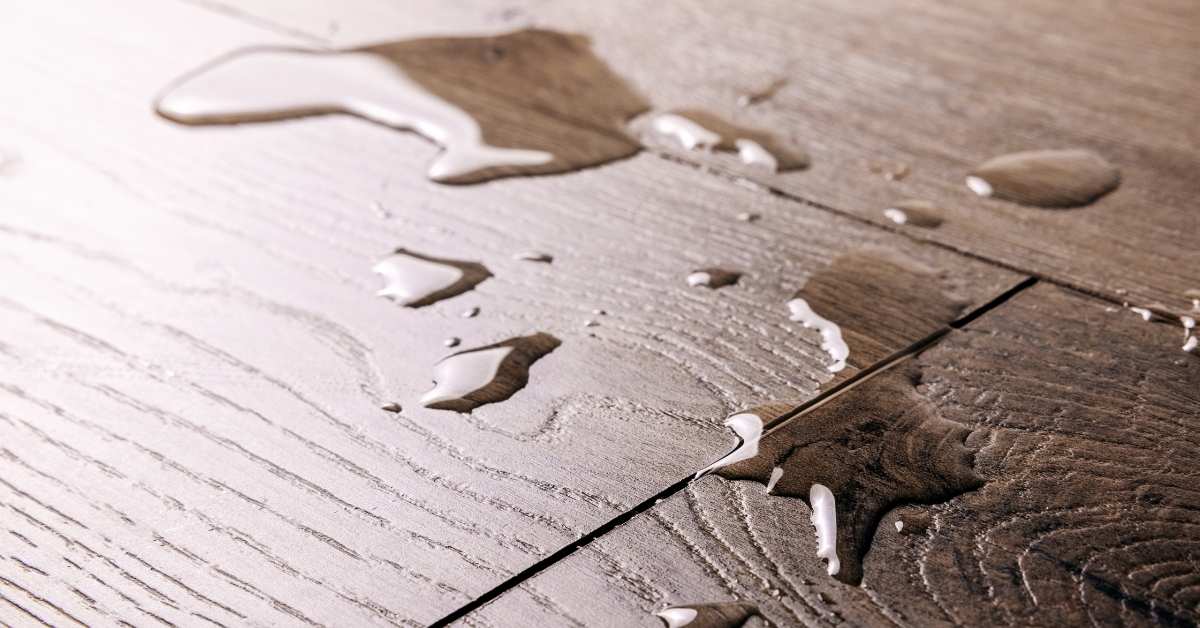
Bamboo behaves as a hygroscopic plant material, meaning it gains or loses moisture with the air. Equilibrium moisture content, relative humidity, and temperature all drive how it swells or contracts. This contrasts with many synthetic floors, which respond differently to humidity swings.
Planks absorb moisture at the surface and through the core, with diffusion paths depending on whether the bamboo is solid, engineered, or strand-woven. Over time, swelling, cupping, gaps, or bowing can show up if humidity or leaks persist. Acclimation, sealing, and maintenance choices all influence these outcomes.
Seasonal and regional humidity impacts
Bamboo’s hygroscopic nature makes it sensitive to seasonal humidity swings. In winter, indoor RH can drop as low as 20%, causing bamboo to shrink. Conversely, summer RH can reach 60% or more, making bamboo swell.
Acclimation is crucial before installation. Let bamboo sit in the room for at least three days to adjust to local conditions. In humid regions, consider using strand-woven bamboo which takes longer to react to moisture changes.
Regular humidity control is key. Maintain indoor RH between 40-60% year-round with a hygrometer and humidifier/dehumidifier as needed.
What happens when bamboo gets wet (short-term vs long-term)
Minor spills usually cause no immediate issues. Wipe up quickly to prevent prolonged exposure.
Long-term or chronic moisture exposure can lead to serious problems over time:
- Swelling: Bamboo absorbs water, causing edges and faces to expand.
- Cupping: Edges rise higher than the center due to uneven moisture absorption.
- Gaps: Prolonged exposure can cause bamboo to shrink when dried, creating gaps between planks.
Flooding is disastrous. Bamboo submerged for 24 hours or more may never fully recover, even if dried. Always prioritize waterproofing and quick cleanup.
Types of Bamboo Flooring and Their Water Resistance
Grain structure matters: straight/edge grain, end grain, and radial patterns each behave differently in moisture and wear. The way the bamboo is cut shapes how quickly it swells and how visible changes appear. This translates to performance in damp or wet areas.
Solid bamboo, engineered bamboo, and strand-woven bamboo differ in construction and core materials. These differences affect moisture tolerance and stability under real-world conditions. Practical installation, sealing, and acclimation requirements vary with each type and product line.
Strand-woven bamboo: water resistance and durability
Strand-woven bamboo is made by compressing bamboo fibers under high heat and pressure. This process creates a dense, hard material that’s more resistant to moisture than other bamboo types.
Why it’s harder: The compression forces the bamboo fibers to bond tightly together, making it denser and harder than solid or engineered bamboo.
Moisture resistance: Due to its density, strand-woven bamboo absorbs less water. It’s suitable for areas with higher moisture levels like kitchens, bathrooms, and basements. However, avoid direct contact with standing water as long-term exposure can still cause issues.
Engineered bamboo: pros and cons for wet areas
Engineered bamboo consists of a core made from multiple layers of plywood or HDF, topped with a layer of solid bamboo. This construction offers some advantages in moisture-prone areas.
Pros
- Stable dimensions due to cross-ply construction.
- Less prone to expansion and contraction than solid bamboo.
- Can be installed in basements with proper acclimation.
- More resistant to edge cupping compared to solid bamboo.
Cons
- Thinner wear layer (usually 3-5mm) limits refinishability.
- Less durable than strand-woven or solid bamboo.
- Still susceptible to moisture damage if exposed to chronic dampness or standing water.
- Requires proper acclimation and sealing for best performance in wet areas.
Engineered bamboo is a good choice for areas with occasional moisture, but avoid high-humidity environments like bathrooms without proper ventilation and sealing.
Solid bamboo: limitations and appropriate uses
Solid bamboo is made from solid planks of bamboo glued together. While it’s durable, it has some moisture-related limitations.
Limitation: Solid bamboo can swell and shrink with changes in humidity due to its hygroscopic nature. This makes it less suitable for areas with high or fluctuating humidity levels like basements and bathrooms without proper acclimation and sealing.
Appropriate uses: Solid bamboo is best suited for dry, climate-controlled environments. It’s great for living rooms, bedrooms, and other interior spaces away from moisture sources. Always ensure proper acclimation before installation to minimize dimensional changes.
Bamboo Grain, Color, and Surface Treatments That Affect Moisture Performance
Grain types like horizontal, vertical, and strand-woven influence how moisture moves through the plank. Each grain pattern shows different swelling tendencies and wear patterns in daily use. Finish choices can amplify or dampen these effects.
Carbonization levels, stains, finishes, and textures play a role in moisture behavior and maintenance needs. Surface treatments create barriers or flaws that affect water movement and cleaning routines. The right combination depends on environment and expectations.
Grain types explained (horizontal, vertical, strand-woven)
Bamboo flooring comes in three main grain types. Each has its own look and moisture performance.
Horizontal grains give a wide plank appearance. They’re softest but swell less than vertical when wet.
Vertical grains show narrow strips, are harder, but can swell more in high humidity.
Strand-woven bamboo is made by compressing strands together. It’s the hardest and most water-resistant option.
Color processes: natural vs carbonized vs stained vs direct print
Bamboo starts off natural, a light blonde color. Carbonization turns it brown.
Carbonization makes bamboo harder and less hygroscopic, but can slightly reduce durability.
Stains add color without affecting hardness or moisture response much. Direct print adds color to the surface only.
Finishes and surface textures (smooth, handscraped, hand-sculpted)
Finishes seal bamboo, protecting it from moisture. Smooth finishes are easy to clean but show scratches.
Handscraped and hand-sculpted textures hide imperfections better but can trap dirt and water in grooves.
Choose a finish with good durability ratings for moisture-prone areas. Reapply as needed to maintain protection.
Installation Methods and Moisture Protection
Installation methods on concrete include nail, glue, floating, and click systems. Each option has implications for moisture management and substrate compatibility. Understanding the method helps prevent future issues in damp spaces.
Pre-installation steps cover moisture testing, barriers, acclimation, and substrate prep. During installation, expansion gaps, underlayment choices, and sealer compatibility matter. Afterward, controlling humidity and monitoring moisture protects the setup over time.
Nail down, glue down, and floating (glue-seam and glueless-click) compared
Each installation method has its pros and cons when it comes to moisture protection. Let’s break ’em down.
Nail-down: This old-school method involves nailing the planks to the subfloor. It’s simple but not ideal for moisture control. Nails can let in water, leading to issues over time. Use this if you’re on a tight budget and don’t mind occasional maintenance.
Glue-down: Here, you spread adhesive directly onto the subfloor before laying the planks. This creates a solid barrier against moisture. It’s more work but provides better protection. Check your adhesive’s moisture resistance rating on the label to ensure it’s up to par.
Floating (Glue-seam and Glueless-click): These are popular for their ease of installation. With glue-seam, you apply adhesive only at the seams, creating a barrier there but not beneath the planks. With glueless-click, interlocking tongues and grooves hold the planks together without glue. Both provide decent moisture resistance, especially when used with proper underlayment and base compaction.
Underlayments, vapor barriers, and subfloor prep
Before you start laying your floor, you need to ge