How Long Does Super Glue Take to Dry on Concrete? Practical Times and Tips for Repairs

How Long Does Super Glue Take to Dry on Concrete? Practical Times and Tips for Repairs

Introduction

Super glue dries to the touch on concrete in minutes, but full strength can take up to 24 hours. The guide walks you through what to expect under different conditions and how to apply the glue for strong, lasting repairs, with practical steps and tips you can use right away.

Related: Time is of the Essence: Understanding the Drying Process of Super Glue.

Key takeaways

  • Initial cure (tack) typically 10–60 seconds on dry concrete; handling strength 1–5 minutes; functional cure commonly 1–24 hours; full rated strength often 24–72 hours depending on product.
  • Concrete porosity and alkalinity can absorb adhesive and slow or weaken the bond; expect longer cures on porous or damp substrates.
  • Practical moisture guidance: avoid CA if slab moisture >5% by weight or relative humidity (RH) >75% — use epoxy or wait for drying.
  • Recommended working temperature range for most CAs on concrete: 10–35°C (50–95°F); below 4°C (40°F) cure may stall.
  • Use thin CA for hairline cracks, medium for modest gaps, gel for verticals/overhead; epoxy or construction adhesive for load-bearing or damp conditions.
  • Always test a standardized patch (see “Visual and measurable tests” section) and follow PPE and disposal rules.
Table of Contents

Quick answer: expected drying and handling times

Tack sets in about 10–60 seconds on typical dry concrete; you generally have 1–5 minutes to reposition before it begins to set, and full cure can take up to 24–72 hours to reach rated strength depending on product and conditions. Temperature, humidity, porosity, surface texture, and adhesive formulation all shift these times.

Good prep—clean, dry surface and minimal squeeze-out—helps hit these windows reliably and avoids delays. Use simple checks like a gentle tap or a fingerprint test after the expected cure time to confirm hardness before load or rework.

Typical tack, handling, and full cure definitions

Tack or initial set is when the surface stops feeling wet and a light touch leaves no residue. It’s the first sign you can move on from finishing work but not a cue to load the patch. For a DIY repair, test with your fingertip or a scrap tool. If it smears, give it more time.

Handling time is the period when the repair can take light stress — walking over, trimming edges, or removing forms — without breaking. Don’t assume the calendar; check by gently applying pressure in an out-of-the-way spot. If it crumbles or dents, wait longer. If you must speed up the job, lower the load and protect the area instead of forcing it.

Full-strength cure is when the material reaches its design strength and you can subject it to heavy loads, sealers, or equipment. That can take days to weeks depending on product, temperature, and humidity. In short: don’t rush the final step. Follow the manufacturer’s cure time, watch conditions, and always check compressive strength or manufacturer guidance before putting vehicles or heavy machinery on the repair.

Back to top ↑

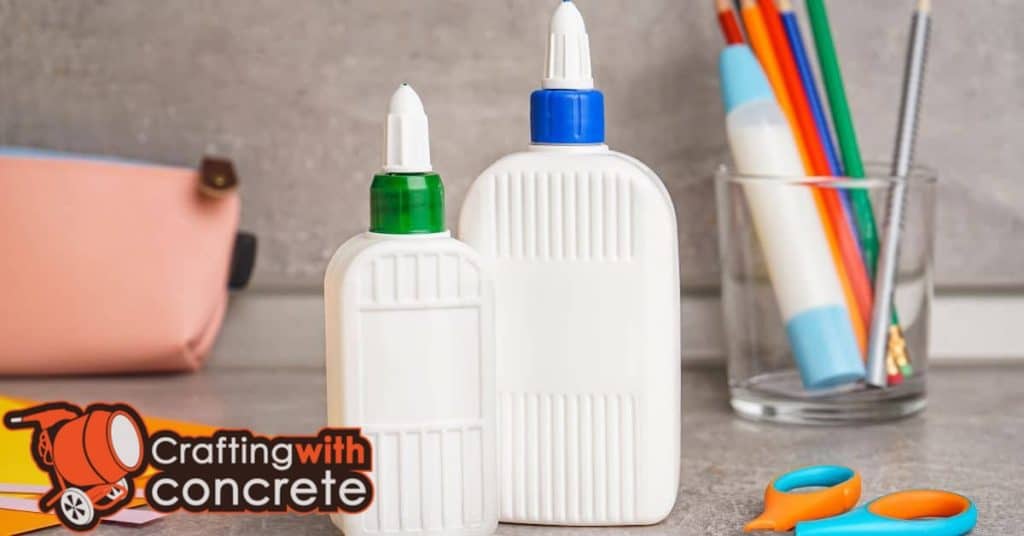
Small green-tipped glue bottle beside larger blue-tipped bottle on desk.
Glue bottles with color-coded tips rest on a craft desk beside scissors and paper.

Why concrete is different: porous, alkaline, and variable

Concrete’s porosity, surface chemistry, and moisture dynamics create a distinct environment for cyanoacrylate glues, because capillary pores and internal aggregate voids actively absorb liquids, limiting immediate contact between adhesive and substrate and shifting the balance between wetting, spreading, and early cure. The alkaline pH, mineral deposits such as efflorescence, and surface moisture profiles—whether dampness sits on the surface or moves through the substrate—alter polymerization rates and bonding pathways, so performance can vary even within a single job site depending on how water moves and where it resides. These factors together mean that prep choices, application timing, and adhesive amount must be tuned to the concrete’s porosity and moisture realities to avoid weak bonds or unexpected cure behavior.

For a DIY reader, this means testing moisture, choosing the right surface treatment, and accepting that not all concrete will behave the same way under a single glue type. Practical steps include using simple moisture checks, deciding when to clean versus roughen the surface, and selecting sealers or primers that slow or regulate moisture transfer to improve adhesion, especially on dense or highly porous mixes. Variability in temperature, humidity, concrete age, and contaminants can shift performance, so plan for slower cures in damp conditions, lighter application where porosity is high, and longer open times when surface moisture is present. Quick-fire guidance: cyanoacrylates work best on dry, mechanically sound surfaces with a clean profile, watch for signs of poor bonding risk like powdery residues or lingering dampness, and perform quick surface checks to pre-empt failures before committing a repair.

Porosity and how it affects glue penetration

Concrete soaks. Those open pores will pull liquid CA into the surface like a sponge. That can make a thin bead disappear fast and the glue can cure on the surface or down in the pores instead of making a strong joint. In short: less glue at the contact = weaker bond.

Before you glue, check porosity with a small drop or a damp rag. If the concrete drinks the water, it will drink your glue. For very porous surfaces either apply a light coat of CA and let it cure, or use a primer or sealer to stabilize the pores. Both options stop the sponge effect and let the next glue application stay where you need it.

If you can’t seal, compensate: use thicker glue, more beads, or an accelerator and clamp quickly. Or skip CA and use an epoxy designed for porous masonry. Don’t expect instant miracles — test a scrap area first and clamp until the joint is proven.

Alkalinity and residual moisture risks

Fresh or uncured concrete often stays alkaline and traps water below the surface. That alkali and moisture will slow or stop cyanoacrylate (CA) from curing properly. In plain terms: do not glue to green concrete unless you’re prepared for failure.

Before you glue, check the slab age and moisture. Wait the manufacturer’s cure time (commonly 28 days) when possible. Use a moisture meter or an in-situ relative-humidity test, or at minimum do a plastic-tape or small test-bond. If RH is high or moisture is visible, use a different adhesive or wait — CA won’t tolerate damp, high-pH surfaces.

If pH testing shows strong alkalinity, neutralize only with proven methods or choose an adhesive designed for alkaline substrates. Always run a small, destructive test patch and inspect after 24–48 hours. If the bond discolors, stays gummy, or peels, scrap it and pick a moisture-tolerant system instead. Test before you commit.

Back to top ↑

Real-world drying time ranges for concrete (tested scenarios)

Real-world drying times for concrete vary by surface condition and environmental factors, and this section outlines practical takeaways for three milestones—tack (barely set), initial set (handleable/short-term hold), and full strength. For each milestone, expect explicit minute-to-hour ranges across three surface conditions: dry/clean concrete, damp concrete, and very porous surfaces, with notes on how porosity and texture influence grip, cure speed, and final bond quality. Environmental and substrate variables such as temperature 50–85°F (10–29°C), humidity, ventilation, and concrete porosity can shift these times by roughly 0–60+ minutes, so plan for a small cushion if conditions are edge-case.

DIY job sites benefit from a compact decision framework that pairs the milestones with observable cues—texture changes, tack by finger or light drag, and gentle pressure tests to confirm readiness without risking damage. Include practical surface preparation tips (light dampening vs. soaking), cleanup steps, and guidance on how to time subsequent work like rebar placement or patch application after each milestone, so your project proceeds safely, with clear indicators when full cure is underway. This approach helps avoid premature loading and reduces surprises on the jobsite.

Dry, sealed concrete — quick reference

On a properly dried and sealed slab you should feel initial tack very quickly — roughly 10–30 seconds after application. That tack means you can press pieces into place. Don’t wait for a full cure to do light positioning checks.

Expect usable handling within about 1–5 minutes. That’s when you can move things into final position and stop worrying about them shifting. If you try heavy work before this window you’ll tear the seal or mess the bond.

Full build-up of strength takes longer — plan on a far stronger bond after about 24 hours. If the surface wasn’t sealed or the slab was damp, drop back to the broader drying ranges covered earlier and re-test before trusting the bond.

Damp or newly poured concrete scenarios

If your slab is damp or was poured recently, expect slower, less predictable drying. Fresh concrete and slabs that retain water can take weeks to months to reach a safe moisture level. If you rush flooring, paints, or sealers onto a surface with moisture >5% by weight, you’re asking for bubbles, adhesive failure, or mold under the finish.

Do the simple checks before you start: let the slab dry longer than you want, check with a moisture meter or do a calcium chloride test, and verify base drainage and compaction under the slab. If a meter shows borderline numbers, ventilate, heat, and/or use a vapor barrier — not faster cures or cosmetic fixes that hide moisture.

Nail down your decision: if moisture tests are over the limit, postpone coatings and sensitive flooring. For tight deadlines, choose products rated for elevated moisture and accept shorter warranties. When in doubt, pay for a pro test—cheaper than pulling up ruined flooring later.

Back to top ↑

How ambient temperature affects cure speed

Ambient temperature largely governs how fast cyanoacrylate cures on concrete. Below 40°F (4°C) the cure slows dramatically or stops; 40–60°F slows but remains workable with a longer setup; 60–80°F (16–27°C) offers the best balance, while above 80°F speeds cure but shortens open time and can increase brittleness.

Surface and substrate temperatures can lag air temperature because concrete’s mass stores and releases heat slowly, and moisture and porosity interact with temperature to affect bonding and tack time. To work reliably, target both ambient and surface temps in the 60–80°F range when possible, allow a short acclimation window, and watch for signs of under- or over-cure as humidity, ventilation, and seasoning of the CA product change with the environment. Delay repairs if temperatures swing outside the ideal range or if surface moisture is high; use accelerators or cool packs as appropriate, and store CA products in climate-controlled conditions to preserve performance.

Cold weather tips

Move the job to the warmest practical spot first. A garage, enclosed porch, or a wind-sheltered tent with a small heater cuts cure time more than fiddling with the mix. If you must work outside, block wind and sun-exposure changes so temperatures stay steady.

Pre-warm materials and the substrate, but do it gently. Store cartridges and liquid adhesives indoors for 24 hours before use. For bigger pieces, use a heat gun on low, a warm water bath for sealed containers, or a portable heater aimed indirectly at the surface. Never apply direct flame or high heat to adhesives — you’ll ruin the chemistry and create safety hazards.

Keep one eye on real numbers: use an infrared thermometer and monitor temperature of both the adhesive and the surface. If the spec calls for 50–80°F, don’t guess. Test a small patch, allow extra cure time, and avoid loads until the manufacturer’s minimum cure is met. If in doubt, raise the temperature slowly and don’t overcook the bond.

Hot weather tips and risks

High heat speeds everything up. That means much less working time, faster skin-over, and a higher chance of trapped bubbles or poor adhesion if you rush. Plan for shorter mixes and expect to move faster than you would on a mild day.

Do the work in the coolest window you can: early morning, late evening, or under shade. Chill liquids and tools if the product allows. Mix only what you can lay down in one pass. Consider manufacturer-approved retarders or cooler water to slow the reaction rather than fighting the material after it starts to grab.

Do a small test patch first. Watch for foaming, pinholes, or a tacky surface that cures unevenly. If the site temperature is outside the product’s recommended range, postpone or create a controlled environment—shade, fans, or temporary cooling—rather than risking a failed job.

Back to top ↑

How humidity and moisture change performance

Cyanoacrylate bonds cure by reacting with ambient and substrate moisture, so the humidity around a concrete surface directly drives how fast and how strong the bond forms. Dry air slows cure; moderate humidity in the practical range accelerates cure to a strong, uniform joint, while wet or misted surfaces can leave a weak, uneven bond because excess moisture competes with the adhesive. Concrete’s porosity matters because porous surfaces drink moisture and create microenvironments that can either support a steady cure or wick away moisture, making surface prep and timing critical.

In real jobs you’ll encounter dew, damp slabs, or residual liquids, so test readiness by touching and using a simple moisture check and by drying or warming as needed before applying CA. Best practice is to target an intermediate humidity window, use gentle warming, moisture absorbers, and the right CA formulation for damp conditions to optimize performance. If moisture is excessive, consider alternative adhesion strategies or extra surface prep steps to salvage a bond, and keep the work area controlled until the substrate reaches a more forgiving moisture state.

Using humidity to your advantage

In very dry indoor conditions you can speed up proper bonding and curing by adding a light, controlled mist to the work area. Use a fine spray bottle or garden mister held 3–6 feet away and apply even, short bursts — you want surface dampness, not runoff. Test a small patch first so you can see how the material reacts before doing the whole job.

For tiny projects or touch-up work, simple breath activation works: warm, moist breath from a short distance will raise local humidity just enough to help adhesion. Don’t be sloppy — check base compaction and absorbency first, and only use breath activation for small, accessible spots where moisture won’t pool.

Watch the clock and the surface. If the mist causes visible sheen or pooling, stop and let it dry back to a dull, slightly damp film before proceeding. Too much moisture kills performance just as fast as too little.

Avoiding puddles and standing water

These are the common mistakes that kill a good install. Dry surfaces and no standing water are non-negotiable — here’s what people keep screwing up and how to fix it.

  • Ignoring surface slope — Flat or low spots trap water and create puddles. Regrade or add a slight pitch so water runs off instead of collecting where you plan to bond.
  • Relying on slow drying — Waiting for nature to deal with a film is optimistic. Use a leaf blower, towels, or a heat gun on low to remove the film quickly before you apply adhesive.
  • Bonding over water film — A thin film breaks adhesion more than you think. If you can’t fully dry, switch to an adhesive rated for damp conditions rather than forcing a standard glue to stick.
  • Sealing before dry — Applying sealers or primers over damp spots traps moisture and ruins the cure. Only seal after you’ve confirmed the surface is dry to the touch and free of sheen.
  • Ignoring nearby runoff — Water from gutters, AC units, or roof edges will re-wet your work. Redirect runoff or postpone the job until surrounding sources are fixed.

Quick double-check: make sure water runs away, the surface is dry (no sheen), and you’re using the right adhesive for any residual dampness. Miss one of those and expect failures down the road.

Back to top ↑

Types of cyanoacrylate: thin vs. medium vs. gel

Thin, medium, and gel cyanoacrylates differ mainly in viscosity, which governs how they wick into concrete porosity, bridge gaps, and stay put on textured surfaces, affecting penetration depth, bond priority, and cleanup. Thin (low-viscosity) CA pours into hairline cracks and capillary gaps, spreads easily on rough concrete, and cures quickly with minimal squeeze-out. Gel CA is thicker and stays where placed, making it useful for vertical surfaces and raised edges, though it provides less deep penetration than thin or medium and may cure more slowly on porous substrates, influencing how long the surface stays tacky, how much bead spreads, and how forgiving the repair is to moisture.

Choosing the right viscosity depends on the repair scenario: narrow cracks favor thin, chips and surface bonding suit medium or gel, and large gaps may require alternative adhesives or epoxy to achieve lasting strength. Consider prep steps, bead size, and orientation—vertical work benefits from thicker formulations that resist runout, while horizontal surfaces tolerate thin beads and faster tack, provided you dry and clean the substrate first on rough, dusty surfaces. Understanding cure times, temperature, and porosity helps predict tack time and final strength, so you can plan cure windows, avoid whitening or brittle bonds, and know when to switch to a different adhesive if needed.

When to use thin CA on concrete

Thin cyanoacrylate is your go-to when surfaces fit tightly or when you need glue to seep into hairline cracks and microfractures. Use it where the joint width is minimal and capillary action will pull the adhesive into the gap. If you’ve got a gap wider than a hairline, don’t bother — thin CA won’t bridge it and will leave a brittle, weak bond.

Prep is everything. Check base compaction, remove dust, oil, and loose particles, and make sure the surface is dry. Apply sparingly along the joint so the glue is drawn in; adding more won’t help and will create a mess. If you need faster handling strength, use a proper accelerator, but remember that overuse can make the joint brittle.

Safety and verification: wear gloves and ventilate the area, and always test a small area to confirm penetration and cure time before treating the whole job. Thin CA gives a quick fix for tight joints and seepage into microcracks, but it’s not a structural repair—use for stabilization and small repairs, not as a substitute for proper patching or epoxy when strength is required.

When to use gel CA on concrete

Use gel CA when you need gap filling — wide cracks, chipped edges, and holes where thin CA would just soak in or run off. Gel stays put on rough concrete, so it’s the practical choice for filling voids before sanding or overcoating. Don’t expect it to be a structural fix; think patch and bond, not load-bearing repair.

Choose gel for vertical or overhead surfaces because it won’t drip while curing. Prep is simple but non‑negotiable: clean dust and loose particles, blow out the joint, and make sure the surface is dry. For deep or very porous areas, tack a thin layer first or use a filler/epoxy base — gel alone can be absorbed in heavy porosity and give a weak bond.

Apply sparingly, hold parts or use clamps until set, and consider a CA activator for faster cure on concrete. Work in moderate temps and ventilate the area. If run-off onto finished areas is a concern, mask around the repair — gel is forgiving, but once it bonds, removing it from finished concrete or sealers is a headache.

Back to top ↑

Super glue vs epoxy vs construction adhesives on concrete

For concrete work, super glue (CA) is best reserved for small, non-structural repairs on clean, dry surfaces with closed pores, while 2‑part epoxies and polyurethane/urethane construction adhesives are preferable for structural or heavy-duty fixes, where gap filling, moisture tolerance, and long-term durability matter most. In practice, use CA for quick, non-load-bearing fixes and cosmetic touch-ups, and reach for epoxy or construction adhesives when bond strength, open pores, or moisture resistance are required, keeping a simple rule of thumb: choose CA for clean, tight joints and epoxies/PU when you need strength and weather stability over time.

Context matters for DIY success because surface prep, cure times, and climate all influence adhesion: dry, properly abraded concrete and clean surfaces improve CA performance, while damp or porous substrates often demand epoxy or polyurethane with longer open times and moisture tolerance. Considering cost, availability, and the job’s intent helps prevent overkill or failure, with epoxy or construction adhesives offering value for load-bearing or gap-filling scenarios, and CA delivering convenient, quick fixes for small areas, edges, or non-structural repairs.

When to choose epoxy instead

Pick epoxy when the repair has to hold weight, take shocks, or live outside. If you’re fixing a stair tread, anchoring a bolt, repairing a cracked footing, or bonding a carved patch where strength matters, go epoxy. Super glue and construction adhesives can work for quick fixes, but they won’t give the long-term structural bond epoxy will.

Before you mix, check base compaction and make the surface clean, dry, and roughened. Epoxy needs a sound substrate and good contact to develop strength. Watch temperature — most epoxies cure poorly below about 50°F (10°C) and get brittle in extreme sun. Mix exactly per instructions, use the full working time, and clamp or support parts until the resin has set.

Choose epoxy when you need chemical, water, or thermal resistance — around drains, gutters, hot pipes, or exterior concrete. If you need to fill wide gaps, select a structural epoxy or a mortar-grade epoxy paste. And don’t skimp on cure time: allow full cure before loading or sealing, or the repair will fail sooner than you’d expect.

When to choose construction adhesive or MS polymer

Pick construction adhesive or an MS polymer when the joint or repair will move. These adhesives stay flexible and tolerate vibration, freeze‑thaw cycles, and small settling. If the job sits on a sidewalk, porch, or a piece of equipment that shakes, go flexible — don’t waste time with brittle CA that will crack and fail.

Before you glue, check base compaction and clean the surface. Dust, loose concrete, and oil kill adhesion. Use a wire brush or pressure wash, let it fully dry, then apply per the manufacturer’s spread and bead size recommendations. For wide gaps, use a foam backer rod so the adhesive only bonds on two sides and can move as intended.

If you need maximum rigid strength for a non-moving piece, epoxy may be the better choice (covered earlier). But for joints that absorb movement or for weather-exposed repairs, choose an MS polymer or construction adhesive and plan for long-term movement — trim the expectation for rigid perfection and focus on durability instead.

Back to top ↑

Brand recommendations and product comparisons

This section helps you quickly identify reliable concrete repair adhesives by brand, with quick-use scenarios and clear buying signals. Look for a mix of Loctite Super Glue Original, Gorilla Super Glue Gel (and Clear), 2‑part epoxy kits, Weldbond, and masonry‑specific adhesives, each with pros/cons and typical cure times. Use the quick-use notes to match products to small crack repairs, bonding to metal or wood, patching chips, vertical surfaces, and gaps that need moisture tolerance.

Why it matters on a DIY jobsite: you’ll compare bond strength, cure time, gap-spanning ability, water/heat resistance, kit contents, surface prep needs, and indoor vs outdoor suitability at a glance. A side-by-side bullet matrix or mini comparison helps you pick based on the task, such as fast-set options for small cracks or high‑strength epoxies for load-bearing repairs. Practical tips cover surface prep (clean, dry, roughen if needed), correct application, clamping or weights, safe handling of epoxies, and typical recoat or full cure times to plan your project schedule.

Best CA for porous/rough masonry

For rough, porous masonry go with a medium-viscosity or thin CA and plan to use a primer/penetrant. Those thinner formulas soak into pores instead of bridging them on the surface. Thick or gel CAs will sit on top and fail—don’t try to force them to act like a glue that can penetrate.

Prep is the job. Clean away dust, loose mortar and dirt. Let the substrate fully dry. Apply a masonry primer or CA-specific penetrant to open the pores, then apply thin CA in light coats. Work small areas, give each coat time to wick in, and repeat until you get the bond you need.

Test a patch first and wear eye protection and gloves. If a gap needs filling, use a hybrid product or a structural repair mortar instead of relying on CA to bulk-fill. For best results, match CA thickness to the joint and environmental conditions—thin for deep pores, medium for short gaps, and primer to make them work.

Quick product notes (practical if-then)

  • Loctite Super Glue Original — quick tack, best for small indoor chips and non-porous surfaces. Tack: seconds; functional: minutes; full: ~24 hours.
  • Gorilla Super Glue Gel — thicker gel for verticals and textured surfaces; slower penetration on porous concrete; good for vertical chip reattachment but not for porous bulk fills.
  • Loctite PL Premium / Liquid Nails (masonry) — use for trim, flashing, and non-structural exterior bonding; flexible, moisture-tolerant, longer fixture time (20–60 minutes) and full cure days.
  • Sikadur‑31, Simpson Strong‑Tie anchoring epoxies — use for structural anchors and heavy repairs; fixture times 30–90 minutes depending on cartridge; full cure 7+ days for full mechanical properties.
  • Two-part quick epoxy putty (5–15 min) — use for filling and shaping chips before final finish; pair with CA as a tack if needed, but epoxy is the structural fill.

Back to top ↑

Surface preparation for concrete before using super glue

Surface preparation aims to maximize concrete porosity for quick adhesive wetting while removing contaminants that could block bonding, all without causing micro-cracks in the substrate. A practical checklist includes thorough cleaning to remove loose pebbles, dust, and debris; degreasing with a suitable solvent; removing laitance and loose dust with a stiff brush or light abrasion as needed; thorough drying, and only then deciding if sanding or etching is warranted to expose a fresh micro-rough texture. Avoid over-sanding or over-etching, which can create dust and uneven edges and undermine adhesion.

This matters on the jobsite because a clean, dry, uniformly textured surface dramatically improves glue flow and bond strength, reducing failed joints and call-backs. Following the steps helps ensure you won’t trap oil, grease, or moisture under the adhesive, and it guides you to apply sanding or etching only where necessary to enhance porosity without enlarging gouges. A quick, final moisture and feel check confirms the surface is dry and slightly rough before applying the glue, boosting confidence in a durable bond.

Practical prep checklist (consolidated)

  • Check base compaction and structural soundness — probe edges; if aggregate flakes, use a mortar/epoxy patch first.
  • Remove loose material: broom, wire brush, vacuum with HEPA if dusty.
  • Degrease: detergent and water for dirt; acetone or denatured alcohol for light oils; rinse and dry fully.
  • Roughen glossy or sealed surfaces with 80–120 grit sandpaper or a light grind to provide a mechanical key.
  • Dry: aim for surface dryness and no visible sheen; use heaters or fans if needed. Confirm with plastic sheet test or moisture meter if in doubt.
  • Test patch: perform a standardized test (see “Visual and measurable tests” section) before committing the whole repair.

Back to top ↑

How much moisture concrete can tolerate before CA fails

Concrete moisture directly affects cyanoacrylate adhesion, so use simple on-site checks like the plastic sheet test and a moisture meter to gauge acceptability. If the plastic sheet test shows moisture under the sheet within 24–48 hours, or meter readings exceed rough targets (roughly low single-digit to low double-digit percent moisture by weight), consider delaying the repair. Exact limits depend on the CA product and surface prep.

This matters for DIY jobs where humidity, curing conditions, or a damp substrate can undermine bonds. Drying strategies, abrasion, and the use of primers or sealers may salvage a bond, and re-testing after drying confirms readiness. A quick decision flow helps you decide to proceed, delay, or use an alternative adhesive or coating.

Plastic sheet test explained

Cut a clear plastic sheet about 2 ft square and tape it tightly to the concrete with all edges sealed. Pick a flat, representative spot near where the floorcovering will go. Leave the sheet in place for 24 hours and don’t peek—disturbing the seal lets air in and ruins the test.

After 24 hours, lift one corner and look at the underside of the plastic and the concrete. If you see visible water droplets or a shiny layer on the underside, then condensation = fail and the slab is releasing too much moisture. If the concrete darkened but there are no droplets, that’s a warning sign—repeat the test in a different spot or use a humidity probe before proceeding.

If the test fails, don’t install moisture-sensitive flooring or cementitious adhesive yet. Let the slab dry longer, improve ventilation, or apply a proper moisture barrier or primer. If the test passes, that doesn’t guarantee success—refer back to the earlier section on how much moisture concrete can tolerate before CA fails for final acceptance criteria or use a calibrated moisture meter for confirmation.

Back to top ↑

Primers and accelerators for cyanoacrylate on masonry

Cyanoacrylate primers and accelerators are specialized products that prep porous or alkaline masonry for bonding, especially on concrete surfaces. They work by sealing the surface and introducing a controlled activator that speeds up the CA cure and improves adhesion to rough, cementitious substrates. This chemistry helps CA grab into pores and counteract surface alkalinity, resulting in stronger, faster-tacking bonds on masonry.

In practice, primers and accelerators are beneficial for repairs on porous, weathered, or alkaline concrete, where bare CA can struggle to wet the surface or cure evenly. A practical usage sequence includes thorough surface cleaning, application of the primer or activator as directed, waiting the recommended dwell time, then applying the CA with attention to work time and curing considerations. Always follow safety practices, note compatibility with your CA formulation, and test adhesion on scrap concrete before tackling primary repairs to avoid over-activation, premature curing, or warping.

Using CA accelerators (activators)

Spray or brush-on accelerators speed up cure a lot — useful when you need a grip in seconds instead of minutes. Before you rush, do a quick spot test on the same masonry. Porous brick or concrete soaks the activator and the glue differently than smooth surfaces, and that changes how fast and how strong the joint will be.

Application specifics:

  • Spray distance: hold accelerator can 15–20 cm (6–8 inches) from the joint and use short 0.5–1 second bursts.
  • Dwell: wait 10–30 seconds after spraying for solvents to flash off before applying CA. On very porous masonry, allow up to 60 seconds but test locally.
  • Dose: use a light, even mist — avoid soaking or puddling the surface. If the surface looks shiny/wet, you’ve over-applied.
  • Signs of over-activation: brittle, powdery joint surface; high incidence of white bloom; joint snaps cleanly under low force in pull tests.

When you need full strength, skip the accelerator or use it only to tack parts in place while the main bond forms naturally. For cosmetic or load-bearing repairs, patience beats speed — clamp or support the pieces and allow proper cure time. Don’t rely on activators to fix poor fit or dirty surfaces; clean, tight contact and check base compaction first.

Back to top ↑

Application technique: small cracks, chips, and surface fixes

Start with a dust-free, dry surface and remove loose material from hairline cracks using a fine brush or compressed air, then wipe the area with isopropyl alcohol or acetone if appropriate to improve bonding and to reduce porosity that can siphon CA away. Select the right CA—thin for fine cracks, gel for vertical or textured surfaces, and thick for larger chips—and set up precise applicators, capillary action, and a deliberate tilt to control flow and prevent run-off into adjacent textures. Apply in small increments from one side, allow a thin layer to cure before adding more, and layer deeper voids gradually while wiping away excess to minimize air pockets and ensure good adhesion.

Finishing, curing, and inspection hinge on proper exposure and timing: typical room-temperature cures, careful handling after partial cure, and sanding flush or recoating as needed, followed by a quick bond-strength check to decide whether a reapplication is necessary. Good technique also means wearing safety gear, ensuring adequate ventilation, and cleaning tools promptly to control fumes and keep the work area safe. This approach yields durable fixes on concrete surfaces and minimizes future touch-ups by addressing porosity, moisture, and surface texture from prep through final cure.

Filling hairline cracks with thin CA

Keep it simple: clean the crack of dust and loose paint, blow it out, and dry it. Tape both sides if the surface is delicate so the glue doesn’t run. You already know the basics of small repairs from the parent section—this is the quick, precise step for hairline gaps.

Use thin CA applied with a fine dropper or a 0.5–1 mm needle. Touch the tip just to the edge of the crack and let the glue wick in by capillary action; don’t try to force it. The glue will travel down the path of least resistance and fill the void—add one drop, wait, and add more only if the gap is still visible. If you rush with too much, you’ll get drips and an ugly bead.

Let the glue fully cure, or use a light accelerator sparingly if you need speed. Once dry, sand lightly flush and feather the edges. Wear gloves and good ventilation—the fumes are real, and overfilling makes brittle repairs that fail under stress. If the crack is moving or structural, don’t waste CA; use an appropriate filler or consult a pro.

Repairing small chips and flakes

Start by cleaning the area and knocking off any loose flakes. If the substrate is dusty or oily, the repair won’t stick. For tiny chips you can use the same thin-then-thicker CA approach used for hairline cracks — lay down a thin tacking coat, let it cure, then build up in short layers rather than one thick dollop.

Between each cured layer, lightly sand to knock down high spots and feather the edge. Use fine sandpaper (220–400 grit) first, then move to finer grits for the final shaping. Don’t skip sanding: it keeps each new layer bonding and prevents lumps. If you overfill, sand back and repeat with thinner passes until the surface is even.

Match texture and color before sealing. For visible areas, finish with a thin clear or primer coat and a light polish to blend the repair. Avoid excessive heat while curing and don’t try to rush with huge globs of CA — you’ll get runs or brittle build-up. If you need more guidance on thin CA application, see the earlier hairline cracks section for the basic thin-coat technique.

Back to top ↑

Application technique: larger gaps and uneven joints

CA glue alone is unreliable for wide gaps in concrete because porosity, movement, moisture, and poor surface adhesion let it wick out or fail under load. A combined approach—backing to bridge the joint, filler to bulk the gap, and epoxy or a compatible adhesive for the final seal—lets each material perform where it’s strongest, with CA playing only a secondary role when appropriate.

This matters on a DIY jobsite because choosing the right sequence and materials prevents cracks, leaks, and recurring rework, while offering a practical workflow: prep the surface, place backing, fill the bulk with a filler, then optionally apply CA sparingly, and finish with epoxy or clamping as needed. Using non-shrink epoxy fillers, cementitious or polyurethane fillers, and foam backer rods lets you tailor the solution to gap size and load, and understanding epoxy over CA can improve moisture resistance and strength—plus it emphasizes compatibility and cure times, and reminds you to test a small area first with the light finger test before committing to full cure.

Using fillers and reinforcing meshes

For larger gaps and uneven joints, start by check base compaction and removing loose debris. Use a mortar patch for volume fills where you need to rebuild profile, and lay a reinforcing mesh into the fresh mortar while it’s still plastic. Embed the mesh so it sits about midway through the patch—not on the surface—and feather the mortar out beyond the gap to get a smooth transition.

For a durable, bonded finish on joints that will see movement or traffic, use a silica-filled epoxy over or as a final skim coat. Epoxy locks the mesh and patch together and resists water and oils better than plain cement. Prime porous substrates if the product instructions call for it, and pay attention to working and cure times—epoxy can be sticky to tool but will harden fast.

Use cyanoacrylate (CA) only for quick, temporary fixes or to tack small pieces in place while you set the patch. CA is not a long-term repair on gaps or joints under load—do the full patch with mesh and proper filler as the final step. Check alignment, cure fully, and then finish or seal according to the materials you used.

Back to top ↑

Clamping, pressure, and positioning for irregular concrete pieces

Irregular or uneven concrete pieces need careful clamping and light, controlled pressure to form a solid bond without shifting during cure. Start by aligning pieces and marking reference edges, then use temporary supports such as blocks, shims, or wedges to hold the layout in place before applying adhesive. Choose a clamping strategy that suits the pieces, using adjustable or quick-release clamps placed at key points and tuned to a gentle, even pressure that prevents warping or crushing thin sections.

Wedge and shim adjustments allow micro-alignments that true the assembly and distribute force evenly, reducing glue squeeze-out and misalignment as the pieces cure. Curing under light pressure benefits from reasonable cure times, stable environmental conditions, and sometimes a membrane or plastic cover to slow moisture loss while maintaining pressure. Practically, this approach supports safer, more repeatable results on DIY or jobsite projects, and it provides clear signals for when to stop adjustments and address any slipping or cracking promptly.

Clamping tips for small fragments

Small, thin pieces need gentle handling. Don’t reach for big steel clamps first—start with soft solutions like rubber bands, painter’s tape, or small sandbags to hold parts while you set them. These let you apply minimum pressure and keep the fragment from shifting without crushing it.

Pad any contact points with scrap rubber, thin wood, or folded tape to protect the face. If you must use a clamp, put a block of soft material between the jaw and the concrete, and tighten slowly. Watch for movement and stop the second you see cracking or hairline shifts.

Keep alignment checks frequent—small fragments move fast. Use quick light taps or a straightedge to confirm position rather than increasing clamping force. For more on pressure and positioning, refer to the earlier section on clamping, pressure, and positioning for irregular concrete pieces.

Supporting large or heavy pieces

For big slabs or heavy chunks, you can’t rely on clamps alone. Set the piece on a firm, level bed and use stacked shims or wedges at multiple contact points to transfer weight to the ground. Check base compaction first — a soft base will settle and ruin your alignment.

Build simple staging or cribbing with hardwood blocks or metal supports so the piece sits evenly. Place shims under low spots and drive wedges slowly until the piece bears evenly on all supports. Use temporary straps or ratchet straps to hold things steady, but don’t let a single strap carry the load.

Keep the joint lined up while the adhesive cures and monitor it until the bond reaches handling strength. Protect finished faces with scrap wood or padding to avoid crushing edges. And don’t cheat on cure time — mechanical supports stay in place until you can safely remove them.

Back to top ↑

Visual checkpoints during cure

During cure, watch real-time visual cues such as surface gloss level, the darkening of the concrete, and any wet-look patches versus dry matte areas to gauge how far the adhesive has set and how environmental factors may be shaping the finish. Pay attention to gap filling and shrinkage, watching for small cracks closing or new micro-gaps forming as the bond cures, and assess edge alignment as it sits against the substrate while the texture evolves from hazy to clearer.

These cues matter because they inform safe timing for gentle load testing, while also signaling when to avoid disturbing the bond during critical windows and when to allow traffic or finishing to begin. Also, understanding the curing environment—the temperature, humidity, and airflow—and keeping a concise, at-a-glance checklist helps you compare observed visuals against expected cure stages and plan steps accordingly.

How to test a bond without breaking it

After you’ve checked the visual cues mentioned earlier, start with light, non-destructive checks. Use your hand to press and then tug gently at corners and seams. Try a small flex or bend where the material allows; if the joint holds firm with small movement, that’s a good sign. If it shifts or peels at the edges, stop and rework the bond.

Do simple progressive load testing next. Place a lightweight object and leave it for an hour. Add a heavier item and check again. Increase weight in small steps rather than one big test. If nothing moves after a couple of steps, the bond is likely sound. If you get sudden movement under a small extra load, don’t assume it’s cured—reassess surface prep and cure time.

Tapping and listening works on many materials. Tap along the joint with a screwdriver handle or your knuckle. A solid joint gives a dull, uniform sound; a hollow or changeable tone often means poor contact. Watch for gaps, glue squeeze-out changes, or soft spots and mark them. Trust your hands and ears—if it feels or sounds wrong, don’t rely on luck. Rework the area before final loads.

Back to top ↑

Full-strength cure vs. functional cure: timelines and tests

Full-strength cure means the adhesive has reached its rated bonding strength on concrete, while functional cure, or ‘safe to use,’ refers to a stage where the repair can be handled and light-use before full mechanical strength is achieved. For common cyanoacrylate-based glues on concrete, expect a short functional cure window of minutes to an hour and a longer full-cure window of several hours to a day, with timelines shifted by temperature, humidity, surface moisture, and how well the surface was prepped; use simple tests such as tack-free handling, a light-load hold test, and a non-destructive hardness or adhesion check after the recommended cure periods to confirm progress.

This matters on DIY jobs like floor spills, cracked tiles, or small surface bonding because it helps you decide whether you can safely traffic or must reinforce or redo the work, reducing the risk of premature failure. To optimize both stages, focus on thorough cleaning and drying, mild mechanical keying for better bite, gentle clamping or weight during the initial cure, and waiting for clear buffers before any load-bearing; include safety reminders and plan for extra time to reach full strength to prevent mishaps.

When to wait 24 hours vs. 7 days

For quick jobs where you only need to move or lightly handle the piece, you can usually get away with a 24-hour wait. That’s for gentle handling only — picking up, moving, or putting a light clamp back on. Don’t assume it’s ready for normal use after a day unless the glue maker explicitly says so.

If the assembly will see weight, tension, weather, or repeated stress, plan on a much longer cure. Most adhesives need at least 72 hours to gain useful strength and up to 7 days for full environmental resilience. Hard-setting epoxies and strong structural adhesives often benefit from the full week before you trust them with loads or exposure.

Do a simple on-site check before you proceed: press at an edge, try a small load, and check base compaction and joint feel. If anything flexes, squeaks, or feels tacky, don’t push it. When in doubt, wait the full week — it’s cheaper than fixing a failed joint. For specifics on functional vs full-strength cure, see the earlier section on timelines and tests.

Back to top ↑

Long-term durability on concrete outdoors (UV, freeze-thaw, vibration)

Long-term outdoor performance of cyanoacrylate glues on concrete is limited by UV exposure, moisture ingress, and repeated temperature cycling, which create microcracking and loss of bond flexibility. Direct sun, salt, and vibration accelerate degradation and reveal failure signs such as edge lifting, joint gaps, and a crumbly or chalky surface texture. For outdoor repairs, CA glues are often unsuitable for longevity; watch for whitening, brittleness, or sudden joint failure as early warning signs.

Maximize outdoor longevity by selecting durable alternatives such as epoxy or polyurethane structural adhesives, cement-based patch mortars, or mechanical fasteners with compatible anchors, and by enforcing rigorous substrate preparation—clean, dry, abraded concrete, appropriate primers if used, dew point awareness, and contaminant removal. Pair these materials with practical design choices that accommodate movement, like flexible joints or enlarged bond zones, and plan for proper cure times, UV protection after cure if applicable, and routine maintenance checks to catch early signs of wear before failures propagate.

UV and temperature cycling impacts

Sun and daily temperature swings chew away at finishes and adhesives. Expect surface bleaching, cracking at edges, and parts that flex in the morning and feel brittle by afternoon. If your job uses cyanoacrylate (CA) adhesives, watch for yellowing and embrittlement — UV breaks the polymer chains and repeated heating/cooling makes the glue lose strength fast.

What to do on site: inspect joints and bonded areas after the first season and then yearly. Check bond lines for cracks, peeling, or powdering. Any CA that looks discolored, crumbly, or pulls away under light pressure needs replacement; don’t try to patch it and hope for the best.

Plan for protection from day one: use UV-stable sealers or mechanical fasteners where possible, keep parts shaded during long sun exposure, and choose adhesives rated for outdoor UV and thermal cycling. If you’re unsure, opt for a tested outdoor-rated product rather than a cheap indoor CA — failure outdoors happens sooner than you think.

Vibration and mechanical stress considerations

Outdoor concrete takes shocks from foot traffic, lawn equipment, and nearby machinery. Don’t assume a rigid bead of standard construction adhesive will hold. For any connection that sees movement, use flexible adhesives or mechanical anchors so the joint can stretch a bit without tearing free.

Before you fasten anything, check base compaction and make sure surfaces are flat and clean. Small gaps or loose aggregate concentrate stress and cause early failure. If you have a thin substrate or repeated heavy vibration, favor through-bolts, expansion anchors, or stainless steel fixings over surface adhesives.

Keep in mind the other outdoor stresses already discussed, like UV and freeze-thaw cycles—they make adhesives stiffer or brittle over time. Plan for periodic inspection and replacement of flexible seals and check anchor torque after the first few weeks of service. When in doubt, over-engineer the attachment; a few extra anchors are cheap compared with redoing a failed mount.

Back to top ↑

Three glue dispensers with red caps displayed on white background.
A range of glue dispensers shows how nozzle design affects application control.

Case studies: small indoor repair, outdoor paver chip, and cracked planter

The case studies cover three realistic mini-projects: a small indoor concrete repair using fast-setting cyanoacrylate or epoxy, an outdoor paver chip fix with polyurethane or epoxy suitable for external exposure, and a cracked planter seam repair with a flexible concrete adhesive and sealant. Each scenario specifies the chosen adhesive with rationale, plus aligned prep steps, cure times, and expected outcomes to guide practical, on-site decisions. Common prep includes thorough cleaning, surface roughening if needed, moisture checks, precise mixing or amounts, and standard safety gear with adequate ventilation to support reliable bonds and long-term performance.

Why this matters for DIY and job sites: it sets clear expectations for surface dry times, initial set, and full cure under varying temperatures and humidity, with post-application sealing or waterproofing where needed. The approach emphasizes measurable outcomes—bond integrity, load tolerance, and aesthetic finish—alongside practical troubleshooting, rework windows, and alternate adhesive options if failures arise. A compact tools and materials checklist, short step-by-step sequences, estimated costs, and quick before/after cues help readers plan, budget, and execute confidently while considering environmental exposure and safety considerations.

Indoor small crack in sealed concrete

Start by cleaning the crack thoroughly: vacuum out dust, wipe with a solvent like acetone, and roughen and degrease the surface if the concrete was sealed. If the seal is thick or glossy, sand the immediate crack edges so the adhesive can bite. Do a small patch test first—some sealers repel cyanoacrylate and you’ll need a primer or a different product.

For a fast fix, use a low-viscosity cyanoacrylate (CA) liquid and an accelerator. Slightly widen the hairline with a probe so the glue penetrates, apply the CA into the crack, then mist accelerator over it. You’ll get instant tack and minute-long cure—you can normally handle gently within 5–10 minutes and put light foot traffic on it in about an hour. Full strength develops over 24 hours.

Don’t overfill or try to sand the cured bead immediately; CA can be brittle and will tear out if you force it. Work with good ventilation and avoid skin contact—CA bonds skin instantly. If the sealed surface won’t accept CA, switch to a thin epoxy or a flexible polyurethane filler instead.

Outdoor paver chip repair

Start by knocking out loose material and sweeping the joint clean. If the chip reaches the bedding layer, stop and check base compaction before you patch — a soft base will keep failing no matter how good the top repair looks.

If it’s just a surface chip, you can temporarily glue pieces back with cyanoacrylate, but that’s a short-term fix. For a durable repair use a polymer-modified mortar or a paver-grade epoxy. Those bond into the stone and resist freeze/thaw and traffic.

Match the color and texture as best you can, press the repair firmly, and let it cure fully before walking or driving. If you’ve already handled indoor small cracks, treat outdoor work more aggressively — harsh weather and loads demand stronger materials and better base work.

Back to top ↑

How to speed the cure safely (accelerators, heat, humidity)

Safe curing of CA on concrete starts with choosing accelerators designed for moisture-activated cures or chemical accelerants, using them sparingly, and applying very thin CA layers to minimize exotherm buildup and pore trapping. Prepare the surface by cleaning, drying, and removing dust, then use indirect heat or gentle airflow to control temperature, humidity, and cure pace, avoiding direct flames or radiant heaters that can crack or deform the concrete. Think of moisture as a helper when used carefully, and monitor for solvent trapping by venting well and testing on scrap before wider application.

This matters on jobsites because the right combination of accelerators, surface prep, and environmental control speeds cure without compromising bond strength or causing premature failures under traffic or loading. Practice quick field checks—dab a small, scrap sample, observe tack and set times, and note any heat buildup—so you can time reapplication and layer sequence without guesswork. Good ventilation, reasonable humidity, and avoiding over-application prevent solvent trapping and provide safer, more repeatable results when repairing cracks or joints in concrete.

Step-by-Step Process

  1. Verify conditions and PPE before starting. Put on gloves, eye protection, and a mask if using chemical accelerators because you’ll handle concentrated products. Check the product label and local weather; stop and call a pro if temperatures or humidity are wildly outside the product’s recommended range. Wait until the substrate is dry and within recommended temperature range (usually 1–2 hours of stable conditions) before proceeding.
  2. Measure and prepare accelerant/mixture at the work area. Mix only the exact amount you’ll use to avoid wasted pot life; this prevents material curing in the bucket. A quick check is that the mix matches the product’s color and pot-life time on the label. If the mix gels instantly or smells unusually strong, stop and consult the manufacturer or a pro immediately.
  3. Apply product evenly and at the recommended rate. Use a brush, roller, or sprayer as specified so curing additives distribute uniformly and prevent weak spots. You’ll know it’s right when coverage looks consistent and there are no runs or puddles. Allow the manufacturer’s minimum tack-free time before touching—commonly 30–60 minutes depending on product and conditions.
  4. Introduce gentle, controlled heat if using heat to accelerate cure. Position forced-air heaters or heat lamps at a safe distance and keep airflow steady to raise surface temperature without baking or uneven drying. Check with an infrared thermometer or touch a discrete area (careful) to confirm surface temperature is in the target range. If you can’t stabilize temperature or see blistering, shut off heat and call a pro; wait until things cool and re-evaluate per product guidance (often 1–4 hours).
  5. Control relative humidity if the product is humidity-sensitive. Use a dehumidifier or humidifier to reach the recommended RH and keep doors/windows closed to maintain it. Confirm with a hygrometer reading that RH is within spec before continuing. If humidity fluctuates wildly and you can’t control it, stop and seek professional advice; maintain target RH for the full initial cure period (commonly 24–72 hours).
  6. Monitor the cure with simple checks during the first critical window. Do a fingertip tack test at a small, non-critical spot to judge surface set; also inspect for discoloration, bubbling, or soft spots. If tests show soft or uncured areas beyond the expected time, don’t overload the surface — call a pro if large areas remain uncured. Respect the manufacturer’s full recoat or light-use times before further work (usually 24–48 hours minimum).
  7. Finish with cool-down and cleanup once the material is set to specification. Turn off heaters slowly and ventilate the space to equalize temperature and humidity, then remove masking and clean tools per product instructions. A proper finish will feel firm, even, and match the recommended hardness test; if the finish is tacky or uneven after the specified cure time, consult the manufacturer or a professional. Wait the full cure time before heavy use—this can be several days to a week depending on product.

Pro tip: Keep a thermometer and hygrometer on site and log readings during the first 24 hours — most failures happen from uncontrolled temperature or humidity swings, not the accelerator itself.

Using regulated heat sources

Use gentle, even heat — not a flame. For most DIY resins and polymer coatings, aim for a surface temperature around 20–40°C (68–104°F). Heat speeds the chemical cure, but push it past about 50°C (122°F) and you risk blistering, trapped solvents, or a weakened finish. Check the product tech sheet first and stay within the manufacturer’s recommended cure temperature.

Choose controllable equipment: an electric forced‑air heater, a low‑setting garage heater, or a thermostatic curing lamp. Keep the unit moving or set it at a distance so you get even warm air across the work. Do not use torches, open flames, or handheld heat guns set to high — they create hotspots and burn the surface.

Monitor the job. Use an infrared thermometer or a contact probe to spot-check surface temps. Ramp heat up slowly over 30–60 minutes, hold within range until cured, then cool gradually. Also remember what we covered earlier about accelerators and humidity — if you raise temperature, adjust those factors accordingly.

Keep the area ventilated and never leave heaters unattended. If you see bubbling, rapid discoloration, or a tacky skin forming too fast, back the heat off immediately — you’re cooking the resin, not curing it.

Using CA accelerant spray correctly

Hold the can 6–8 inches from the joint and apply in quick, light passes. Don’t soak the glue — a thin, even mist cures fast and keeps the bond strong. If you need more, wait a few seconds for that coat to set and then add another short burst rather than one long spray.

Control dose with short 1-second bursts and by counting—don’t guess. Test on a scrap piece first so you know how your particular spray behaves. Avoid letting the accelerator pool or run into gaps; pooled accelerant makes brittle joints and white bloom that’s a pain to clean up.

Use the spray only in a well-ventilated area—open windows, run a fan, or work outside. Wear a respirator or mask rated for organic vapors and keep the can away from heat or open flame (remember the earlier notes about heat and humidity). If you smell it strongly or feel lightheaded, stop and get fresh air immediately.

Back to top ↑

Common mistakes and how to avoid them

Common concrete mistakes boil down to moisture, dust or efflorescence, an uneven or textured surface that reduces adhesion, and using the wrong adhesive or application technique, so start with quick checks like a simple moisture test, thorough cleaning or rinsing, and etching when needed to create a clean, receptive substrate before selecting a gel or epoxy adhesive that suits concrete and humidity tolerances. Avoid over-application or pooling of glue, and verify product compatibility and label guidance for concrete to prevent trapped moisture and weak bonds from the outset.

This matters on a jobsite because proper surface prep, timing, and cure conditions directly control bond strength and longevity, helping you clamp or weight repairs as required and account for open/working time vs. cure time under the current temperature and humidity. If a bond fails, the corrective path is to re-clean, re-apply with fresh product, consider an alternative adhesive or mechanical fasteners, and follow safety and cleanup steps to protect surrounding materials and workers. By understanding these pitfalls and following disciplined steps, DIY projects become more predictable, durable, and easier to inspect for signs of weakness before failure occurs.

Avoiding excessive glue on porous concrete

These are the mistakes I see on site that ruin a bond or waste glue. Fixing them takes a few simple habits rather than more product.

  • Pouring on like water — Porous concrete drinks CA. If you puddle glue it soaks away and leaves a weak surface bond. Apply small dots or a thin bead instead and let it wick where needed.
  • No test patch — Every slab is different. Try a quick patch on an out-of-the-way spot to see how fast the concrete soaks the glue. Adjust dose or sealant based on that result.
  • Too much at once — Big globs don’t speed things up. They just soak in, cure poorly, or run. Use multiple light applications, allowing each thin pass to set before adding more.
  • Skipping a primer — On very open or crumbly concrete, the fix is simple: apply a purpose-made primer or thin epoxy first. It prevents absorption and gives the CA something solid to grip.
  • Over-relying on accelerator — Spraying accelerator to save time can lock a weak surface layer in place while the rest soaks away. Use it sparingly and only after you’ve dosed thin layers correctly.

Double-check these points before you start. A little restraint on the glue and a quick test patch save time and avoid rework.

Back to top ↑

Cleanup and finishing after CA cures on concrete

Cleanup after CA cures on concrete starts with removing cured CA mechanically using a putty knife or blade, followed by solvent options if residues remain, while wearing gloves, eye protection, and ensuring adequate ventilation. Address uncured CA at the repair site by stopping spread, using acetone-based remover carefully, and setting up containment to keep the bonding from spreading to unintended surfaces. Smoothing and shaping come next, with a careful grit progression from coarse to fine to create a flush edge without gouging the concrete.

Before finishing, ensure the surface is clean, dry, and dust-free and test a small area for paint or sealer adhesion to avoid failures later. Finishing options include acrylic concrete paint, epoxy, or sealant, and applying per product guidance with attention to even color match and long-term durability. Proper cleanup and timing at the jobsite reduce rework, protect surrounding materials, and help repairs blend with the existing floor for a durable, professional result.

Solvent and mechanical removal techniques

First, decide if the CA is still tacky or fully cured. For anything not fully set, wipe a small area with acetone on a rag and see if it softens — acetone will dissolve uncured CA fast. Work in small patches, rag away softened glue, then rinse the spot with clean solvent. Don’t soak large areas at once or you’ll damage nearby finishes.

When the adhesive is hard, you’ll need mechanical removal. Start with a firm plastic or carbide scraper for thin residue. For thicker deposits use a grinder with a cup brush or diamond cup wheel, working light and shallow so you don’t gouge the concrete. If a tool chews more than it removes, stop and switch to a finer method — aggressive grinding can ruin your surface and create extra finishing work.

Safety and cleanup matter: always wear a respirator, eye protection, and gloves, and run a vacuum with a HEPA filter when grinding to control dust. Keep solvents away from flame and ventilate well. Dispose of solvent-soaked rags and removed material per local rules. If you need a refresher on final surface prep and finishing steps, refer back to the earlier cleanup and finishing section before applying any coatings or sealers.

Back to top ↑

Health and safety specific to using CA on masonry

Health and safety when using cyanoacrylate on masonry centers on ventilation, skin contact risks, first aid, and PPE for dusty concrete, so plan ahead for site conditions and task sequences. Ensure temporary exhaust or localized ventilation is in place to meet sensible air-change targets, monitor air flow with simple indicators, and prevent CA fumes from accumulating in typical masonry spaces where dust is generated. Be mindful that CA can bond rapidly to skin or to damp dust on concrete, so know the immediate first‑aid steps, carry appropriate PPE, and have cleanup materials ready at hand to minimize injury and downtime.

Keeping these precautions matters for DIY projects, where uncontrolled exposure can create painful bonds, delayed work, and uneven finishes as you rush to complete tasks with limited shop controls. Wear CA‑resistant gloves (nitrile or latex alternatives as appropriate), protective eyewear, a respirator or dust mask, and long sleeves to minimize skin contact and inhalation risk, selecting PPE that fits well and remains comfortable over long sessions in dusty environments. Store and handle CA properly to avoid droplets on work surfaces, label and cap containers securely, and follow recommended cleanup methods with solvents that won’t degrade surfaces or safety, so quick, careful spill response reduces risk and downtime.

Fixing skin bonded by CA

If you glue your skin to masonry with cyanoacrylate, don’t panic and don’t pull. First step is to soak the area in warm, soapy water for several minutes to soften the bond. Gently roll or peel the skin apart once it has loosened—forceful ripping will tear skin and make it worse.

If warm soapy water doesn’t free it, carefully apply a small amount of acetone to the edge of the bonded area. Use a cotton swab and work slowly; acetone dissolves CA but can irritate skin and damage fabrics. Only use acetone if you don’t have cuts, you’re not allergic, and you’ve followed the PPE advice mentioned earlier.

Seek medical help if the bond involves eyes, lips, large areas, or if you can’t separate it after repeated attempts. If you get any signs of breathing trouble, severe pain, numbness, or infection, go to A&E. Keep tetanus status up to date when skin is damaged, and wear gloves next time—trust me, that saves headaches.

PPE and ventilation specifics

  • Respirator: use a half‑mask or full face respirator fitted with organic vapor cartridges (NIOSH-rated OV) plus particulate filters (P100) when working with accelerators, solvents, or in enclosed spaces. N95/P100 dust masks are NOT sufficient for solvent vapors.
  • Ventilation: aim for 4–6 air changes per hour (ACH) in enclosed workspaces; use local exhaust or a box fan pointing outside if mechanical exhaust is not available.
  • Gloves and eye protection: nitrile gloves for handling CA and solvents; impact-rated goggles or face shield when grinding or using power tools.
  • Exposure limits: if you smell solvent strongly, move outside or increase ventilation—do not rely solely on smell. For prolonged work, rotate operators or take frequent breaks in fresh air.

Back to top ↑

Tools and materials checklist for concrete super glue repairs

Select cyanoacrylate options by viscosity—thin for small gaps and smooth surfaces, gel for vertical edges, and thicker formulas for porous concrete—ensuring surface compatibility to prevent runny joints and edge peeling, and factoring in ambient temperature to estimate open-time and edge control. Use a primer or accelerator when needed to boost bond strength and control cure time, followed by careful surface prep (degreasing, dust removal, moisture check, and dry, pH-neutral conditions) and a brief solvent-evaporation window before application, while having clamps or temporary supports ready to hold parts during cure, and confirm compatibility with any paint or sealant nearby.

Keep a concise toolkit: cleaning tools, masking, mixing tools if epoxy follow-ups are planned, and fixtures to control squeeze-out and alignment, plus PPE such as gloves, eye protection, and ventilation; outline spill containment, work in a ventilated area away from ignition sources, and ensure you have a clean workspace to prevent debris. Consider follow-up options with a mild epoxy for added reinforcement when appropriate, and plan a two-step repair to avoid primer or accelerator compatibility issues later, noting how epoxy timing interacts with CA cure and how to manage potential compatibility with primers.

Recommended PPE for masonry adhesive work

Wear sturdy nitrile or chemical-resistant gloves every time you handle super glues or masonry adhesives. Thin latex will fail if solvent or aggregate gets on it. Change gloves if they get nicked or soaked—don’t try to work through a tear.

Always use impact-rated eye protection. Adhesives and chips of concrete can splash or fly during surface prep and grinding. If you’re power-tooling a joint, add a full-face shield over goggles for the best protection.

Use a respirator rated for both dust and organic vapors when sanding, grinding, or working with solvent-based adhesives. A P95/ P100 cartridge won’t stop fumes; choose cartridges labeled for organic vapors or use a multi-gas/particulate combo. If you can smell adhesive, you need better respiratory protection.

Work where there’s good airflow. Open windows and run a shop fan to push fumes away from you. If ventilation is poor, pause and don’t improvise—move the job outside or use a powered exhaust system. Safety shortcuts here lead to headaches or worse.

Back to top ↑

Cost vs. performance decision guide

Choosing between cheap quick-setting CA glues and more robust epoxy or construction adhesive depends on intended life, load, and exposure. For light, non-structural fixes on dry, indoor surfaces, CA glue can be viable for quick fixes, but for any movement, moisture, or temperature cycling, epoxy or construction adhesive is usually required. This guide maps choices by load, movement, and exposure, and outlines expected life span and failure modes to help readers pick the right class of adhesive.

Start with surface prep, cleanliness, porosity, and whether the repair is permanent or removable, then weigh cure time and initial strength against cost and labor. The goal is a clear quick-reference: cheap CA for small, static bonds; medium-term epoxy for moderate loads and damp or rough surfaces; high-strength construction adhesive for high loads or movement, indoors or outdoors. Also consider rework risk and recommended DIY versus professional repair to determine the best timing and approach.

Ballpark cost and lifecycle examples

  • Hairline crack patch with CA (DIY): materials $5–15; expected indoor life 1–3 years depending on movement and exposure.
  • Small paver chip using epoxy mortar: materials $15–60; expected outdoor life 5–15 years with proper prep and drainage.
  • Stair tread or anchor repair with structural epoxy/chemical anchor: materials $30–150; expected life 10+ years — typically worth the higher upfront cost for load-bearing work.

Cheap fixes can be economical short-term, but repeated rework on failed CA patches often exceeds the cost of doing the right epoxy or mortar repair the first time. Use the lifecycle expectations above to decide when to invest up front.

Back to top ↑

Preparing very old or historic concrete for repairs

Preparing very old or historic concrete for repairs requires a cautious, preservation-minded approach that protects original textures and materials. The key is reversibility and minimal intervention: design repairs that can be undone or removed without damaging the historic fabric, and avoid aggressive removal or heavy mechanical prep. Choose breathable, compatible materials that match historic binders—often lime-based— and steer away from modern hard-setting adhesives or sealers that trap moisture and promote deterioration.

Begin with a careful condition assessment and value judgment, identifying fragile zones, spalling, flaking, evidence of previous repairs, original binders, and any architectural or heritage guidelines that dictate reversible interventions, so the plan respects historic fabric from the outset. Plan a phased, small-scale program that prioritizes preserving as much original surface as possible, emphasizes gentle surface preparation and non-destructive cleaning methods, and relies on thorough, label-friendly documentation of every product, technique, and decision to inform future conservation decisions and allow traceability. Implement small-area tests to verify adhesion, compatibility, color and texture match, and long-term behavior under expected moisture and temperature cycles, then proceed in stages to minimize risk, monitor outcomes, and adjust methods before expanding the repairs, ensuring that each step remains reversible and feasible for future conservation needs.

When to consult a conservation professional

If the concrete is part of a listed structure, has original finishes, or is clearly historic, get a conservation pro before you touch it. Small chips and non-structural repairs are one thing. Anything that affects the original fabric, visible surfaces, or structural lines needs expert input.

Call a specialist if you see active structural cracks, large areas of delamination, persistent rising damp, or unknown internal metalwork. If you can’t quickly check base compaction or figure out what the original mix or surface treatment was, stop and ask. A pro will tell you whether to test materials first or to use compatible mortars and breathable coatings.

And do not glue or seal historic masonry with permanent products on your own. Using irreversible adhesives or modern hard-setting epoxies can destroy value and make repairs impossible to reverse. When in doubt, pay for advice now rather than creating a repair you can’t undo.

Back to top ↑

Combining adhesives: CA as a temporary set, epoxy as final bond

Combining adhesives like CA and epoxy lets you hold parts in place with a light, fast-setting tack while you mix and apply a durable epoxy bond for the final connection on concrete. Use CA as a temporary hold to keep large pieces, rebar embeds, or formwork from shifting during the epoxy cure, then switch to epoxy for the rigid, long-lasting joint. Plan for surface prep and material compatibility by cleaning dust-free, dry surfaces, roughening gripping areas, and choosing CA thickness and epoxy fill to suit the joint, while accounting for temperature and humidity that can alter cure times. A practical workflow is to apply a light CA to tack the parts, verify alignment, allow a minimal set, then mix and apply the epoxy with attention to proper ratios and pot life for the final bond.

Why this matters on the jobsite is that CA lets you position heavy or awkward components without disturbing the final epoxy, reducing misalignment and rework. It also minimizes squeeze-out into the epoxy joints by isolating the temporary hold, and provides a clear window to remove or adjust CA before the epoxy fully cures. Following sensible safety, ventilation, and contamination precautions helps prevent damage to the bond, and QA checks—such as testing tack strength and inspecting post-cure gap closure—keep the structure reliable. Understanding timing—CA rough-tack duration, epoxy open time, and final cure on concrete—helps you plan moves, avoid gaps, and achieve a precise, durable finish.

Sequence and compatibility issues

Think of CA as a clamp, not a permanent substrate. If you tacked pieces with CA and plan an epoxy final bond, let the CA fully harden, then remove any brittle or glossy CA from the joint. The easiest reliable fix is to sand back to fresh substrate so the epoxy can physically bite into the material instead of gluing to a thin CA film.

Avoid CA accelerators, gap-filling CA in the joint, or spraying adhesives near the epoxy area. Those chemicals and CA fumes can inhibit epoxy cure or leave thin contamination layers. After sanding, wipe with an appropriate solvent (acetone or denatured alcohol) and let it dry before mixing epoxy.

When in doubt, do a small test on scrap from the same material. Epoxy will usually win if you present a clean, abraded surface. If the CA soaked deep into a porous part, replace or remove that section rather than trusting epoxy to bond through contaminated fibers. Test on scrap saves time and prevents rework.

Back to top ↑

Visual and measurable tests: how to validate bond strength on site

Visual and measurable tests for bond strength on site rely on simple pull or twist tests and shear checks to verify that a concrete repair holds as intended. A clear, repeatable protocol guides you through immediate post‑application checks, short‑term dwell tests (24–72 hours), and planned controlled loads over time, with explicit criteria for when to repeat tests or discard a repair. By isolating variables such as surface porosity and profile, glue type, adhesive cure time, and the presence of contamination, you can interpret results consistently and decide whether rework, additional troweling, or different fasteners are required.

This approach gives practical feedback without costly equipment, helps you sequence tasks, and reduces the risk of hidden failures in the field. Recording results, applying defined pass/fail thresholds, and knowing next steps if a bond is weak keeps crews aligned and supports safety, quality, and accountability across repair sections. Understanding timing and load progression also clarifies whether a repair can be trusted for routine use or needs extended monitoring before full service.

Standardized test protocol (repeatable)

Use this small test patch method before committing to a full repair. It gives objective results you can compare to pass/fail thresholds.

  1. Test size and prep: pick a 25 x 25 mm (1″ x 1″) area of representative concrete near the repair. Clean, degrease with acetone, abrade lightly with 120–180 grit, and dry for 10–30 minutes.
  2. Apply CA: apply the same CA product and technique you’ll use on the main repair (single drop or small bead). If using accelerator, apply at the same spray distance and dwell you plan to use (15–20 cm; 10–30 s dwell).
  3. Scheduled checks: record times — tack (10–60 s), 1 hour, 4 hours, 24 hours, 72 hours. At each check do the same simple tests: fingertip press, light peel with a 1 kg (2.2 lb) progressive load (place weight on small board contacting the patch), and a 90° peel attempt with a putty knife.
  4. Pass/fail criteria: immediate tack within 60 s is expected; at 1 hour the patch should hold a 0.5–1 kg weight without displacement; at 24 hours it should hold 2–5 kg without cohesive failure. If the patch peels, remains tacky, or shows white bloom/crumbling after 24 hours, the substrate or product is unsuitable.
  5. Record and decide: photograph and note ambient temp/RH, substrate moisture reading, and results. If the test fails, try primer/epoxy or change adhesive class rather than upscaling CA usage.

These numbers are practical pass/fail rules for DIY site checks — they’re not laboratory strength values but are repeatable and useful for on-site decision making.

Back to top ↑

Repair aesthetics: matching texture and color after CA repair

The goal after CA repair is to reach a clearly defined texture and color that blends with the surrounding concrete, whether a smooth, brushed, or broomed finish, and to follow finishing steps that preserve strength and appearance. Choose compatible repair materials—cementitious patch, epoxy, or CA-specific filler—and add colorants or pigments to match, always testing a small patch before full application. Use feathered edges, light abrading, and progressive sanding, then apply priming if needed, thin coats, and mind curing times to level sheen between repaired and native concrete.

This matters on DIY projects because a seamless repair can preserve value, reduce visual distraction, and avoid costly refinishing later. Stabilizing color with stains or sealers that unify appearance requires testing for gloss and pigment immersion to prevent mismatches. Finally, follow safety and toolkit best practices—dust control, ventilation, PPE, and cleanups—while watching for common pitfalls like over-saturation of color, visible repair lines, or overly hard patches, and apply quick fixes as needed to maintain a natural look.

Staining and sealing over repaired spots

Once the CA has fully cured and you’ve matched texture (see earlier notes), the next step is to test how finishes stick. Always test a small patch — a cured CA spot will resist penetration, so expect surface-only staining. Aniline dyes and gel stains sit on the surface and typically give the most predictable color over repaired areas. Traditional penetrating stains often won’t soak into the CA, so they’ll look different than the surrounding wood.

For sealers, choose products known to bond to non-porous surfaces. Shellac (alcohol-based) takes well to cured CA and creates a good tie-coat. Solvent-based polyurethanes also adhere reliably if you scuff the repair and clean with alcohol first. Avoid spraying lacquer directly on fresh CA unless it’s fully cured—lacquer solvents can soften some CA formulations. Waterborne finishes can work but may show sheen and adhesion differences unless you sand and prime the spot first.

Back to top ↑

When not to use super glue on concrete — use cases to avoid

CA glue, while useful for light, dry applications, is not a reliable choice for concrete when the repair bears weight or load, when parts will be submerged, or when the area undergoes repeated heating and cooling. It also struggles in joints that flex, expand, or contract with temperature changes, so for any movement or structural scenario you should avoid CA and turn to epoxy, polyurethane, or mechanical methods.

For DIY projects, recognizing these limits helps you avoid bond failures, water ingress, and early failure, which saves time and money by reducing callbacks and rework. Submerged or constantly wet parts require adhesives with proven moisture resistance and higher elasticity, while dirty, oily, or large gaps demand proper surface prep or alternative bonding systems. In practice, use epoxy for rigid joints and structural repairs, polyurethane where some movement is expected, and mechanical fasteners or anchors with clean, dry, and tightly fitted surfaces to achieve durable concrete fixes.

Alternatives for submerged or constantly wetted areas

If the concrete stays wet or is actually submerged, skip the super glue. Use a marine-grade epoxy made for underwater bonding or a hydraulic cement that sets in water. These products cure while wet and resist washout. They also handle movement and pressure that super glue just can’t.

Prep still matters. Chip away loose concrete, remove algae and oil, and roughen the surface so the epoxy or cement can bite. For cracks, pack hydraulic cement into the void and tamp it tight. For plate or patch repairs use an epoxy paste or cartridge product and follow the maker’s instructions for cure time and layer thickness.

Think practical: check load and movement before you choose a product, and test a small area if unsure. If the job is structural or in constant tidal conditions, get a pro involved. For other reasons why super glue fails on concrete, refer back to the earlier section — don’t repeat the same mistakes.

Back to top ↑

Environmental and disposal considerations

Handle and dispose of CA and related solvents responsibly. Uncured CA is reactive — avoid releases to soil and water. Cured CA is inert and may be disposed of with construction waste in many jurisdictions, but containers, solvent rags, and accelerator cans may be regulated.

Practical disposal steps:

  • Unused liquid/gel: follow manufacturer instructions; many small CA tubes can be disposed of in household trash if cured and sealed, but check local rules. Larger quantities or uncured product should be taken to a hazardous-waste drop-off.
  • Empty containers and packaging: rinse per label only if instructed; otherwise, cap and place in appropriate recycling or trash stream as your local authority requires.
  • Acetone- or solvent-soaked rags: place in a sealed metal can with a tight lid until you can take them to a hazardous-waste facility or use a commercial rag disposal program. Do not burn solvent-soaked rags.
  • Accelerator and solvent aerosols: treat as hazardous waste when partially full; many municipalities prohibit aerosol disposal in household bins.
  • Spills: contain with absorbent, scoop into sealed container, and take to hazardous-waste disposal if significant volume escapes to soil or storm drains. Don’t rinse into storm sewers.

For worker and indoor-air considerations, minimize VOCs by using low-VOC products where possible, ventilate to the outside, and follow recommended respirator and cartridge use. When in doubt about product-specific disposal or environmental classification, contact the manufacturer or your local waste authority for guidance.

Back to top ↑

Troubleshooting guide: weak bonds, white residue, and bubbling

This troubleshooting guide helps you diagnose CA failure modes on concrete—weak bonds, white residue, and bubbling—and map each symptom to likely causes like surface contamination, moisture, porosity, improper curing, or substrate incompatibility. It then outlines practical fixes, including surface cleaning and abrading, moisture management, and guidance on when CA may be unsuitable with recommended alternative adhesives.

By following a quick test patch on scrap concrete and documenting environmental conditions, you can confirm the right approach before scaling up. Expect guidance on surface treatments, primer options, and safer choices such as epoxy, polyurethane, or masonry-specific adhesives to improve reliability and reduce call-backs. Safety remains essential: ventilate, protect yourself, and observe cure times before loading or stressing joints.

Fixing bloom (white residue) and fogging

Bloom and fogging come from moisture or solvent trapped in the coating—same place you saw bubbling and weak bonds earlier, but this is surface staining rather than loss of adhesion. First step: determine if it’s surface bloom (wipes off) or deeper fogging (matt, cloudy). Try a simple wipe test with a lint-free cloth to see if it moves.

If the residue wipes off, clean with a cloth dampened in the appropriate solvent recommended by the product—light alcohol for water-borne films, manufacturer solvent for solvent-borne coatings. Don’t scrub too hard; work gently and dry the area fully. For stubborn haze, repeat cleaning then let the surface cure 24–48 hours before re-evaluating.

To prevent recurrence, control moisture and solvent evaporation during application: avoid high humidity, allow full flash-off between coats, and don’t apply too thick. If bloom keeps returning or the film softens, you’re dealing with trapped solvent or substrate moisture—stop, let the piece dry longer or strip and refinish. Better to wait and do it right than keep chasing the same problem.

Back to top ↑

Step-by-step mini how-to: patching a shallow surface chip with super glue

Step-by-Step Process

Follow these steps to fill a shallow surface chip with super glue, let it cure, and finish it so the repair is smooth and discreet.

  1. Inspect the chip and surrounding area. Confirm the chip is truly shallow and the substrate is sound; if the chip goes deep or the material flakes, stop and call a professional. Check: edges are intact and material around the chip doesn’t crumble when pressed.
  2. Clean the area briefly but thoroughly. Remove dust, oil, and loose particles so the glue bonds; a quick wipe with isopropyl alcohol works. Check: surface looks matte-clean and no residue remains; if contamination persists, repeat cleaning.
  3. Mask around the chip with low-tack tape. This keeps excess glue off the good surface and gives a clean edge. Check: tape lines are straight and cover the surrounding finish; if the tape lifts paint or veneer, call a pro for safer containment.
  4. Apply a small drop of super glue into the chip using the tip or a toothpick. Use minimal glue—you can add more, but too much creates a bulge. Check: chip is filled without overflow; if glue runs or pools, stop and remove excess immediately with acetone-soaked cloth.
  5. Shape and level the fill while tacky or after partial cure. Use a flat tool or a fingernail to press and smooth, so it sits flush with the surface. Check: the patch is level to the touch; if the repair gaps or sinks, add another thin layer after the recommended cure time.
  6. Let the glue fully cure undisturbed for the manufacturer’s time. Proper cure prevents future lifting or yellowing. Check: the patch is hard, not tacky—if still soft after the listed time, wait longer or consult product support.
  7. Lightly sand and finish if needed, then remove tape and clean the area. Sanding blends the repair and restores the look; finish with touch-up paint or polish if required. Check: repair is smooth, matches adjacent surface; if cracking or poor adhesion appears, call a pro for a more durable repair.

Pro tip: Use the smallest dab of glue and build up in thin layers—big blobs are the fastest way to make the job worse and harder to sand.

Materials list and expected timeline

Pick the right glue, filler and prep gear and the patch will look neat and last. The wrong choices cause poor bonds, visible stains, or cracks later. Below are the real items to buy, what to check on the label, how they act on the job, and a quick note on cost and safety.

  • Cyanoacrylate glue — Thin or medium-viscosity super glue for bonding the shallow chip and sealing pores. Look for “low viscosity” for feathering into hairline chips or “gap filling” for slightly deeper voids. Cheap glue can craze plastics, yellow finishes, or pop off; good tubes run $4–12 depending on brand and size.
  • CA accelerator — Spray or brush-on activator to cut cure time to seconds. Check for compatibility with cyanoacrylate on the label and low-odor if you’re indoors. Don’t skip it when you need instant tack; using it wrong can make brittle, frosty bonds and lots of fumes; expect $6–15 a can.
  • Two-part epoxy filler — Small putty or syringe for filling and sculpting the chip after bonding. Look for “fast cure” 5–15 minute epoxies and non-sag, paintable formula; color can be pale and easy to tint. Avoid household spackles here — they crack or shrink on exterior surfaces; tubs cost $8–25 for small kits.
  • Fine abrasive — Sandpaper or abrasive pads, grit range 240–600 for blending and finishing. Choose waterproof paper if you’ll wet-sand and a higher grit for final polish. Using coarse grit leaves obvious scratch trails; a $5–10 pack is all you need.
  • Cleaning solvent — Acetone or denatured alcohol to remove oil, dust and release agents before bonding. Pick a fast-evaporating product labeled safe for the substrate you’re working on. Skipping proper cleaning ruins adhesion and causes bubbles or lift-offs; a small bottle is $3–8.
  • Dispensing tools — Micro-tips, toothpicks, mixing sticks and disposable syringes for precise placement. Look for fine-gauge tips and small-volume syringes to avoid overapplication. Using your fingers or a big brush leads to messy blobs and wasted material; a kit is usually $2–8.
  • PPE: gloves & respirator — Nitrile gloves and an organic-vapor respirator or at least an N95 for fumes and dust. Check chemical compatibility on glove packaging and filter rating on respirators. Cheap gloves tear and cheap masks won’t stop solvent vapors — that risks skin burns and respiratory irritation; basic PPE is $5–40 depending on quality.

Pro tip: Buy small quantities of quality materials and store them cold/dry (especially CA glue and epoxy) to extend shelf life. Keep spare micro-tips and a can of accelerator on hand — nothing kills a small job faster than running out of a tiny piece of kit.

Back to top ↑

Long-term maintenance of CA repairs on concrete

Long-term maintenance of CA repairs on concrete hinges on a practical inspection cadence, typically quarterly in the first year and biannually thereafter, focusing on repair joints, glue joints, and the surrounding substrate for cracks, lifting, or debonding. It also identifies concrete-specific wear indicators that trigger resealing or reapplication, such as hairline cracks widening, efflorescence, or moisture intrusion, so care remains preventive rather than reactive. Timelines for reseal or reapplication align with product data for typical CA repair sealers, epoxy or polyurethane toppings, and concrete sealants, including cure times and environmental considerations to ensure proper performance.

Actionable signs the repair needs redoing—loss of adhesion, cracking, chipping, exposed aggregate, or water seepage—are paired with recommended corrective steps to guide on-site decisions. Maintenance best practices emphasize a consistent cleaning routine, proper surface preparation before resealing, selecting compatible products, and diligent record-keeping that notes the date of repair, product lot, and prevailing environmental conditions. Keeping a simple maintenance log helps catch trends early, plan reseals before performance declines, and minimize downtime by coordinating the work with climate windows and substrate readiness.

Seasonal checks and climate-driven maintenance

Do a quick walk-through every spring and fall, and again after any long freeze-thaw cycle or heavy rainfall. Inspect for new cracks, lap joints, and areas that have lost compaction. If you see separation at the repair edges or settling, mark it and plan a fix before it grows.

Look for clogged or redirected drainage that keeps water against the repair. Clean out debris, regrade where needed, and make sure downspouts and gutters dump water away from the patched area. Standing water is the fastest way to kill a repair.

Check coatings and sealers for wear and reapply if they’re peeling. If hairline cracks appear, don’t ignore them — they’re cheap to touch up now and expensive to replace later. For big movement or repeated failures, get a pro to reassess the substrate and drainage rather than keep patching the symptom.

Back to top ↑

Key specs and numbers that matter (without a datasheet)

Key specs readers actually care about include open time, initial set (tack or handling strength), and full cure, plus how these shift with concrete porosity, temperature, and humidity. Translate manufacturer numbers into DIY terms: what “dry to touch,” “cure time,” or “high-strength after X hours” means for crack filling, surface bonding, or veneer patches. Remember that surface readiness and moisture matter, so drier, cleaner surfaces and proper curing conditions can swing times by hours or more, with tests like a light fingertip press or a gentle scratch helping you gauge readiness.

For DIYs, expect quick reference timelines by product type—cyanoacrylate, epoxy, and polyurethane, in gel or liquid form—with guidance on whether to clamp or mask during cure. This section emphasizes practical benchmarks, how to read performance numbers without a datasheet, and why powdery porosity or a humid, poorly ventilated space can slow things down. Use DIY-friendly resources translated from manufacturer data sheets, masonry repair standards, and testing guides, plus simple home checks and moisture tests to verify readiness before proceeding with the next step.

Quick numeric cheat sheet

  • Acceptable substrate moisture for most CAs: <5% by weight / RH <75% (use epoxy/polyurethane above these limits).
  • Typical CA working temp: 10–35°C (50–95°F); below 4°C (40°F) cure may stall.
  • Typical tack: 10–60 seconds (dry concrete); handling: 1–5 minutes; functional: 1–24 hours; full: 24–72 hours.
  • Accelerator spray: 15–20 cm (6–8 in) distance; 0.5–1 s bursts; 10–30 s solvent flash; avoid pooling.
  • Standardized test patch: 25 x 25 mm area, 120–180 grit prep, check at 1h (0.5–1 kg hold), 24h (2–5 kg hold).

Back to top ↑

Bead of yellow super glue dripping from open tube onto white surface
A small bead of yellow super glue is dispensed for precise bonding.

Conclusion

When you’re repairing concrete with CA, the key is to get a solid bond quickly without trapping moisture or misaligning the piece. Do a small test first, choose the right CA type for the job, and prep the surface so the repair stays strong under normal use and weather.

Proceed with a simple check that reads like a quick field routine: verify the surface is clean and dry, apply a thin bond-capable layer or primer where recommended, place the piece with steady pressure or a light clamp, and allow the cure per the product’s guidance while protecting from moisture and heat swings. If you’re patching small chips, surface fixes, or gaps, follow the recommended application technique and keep the area monitored for cure checkpoints before loading or stressing the joint.

Common mistakes to avoid are trying to rush cure times, using CA on damp or highly alkaline surfaces without prep, and skimping on surface prep or protection. Safety rules are simple: work in a ventilated area, wear eye protection and gloves, test a small area first, and never rely on CA as a sole structure bond in critical outdoor or load-bearing spots. Leave exposed joints to cure undisturbed and clean up while the glue is still workable, not after it’s fully set.

If you’re dealing with large gaps, uneven joints, or historic/concrete where aesthetics and durability matter, it’s wise to call in a professional for a final bond or complementary adhesive system. Stick to the practical steps here, stay conservative with expectations, and you’ll keep repairs strong, safe, and looking good for the long haul.

Quick jobsite cheat-sheets

Which adhesive to use (one-liners):

  • Hairline indoor crack, dry: thin CA + primer if porous.
  • Vertical chip or edge: gel CA or epoxy putty for bulk.
  • Load-bearing, damp, or outdoor: structural epoxy or polyurethane—don’t use CA.
  • Moving joints: MS polymer or construction adhesive with backer rod.

Drying-time quick chart (typical):

  • Dry/sealed: tack 10–30 s, handle 1–5 min, full ~24 h.
  • Porous/dry: tack 30–60 s, handle 5–60 min, full 24–72 h.
  • Damp or green concrete: do not use CA — wait or use epoxy/hydraulic cement.

Back to top ↑

FAQ

How long does super glue take to dry on concrete?

For a quick tack, you’ll feel it set in seconds to a minute. Full strength cure usually takes about 24 hours. Don’t expect a rock-solid bond before that; handle gently until it cures.

Does the brand or type change the drying time?

Yes. Gel formulas can be slower to set, especially on rough concrete. Thicker beads take longer to cure. Always check the label for expected tack time and full cure duration.

What affects drying time on concrete surfaces?

Temperature, humidity, and how porous the concrete is all matter. More glue or a thicker layer slows things down. If the surface is dirty or damp, dampen or clean first to improve bonding.

What are best practices for applying super glue to concrete?

Clean the area first, roughen lightly if it’s smooth, and apply a thin bead. Press the pieces firmly for a few seconds and wipe away any excess glue. Don’t move or stress the joint until the cure is complete.

Back to top ↑