How to Find the Right Stucco Mix for Patching: Sand, Lime, and Cement Ratios

How to Find the Right Stucco Mix for Patching: Sand, Lime, and Cement Ratios

Introduction

Find the right stucco mix for patching by balancing sand, lime, and cement to match your repair.

This guide explains practical ratios, how to adjust for climate and substrate, and the key steps to mix, test, and apply patch material.

By the end, you’ll be able to choose a mix that matches existing plaster and apply it with confidence for durable, seamless repairs.

Key takeaways

  • Understand stucco vs plaster: lime-based, cement, and polymer-modified mixes differences.
  • Choose lime types by hydration and pozzolan content for compatibility.
  • Select clean, well-graded sand with no organic matter for finish.
  • Use tested metric and imperial ratios; record batch specifics for consistency.
  • Match existing stucco by performing pull tests and hardness checks.
  • Include waterproofing or sealer after cure to protect patch.
Table of Contents

What is stucco and how it differs from other plasters

Traditional stucco is a cement-lime-sand mixture, usually applied in base and finish coats and mixed with water to a workable slump, with a cement-to-lime ratio designed for durability while preserving workability. Lime improves plasticity, reduces cracking, and enhances bulk air permeability, helping moisture move through the wall and reducing trapped moisture on older substrates. By contrast, gypsum plaster and synthetic EIFS use different binders and curing behavior, which alters bonding strength, vapor permeability, water management, and long-term performance in patching scenarios.

Knowing these material differences helps you choose the right patching approach for lasting durability and a uniform appearance, especially on older walls or where different substrates meet. For patching, assess substrate type and condition, thickness limits, moisture levels, previous coatings, and whether lime-based or cement-based mixes remain in the wall, then select traditional cement-lime-sand repairs or gypsum-based patching or EIFS-repaired surfaces accordingly, including any necessary priming or moisture mitigation steps. Proper surface cleaning, moisture assessment, priming, and edge feathering are essential preparatory steps to ensure good adhesion, uniform color, and texture match while reducing future cracks.

Components explained: cement, lime, sand, water

Cement is the hardening agent — it gives stucco its compressive strength and sets the mix. Lime adds plasticity and workability, so the mortar can be troweled and bonded instead of cracking like concrete. Sand is the filler that controls texture, shrinkage and overall volume.

Water activates the chemistry and determines how easy the mix is to apply. Too much water weakens the cured stucco; too little makes it stiff and hard to work. The three solids and water act together: cement for strength, lime for flexibility and bond, sand for body.

For patching, match the original balance. A mix with too much cement will be brittle; too much lime will be soft. Getting the proportions right reduces future delamination and cracking.

Traditional vs synthetic stucco (EIFS) and gypsum

Traditional stucco is a cement-lime-sand system that bonds directly to masonry or lath. EIFS (synthetic stucco) is foam-backed with a thin polymer finish and behaves very differently — it relies on adhesives and drains rather than mass and breathability. Gypsum plaster is interior-only and dissolves if exposed to moisture.

When repairing, compatibility matters. Patching a cement-based wall with a polymer or gypsum material often leads to failure. Use materials with similar flexibility, vapor profile and adhesion. If you’re fixing an EIFS panel, use EIFS-compatible patch products; for cement stucco, use cementitious patches.

Rule of thumb: match the original system or consult the substrate before you mix. That’s how you avoid repeat repairs and hidden moisture problems.
Back to top ↑

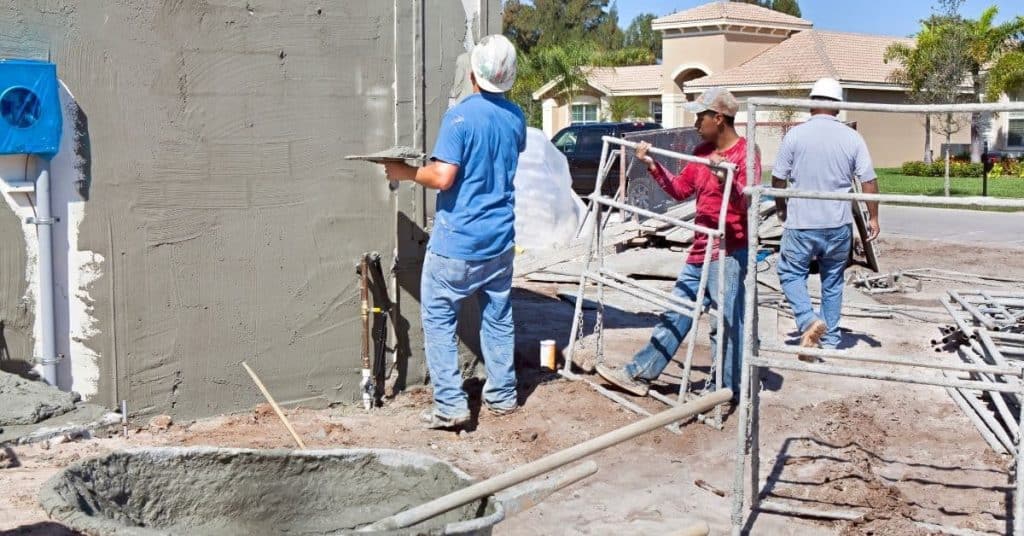
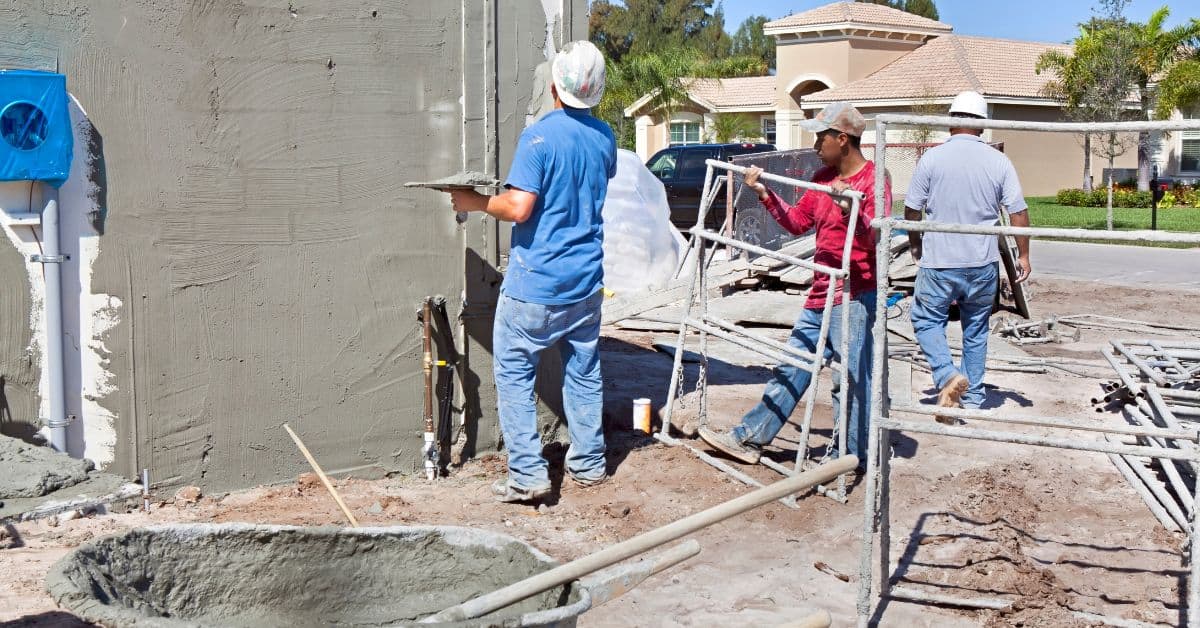
Workers applying fresh stucco on exterior house wall
Demonstrating the application of stucco on a building exterior wall

Types and grades of lime, and the role of pozzolans

Non‑hydraulic lime dries by moisture loss and remains breathable, while hydraulic lime (NHL) develops strength from clay or pozzolanic content, making it more durable in damp or high‑mass patches; understanding this difference helps you pick patch materials that resist cracking, carry water vapor, and work with historic substrates without sealing them shut. NHL grades 2, 3.5, and 5 reflect varying stiffness and set speed, so use NHL 2 for small, discreet patches on well‑drained, stable walls; NHL 3.5 for moderate exposure and patch sizes; and NHL 5 for exterior, damp, or structurally demanding repairs, always balancing substrate compatibility and breathability against load and movement.

Pozzolanic additives, including natural pozzolans, boost early strength and water resistance in lime mortars, but overuse or incompatibility with breathable lime can trap moisture and hinder vapor transfer, so mix modestly and test compatibility with existing lath, stucco, or lime washes. A quick in‑field decision tree and practical checks help you validate a patch: match interior vs exterior, damp vs dry, small repair vs large area to lime type, NHL grade, and pozzolan, then assess workability, set time, tack, breathability, and finish compatibility before sealing the repair.

Hydraulic vs non‑hydraulic lime: setting and strength

Non‑hydraulic lime sets by absorbing CO2 from the air — that’s carbonation. It’s forgiving, breathable and self‑healing, but it’s slow and won’t gain strength under water or in permanently damp spots.

Hydraulic limes contain clay or other minerals that allow them to set through a chemical reaction with water. They develop strength faster and will set in damp or exposed exterior conditions. Use them where you need earlier strength or where moisture is present.

Practical rule: choose non‑hydraulic for internal repairs and fine pointing on dry, breathable masonry; choose hydraulic (NHL types) for exterior patches, damp walls, or where you need the mortar to take load sooner.

Pozzolans and additives: what they do

Pozzolans are siliceous or aluminous materials like volcanic ash, brick dust or fly ash. Mixed with lime they react to form additional cementitious compounds. That improves early strength, reduces shrinkage and adds a measure of hydraulicity to an otherwise non‑hydraulic mix.

You’d add pozzolan when you want faster strength or better performance in damp conditions but still need a breathable mortar. Common practice is to add a pozzolan at roughly 10–30% of the lime binder by volume, or to proportion mixes so the binder:aggregate remains about 1:3 while replacing part of the binder or sand with pozzolan.

Tip: test a small patch first. Too much pozzolan makes mortar stiff and harder to work; too little won’t change performance noticeably.

Back to top ↑

Sand and aggregate selection: grain size, cleanliness, and effect on finish

Sand grading determines texture, bond, and shrinkage, with finer grains producing smoother surfaces suitable for finish coats and coarser grains creating more grip and drag for scratch or brown coats. The particle size distribution also affects water demand, slump, and how well the mixed sand integrates with lime or cement blends commonly used in patching projects. Cleanliness matters just as much: dust, clay, silt, salts, and organic matter can weaken adhesion or trigger efflorescence, so washing, sieving, or screening to remove fines and contaminants is a standard prep step before mixing.

Choose sand type (sharp, masonry, or builder) and consider whether to include coarse aggregates for added texture or strength, then tailor ratios to the coat you plan to apply and the underlying material. This is where practical testing pays off: run small patches to confirm bond, color match, surface feel, and how the chosen sand interacts with water demand, water retention, and cementitious binders under real curing conditions, adjusting as needed. Keep the plan aligned with site conditions, surface prep quality, and environmental factors to avoid surprises and ensure a durable, consistent finish.

Choosing the right sand grade for scratch, brown, and finish coats

Pick sand by the coat you’re laying, not by what’s cheap. Scratch coat needs coarser grit for mechanical keying, brown coat wants medium aggregate for strength and workability, and finish coat uses fine sand for a smooth surface.

Typical choices: sharp or concrete sand (coarse) for the scratch, masonry/river sand (medium) for the brown, and washed fine sand for the finish. Expect a rough, toothed scratch; a flat, workable brown; and a tight, smooth finish.

Sand prep: washing, sieving, and contaminants to avoid

Skip sloppy sand and you skip most finish problems. These prep steps are common jobsite fixes that keep mixes predictable and bonds solid.

  • Salt and soluble salts — cause efflorescence and poor bond; wash sand and avoid shoreline stockpiles.
  • Clay and fines — make mixes sticky and weak; sieve through 4–6 mm screen and rinse until water runs clear.
  • Organic matter — roots and peat kill set and adhesion; spread sample on paper, dry and inspect, discard any dark, odorous loads.
  • Mixed gravel and oversized stone — create voids and bond failure; sieve and remove particles larger than recommended for the coat.
  • Saltwater contamination — corrodes metal and ruins cement cures; always use freshwater for washing and never mix with seawater.

Do the simple checks: visual, squeeze test for fines, and a quick rinse. Clean, correctly graded sand saves you rework and ugly patches later.

Back to top ↑

Exact mix ratios and sample recipes (metric and imperial)

This section lays out exact mix ratios for common patch scenarios, including small crack fills, feathered skim coats, and full-depth patches, with both metric (kg, L, g) and imperial (lb, oz, gallons) units. It provides clear, actionable sample recipes that cover 1, 5, and 10 kg/lb batch sizes, plus guidance on water-to-matcher adjustments, typical working times, and curing expectations for initial render, skim coat, and finish coats. You’ll also find notes on material roles and compatibility, such as lime-based versus cement-based patches, sand grading, recommended cement content, and when to incorporate plasticizers or bonding agents, along with cautions about weather, substrate moisture, and patching over painted or sealed surfaces.

For a DIY or jobsite reader, this information translates into a practical framework for planning patches with predictable texture and strength, and with tests like slump-like consistency, hand-mold checks, and adhesion/tackiness assessments to verify mix adequacy. The guidance helps you adjust ratios based on patch depth and substrate condition, optimize yield, and avoid common pitfalls, while clarifying the differences between coat types and how to choose the right recipe for each task.

Small crack and hairline repairs (repair mortar)

Use a simple repair mortar: 1 part cement : 1 part hydrated lime : 6 parts sharp sand. For tiny jobs mix about 1 litre batch — roughly 125 ml cement, 125 ml lime, 750 ml sand. For an imperial quart batch: 1/2 cup cement, 1/2 cup lime, 3 cups sand.

Mix to a workable, putty‑like consistency. Start with about 10–15% water by volume and add a little more if needed. Push the mortar into the crack, compact, then strike flush when firm.

When to use acrylic patch: choose acrylic patches for very thin feathered edges, vertical hairlines that move, or when drying time must be fast. Use cement‑lime mortar for structural or deeper repairs.

Patch hole / medium repairs (scratch + brown coats)

For the scratch coat use 1 part cement : 1 part lime : 4–6 parts sand. For a small trial batch ~2 litres: 250 ml cement, 250 ml lime, 1.5–3 litres sand. Keep mixing water low — aim for plastic, not soupy, about 10–12% of dry volume and adjust to workability.

The brown coat is stronger and slightly leaner: 1 part cement : 0.5 part lime : 4 parts sand. A 2 litre batch is about 333 ml cement, 167 ml lime, 1.33 litres sand. Scratch coat should be keyed or scratched while damp; let it cure 24–48 hours before applying the brown coat.

Yields and timing: a 10 kg bag of cement with matching lime and sand will cover multiple medium patches — scale the ratios up proportionally. Keep coats thin (8–15 mm each) and damp cure to avoid shrinkage.

Finish coat mixes and lime‑rich alternatives

For a standard finish coat use 1 part cement : 1.5–2 parts hydrated lime : 6–8 parts fine sand. This gives a workable, smooth surface. For a small 1 litre trial: 125 ml cement, 190–250 ml lime, 625–1000 ml fine sand. Add water sparingly until you get a creamier finish coat consistency.

For historic or breathable walls use a pure lime plaster: 1 part hydrated lime putty : 2–3 parts fine sand, with long curing times and multiple thin coats. Lime plasters are softer and more flexible but take longer to carbonate and gain strength.

Pros and cons: cement‑rich finishes are fast and durable but less breathable; lime‑rich finishes are breathable and tolerant of movement but require patience and proper curing.

Back to top ↑

Stucco wall with three boarded windows and discoloration
Shows discoloration indicating possible stucco mix issues or patching needs

Step‑by‑step mixing, application, and curing schedule

The step‑by‑step guide walks you through the entire patching process from start to finish, detailing the exact mixing sequence for sand, lime, and cement, with batch sizes, water targets, slump, and working time, plus the tools, safety gear, and workspace setup you’ll need to stay clean and efficient. It also defines the coat order and recommended thicknesses for scratch, brown, and finish coats, including maximum per‑coat limits and tolerances, followed by precise timing between coats and surface moisture criteria to test readiness before moving on. Finally, it covers the ideal curing schedule and environmental conditions—temperature ranges, humidity, sun exposure, and protection strategies—to prevent rapid drying or weather damage, along with substrate prep and bonding checks to ensure good adhesion.

Knowing exactly what to measure and prepare saves you from rework and cracks by clarifying bonding methods, primer or bonding agents when needed, and how to evaluate old stucco soundness and patch compatibility before you begin. It also helps you plan your day around sensible cure windows, moisture testing, and weather forecasts so you can maintain consistent material workability and avoid early failures. This practical sequence gives a DIY or jobsite reader confidence to execute a patch with uniform thickness, proper tack between layers, and a reliable cure that resists cracking while complying with project timelines.

Mixing technique and consistency targets

Start by dry-mixing the powders until color and texture are uniform, then add water slowly while mixing. Aim for a workable paste that holds a trowel ridge but will flatten under its own weight — not a pourable slurry. If you followed the earlier mix ratios, this is just the final tuning step.

Do a simple slump or drop-ball check: scoop a golf‑ball‑sized lump and drop it from a few inches. It should deform slightly but not collapse into a puddle. If it slumps, add a small amount of dry mix; if it cracks and crumbles, add water in tablespoons until it behaves.

Troubleshooting: Too wet mixes cause sagging and long cure times; too dry mixes reduce bond and increase cracking. Adjust in small increments and always remix well before applying.

Application: scratch, float/brown, and finish coat techniques

Apply the scratch coat firmly to the prepared substrate and score it horizontally with a scratcher or notched trowel to give the next coat a key. While still plastic, embed mesh or hair into the scratch coat and press it flat so it’s fully covered but not lumpy.

For the float or brown coat, use a straightedge to bring thickness to the specified dimension and keep trowel angles around 20–30 degrees for spreading, then 45 degrees for flattening. Keep coats even; feather edges to avoid ridges.

The finish coat gets the lightest touch. Use a clean trowel and a lighter mix for better workability. For textures, use sponge, wood float, or broom while the surface is still slightly damp. Always avoid overworking a drying finish — that’s where burnishing and cracks start.

Curing, rewetting, and protection

Keep the work damp for the initial cure period — typically 48–72 hours for cement-rich mixes and longer for lime-rich mixes. Mild moisture during this window prevents rapid drying and shrinkage. If conditions are hot or windy, mist the surface several times a day.

For lime or lime-cement blends, plan a rewetting schedule: mist twice daily for the first week, then taper off. This promotes proper carbonation and strength gain. If rain is expected, cover with breathable tarpaulins; don’t seal with plastic that traps heat.

Protect from sun, wind, and frost until the material reaches adequate strength — frost in the first 24–48 hours can ruin a cure, and direct sun will cause surface cracking. Use shade cloth, windbreaks, or insulating blankets as needed based on the forecast.

Back to top ↑

Matching existing stucco: testing, hardness, and compatibility checks

Practical, tester-focused steps help you determine existing stucco composition and hardness using an acid test, a scrape test, and a drop test, then translate results into a clear compatibility plan. Note any material color or texture clues that point to lime-putty, cement, or gypsum-based mixes, and use that information to guide a simple decision tree: whether the patch should be lime-based, cementitious, or a hybrid, with appropriate bonding agents and cement–lime ratios for each substrate. Also include substrate checks for lath, moisture, surface roughness, and signs of delamination or efflorescence, addressing failures before patching any area.

Keeping thorough documentation and safety in mind, record test outcomes, environmental conditions, and expected cure times to support long-term performance, while outlining cleanup steps and practical curing guidelines. This context helps you avoid common failure modes like stone-hard patches, powdering, or cracking by choosing compatible mixes and additives that enhance adhesion without compromising seal. The goal is a simple, repeatable repair-mix workflow: match the patch to the identified base material, list lime-putty or cementitious blends that work, and apply bonding enhancers only where they actually improve bond and flex with the substrate.

Quick on‑site tests to identify lime vs cement content

Grab a small chip of the stucco from low‑visibility area. Put it in a disposable cup and add a little household vinegar (acetic acid). If it fizzes or bubbles noticeably, the mix contains free lime. No fizz usually means mostly cement.

Do the drop (hammer) and scrape tests too: lime mixes are softer and crumble under light blows or a steel scraper; cement mixes ring and resist. Use all three checks together — the vinegar test gives chemical info, the drop and scrape give mechanical hardness.

Limitations: vinegar won’t tell you proportions or additives. Old or carbonated lime may not fizz well. When in doubt, treat the wall as a blended mix and choose a repair mortar designed for compatibility, or get a lab or mortar analysis for a definite answer.

Matching color, texture, and hardness

Start with test patches. Mix small batches and apply them in the same stroke pattern you’ll use on the repair. Let them cure under the same sunlight and moisture conditions as the wall before judging color and texture.

For color, tint the base mortar with small amounts of iron oxide or premixed pigments. Adjust in small steps — pigments concentrate fast. For texture, match aggregate size and use the right tool: wood float for citrus finish, sponge or brush for dash, trowel strokes for smooth. Recreate the original stroke pressure and angle.

Check hardness after a few days. If the patch is too soft, reduce lime or add more cement in the next mix. If it’s too hard and may crack, add more lime or fine sand. Record the successful mix ratio and technique so you can repeat it across the repair area.

Back to top ↑

Tools, materials checklist, and cost/yield guidance

This section lays out a comprehensive DIY patching kit: a complete tools roster (drill with paddle mixer, mixing bucket, hawk and trowels, margin trowel), containment and cleanup gear (drop cloths, plastic sheeting, brushes, pressure sprayer, solvent), and a materials checklist that covers patch mixes with sand/lime/cement ratios, bag sizes, bonding agents, polymer modifiers, mesh or fibrous reinforcement, primer, sealer, and curing aids, with practical substitutions for lime-based versus cement-based patches.

It also packages practical cost guidance—typical price ranges per bag, expected yield per bag by mix type, and a simple per-square-foot calculation that factors in bulk-buy versus consumer-pack differences—paired with a yield and coverage table that accounts for patch thickness (thick vs skim coat), surface area calculations, and representative scenarios, plus a quick example to estimate material needs. Safety, storage, and disposal considerations are embedded, including PPE, ventilation, weather windows, storage life of mixes, and proper disposal of leftovers. Bonds, curing times, substrate prep, and signs you need to adjust the mix (lime-dominant vs cement-dominant) are highlighted to support patch longevity.

In plain terms, this matters because it translates planning into practical, on-site decisions that prevent gaps between expected and actual results, helping you avoid wasted material and rework. The guidance helps you choose the right combination of tools and mixes for your specific patch, understand yields and costs before you buy, and apply safety and storage rules that keep crews healthy and materials workable through the project timeline. It also emphasizes quick compatibility checks and real-world steps—like measuring surface area accurately, verifying bonding and curing windows, and recognizing early signs that a patch needs a lime- or cement-forward approach—so you can optimize performance and longevity without surprises.

Quick navigation note: This section aligns with the Table of Contents entries for “Tools, materials checklist, and cost/yield guidance” and related practical references. For quick jumps to the detailed lists, use the TOC references to the tools, material types, and cost/yield guidance as you plan purchases.

Essential tools and PPE with practical notes

Basic gear keeps the job clean and safe. Pick durable tools and the right protective equipment for dust and splash hazards.

  • Mud trowel A 6–12″ trowel for spreading and finishing. Look for stainless or carbon steel; keep the edge sharp to avoid gouging the patch.
  • Pointing trowel Small 4–6″ trowel for tight spots and trim work. Use a flexible blade for neat feathering; don’t force a rigid blade into tight joints.
  • Hawk or board Holds mixed mortar while you work. Choose a lightweight hawk or a small backboard; keep it clean to prevent lumps in the mix.
  • Mixing drill 1/2″ drill with paddle mixer for small batches. Rent a heavy-duty model for larger jobs; mix slowly to avoid air entrainment.
  • Stiff brush For cleaning surfaces and texturing finishes. Use nylon for cement and wire for heavy rust; brush after initial set for consistent texture.
  • Respirator (P2/P3) Cartridge respirator or N95/P2 mask for dust control. P3 cartridges or NIOSH N95/FFP2 masks for silica; replace cartridges as recommended.
  • Safety goggles Wraparound eye protection for splash and dust. Clear lenses for day work, tinted for bright sun; clean lenses to maintain visibility.
  • Gloves & knee pads Durable nitrile or leather gloves and padded knees. Protect hands from alkaline mixes and knees during low work; change gloves if torn or heavily soiled.
  • Dust control kit Wet-vac, spray bottle, and drop sheets. Use a shop vac with HEPA or spray lightly when grinding; contain dust to protect health and finish.

Material quantities, bag sizes, and cost estimates

Your material choice changes strength, appearance, and cost. Use the right bag size and mix for the job to avoid waste and failures like cracking or weak bonds.

  • Portland cement Common 25–50 kg (50–110 lb) bags. Type I/II for general patching; store dry and use within shelf life. Too much cement in a thin patch causes cracking and shrinkage.
  • Masonry cement Packaged 25–40 kg (55–88 lb) with lime added. Better workability and bonding for mortar; not as strong as straight Portland for structural repairs.
  • Preblended mortar Bags 20–40 kg (44–88 lb). Choose Type N for general work, Type S for higher strength; follow manufacturer water ratio. Wrong type leads to weak joints or excessive hardness.
  • Concrete mix 20–50 kg (44–110 lb) ready-mix bags. Yield ~0.012–0.02 m3 (0.4–0.7 ft3) per 25 kg bag; check aggregate size for finishing. Using oversized aggregate reduces finishability and weakens small patches.
  • Patch compound Tubes or 3–20 kg bags for shallow repairs. Look for polymer-modified formulas for better adhesion; budget higher per kg but less rework. Non-polymer mixes can delaminate or absorb water.
  • Bonding agent 1–5 L bottles concentrate. Use as primer or additive per label; improves bond on smooth substrates. Skipping it can cause cold joints and poor adhesion.
  • Sand Bulk or 20–25 kg bags. Clean, well-graded masonry sand is best; avoid clay or organics. Dirty sand weakens the mix and can stain the finish.
  • Admixtures Plasticizers and retarders in small bottles. Use for workability or slower set in heat; dose per instructions. Overdosing affects strength and cure time.
  • Cost ranges Expect $6–20 per 25 kg bag for cement/mortar and $10–40 for polymer-modified patch. Budget rental mixer $30–60/day or buy ~$100+. Cheap materials save money now but cost more in callbacks.

Back to top ↑

Waterproofing, sealers, and post‑repair protection

Breathable water repellents are the better choice on patched lime-cement-sand mixes when moisture needs to escape through the coating and vapor permeability matters for drying cycles, whereas non-breathable sealers can trap moisture, promote salt migration, and lead to surface dusting or delamination if used inappropriately. Know the difference between silane/siloxane versus acrylic/urethane sealers, confirm compatibility with lime-based patches, and perform thorough surface prep—clean, dry, properly cured, with moisture tested and efflorescence or dust addressed—to prevent adhesion problems before sealing.

Apply thin coats within the recommended weather and substrate temperature windows, monitor coat thickness and number of coats, and select tools suitable for porous lime mixes to avoid pinholes or peeling, ensuring even coverage without overbuilding the surface. Then plan post-repair protection with an appropriate curing period, re-sealing intervals, and a maintenance schedule, and use a quick DIY decision approach that considers patch age, porosity, and exterior or wet-area exposure to choose the right sealer and timing.

Choosing a sealer for lime vs cement finishes

Lime-based renders need to breathe. That means use a breathable water repellent—typically a silane/siloxane product—so moisture can still move through the wall without letting water in. These repellents sit on the surface and repel liquid water while allowing vapor to escape.

Cement-rich mixes are tougher and can handle less-breathable coatings, but I still start with a breathable option where possible to avoid trapping moisture that can cause spalling. Acrylic sealers are acceptable on cement finishes in low‑risk areas like sheltered facades or interior concrete, but avoid non‑breathable films on external lime work.

Quick rule: breathable silane/siloxane for lime and most exterior work; acrylics only where vapor movement is limited or the substrate is full cement and well-drained.

Flashing, trim, and long‑term moisture prevention

Sealers are the last line of defense. Fix the sources first. Check rooflines, gutters, window sills, and grade. If water is getting behind the render, no sealer will stop repeat failures.

Install proper flashing at horizontal terminations and around openings. Use drip edges and kick-out flashings where roofs meet walls. Trim and weep details must shed water away from the wall, not toward it.

Maintenance tip: inspect every season. Replace failing caulk, clear gutters, and repair any damaged flashing right away to keep repairs from coming back.

Back to top ↑

Worker spraying stucco mixture onto wall
Proper application of stucco mix is essential for durable patching

Conclusion

Protecting your home starts with the right mix, careful testing, and steady hands, so pick the approach that matches your patch and climate and don’t skip the safety checks. When you get the mix and ratios right, your patch will bond, look correct, and last longer.

First, assess the job like a pro: test a small area to check hardness and compatibility, confirm you’ve chosen the right lime, pozzolan, and sand, and verify you can mix and apply using the metric or imperial recipes you’ve prepared, then mix in clean containers, add water gradually, and apply within the workable window with proper curing and protection from sun and rain. Keep the process in small batches, clean as you go, and document what you used so you can match the existing stucco precisely and avoid surprises.

Two or three common mistakes to avoid are skipping the small-area test, using the wrong sand or lime type, and rushing curing or weather protection. Never mix without verifying compatibility first, don’t shortcut the testing or the moisture control, and never apply patch material that’s not properly mixed or has been stored past its usable time. Safety rules are simple: wear eye protection, gloves, and a dust mask; work in good ventilation; and avoid applying patch during extreme heat, cold, or wet weather until the surface can cure correctly.

If the patch needs more than a cosmetic touch‑up, or the existing stucco shows extensive cracking, crumble, or moisture intrusion, it makes sense to call a professional for a closer match and a durable solution. With careful preparation, clear steps, and attention to compatibility, you’ll finish with a repair that looks right, lasts, and keeps water out—your home stays strong and your effort pays off.

Back to top ↑

FAQ

What is the right base mix for patching stucco?

For most patches, start with a mix of sand, cement, and lime in a balanced ratio. Too much cement makes it brittle; too much lime can weaken the patch. A common starting point is 3 parts sand, 1 part cement, and 1 part lime.

Tip: For quick navigation to the related Tools, materials checklist, and cost/yield guidance in the TOC, see Tools, materials checklist, and cost/yield guidance.

How do I choose sand size for a patch?

Use clean, sharp sand with small to medium grain. It should feel gritty, not clayey. Fine sand blends can work, but they crack easier when there’s movement.

See the table in the TOC’s Materials & Tools section for a visual guide to sand gradation and a quick checklist of acceptable sand sources.

When should I use lime in the mix?

Lime helps with workability and flexibility. If you’re patching an old, breathable wall, lime is a must. Skip it only if you’re aiming for a hard, inflexible patch on non-porous surfaces.

For practical compatibility notes and maintenance reminders, refer to the TOC entry Tools, materials checklist, and cost/yield guidance and Maintenance guidance.

What signs tell me the mix ratio is off?

If the patch crackles, flakes, or sinks, the mix is too rich in cement or not bonded. If it never sets, it’s too lime-heavy or too wet. Adjust by adding more sand and lime, or reduce cement, and re-test.

Safety reminder: always wear gloves, eye protection, and a dust mask when mixing and applying stucco, and keep a small bucket of clean water ready for tool cleaning. For related cost, maintenance, and troubleshooting references, see Tools, materials checklist, and cost/yield guidance and Troubleshooting in the TOC.

Back to top ↑