

Introduction
A temporary wind break can reduce the wind speed at a fresh concrete surface, giving you more time to finish and begin curing before rapid moisture loss causes plastic shrinkage cracks. It is one control in a moisture-loss plan—not a substitute for correct finishing and curing. Related guidance: Plastic Shrinkage Cracks: Wind, Sun, and Simple Prevention.
Key takeaways
- Plastic shrinkage cracking can occur before set when surface evaporation exceeds the water reaching the surface.
- Use an approved evaporation-rate chart or calculator with measured air temperature, concrete temperature, relative humidity, and wind speed; do not rely on one wind or temperature cutoff.
- Set the barrier on the upwind side before placement, outside the finishing, testing, drainage, and worker routes.
- A porous screen often reduces near-surface wind with less turbulence and less wind load than an improvised solid wall. Select the system for the actual exposure.
- Fog the air above fresh concrete when that method is specified; do not spray water onto the surface or work water into the finish.
- Anchor, brace, inspect, and—if necessary—remove a temporary barrier before wind can make it unsafe.
Table of Contents
- Introduction
- Key takeaways
- Understanding plastic shrinkage cracking
- Why wind matters: evaporation, bleed water, and surface drying
- Simple wind breaks and when to use them
- Building effective wind breaks: materials, layout, and anchoring
- Complementary methods to reduce wind and evaporation effects
- Placement timing, finishing techniques, and hot-weather recommendations
- Safety, inspection, and common mistakes to avoid
- Cost-benefit analysis and long-term impacts of plastic shrinkage cracking
- Conclusion
- FAQ
Understanding plastic shrinkage cracking
Plastic shrinkage cracks form while concrete is still plastic, usually in the first hours after placement. They are commonly shallow surface cracks, often appearing as parallel or irregular hairline lines. They develop when the exposed surface loses water faster than bleed water or internal water can replenish it, so the stiffening surface shrinks and cracks.
Wind, warm concrete or air, low relative humidity, direct sun, a dry or absorbent subbase, mix behavior, and delayed curing can combine to raise the risk. Wind does not simply “blow away” bleed water; it increases evaporation from the exposed surface. Watch the actual slab: rapid loss of sheen, visible surface drying, and early cracking are more useful warnings than a single weather number.
What is plastic shrinkage cracking?
It is an early-age surface condition, not the same as later drying-shrinkage cracking. Its significance varies. Fine, shallow, nonprogressive cracks may be primarily an appearance or finishing concern; deep, wide, recurring, extensive, or otherwise unacceptable cracks need evaluation against the project requirements.
Causes and risk factors
Risk rises when evaporation outpaces bleeding. A mix with little bleeding, a large exposed area, sun-heated forms or subbase, and a long gap between placement and curing can make a moderate breeze consequential. Plan controls before concrete arrives rather than trying to correct a drying surface after it has cracked.
Why wind matters: evaporation, bleed water, and surface drying
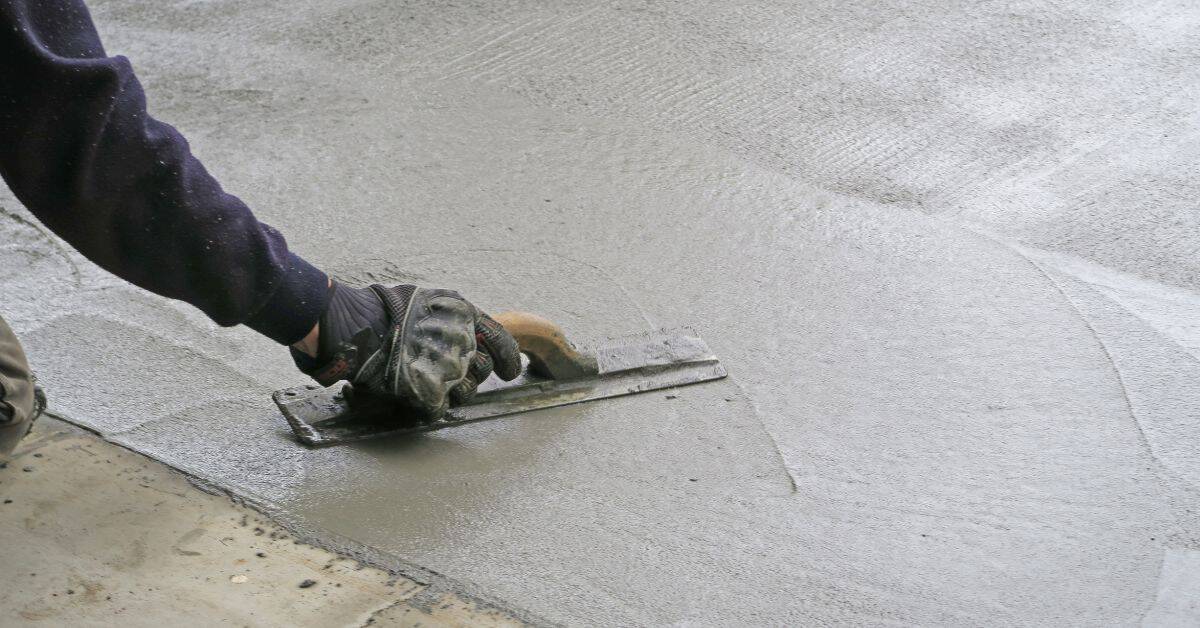
Moving air thins the humid layer immediately above the slab and speeds evaporation. The effect combines with air temperature, concrete temperature, relative humidity, sunlight, and the concrete’s bleeding behavior. A barrier aims to slow that near-surface airflow and reduce evaporation; it cannot make a hot, dry placement safe by itself.
Evaporation rate and bleed water dynamics
Measure the conditions before placement and recheck when weather changes. Use the project-specified evaporation chart or calculator, then compare its result with the mix, exposure, and surface condition. The ACI guidance on evaporation-rate assessment explains why air temperature, concrete temperature, humidity, and wind must be considered together rather than treated as independent universal triggers.
When wind becomes critical — what to check
- Check the forecast, wind direction, gust potential, sun exposure, and the time the slab will remain exposed before curing starts.
- Measure wind, air temperature, relative humidity, and concrete temperature using the approved job method.
- Review the evaporation estimate with the finisher and curing-material applicator before placement.
- During placement, watch for loss of sheen, visible drying, changes in bleed-water behavior, and cracks beginning before set.
- Reassess if wind shifts, clouds clear, deliveries slow down, or the crew loses finishing capacity.
Decision point: If the surface is drying faster than the planned controls can manage, stop extending the placement and use the specified control, postpone, or get qualified direction.
Simple wind breaks and when to use them
Use a wind break when wind is a controllable part of the evaporation problem. Place it upwind, before the pour when practical, to reduce direct flow across the slab. Keep it outside the work zone and arrange it so finishers can reach forms, testing can occur, curing materials can be applied, and runoff cannot be diverted onto the fresh concrete.
Types of Wind Breaks and Pros/Cons
Porous mesh or screen: Often a practical first choice. It reduces wind speed while allowing some airflow and can produce a broader, less turbulent sheltered area than a completely solid panel.
Solid panels: Can provide strong local shielding, but a solid wall can create turbulent recirculation and carries greater wind load. Use only when its support and anchorage suit the expected exposure.
Fabric or sheeting: Fast to deploy, but it can flap, tear, or act like a sail. It needs a frame and anchorage appropriate to the conditions; do not rely on loose tarps, pallets, blocks, or improvised weights.
When and Where to Erect Wind Breaks
Lay out the barrier based on wind direction, barrier height and porosity, slab geometry, gusts, and access—not a universal panel gap or setback. Leave a clear route for wheelbarrows, hoses, strike-off, finishing, inspection, emergency movement, and curing. Do not let supports touch forms or fresh concrete, create a trip hazard, or block drainage.
A wind break is most useful when wind is the main exposure. If direct sun is heating the slab, add shade or reschedule. If drying continues despite wind reduction, use the specified initial-curing control and prepare to begin final curing promptly.
Building effective wind breaks: materials, layout, and anchoring
Choose a barrier system that is stable, clean, and compatible with the site. Supports, ties, stakes, braces, ballast, and panels must work as a system for the anticipated wind and gusts. Material choice should address strength, rot or weather resistance, sharp edges, worker exposure, and disposal—not simply whether lumber is treated or untreated.
Tools and materials checklist
- Windbreak panels or a porous screen system; clean materials that will not shed debris onto the slab.
- Supports, ties, braces, stakes, anchors, or ballast selected for the barrier and site.
- Tape measure, level, hammer or drill, and fasteners compatible with the system.
- Anemometer or approved wind-measurement method; air temperature, humidity, and concrete-temperature tools as required.
- Specified fogging, evaporation-reducer, and curing materials, with product instructions available.
- Gloves, safety glasses, suitable footwear, and any site-required PPE; marked travel routes and exclusion areas.
Construction and anchoring details
Set panels far enough from the slab and forms to preserve the work path and prevent a fallen panel from reaching fresh concrete. Check every connection before placement, then inspect after gusts and whenever the wind changes. Provide a planned way to tighten, stabilize, or remove the barrier without crossing the slab.
- Keep braces, guy lines, stakes, and ballast out of walking paths where possible; mark unavoidable hazards.
- Do not attach a barrier to forms, scaffolds, vehicles, or temporary structures unless that structure and connection have been evaluated for the added wind force.
- Establish a stop-work or removal trigger based on the system, forecast, and observed movement. Flapping, leaning, sliding, lifting, or loose connections mean stop and correct the barrier before continuing.
Wind screens and tarps can impose substantial forces. OSHA notes that wind screens on scaffolds require the scaffold to be secured against anticipated wind forces; the same caution applies to temporary barrier assemblies at an exposed pour. See OSHA’s guidance on wind-imposed forces from screens and sheeting. Tall, solid, interconnected, or unusually exposed barriers need a competent person or qualified site professional to select the anchorage.

Complementary methods to reduce wind and evaporation effects
Use the least disruptive control that addresses the actual exposure, then layer controls when needed. First assess evaporation risk and the slab. If conditions are manageable, proceed with normal placement and prompt curing. If wind dominates, add a wind break. If sun is heating the concrete, add shade or reschedule to a cooler period. If the surface is losing sheen before final curing, use specified fogging or an evaporation reducer. None of these replaces final curing. Related guidance: Microfiber vs Macro Fiber in Concrete: Which to Use (and When).
Evaporation Retarders and Curing Compounds
Do not confuse these products. An evaporation reducer is an initial-curing aid used on fresh concrete at the manufacturer-specified stage, commonly while bleed water is present. Apply it as directed and never work it into the surface as a finishing aid. A curing compound is a final-curing product with its own finish- and manufacturer-dependent timing. Applying a curing compound while bleeding is still occurring can damage the surface.
The FHWA’s plastic-shrinkage prevention guidance identifies windbreaks, fogging, evaporation reducers, and prompt curing as complementary controls. Follow the project specification and product instructions for the selected method.
Fibers and Admixtures for Shrinkage Crack Resistance
Fibers and admixtures are mix-design decisions, not field fixes for a rapidly drying surface. Do not add water, fibers, or admixtures at the site unless the supplier and project requirements specifically allow it. For a DIY pour, order the intended mix and manage exposure, finishing, and curing instead of attempting last-minute changes.
Placement timing, finishing techniques, and hot-weather recommendations
Before delivery, confirm the crew, tools, wind-break layout, evaporation plan, and curing method. Consider a cooler or less exposed placement window when the forecast allows. Keep the pour size within the crew’s placement and finishing capacity so no section waits exposed while the crew catches up.
Scheduling Pours and Controlling Mix Temperature
Shade materials and equipment where practical, prepare the subbase as required, and coordinate delivery so concrete is placed without unnecessary delay. Any concrete-temperature limits, cooling measures, or delivery adjustments must come from the mix supplier and project requirements. Do not assume that a wind break makes an otherwise unsuitable hot or dry placement acceptable.
Surface Wetting, Fogging, and Finishing Tips
Fogging means humidifying the air above the slab with equipment that produces a fog, not spraying water onto the fresh surface. Conventional spray nozzles can leave excess water on concrete. Never add water during finishing or trowel standing water into the slab.
Wait for the surface condition required for the intended finish. Do not rush finishing to chase a drying sheen, and do not overwork the surface. Once finishing and surface condition permit, begin the specified final curing without delay. Sheets, blankets, burlap, or other covers must not be placed until they can be applied without marring or imprinting the finish, trapping bleed water, or otherwise damaging the surface; secure them against wind uplift.
Safety, inspection, and common mistakes to avoid
Inspect the barrier and slab through the critical early period, especially after a wind shift or gust. Assign one person to monitor weather and surface condition while the crew places and finishes. Keep a simple record of readings, controls used, product application times, curing start time, and observed cracking; it helps identify what worked on the next pour.
Safety precautions for temporary wind breaks and sunshades
- Check for overhead electrical hazards before raising tall panels or supports.
- Keep panels, braces, and guy lines out of worker routes and clear of the forms and fresh slab.
- Wear appropriate PPE while cutting, fastening, raising, or removing materials.
- Do not work around a barrier that is lifting, flapping heavily, leaning, or sliding; stabilize or remove it first.
- Use a qualified person for barriers with significant wind exposure, height, solid surface area, or connections to other temporary structures.
Common mistakes and remedies
- Waiting until the slab is drying: Set the barrier and curing supplies before placement. If drying begins, stop extending the pour and implement the specified initial-curing control.
- Building an airtight wall from loose materials: Use a stable system selected to reduce wind, not an unsecured sail. Consider a porous screen where appropriate.
- Blocking finishing, testing, or drainage: Reposition the barrier before concrete arrives; do not improvise an access route over the slab.
- Spraying water onto fresh concrete: Stop direct spraying. Correct the fogging setup or use the specified evaporation reducer; do not finish excess water into the surface.
- Applying curing compound during bleeding: Stop and follow the product instructions and project requirements. Do not treat an evaporation reducer as curing compound.
- Placing covers too early or leaving them loose: Wait until the surface can receive them without damage, then overlap, secure, and inspect them for wind uplift.
Cost-benefit analysis and long-term impacts of plastic shrinkage cracking
For a small pour, the useful comparison is simple: the time and materials needed to prepare wind reduction and curing versus the difficulty of repairing an unacceptable finish. Reusable screens, braces, and curing supplies can also make later pours easier to manage. Avoid assigning a universal repair cost or payback period; local labor, finish requirements, and the severity of any cracks control that decision.
Estimating prevention vs repair costs
List the barrier, anchoring, shade, fogging, evaporation-reducer, and curing materials you actually need. Then consider whether visible cracks would be acceptable for the intended slab, coating, or owner expectation. Record weather and results so future pours can use a setup that has worked on the site.
Long-term structural and durability consequences
Do not assume every plastic shrinkage crack means structural failure, a voided warranty, or replacement. Evaluate cracks by their depth, width, extent, location, recurrence, exposure, and the project acceptance criteria. Seek professional concrete evaluation for cracks that are deep, wide, recurring, extensive, associated with delamination or poor consolidation, or otherwise inconsistent with the project requirements. Related guidance: Plastic Shrinkage Cracks: Misting and Evaporation Retarders.

Conclusion
Plan wind management before the truck arrives: measure conditions, select the needed controls, place and anchor the upwind barrier without blocking the job, and have curing ready. Watch the surface—not just the forecast—and respond to rapid drying before cracks form.
When wind, heat, slab size, or barrier loads exceed what a simple temporary system can safely manage, postpone the placement or obtain qualified site and concrete guidance.
FAQ
What is the simplest wind break for fresh concrete?
A properly supported porous screen on the upwind side is often a practical simple option because it reduces wind without becoming a completely solid sail. The simplest acceptable system is still one that remains stable for the forecast and gusts; loose boards, pallets, boxes, and unsecured tarps are not a safe substitute.
When should I put up wind breaks?
Install and inspect them before placement when practical. Keep the barrier in place while it is needed to control exposure, but continue with the specified curing plan. Remove or reconfigure it when conditions or safety require; do not wait for an unstable barrier to fail.
How should I position wind breaks for best effect?
Place them upwind and outside the slab, forms, finishing path, testing access, drainage route, and worker travel path. The exact distance, height, continuity, and porosity depend on the wind, barrier system, and pour layout, so there is no universal panel spacing or setback.
What should I do if plastic shrinkage cracks begin?
Do not spray water on the slab or trowel the cracks away. Stop extending the placement, increase monitoring, use the specified initial-curing control, and follow the project’s fresh-concrete repair or evaluation procedure. Obtain professional direction for significant or recurring cracking.