Table of Contents
- Overview and Purpose
- Assessing Brick & Mortar Condition
- Brick Types and Their Implications
- Mortar Joint Characteristics and Risks
- Anchor Types—Overview
- Choosing the Right Anchor
- Load Types and Calculations
- Drill Bits, Hole Preparation, and Cleaning
- Installing Mechanical Anchors (Step-by-Step)
- Installing Chemical (Adhesive) Anchors (Step-by-Step)
- Anchoring into Hollow Brick and Cavity Walls
- Anchorage for Heavy Loads and Structural Ties
- Permits, Codes, and Documentation
- Testing and Verifying Existing Brick Strength
- Common Failure Modes and Mistakes
- Safety Precautions and PPE
- Asbestos, Lead Paint, and Hazardous Materials in Old Brickwork
- Preservation and Aesthetics for Historic Brick
- Testing Anchors After Installation
- When to Hire a Structural Engineer or Masonry Specialist
- DIY vs Professional Labor—Cost and Time Estimates
- Step-by-Step DIY Checklist
- Real-World Case Studies and Examples
- Photo and Diagram Requests (Guidance for Readers)
- Maintenance and Long-Term Monitoring
- Appendix: Quick Reference Tables and Manufacturer Resources
Introduction
Anchoring in old brick should follow tested, cautious methods to ensure safety and stability.
You’ll learn how to evaluate brick condition, select appropriate fasteners, and perform safe installation while avoiding common mistakes.
The guide walks through practical steps, tips, and rules of thumb to help you secure loads without damaging historic masonry.
Overview and Purpose
This section provides practical anchoring guidance for old brick, with safety cautions and clear decision points about when to DIY versus hire a professional. Readers will learn how to evaluate brick condition, choose appropriate anchors for residential settings, and weigh load requirements from non-load-bearing to moderate-load applications. It also highlights criteria such as brick integrity, mortar softness, spalling risk, and when local codes or permits may influence method selection.
You’ll get a quick, jobsite-friendly framework for choosing between DIY methods and professional assistance based on brick condition, anchor type, and load needs, plus a reminder to consider plaster or lime mortar, grout joints, and substrate limitations. The content helps you anticipate tool readiness, PPE needs, and safety steps like dust control and lead paint considerations, so you can plan ahead and avoid common failures. Understanding these factors matters because it reduces risk, clarifies permit or documentation needs, and improves the likelihood of a secure, compliant installation on old masonry.
Who this guide is for
This is written for homeowners who want to understand the basics, weekend DIYers who plan to do small parts themselves, and contractors who need a quick checklist. If you read the Overview and Purpose already, you know this is about practical decisions and safety — not design theory.
Do the simple checks and prep yourself: measure clearances, mark utilities, and check permits before you start. If you can lift the parts and finish them in a day or two, go ahead. If the job needs heavy excavation, structural changes, gas or electrical work, stop and get professional help.
No shame in calling someone. If you’re unsure about drainage, load-bearing walls, or using heavy machinery, call a pro. That’s cheaper and safer than fixing a ruined project.
What this guide will not cover
This is a hands-on checklist for common home repairs and small upgrades. It does not cover major structural retrofit design. If your work affects load-bearing walls, foundations, or whole-house framing, hire a structural engineer and get formal plans. Don’t try to guess the fix from a blog post when the structure is at risk.
It also skips industrial masonry and commercial-grade systems. Heavy masonry, factory walls, and specialty materials need contractors with special equipment and certifications. For those jobs, you need shop drawings and trade-level oversight, not DIY tips.
Finally, this guide won’t give full seismic retrofit plans. Seismic upgrades are site-specific and require calculations, permits, and often professional monitoring during construction. Before you start, check local codes and get the necessary permits and expert input if seismic performance is a concern.
Assessing Brick & Mortar Condition
Assessing brick and mortar condition for anchoring starts with clear screening criteria: look for cracking, spalling, mortar joint deterioration, efflorescence, and signs of moisture intrusion, then judge whether these conditions cross thresholds that require deeper evaluation. Use visual and tactile checks to note surface cracking patterns, hollow-sounding bricks, mortar hardness, moisture staining, and any loose or friable mortar, while distinguishing vertical from horizontal crack directions that may indicate different issues. When these signs are present, determine if more thorough testing or professional assessment is warranted before choosing an anchoring approach.
The practical value for DIY or jobsite work is that systematic inspection informs safe, effective anchoring decisions and reduces the risk of failure. Knowing how moisture, dampness, and potential freeze-thaw damage interact with brick and mortar helps anticipate weaknesses and plan appropriate remediation or protection measures. Documentation—crack maps, moisture tests, and clear photos—supports accurate decision points, helps guide anchoring method choices, and clarifies when permits or professional involvement are needed to ensure long-term stability.
Visual signs of deterioration
Walk the wall slowly and look for obvious trouble: hairline cracks, wide cracks, spalling where faces flake off, white powdery efflorescence, and any bricks that have shifted out of line. If you’ve already read the earlier notes on what those signs mean, use them here as a quick checklist. Measure crack width with a ruler or gauge and mark anything that grows over a week.
Tap suspicious bricks with a screwdriver handle. A hollow sound or loose movement means the unit or mortar won’t hold an anchor. If mortar is friable or units are clearly displaced, stop planning anchors until repairs are made. In plain terms: do not anchor into anything that moves or crumbles.
Document damage with photos and notes on location and size. Small, stable hairline cracks can sometimes be monitored; anything wider, actively scaling, or near corners and openings needs repair or a pro evaluation first. Decisions are simple: good solid brick and sound mortar = proceed; loose, spalled, effloresced, or displaced = repair or replace before you drill.
Tactile and probe checks
Start with a simple handshake: tap the brick face with the handle of a screwdriver or a small hammer. A clear, sharp ring means the unit is sound. A dull thud or a hollow knock often points to internal decay or a detached wythe. Don’t stand there whacking every brick—spot test where mortar looks cracked or where you saw visual signs of deterioration.
Next, push a screwdriver or awl into mortar joints and soft spots on the bricks. You want to feel resistance. If the tip sinks easily or the mortar crumbles to powder, that joint needs repointing or replacement. If the brick itself gives under light pressure, treat it as a failing unit—patching won’t hold long on a soft brick.
Use the combination of tapping and probing to decide next steps: repoint small areas, replace hollow or crumbling bricks, or call a mason for larger unstable sections. Be careful with force—too hard a blow can break a good brick and make your problem worse. If in doubt, mark suspect areas and get a pro opinion before cutting into the wall. Detect hollow or soft brick early and you’ll save money and headaches later.
When to suspect systemic issues
Big red flags aren’t subtle. If walls are visibly bowing, large sections of brick are delaminating, or mortar loss is widespread rather than local, treat it as more than surface damage. Hairline cracks here and there you can monitor. Continuous or widening cracks, doors and windows sticking, or floors sloping are signs the whole assembly may be moving.
Don’t guess—document. Photograph affected areas from multiple angles, mark crack ends with a date, and measure any openings over time. Tap bricks and note large hollow areas, check for foundation settlement near downspouts, and look for patterns (same crack across multiple wythes). If damage crosses multiple stories or spans long runs, that’s a systemic pattern, not a patch job.
If you see those patterns, stop cosmetic fixes and call a structural engineer. In the short term, limit loads against the wall and keep people out of at-risk areas. Do not cover over or tuckpoint massive delaminations—that hides a serious structural problem and can make it worse. Get a professional plan before you spend money on repairs.

Brick Types and Their Implications
Brick types—solid, hollow, pressed, and clinker—shape how you select anchors because their internal structure, voids, and mortar joints affect drill wear, load transfer, and holding power. Solid brick offers stronger, more predictable grip with lead or sleeve anchors, while hollow and pressed bricks favor through-bolts or high-shear masonry anchors to bridge cavities. Clinker poses its own challenges and may require careful assessment and alternative anchoring strategies.
Understanding these differences helps you evaluate site conditions, plan safe drill work, and avoid overestimating capacity in aging walls. This matters for DIYers because condition, moisture, efflorescence, and prior repointing can change what anchors perform best and how you prep surfaces. Clear on-site evaluation steps and prudent consults can prevent damage, leaks, and failed installations on brick walls that carry dynamic or critical loads.
Solid vs hollow brick
Solid bricks carry loads. They bite into mortar and take anchors cleanly. If you’re hanging something structural or heavy, assume solid brick will hold without fancy tricks — still check base compaction and mortar condition before you trust it.
Hollow bricks are a different animal. The wall panel itself often carries compression, not the thin webs where you’d try to screw an anchor. Most common mechanical anchors grab the shell and fail unless you use a sleeve that goes through the cavity or fit a backing plate on the far side. In short: don’t rely on short expansion plugs in hollow brick for anything critical.
What to do on site: tap the brick to tell solid from hollow, probe mortar joints, and when in doubt assume hollow. For heavy items plan for through-bolting or provide internal backing, or use adhesive anchors rated for hollow units. If you skip that and bolt into the shell, expect movement or pull-out — and a call from an angry homeowner later.
Toward historic/soft-fired bricks
Old soft-fired bricks are lower strength and often crumbly. Don’t treat them like modern dense brick. If you haven’t already, refer back to the solid vs hollow brick notes for how the brick type changes fastening choices. Start by testing a small, non-critical area so you know how the brick behaves when you drill or load it.
Avoid expansion anchors, heavy hammering, and high-torque screws. Drill with a sharp bit at low speed and keep holes clean. Where you need reliable holding, use chemical (resin) anchors or threaded resin rods and distribute the load with larger plates or pads. These spread forces and reduce pull-out risk.
Check the mortar and brick edges before fixing anything. If mortar is soft, consider re-pointing with lime mortar or tying into deeper sound material rather than loading the face. When in doubt, err on the side of gentler fixes and call a conservation-minded pro for structural or highly visible work.
Mortar Joint Characteristics and Risks
Why anchoring into mortar is problematic
Mortar is the weakest part of a wall. Anchoring into the head or bed joints gives you the lowest capacity and a high risk of mortar pull-out. If a load tries to pull or pry, the joint will crumble before the anchor reaches its rated strength.
Don’t assume a tight fit in the joint equals a good anchor. For practical work, aim to put the anchor into the brick or block body, or use a through-bolt that transfers load across the wall. Short anchors set only in mortar fail more often, especially near edges or where joints are soft or weathered.
What to do on site: probe the joint thickness and mortar condition, avoid drilling solely into joints, and where you must use a joint, plan for reduced capacity or use supplemental support (longer embeds, straps, or through-fixing). When in doubt for structural loads, get an engineer to specify anchors — don’t rely on guesswork.
Repointing considerations before anchoring
Repointing is often done to give you something solid to grab onto or to tidy the look. Before you start anchoring, walk the wall and check where the joints are loose, missing more than 10–15 mm of mortar, or have been patched before. If the mortar is crumbly or the joint is deep, plan to repoint those runs first; don’t try to hide bad joints with anchors.
Match the new mortar to the original in porosity and strength. Using a too-strong mix can crack bricks; a too-weak mix won’t hold anchors. If you’re unsure, lean toward a softer lime-based mix for older masonry. Also consider weather and cure time: let mortar fully cure before loading anchors — typically several days to a week depending on conditions — and keep the joint damp as directed to avoid rapid drying.
Sequence the work: repoint, allow proper cure, then install anchors or through-fixings. If you must install anchors before repointing, drill into the brick or use temporary supports rather than loading into fresh mortar. Finally, if aesthetics matter, match color and tooling; if structural embedment matters, get a second opinion from a pro before trusting repointed joints alone.
Anchor Types—Overview
Anchor Types—Overview: This section defines five common masonry anchors—masonry screws, expansion anchors, sleeve anchors, through-bolts, and chemical/epoxy anchors—and notes their typical suitability for older brick walls. Masonry screws offer quick, removable fastening for sound brick; expansion anchors tolerate minor mortar issues but can be limited by hollow sections. Sleeve anchors provide strong load transfer in solid brick; through-bolts span through the wall for high loads, and chemical/epoxy anchors rely on adhesive bonding for irregular substrates and uneven embedment.
Plan with brick condition in mind by assessing mortar integrity, presence of voids or hollows, the expected load direction, and whether you need a through-wall or surface-mounted solution. This context helps you match anchor type to scenario, anticipate installation cautions like correct bit size and hole cleanliness, and weigh factors such as corrosion resistance, vibration or seismic considerations, and any code or permitting implications for retrofits on older structures.
Mechanical anchors
Expansion anchors bite into solid material by swelling or pressing against the hole wall as you tighten them. For sound masonry they work best in dense, uncracked concrete or solid brick. Before you start, check hole is clean — dust or loose particles kill holding power. Drill the correct diameter and depth, blow or brush the hole, and re-check the fit with the anchor before you drive it in.
Decide by load and edge conditions. Use wedge or sleeve anchors for medium to heavy loads where you can maintain good edge distance and spacing. For light fixtures use drop-in or lag shields. Don’t try to save time by using a shorter anchor than the plate or ledger requires — you’ll end up tearing the fastener out when the load goes on.
Tighten to the manufacturer torque and re-check after the first load. If the masonry is fractured, hollow, or poorly compacted, skip mechanical expansion anchors and use a bonded (epoxy) anchor or relocate the fix. And don’t under-drill or over-torque; both are fast ways to fail the anchor and create a repair headache.
Chemical (adhesive) anchors
Epoxy or chemical anchors use a two-part resin injected into a drilled hole. They grip the bolt or threaded rod with adhesive instead of expanding against the hole wall. For broken, cracked, or soft masonry they often outperform mechanical anchors because the adhesive bonds to irregular surfaces and fills voids.
Prep is everything. Drill the right diameter, then clean the hole thoroughly with a brush and vacuum — dust kills bond strength. Inject the resin from the back of the hole toward the face and insert the rod while twisting to get full contact. Follow the cartridge instructions for mixing and working time; don’t try to rush it.
Curing time depends on product and temperature. Cold slows cure; heat speeds it up. Allow the manufacturer’s stated time before applying load — partial cure is not good enough. If you’re anchoring safety-critical items, wait for the advertised full cure and pick a product rated for your substrate and expected loads. Don’t cut corners; a shortcut here means a failed anchor later.
Through-bolts and tying methods
Through-bolts are the go-to when walls are thin, loads are high, or you’re dealing with hollow brick. Drill straight, get the bolt long enough to pass through and leave room for a nut and washer, and make sure the hole lines up so the plates sit flat. If you have a thin shell with something solid behind it, confirm solid backing before you tighten everything down.
When you can, tie the load across the wall using a backplate or a crossing bolt so the force spreads out. For hollow or crumbling masonry, use a backing plate that covers the problem area and clamps both faces. Tighten to a sensible torque — not finger-tight, not wrecking-the-brick tight — and use a proper locking nut or washer so vibrations don’t loosen the joint.
Don’t treat through-bolts like magic; they still need a load path. If you’ve already looked at mechanical and chemical options, choose through-bolts when you can’t rely on adhesive alone or when the backing is suspect. If the wall is poor quality, tie into framing or add a plate that transfers load to better material. If in doubt, put a test bolt in first and inspect both faces as you tighten.
Choosing the Right Anchor
Choosing the right anchor starts with identifying the brick type and condition, then matching the embedment, edge distances, and load direction to the anchor’s design, while checking local codes or manufacturer guidance. Consider whether the brick is impervious, hollow, or decayed, inspect mortar and signs like efflorescence or cracking, and plan embedment depth and setbacks to prevent chip-out and mortar failure. Factor in whether the load will be shear, pull-out, or a combination, and anticipate vibration and environmental exposure to select hardware that remains secure over time, with redundancy for high‑load or safety‑critical work.
Understanding these criteria helps you plan installation steps, choose corrosion-resistant materials for indoor vs exterior use, and set up inspections and redundancy for safety-critical work, while prioritizing ease of inspection. A thoughtful approach translates into fewer failures, easier maintenance, and a clearer record of location, type, and depth for future repairs, including documentation of embedment and anchors. This context is especially valuable for DIYers because it focuses on practical decisions—from surface prep to interpreting signs of substrate distress—that enable reliable, long-term performance without guesswork.
Decision flowchart (simple)
Start by looking at what you’re anchoring into: brick, block, concrete, or hollow walls. If it’s brick or block, assess mortar and brick condition — if the mortar is crumbly or the brick is soft, stop and repair before you anchor. For concrete, check for cracks and core strength; hit a few spots with a hammer to judge soundness.
Next, decide the load type. Is this a light hanging load, a medium shelf, or a heavy structural hold? Light loads usually use screw-in or plastic anchors. Medium-to-heavy loads need mechanical or chemical anchors. If the mount carries dynamic or safety-critical loads, lean toward the stronger anchor families and don’t cut corners.
Finally, pick the anchor family that matches substrate and load, then verify spacing/edge distance and hole size before you drill. Measure twice, mark once — wrong spacing or too close to an edge ruins the anchor. If you’re unsure at any step, slow down and ask for help rather than forcing a trial-and-error fix on the wall.
Quick printed flowchart (jobsite use) 1) Identify substrate: Solid brick / Hollow brick / Soft-fired brick / Concrete 2) Screen: Visual + tap + probe — if MOVING/CRUMBLING → REPAIR or CALL PRO 3) Load: Light < 100 lb / Medium 100–500 lb / Heavy > 500 lb or safety-critical 4) Select anchor: - Solid brick: masonry screw or sleeve/wedge anchor (mechanical) OR chemical for higher pull - Hollow: through-bolt with backing OR cavity toggle for light loads - Soft/decayed brick: chemical anchor with plate distribution OR through-bolt 5) Drill, clean, install, test. If any step fails → relocate / repair / call engineer
Anchor-selection matrix (quick):
- Solid brick + light load → Masonry screw (e.g., 1/4″–3/8″)
- Solid brick + medium load → Sleeve/wedge anchor (3/8″–1/2″) or chemical anchor
- Solid brick + heavy/critical → Through-bolt OR chemical anchor with full embedment (see Appendix)
- Hollow brick + light → Toggle/cavity anchors (check cavity depth)
- Hollow brick + medium/heavy → Through-bolt with backing plate (interior plate)
- Soft-fired/decayed brick → Chemical anchors plus load-distributing plate; avoid expansion wedges
Downloadable quick assets: one-page checklist, annotated photo guide, and anchor-selection PDF with TDS/ESR link list. (Links in Appendix.)
Factors that reduce capacity
Water and moisture are the biggest troublemakers. Wet concrete and saturated soil cut anchor capacity fast. Make sure you check base compaction and provide drainage or a moisture barrier where needed. If you see standing water, reroute it or raise the anchor location — don’t assume the anchor will magically hold.
Freeze–thaw cycles and repeated wet-dry swings crack and loosen the surrounding material over time. If the job is in a cold climate, choose anchors and installation methods rated for freeze action, give concrete extra time to cure, and inspect grout or epoxy joints annually for voids.
High heat and chemicals can weaken metals and adhesives. Avoid placing ordinary zinc-plated anchors in corrosive areas; use stainless or properly coated anchors and chemical-resistant adhesives instead. If the anchor sits near chemicals or hot exhausts, treat it like a replacement job waiting to happen and plan for more frequent checks.
Load Types and Calculations
For old brick, anchors face two primary load types: shear (lateral forces that push the anchor sideways) and tensile (pull-out forces that try to extract it), and realistic installations must account for how combined actions such as wind, vibration, and seismic events alter allowable loads as these modes interact. Embedment depth, brick strength, mortar condition, and the presence of hollow cores or voids in the masonry govern capacity, so calculations must reflect shorter embedment in weaker bricks and longer embeds in stiffer, well-bonded units to prevent premature failure.
A practical framework estimates per-anchor and system capacity by separating shear resistance, pull-out resistance, edge and spacing effects, and the way embedment depth shifts both limits, while also warning against common failure modes like mortar cracking, anchor pull-out, or spalling when edges are too close in practice, and aging effects can reduce grip and stiffness. Choosing the right anchor type for old brick—through-bolts, mechanical anchors, or epoxy systems—and planning load paths, correct spacing, and backing helps you stay within safe limits and spot when professional review or permits are wise.
Pull-out vs shear capacity
Pull-out is when a fastener is being pulled straight out of the brick; shear is when the load tries to slide the fastener sideways. For most DIY jobs the difference is simple: pull-out relies heavily on how deep the anchor is set and the strength of the brick or mortar, while shear often gets help from the fixture pressing against the wall.
So what you actually need to check: embedment depth and the brick condition. Shallow holes in soft or crumbling brick will fail in pull-out long before they fail in shear. Use anchors sized for the depth you can get, avoid using just the front skin of the brick, and if the mortar is loose, consider repositioning to a full brick or using through-bolts that pick up backing material.
If you’re unsure of the brick strength, don’t wing it — test one anchor before committing, or attach a backing plate that spreads the load. For heavy or critical loads, pick an anchor rated for pull-out in masonry and follow the manufacturer’s embedment recommendation; failing that, get a pro to check load calculations rather than guessing from appearances.
Typical example (illustrative — always verify TDS): a 3/8″ (10 mm) epoxy-anchored threaded rod with 75–100 mm embedment in sound solid brick may provide roughly 2–4 kN pull capacity; the same diameter as a wedge anchor in solid brick at 75 mm embedment might yield 1.5–3 kN (manufacturer and substrate dependent). These are example ranges to help compare families — always use manufacturer allowable loads and safety factors for design.
Spacing and edge distance rules of thumb
Keep things simple: for ordinary anchors aim for about 10d spacing between anchors (d = anchor diameter) and at least 6d from any free edge. That gives the concrete room to transfer load without cracking. If anchors sit in a line or near a corner, increase those distances — corners are weaker, so treat them like an edge and add extra spacing.
Embedment and concrete thickness matter. Thin slabs and shallow embedments need wider spacing. For shallow anchors or hammer-set types assume you need more distance than the rule of thumb. Also watch the distance to reinforcing steel; it can block anchors or change failure modes. If you see reinforcing or the slab is poorly consolidated, check base compaction and consider a different anchor or a grout/epoxy setting.
These are rules of thumb for typical, non-critical work. If loads are high, cyclic, seismic, or life-safety, get engineered values. Don’t shrug off the math — earlier sections covered pull-out vs shear capacity, and when those limits control the design. When in doubt, get an engineer. Cheap shortcuts here cause failures you can’t fix with a new bolt.
Drill Bits, Hole Preparation, and Cleaning
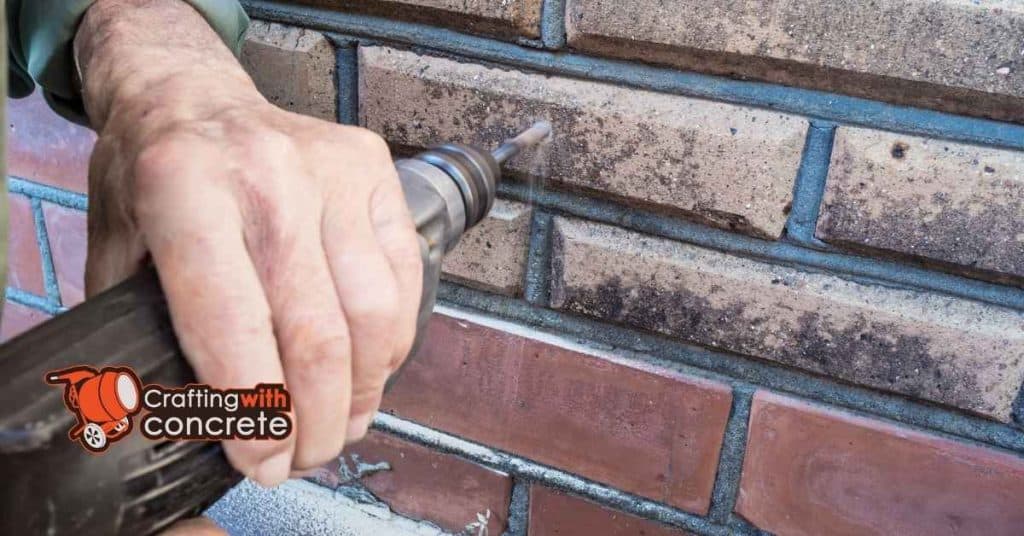
Select masonry bits rated for brick and the specific condition of old brick, assess whether a hammer action is needed, and decide between a standard hammer drill and a rotary hammer to achieve clean, straight holes with minimal chipping and mortar breakout. Specify the exact drill diameter for each anchor type, verify embedment depth, and account for brick shell thickness and any veneer, so you avoid mortars, over- or under-drilling, and misalignment that could compromise hold. Pre-mark, center-punch, and drill perpendicular to the surface, and consider staggered holes or pilot holes when feasible to reduce spalling on brittle brick while distributing load more evenly.
Thorough hole cleaning matters: vacuum out dust, use a soft brush to clear debris, and apply compressed air only where allowed by the brick surface, ensuring each hole is dry and free of fines before anchor insertion. Brush out shavings, wipe the interior with a dry cloth, inspect for cracks or debris, and reseal with compatible sealant if the anchor spec calls for it, so performance is not compromised. Always perform a quick brick condition check, test a sample hole, avoid heat buildup, wear protective gear, and follow manufacturer torque and setting depth to prevent brick damage and ensure reliable anchorage.
Correct drill bit types and speeds
Use carbide masonry bits for concrete, brick, and block. For small jobs a standard shank will do; for thicker or reinforced concrete use SDS or SDS‑plus bits and a rotary hammer. Match the bit to the material — don’t try a twist bit in masonry and expect good results.
Run the drill at moderate speed and let the hammer action do the cutting. High RPMs don’t help in masonry and just burn the tip. If you’re using a hammer drill, set it to hammer mode and apply steady pressure. Don’t force the bit through the material.
Watch the bit tip. Stop and clear dust, pull the bit out occasionally, and take short breaks to avoid overheating. A hot, glazed bit loses cutting edge fast. Replace bits that are chipped or rounded — a worn bit means slow work and bigger holes. For cleaning and hole prep, follow the steps covered earlier before inserting anchors.
Hole cleaning techniques
Don’t skip cleaning. A dusty hole kills bond strength fast, especially with chemical anchors. After drilling, always remove loose chunks, then use a stiff wire brush sized to the hole and push it to the full depth. Work from the bottom up so you pull dust out rather than grind it deeper.
Follow the brush with compressed air or a hand pump. Blow from the bottom up if you can. If you have a wet/dry vacuum, use it right at the hole mouth while you brush. The routine is simple: brush, blow, repeat until you see no dust when you shine a light or run your finger along the edge.
Keep it clean until you insert the anchor. Don’t touch the hole interior with your fingers. If instructions allow water cleaning, dry completely before installing the anchor. If unsure, vacuum and air until clean — that’s the difference between a secure anchor and a loose one.
Hole depth and tolerance tips
Measure the required embedment and the fastener length before you drill. If the manufacturer calls for 40 mm embedment, stop at 40 mm — not 38 and not 45. Use a depth stop or wrap tape on the bit to mark the depth. If you don’t have a stop, use a collar or a piece of tape as a visual and test on scrap first.
Always set a depth stop when precision matters. Allow the small extra gap the manufacturer specifies for adhesives or the fastener head. A common trick is to add 1–2 mm extra for adhesive squeeze. Too deep wastes material and weakens the hold. Too shallow and the anchor won’t engage properly.
Check base condition and tolerances before committing: check base compaction, measure with a caliper or depth gauge, and try a single fastener to confirm fit. Clean the hole as covered earlier, then re-check depth after cleaning. If the part needs head clearance, measure that too and leave the space the manufacturer requires rather than relying on guesswork.
Installing Mechanical Anchors (Step-by-Step)
Installing mechanical anchors on old brick requires selecting the right type—expansion anchors, sleeve anchors, or masonry screws—and verifying the brick and mortar can bear the intended loads without reuse of failed devices. Begin by assessing brick condition and substrate, looking for hollow units, cracks, and poor mortar, and confirm you anchor into solid brick rather than weak joints; plan embedment depth, spacing, edge distances, and whether a pilot hole is needed. Then drill and prepare holes with the correct carbide bit, mark locations, drill steadily to full depth, clean debris, deburr edges, and keep holes straight and perpendicular before proceeding with the install steps.
Follow the install steps for each anchor type, insert or drive to the required torque, avoid over-tightening, and ensure flush seating to prevent brick cracking or pulling out. Post-install checks matter: test pull-out lightly, inspect for movement or gaps, seal against moisture as appropriate, and document loads while watching for signs that a dynamic condition or damage requires removal. This cautious, methodical approach helps DIYers achieve safe, durable anchors in old brick by combining accurate planning, careful drilling, and proper tightening without compromising the substrate.
Step-by-Step Installation Process
Follow this sequence to install mechanical anchors cleanly and safely so the fixture holds and the hole won’t fail later. The steps cover preparation checks, drilling, installing, testing, and final cleanup.
- Inspect the fastener and surface and lay out anchor locations. Confirm anchor type, length, and spacing to match the load and the previous section notes. Check that the substrate is sound by tapping or visual inspection; stop and call a structural pro if you find cracks, voids, or corroded rebar.
- Measure and mark each hole precisely. Accurate layout prevents misalignment when the fixture goes on; measure twice, mark once. Verify marks with a square or level; if multiple anchors don’t line up, reassess before drilling.
- Drill the hole to the specified diameter and depth, holding the drill straight. Correct hole size and depth ensure the anchor expands properly and grips the material. Check depth with a marker on the bit or a depth stop; if you hit unexpected reinforcement or the bit stalls, stop and call a pro.
- Blow and brush the hole clean, then vacuum it out. Debris in the hole reduces holding power, so cleaning is crucial. You should see no dust when you blow into the hole and the brush should come out clean; repeat until clean.
- Insert the anchor per the manufacturer’s orientation and tap it in flush if required. Proper placement makes sure the expansion mechanism works and the anchor seats correctly. The anchor should sit flush or at the specified embed depth; if it spins in the hole or won’t seat, remove it and reassess or call an installer.
- Tighten or set the anchor to the specified torque or setting length. Correct torque activates the expansion reliably and prevents loosening later. Use a torque wrench or torque-specified drill setting and feel for the proper resistance; if it keeps turning without tightening, stop and get professional help.
- Make final checks, secure the fixture, and clean up the area. Verify alignment, retorque after initial load if the instructions call for it, and remove any dust or debris. Allow any adhesive or grout to cure per manufacturer time (often several hours to 24+ hours) before applying full load; mark the area if a cure wait is needed.
Pro tip: Keep the manufacturer’s installation chart and your torque wrench on site. The biggest DIY mistake is assuming “close” is good enough — the correct hole size, depth, and torque are what actually keep anchors from failing.
Setting expansion anchors correctly
After drilling and cleaning the hole as covered earlier, check that the hole diameter and depth match the anchor spec. Blow or brush the hole so the anchor can seat fully. If the anchor won’t go in by hand, don’t hammer it hard — you’re likely using the wrong size or a damaged anchor.
Insert the anchor until the head is flush with the surface. Tap it gently with a hammer just to seat it; you want it snug, not driven through the brick. If the anchor spins while tapping, stop and re-evaluate — that hole may be oversized or the brick face is crumbling.
Tighten to the manufacturer’s torque using a calibrated tool and a steady hand. Turn slowly and stop at the specified value — over-torquing causes overexpansion and cracked brick. If you see hairline cracks or the anchor pulls in, back off, remove the anchor, and repair or choose an alternate fix such as a larger anchor or adhesive anchor. A quick pull test after torquing confirms a secure fit.
Using masonry screws (Tapcon style)
Pick a screw long enough to get at least 1 inch of embedment into solid concrete or the thickness the manufacturer calls for. Mark your depth on the drill bit so you don’t go too deep. For best grip, pre-drill with a carbide masonry bit and blow or brush the hole free of dust before you screw anything in.
Match the drill bit diameter to the screw size — the wrong bit will strip the thread or make the anchor loose. Start the hole with steady pressure and a hammer drill at the recommended speed. If you hit rebar, stop and relocate; forcing a screw into rebar ruins both the screw and the concrete.
Drive the screw until the head is flush or snug against the fixture. Use a drill with a clutch or an adjustable torque setting and follow the manufacturer’s torque limits; overtightening will strip the threads or crack the concrete. If the screw spins freely, back it out and re-drill with a fresh hole and clean it again.
Check the installed screw by pulling lightly and inspecting for cracks around the hole. If you see hairline fractures or the screw won’t hold, remove it and repair the hole before re-installing. Don’t guess — fix it right or replace the anchor type.
Installing Chemical (Adhesive) Anchors (Step-by-Step)
Installing chemical adhesive anchors on old brick requires careful assessment of the wall, including brick condition, substrate integrity, porosity, moisture, and whether the brick is solid or hollow, to determine if the substrate will reliably support an anchor. Choose the right adhesive anchor system and compatible masonry drill bits, then prepare the work area by cleaning holes with a bristle brush and compressed air, removing dust and efflorescence, and confirming the embedment depth matches the manufacturer’s specifications and any sleeve requirements.
Follow a disciplined mixing, dispensing, and insertion protocol: measure and mix the adhesive to the correct ratio, apply into the hole or onto the anchor per instructions, insert to the correct depth, and hold steady to prevent adhesive slug ooze. After installation, observe the specified cure time under controlled conditions, then verify the bond before loading, and document inspections along with safety PPE and code compliance notes. Understanding the influence of old brick porosity, temperature, and moisture on cure and bond strength helps you plan for reliable long-term performance and safer installations on aging masonry.
Step-by-Step Installation Process
This sequence walks you through a clean, practical installation of chemical anchors from first drill to final test. Follow each step in order and respect cure times so the anchor carries load as intended.
- Put on PPE and inspect the jobsite. Wear goggles, gloves and a respirator if dusty; this keeps you alive and compliant. Quick check: PPE is on and work area clear of loose debris. Stop and call a pro if the slab has visible cracks or rebar where you must drill.
- Mark anchor positions and verify spacing and edge distance. Accurate layout prevents splitting or load conflicts later. Quick check: measure twice and sight the marks; use a square or template. If layout affects structural members, stop and get an engineer.
- Drill to the specified diameter and depth using a hammer drill or rotary as required. Correct hole size and depth ensure the adhesive and anchor work together. Quick check: depth gauge or tape shows correct depth and the hole walls look fully cut, not glazed. If drill bit binds badly or you’re off-mark, stop and reassess or call a pro.
- Thoroughly clean the hole with a brush and compressed air (or vacuum). Clean holes let the adhesive bond to concrete, not dust. Quick check: run the brush and blow two to three times until the exhaust is clear; you should see no dust cloud when blown. If you can’t remove sand or the hole is full of water, call a pro or use a different anchoring method.
- Inject the adhesive from the back of the hole with the static mixer nozzle, filling the hole to the required level. Pushing adhesive from the back prevents air pockets and ensures full coverage. Quick check: adhesive should come out near the mouth as you withdraw the nozzle and the hole should look uniformly filled. If the cartridge won’t dispense or mixes poorly, stop and replace the cartridge or tool.
- Insert the threaded rod or rebar with a slow twisting motion to expel air and seat it to depth. Twisting ensures even adhesive displacement and full contact. Quick check: rod bottoms out at your depth mark and no large voids are visible; slight adhesive bead at the surface is normal. If the rod drops out or you hit obstruction, pull it and redo the hole or call a pro.
- Allow full cure per the adhesive manufacturer before loading, then torque-test the anchor. Cure time is what gives the anchor strength—don’t guess. Quick check: feel for tackiness; use the specified torque wrench setting and watch for correct torque without slippage. If the anchor moves during torque testing or cure time is uncertain due to cold/wet conditions, do not load and contact a professional.
- Clean up excess adhesive and seal the perimeter if required. Neat finish prevents corrosion and keeps the job looking professional. Quick check: surface is trimmed and sealed where needed; tools cleaned before adhesive hardens. If adhesive hardened on critical surfaces, stop and get a pro—removal can be destructive.
Pro tip: Always follow the adhesive manufacturer’s cure chart for temperature and humidity. A fast cure at 70°F can take three times longer at 40°F, and predicting strength by feel is a recipe for failure.
Choosing the right adhesive
Pick an adhesive that’s specifically rated for masonry. Don’t grab a general-purpose glue and hope for the best — brick and block absorb moisture and behave differently than concrete. Look at the product label for “brick,” “masonry,” or “CMU” and match that to the anchor type you’ll be installing.
Match the adhesive to the temperature where you’ll be working. Cold cures slow or not at all; heat shortens working time. If you’ll be drilling and weather is below the manufacturer’s minimum, use a cold-weather formula or delay the job. Also consider how porous the brick is — very porous units may need a thicker, slower-curing resin or pre-wetting per the product instructions.
Finally, size the adhesive to the load and the anchor. Heavy loads need high-strength epoxy or polyester systems and the correct capsule or cartridge volume for the hole. When in doubt, pick the higher-rated option and follow the torque and embedment depths from the anchor manufacturer. If you’ve already read the step-by-step install earlier, apply those surface prep and hole-cleaning checks before injecting the adhesive. Don’t skimp on that — bad prep ruins even the best adhesive.
Injection technique and plug methods
Start by inserting the nozzle all the way to the back of the drilled hole and squeeze slowly while withdrawing the nozzle. That pushes adhesive from the far end forward, so you get a full bed of material instead of trapped voids. If you jam the nozzle only part way in, you’ll end up with air pockets and a weak bond — don’t do that.
Use the proper nozzle length for the hole depth and keep a steady, controlled bead as you pull out. Stop filling when adhesive reaches about one-third to one-half of the hole length from the face so the bolt can push the adhesive forward when you insert it. A quick twist of the anchor as you push it in helps spread the resin evenly.
For through-holes or high-wind jobs, plug the hole face with a paper or plastic cap as you inject to prevent blowout, or use a closed-end sleeve plug if you need a sealed pocket. After curing, check the job visually and with a torque test if the load matters. If you followed the earlier prep steps — correct hole size, clean hole, and right adhesive choice — this method gives reliable anchors every time.
Anchoring into Hollow Brick and Cavity Walls
Anchoring into hollow brick and cavity walls requires recognizing these units are weaker and have limited load transfer paths, so anchors must be selected and installed to compensate for hollow cores, mortar weakness, and potential joint proximity. Use through-bolts with internal plates, cavity-specific anchors, and toggle systems, noting their load ratings, installation tolerances, corrosion resistance, and the need to locate solid backing and avoid joints during placement.
The practical benefit on the jobsite is safer, more predictable performance with clear, field-ready guidance for locating backing, pre-drilling pilot holes, determining appropriate bolt length, spacing, edge distances, and waterproofing considerations that protect vulnerable mortar joints. Safety checks, moisture exposure, salt conditions, and code requirements frame the planning and inspection steps, while you document results and know when to add internal reinforcement or consult a structural engineer for retrofit options. Verification through simple pull-out or shear tests within safe limits helps confirm adequacy, highlights maintenance needs, and supports a disciplined approach to long‑term inspections without over-reliance on anchors in weak units.
Through-bolting with interior backing
For heavy fittings you want a solid reaction behind the inner leaf. Open a small access panel or use the nearest service cavity to insert a steel plate or treated timber block. Position the plate flat against the inner face so it will distribute load across a wide area instead of bearing on a few hollow cores.
Drill the bore through both leaves and run a suitably long bolt or threaded rod from the outside through to the backing plate. Use large-diameter washers on the plate side and on the outside face. Tighten evenly and in small increments so the plate pulls flat — don’t overtighten or you’ll crush the block or crack the brickwork.
Check that the cavity insulation and services are not damaged and reseal around the bolt with an appropriate sealant or firestop. For dynamic or very heavy loads, or if the inner leaf is poor quality, get a structural check. A proper backing plate and good alignment will make a through-bolt installation last.
Toggle and sleeve systems
Toggles and hollow-wall sleeves are the fast option when you can’t get a solid backing. Use them for light to medium loads only — think shelving, mirrors, curtain poles. Before you buy, check cavity depth, wall lining thickness and the manufacturer’s load ratings. If the cavity is deep or the plaster is thin, many toggles won’t open or will spin loose.
Pick the right toggle for the job: big wings for thin single-skin blocks, long sleeves for deeper cavities. Drill the hole exactly to the anchor size, push the toggle fully open, and snug the screw without crushing the wall. Don’t rely on them for heavy items or where safety matters; if there’s any doubt, go back to through-bolting with interior backing (covered earlier).
After installation, give the fixture a firm test pull before finishing. If the anchor wiggles, or moves under load, replace it with a larger-rated anchor or use a backing plate. And don’t be that person who ignores load limits — anchors fail when overloaded, not when they’re old.
Anchorage for Heavy Loads and Structural Ties
Heavy loads in old brick structures—lintels, beams, and timber ties—must be treated as real structural connections rather than casual anchors, because their success depends on how the load is carried through the masonry. When those loads transfer through compromised, undersized, or poorly bonded masonry, conventional fasteners can fail, movement can propagate, and engineered design is usually required to meet safety, durability, and code expectations.
Before anchoring, assess brick condition, mortar integrity, wall orientation, potential freeze‑thaw exposure, and the risk of spalling to determine the appropriate method. Choose through-bolts, masonry anchors, or toe-ins based on the load path and brickwork, and match fastener type and length to avoid cracking or mortar breakout. Installing to tolerances with proper edge and spacing is critical to protect the brick and its bond, and where loads are substantial or where the wall bears a beam or lintel, document findings, secure a structural engineer letter if required, and follow permitting or survey requirements before proceeding.
Using continuous straps and ties
Run continuous straps and ties so the load spreads along the brickwork instead of landing on one brick. Use stainless straps or galvanized steel rated for masonry and fasten them into sound backing—concrete, steel beams, or solid block—rather than relying on thin mortar alone. If you already read the anchorage section, you know why point loads are bad; straps fix that by distributing the force.
Embed bed-joint anchors into full mortar beds or use purpose-made through-ties for cavity walls so the tie bears on multiple units. Don’t cram a short strap into soft mortar and expect it to hold. Measure cavity width, choose the right length and tie type, and torque fixings to the manufacturer’s setting. If the wall looks cracked, hollow or raked out, stop and check wall condition before you attach anything.
Tighten straps enough to transfer load but not so tight they pull bricks out of line or create stress concentrations. Allow for slight movement for thermal and settlement shifts. Finally, document each tie location and inspect after the first freeze‑thaw cycle. If in doubt about load paths or corrosion risk, get an engineer to sign off rather than improvising with oversized nails or short screws.
When a structural engineer is required
If you change the way loads travel through the building — like cutting a wall or moving a beam — stop and call an engineer. Any time you have an altered load path or anchors that will share a load, you can’t guess. Temporary shoring and stamped calculations are the minimum you should expect before cutting into structure.
When several anchors are tied together to carry the same load, don’t rely on a catalogue pull value. Get an engineer to size anchors and connections and to specify embedment and edge distances. If the work affects a historic structure or a permit triggers structural review (seismic upgrades, change of occupancy, egress changes, fire rating), insist on a stamped plan.
Practical checks: stop work, document what you plan to change, and call an engineer. Hold the job until you have drawings or written direction. If you see unexpected cracking, deflection, or water damage while you’re working, call them right away — don’t try to “make it work” in the field. A short call can save you big headaches and keep inspectors happy.
Permits, Codes, and Documentation
Permits are triggered when anchoring into old brick involves drilling, installing anchors, or modifying the structure, while casual repairs may proceed with fewer reviews; this section maps the typical permit triggers, relevant code sections, and the documentation and inspection steps required to stay compliant. It also identifies the main codes and standards to reference—local building code, IBC/IRC provisions, seismic retrofit criteria, and any city amendments—along with where exemptions or prescriptive methods may apply, plus the essential site plan, existing conditions photos, calculations or engineer/architect notes, product data for anchors, construction drawings, and waterproofing or moisture-control details.
Understanding the process helps you forecast timelines, anticipate rework, and coordinate approvals before work begins, so you can keep the project moving and avoid delays. It also clarifies who may perform the work under your jurisdiction—licensed contractors vs. owner-occupant DIY allowances, and what permits are needed for labor or materials—as well as practical guidance on fees, permit durations, renewal rules, and how to communicate effectively with the building department to prevent common missteps.
Common permit triggers
If your work affects the structure or the foundation you’re almost always in permit territory. Things like cutting in a new opening, adding or removing a load-bearing member, installing anchors or ties that become part of a structural alteration, or changing roof framing will usually need review. Small cosmetic changes or non-structural repairs are different, but don’t assume — check with the building department.
Ground and retaining work also triggers permits more often than homeowners expect. Digging for new footings, installing a new deck over a certain height, or building a retaining wall that holds back soil can require engineered details and inspections. If you’re fastening anchors into foundation or tying new steel into existing members, get the design stamped or hire someone who will.
Before you start, call the local permit office and describe what you plan. Have sketches or basic dimensions ready. If they say you need plans or an engineer, don’t cut corners. And don’t cover work up before the inspector signs off — that’s where the real trouble starts. If in doubt, get a quick consult from a structural pro rather than guessing. Strong, documented work saves money and headaches.
Typical U.S. permit checklist (examples to bring to a city office)
- Project description and scope (include anchor count, locations and loads)
- Site photos showing wall, openings, and nearby features
- Plan view and elevation sketch with dimensions
- Manufacturer TDS/ESR for specified anchors and adhesive
- Structural engineer’s letter or stamped drawings (if structural or >500 lb per anchor)
- Contractor license and insurance (if using a contractor)
Example city triggers (illustrative):
- New openings, lintel replacement, or beam attachments → almost always permit required (IBC/IRC: structural alterations).
- Anchors that change load path or carry >2 kips (approx. 8.9 kN) per connection → engineer + permit likely.
- Work affecting means of egress, fire rated walls, or altering parapets → permit and plan review.
What inspectors look for
Inspectors want to see that whatever you bolted or poured is done the way the plans show. They’ll check the anchor spacing and embedment first — wrong spacing or shallow anchors fail fast. Bring the plan or permit set so they can match layout and anchor type to the approved drawings.
Expect them to verify anchor type and hardware. Nylon or undersized anchors where a through-bolt was specified is a fast fail. They’ll look at spacing, edge distance, and how deep bolts or rebar go into concrete. If you patched holes or changed anchor locations, be ready to explain and show engineer approval.
They also look for paperwork. A stamped drawing or an email from the engineer saying “approved” will save you a fight. If you try to shortcut details or skip the required embedment, the inspector will make you fix it — and you’ll pay more for the fix than doing it right the first time.

Testing and Verifying Existing Brick Strength
On-site evaluation begins with a quick visual survey for cracks, bulging headers, mortar deterioration, efflorescence, and moisture signs that can compromise brick strength. Next, apply practical nondestructive tests such as pull tests, drill sounding, probe testing, and Schmidt hammer basics, pairing each method with what its readings say about brick or mortar strength. When cracks persist, historical uncertainty exists, water intrusion is suspected, or bond between brick and structure is in doubt, escalating to more rigorous NDT or a professional evaluation is warranted.
Follow documented test protocols, use the right tools, record results clearly, and minimize damage to brickwork and adjacent finishes during every step. Interpreting the outcomes translates directly into practical choices for fastener type, load limits, and whether retrofit methods or permits are likely required. Be mindful of false positives and negatives, environmental effects on readings, and always verify test validity against local codes or standards to avoid misinterpretation.
Simple pull-test procedure
Pick a few non-critical bricks near where you’ll install anchors. Clean the face and point a small area of mortar out if needed so your pull device sits flat. Attach a test fitting — a short threaded rod with a plate or a dedicated pull-stub works fine — and tighten it into the mortar or through a shallow drilled hole. Wear safety glasses and stand clear of the brick face while loading.
Use a handheld calibrated pull gauge or a small hydraulic hand pump to apply load slowly. Increase the load in steady steps and watch closely for cracks, mortar slip, or the brick breaking out. Stop as soon as you see visible movement or failure and note the peak reading. Don’t try to force it to total failure — you only need a conservative estimate of local capacity.
Repeat the test several times on nearby bricks to get a reliable average; repeat 3 tests nearby and use the lowest safe value for design decisions. If results are inconsistent or you see hairline cracking extending beyond the test area, assume worse strength and consult a structural pro before proceeding. For the bigger picture, compare these readings to the earlier non-destructive checks described in the Testing and Verifying Existing Brick Strength section.
Suggested sample thresholds (illustrative): if three nearby pull tests each fail below 1 kN (≈225 lbf) for a single anchor in solid brick, treat the unit as unsuitable for medium loads without reinforcement or a backing plate. Use conservative safety factors and always verify with manufacturer data or an engineer for safety-critical work.
When to use NDT or lab testing
If your quick pull-test looked okay but you see a lot of surface cracking, spalling, or inconsistent brick types across the wall, stop guessing and get more reliable data. Use handheld ultrasonic or rebound-type NDT when the bricks look intact but you need a non-destructive check across many areas. Ultrasonic tests are fast and cheap for spotting zones of weakness without removing material.
Choose core samples and lab compressive-strength testing when the wall carries structure, you’re changing load paths, or an engineer asks for certified results. Core testing gives an actual compressive number and finds internal defects that NDT can miss. Don’t waste cores on random points — pick representative locations: corners, mid-spans, and any spots that failed a pull-test or show visible damage.
Practical rule: if the job affects safety, resale, or a permit, get lab tests and call a structural engineer. Label and document each sample, protect adjacent masonry, and use an accredited lab. If budget is tight and the wall is non-structural, NDT plus a few targeted cores often gives enough confidence to move forward.
Stepwise NDT and field procedure (concise)
- Document locations and take photos (scale visible).
- Perform visual + tap tests; mark suspect areas.
- Run 3 pull-tests near planned anchors (use calibrated gauge). Record peak loads and mode of failure.
- If pull-tests vary >25% or are below expected thresholds, perform ultrasonic or rebound hammer mapping across the work area.
- If NDT flags zones or the project is structural, take 2–4 cores in representative locations and send to an accredited lab; get an engineer to interpret results.
Common Failure Modes and Mistakes
Common failure modes for anchors in old brick include over-drilling into brick rather than the mortar, anchoring into weak mortar joints, and insufficient embedment depth, which reduces withdrawal resistance and can lead to loose fixtures. Also risky are using the wrong adhesive or anchor type for brick, and thermal cracking or movement around the fastener that compromises seal and load transfer. These issues often show up as loose fixtures, hairline cracks, brick spalling, or adhesive failure when you test with load, edge distance checks, or repeated cycling.
Understanding how these failures occur helps you spot signs early and choose the right solution, such as longer embeds, relocation away from compromised zones, or through-bolting where appropriate, all while maintaining proper edge distances. It also matters because mortar and brick behave differently in historic structures, so substrate testing, correct drill bits, precise depth checks, and matching adhesive and anchor ratings for brick (vs. mortar) prevent costly mistakes. When in doubt, consult a structural pro or building official and seal anchors to protect from moisture and movement, ensuring safe, durable connections.
Over-drilling and under-embedment
Drilling a hole too big is an instant grip killer. If the bit is oversized the anchor simply sits loose and wedges can’t bite. Always compare the bit to the anchor shank before you drill, measure the hole after drilling, and clean the hole so any gap isn’t hiding dust that will further reduce grip.
Too shallow and the anchor can’t reach its rated capacity. If you don’t hit the specified embedment depth you cut the load path short — the anchor will pull out or shear at much lower loads. Mark depth on the drill, use a stop collar, and check the actual embedment before tightening bolts.
Also check the substrate. Soft, poorly compacted or cracked concrete magnifies both mistakes. If you see oversized holes or shallow set anchors, don’t try to torque them up and hope — re-drill correctly, use the right size/length anchor or repair the hole with an approved resin or sleeve system. Better fix it now than replace the whole connection later.
Anchoring into mortar joints
Mortar is usually the weakest link. If you put an anchor only into a mortar joint it will shear or crumble under load. Don’t assume a clean hole fixes that — the mix, age and weathering of the mortar make it unreliable for anything structural.
Look for solid masonry to take the anchor instead. Drill into the brick or block face, or run a through-bolt that ties two wythes together. If you must use a joint because of location, move the anchor to span the joint and bite into the masonry above or below. Embed into sound masonry, not just mortar.
When repairs are needed, cut out and repoint weak joints or use a manufacturer-approved chemical anchor that’s rated for use in joints and for the load you expect. Finally, always test one anchor before finishing the job. If it pulls out or the joint crumbles, stop and change the method.
Safety Precautions and PPE
This section outlines essential safety precautions for working on masonry facades, including required PPE, dust control measures, safe drilling practices, and proper ladder or scaffold use. It covers PPE fit and maintenance (safety glasses or face shield, respirator or dust mask as needed, hearing protection, gloves, hard hat, steel-toed boots), dust-control strategies like wet-cutting and dust collectors, and guidance on choosing the right hammer drill versus rotary hammer for brick work. You’ll also find tips on securing work areas, preventing spalling, and maintaining three points of contact on ladders or scaffolds to reduce fall risk.
Applying these precautions matters for DIY projects because it minimizes health hazards, protects occupants, and prevents costly damage to brick and mortar while working near facades. The section emphasizes practical steps you can take, such as wet-cutting where feasible, using dust collection vacuums, plastic containment, and local exhaust, plus securing cords and keeping debris out of the drill path so you finish with safer joints and fewer trips to the hardware store. A quick pre-work checklist, awareness of utilities behind brick, and planning for weather and insulation conditions improve outcomes by reducing interruptions and avoiding cracks, spalling, or compromised masonry.
Respiratory and dust hazards
Dust is the hazard you can’t afford to ignore. For cutting, grinding, demo, or sanding assume silica, lead, or asbestos could be present in older buildings. If you haven’t tested materials, slow down and treat dust like it’s contaminated.
Use wet methods to keep dust down at the source. When water isn’t practical, seal the area and run a fan out the window. Don’t rely on a paper shop-vac — use a HEPA vacuum for cleanup and tool hookups to catch the fine stuff.
Wear a fit-tested respirator that’s rated for dust and particles, not just a disposable mask. Follow the other PPE basics already covered, and if you find suspect asbestos or heavy lead contamination, stop work and call a pro. Cheap shortcuts here cost health for years.
Fall protection and work platform safety
Before you climb, inspect before each use. Look for cracked rungs, loose bolts, frayed straps and bent frames. Set ladders on firm, level ground at the proper angle (one foot out for every four feet up). Tie or secure the top and never stand on the top two rungs. If a ladder is wobbly or feels cheap, don’t use it — get the right tool.
Scaffolds need a solid base and guardrails. Make sure planks are fully supported and not overhanging. Check that the scaffold is level and that pins and braces are in place. Don’t overload the platform with materials or people. Use the built-in access ladder or a secured ladder to get on and off — don’t climb the cross‑bracing.
When anchors are high off the ground, plan your tie‑off and rescue ahead of time. Use a rated anchor or beam clamp — don’t tie to a gutter, railing or HVAC duct. Keep your lanyard short enough to prevent a fall but long enough to let you work. Consider a fall‑restraint setup to prevent a fall, or a certified fall‑arrest system if there’s a drop. Inspect harnesses and hardware before each shift, and always have someone who can reach you quickly in case of a fall. (Respiratory and dust controls are covered elsewhere.)
Asbestos, Lead Paint, and Hazardous Materials in Old Brickwork
Old brickwork often hides hazardous substances, including asbestos-containing joint compounds, lead-based paints on interior and exterior surfaces, and secondary contaminants such as fine dust, silica in mortar, solvent residues, and degraded coatings that can become airborne during disturbance. Before any mortar or paint is disturbed, implement a testing plan: use field lead spot tests for rapid screening and obtain accredited laboratory analyses for asbestos, with results guiding whether to isolate, encapsulate, or remove the material. Containment and work practices then follow—PPE appropriate to the hazard, dust suppression through wet methods, strict isolation of the work area, and waste containment strategies to prevent cross-contamination and ensure traceability for later disposal and recordkeeping.
Legal requirements vary by locality but commonly include permits, notifications, licensed abatement professionals for removal, and approved disposal routes for hazardous waste; understanding these rules before starting helps avoid fines and delays. This section helps DIYers decide between encapsulation and removal, clarifies who may order tests and how results influence scheduling and crew roles, and emphasizes documenting compliance for permits, future renovations, and homeowner communication. Failing to test and control exposure can put occupants at risk and complicate downstream work, while following a clear process improves safety, reduces liability, and supports a successful project.
Quick screening steps
Walk the site with your eyes and hands first. Look for crumbling mortar, loose paint flakes, dark tar/blackened patches, or white fibrous material stuck in joints. Check building age and known renovations — anything built before the 1980s or patched with unknown materials deserves closer attention.
Tap suspect areas gently. If brick or mortar breaks up easily, or paint flakes off in powder, treat it as potentially hazardous until tested. Wear a dust mask and gloves while poking around and avoid sweeping or using a high-pressure hose that will spread dust.
If you see suspect material, smell chemical odors, or plan to cut, grind, or remove brickwork, call certified abatement professionals. Do not disturb questionable areas yourself. A quick lab test or a pro inspection is cheap compared with the cost and risk of doing it wrong.
Mitigation and safe work practices
First, remember the quick screening you already did. If there’s any chance of asbestos, lead paint, or other hazardous residue, stop and get a proper test before you chip or grind. Don’t guess — testing decides whether you can do light work yourself or must escalate to professionals.
Control the area. Set up containment with plastic sheeting and tape. Seal doors, vents and floors so dust cannot spread. Use wet methods — mist surfaces while you work to keep dust down. Do not use power tools that create airborne dust unless equipped with HEPA filtration and approved guards.
Wear proper PPE and follow disposal rules. Use a P100/HEPA respirator, gloves, and disposable coveralls. Bag and label debris, and follow local hazardous-waste rules. If removal is significant, hire a certified contractor — they have permits, training, and disposal contacts. Don’t cut corners; a cheap DIY job can cost you more in health and fines.
Who to call / next steps (clear pathway):
- Lead paint: use an EPA-certified lead inspector for testing. If >1 mg/cm2 (or local threshold), abatement by certified contractor required. See EPA Renovation, Repair and Painting (RRP) program for requirements.
- Asbestos: call an accredited asbestos testing lab or local environmental agency. If positive, engage a licensed asbestos abatement contractor for removal/encapsulation and follow local disposal rules.
- Major contamination or uncertain results: stop work, post notices, and hire a certified industrial hygienist (CIH) to recommend PPE, containment class (usually negative-pressure HEPA), and disposal.
Preservation and Aesthetics for Historic Brick
Preservation and aesthetics hinge on choosing anchoring methods that are reversible, minimally invasive, and sympathetic to historic brickwork in the context of the surrounding masonry and historical guidelines. A quick assessment should flag fragile areas such as soft mortar, spalled bricks, and pattern variability, then outline dings, cracks and moisture risks to guide where anchoring is appropriate, with practical thresholds for safe installation. The goal is to keep the brick’s texture and patina intact while using surface mounting, adhesive or mechanical anchors that minimize mortar removal and are clearly reversible if conditions change, offering alternatives when conditions are too fragile.
Material compatibility matters: lime-based mortars, traditional finishes, and brick color should guide fastener selection, sealers, and joint preservation so the facade looks authentic after installation, while considering weather, wind loads, and adjacent structures. Use plug-and-pedestal systems where possible and patching methods that avoid large visible holes, keeping repairs subtle and reversible, with attention to color-matching and texture. Document every step with photos, obtain any necessary permissions, and implement a simple long-term monitoring routine to watch for movement, moisture, and joint integrity so you know when to re-evaluate anchoring choices, and ensure decisions are reviewed by a conservation-minded authority when required.
Concealed fixings and color-matched repairs
Start by checking the brick face and joints where the fixture will sit. If the bricks are soft, you either move the fixing to sound brick or use countersunk anchors with a backing plate — don’t drill out a whole face brick unless you have to. Use stainless or hot-dip galvanized stainless-clad fixings to avoid rust stains later.
When you need to hide a repair, use a neat plug repair rather than slabbing on mortar. Cut a clean recess, insert a matching brick or plug, and dress the joint so the profile matches the surrounding tooling. For small holes, use a properly prepared mortar plug and press it tight so it bonds to the old mortar.
Colour matching matters. Mix small test batches and place trial patches before you do the whole repair. Aim to match mortar in colour, texture and joint profile; wrong mix or too-strong cement shows immediately. Let repairs cure, then clean only with gentle methods — aggressive cleaning or painting will scream “repair” from the street.
Reversible vs permanent methods
Decide first whether you must preserve the original fabric or you can sacrifice small sections. If the goal is preservation, favor methods that can be removed without taking out brick or mortar. For light fixtures and signs, use removable adhesives or reversible surface mounts after testing a small patch. Test an adhesive on an invisible spot so you know it comes off cleanly.
Choose mechanical through-bolts with interior plates when the load is structural, the brick is thin, or you have interior access to install backing plates. Through-bolts spread load behind the wall and are much safer than relying on brittle mortar or expanding anchors in old brick. Use stainless or hot-dip galvanized hardware and avoid big expansion anchors in soft or hollow units — they pull out.
If you can’t reach the interior, use anchors designed for historic masonry or small reversible surface brackets. Avoid permanent adhesives or coring for heavy loads unless you accept permanent alteration. Whatever you pick, document what you did and keep fasteners simple to remove later. If unsure, talk to a mason before drilling — mistakes are expensive and often irreversible.
Testing Anchors After Installation
Testing anchors after installation centers on three practical checks: calibrated torque verification for each anchor type using a precise wrench, a pull-out or pull-through test to gauge actual load capacity, and careful visual or non-destructive inspection for movement, hairline cracks in brick or mortar, spalling, or corrosion. It also involves planning considerations such as confirming the anchor type, installation site, and brick substrate condition to ensure ongoing safety on aging masonry. Record readings, note deviations from manufacturer guidelines or code requirements, and document any concerns or necessary adjustments before the system is considered acceptable for service.
This approach matters on the jobsite because it directly ties performance to safety, durability, and long-term maintenance, helping you catch issues early and prevent failures under load. By establishing a documented test plan, specifying who conducts the tests, suitable loads, inspection intervals, and remediation steps, you create a clear path for re-testing and upgrades if conditions change. The process also supports better decision-making about backing, reinforcement, and adherence to seismic-strengthening principles where relevant, ensuring the embedded anchors remain reliable as masonry ages and service demands evolve.
Torque and setting verification
Set your torque wrench to the value the anchor manufacturer lists for that bolt size and substrate. If you don’t have the table on hand, don’t guess — find the spec or stop. Use a properly calibrated torque wrench and tighten in one smooth motion until it clicks. If the anchor requires staged tightening, follow the table exactly.
After torquing, confirm the anchor expanded correctly by looking for the expected gap closure, washer compression, or visual indicator the manufacturer shows. Check the bolt for firm resistance — it shouldn’t spin freely or wiggle. If the anchor has a setting mark or clip, verify it’s fully engaged.
Also check base compaction and hole cleanliness before you start; loose debris or soft material will ruin a proper setting. Never use a cheater bar to exceed the specified torque — over-torquing can split concrete or shear the anchor. Record the torque values and any failures so you can address problem anchors immediately.
Post-installation inspection checklist
Walk the job and inspect each anchor under load. Give it a tug where you can and watch the surrounding concrete or masonry. Look for cracks, mortar displacement, hairline gaps at the edge of the hole, or any movement of the fixture. If the anchor shifts at all, stop and remove the load — don’t hope it holds.
Check for signs of salt or white staining on the surface — that’s efflorescence and can mean water is moving through the joint or the anchor is wicking moisture. Scan for early corrosion on threads and plates, and confirm grout or epoxy hasn’t pulled away or separated from the hole. Take photos for your records.
Don’t forget the basics you already did: verify torque and setting per the earlier tests, but also re-check alignment and the substrate around the anchor after final loading. If anything looks wrong, re-evaluate the anchor type, hole depth, or substrate condition before reloading. Better to redo one anchor than to fix a failure later.
When to Hire a Structural Engineer or Masonry Specialist
Clear triggers for bringing in a professional include complex load paths, multi-story brick load, and retrofits near structural elements, or evidence of unusual settling. Observable distress signs warrant escalation: cracking wider than hairline, bulging or bowing, diagonal cracks, mortar deterioration, water staining, or loose bricks, with DIY attempts avoided for any structural remediation. When in doubt, pause and seek a professional evaluation rather than guessing or improvising.
Understanding roles helps you choose the right specialist: engineers typically provide calculations, retrofit design, and anchor specifications, while masonry experts handle brick- and mortar-compatible repairs and details. Permitting, codes, seismic considerations, and insurance implications matter; a permit may be required for certain retrofits and for work near structural elements. Historic or heritage constraints call for preservation‑friendly, reversible approaches and appropriate approvals that can affect scope, timeline, and costs.
What to expect from an engineer
The engineer gives you numbers and a plan. Expect clear load calculations, a written anchor specification, stamped drawings you can give the mason, and a short list of inspection criteria the inspector will check. They won’t babysit the crew, but they will tell you what must be built and why.
Before hiring, ask for the stamped drawings and the assumptions behind the calculations. Tell them site details — foundation type, nearby openings, and any existing cracks. Make the contractor follow the drawings. If something on site is different, stop work and get a written revision.
Get a timeline for revisions and who schedules final checks. Don’t accept verbal-only instructions or vague notes. Hold the contractor to the drawings and the engineer’s list, and insist on sign-off when the inspection items are complete.
How to vet a contractor or engineer
Start by asking for proof of license and insurance and then actually verify them with the issuing agency. If they can’t produce current paperwork or won’t let you call the agency, walk away. For engineers, confirm their stamp and that they’ve handled masonry-related structural work before.
Ask for recent projects that match yours and ask for similar-job references. Call those homeowners and ask about timelines, cleanup, and whether the work held up. If the contractor won’t let you visit a current job, that’s a red flag.
Get a written scope, timeline, permit plan and warranty before signing. Compare at least two bids and don’t be lured by the cheapest one—poor-quality crews cut corners. Finally, confirm who pulls permits and who’s responsible for inspections; if an engineer is involved, make sure they’ll review changes, not just sign off once work starts.
Prescriptive “When to stop and call a pro” triggers (measurable)
- Crack width greater than 3 mm (≈1/8″) or cracks that grow over a week — call an engineer.
- Wall bowing >10 mm over 3 m run, or any visible delamination between wythes — call an engineer/masonry specialist immediately.
- Anchors that must carry >8.9 kN (≈2 kips / ~2,000 lbf) each, or multiple anchors sharing >10 kN — require engineered design.
- Removal of a lintel, load-bearing element, or creating a new opening — require stamped drawings and permit.
- Extensive hazardous-materials suspicion (asbestos, lead) — require certified testing and licensed abatement.
DIY vs Professional Labor—Cost and Time Estimates
Understanding the cost structure for brick anchors means separating materials (epoxy anchors, masonry fasteners, corrosion‑resistant options) from labor (site prep, drilling in brick, grouting, sealing) and recognizing typical markups or regional variations that affect DIY quotes. You’ll find clear time estimates by task—from site assessment and deciding the anchor type (bolt, sleeve, chemical) to whether you’re working on brick face or a full masonry surface, core drilling versus predrilled holes, and curing or setting times—plus how weather or wall condition can extend duration. A practical framework helps you decide when DIY is feasible (simple anchor replacements, non‑structural loads, accessible brick) and when professional labor is prudent (significant structural connections, seismic considerations, or deteriorated brick).
Safety and permits matter because open joints, hollow bricks, spalling, PPE, and fall protection can derail a job if not addressed; check local code requirements and plan for inspections when required. The section also covers budgeting and procurement tips like contingencies for extra anchors, patching mortar, or repointing, plus strategies to compare DIY kits against contractor quotes and source bulk discounts. Keeping documentation of workmanship and material specs ready for inspections helps you avoid delays and ensures what you install meets code and performance expectations.
Ballpark material costs
Pick the right materials and the job lasts; pick cheap stuff and you’ll be back fixing cracks, stains, or failed anchors. Below are the common materials, what to read on the label, how they behave, and realistic price ranges so you don’t guess at the hardware store.
- Concrete wedge anchors — Used to fasten ledger plates, handrails, or frames into concrete. Look for zinc or stainless steel, diameter and embedment depth on the package (3/8″–1/2″ common for light loads). Expect $1–$5 each; cheap zinc in wet locations will rust and fail, choose stainless for exterior or load-bearing work.
- Chemical anchors (epoxy) — Two-part resins for heavy loads in cracked or hollow masonry. Check cartridge size, temperature rating, and approved hole-cleaning/curing times on the label. $20–$60 per cartridge; don’t use a generic epoxy not rated for masonry—bad choice gives losing anchors and safety risk.
- Masonry mortar (Type N/S) — For bedding brick, patching, or re-pointing. Look at compressive strength (Type N ~750 psi, Type S ~1800 psi) and color options printed on the bag. Bags run $6–$20; using weak mortar for a structural wall causes cracking and poor bond, while too-strong mortar can crack softer bricks.
- Polyurethane or silicone sealant — Weatherproofing joints and flashing at the brick/trim interface. Check adhesion to masonry, UV resistance, and movement capability (percent elongation). $6–$20 per tube; cheap silicone can stain porous brick or peel in sun—buy a product rated for masonry and exterior use.
- Masonry drill bits (carbide/SDS) — For drilling anchors and chase holes. Match shank type to your drill (SDS or SDS-Plus) and look for carbide tips and recommended hole sizes on the package. $8–$35 per bit; a cheap twist bit will overheat, walk, and make oversized holes that weaken anchors—rent an SDS rotary if you don’t have one.
- Pointing grout/repair mix — For filling mortar joints and cosmetic repairs. Look for shrinkage control and matching aggregate size or color options. $10–$25 per bag; using ordinary cement causes hairline cracks and poor adhesion to old mortar—buy a mortar-compatible repair mix.
- PPE (glasses, gloves, dust mask) — Simple, non-negotiable protection on any masonry or drilling job. Choose NIOSH-rated N95 or better for dust, ANSI-rated glasses, and cut-resistant gloves for handling anchors and brick. $2–$30 per item; skipping PPE risks lung damage from silica dust and eye injuries from chips—don’t cheap out here.
Pro tip: Buy a little extra of colored mortar or sealant for touch-ups and store sealed cartridges upright in a cool dry place. Mix small batches, keep cartridges warm before use in winter, and always clean or cap tools right away to avoid waste and surprise failures later.
Labor cost scenarios
Small repairs you can handle: if the work is cosmetic—repointing a few joints, replacing a handful of bricks, or resurfacing a short section—expect mason rates in most areas around $40–$80 per hour or $15–$35 per sq ft on a flat price. Do the math against your time. If you value your weekends or need a tight finish, a pro often costs less once you factor in wasted trips and rework.
Structural or hidden problems: if the wall ties into a foundation, roof, or carries loads, hire a structural contractor. General/structural rates commonly run $75–$150+ per hour and many firms prefer flat pricing for larger repairs. These jobs often reveal hidden issues—rot, undermining, or poor compaction—that blow up a DIY estimate. For anything beyond surface repair, get three bids and a written scope before you touch it.
What to check before you decide: verify permit needs, ask about warranty, and confirm timeline. Have the pro point out what they’ll inspect—anchoring, mortar strength, drainage, and whether they’ll check base compaction. If a contractor includes inspections and fixes for concealed damage in the quote, that often justifies the higher hourly rate.
Worked example budgets and timelines
Example 1 — Anchor a 6′ exterior handrail to solid brick (4 anchors):
- Materials: 4 x 3/8″ chemical anchors + 4 threaded rods + 4 washers/nuts + small backing plates = $120–$200
- Labor (DIY): 1 day — site prep, drilling, injection, install (cure time 24 hrs minimum) — tools rental (rotary hammer) $30–$60/day
- Permit: often not required for handrail retrofit unless it’s a means-of-egress element; check local office (cost $0–$150).
- Total DIY materials + rental ≈ $150–$300; professional install (incl. labor) ≈ $400–$900.
Example 2 — Through-bolt beam strap into cavity wall (structural):
- Materials: long threaded rod, interior steel plate, washers/nuts, sealant ≈ $200–$400
- Engineer/stamped drawings: $500–$2,000 (depending on complexity)
- Labor: 1–2 days for two-person crew (drilling, access, plate fit, torque) ≈ $600–$1,500
- Permits/inspections: $100–$500 depending on jurisdiction
- Total project cost ≈ $1,400–$4,400 (includes engineering and permit costs).
These examples show why medium/large jobs often justify professional help — the cost of fixing a failed structural anchor or replacing damaged historic brick is much higher than doing it right initially.
Step-by-Step DIY Checklist
This step-by-step DIY checklist consolidates pre-drill, install, and post-install checks into a clear, safety-first workflow for old brick. It emphasizes defining load scope, choosing appropriate masonry anchors, confirming drill bit size, and planning materials so you avoid mortar joints and hollow areas while staying within the brick’s limits. You’ll also find guidance on testing brick integrity, protecting workers, and aligning the process with installation sequence and post-load evaluation. The goal is to reduce guesswork and help you decide when a professional assessment is the right call for complex or high-load projects.
Using this checklist helps DIYers predict challenges, prevent brick damage, and achieve reliable load transfer. It translates planning into practical, repeatable steps that support proper anchor seating, torque, and post-install checks, so you can spot movement or spalling early. Focusing on safe technique and timely troubleshooting minimizes surprises on the job, supports quick maintenance, and clarifies when to pause and seek professional input to protect both the structure and your safety.
Step-by-Step Process
This sequence walks you from prep to finish for a typical DIY job. Follow each step in order to avoid rework and catch problems early.
- Gather materials and set up the work area. Do this first so you won’t stop mid-job hunting for parts; arrange tools within arm’s reach and lay down drop cloths. Check: you should be able to reach each tool without stepping off a ladder and no loose debris on the floor. Call a pro if you can’t secure a safe workspace or if heavy lifting is required. Wait: none.
- Perform the brief safety and utility checks mentioned earlier and lock out power or water as needed. Confirming utilities are isolated prevents accidents and damage during the main work. Check: circuit off or water valve closed and tester shows no live feed. Call a professional electrician/plumber if you find wiring or pipe corrosion or if the shutoff doesn’t work. Wait: none.
- Measure and mark precisely where cuts, fasteners, or fixtures will go. Accurate layout keeps pieces from being wasted and ensures fit on the first try. Check: measurements match your plan within the tolerance you set (e.g., ±1/8″). Call a pro if walls or structures are out of plumb or load-bearing conditions are unclear. Wait: none.
- Cut, trim, or fit components dry before fastening. Dry-fitting prevents surprises and shows how pieces align before permanent attachment. Check: parts sit flush, gaps are even, and you can fasten without forcing. Call a pro if cuts repeatedly fail or if the material fractures unpredictably. Wait: none.
- Fasten or install the main components using the recommended hardware and sequence. Doing this in the right order prevents stress on adjacent pieces and keeps everything square. Check: fasteners are seated, parts don’t wobble, and seams are even. Call a pro if the structure shifts, creaks under modest pressure, or anchor points pull out. Wait: allow any adhesives or anchors to cure per manufacturer instructions (commonly 24 hours).
- Apply finishes, sealants, or paint as required, following product dry times. This locks in protection and gives the job a finished look. Check: finish is even, no runs, and touch is firm after the recommended dry time. Call a pro if you see blistering, solvents lifting underlying materials, or persistent tackiness. Wait: respect full cure times—often 24–72 hours before light use.
- Clean the area, remove protection, and perform a final inspection and function test. Cleanup reveals omissions and prevents future damage from stray debris. Check: fixtures operate, fasteners stay tight, and the site is clear of scraps. Call a pro if your final function test fails (e.g., leaks, unstable fittings, electrical faults). Wait: none beyond product cures already observed.
Pro tip: Work in short, focused sessions and verify each step with the quick checks listed. Rushing through measurements or skips in the sequence is the fastest way to double your work or call for a repair pro later.
Pre-work checklist
Before you touch tools, handle permits. Check local codes and get the permit if required. No permit can turn a small job into a big legal headache. Confirm any utility locates so you don’t cut a line when digging or drilling.
Run the basic tests you need: soil compaction, moisture for concrete, and a continuity/voltage check for electrical work. If any test fails, fix it now. Don’t assume you can troubleshoot major failures mid-project — stop and correct the problem before proceeding with the Step-by-Step Process already outlined earlier.
Gear and tools: inspect every tool, charge batteries, and replace dull blades. Lay out your PPE and make sure it fits — gloves, eye protection, dust masks or respirators where needed. If you wouldn’t let a helper use a tool without a demo, don’t let them use it on your jobsite either.
Installation checklist
Start by confirming your layout and line up with the Pre-work checklist and Step-by-Step Process. Mark every anchor point, then set the drill to the correct speed and bit size. If you guess here, you’ll pay for it later—use the drill setting the anchor manufacturer specifies or you’ll wreck the hole.
After drilling, always clean holes thoroughly — blow out dust, vacuum, or brush until the hole is visibly clean. Insert anchors only into dry, dust-free holes. Tap them in straight, set them to the correct depth, and don’t fudge the fit.
Tighten to the published torque and respect cure times. Over-torquing strips threads; under-torquing lets things wiggle loose. If adhesive anchors are used, note the cure window and keep loads off until fully cured. Quick checks: correct drill/bit, clean hole, correct anchor setting, and correct torque/cure timing.
Real-World Case Studies and Examples
Successful retrofit example
We had a small job where the brick looked sound and the loads were modest — a light metal handrail on a porch. First thing I did was inspect for loose or crumbling mortar. If the brick chips or powder out when you tap it, stop and repair the brick or use a different anchor method. For good bricks, chemical anchors work well and save money compared with through-bolting.
Drill to the right diameter and depth, then clean the hole thoroughly — brush, blow, repeat. Inject the resin from the back of the hole and insert the threaded rod slowly so you force the resin forward and avoid air pockets. Wipe excess, hold alignment, and leave the recommended cure time. Skimping on hole cleaning or cure time is the usual reason these fail, so don’t rush it.
Pick an anchor size rated for the modest loads and mind edge distance and spacing. If you’re unsure, install a single trial anchor and pull on it before finishing the rest. Wear eye protection and gloves, and don’t overtighten once cured — chemical anchors need steady torque, not brute force. If the brick passes the quick checks and the loads are light, this is a fast, low-cost retrofit that lasts when done properly.
Failure example and lessons
A row of timber posts pulled out after being anchored straight into soft mortar. The mortar crumbled under load and the anchors ripped out. First thing to do on your job: stop assuming mortar equals structure. Make sure anchors bite into solid substrate — not the bedding mortar layer.
How to check and fix it: probe the wall around the failed anchors, tap with a hammer, and try a small extraction test. If the masonry behind the mortar is sound, re-drill deeper and install resin-set or through-bolted anchors into the brick or block, not the mortar. If the masonry is poor, remove and rebuild the affected area or use a stainless steel plate to spread the load and tie into good material, then repoint with appropriate grout.
Don’t skip documentation and load thinking. Note which anchors failed and why, and measure any movement. For anything carrying people or heavy loads, call an engineer. For simple fence posts or light fixtures, follow the fix above and avoid repeating the same mistake: mortar is not a holding material. Compare this to the successful retrofit earlier for ideas on correct anchor placement and load paths.
Photo and Diagram Requests (Guidance for Readers)
This material speeds accurate assessments and quotes by reducing back-and-forth and clarifying what needs engineering input or retrofit design. Following a straightforward checklist—labeled photos with scale, a brief load description, known prior repairs, and a rough budget range—helps contractors and engineers size requirements, confirm permit needs, and deliver clear design calculations, retrofit plans, and anticipated deliverables. Be mindful of red flags like brick spalling, cracked mortar, efflorescence, bulging or leaning walls, or moisture intrusion, and avoid drilling or fastening until the back-up structure and permits are confirmed.
Key photos to take
Take clear, focused close-ups of the brick face and the mortar joints. Get the mortar at a 90° angle so you can see depth and cracking. If the shot is blurry or shot from too far away, it’s useless — retake it until it’s sharp.
Always include a scale reference in at least one close-up — a ruler, a tape measure, or a coin held next to the joint. That gives real size and makes it possible to assess crack width and joint depth without guessing.
Finish with broader wall and context shots that show the whole run and any nearby features. One photo from a distance and one from the side will cover perspective. If you already read the earlier Photo and Diagram Requests, follow that framing and labeling so nothing gets missed.
Measurements to record
Take a few steady measurements that actually matter: measure wall thickness at several points, note the brick size and number of leaves, and mark where you suspect a cavity. Use a tape or calipers and write down each reading — don’t rely on memory. If a wall is uneven, record the thinnest and thickest readings so a builder knows what to expect.
Measure the distance from the work area to edges and openings: corners, door frames, window reveals and any nearby services. Measure clearances from the surface to fixed items and to the next structural element. Those distances determine how much material you can safely remove and where temporary supports will need to go. Record distances to openings on the same photo or diagram for quick reference.
Combine numbers with the photos you’ve already taken rather than repeating them. Snap a picture with a tape or ruler in frame so measurements are obvious. If you guess or round up, say so — false precision costs money on site. Keep notes neat and dated.
Maintenance and Long-Term Monitoring
Maintenance and Long-Term Monitoring guides a structured, periodic check of anchors and masonry, emphasizing clear cadences, visual indicators of movement or distress, and components such as embedment depth, corrosion, and mortar health to assess risk and plan safe interventions over time. It also outlines documenting findings with simple logs, photos, measurements, and notes, and describes when and how to involve qualified professionals for repointing, anchoring upgrades, or other repairs while prioritizing access safety for brick ledges and anchors.
For a DIY or jobsite reader, this section helps you understand why regular surveillance matters, what signs to watch for—cracking, bulged bricks, rusting hangers, deteriorated mortar, efflorescence—and how to log changes to support future decisions. It also clarifies practical steps for safe maintenance, such as selecting compatible mortar and fasteners, evaluating the likelihood of freeze-thaw damage, and considering moisture control, flashing, weep holes, and sealant upkeep to minimize future degradation, with guidance on when to call a licensed contractor or mason for more complex updates.
Signs of future problems
Watch for new cracks that grow in length or width over weeks. Mark them with a pencil and take a photo with the date. If a crack opens after weather events or shows fresh edges, stop using the area and get a professional to re-evaluate.
Keep an eye on rust stains around fasteners and bearings. Surface rust is common, but spreading stains or pieces of corroded metal mean the fixings are losing strength. Don’t ignore rust—replace corroded bolts or brackets before they cause a failure.
If you notice loosened fixings, unexpected movement, or fresh settlement, act quickly. Tighten simple fixings you can reach, but for structural shifts arrange a proper inspection. As noted earlier under Maintenance and Long-Term Monitoring, regular checks and dated photos are the best early-warning system.
Preventive maintenance tips
Do a quick walk-around every 3–6 months and after big storms. Look for new cracks, loose mortar, corrosion stains, or areas where water puddles. If you spot something that wasn’t there before, mark it and watch it the next time you inspect.
When mortar joints start failing, repoint before big gaps form. Cut out soft or crumbling joints back to sound material and pack new mortar that matches the original strength and color. Do not slop on high-strength cement where lime-based mortar belonged — that damages the surrounding masonry and the anchors. For small localized holes, use a compatible patch and make sure anchor pockets are clear of debris.
Keep water out of the equation. Clean gutters, maintain flashing, and fix any ponding so moisture doesn’t attack the anchors or mortar. Apply or renew breathable waterproofing where masonry gets soaked, but avoid impermeable coatings on old walls. When repairs are beyond simple pointing or sealing, call a pro rather than guessing — a wrong fix costs more down the road.
Simple numeric monitoring thresholds (guidance):
- Crack growth: >1 mm per month → schedule inspection; >3 mm total width → engineer review.
- Anchor movement: any detectable lateral or axial movement >2 mm under normal use → remove load and inspect.
- Rusting: surface rust acceptable; pitting/corrosion loss >10% of cross-section or visible flaking → replace anchor.
Monitoring log template (one-line per inspection): Date | Location | Photo ref | Crack width (mm) | Anchor movement (mm) | Comments / Action taken
Appendix: Quick Reference Tables and Manufacturer Resources
The appendix gathers quick-reference tables for anchor embedment across masonry screws, expansion anchors, and adhesive or resin anchors, and pairs them with exact embedment metrics such as depth, sleeve length, and edge distances, all alongside direct links to authoritative manufacturer datasheets and code resources. It emphasizes concise comparisons: embedment depth versus brick mortar joint condition, installation drive or torque parameters, and estimated working load limits for common brick grades and anchor types, plus guidance on reading ratings and distinguishing ICC-ES reports from generic specs. Clear navigation, labeled tables, and quick-click anchors help you locate manufacturer resources and cross-references with practical notes on code considerations.
This section matters on the jobsite because it translates standards into actionable data you can verify in the field, including substrate suitability checks (old brick, solid masonry, or hollow bricks), surface prep, weather effects, and when retrofit or seismic-strengthening steps warrant professional input. You’ll gain context for interpreting warranties, expiration dates, and how to use the tables to select appropriate anchors without guesswork, while safety and permit considerations are highlighted in practical terms. Clear guidance on how to read performance charts and where to seek expert sign-off supports confident, compliant retrofits and planning for future codes or inspections.
Typical embedment depth table
Quick practical ranges you can use on site: cast-in-place headed bolts often sit between about 3–8 inches (75–200 mm). Mechanical expansion anchors like wedges and sleeve anchors commonly use 2–4 inches (50–100 mm). Adhesive or epoxy anchors generally need deeper embedment — plan on roughly 4–8 inches (100–200 mm) depending on diameter and load. Drop-in anchors and flush types are usually shallow, around 1.5–3 inches (40–75 mm).
Sample drill diameters and torque guidance (illustrative — verify TDS):
- 3/16″ masonry screw: use 5/32″ bit; embedment 25–40 mm; torque ~10–15 N·m (manufacturer dependent).
- 1/4″ masonry screw: use 3/16″ bit; embedment 30–50 mm; torque ~15–25 N·m.
- 3/8″ wedge/sleeve anchor: use 3/8″ bit; embedment 50–75 mm; torque ~30–45 N·m.
- 1/2″ sleeve/chemical anchors: use 1/2″ bit; embedment 75–150 mm; torque ~60–90 N·m.
These are rough ranges to get you started. Before you drill or set anything, check base compaction and look at actual load direction. If the concrete is old, cracked, or low strength, you’ll need deeper embedment or a different anchor type. Don’t skimp — a shallow anchor that fails will cost more than doing it right once.
Always cross-check the specific product data: anchor performance varies by diameter, thread, and manufacturer. When in doubt, follow manufacturer values and installation steps printed on the data sheet or tech bulletin. If the anchor schedule from earlier in the appendix contradicts these ranges, use the manufacturer’s numbers.
Recommended manufacturer and code resources
Don’t guess with anchors or adhesives. Stick to established brands with full test data: Hilti, Simpson Strong‑Tie, Powers (BASF), Red Head (ITW), EJOT and Rawlplug. Go straight to their technical data sheets and product selector tools to get embedment, torque, and adhesive cure times for the exact masonry type you’re using. If you referred to the Typical embedment depth table earlier, use those numbers as a starting point—then verify against the manufacturer TDS.
For standards and acceptance tests, check ACI 318 and ACI 355.2 for adhesive and anchored system requirements, ASTM E488 and ASTM F3120 for anchor testing, and ASCE 7 for load combinations and wind/seismic rules. For code adoption and project approval, look up the latest IBC chapters and ICC evaluation reports (ESRs) for specific products. For Canadian projects, see CSA A23.3 and applicable provincial bulletins.
Quick and practical: bring the product data sheet and the ESR or test report to permit reviews and inspections. If the manufacturer can’t produce test data for your substrate or seismic level, don’t install it. And one last thing—always check the TDS for drill size and cure time before you mix or set anything; skipping that step creates failures, not savings.

Conclusion
Anchoring into old brick is doable, but it must be done with care. Safety, testing, and matching the brick and mortar matter for long-term durability and appearance.
First, assess in a small area: check for cracks, spalling, or loose mortar; choose the right anchor for the brick type and any hollow sections; confirm load types and required calculations; drill with the proper bit and depth, clean the hole, install the chosen anchor, and then test each installation before moving on; document any permits or codes and keep a simple record of materials and results; and finally monitor the work over time for signs of movement or wear.
Common mistakes to avoid include overloading anchors beyond their rated capacity, drilling into suspect or hollow zones without confirming wall structure, and skipping the post-installation tests or ongoing maintenance. Always wear PPE, keep dust under control, and never mix incompatible products or skip mortar condition checks before fastening. If the brick shows extensive deterioration, if you are anchoring heavy loads, or if the structure is historic and critical, don’t press on—reassess with a professional.
If you encounter uncertainty about load demands, hollow sections, or structural ties, or if heavy loads or masonry elements are involved, it’s time to call a structural engineer or qualified mason. Stay methodical, document every step, and you’ll finish strong with anchors that are safe, sturdy, and respectful of the old brick.
FAQ
Is it safe to drill into old brick for anchors?
Only if you test the brick first. Old brick can crumble or have hidden voids. If you doubt it, don’t push your luck.
What type of anchors should I use for old brick?
Use masonry anchors or full‑length masonry screws rated for brick. Avoid plastic sleeves that loosen over time. Match the anchor to the load you’re putting on it.
How do I avoid damaging bricks when installing anchors?
Drill slowly with a hammer drill and a masonry bit. Stop if the drill bogs down or you feel loose bricks. Clean dust from the hole before inserting the anchor.
What signs mean I should skip an anchor and find another method?
Crumbling mortar, recessed bricks, or blocks that crumble when tapped mean don’t rely on that spot. If you see efflorescence, severe cracking, or soft spots, redirect the load elsewhere.

