
Introduction
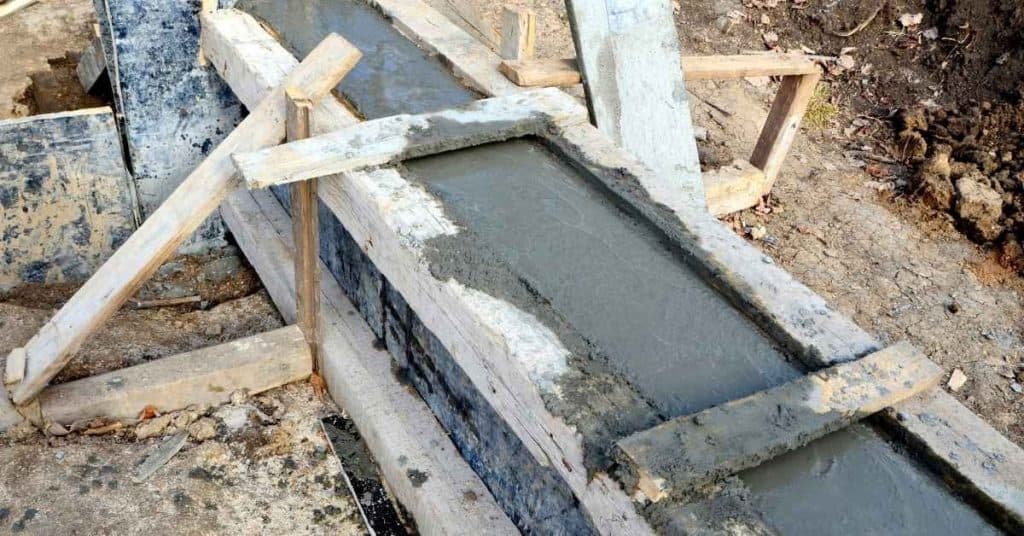
Bracing concrete forms with well-planned 2x lumber patterns prevents bowing and keeps the pour straight.
The guide walks through practical bracing patterns, proper lumber spacing, and quick checks to keep forms straight and secure during a pour.
Key takeaways
- Use 2x lumber bracing on all forms every 2–4 feet.
- Align bracing to load paths with cross-braces at every corner.
- Use wedge anchors and screws; avoid nails for high wind.
- Space braces 24–36 inches; tighter for high pours or tall forms.
- Inspect forms daily; tighten bolts and recheck alignment before concrete pour.
- Remove and re-set formwork promptly after curing to prevent distortion.
- Establish a simple inspection cadence: do a quick check before pour, monitor for movement during pour (every 2–4 hours if possible), and inspect again after curing for any distortion or loosening.
- Long-term maintenance and reusability: clean all components after each job, seal or treat lumber to slow moisture damage, store braces off the ground in dry, stacked conditions, and rotate stock to replace damaged or worn braces to reduce future form failures.
Table of Contents
- Introduction
- Key takeaways
- Why concrete forms bow — causes and risk factors
- Tools and materials checklist for bracing with 2x lumber
- Basic bracing principles and load paths
- Bracing patterns that work with 2x lumber — step-by-step layouts
- Spacing, sizing, and calculation quick-reference for 2x bracing
- Fastening methods and connection details that prevent failure
- Installation sequence and practical tips on site
- Handling special situations: curved forms, corners, and high wind
- Troubleshooting common bracing failures and repair fixes
- Maintenance, storage, and cost-saving tips for durable formwork
- Conclusion
- FAQ
Why concrete forms bow — causes and risk factors
Concrete forms bow when the wet mix pushes on the panels and they bend or bulge. Hydrostastic pressure from the pour, the weight of the concrete, pour height, and weak anchors all push harder than your 2x lumber can safely carry.
If you see bowing starting, stop and fix the bracing now before the wall moves. Weak anchors and under-braced 2x lumber will fail fast under hydrostatic pressure and wet concrete. Proper anchors and solid braces keep the form true and save you from costly rework.
Pressure from fresh concrete and pour rate
The weight of wet concrete can be a real force to reckon with. As you pour, the fluid pressure builds up inside your forms, pushing outward. This is especially true for high pours where gravity adds its own pull. Pouring too fast only makes it worse.
Think about pouring in increments instead. Break up the pour into smaller sections and let each settle before moving on to the next. This gives the concrete a chance to start setting, reducing that outward push. It’s like letting water fill a balloon slowly rather than all at once.
The key is to keep an eye on how your forms are holding up as you go. If they’re starting to bow or shift, slow down and reinforce them before continuing. This way, you avoid the sudden shock of too much weight hitting the formwork all at once.
Lumber limitations and moisture effects
The type of 2x lumber you use can make a big difference. Different species have different strengths, and even within the same wood, the grain direction plays a role in how stiff it is under load.
Moisture content is another factor. Wood that’s too wet will bend more easily than dry wood. As moisture evaporates from the lumber during curing, it can also shrink and twist. This movement adds to the risk of forms bowing or shifting out of place.
To minimize these issues, choose quality lumber with straight grain patterns and a moisture content close to what your local climate will maintain once the concrete is set. Check the wood before you start building your forms; if it feels damp or has visible warping, find something better suited for the job.
Poor connections and uneven backfill
Nailing or screwing your formwork together isn’t just about holding pieces in place. Weak joints can lead to forms bowing under pressure, especially if there’s no continuous support from wales or braces.
Uneven ground or poorly compacted backfill around the foundation also adds stress points where the forms are more likely to shift. If your base isn’t level and solid, you’re setting yourself up for trouble as soon as concrete starts flowing in.
To avoid these issues, make sure all connections are tight and reinforced with additional bracing if needed. Use wales at regular intervals along the length of your formwork to distribute loads evenly. And before pouring, take time to ensure that any backfill is well compacted and level around the perimeter of your forms.

Tools and materials checklist for bracing with 2x lumber
For bracing with 2x lumber, you need the right sizes, fasteners, connectors, braces, stakes, and basic tools. Use common 2x lumber (2x4s, 2x6s, or 2x8s as needed), galvanized nails or screws, metal connectors, and sturdy braces. Keep plenty of stakes and a simple toolkit on hand to set and pin the braces.
This matters because proper bracing stops bowing and keeps the frame square on rough sites. Using the right hardware and timing saves you trim calls and rework, and it keeps people safe when the wind picks up.
Recommended 2x lumber types and sizes
This checklist helps you pick the right wood for your concrete forms, ensuring they stay straight during the pour.
- Use 2x4s for smaller walls; check if spans are less than eight feet. Longer spans risk bowing.
- Select 2x6s for medium-sized walls up to twelve feet wide. Confirm spans fit within structural limits.
- Avoid green wood; it warps and twists under pressure. Check moisture content with a meter or look for dry, seasoned lumber.
- Grade selection matters. Choose ACQ-treated for durability; confirm grade stamps match project specs.
- Add 2x8s for wider spans over twelve feet to distribute load better. Ensure you have enough material on hand.
- Use straight boards; inspect lumber for bends or twists before cutting. Bent wood can cause formwork issues.
- Consider 2x10s for very wide walls over sixteen feet; confirm structural drawings match your choice.
- Avoid knots and splits. Check each board carefully to avoid weak points that could fail under pressure.
Always double-check lumber sizes and quality before cutting. Poor choices lead to formwork failures.
Fasteners, connectors, and tensioning hardware
This checklist ensures you have the right tools for securing your concrete forms tightly without damaging them.
- Nails or screws; use 16d nails or #10 x 2-1/2 inch deck screws. Confirm fasteners are long enough to penetrate into backing material.
- Carriage bolts; for heavy-duty connections, check bolt length and diameter match your lumber thickness.
- Hinges and brackets; use galvanized steel hinges; confirm they fit the wood width and spacing.
- Turnbuckles; adjust tension as needed. Check if you have enough to brace all sides of forms evenly.
- Carpenter’s clamps; for temporary bracing, ensure clamps are strong enough to hold lumber in place.
- Lag screws; use 1/2 inch lag bolts; confirm they fit your wood thickness and have washers.
- Steel straps; secure forms together. Check if straps can withstand the concrete pressure without breaking.
- Bolted connectors; for permanent connections, ensure all parts are compatible and securely fastened.
Always verify hardware fits your project needs before starting to avoid mid-job shortages or failures.
Optional tools for accuracy and safety
This checklist includes items that help you install forms accurately and safely, reducing mistakes and injuries.
- Bracing jigs; use adjustable braces to keep forms straight. Confirm they fit your lumber sizes.
- Digital levels; check horizontal and vertical alignment. Ensure accuracy with regular calibration checks.
- Stringlines; mark form positions accurately; confirm lines are taut and level before cutting.
- Safety glasses; protect eyes from flying debris during hammering or drilling.
- Hearing protection; use earplugs or earmuffs to guard against loud noises.
- Steel-toed boots; wear them for foot safety on the job site. Confirm they fit properly and are comfortable.
- Gloves with grip; prevent hand injuries while handling tools and materials.
- Hard hats; protect your head from falling objects; ensure a snug, secure fit.
Always wear proper PPE and use accurate measuring tools to avoid mistakes and stay safe on the job site.
Basic bracing principles and load paths
Bracing is how the load moves from the plywood and forms into the ground and the building beside it. Make a continuous path from the slab, to the braces, to the anchors. Use triangles wherever you can; straight lines fail under pressure.
If you skip braces or fake them, you’re inviting wall bow, wobble, or collapse. Proper bracing keeps forms square and the floor level, even when the wind or soil shifts. Do it right the first time and save yourself a headache later.
Triangulation and diagonal bracing basics
Diagonal braces are the backbone of any concrete form system. They lock your forms into place by preventing them from racking, which is when the forms twist or bow under pressure. The key to effective diagonal bracing lies in triangulation.
To set up a diagonal brace, you need two points: one at the top of the wall and another at the bottom. This creates a triangle that distributes load evenly across your formwork. Use 2x4s or 2x6s for these braces, depending on the height and pressure of your pour.
When sizing your diagonal braces, aim to keep them as short as possible while still providing adequate support. A good rule is to have a brace length no more than twice the height it’s supporting. This keeps the angle sharp enough to resist racking forces effectively.
Remember, the goal of triangulation isn’t just about preventing bowing but also ensuring your forms stay plumb and true throughout the pour. Properly angled braces will keep your walls straight and square.
Shear resistance and wales (horizontal supports)
Wales, or horizontal supports, are crucial for resisting the shear forces that can cause forms to bow outward. They act like a belt around your formwork, holding everything together.
The number of wales you need depends on the height of your wall and the pressure from the concrete pour. As a general guideline, start with one wale every 4 feet for walls up to 8 feet tall. For taller walls or higher-pressure pours, add more wales as needed.
Spacing is also important. Keep wales no farther apart than twice their height above grade. This ensures they can handle the load without bowing under pressure. So if your wall is 6 feet high, place a wale every 3 to 4 feet.
To install wales correctly, secure them tightly with screws or nails at both ends and in the middle for added stability. Use metal connectors or brackets where possible to distribute load evenly across multiple boards.
Ties, braces, and stakes working together
A complete bracing system combines vertical ties, diagonal heel braces, ground stakes, and wales to ensure your forms stay in place during the pour. Each component plays a critical role.
Vertical ties connect your formwork to the ground or adjacent structures. They should be placed close together—every 2 feet is ideal—to provide continuous support. Use metal straps or brackets for added strength.
Diagonal heel braces, as we discussed earlier, prevent racking by locking forms in place. Ground stakes anchor these braces firmly into the soil. Make sure your stakes are long enough to penetrate deep into stable ground and secure them tightly with hardware like lag screws.
Together, this system creates a robust framework that can handle even high-pressure pours without bowing or shifting. Each part complements the others, forming a cohesive support network that keeps your forms solid and true throughout the process.
Bracing patterns that work with 2x lumber — step-by-step layouts
For 2x lumber, these bracing patterns are tried and true. They are simple to build, call out clear load paths, and keep a wall or scaffold steady.
A simple heel brace, a raker brace grid, continuous wales, and a back-shore system give you solid, adjustable support. They save time on the job and reduce the chance of collapse when setups loosen. Choose patterns that match your lumber and span, and build tight, square frames.
Step-by-Step Layout Process
This sequence helps you set up your bracing patterns efficiently and safely, ensuring your concrete forms stay straight during the pour.
- Inspect all materials for damage or defects. Check fasteners are tight and connections secure before starting.
- Lay out your 2x lumber braces evenly along the form edges, spacing them according to wall height and pour pressure needs.
- Attach raker braces at a 45-degree angle from the top of the wall down to ground stakes. This distributes force effectively.
- Install continuous wales across the bottom of your forms every few feet for added stability against lateral forces.
- Secure backshore supports on the opposite side of the pour area, connecting them firmly to the raker braces and wales.
Final check: Ensure all connections are tight and bracing is evenly distributed. Double-check before pouring concrete.
Simple Heel Brace Pattern for Short Walls
This layout uses basic heel braces to stabilize forms up to typical slab heights, ensuring they don’t bow under pressure.
Start by placing your 2×4 or 2×6 lumber at a slight angle from the top of the form down to ground stakes. The angle should be around 30 degrees, providing enough support without overloading the braces.
Fasten each brace securely with galvanized nails or screws, making sure they’re tight and won’t slip during the pour. Check that all connections are solid before moving on to the next section.
Raker Brace Grid for Medium-Height Walls
This pattern uses a grid of rakers and 2x wales to support forms up to about four to six feet high, providing robust stability against concrete pressure.
Place your raker braces at intervals no more than three feet apart, attaching them securely from the top of the wall down to ground stakes. The angle should be around 45 degrees for optimal force distribution.
Add continuous wales across the bottom of the formwork every few feet, connecting them firmly to the raker braces and ground supports. This helps prevent lateral movement during the pour.
Continuous Wales and Backshore for Tall Walls
This system uses continuous horizontal wales and robust backshore supports to stabilize forms for taller walls and heavier pours, ensuring they remain straight and secure.
Lay out your 2×4 or 2×6 lumber as continuous wales across the bottom of the formwork every few feet. Connect these firmly to raker braces and ground stakes for added stability against lateral forces.
Install backshore supports on the opposite side of the pour area, connecting them securely to the raker braces and wales. This provides additional support and helps distribute pressure evenly across the entire wall structure.
Spacing, sizing, and calculation quick-reference for 2x bracing
Keep 2x bracing tight and straightforward. Use braces about 4 ft apart on center, and add a new brace every 4 ft of pour height. Tie every brace with solid, properly sized ties to resist pressure.
This matters because wrong spacing or weak ties lets forms bow or fail. It saves time and money to plan with simple rules rather than guessing on site. Don’t cut corners—bad bracing leads to leaks, cracks, or worse when the concrete goes in.
Rule-of-thumb spacing by wall height
When it comes to bracing your concrete forms, the first thing you need to nail down is how often you space out your braces. For short walls under 6 feet tall, a brace every 4 feet works well. As the wall gets taller, you’ll want to tighten up that spacing.
For walls between 6 and 10 feet, drop it to a brace every 3 feet. If you’re pouring walls over 10 feet high, you might need braces as close as every 2 feet or even less. The key is to keep an eye on the lateral pressure—more height means more force pushing against your forms.
Remember, these are just guidelines. Always check local codes and adjust based on soil conditions and concrete mix properties. If in doubt, err on the side of over-bracing rather than risking a collapse.
How to estimate lateral pressure and choose brace capacity
To figure out how much lateral force your concrete will exert, you need to know the height of your pour. A good rule is that for every foot of wall height, expect about 100 pounds per linear foot of lateral pressure.
Once you have an estimate of the lateral pressure, pick your brace size accordingly. For walls under 6 feet tall, a standard 2×4 should handle it just fine. As the height goes up, so does the force—move to 2x6s or even engineered lumber if needed.
The goal is to make sure your braces can resist that pressure without bending or breaking. If you’re unsure about the strength of a particular brace setup, do some quick calculations and test it out on a small section before going full-scale.
When to step up to 2×6 or engineered members
Moving from standard 2×4 bracing to larger sizes like 2x6s or even engineered lumber is a decision based on several factors. If your wall height exceeds 10 feet, you’re likely going to need the extra strength.
Soil conditions also play a role—soft soils can increase lateral pressure significantly, making bigger braces necessary. Similarly, if you’re pouring with a high-strength concrete mix or adding heavy rebar reinforcement, upsize your bracing materials accordingly.
In some cases, engineered lumber like I-beams might be the best choice for very tall walls or challenging soil conditions. These members are designed to handle higher loads and can provide better stability than standard 2x4s or even 2x6s.
Fastening methods and connection details that prevent failure
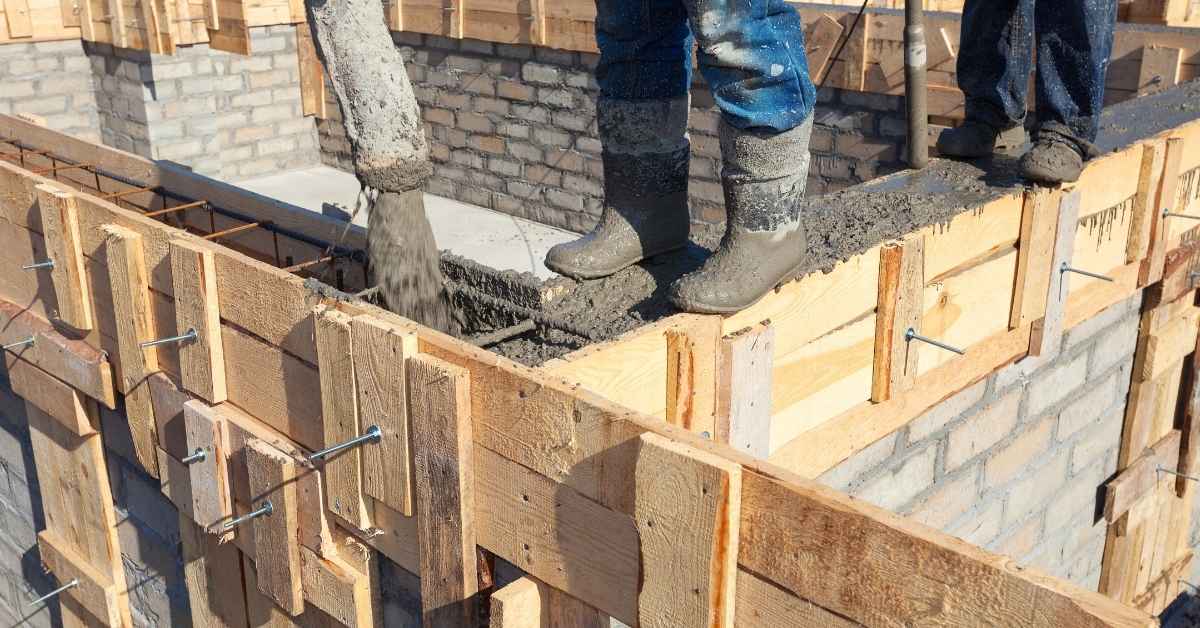
The key is to use the right fasteners and correct patterns so joints don’t fail. Nail patterns, choosing screws versus nails, using bolts and plates, and adding blocking where needed keep parts from splitting or pulling out.
When you run the wrong fasteners or skip blocking, you’ll see loose connections and costly fixups. Getting this right saves time, reduces call-backs, and makes a safer, stronger build that lasts.
In high-wind conditions, add temporary wind bracing to the formwork before and during all pours. Use lightweight, easily removable bracing (such as adjustable scaffold frames or approved wind bracing panels) that can be quickly installed or removed as winds shift. Ensure braces cross-brace the formwork at multiple points and are anchored to stable, immovable ground or anchor points. Inspect wind bracing at least twice daily during storms or gusty weather and after any major wind event.
Nail and screw patterns for wales and sheathing
When nailing your 2×4 wales to the formwork, space nails every 6 inches along the length of each piece. This keeps them from popping out under pressure. Use screws in areas with high shear loads or where you need a stronger hold.
For sheathing boards, stagger your nailing pattern so that no two nails line up directly above one another on adjacent sheets. This helps distribute the load evenly and prevents any single board from failing under stress. Check local building codes for specific spacing requirements in your area.
Avoid over-nailing or screwing which can split the wood, weakening the structure. A good rule of thumb is to use two nails per stud on each side of a wall form and ensure they’re placed at least an inch from the edges to prevent splitting.
Bolted connections and through-ties
For high-load areas or where you need a connection that can be reused, go with carriage bolts instead of nails. These provide a stronger hold and are easier to remove for future projects.
Add washer plates at each end of the bolt to spread out the load and prevent wood splitting. Backer boards behind the plate help distribute pressure evenly across the surface.
Through-ties, which run through both sides of your formwork, are crucial in preventing bowing. Use them where you have long spans or high lateral loads. Ensure they’re properly anchored on both sides to maintain stability under load.
Reinforcing joints and corners
Corners are weak points in your formwork, so reinforce them with blocking or gussets. This helps distribute stress evenly and prevents concentrated loads from causing failure.
Add extra wales at corner intersections to provide additional support. These should be securely fastened using a combination of nails and screws for maximum strength.
For particularly demanding corners, consider adding diagonal braces that tie into the main structure. This not only reinforces the joint but also adds stability across the entire formwork system.
Installation sequence and practical tips on site
First, stake and level the site, then erect the frame, install bracing and wales, and sheathe the walls. Assign clear crew roles and nail timing to each task, so nothing sits idle. Do a final pre-pour inspection before the concrete goes in.
Sticking to the order keeps the building square, prevents rework, and limits chaos. The right timing lets the crew move efficiently, check plumb, and clear the site for a clean pour.
Pre-pour checks and alignment verification
Before you start pouring concrete, it’s crucial to do a final walk-through of your forms. Make sure everything is in place and ready for the pour. Start by checking that all your forms are plumb and level. Use a laser level or a long straightedge to ensure there are no gaps or misalignments.
Next, inspect each brace connection point to make sure they’re tight and secure. Loose connections can lead to form movement during the pour, which is something you want to avoid at all costs. Also, check that your gap control measures—like caulk or foam tape—are in place and doing their job.
Once everything looks good, double-check your stakes and shoring for stability. If you’re pouring a large wall or slab, it’s also a good idea to have someone else do a quick walk-through with you just to catch anything you might have missed. This final verification step can save you big headaches later on.
Pour pace, lifts, and monitoring during pour
The pour itself is a critical time to keep an eye on your forms. Start by pouring in manageable lifts—typically 12 inches at a time for walls or smaller sections for slabs. This helps prevent excessive lateral pressure that could cause form movement.
As you pour, have someone assigned to monitor the forms and braces. Look out for any signs of bowing or shifting. If you notice anything amiss, stop pouring immediately and address it before continuing. Tighten loose connections, add temporary support if needed, and make sure everything is secure again.
Keep communication open between your pour crew and those monitoring the forms. Quick reactions can prevent major issues from developing into costly problems. Remember, taking a moment to fix an issue now is better than dealing with a collapsed form later on.
Handling special situations: curved forms, corners, and high wind
Handling curved forms needs segmented bracing. For curves, don’t force straight panels; use short sections tied with braces that follow the curve. Secure connections firmly and check alignment as you go. When planning curved or irregular layouts, sketch a light layout with a few key anchor points and mock up a small section first to confirm brace spacing and ring-wale placement before committing full formwork. For non-rectilinear plans, consider allowing extra space for formwork adjustments and temporary shims to keep panels square as you pour.
Corners are tricky. Plan for awkward angles with extra bracing and tight corners to avoid gaps or failure. Wind or rain raise risk fast, so pause work in bad weather and recheck fasteners and supports before proceeding.
Bracing segmented or curved plywood with 2x members
When dealing with curved forms, you need to break the curve into smaller segments and brace each segment individually. Use ring wales around the perimeter of your formwork to provide a continuous support system. These rings can be made from 2x4s or 2x6s depending on the radius of curvature. For non-rectilinear layouts, let the ring wales follow the natural curve rather than forcing a straight line; stagger braces so there is no single line of weakness. Use additional temporary stiffeners where the curve tightens to keep panels evenly spaced and prevent local bowing.
For radial bracing, install diagonal braces that extend from the ground up to the curved surface at regular intervals. This helps distribute the lateral pressure evenly across the formwork. Temporary stiffeners like additional 2x lumber strips can be added perpendicular to the curve to prevent bowing under load. In irregular geometries, concentrate bracing near tight radii and long straight sections alike, and avoid clustering all braces in one area which can create bending moments elsewhere.
The key is to ensure each segment of your curved wall has enough support to handle the concrete’s weight and pressure without deforming. Remember, the tighter the radius, the more critical it is to have robust bracing patterns in place. For non-rectilinear layouts, verify every joint and brace intersection with a straightedge or temporary plumb line to maintain overall geometry during pouring.
Reinforcing inside and outside corners
Corners are weak points where concentrated loads can cause failure. For inside corners, add blocking between the formwork panels to provide additional support. This blocking should be at least 2×4 lumber placed vertically every few feet along the corner.
Outside corners require extra attention too. Install corner posts that extend from the ground up and are securely fastened to both sides of the wall forms. These posts act like buttresses, reinforcing the structural integrity against outward forces.
Continuous wales running around the perimeter of your formwork can also help distribute loads evenly across corners. Make sure these wales are well-secured with through-ties or bolts at strategic points to prevent any movement during pouring. For non-rectilinear corners, ensure that blocking and wales accommodate the geometry without creating gaps where concrete can escape or cause misalignment.
When working with curved or irregular corners, periodically check joint tightness and re-tighten fasteners as needed after initial curb or partial pour to prevent creep during curing.
Weather-related adjustments and temporary protection
In windy conditions, you need to secure your formwork tightly. Use additional diagonal bracing and guy wires anchored to the ground or nearby structures to stabilize forms against wind forces.
Rain can be particularly problematic as it adds hydrostatic pressure on your forms. Cover exposed sections with tarps or plastic sheeting to shield them from rainwater. Ensure that any water pooling around the formwork is diverted away using drainage channels or pumps.
Securing forms overnight is crucial, especially in areas prone to high winds or heavy rainfall. Use sandbags or additional bracing materials to weigh down and stabilize your setup until pouring can begin safely. Always check local weather forecasts before starting a pour to avoid unexpected delays or damage.
Troubleshooting common bracing failures and repair fixes
Bracing that bulges, leaves gaps, or pulls fasteners means trouble fast. Stop and fix it now with solid 2x lumber braces; replace or tighten the wrong pieces and secure every connection. If it moves, it’s not safe.
Using 2x lumber for braces gives you a simple, strong fix that keeps walls plumb while you work. That matters on a DIY jobsite because weak, improvised supports let walls shift and fasteners fail, wasting time and money.
Emergency shoring during a pour
If you notice your forms bowing or bulging while pouring concrete, act fast to prevent further damage. First, assess the situation and identify where additional support is needed.
To add emergency rakers, use 2x4s or 2x6s as temporary braces. Place them at a 30- to 45-degree angle from the ground up to the formwork. Secure these with heavy-duty straps or strong ties to ensure they don’t slip during the pour.
For tie-downs, use long lag bolts and sturdy anchor points like concrete footers or steel stakes driven deep into the ground. Ensure all connections are tight and secure before resuming the pour.
Remember, safety first—never work alone when making emergency repairs to formwork during a pour.
Post-pour repairs and how to reuse or reinforce removed forms
After the concrete has cured, carefully inspect your forms for any damage. Look for cracks, splits, or warping in the lumber that could compromise its structural integrity.
If you find minor issues like small cracks or nail pops, these can often be repaired with wood filler and new fasteners. For more significant damage, such as large splits or severe bowing, it’s best to replace those sections rather than risk future failures.
When deciding whether to reuse forms, check the lumber for signs of wear beyond repair. If in doubt, consult local building codes or manufacturer guidelines on acceptable conditions for formwork materials.
To reinforce reusable forms, consider adding extra bracing at weak points identified during the pour. This can help prevent similar issues from occurring again and extend the life of your forms.
Maintenance, storage, and cost-saving tips for durable formwork
Keep your formwork materials clean, dry, and stored correctly to last. Clean off concrete residue, dry fully, and stack plywood and 2x lumber off the ground. Store flat or on racks to avoid warping.
Proper storage saves you money by extending life and avoiding replacements. If you mix damaged boards with good ones or skip drying, you’ll pay more later in weaker formwork.
Best practices for lumber care and reuse
After a pour, clean your 2x lumber thoroughly to remove any concrete residue. Use a wire brush or sandpaper to scrub off hardened bits of cement. Don’t forget the corners and edges where debris tends to stick.
Dry the wood completely before storing it away. Leaving moisture trapped can lead to warping and rot over time. Stack your lumber on pallets in a dry, well-ventilated area to prevent water damage from the ground or damp air.
Inspect each piece for cracks, splits, or other signs of wear that could compromise its strength during future pours. If you spot any issues, repair them with wood filler and sandpaper before putting it back into service. A little maintenance now can save big headaches later when you need those forms again.
Budgeting and where to splurge vs. save
When planning your concrete formwork, it’s important to know where to invest in quality materials versus areas where basic options will do just fine. For example, high-quality connectors like bolts or through-ties are worth the extra cost as they ensure stability during pours.
On the other hand, standard 2x lumber is often sufficient for most straight sections of formwork. However, if you’re dealing with curved forms or corners that require more support, consider using stronger grades of wood to handle the additional stress without bowing.
Remember, cutting corners on materials can lead to costly repairs and delays down the line. Spend wisely by focusing your budget where it will have the biggest impact—like reinforcing critical joints and corners with extra bracing or high-strength connectors.
Conclusion
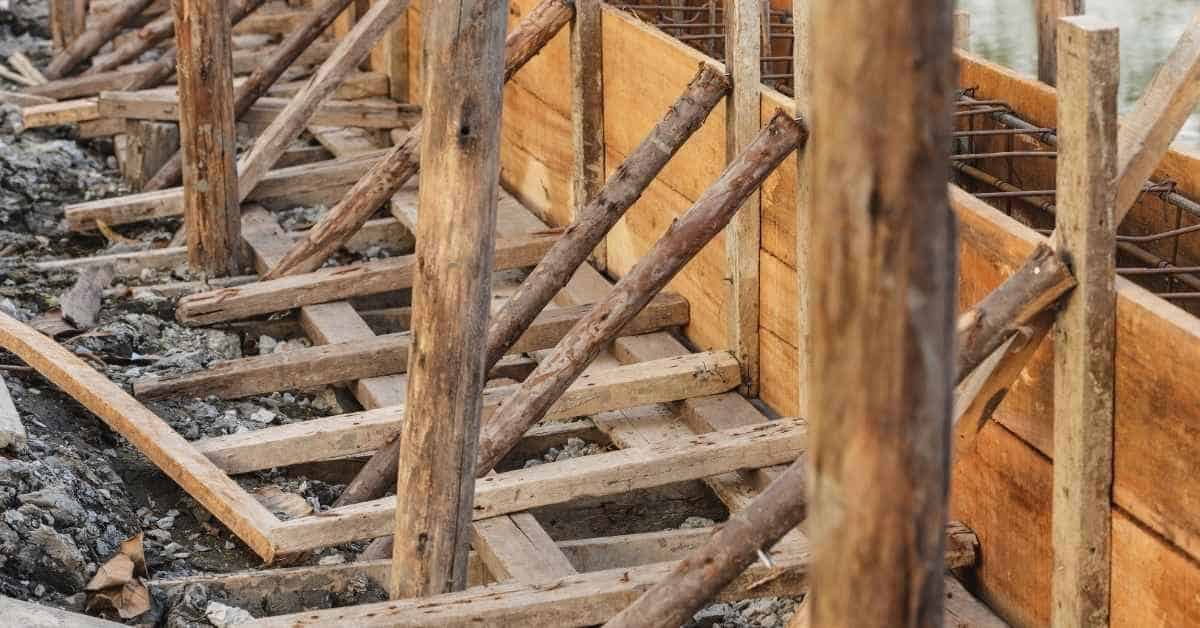
Keeping concrete forms from bowing is essential for safety, a straight pour, and a durable finish you can trust. When you control the load paths with proper bracing, you reduce risk and avoid costly rework or form failure at the job site.
First, confirm you have the right 2x lumber, bracing patterns, and fasteners, then lay out the patterns per the guide, space and fasten securely, test the load paths by hand, check for plumb and level, tighten connections, and proceed with the pour after a final on-site check. Do this in one clear sequence so nothing is left loose or misaligned.
Avoid these common mistakes: over-tightening fasteners that split lumber or crack plywood, skipping bracing on long spans or curved forms, and reusing damaged form panels without inspecting every connection and brace. Always follow the established spacing, sizing, and fastening rules and keep wind considerations in mind—adjust bracing for gusts or exposed sites to keep forms from walking or bowing.
If a project involves curved forms, high winds, or you’re unsure about the load you’re placing on the forms, call in a pro rather than pushing ahead. With careful planning, disciplined setup, and a brisk on-site check, you can finish strong and move on to the next job with confidence.
FAQ
How do I prevent concrete forms from bowing when using 2x lumber?
Set up solid stakes and run braces every 2 to 4 feet. Tighten everything well and keep the form plumb with a level as you go.
What bracing pattern works best with 2x lumber for walls?
Use H-braces or cross-bracing that ties the two sides together. Tie the braces at the top and bottom and keep them tight as the concrete pours.
How tight should the screws or nails be, and what hardware should I use?
Use 2x lumber braces fastened with strong fasteners, like 16d nails or deck screws. Drive them firmly but don’t strip the wood or over-tighten and pinch the form.
What mistakes cause bowing and how do I fix them?
Skipping braces, missing stakes, and not checking plumb can doom a pour. Add braces now, recheck level, and tighten all fasteners before the concrete sets.