How to Remove Floor Tiles from Concrete (tools, Timing, and Clean-Up)

How to Remove Floor Tiles from Concrete (tools, Timing, and Clean-Up)

Introduction

Remove floor tiles from concrete by following a staged, careful approach that protects the slab and surrounding areas.

You’ll learn practical how-to steps, timing considerations, and cleanup strategies that keep dust, debris, and damage to a minimum. The guide outlines tips on choosing methods, estimating effort, and planning a safe, efficient workflow.

Key takeaways

  • Assess tile bond type to choose removal method and safety precautions.
  • Protect surrounding surfaces with plastic sheeting and masking tape during work.
  • Score grout lines and use appropriate chisel safely to avoid floor damage.
  • Remove tiles from edges inward to maintain room layout and balance.
  • Clear debris regularly and plan disposal to prevent clogging drains.
  • Repair or resurface concrete before installing new flooring for durability.
Table of Contents

Quick overview and when to DIY vs hire pro

Quick overview: define what you’re removing (tile type, thickness, adhesive, any backing on concrete) and check surface condition to decide if DIY is realistic or if a pro is warranted. Look at how tough the removal will be—big area, stubborn glue, tricky edges—and weigh disposal needs and your comfort with dust control and safety. Budget a rough plan for cost and time that reflects tools, PPE, and any hauling or floor prep after removal.

Why it matters for you: getting this right up front saves back pain, money, and wasted time. The decision hinges on surface flatness, moisture risk, and any hidden wires or pipes that could complicate removal, so you can spot red flags early. A solid plan with a containment setup, a complete tool-and-disposal kit, and a remediation plan for the floor helps you stay on track and avoid costly mistakes.

When to hire a professional

If you’re dealing with an older home, there’s a chance the tiles contain asbestos. If unsure, it’s best to call in a pro for testing and removal.

Larger areas or complex subfloors also signal the need for a contractor. Heavy adhesives, intricate edges, or hidden electrical lines can make DIY risky and time-consuming.

Structural concerns like uneven floors or moisture issues are red flags that require professional assessment to avoid costly mistakes. A pro will have the right tools and expertise to handle these challenges safely.

When hiring a contractor, ask about their experience with tile removal, safety protocols, and disposal methods. Get clear estimates on labor costs and timelines before starting your project.

Typical timeline and labor needed

A small room might take a day or less with the right tools and no complications. Larger areas can stretch to several days, depending on size and adhesive strength.

The key is planning your time carefully. Start early in the week if possible, so you have flexibility for unexpected delays. Labor intensity varies; heavy lifting and dust control require physical stamina and safety awareness.

For medium-sized projects, budget 2-3 days to account for cleanup and disposal logistics. Large-scale jobs may need a full week or more, especially if there are structural issues or complex subfloors.

Remember, the timeline includes not just removal but also setting up containment areas and dust control measures. Proper planning upfront saves time and reduces stress during the project.

Back to top ↑

paint brush on concrete floor with red painted tiles
Demonstrates potential floor finish after tile removal and surface preparation

Preparing the area and safety precautions

Before you start cement work, clear the room and protect adjacent areas, then seal off doors and joints to create a contained work zone. Move furniture and unplug appliances, lay drop cloths and plastic sheeting on floors and walls, and set up a plan for waste collection so debris stays contained and manageable. Ventilation is key—maximize airflow from exterior sources, run a general exhaust, and use a dust barrier to keep dust from drifting into the rest of the house, while keeping the HVAC in a mode that won’t recirculate dusty air.

Think of this as a safety and cleanliness plan you can actually follow: have a buddy system for safety checks, wear proper PPE for long tasks, and keep a simple, continuous cleanup routine to prevent buildup and trips. Know that dust control is not optional—it matters for your lungs and the home’s finish, and it helps you finish faster with less drama. If you suspect hidden hazards, like old tile or paint, stop work and check the label, datasheet, or local guidance for how to proceed safely and who to call if needed.

Personal protective equipment (PPE) and dust control

Wear the right gear to protect yourself from harmful particles and debris. Here’s what you need:

  • Safety goggles. Protect your eyes from flying chips and dust. Wear them at all times while working.
  • N95 respirator or better. A P100 mask is best for concrete dust. It filters out 99.97% of airborne particles, including silica dust.
  • Work gloves and long sleeves. Keep your skin from getting scratched up by sharp edges and debris. Wear sturdy work boots to protect your feet.
  • HEPA vacuum or air scrubber. Use a HEPA filter for the best dust control. Rent one if you don’t own it; they cost around $50 per day.
  • Plastic sheeting and duct tape. Seal off doors, windows, and vents to contain dust within your work area. Cover adjacent walls with plastic sheets.

Protecting surrounding surfaces and utilities

Cover cabinets, appliances, and fixtures before you start tearing up the floor. Use drop cloths and plastic sheeting to shield walls and doors from dust.

Be extra careful around plumbing and electrical elements. Mark where pipes and wires are located with a marker or chalk so you don’t accidentally damage them while removing tiles.

If your work area is near an HVAC vent, seal it off tightly with plastic sheeting to prevent dust from getting into the ductwork.

Back to top ↑

Tools and materials checklist

This section lists the essential tools and materials you’ll need for safe, effective removal, starting with PPE like glasses, gloves, and a dust mask, and then the core pry and demolition gear. It covers power tools, consumables, and cleanup supplies in a practical order, plus budget and precision alternatives so you’re not gambling on the wrong tool. Expect a pragmatic mix of pry bars, hammers, chisels, wedges, scrapers, and a solid dust-collection strategy, plus the gear to tackle grout, adhesive, and tough residues.

Knowing what to have on hand keeps the project moving and protects your concrete from unnecessary damage. It helps you choose between budget hand tools or rental-quality power tools, depending on the job and your pace, and it clarifies workflow from containment to disposal and surface inspection. This guidance also points you to important consumables and replacement parts so you don’t get stuck mid-removal with the wrong bit or a worn blade in the mixer or grinder.

Hand tools and small consumables

Start your tile removal project by gathering the right hand tools and basic supplies. These items are essential for a smooth start, especially if you’re working on smaller areas or need to be budget-conscious.

  • Pry bar: Use it to lift edges of tiles; check that it’s long enough to reach under tiles without bending.
    Skipping this can lead to wasted effort and damaged tiles.
  • Heavy-duty hammer: For breaking up stubborn grout lines; ensure it has a flat face for even strikes.
    Avoid using regular hammers as they may chip the concrete.
  • Cold chisel: To break through tough adhesive or grout; confirm its sharpness and durability.
    Using dull tools can waste time and damage surfaces.
  • Chisels set: For detailed work around edges and corners; make sure you have a variety of sizes.
    Lack of chisel types may leave rough spots after removal.
  • Pry wedges: To gently lift tiles without breaking them; check for rubber tips to avoid concrete damage.
    Hard metal wedges can scratch or crack the surface.
  • Sledge hammer: For large areas needing quick demolition; ensure it’s heavy enough for the job.
    A lighter hammer won’t provide the necessary force and may cause frustration.
  • Scraper: To remove residual grout and adhesive after tiles are out; confirm its sharpness and durability.
    Dull scrapers leave behind residue that can be hard to clean up later.
  • Gloves, knee pads: For protection during removal; ensure they fit snugly without restricting movement.
    Skipping these can lead to cuts, bruises, or sore knees.

Quick rule: Always have a pry bar and scraper on hand for efficient tile lifting and cleanup.

Power tools and rentals

For larger projects or areas with tough adhesives, power tools are essential. These tools save time and effort but require careful handling to avoid damaging the concrete.

  • Oscillating multi-tool: Great for cutting grout lines; ensure it has a dust collection attachment.
    Without this, you’ll have a mess of fine dust everywhere.
  • Rotary hammer with chisel: For breaking up tough adhesive or concrete; confirm the right bit size.
    The wrong bit can damage your tool and leave marks on the surface.
  • Floor scraper attachment: To remove residual grout and adhesive quickly; check for compatibility with your power tools.
    Using hand scrapers here would take much longer.
  • Demo hammer: For rapid demolition of large areas; ensure it’s powerful enough to break through tough materials.
    A weaker tool will slow you down and frustrate you.
  • Battery vs corded options: Choose based on mobility needs; batteries offer more flexibility but need charging.
    Corded tools are reliable but limit your movement.
  • Rental guidance: Rent if you don’t have the right tool or can’t afford to buy one; check rental shop reviews.
    Badly maintained rentals can cause damage and delays.
  • Dust collection attachments: Essential for all power tools; confirm they fit your equipment properly.
    No dust control means a huge cleanup job afterward.

Quick rule: Always use the right tool for the task to avoid damaging the concrete or slowing down progress.

Back to top ↑

Identifying how tiles are bonded to the concrete

Tiles on concrete are usually thinset, mastic, or glued to an underlayment. Visual clues—edge and grout look, plus the substrate—help you tell them apart. Quick checks like a light scratch, a gentle lift on a loose tile, and looking for adhesive residue guide your method.

Knowing the bond type shapes your removal technique, dust control, and disposal plan. It also saves you from using the wrong tools or making a bigger mess. If you’re unsure, check the label or manufacturer instructions for guidance.

Signs of underlayment or membrane

If you see a layer beneath the tiles that looks like cement board, plywood, or vinyl-backed sheets, it’s likely an underlayment. These materials are often used to provide a flat surface for tile installation.

To identify underlayment, look at the edges of your tiles where they meet walls or other surfaces. If you see a clear separation between the tile and concrete, there’s probably an underlayment underneath. Also, check if the grout lines are consistent and straight; this is another sign that an underlayment was used.

When planning to remove tiles with underlayment, be prepared for additional work. Underlayments can complicate removal because they often require separate tools and techniques. For example, you might need a hammer and chisel or a circular saw to cut through the underlayment before removing it.

Asbestos-containing tiles and adhesives

Older homes, especially those built before 1980, may have asbestos in their floor tiles or adhesive. Asbestos can be dangerous if disturbed during removal.

To identify potential asbestos, look for signs like a rough texture on the tile surface or unusual patterns and colors. If you suspect asbestos, it’s crucial to test samples professionally before proceeding with any work.

If asbestos is confirmed, do not attempt to remove tiles yourself. Hire a professional who has the proper training and equipment to handle asbestos safely. DIY removal can release harmful fibers into the air, posing serious health risks.

Back to top ↑

Close-up of floor polishing machine on concrete floor
Using a polishing machine to assess tile bonding on concrete

Step-by-step tile removal from concrete

Start with a quick site check: assess the subfloor, tile and adhesive thickness, grout joints, and any moisture concerns, and confirm PPE and ventilation as needed. Decide manual vs power tool, plan a grid-style removal to minimize damage, pick a starting point in a corner or seam, notch a gap, protect adjacent concrete with tape or cardboard, then remove grout first, lift tile one by one, and attack adhesive in manageable sections while keeping debris contained.

Why it matters: a careful start reduces chipping and gouges, and switching between manual prying and power-assisted scraping lets you control how the adhesive comes up. This approach keeps the slab intact for the next flooring phase, makes cleanup easier, and helps meet local disposal rules for tile and adhesive waste.

Step-by-Step Cleaning Process

This sequence ensures a thorough and efficient tile removal process, from prep to cleanup.

  1. Check for asbestos before starting. If present, call in professionals immediately.
  2. Evaluate the subfloor condition and plan your approach. Use painter’s tape to protect edges.
  3. Begin by removing grout with a chisel or oscillating tool. This makes tile removal easier.
  4. Lift tiles carefully using pry bars and scrapers. Work in small sections for better control.
  5. After each tile, clean the area to prevent scratches on concrete. Use a vacuum and damp mop.

Creating a Starting Point and Removing Tiles

Select a corner or seam as your starting point for cleaner breaks. Create a small notch to begin lifting.

Use a pry bar to gently lift the first tile, then work around it with scrapers. This minimizes dust.

Tip: Protect adjacent surfaces with painter’s tape and thin cardboard to avoid chipping.

Removing Mortar, Thinset, and Stubborn Residues

Use an oscillating tool or carbide chisel for tough adhesive. Work in small sections to avoid damaging the concrete.

Slice through stubborn residue with a sharp blade. Switch between manual prying and power tools as needed.

Note: For chemical softeners, follow manufacturer instructions carefully to prevent damage.

Back to top ↑

Special situations and troubleshooting

Special situations mean you can’t treat every tile pull the same. Large-format tiles, epoxy adhesives, embedded thinset, radiant-heat systems, and tile over plywood each demand a tailored removal approach and different tool choices. You’ll want to plan for dust control, safety, and minimizing damage before you start.

Check substrates, heat elements, and the risk of cracking nearby tiles, and test a small area first when possible. Use targeted strategies with clear step sequences, proper PPE, and safe disposal in mind so you don’t nick wires or heat mats or pull up more material than you intended. Quick decisions on pauses and temperature compatibility keep radiant floors intact and the project moving smoothly.

Working around built-ins, thresholds, and corners

When removing tiles near cabinets, doorways, and other transitions, take extra care to avoid damaging these structures. Start by gently prying up the edges of the tiles with a flat pry bar or spud bar, being careful not to apply too much force that could crack adjacent tiles.

For corners and thresholds, use a chisel and hammer to carefully chip away at the mortar around the edges. Work slowly and steadily to ensure you don’t damage the underlying concrete or any surrounding fixtures. Once the tile is loose enough, lift it out in small sections to minimize stress on the remaining tiles.

After removing the old tiles, clean up any debris and check for any cracks or imperfections in the substrate before installing new flooring material. This careful approach will help ensure a smooth transition between different surfaces and maintain structural integrity.

Dealing with difficult tiles and minimizing substrate damage

Facing tough removal scenarios, such as deeply embedded thinset or fragile concrete, requires patience and the right tools. For stubborn tiles that won’t budge, start by scoring around them to weaken the bond before applying a chemical remover like Tile Remover Pro.

When dealing with thinset that’s set deep into the substrate, use a chisel and hammer to break it up gradually rather than trying to lift large chunks at once. This method helps prevent cracking or damaging the concrete beneath. If mechanical removal is necessary due to extreme bond strength, consider renting a floor grinder equipped with diamond blades.

Always wear proper PPE, including gloves and safety glasses, when using power tools like grinders. Ensure good ventilation in enclosed spaces to avoid inhaling dust or fumes. By taking these precautions, you can safely remove difficult tiles while preserving the integrity of your concrete slab.

Back to top ↑

Clean-up, disposal, and preparing the concrete for new flooring

Clear the work area of debris, sweep, and vacuum with a HEPA filter to keep dust down. Remove nails, old adhesives, and bulky waste, then protect surrounding areas and wear PPE. Do a final clean-up and inspect for any spots that need patching before moisture testing and flooring installation.

Moisture testing should guide underlayment and flooring choices, and you should follow the test methods and read the results against the flooring type you plan to install. Dispose of waste according to local rules, and consider recycling or bulky-item options; note any hazardous components and correct disposal channels. After patches are cured and the surface is flat, re-clean and prepare for the chosen underlayment and moisture barrier, ensuring edge and perimeter conditions are ready for the new floor.

Waste disposal and recycling options

Once you’ve removed all the tiles, it’s time to deal with the debris. Start by sorting your waste into categories like tile pieces, mortar chunks, and old adhesives. Check local regulations for proper disposal methods—some areas have specific rules for construction waste.

If recycling is an option in your area, look up nearby facilities that accept concrete or ceramic materials. Otherwise, consider renting a roll-off dumpster to haul away the debris efficiently. Make sure you know the size requirements and any weight limits before booking one.

For hazardous components like resin-based adhesives, follow strict disposal protocols to avoid environmental harm. This might mean taking them to a special facility or arranging for professional removal services if they’re too toxic for regular waste streams.

Final surface prep and repair

After cleaning up the debris, it’s crucial to inspect your concrete floor for any damage or imperfections. Use a grinder to smooth out high spots and fill in small holes with concrete patch material. Ensure that all repairs are level and flush with the surrounding area.

If there are larger areas needing attention, apply a skim coat of self-leveling underlayment over uneven sections. This will create a smoother base for your new flooring installation. Make sure to follow manufacturer instructions carefully for best results.

Before laying down any new floor covering, conduct moisture and alkali tests on the concrete surface. These tests help determine if there’s enough time between removal and reinstallation for proper drying and curing of the substrate. This step is critical in preventing issues like delamination or mold growth later on.

Back to top ↑

Common mistakes to avoid and pro tips for efficiency

The common mistakes bite you later: you skip proper PPE and dust control, you use the wrong tool for tile and mortar removal, and you don’t inspect the substrate before you start. You also ignore asbestos risks or old mastic, which can bite you hard with rework and cleanup. Plan practical steps and use the on-site checklists to stay on track while you speed things up safely.

This matters because a clear workflow, working in small zones, and batching repetitive tasks cut rework and delays. Labeling or sketching removed sections helps you keep track and stay organized. Use the listed on-site checklists for PPE and dust control, prep and protection, removal method, edge/substrate inspection, and cleanup/disposal to stay efficient and safe.

Time-saving techniques and ergonomics

To keep your removal project moving smoothly, start by dividing the floor into manageable sections. Work in small zones to avoid fatigue and maintain focus. Use a hammer drill with chisel or an oscillating multi-tool for efficiency, but don’t forget to take breaks every hour to rest your hands and arms.

When using rental tools, plan ahead to minimize downtime. Have all necessary blades and bits ready before you start so you can switch quickly between tasks without stopping work. This reduces the time wasted on setup and adjustments.

Ergonomics play a big role in efficiency too. Keep your body in motion by rotating tasks that require different tools or techniques. For example, alternate between using an oscillating tool for small cuts and a hammer drill for larger areas. This helps distribute physical strain across different muscle groups and prevents overuse injuries.

Visual checkpoints and quality-control checklist

Before moving on to the next step, use this quick checklist to ensure your concrete slab is ready for new flooring. This helps avoid costly rework later.

  • No visible adhesive: Check that all old mortar or thinset has been removed and the surface looks clean. If missed spots remain, they can cause lumps under new tiles.
  • Smooth substrate: Look for any rough patches or high spots where adhesive was left behind. Smooth these areas with a grinder to ensure a level surface.
  • No debris: Sweep and vacuum the area thoroughly to remove all dust, chips, and loose material. Leaving dirt can cause bonding issues with new flooring.
  • No cracks or damage: Inspect for any cracks or damaged areas that need repair before proceeding. Neglecting this step could lead to future problems under your new floor.

Quick rule: If you see it, fix it—don’t skip steps and hope for the best.

Back to top ↑

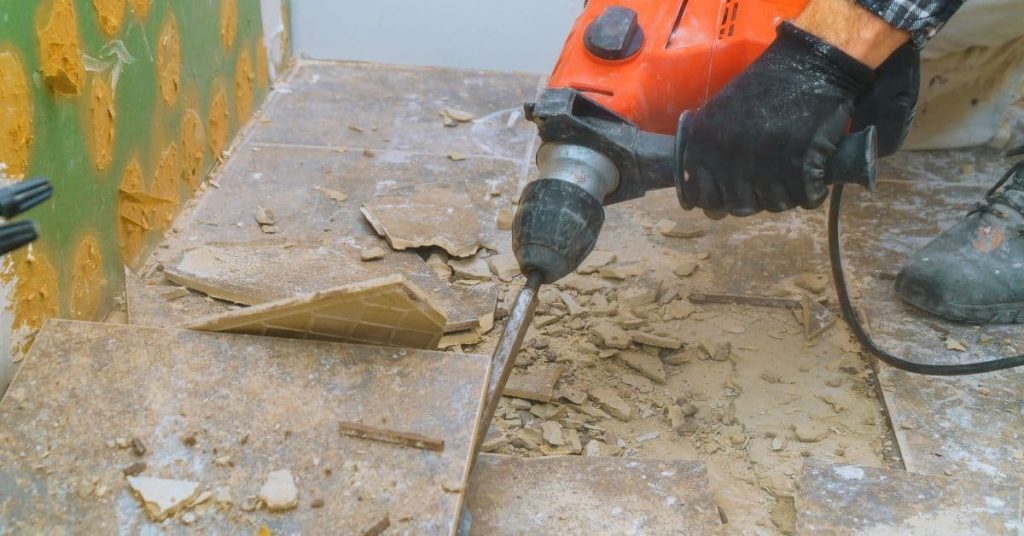
Person using electric hammer to remove floor tiles from concrete
Using the correct tool simplifies and speeds up tile removal

Conclusion

Removing floor tiles from concrete is a job that pays off when you keep safety, control, and care at the top of your plan. A solid approach protects the concrete, preserves the structure, and gives you a clean slate for the new floor.

Start with a simple, repeatable sequence: inspect the bond type, clear the area, put on PPE, lay out tools, test a small patch, then remove tiles in the safest order for your setup. Keep dust down, manage debris in a single pass, and rinse and inspect the concrete as you go so you know you’re not creating hidden damage.

Avoid rushing, avoid brute force, and avoid skipping safety steps. Common mistakes include pulling tiles without testing bond strength, using the wrong tool for the backing, and neglecting ventilation or dust control. Safety first, test in a small area, and keep the work area tidy to prevent trips and cuts.

If the tiles are unusually bonded, if you uncover structural issues, or you encounter unknown backing or hazardous materials, call a pro instead of pushing on. When you do finish each phase, you’ll know exactly what to do next and you’ll be ready to lay the new flooring with confidence. Stay steady, follow the plan, and you’ll get a solid, durable result.

Back to top ↑

FAQ

What’s the best way to start removing floor tiles from concrete?

Score the tiles first with a hammer and chisel to create cracks. Then pry up large sections with a flat bar or crowbar. Keep your body low and steady to avoid throwing your back out.

What tools do I need for a clean break and minimal dust?

You’ll want a razor knife, a stiff chisel, a hammer, a pry bar, and protective gear. A rented chipping hammer or oscillating tool speeds things up. Wear safety glasses, gloves, and a dust mask to curb particles.

How long will this take and how do I plan for cleanup?

Small rooms go quicker than you think but expect a full day for prep, removal, and rough cleanup. Plan to bag debris in heavy-duty trash bags or use a dumpster. Keep a shop vac handy for dust and tiny shards.

What common mistakes slow you down or create extra work?

Don’t force tiles when they’re stubborn; you’ll break them and spread shards. Don’t skip grinding off old mastic; it’ll tear up blades and waste time. Don’t forget to ventilate and protect nearby surfaces from dust and damage.

Back to top ↑