Search Results for: stucco patch

How to Find the Right Stucco Mix for Patching: Sand, Lime, and Cement Ratios

How to Find the Right Stucco Mix for Patching: Sand, Lime, and Cement Ratios

Introduction Find the right stucco mix for patching by balancing sand, lime, and cement to match your repair. This guide explains practical ratios, how to adjust for climate and substrate, and the key steps to mix, test, and apply patch material. By the end, you’ll be able to choose a mix that matches existing plaster […]

How to Find the Right Stucco Mix for Patching: Sand, Lime, and Cement Ratios Read More »
How to Patch Small Wrb Punctures with Liquid Flash Before Re-Stucco

How to Patch Small Wrb Punctures with Liquid Flash Before Re-Stucco

Table of Contents Why WRB Integrity Matters Before Stucco When to Use Liquid Flash vs. Tape or Full Panel Repair Recommended Liquid Flash Products and Compatibility Matrix Tools, PPE, and Materials Checklist Step‑by‑Step Repair Method for Small Punctures (Exact Technique) Curing, Environmental Limits, and Inspection Criteria Integration with Stucco Lath and Finish Work Troubleshooting, Common

How to Patch Small Wrb Punctures with Liquid Flash Before Re-Stucco Read More »

Patching Small WRB (Weather-Resistive Barrier) Punctures Before Re-Stucco

Patching Small WRB (Weather-Resistive Barrier) Punctures Before Re-Stucco

Table of Contents Why WRBs Matter for Stucco Cladding Types of WRB Materials Compatible with Stucco How to Inspect a WRB Before Re‑Stucco Diagnosing Punctures vs. Underlying Damage Approved Repair Materials and When to Use Them Step‑by‑Step: Patching Small Punctures in Housewrap Step‑by‑Step: Patching Punctures in Self‑Adhered Membranes Sealing Fastener Penetrations and Nail Holes Flashing

Patching Small WRB (Weather-Resistive Barrier) Punctures Before Re-Stucco Read More »

Man wearing a tool belt and carrying tool bag and case

Tool belt setup for trowel work on plaster and stucco: carrying hawk, trowel, and jointers without dropping everything

Introduction A proper tool belt setup keeps your hawk, trowel, and jointers secure and hands free for plaster and stucco work. Choose a belt with pockets and holsters that place the heaviest items close to your center of gravity. Position the hawk handle, trowel blade, and jointer handles in dedicated spots to reduce crossing and

Tool belt setup for trowel work on plaster and stucco: carrying hawk, trowel, and jointers without dropping everything Read More »

Red concrete pump booms against clear blue sky

Infrared thermometer hacks on concrete and stucco: spotting hot spots and curing temps without guessing

Introduction An infrared thermometer lets you measure surface temperatures without contact, helping you spot temperature patterns on concrete and stucco. Use it to scan flat areas and edges to identify unexpected hot spots and cool zones. Read the readings as indicated by the device’s scale or color display. When evaluating curing temps for stucco, use

Infrared thermometer hacks on concrete and stucco: spotting hot spots and curing temps without guessing Read More »

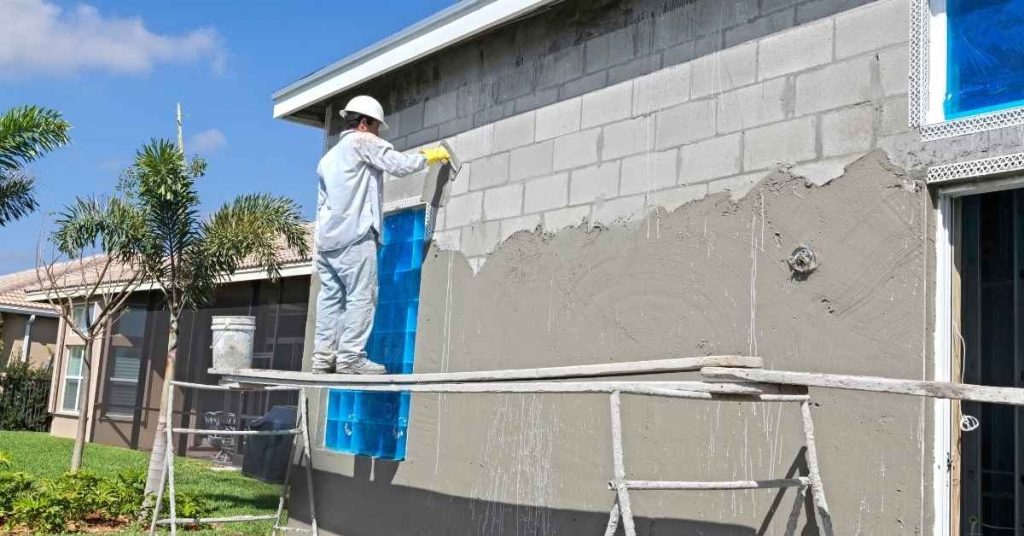
Worker applying stucco on cinder block wall outdoors

Parging vs stucco on block: prep, bonding, and avoiding delamination

Introduction Parging and stucco are two surface finishes for block walls, with parging being a thin cement-based coating and stucco a thicker, textured layer. Both aim to prevent moisture intrusion and create a smooth or textured exterior. The article compares prep, bonding, and how to avoid delamination in each method. Surface prep should start with

Parging vs stucco on block: prep, bonding, and avoiding delamination Read More »

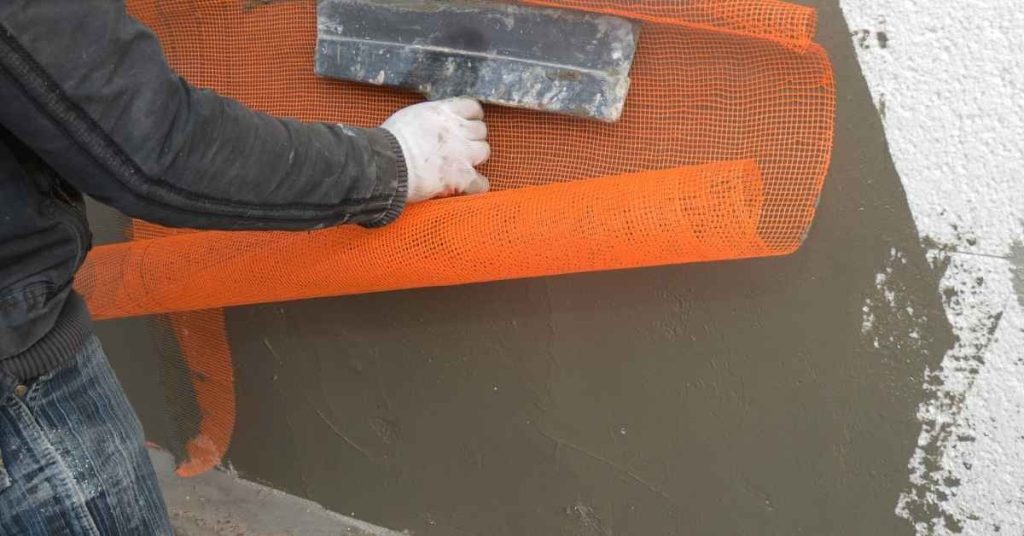
Person applying orange mesh over wet brown stucco base coat

Repairing stucco chips at corners: building back profile with mesh and base coat

Introduction Repairing stucco chips at corners means restoring damaged edge areas by rebuilding the corner profile with mesh and a base coat. This approach reinforces the edge, provides a uniform surface, and prepares it for finish. Keep the work neat and check that the base coat adheres well to the existing stucco. Start by cleaning

Repairing stucco chips at corners: building back profile with mesh and base coat Read More »

Corner of a stucco exterior wall with glass block windows

Using efflorescence on stucco as a leak map: how to trace water paths inside the wall

Introduction Efflorescence on stucco is mineral salt deposits left behind when moisture moves through the wall, and it can indicate where water is traveling inside the structure. These deposits can hint at the paths moisture takes through the cavity. Use the visible salt deposits as a map to trace moisture paths and observe patterns around

Using efflorescence on stucco as a leak map: how to trace water paths inside the wall Read More »

Stucco partially removed revealing underlying brick wall

Stucco water intrusion diagnostics: reading stain trails to find the entry point

Introduction Stucco water intrusion diagnostics is the process of tracing stain trails on the exterior to find where water is entering. Stains can reveal the path water takes behind the surface and point to the entry point. This is a practical, hands‑on approach you can work through at your own pace. Look for staining patterns,

Stucco water intrusion diagnostics: reading stain trails to find the entry point Read More »

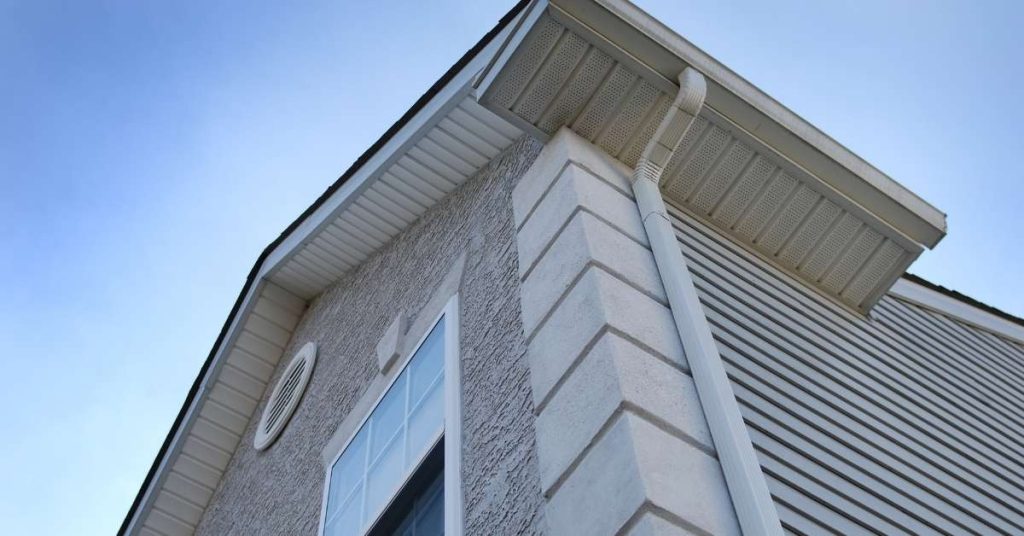
Close-up of exterior corner with stucco finish and siding

Stucco expansion gaps at slab lines: why they crack and how to detail the break

Introduction Expansion gaps at slab lines are deliberate spaces that allow concrete and stucco to move with temperature and moisture changes. They help prevent cracks by giving seams somewhere to open and close without telegraphing through the finish. Cracking often occurs when gaps are too small, poorly located, or not sealed properly over time. Detailing

Stucco expansion gaps at slab lines: why they crack and how to detail the break Read More »