Repairing Concrete After Spray Foam Removal: Patch, Grind, and Prep Steps for a Smooth Finish

Repairing Concrete After Spray Foam Removal: Patch, Grind, and Prep Steps for a Smooth Finish

Introduction

Repairing concrete after spray foam removal involves patching damaged spots, grinding to a smooth profile, and properly prepping the surface for a uniform finish.

This guide explains practical steps, tips, and everyday best practices you can apply to achieve a seamless repair that accepts paint or coatings.

Key takeaways

  • Assess adhesive remnants and unsound concrete before patching for proper bond.
  • Remove foam residues safely with chipping hammer, scraper, and PPE protocol.
  • Profile surface to achieve a clean, uniform anchor for patching.
  • Use polymer-modified mortars or epoxy blends with compatible bonding agents.
  • Apply patch in staged depths: partial-depth first, followed by full-depth if needed.
  • Finish with grinding and joint profiling for a smooth, paint-ready surface.
Table of Contents

Quick overview and step-by-step workflow

Inspect the surface to confirm soundness, moisture level, and that foam and any contaminants are fully removed, then plan the sequence with estimated times for each step. Proceed to cleaning and debris removal until the surface is dust-free, then mechanically profile or roughen the substrate to optimize patch adhesion. Move through removing unsound concrete and foam, profiling, patching in lifts as needed, finishing with a light final planing, and then curing, using rough time ranges (inspect 15–30 min, clean 20–40 min, remove 30–60 min, profile 15–30 min, patch 1–2 hours, finish 1–2 hours, cure 24 hours to several days) as a practical guide.

This sequence matters because proper pre-checks and surface preparation directly influence patch bond, durability, and a uniform finish on surfaces left after spray foam removal. Understanding the timing helps DIYers plan a session, manage moisture-sensitive materials, and protect the patch during cure to avoid micro-cracking or delamination. It’s the difference between a patch that sticks and a finish that lasts, and a clear at-a-glance roadmap keeps the project on track from start to near-final cure.

Step-by-Step Process

This sequence gets the job from ready-to-start to finished checks: prep, fit, secure, finish, and tidy-up so the job holds up and looks right.

  1. Do a final prep and safety sweep: clear the work area, confirm power/gas off if relevant, and lay protective sheeting. You do this to prevent accidents and keep surfaces clean. Quick check: walk the perimeter and touch tools to confirm power is off; stop and call an electrician if wiring is exposed or you’re unsure. Wait: none beyond any previously noted curing or drying.
  2. Measure and mark precisely for all cuts and fixings: measure twice, mark once using a straightedge and pencil. This prevents costly mistakes and ensures parts align. Quick check: measure each mark against the plan and dry-fit a scrap piece; call a carpenter if walls or framing are wildly out of square. Wait: none.
  3. Cut or modify materials next, using the right blade and supports: cutting last keeps pieces accurate and reduces waste. Quick check: test fit the cut piece into place; edges should sit flush with no big gaps. Stop and call a pro if cuts are complex (curves in structural members) or your saw binds. Wait: allow any treated lumber to sit if recommended by manufacturer (typically a few hours).
  4. Dry-fit the assembly before fastening: assemble without final fasteners to confirm fit and alignment. This catches mistakes before permanent work. Quick check: seams align and parts sit square; use a level. Call a pro if large structural pieces shift or you can’t get parts to square. Wait: none.
  5. Fasten and secure using specified screws, anchors, or adhesives: fastening now makes the assembly load-bearing or weatherproof as intended. Quick check: fasteners sit flush and hold under a firm pull; test moving parts operate smoothly. Stop and call a pro if anchors pull out or the substrate crumbles. Wait: let adhesives cure per label—commonly 24 hours for full strength.
  6. Apply finishes and seals: paint, caulk, or seal joints to protect and finish the job. This keeps moisture and dirt out and gives a professional look. Quick check: caulk beads are smooth and paint has even coverage; run a finger (lightly) after tack time to test dryness. Wait: follow product dry times—paint often needs 24–48 hours, caulk about 24 hours to cure.
  7. Final cleanup and inspection: remove debris, reinstall trim or covers, and do a final walkthrough. This prevents future problems and leaves the site safe. Quick check: no rattles, no visible gaps, and work area is clean; test any systems you altered. Call a pro if you find hidden damage, persistent leaks, or structural movement. Wait: none beyond finish cure times already observed.

Pro tip: Keep a simple checklist and a phone number for a trusted pro on site; a quick call early saves a lot more time and money than fixing a botched repair later.

Process map and estimated timings

Think of this as a road map, not a how-to — you already have the step-by-step. First walk the site and decide which scenario you have: light contamination, moderate damage, or full-depth repair. That decision drives the tools, disposal and drying time you’ll need.

Estimated hands-on time (per sq ft): light contamination — 2–10 minutes for spot cleaning and surface prep; moderate damage — 15–45 minutes for grinding, patching and drying; full-depth repair — 1–3 hours for removal, rebuild of base and re-topping (longer if the subbase needs work or permits are required). These are ballpark times. Expect longer if access is tight or if you have to wait for materials or moisture readings.

What to check and decide on site: check base compaction, measure moisture, confirm drainage, and decide whether you can contain and dispose of waste legally. If moisture or compaction fails your checks, stop and fix the base — quick cosmetic fixes will fail otherwise. Plan for contingency time for drying and inspections.

Decision points (DIY vs. pro)

If the job is small—think a single patch, a handful of tiles, or a shallow concrete crack—and you have the right tools on hand, do it yourself. Follow the quick workflow and timing notes already covered, check base compaction, and don’t overthink cosmetic fixes. Small jobs let you save money and learn useful skills.

Call a contractor when objective thresholds are met rather than vague impressions. Practical thresholds to hire a pro and possibly get permits include:

  • Damage area greater than about 10% of the slab or any single delaminated patch larger than 2 sq ft.
  • Rebar exposure with section loss greater than 25–30% or visible advanced corrosion on reinforcement.
  • Cracks that are actively moving (growth measurable >1 mm or repeatable movement on a gauge over a 2–4 week monitoring period).
  • Evidence of slab settlement or heave affecting more than a room-sized area, or vertical offsets at control joints greater than 1/4″.
  • Presence (or suspected presence) of asbestos-containing materials, unknown insulation chemistry, or isocyanate complaints — stop and test.

If you meet any of those, get a licensed contractor or structural engineer. If you need heavy equipment (jackhammer, ride-on grinder, shot-blaster) or plan structural repairs, hire a pro with insurance and the right permits.

Safety and tools matter. If the job needs a jackhammer, ride-on compactor, core drill, or work above ground level, hire help. Don’t tackle jobs with potential asbestos, active gas lines, or unstable structures. When in doubt, get a contractor quote—cheap DIY mistakes cost more than hiring someone decent. A quick inspection and a firm no-surprises estimate is usually worth the peace of mind.

Back to top ↑

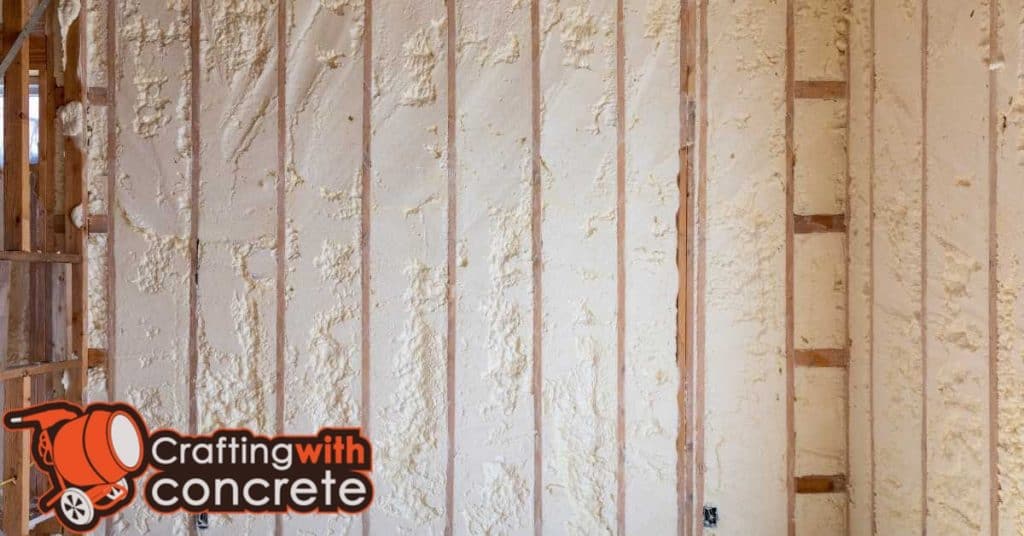
Open stud wall with sprayed foam insulation filling cavities.
Spray foam fills wall cavities between studs, creating an insulating air seal.

How to identify unsound concrete after spray-foam removal

After spray-foam removal, visually identify defects that indicate the concrete’s health: cracks, spalling, delamination, laitance, microcracks, and pockets of residual foam. Each defect tends to show up as distinct surface cues—cracks and microcracks as hairline lines, spalling as flaked edges, delamination as bubbled or hollow patches, laitance as a chalky film, and foam pockets that trap sheen, color variation, or dust against the surface. Foam contamination can mask deeper issues by hiding voids, masking delamination beneath a glossy surface, or giving the impression of a solid, paint-ready layer that hides moisture pathways.

To uncover hidden signs, rely on non-destructive tests, sounding or hammer tests, moisture and porosity checks, careful surface cleanliness assessment, and, if needed, core sampling considerations to verify fully embedded defects. These steps help you distinguish surface repair needs from deeper remediation, prioritize actions, and provide a credible basis for triage, budgeting, and planning for any follow-up testing or partial core samples before repair work begins. Document findings with photos and notes, categorize issues by severity and location, and ensure the record includes scale, date, environmental conditions, and recommended next steps so the crew can proceed with targeted remediation.

Step-by-Step Cleaning Process

This sequence gets the slab ready for a proper soundness check after spray-foam removal. Follow each step in order so you don’t chase problems later.

  1. Put on PPE and isolate the area. Wear gloves, eye protection and a respirator because dust and old foam bits are nasty; this keeps you safe while you work. For silica-generating operations use a P100/HEPA respirator and run a HEPA vacuum on the tool. Check your respirator fit and that ventilation is working before you start. Stop and call a pro if you can’t get a safe work area or suspect asbestos or hazardous insulation.
  2. Remove loose foam and adhesive with a stiff scraper and putty knife. You do this so the concrete surface is exposed for inspection and probing. Check that the surface is visibly free of foam and flaky residue along the entire area. If adhesive won’t come off without heavy chipping, call a pro — you may be over-cleaning and damaging the slab.
  3. Sweep and blow the area with a shop vac on hard floor setting. Cleaning removes dust that hides hairline spalls and poor bond zones. The check: no residual powder or fibers when you run your hand over the surface. Wait only a few minutes for vacuuming to finish; proceed when surface is visibly clean.
  4. Do a tap-and-sound survey with a hammer or screwdriver handle. This exposes hollow or delaminated spots because unsound concrete sounds dull or hollow. Mark any dull-sounding zones with chalk or tape as you go. If you find large hollow areas or a pattern of delamination over a structural element, stop and call a structural pro.
  5. Probe suspect spots with a screwdriver or masonry probe and then a cold chisel. The point is to find soft, powdery, or crumbly concrete that won’t hold an edge. A solid area resists the probe and chips cleanly; soft areas crumble or scrape away. If probing removes more than a teaspoon of material across an area bigger than a hand, consult a contractor — the slab may need repair or removal.
  6. Check moisture with a plastic sheet test or a handheld moisture meter. For coatings and many epoxies aim for in-slab relative humidity (ASTM F2170) under 75% RH, and for some moisture-sensitive systems target <60% RH—check the product data sheet. The quick check: tape a 12×12″ plastic square for 24 hours and look for condensation, or read the meter; high moisture means wait. If you get constant high readings or visible water, call a moisture-control pro before doing patchwork.
  7. Clean dust and contaminants with water rinse and a deck brush, then vacuum and let dry. This final cleaning reveals remaining weak spots and ensures repair materials will bond. The check: surface is free of dust, oils and residues and feels rough, not slippery. Allow at least 24–48 hours of drying time before any patching or coatings unless using fast-setting, manufacturer-cleared products.

Pro tip: Photograph and map weak spots as you work. It saves time when you decide what to repair or show a contractor, and prevents missed trouble that looks fine once covered again.

Visual inspection checklist

Walk the slab slowly and look closely for obvious problems: note every crack (measure width with a coin or ruler and estimate depth), areas where the concrete pulls away from embeds or walls, and any spalling or flaking surface. Take clear photos of each issue from two angles and include a ruler or tape in the frame so the contractor can see scale. If you spot dark stains or efflorescence, photograph them too — they tell you where moisture has been or still is.

Tap questionable areas with a hammer or screwdriver tip and listen for hollow sounds; mark those spots and record their location. Measure and log crack widths and depths, note whether joints are bonded or debonded, and write short notes on substrate softness or loose chips. Don’t guess—record measurements and conditions so quotes aren’t vague and contractors can price work accurately.

Take organized photos and short notes — name files or number tags to match your log. If you find large delaminated sections, deep cracks, or active water staining, stop and get a professional quote rather than patching blindly. A caught problem now is cheaper than tearing out a bad repair later.

Simple tests to confirm soundness

You’ve already done the visual checks — now confirm what you saw with a few quick hands-on tests. Think of these as fast go/no-go checks: they tell you if the slab will hold a new finish or if it needs repair or removal. If anything fails, don’t try to skimp; call a pro.

Start with the hammer test (sounding). Tap a 1–2 inch steel hammer or screwdriver across the surface in a grid. A solid, ringing sound means the concrete is bonded; a dull thud or hollow sound means delamination or loose material. For a stronger check, use a commercial pull-off test tool (ASTM D4541 or ASTM C1583 for overlays): glue a 20–50 mm dolly to the slab, let the adhesive cure, then pull. Aim for cohesive concrete failure above roughly 1.5–2.0 MPa as a common acceptance threshold for repairs — follow the product spec for required minimums.

Check moisture and alkalinity before applying anything new. Use a moisture meter and/or the ASTM F2170 RH test for in-slab humidity where required (many manufacturers reference RH limits 75% or less; some coatings require <60% RH). For alkalinity, rub surface residue into water and test with pH strips — many coatings require pH below ~10.5. If moisture or high pH shows up, address it (drying, surface prep, neutralizer) rather than forcing a finish that will fail.

Back to top ↑

Problems specific to spray-foam contamination

Spray-foam residues and adhesives create several repair challenges that need targeted cleanup and testing before patching. These include waxy or plastic films, oily binders, and particulate dust that can all reduce bond strength or create delamination. Understand the residue type, test for transferability, and remove or encapsulate according to the product you plan to use.

Types of foam residues and how they behave

Closed-cell foam leaves a hard, waxy crust and often a thin brittle shell on surfaces. That crust sheds flakes and won’t let adhesive or paint soak in. If you see that shiny, plastic-feeling layer, remove it mechanically (grinding, shot blast) down to sound concrete before bonding.

Open-cell foam leaves a soft, fibrous residue that can look dusty or spongy and holds moisture. It kills adhesion and traps solvents. Brush or vacuum loose material away and wipe with a manufacturer-approved solvent or detergent to reach firm material before you try to glue, caulk, or paint over it.

Adhesive smears from the installation are tacky or brittle depending on product and age. Test a small patch: if the new adhesive beads up or peels, you’ve got contaminated adhesive. Clean to sound substrate or remove the affected concrete and re-patch as necessary.

Common invisible contaminants and testing

Do a simple wipe test: rub a clean white cloth over suspect areas (spray-foam edges, trims, HVAC grills). If the cloth picks up a greasy film or leaves a shiny smear, you’ve got transferable residue. Then do a small solvent check with isopropyl alcohol or mineral spirits on an inconspicuous area—if the residue dissolves or smears, it’s a binder or oil and requires deeper cleaning or replacement.

When contamination could affect health (old foam with unknown chemistry, suspect isocyanate exposure) or when insurance/permits require confirmation, send samples to a lab (VOC screening, FTIR, GC‑MS). For possible asbestos in older buildings, stop work and hire an accredited asbestos inspector before disturbing materials.

Back to top ↑

Safe removal of foam and unsound concrete

Safely removing foam and unsound concrete hinges on clear criteria to distinguish removable foam from compromised concrete, using stepwise methods that match the condition: start with loose or thin foam, progress to embedded foam and weak concrete with chiseling or a jackhammer, and finish with edge work and flush surfaces using grinders or careful abrasive blasting only when all safety and substrate checks are satisfied. Establish criteria by listening for hollow sounds, looking for visible cracking or delamination, and performing moisture tests or simple non-destructive checks after each pass to decide when to proceed or pause. Emphasize controlled tool pressure, correct angles, vibration management, masking to protect nearby surfaces, and ongoing assessments for rebar exposure, dust control, and lockout/tagout for powered equipment.

This approach matters on any jobsite or DIY project because it helps prevent over-removal, minimizes damage to surrounding concrete, and reduces retracing work or costly repairs, while keeping workers safer with proper PPE, ventilation, and dust control. You gain a practical, repeatable workflow: choose the right method for the material at hand, document quick assessments after each removal pass, and apply containment and disposal routines that meet local regulations. By planning containment, debris management, and post-removal inspections for corrosion risk, you’ll know when to proceed to patching and preparation steps or schedule structural repairs, all without guessing in the field.

Manual and hand-tool methods

For small patches and delicate edges, hand tools let you remove foam and soft or unsound concrete without wrecking the surrounding sound material. These are the tools you’ll actually use on tight corners, steps and patch areas after following the safe-removal steps covered earlier.

  • Floor/hand scraper — A flat metal blade on a long handle for scraping foam and thin layers of loose concrete. Look for a hardened steel blade 3–6 inches wide; replaceable blades are handy.
  • Putty / razor scraper — Small handheld scraper with a single-edge razor for tight spots and adhesive residue. Use a fresh single-edge blade and change often to avoid dragging.
  • Cold chisel + club hammer — For knocking away small pockets of unsound concrete and foam where scraping won’t reach. Use a 1/2–3/4″ cold chisel and a 2–4 lb club hammer; keep the chisel tip sharp and the strike square.
  • Masonry chisel + lump hammer — Wider chisel for removing larger soft patches and undercutting delaminated concrete. Control your swing and take small bites.
  • Oscillating multi-tool with carbide blade — Cuts foam, soft concrete, and makes clean cuts at edges or trims flush with fixtures.
  • Reciprocating saw with demolition blade — Best for cutting out larger foam sections or breaking thin concrete slabs in tight access spots.
  • Wire brush & stiff broom — For final cleaning of loose particles and preparing the surface for patching.
  • PPE: gloves, eye protection, respirator — Use at minimum N95 for light dust; for silica-producing work use P100 and HEPA controls. Hearing protection for powered tools.

Pro tip: Start with the least aggressive tool that will work and step up only as needed. Pair a razor scraper and wire brush for finish work, then bring in chisels for stuck areas. Rent the heavy gear only for bigger jobs — you’ll save money and avoid over-damaging the good concrete around the repair.

Power tools and abrasive methods

Power and abrasive methods speed up removal of foam and weak concrete where hand tools stall. Use the right machine for the job size and substrate—otherwise you wreck the deck, blow your budget, or create a big dust mess.

  • Rotary grinder (diamond cup) — Ideal for fast surface removal and profiling. Use a diamond‑cup wheel; start with coarse 36–60 grit for heavy removal, follow with 80–120 grit to blend, and finish with 180+ grit for coating prep. Make overlapping passes (30–50% overlap). Use a dust shroud and HEPA extractor to control silica.
  • Needle gun — Breaks loose weak, flaky concrete without cutting into sound concrete. Good for spot delamination and tightly controlled removal.
  • Angle grinder with flap disc — Good for edge work, cleaning up corners, and light smoothing after grinding. Use ceramic or zirconia flap discs rated for concrete.
  • Shot/abrasive blaster — Best for heavy surface cleaning and producing a uniform profile on large, exposed areas (target CSP 3–5 for overlays). Hire trained operators and match media/pressure to avoid over-etching.
  • Demolition hammer / breaker — For removing thick patches of unsound concrete or old embedded foam. Match breaker size to slab thickness and avoid oversizing near sound areas.
  • HEPA dust extractor — Controls respirable silica and keeps the site clean when using grinders and breakers. Use construction‑grade HEPA vacuums and hook them to tools where possible.
  • Air compressor & blast pot — Powers needle guns and portable abrasive blasting setups. Match CFM/PSI to the tool.

Pro tip: Don’t try to force one tool to do every job. Start rough with a grinder or blaster, switch to needle gun or breaker for stubborn areas, and finish with an angle grinder and HEPA vacuum. Rent the heavy stuff if you’ll only use it once—buy the dust control gear and PPE.

Safety and PPE for foam and concrete removal

Wear the right gear before you start: fitted P100/HEPA respirator for silica or P100/organic-vapor cartridges if solvents are present, eye and face protection, hearing protection, and cut-resistant gloves. For occupational work, OSHA requires employee medical surveillance and training when workers are exposed to respirable crystalline silica above the action level; limit exposures with engineering controls (HEPA vacuums, wet methods) first.

Control dust and fumes at the source. Run a HEPA-rated vacuum on grinders or sanders, use wet-cutting or misting when appropriate, and seal off work areas to prevent migration of dust. If you suspect asbestos or chemical hazards (e.g., solvent-contaminated foam), stop and arrange for testing before proceeding.

Be cautious with solvents and adhesives left in the foam or on concrete. Provide fresh air, avoid open flames, store solvent-soaked rags in a metal container, and follow the SDS for disposal. If you cannot establish safe exhaust and filtration, hire a contractor who can.

Back to top ↑

Containment, cleanup, and disposal considerations

Containment, cleanup, and disposal considerations focus on keeping spray foam debris, concrete dust, and any contaminated runoff under control through practical methods such as plastic sheeting, negative-pressure work zones, and HEPA-filtered vacuums during removal, grinding, and cleaning. Use barriers like snail-trap silt fences and containment berms, paired with drip pans and temporary flooring, to manage runoff and protect adjacent areas. Clearly separate debris streams, label waste properly, and determine if foam requires hazardous-waste handling or special disposal while identifying local facilities and possible recycling options for concrete.

Implementing these steps matters because it minimizes airborne particles, reduces cross-contamination risk, and helps you stay compliant with local disposal rules and permit requirements. It also clarifies responsibilities, streamlines waste processing, and supports safer, cleaner jobsites with clear paths for transfer to licensed facilities. By planning PPE, hygiene stations, and work practices now, you protect yourself and others while ensuring responsible residential or small-project cleanup and disposal.

Dust and waste containment best practices

Start by closing the work area off from the rest of the house. Use plastic sheeting to cover doorways, vents, and floors. Make a simple vestibule for entry and exit so dust doesn’t track out. Seal all openings—gaps around pipes and baseboards are the usual culprits.

If you can, run a negative-pressure enclosure to keep dust from spreading. A box fan with an inline HEPA filter or a rented negative-pressure unit will do more than waving a broom. Never rely on open windows or a ceiling fan to clear airborne dust.

Clean as you go. Use a HEPA-filtered vacuum for concrete dust and fine debris, and bag waste in heavy contractor bags that are tied off each day. Keep a short daily cleanup routine: vacuum, wipe surfaces with a damp cloth, and remove waste to an outside dumpster. If you skip this, you’ll track the mess through the house and regret it later.

Environmental and regulatory disposal notes

Quick rule: check the SDS for every foam or adhesive you use. Manufacturers list whether the product, leftover cans, or contaminated rags are considered hazardous. If the SDS lists solvents, isocyanates, or pressurized containers, assume special handling is required.

Local rules vary. Call your municipal waste office or visit their website before you throw anything out. Some cured spray foam is treated as construction waste, but uncured foam, spray cans, and solvent-soaked rags often must go to a hazardous waste facility or special drop-off. Don’t assume the transfer station will accept it—ask first.

Practical on-site moves: keep wastes separate and labeled, don’t mix solvent wastes with general trash, and store used rags in a metal container with a lid until disposal instructions are clear. Keep disposal receipts or manifests if your municipality requires them—paperwork avoids fines. If you’re unsure, hire a licensed waste hauler; cheap shortcuts here can cost a lot later.

Back to top ↑

Profiling and surface preparation for good bond

Surface profile, defined by the ICRI CSP scale, sets the depth and roughness the bond requires for durable adhesion after spray foam removal. Different CSP levels influence how strongly epoxies, polymer-modified mortars, and overlays will grip the substrate, so target CSPs should align with product data, substrate condition, and whether the surface is clean or laitance-laden. Acceptable preparation options include grinding, shot/abrasive blasting, and scarification, each with its own workflow, safety considerations, and ideal CSP range tailored to the repair product and substrate, and verification techniques such as replica tests or profilometer readings.

Before choosing a method, assess current conditions—moisture, alkalinity, laitance, contamination, and any remaining foam residues—as these factors dictate achievable profile depth and equipment choice. Practical steps include issuing CSP verification via replica tests or profilometer readings, surface roughness checks, and documenting findings to guide safe, efficient work while minimizing over- or under-roughening, moisture-related delamination, or contamination carryover. Also, map CSP targets to common repair products (epoxies, polymer-modified mortars, overlays) and provide quick-checks for uneven profiles, rework sequencing, and protective measures to help DIY crews forecast bonding performance before gear is set.

Measuring and verifying surface profile

Don’t guess the profile — check it. The quickest practical checks are a simple visual look for high and low spots, a tape feel test for texture, and a replica tape reading when you need numbers. Walk the area, note glossy or smooth patches, and mark them for rework before you mix materials.

A tape feel test is as simple as pressing a strong clear tape onto the concrete, peeling it off, and feeling how much grit sticks — if it feels almost smooth, you need more profiling. For a proper measurement carry replica tape and the gauge — the tape gives a micro‑profile number you can compare to the product datasheet or convert to CSP. If you don’t have replica tape, use several visual/tactile checks across the slab and treat anything inconsistent as a failure point.

Know your targets: for bonded overlays and thin toppings aim for about CSP 3–5; for heavier patch and epoxy mortars aim higher, around CSP 5–7. Always match the reading to the manufacturer’s spec — wrong profile is the number-one cause of bond failure, so stop and re-profile if you’re even slightly outside the target.

Removing residual contamination before profiling

Start by identifying the type of residue: oil/grease, solvent-soluble binders, or cured foam binder. For light oils and grease, degrease with a commercial pavement cleaner or hot water with detergent and scrub hard. For solvent-soluble binders, use a compatible solvent and wipe until the rag comes away clean. Do a small test patch first to confirm the solvent won’t damage the substrate.

If residues are baked-on or rubbery, mechanically remove them. Use a stiff scraper, rotary wire brush, or an angle grinder with a cup brush while running dust extraction. Don’t use aggressive grinding settings that change the profile you need. Keep passes light and check progress often. Replace cutters and brushes when they get glazed — they stop cutting and just smear the mess around.

After cleaning, wipe the area with clean solvent or fresh water and let it dry. Perform a quick water-break test or simple visual check: water should sheet out, not bead. If beads form, repeat cleaning. Wear proper PPE and ventilate when using solvents. Once residue is gone and surface is dry, proceed to final profiling and the profile verification already covered earlier.

Back to top ↑

Choosing patching materials and bonding agents

Patching options vary with need: patch mortars suit small, non-structural repairs, while polymer-modified cementitious mixes offer better flexibility and bonding on weathered substrates, and bonding-enhanced systems are useful where contamination or weak substrate is a risk. Choose based on load requirements, surface history, and whether primers, epoxies, or urethane bonding agents are needed for moisture-prone or chemically challenged conditions. Plan for cleaning, degreasing, and achieving the right abrasion or roughness profile before patching to maximize adhesion.

Surface contaminants like foam debris, oils, and sealants dictate preparation and product selection, as primer compatibility and surface sealers influence long-term performance. The guidance helps you decide when primers alone are enough and when stronger bonding systems are required, plus how spray foam residue affects adhesion, curing, and shrinkage. Expect curing time, temperature limits, and potential issues like blisters or delamination, and pair them with bond tests and flatness checks to confirm readiness before finishing.

Quick-reference material selection guide

Pick the right material and the patch will last and look right. Choose by problem type — hairline cracks, surface spalls, deep patches, or overlays — and match the spec on the bag or label to the repair you need.

  • Polyurethane crack sealant — Used for hairline and non-structural moving cracks. Look for a flexible, paintable PU sealant rated for concrete and with ±25% movement capability on the tube. Expect pot-life/skin times shown on the cartridge; typical cure to handle 24–48 hours depending on temperature.
  • Polymer-modified skim coat — Best for surface spalls and thin repairs under 1/2″. Follow manufacturer water ratios exactly. Typical compressive strengths vary; target mixes with 28-day strengths in the 1,500–4,000 psi range for non-structural work.
  • High-strength structural patch — Use for deep, full-depth repairs or where load transfer matters. Choose a high-compressive-strength, shrink-compensating repair mortar (look for 28-day strength > 4,000 psi and shrinkage compensation). Follow water ratios and place in lifts as specified.
  • Epoxy injection resin — For bonded structural crack repairs and restoring tensile capacity. Look for structural epoxy labeled for concrete injection; many products list working times and acceptable crack width ranges (e.g., up to 1/4″ or less). Epoxy requires dry conditions unless the product explicitly tolerates damp surfaces.
  • Acrylic bonding agent — Use when you need a thin bond coat between old concrete and a new mortar or overlay. Follow label dilution and open/tack times. Some acrylics accept recoat in minutes; others require longer flash times—confirm on the datasheet.
  • Hydraulic/fast-setting cement — Good for plugging active leaks and quick-return repairs. Set times can be 5–15 minutes; they are brittle long-term and are best used for emergency stopping, not final topping.
  • Polymer-modified bonded overlay mix — For resurfacing and bonded overlays several mm to inches thick. Use mixes specified for overlays and follow placement and curing guidance closely; expect longer cure times and match CSP per manufacturer directions.

Pro tip: Buy one clear job-sized bag and one proper bonding agent; store unopened bags dry and off concrete; mix small batches to avoid waste, and always follow manufacturer water ratios — too much water kills strength and causes cracking later.

Bonding agents, primers, and tack coats

Bonding agents and primers are there to make sure a new patch bites into the old surface instead of peeling off. Use a primer when the product label calls for it—porous concrete and dusty surfaces need it. For overlays, target CSP and primer compatibility listed by the overlay maker. For concrete repairs, a bonding slurry (cementitious) or epoxy primer often does the job depending on the patch material.

Application is simple: clean, dry, and compact the base, then apply the agent evenly and don’t dilute unless the label says so. Roll or brush thin coats for primers; spray or squeegee for tack coats. Watch temperature and moisture—most primers require substrate temperatures above 40°F (4°C) and below 90°F (32°C) and require surfaces below specific RH limits. Let primers flash to a tacky state before applying the patch; tack coats usually need a short open time so they’re sticky but not smeared into nothing.

Know the pot life and compatibility limits. Epoxy pot life can be short—often 20–60 minutes once mixed—and will thicken faster in heat. Water-based primers dry fast; solvent-based ones take longer. Check compatibility with residues like foams, oils, or curing compounds—some epoxies won’t bond to foam residues and some primers won’t tolerate oil. When in doubt, wipe a small test patch and let it cure overnight. If it peels, stop and change products—fixing a failed bond costs a lot more time than doing it right up front.

Back to top ↑

Crack repair techniques and schedules

After foam removal, assess crack width, length, depth, movement, and type to choose the right repair: epoxy injection for structural cracks, routing and sealing for dormant cracks, stitching for moving cracks, or gravity-fill for wide gaps. Plan surface prep and routing depth, bevel edges, and ensure clean, dry cracks to maximize edge bonding.

A clear schedule with cure times, compatible primers, and environmental controls helps maximize bond and durability while guiding sequence. Finishing steps like grinding flush and verifying no movement, plus moisture or penetration tests if needed, ensure the repair holds and reduces future ingress.

Small hairline cracks and microcracks

For tiny, non‑structural cracks the fix is mostly about prep and using a low‑viscosity material that actually penetrates. First route and clean the crack: open it slightly with a grinder or chisel to remove dust and loose filler, blow or vacuum the debris, then wipe with a damp cloth. If the crack is damp, let it flash off so the repair material can bond.

Use a low‑viscosity epoxy or a thin cement slurry depending on the surface and exposure. Epoxy is best for dry, indoor concrete or where you need a gap‑filling, long‑lasting repair — inject with a syringe or pourable applicator so it soaks into the microcracks. For exterior or moist areas a polymer‑modified cement slurry pressed into the routed crack works well; pack it and tool flush.

Watch for movement. If the crack reopens or is actively moving, don’t waste time with epoxy — use a flexible sealant or get a pro opinion. After curing, check for surface bond and finish as needed. And remember: tiny cracks often point to underlying issues, so check base compaction or drainage if they keep returning.

Structural cracks and through-cracks

These cracks are different from hairline or surface shrinkage—think of them as signs the wall or slab is moving. First step: figure out if the crack is active. Monitor it for a couple of weeks with a simple gauge or taped ruler. If it grows, calls for stronger fixes than surface sealers.

Epoxy injection works when the pieces line up and the crack is stable. It bonds the concrete back together and restores strength. Use epoxy for through-cracks that are clean, dry, and not shifting. Stitching with metal staples or drilled-in bars is the next step when there is a little movement or you need added mechanical shear resistance.

If the crack is wide, irregular, or the foundation shows settlement, combine methods or move to full-depth repair. Tie in reinforcement or replace the damaged pour where loads pass through. Don’t waste time on fancy cosmetic patches when the structure needs ties or a new section—fix support first, finish cosmetics later.

Back to top ↑

Round sanding disc on long pole used on blue-patched drywall
Extending reach with a pole sander helps smooth patched drywall before finishing.

Full-depth and partial-depth patch procedures

Choosing between partial-depth patches and full-depth repairs hinges on the extent of damage, structural needs, and how exposed the reinforcement is. Partial-depth patches remove damaged concrete to sound substrate (typically 1–2 inches or more as needed), then surface prep, bonding agent, and proper rebar protection are used, followed by a suitable patch material and consolidation to ensure a smooth, durable transition.

This approach matters on the jobsite because it directly impacts long-term durability, crack control, and the risk of future corrosion. By matching material choice and additives to the surrounding concrete, ensuring adequate cover and proper bonding, and using correct curing methods, you reduce shrinkage cracking and improve adhesion to the substrate. Understanding when to extend to full-depth repairs—establishing patch boundaries, removing to sound concrete across the full area, installing forms, treating rebar, and using dense patch material with proper compaction and curing—helps prevent future issues and keeps the repair integral with the existing slab.

Partial-depth patch step-by-step

This sequence walks you through removing loose material, creating a sound edge, bonding, placing the patch mortar and finishing so the repair holds and looks right.

  1. Chip out all delaminated and loose surface material until you hit solid concrete or intact aggregate. You do this to stop the patch from popping off later. Check by probing with a screwdriver — no more soft or hollow spots. If the delamination is deeper than 1–2 inches or you find rusted rebar, stop and call a pro.
  2. Create a clean, squared edge and a uniform backside profile with a hammer and chisel or grinder. A defined edge gives the patch something to bite onto and prevents feathering. The check is a straight, sound edge with no crumble when you press it. If you can’t get a solid edge without removing large sections, call a contractor.
  3. Blow or wash the area, then let it dry to a damp surface — not puddling. Clean removes dust and contaminants so the slurry and mortar bond. The surface should feel cool and slightly damp to the touch but not wet. Wait until visible standing water is gone before proceeding; a full hour is typical depending on temperature.
  4. Mix and apply a bonding slurry or adhesive per product instructions and tack it to the prepared area. The slurry ties the new mortar to the old concrete and prevents separation. Check that the slurry is evenly applied and still tacky when you place the mortar. If the slurry runs or won’t stick, mix a fresh batch or switch products instead of forcing it.
  5. Pack patch mortar into the cavity in thin lifts, roughly 1/2 to 3/4 inch per lift, tamping each layer solid. Thin lifts reduce shrinkage and cold joints and ensure full compaction. Check by feeling for voids and tapping — a solid, dense sound and no crumble at the edges. If you can’t get good compaction with hand tools, call a pro with pneumatic equipment for larger repairs. Allow each lift to set per product directions, usually 20–60 minutes, before next lift.
  6. Strike and trowel the final surface to match surrounding concrete. This step controls drainage and appearance, so get the slope and texture right. The check is that water runs off like the surrounding slab and the texture blends when dry. Don’t overwork the mortar — stop when it holds form and follow product set time before light use (usually 1–2 hours for walkable, longer for full strength).
  7. Cure the patch properly with wet curing or a curing compound for the time the product requires, typically 24–72 hours for initial cure and 7 days for strength gain. Proper curing prevents cracking and loss of strength. Check by ensuring the patch stays continuously damp if wet curing, or that the curing membrane remains intact. If you see rapid drying, shrinkage cracks, or the patch powdering, call a pro to evaluate the repair method and materials.

Pro tip: Don’t try to feather thinly to match edges — that’s where patches fail. Cut a clean, squared edge and use compatible repair mortar in proper thicknesses for a durable repair.

Full-depth patch step-by-step

Follow these steps to remove bad concrete, repair the steel, form and place a structural patch, and get the area cured and back in service. The sequence assumes you’ve already read the surface-prep and partial-depth notes — this is the full-depth workflow from demolition to final cure.

  1. Demolish to sound concrete using a hammer or small jackhammer until you reach solid, non-failed material. You do this to expose the full depth of damage and any embedded steel so the new patch bonds correctly. Check that intact concrete edges are firm and don’t crumble when you tap them; if large sections keep breaking off, stop and call a contractor — you may have a hidden delamination or structural issue. No wait time; proceed once sound edges are confirmed.
  2. Expose and clean rebar, cutting out and replacing any bars that are badly sectioned. Corroded steel kills long-term repairs, so remove loose rust, scale, and badly pitted bars and wire-brush or power-grind remaining bars. Check with a wire brush and a screwdriver: solid steel shines when clean and doesn’t flake; if more than 25–30% of a bar’s section is gone, call a pro for structural replacement. Allow time for metal primers or corrosion treatments to flash off per product instructions (usually 1–2 hours) before placing mortar.
  3. Install formwork and any required reinforcement dowels or new bars, set to the correct final concrete level. Forms control shape and support the fresh material so the patch cures to the right dimensions and strength. Verify form alignment with a straightedge and level; forms should be tight with no gaps larger than the mortar line. No cure wait here; the job pauses only until forms and reinforcement are secure.
  4. Select and mix the structural repair mortar or concrete per manufacturer instructions, using the specified water ratio and additives. Using the right product and mix strength ensures the patch will carry load and bond to existing concrete. Check slump or consistency against the product’s guide — too wet and it will sag, too dry and it won’t consolidate. If you can’t obtain the specified structural product or are unsure about required strength, stop and consult a structural materials supplier.
  5. Place the repair material in lifts, compacting and vibrating each lift to remove voids and ensure bond to old concrete and rebar. Placing in lifts avoids cold joints and trapped air; vibration consolidates the mix around rebar and into corners. Check for continuous, dense fill with no visible honeycombing and a firm surface after consolidation; if voids appear, rework immediately. Respect manufacturer lift thickness limits and allow initial set between lifts if specified (commonly 10–30 minutes for rapid products).
  6. Screed and finish the surface to the required profile, then apply curing method (wet cure, membrane, or curing compound) immediately. Proper finishing and curing prevent surface crazing and ensure strength development. Check that the surface is uniform and free of laitance before curing; use a straightedge or visual inspection. Follow curing time: keep moist for at least 7 days for cementitious mortars, with full strength typically at 28 days; if unsure about exposure or load, wait the full 28 days before heavy use.
  7. Strip forms, touch up edges, and protect the patch from traffic, freeze, and impact while it gains strength. Final checks confirm bond and dimensional accuracy before reopening to service. Tap the cured patch — it should sound solid and not hollow; measure critical dimensions against the original plan. If cracks develop quickly or the patch shows spalling within days, call a professional — poor mix, placement, or underlying movement may need engineered repair.

Pro tip: Don’t shortcut cleaning or consolidation. A quick job now means a quick failure later — clean, treat steel properly, place in lifts, and cure fully. If any step feels uncertain, stop and consult a structural concrete specialist rather than guessing your way through it.

Back to top ↑

Mixing, placing, and finishing techniques for a smooth surface

Develop a reliable repair mortar routine with defined mix design targets, including ratio ranges, suitable additives, and a target slump, while adapting for ambient temperature and humidity to prevent early-set or weak patches; emphasize thorough surface prep, substrate soundness checks, dust and grease removal, and feather-edge guidance to ensure a strong bond with the existing slab. Outline precise trowel techniques for patch placement—whether using a lath or feathered edge method, embedding reinforcement if needed, and avoiding air voids—then describe how to achieve a flush, uniform height through careful finishing and, when necessary, controlled grinding to blend with surrounding elevation.

This matters on the job site because proper mix, prep, and technique reduce rework, cracks, and delamination while delivering a smooth, skid-resistant texture that matches adjacent slabs; it also guides you through timing, tool choices, dust control, and correct planarity checks with straightedges and water tests, followed by curing and sealing options to secure long-term performance. By understanding when and how to feather transitions, verify high spots, and reoccupy the area safely, you gain confidence to achieve a durable, visually seamless surface with minimal disruption.

Troweling, floating, and feathering

Start by looking at the slab and the transitions. Check base compaction, look for high spots and low spots, and mark them. For small areas or tight corners use a hand trowel and a hawk. For larger open areas use a float or power float to get a consistent plane. Decide early—don’t switch tools halfway unless you know why.

When you’re moving from one level to another, keep the float or trowel flat and work the edge back and forth with light pressure. Feather the higher side down into the lower side so you don’t create a ridge. If you see a ridge, stop and blend it immediately; leaving it to fix later just makes more work.

Final texture is a choice: hand trowel for a tight, smooth finish; power float for speed and uniformity on big slabs. If you go power, don’t overwork the slab—too much ride time = burn and weak surface. Make the call based on slab size, your skill, and whether you need a broomed or smooth finish.

Grinding and polishing after patch

Start by assessing the patch and surrounding slab with a straight edge and good light. If the patch has high spots, knock them down with a coarse cup or diamond wheel (around 36–60 grit). Move in overlapping passes (30–50% overlap) and keep the machine flat — you want even removal, not gouges. Don’t try to skip steps; coarse, medium, then fine is the only reliable way to a uniform surface.

After the coarse pass, follow with medium (80–120 grit) to blend the patch into the existing floor and remove scratches from the first cut. Finish with fine pads or grits (180–400+, depending on coating requirements) until the texture is consistent across the whole area. Feathered edges and thin skims take extra attention; they’ll show up under coatings if not fully blended.

Control dust and adhesion prep: attach a dust extractor and wear a respirator rated for silica. For final cleanup, use a HEPA vacuum and a tack cloth so no fines remain. One last check with a straight edge and a wipe with solvent or recommended primer ensures the patch is ready for coatings or floor coverings. If you see shadowing or waviness, grind back and repeat the finer passes; surface prep is where jobs live or die.

Back to top ↑

Curing, protection, and testing repaired areas

Curing, protection, and testing repaired areas means choosing proven methods to harden patches, shield fresh surfaces from premature wear, and verify readiness for coatings or overlays. Use moist curing, curing blankets, semi-permeable membranes, or chemical curing compounds, noting timing, benefits, and drawbacks for each option. Plan protection during curing with restricted traffic, clear signage, and barriers, and track how long before surfaces reach target strength under the given environmental conditions.

Environmental controls matter just as much as the materials chosen: keep suitable temperatures and humidity, shield from wind, and adjust for hot or cold conditions to avoid premature drying or moisture loss. Before coatings, perform simple tests such as RH (ASTM F2170) or non-destructive moisture meters, pull-off adhesion tests (ASTM D4541/ASTM C1583) where required, surface dryness checks, and surface profile judgments to confirm readiness. Document recoat windows, cure- and test-result findings, and ensure compatibility with sealers or overlays to support a reliable, long-lasting finish for DIY projects and busy job sites alike.

Curing timelines and signs of proper cure

Most patch materials have clear working windows. Fast-set skid patches and epoxy-based mortars can support foot traffic in a few hours and light vehicle traffic in about 24 hours. Standard cementitious patches typically take 24–48 hours to take light loads, reach useful strength in 7 days, and approach full strength by 28 days. Cold or wet weather can stretch those times dramatically, and heat will shorten them.

Don’t guess—feel and look. Gently press with your thumbnail or a screwdriver tip in an inconspicuous spot; it should be hard, not gummy or powdery. Tap the patch with a hammer; a solid sound beats a dead thud. Check joints and edges for lifting or separation and make sure there’s no visible moisture before grinding or sealing.

Before you grind, mill, or put heavy loads on the repair, do a simple staged test. Walk on it, then stand, then drive slowly over it if it’s a driveway. If the patch skids, compresses, or sheds dust, it’s not ready. And remember the basics you handled earlier: check base compaction and cure times from the product tech sheet—don’t override them because you need it done today.

Adhesion and moisture testing before finishing

Don’t guess — confirm. For a quick moisture check, tape a 12×12 inch clear plastic sheet down on the repaired surface for 24 hours and look for condensation under it. No water usually indicates safe surface conditions for many coatings; for product-specific acceptance use ASTM F2170 in-slab RH readings and compare to manufacturer limits (commonly 75% RH or lower, some systems require <60% RH).

Check adhesion before you spend time and money on finishes. For a contractor-quality answer, hire a pull-off tester (ASTM D4541 or ASTM C1583 for overlays). Acceptance is product-dependent—many repair specs require pull-off strengths >1.5–2.0 MPa; verify the required minimum on the product data sheet. For a DIY quick check, score a small X through the coating to substrate, press a strong tape down, pull sharply and inspect for lift. If the coating or repair comes away, you don’t have adhesion and you must remove and re-prepare the surface.

Don’t paint or seal over damp or poorly bonded patches just because they look dry. Bad adhesion or trapped moisture causes bubbling, peeling, and call-backs. If tests are marginal, wait longer, improve surface prep, or get a professional pull-off test before finishing. Strong results now save you rework later.

Back to top ↑

Tools, equipment checklist and rental/contractor options

This section provides a comprehensive checklist of hand tools (trowels, chisels, brushes), measuring and marking aids, and power tools (angle grinders, wet/dry vacuums, rotary hammers), plus surface-prep gear like grinders, scarifiers, and dust collection systems. It covers rental versus purchase options, bundle contracts, and safety gear, with guidance on tool quality, ergonomic grips, blade specs, and inspection tips to avoid nonfunctional equipment. It also includes tips for screening contractors, requesting references, and aligning scope with patches, grinding, sealing, and contingencies for subsurface conditions.

Understanding when to rent vs buy helps control costs and ensure access to specialized gear like scarifiers and dust extraction. The section translates planning into safer, smoother jobs by outlining PPE, silica controls, ventilation plans, and on-site briefings, so crews stay compliant and productive. For DIY or small teams, following these guidelines improves quotes, scopes, and scheduling, reducing surprises and delays.

Essential tools for DIY vs pro jobs

Think of this as the short list of what you actually need on site versus what you should leave to the rental yard or a contractor. I’m splitting the kit into affordable DIY essentials you should own or rent for a day, and heavy pro-only gear you hire someone for.

  • Angle grinder — Cuts, grinds and preps small concrete and metal edges. Use a 4–9″ disc and match grit/type to the material; 10,000–12,000 rpm is normal.
  • HEPA vacuum — Controls dust during cutting and grinding to keep the site breathable. Look for true HEPA filters and a high CFM for concrete dust.
  • Hammer drill / SDS+ — Drills anchors and small holes into concrete. Use SDS+ bits for hard concrete and 6–12 mm sizes for anchors.
  • Circular saw with diamond blade — Makes straight cuts in thin slabs or scored control joints. Use a continuous-rim diamond blade rated for wet or dry cutting and match RPM to the blade.
  • Pry bar & sledge — Basic demolition and leverage for tiles, thin slabs and old fixtures.
  • Jackhammer / breaker (pro) — For full slab removal or thick reinforced concrete. Requires matching breaker size to slab thickness and air or electric power rating; hire or rent from a pro if large.
  • Shot blaster (pro) — Prepares large concrete surfaces and restores profile before overlay. Equipment is heavy and requires trained operators and dust control.
  • Slab saw / bridge saw (pro) — Cuts deep control joints and removes large sections precisely. Hire for this; using a small saw for deep cuts risks overheating and unsafe kickback.

Pro tip: Buy the small, affordable items (grinder, HEPA vac, SDS drill) and rent heavy kit per job. Pair a HEPA vac to any cutting tool and never force a tool beyond its spec — that’s the fastest way to wreck your gear and your surface.

What to ask a contractor

Start by asking how they will do the work. Get the exact method, materials, and sequence. Ask who is on site each day, which subcontractors they use, and whether they carry the specific equipment or will rent it. If you already checked tools in the earlier checklist, just confirm they match what you expect.

Ask for a clear timeline with milestones and a plan for delays. Demand a written warranty that states what is covered and for how long. Ask how they handle change orders and unexpected discoveries. Get proof of insurance, a copy of permits, and at least three local references you can call.

Before you sign, insist on acceptance criteria and testing. Ask for specifics like replica tape/CSP targets, moisture readings (ASTM F2170), or pull-off minimums (ASTM D4541) and who will perform and document those tests. Ask who cleans site daily and who removes waste at job end. If they dodge these questions, walk away.

Back to top ↑

Cost estimates and time budgeting

Plan for ballpark costs by outlining cost per square foot for cleaning/patching, grinding/profiling, and full-depth repair, then explain how surface condition, containment, access, and local material costs cause variation. Include a clear labor-versus-material split with typical percentages, hourly rates, and how to estimate crew size, shift length, and downtime from cure times or weather. Highlight common price drivers such as patch materials, grinding equipment rental, sealants, bonding agents, and any specialty coatings that affect the final finish.

Contextualize the numbers with sample project timelines from mobilization through final finish, showing milestones for prep, patching, grinding/profiling, curing windows, and inspection. Offer a quick budgeting approach: input area in sq ft, apply phase-by-phase costs, add a 10–20% contingency, and note regional adjustments, while keeping documentation for homeowner approval and quotes. This helps DIYers and jobsite teams compare bids, plan crew needs, and anticipate downtime and weather impact.

Sample budget scenarios

Below are three real-world examples to help you convert the earlier cost ranges into a plan you can act on. Think of them as job sheets: what you need to buy, the work you need to do, and the likely time each will take. Use these to compare quotes and to decide where you can DIY and where you should hire someone.

  • Low-scope (spot cleaning & small patch): Materials + consumables $5–15, tool rental $20–80/day. Typical labor 2–8 hours. Estimated total $1–3 per sq ft for minor areas.
  • Medium-scope (room-sized prep & partial-depth patches): Materials $50–200 (mortar, primer), grinder rental $40–120/day, HEPA vac rental or purchase, disposal fees. Labor 1–2 days for a small crew. Estimated total $8–15 per sq ft depending on patch density and containment needs.
  • High-scope (large area/profile/grind & overlay or full-depth repairs): Equipment rental (shot blaster/ride-on grinder) $100–500/day, materials $200–800, labor multiple days. Estimated total $15–40+ per sq ft for heavy remediation and overlays; full-depth structural repairs can run higher depending on reinforcement work and formwork.

These are order-of-magnitude numbers. Get two or three itemized quotes before committing and add a 10–20% contingency for unseen conditions (contaminated waste, extra moisture remediation, or permit requirements).

Ways to save without sacrificing quality

Do the easy, low-risk work yourself: demolition, paint, demolition cleanup, and basic trim. Save big on labor that doesn’t require a license. Leave wiring, gas, structural work, and finish plumbing to pros. If you choose DIY, be honest about your skill. Mistakes on hidden systems cost more than you save.

Rent tools you won’t use often and buy consumables you’ll use up. A day’s rental of a saw or compactor beats buying for one project. For complex tasks hire the crew but ask for a short-term call-back rate so you can finish punch list items yourself. Also compare contractor rates with itemized bids — a cheap lump sum can hide expensive shortcuts.

Choose the right materials, not the fanciest. Match material specs to expected use and lifespan. Don’t overspec tile, lumber, or finishes for low-traffic areas. Ask your supplier for alternatives that meet code and warranty. And always check base compaction and sub-surface work first — cheap materials on a bad base fail fast. Finally, keep one eye on your budget scenarios from earlier and adjust priorities rather than cutting everything evenly.

Back to top ↑

Common mistakes and troubleshooting

Common mistakes and troubleshooting in spray foam removal from concrete center on residual foam left behind, inadequate surface preparation, weak bond between the patch and the existing slab, incorrect patch material or mix ratio, and improper curing or sealing, with corrective actions and prevention tips that start with thorough debris removal, surface profiling, and moisture management to prevent future failures. Expect practical steps to remove stubborn foam, create a suitable roughness profile through grinding or profiling, choose compatible patch compounds and admixtures, and implement controlled curing and sealing to lock in a durable repair, along with simple in-situ checks to catch issues early before proceeding to final finishing.

This matters on a jobsite because surface readiness, material compatibility, and curing conditions drive long-term performance and minimize callbacks, waste, and rework, while practical checks—cleanliness, dryness, friability, profile tests, moisture assessment, and compatibility sanity checks—provide a clear, repeatable workflow for DIYers and pros alike. By framing a straightforward troubleshooting sequence and prevention habit, the section helps readers distinguish bond failure, contamination-driven debonding, or patch-mix errors, and adopt proven steps to correct each issue before moving to the final grind and finish, ultimately delivering a smooth, durable repair with predictable results.

Troubleshooting adhesion failures

If your material peels or flakes, don’t guess—inspect. First check for obvious contamination: oil, dust, paint, or mold. Run a quick wipe test with solvent; if grime comes off, the surface wasn’t clean. Also verify the substrate profile and compaction; a smooth or weak base won’t hold the binder.

To reprepare, mechanically abrade or shotblast until you expose a fresh profile. After abrasive work, dry and clean thoroughly—no dust left. If moisture was present, wait until the substrate is below the product’s maximum moisture level (check product data sheet and ASTM F2170 limits) or use a proper moisture mitigation system. Reapply primer or tack coat according to product directions before the main layer.

When reapplying, follow temperature and pot-life limits. Press materials firmly into the primed surface and allow proper cure time before traffic. If failure repeats, stop and get the manufacturer’s tech data or test a small patch with different prep to isolate the cause. Poor prep is ninety percent of the problem—don’t skip it.

Fixing uneven or over-cut patches

If the patch sits low or you see a bowl instead of a flat surface, don’t keep troweling in more compound blindly. First check base compaction and clean the edges. Loose material or dust will let the patch settle again. For shallow low spots, apply thin lifts of setting-type compound and pack them tight — let each lift cure before adding the next.

Feathering problems show up as visible ridges or a sharp edge where new meets old. Grind back any high ridges to create a gradual slope, then feather with thin coats of joint compound or polymer-modified skim coat. Use a wide trowel and pull long, smooth strokes; stop when the transition is barely visible and sand lightly after cure.

If the patch is badly over-cut or keeps cracking, don’t paper over it. Rebuild the area instead of piling compound on a weak base — that’s when you should re-do the patch. For cosmetic minor unevenness where structure is sound, a thin skim coat will fix it faster; otherwise, rip back to solid material and start fresh. If you’ve had adhesion problems before, cross-check those fixes first rather than blaming the finish.

Back to top ↑

Visual checkpoints and final inspection checklist

This section provides a room-by-room or slab-area final inspection checklist to confirm every repair is ready for coatings, floor coverings, or traffic. Map each repair area, including slab edges, transitions, and high-traffic zones, and establish explicit acceptance criteria for final prep: surface profile, bond-seal readiness, moisture and alkalinity thresholds, and residual foam/void removal quality before coatings or floor coverings. Document critical checks for control joints, dowels, cracks, and repaired patches with proper compaction, cure, and edge integrity; verify patch flushness with surrounding concrete and that measured surface moisture, pH, cleanliness, and odor meet coating manufacturer specs.

The guide helps ensure consistent results, reduces surprises on site, and makes it easier to catch micro-voids, feathered transitions, or uneven edges before coatings or coverings go down. A clear documentation protocol—photographing each area, annotating defect sites, recording coordinates or room names, and compiling a final punch list with deadlines and re-checks—paired with safety, PPE, and cleanup steps, keeps the project organized and safe while delivering a ready-to-coat surface.

Acceptance criteria for different end uses

For coatings, look for a uniform film with no blistering, pinholes, or solvent entrapment and a cured hardness consistent with the product data. Measure film thickness where required; stick to the manufacturer’s wet/dry mil specifications. If you see pooling or an uneven sheen, don’t accept it — that usually means poor prep or wrong application conditions.

Tile and vinyl adhesives need solid contact and full bedding. Check that tiles or vinyl have no hollow-sounding spots and that seams sit tight without edge lift. For tile, grout joints should be within the specified width and depth tolerance and fully filled; for vinyl, verify bond tests or lift checks at random spots. For vehicle traffic demand higher compressive strength and stricter surface tolerances.

Decide acceptance by end use: for pedestrian areas accept tighter flatness and seam tolerances; for vehicle traffic demand higher compressive strength, thicker coatings, and stricter surface tolerances. Always check base compaction and substrate tolerances before final sign-off. Refer back to the visual checkpoints and final inspection checklist for basic defect items, then apply these end‑use criteria as the pass/fail standard.

Documentation and photo log for warranties

Treat your documentation like an insurance policy. Take clear, dated photos before work starts, at key progress points, and after final cleanup. Include wide shots for context and tight shots for problem areas. Save photos with descriptive filenames and the date or job number in them so they’re not anonymous later.

Record test results and measurements the same way you record visuals. Note compaction numbers, moisture readings (ASTM F2170 RH), and any on-site readings from manufacturers’ recommended tests. Keep a scanned copy of the receipt and the product data sheets and write down the installer’s name, contact, and the serial or batch numbers for materials.

Don’t assume a simple verbal promise will hold up. If warranty claims may come later, bundle the photos, tests, and paperwork into a single labeled folder or digital file and back it up. If you’ve already followed the visual checkpoints and acceptance criteria, reference those entries rather than re-documenting them—just make sure the proof matches what was inspected.

Back to top ↑

Practical next steps and trusted sources

Plain-language framing of ICRI and ASTM standards helps DIY readers know what applies to surface preparation, patching materials, bond, and curing requirements, with simple definitions. Look for typical product spec parameters such as Concrete Surface Profile targets, minimum and maximum compressive strength, pot life or working time, cure time, and bond criteria, and check manufacturer data sheets and SDS to confirm compatibility and safety.

Understanding these details matters on the jobsite because it guides pre-patch checks, the patching and finishing sequence, and how to verify that the substrate will hold up to spray-foam removal and repair work. It also helps you cross-check referenced sections, avoid common pitfalls, and know when to bring in a pro or manufacturer tech support for tricky substrates or ambiguous data.

Key standards to reference

When preparing a concrete repair, look up the ICRI concrete surface profile (CSP) that the product maker calls for. The CSP scale (1–9) tells you how rough the surface should be. If you skip that and try to feather-edge a smooth slab, the repair will fail. Check the required CSP against what you actually have before you buy materials.

Use the ASTM pull-off test to verify bond strength. For repairs, the common reference is ASTM C1583 (pull-off of repair overlays to concrete) or the coating equivalent ASTM D4541. Acceptance thresholds are product dependent—many repairs require pull-off >1.5–2.0 MPa; confirm the manufacturer’s requirement and document test results.

Verify substrate moisture with ASTM F2170 (in-slab RH) or ASTM F1869 (Calcium Chloride) as appropriate for the coating or topping. Common acceptance is ASTM F2170 RH < 75% for many systems; some sensitive systems require lower. For compressive strength references for new mixes or cores, use ASTM C39 (cylinders) and ASTM C42 (cores) if you need to confirm existing concrete strength.

How to read product data sheets

Treat the product data sheet like a cheat sheet. Scan for the numbers you care about first: working time (pot life), compressive and flexural strengths, and the temperature limits for application and service. If the pot life is short, plan mixing and handling so the crew can place it before it sets. If strengths are lower than your job needs, pick a different product or add more thickness — don’t hope it will “get stronger later.”

Look for the recommended substrate preparation and any specific notes about moisture, primers, or adhesion. If the sheet calls for a clean, profiled surface or to check base compaction, do that before you order material. A perfect mix won’t stick to dirt or a weak base. If the sheet references standards or test methods, that tells you how the numbers were measured — useful when comparing products (see the Key standards section for what to look for).

Check cure times and temperature ranges so you can schedule work and protect the install. Cold weather can double cure times; heat can ruin pot life. Note any special storage or mixing ratios and plan extra time for site prep. When in doubt, call the manufacturer and get confirmation in writing — verbal advice from reps is fine, but I want it on paper before I sign off.

Back to top ↑

Rusty metal surface with peeling blue paint and orange rust.
Peeling rust indicates prep needed—sand smooth and apply primer before painting.

Conclusion

Repairing concrete after spray foam removal is within reach, but it only works when you keep safety first and follow a proven sequence to get a durable, smooth finish.

Begin by confirming the substrate is solid and clean, set up containment and waste controls, profile the surface for a good bond, choose appropriate patching materials and bonding agents, then mix, place, and finish in the proper order, cure correctly, and test the repair before moving on. Do the work in small, controlled steps, document the results, and rework any area that fails a simple surface or bond check. If anything looks questionable or you’re unsure about the extent of contamination, pause and reassess before proceeding.

Common mistakes to avoid are skipping surface profiling, neglecting containment and cleanup, and rushing the curing phase. Don’t patch over contaminants or unsound concrete; don’t mix more material than you can place within the working time; and never skip the moisture and bond tests. Always wear the right PPE, keep the work area ventilated, and verify each step with a visual checkpoint before moving forward.

If the area is large, or you encounter deep cracks, heavy contamination, or stubborn foam residue that keeps bonding from taking hold, it’s wise to bring in a pro. A contractor can confirm soundness, handle controlled removal, and ensure code-compliant curing and protection. With careful steps and good judgment, you’ll finish with a solid, smooth surface that lasts—and you’ll know exactly what to do next time you tackle a repair.

Back to top ↑

FAQ

What is the first thing to do after spray foam removal?

Sweep the entire area and vacuum up dust. Inspect for big gouges or loose chunks. Verify moisture with a plastic-sheet or moisture test (ASTM F2170 recommended for in-slab RH) and ensure the surface meets product-specific limits before patching.

How do I patch holes and cracks in the concrete?

Clean the holes and cracks along the edges. Apply a concrete bonding agent if the product requires it, then press in patching mortar or repair compound in thin lifts. Follow manufacturer water ratios and cure windows; rough-finish with a trowel and allow the correct cure time before grinding or coating.

How do I grind and level the surface for a smooth finish?

Rent a concrete grinder with a diamond cup and HEPA dust extraction. Start coarse (36–60 grit), blend with medium (80–120 grit), and finish with fine (180–400+) until texture is uniform. Use overlapping passes and check flatness with a straightedge. Control dust with a HEPA vacuum and respirator.

How long before finishing or sealing after patching?

Let patched concrete cure fully per product directions. Fast-setting products may accept light traffic in hours; standard cementitious patches need 24–48 hours for light use, 7 days for service, and approach full strength at 28 days. Verify moisture and pull-off adhesion before finishing.

Back to top ↑