

Introduction
Routing and sealing control joints means cutting or shaping the joint and filling it with a compatible sealant so the slab can move without cracking or spalling. In DIY terms, it’s about making a clean groove at the right time, keeping it clean, and using a sealant that stays flexible and bonds to your concrete. I’ll focus on hands-on timing, prep, sealant choice, and how to apply it so the joint does its job.
Start by checking when the concrete has cured enough for routing and when the joint needs resealing—follow the product label and local guidance if you’re unsure. Clean the joint, pick a sealant suited for your climate and movement expectations, and apply with steady tooling for a flush, bonded finish; if in doubt, test a small area or consult the manufacturer. Maintenance is periodic: inspect for gaps or deterioration and plan to clean and reseal before water intrusion or debris cause spalling.
Key takeaways
- Inspect joints thoroughly before sealing; remove debris and dampness to ensure adhesion.
- Choose sealant with appropriate movement capability and chemical resistance for service.
- Route control joints after cleaning, then prime if required by product label.
- Prevent spalling by flushing joints flush to surface or overband as needed.
- Schedule maintenance timely; inspect joints for cracks and sealant degradation.
- Wear eye protection and mask during cleaning and solvent use.
Table of Contents
- Introduction
- Key takeaways
- Understanding Control Joints and How Sealing Prevents Spalling
- When to Route and Seal: Inspection Triggers and Timing
- Surface Preparation and Joint Geometry Best Practices
- Sealant Selection — Materials, Movement Capability, and Chemical Resistance
- Best Application Profiles: Flush Fill, Overband, Reservoir and Combinations
- Traffic, Loading and Mechanical Considerations
- Installation Best Practices, Safety and Environmental Controls
- Maintenance, Repair Strategies and Life-Cycle Cost Considerations
- Conclusion
- FAQ
Understanding Control Joints and How Sealing Prevents Spalling
Control (contraction) joints, construction joints, and isolation joints each serve different purposes: control joints guide shrinkage cracks, construction joints separate pours or stages, and isolation joints decouple slabs from vertical elements. Each type should be located and detailed to steer cracking into planned lines and away from exposed edges that can spall.
Routing or sawing to create a consistent joint geometry, then installing an appropriate backer rod and sealant, protects the joint edges from breakage and keeps water and contaminants out of the slab body. Check product data sheets and local rules for compatible sealants and backer rod materials, and follow manufacturer instructions for joint depth and spacing relative to slab thickness.
Joint types and functions
Concrete slabs need joints to control cracking. Here are three main types:
Control Joints (Contraction Joints): These are planned, saw-cut joints spaced 24″-36″ apart for interior slabs and 18″-24″ for exterior. They direct cracks towards the joint center, preventing random spalling.
Construction Joints: These are formed where concrete placements meet. They should be staggered to avoid aligning vertically, which could cause structural issues.
Isolation Joints: These separate structures or areas with different movement patterns. They prevent cracks from one area affecting another.
How spalling starts at joints
Unprotected joints invite trouble:
Edge stress: Concrete shrinks as it cures, pulling away from the form. This leaves edges vulnerable to chipping.
Freeze-thaw cycle: Water seeps into unsealed joints, then freezes and expands, pushing concrete outwards (spalling).
Moisture ingress: Unsealed joints let water in, weakening concrete over time. Traffic can then cause pieces to break off.
When to Route and Seal: Inspection Triggers and Timing
Look for specific triggers before routing or resealing: hairline cracks that open progressively, early edge spalling, delamination near joints, persistent moisture staining, or visible sealant pulling away; document conditions with photos. If any of these appear, plan intervention before deterioration widens—use a checklist to record joint width, depth, and prior movement.
Schedule routing and sealing during moderate, dry weather with low humidity and several drying days; avoid freeze/thaw windows and prolonged wet periods. Verify surface dryness and follow manufacturer guidance on acceptable temperature and moisture ranges before priming or sealing, and log inspections and weather conditions in the field file.
Condition-based triggers for intervention
Before you start routing and sealing, check these conditions to ensure your work is effective and long-lasting.
- Hairline cracks: Measure any cracks wider than 0.1mm. Ignoring them can lead to further deterioration.
- Early spalling: Look for small pieces breaking off. This indicates deeper problems that need addressing.
- Delamination: Check if the concrete is peeling away from itself or other surfaces. This could be due to moisture trapped beneath.
- Moisture staining: Persistent stains can signal ongoing water issues, which sealant won’t fix alone.
- Joint movement: Measure any gaps wider than 1mm. Excessive movement may require full-depth routing.
- Edge deterioration: Inspect corners and edges for signs of wear or damage that could compromise the seal.
- Crack pattern: Identify if cracks are random, indicating settling issues, or systematic, suggesting design flaws.
- Loose material: Tap joints with a hammer. If it sounds hollow, there’s likely loose aggregate inside.
Quick rule: Document all findings to track progress and plan future maintenance.
Seasonal and climate timing
Timing your routing and sealing work with the right weather conditions ensures a successful job.
- Temperature: Work when temps are between 40°F and 90°F (5°C and 32°C). Extreme heat or cold can affect adhesion.
- Humidity: Aim for relative humidity below 85%. High humidity slows curing and promotes mold growth.
- Drying days: Plan your work on days with low dew points to prevent condensation from interfering with the cure.
- Avoid late fall/early spring: Freezes can damage fresh sealant. Wait for consistent warm weather.
- Prolonged rain/stagnant moisture: Wet surfaces won’t adhere properly, and prolonged dampness can cause sealant to fail prematurely.
- Check datasheets: Always consult product datasheets for specific allowable application temperatures and conditions.
Quick rule: Monitor weather forecasts closely during and after your work to protect the cure.
Surface Preparation and Joint Geometry Best Practices
Proper surface prep is non-negotiable: remove dust, laitance, oil, and loose material, verify concrete is surface-dry, and use compatible cleaning methods to avoid residue. Check sealant technical sheets for recommended substrate cleanliness and moisture limits before priming.
Consistent joint geometry—width, depth, edge radii, and reservoir shape—lets the sealant move predictably and avoids adhesive failure; use templates or jigs to achieve uniform cuts. Install the correct size backer rod and bond-breaker at the proper depth so the sealant adheres only to the sides, not the base; confirm sizing against the sealant manufacturer’s recommendations.
Recommended routing/profile shapes
Routing control joints creates reservoirs that hold sealant. You can route with a sawcut or reservoir blade.
Sawcuts are simple, but they don’t hold much sealant. Use them for thin, wide joints (1/4″ – 1/2″).
Reservoir blades create deeper, wider profiles that hold more sealant. They’re best for wider, deeper joints (3/8″ – 3/4″).
Profile considerations:
- Depth: Deeper profiles hold more sealant and accommodate more movement.
- Width: Wider profiles allow for more sealant volume and easier application.
- Vertical faces: Sharp edges can fracture. Bevel or round off the top edges to prevent this.
Cleaning, drying, and concrete preparation
Proper cleaning ensures sealant adheres well. Here’s how:
Mechanical cleaning: Use wire brushing or power washing to remove loose material.
Remove laitance, the weak, dusty layer on new concrete. It can prevent adhesion.
Drying: Concrete must be fully dry before sealing. This takes time – at least 28 days for new pours. Use a moisture meter to check.
Ensure surfaces are dust-free. Wipe with a damp cloth, then let it dry. Vacuum if needed.
Sealant Selection — Materials, Movement Capability, and Chemical Resistance
Different chemistries behave differently: some offer high elasticity and recovery, others superb chemical or abrasion resistance but less movement capability. Compare product data sheets for elasticity, adhesion to concrete, cure behavior, and chemical tolerance to match the job conditions rather than relying on general statements.
Choose a sealant whose movement accommodation and recovery match the measured or expected joint movement and temperature swings, and confirm substrate compatibility and primer needs. Consider UV, freeze–thaw, deicers, fuel or chemical exposure, and traffic abrasion when selecting a material, and verify installation temperature and cure guidance from the manufacturer.
Material pros and cons
Choosing the right sealant is crucial for a successful joint sealing job. Each material has its strengths and limitations.
- Polyurethane: Flexible, good adhesion, abrasion resistant. Look for high Shore A hardness (60-70). Avoid low-quality products that may stain or discolor.
- Polysulfide: High flexibility, excellent UV resistance. Specify low modulus (0.25-0.35 MPa) for wide joints. Avoid in areas with heavy traffic as it can be prone to wear.
- Epoxy: Excellent adhesion and chemical resistance. Use 100% solids for high performance. Avoid in areas with frequent joint movement due to its brittle nature.
- Silicone: High flexibility, good UV resistance. Specify low modulus (0.2-0.3 MPa) for wide joints. Avoid in areas with heavy traffic or chemical exposure as it can degrade over time.
- Hot-applied asphaltic: Inexpensive, easy to apply. Use in compression-type joints only. Avoid in areas with frequent freeze-thaw cycles due to its susceptibility to cracking.
Movement capability, hardness, and specification guidance
The sealant’s ability to move with the joint is crucial. Check product datasheets for movement class (M1-M4) and Shore hardness.
For horizontal joints, look for M2 or M3 movement classes and Shore A hardness of 50-60. For vertical joints, consider M1 or M2 and Shore A hardness of 60-70.
Consider joint width too. Narrower joints (less than 6mm) need harder sealants, while wider ones require softer ones.
Temperature also plays a role. Warmer climates may require softer sealants to accommodate expansion.
Material specs and standards explained
Understanding material specifications helps ensure the right choice for your project.
- Movement class: ASTM C1583. M1 (lowest) to M4 (highest) movement capability. Match to expected joint movement.
- Adhesion tests: ASTM D429, ASTM D638. Ensure the sealant adheres well to concrete. Avoid products with low adhesion ratings.
- Chemical resistance: ASTM C1582, ASTM C1583. Check resistance to common chemicals in your environment. Avoid products with poor chemical tolerance.
- UV resistance: ASTM G154. Important for outdoor applications. Avoid products with low UV resistance.
- Freeze-thaw resistance: ASTM C670. Crucial for cold climates. Avoid products with poor freeze-thaw performance.
Best Application Profiles: Flush Fill, Overband, Reservoir and Combinations
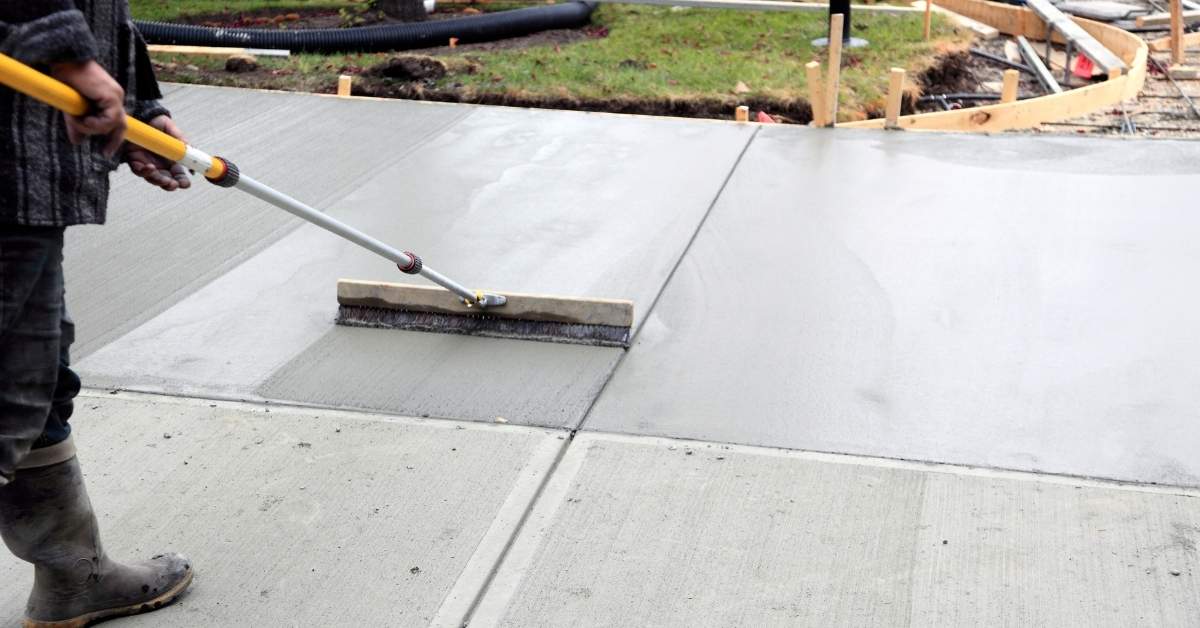
Flush-fill, overband, reservoir, and combination profiles serve different needs: flush-fill minimizes trip hazards, overband protects exposed edges, and reservoirs contain the sealant below the surface for high-traffic areas. Choose the profile based on traffic type, slab condition, and edge vulnerability rather than defaulting to one approach.
Prepare the surface and joint to match the chosen profile and sealant—for example, a reservoir needs precise depth and backer rod placement while overband requires sound edge prep. Confirm dimensional guidelines and compatibility with the selected sealant and backer rod from product instructions before profile installation.
When to use each profile
The choice of sealing profile depends on the joint condition, traffic loading, and your aesthetic or functional priorities.
Flush-Fill: Ideal for light traffic areas like residential driveways. It’s simple, cost-effective, and maintains a clean, flat surface.
Overband: Suitable for heavy traffic zones like commercial parking lots. It provides extra protection against edge spalling but may require more maintenance.
Reservoir: Great for areas with high moisture content or freeze-thaw cycles. It allows water to drain, preventing hydrostatic pressure buildup.
Combination: Used when you need both the edge protection of Overband and the drainage benefits of Reservoir. Typically used in harsh climates or heavy-duty applications.
Tooling and placement technique
The right tools and techniques ensure a proper seal, preventing voids and ensuring longevity.
- Bottom-up fill: Start filling from the bottom of the joint, working your way up to prevent air pockets.
- Wand/Nozzle selection: Choose the right wand/nozzle for your profile. Flush-Fill uses a straight nozzle, while Overband and Reservoir require specialized wands.
- Overband finishing: Use a trowel or float to smooth out the overband material, ensuring full contact with the joint edges.
- Visual checkpoints: Inspect the joint after filling to ensure there are no voids. A flashlight can help illuminate any gaps.
- Optional tools: Rentable tools like joint fillers and sealant applicators can make the job easier. Prices vary, but expect to pay around $50-$100 per day.
Traffic, Loading and Mechanical Considerations
Anticipate wheel loads, turning actions, and concentrated loads when choosing sealant and profile: repeated turning and point loads demand sealants and edge details that resist gouging and fatigue. Map traffic patterns and high-wear zones to decide on tougher materials or protective edge details where abrasion and impact are greatest.
Detail joints (saw-cut versus routed, sealant depth, backer rod placement) to accommodate expected loads and to prevent edge lift under concentrated equipment. Include inspection and maintenance plans for high-traffic areas and verify that the selected sealant and geometry meet the functional demands through field testing or manufacturer guidance.
Heavy vs Light Traffic Strategies
When planning your jointing and sealing, consider the weight and frequency of traffic. For heavy traffic areas like driveways or loading docks:
Use tougher sealants. Opt for polyurethane or silicone-based products that can handle heavier loads and resist fatigue better than acrylic or latex sealants.
Choose deeper, wider joints with a recess profile. This allows for more movement and reduces the risk of spalling. A 1/2″ to 3/4″ wide joint with a 1/8″ recess is a good starting point.
For light pedestrian areas like sidewalks or patios, simpler solutions will suffice:
Use standard acrylic or latex sealants. They’re cheaper and easier to apply but have less movement capability.
Saw-cut joints with a 1/4″ width are usually sufficient for lighter traffic.
Edge Protection and Mechanical Details
Protecting edges is crucial to prevent spalling, especially where equipment interacts with the concrete. Here’s how:
Chamfer edges. A 45-degree bevel on the top edge of your slab reduces impact stress by distributing forces over a larger area.
Use joint reinforcement. Fiber-reinforced backer rod or metal inserts can strengthen joints at edges and resist gouging from equipment like forklifts or pallet jacks.
Create transitions. Slope the surface downwards away from edges to direct water runoff and prevent edge lift. Use a 1:8 slope for every foot of width.
For vehicle traffic, consider adding a protective curb or barrier at the edge to absorb impact and protect your sealant joints.
Installation Best Practices, Safety and Environmental Controls
Follow a stepwise installation checklist from routing through curing: confirm joint dimensions, choose routing method, install backer rod and primer if required, apply sealant to the correct depth, tool the sealant, and protect the joint during cure. Perform in-process quality checks at each milestone and document conditions and product batch data.
Implement PPE, dust control, ventilation, and spill containment measures to protect workers and users; control silica and solvent exposure per applicable guidance. Monitor weather, control site traffic during cure, and retain photos and logs for QA and future maintenance planning.
Step-by-step installation checklist
Use this checklist to ensure a successful joint routing and sealing job. Follow these steps in sequence for the best results.
- Inspect: Check concrete surface, joint dimensions, and formwork readiness before starting.
- Rout/Cut: Determine groove depth (1/4″ to 3/8″) and width (1/2″ to 3/4″), then route or saw-cut joints. Inconsistent depths can lead to water entrapment and spalling.
- Clean: Remove dust and debris from routed/cut joints using compressed air or a brush. Dirty surfaces hinder sealant adhesion.
- Insert backer rod/bond-breaker: Insert backer rod for wide joints (over 1/2″) to control sealant depth. Bond-breakers prevent adhesion between concrete and sealant, allowing movement without stress transfer.
- Prime if required: Apply primer to enhance sealant adhesion, especially on porous or damp surfaces. Skipping this step may result in poor bond strength.
- Apply sealant: Use a compatible sealant (silicone, polyurethane, etc.) and apply it according to the manufacturer’s instructions. Incorrect sealant type can lead to cracking or staining under movement or weathering.
- Tool finish: Tool the sealant to create a smooth, even surface. This step ensures proper water shedding and aesthetic appeal.
- Protect during cure: Cover joints with plastic or tape to prevent contamination and mechanical damage during curing. Neglecting this can compromise the seal’s integrity.
Quick rule: Always follow these steps in sequence for a successful installation.
Safety, PPE and hot-applied materials
Material choices significantly impact safety measures and final results. Here’s what you need to consider:
- PPE: Wear appropriate personal protective equipment (gloves, goggles, etc.) when handling sealants and backer rods. Inadequate PPE can lead to injuries or chemical exposure.
- Ventilation: Ensure proper ventilation during application, especially with hot-applied materials. Poor ventilation can cause health issues due to solvent fumes.
- Hot-applied sealants: Follow manufacturer’s guidelines for handling and application of hot-applied materials. Inadequate temperature control can result in poor curing or material damage.
- Traffic control: Implement traffic control measures to protect crews and occupants during installation. Uncontrolled traffic can cause accidents, injuries, or damaged work.
- Silica exposure: Use wet cutting methods when routing joints to minimize silica dust exposure. Inhaling silica dust can lead to serious lung diseases.
DIY vs professional installation
Deciding between DIY and professional installation depends on several factors:
Complexity: Simple, narrow joints with minimal movement can be tackled by DIY enthusiasts. Complex jobs involving wide joints, heavy traffic areas, or significant movement should be left to professionals.
Traffic risk: High-traffic areas like driveways, walkways, or roadways require professional installation to ensure longevity and safety. Incorrect installation in these areas can lead to accidents or rapid deterioration of the joint sealant.
Warranty considerations: Many warranties on concrete work require professional installation for coverage. DIY installations may void these warranties, leaving you responsible for any repairs or replacements.
In conclusion, while simple jobs can be done by homeowners, complex or high-risk installations should be left to licensed professionals to ensure quality and safety.
Maintenance, Repair Strategies and Life-Cycle Cost Considerations
Establish a scheduled inspection program with visual checks for sealant adhesion, edge integrity, moisture staining, and any load-induced changes; assign responsibility and keep a log of findings and remediation actions. Identify common failure modes—sealant debonding, edge spalling, joint width change—and define trigger points for repairs to limit escalation.
Proactive maintenance—timely cleaning, priming, and resealing—reduces total life-cycle cost compared with reactive large repairs; document expected maintenance intervals and track downtime costs. When choosing initial joint profiles and sealants, weigh likely maintenance frequency and access constraints and record those assumptions for future cost comparisons and replacement planning.
Inspection frequency and diagnosing failures
Regularly inspect your control joints to catch issues early. High-traffic areas need more frequent checks.
- Visual check: Look for cracks, gaps, or discoloration. Skipping this can lead to undetected damage.
- Moisture assessment: Check for water in the joints using a moisture meter. Ignoring this can cause hidden damage.
- Edge integrity: Inspect joint edges for chipping or crumbling. Neglecting this can lead to further deterioration.
- Sealant condition: Check sealant for signs of wear, peeling, or discoloration. Delayed repair can cause water intrusion.
- Load-induced cracking: Look for cracks that widen under load. Ignoring this can lead to structural issues.
- Abrasion check: Inspect for signs of abrasion from traffic or debris. Skipping this can accelerate joint failure.
- Adhesion loss diagnosis: Check if sealant is pulling away from the substrate. Delayed repair can cause water intrusion.
- Cohesive failure diagnosis: Look for cracks within the sealant itself. Ignoring this can lead to further damage.
Quick rule: Inspect every 3-6 months, more frequently in high-traffic areas.
Repair methods and budgeting for reseal intervals
Regular maintenance is key to extending joint life. Here’s how to plan repairs and resealing.
Clean and reseal: For minor issues, clean the joint and apply new sealant. This is quick and cost-effective but only suitable for early-stage problems.
Partial removal and reseal: If sealant has failed, remove it partially, clean, and reseal. This is more involved but still cheaper than full replacement.
Full replacement: For severe damage, remove all old sealant, clean, and apply new. This is the most expensive option but necessary for extensive damage.
Budgeting depends on traffic, environment, and product service life. Check product data for reseal cadence estimates. Regular maintenance extends joint life, reducing overall spend.
Conclusion
Routing and sealing control joints right pays off in safety, durability, and a clean, professional look. Do the work correctly and you reduce spalling damage, avoid costly repairs, and keep water and debris out of the structure.
First, verify need and timing by inspecting joints, choose a sealant arc and profile that fits the joint geometry, and prepare the surface properly. Then follow a clear sequence: confirm movement capability, clean and prime as needed, apply the chosen profile, tool and finish for flush, overband, or reservoir layouts, and cure with the right environmental controls. Start small areas to test adhesion and movement before committing the whole project, and document any changes for future maintenance.
Common mistakes to avoid are skipping surface prep, using the wrong sealant for the environment or movement, and neglecting edge cleanliness or adequate cure time. Always wear basic PPE, ventilate when needed, and keep traffic off fresh sealant until it cures. If joints are structurally stressed, or if you’re unsure about geometry, consider a professional to review the plan and supervise or perform the critical steps. With careful checks and disciplined workflow, you’ll get lasting joints that resist spalling and look solid for years to come.
FAQ
How often should I maintain or re-seal control joints on a DIY project?
Inspect joints regularly as part of your maintenance routine. Re-seal when you notice cracking, lifting, dirt buildup, or loss of sealant integrity, and follow the sealant manufacturer’s guidance for reapplication intervals.
How should I prep and clean control joints before sealing?
Remove old sealant and debris from the joint. Clean the channel with the recommended solvent and let it dry completely before applying new sealant.
How do I choose the right sealant for routing and sealing?
Match the sealant to the joint movement, substrate, and environment. Check the product label and manufacturer instructions, and avoid a sealant that isn’t rated for concrete or the expected movement of your joint.
What are good application techniques for effective sealing and proper routing depth/profile shapes?
Follow the profile shapes you planned (flush fill, overband, reservoir) and use the proper tool to form a clean, continuous bead. Apply in suitable temperatures per the manufacturer, then tool and smooth the joint to seal edges well. If unsure, test on a small area first and defer to the product instructions.
How should I inspect sealed joints regularly?
Look for cracks, tears, or gaps in the sealant and for dirt or moisture intrusion. Schedule routine checks and document findings so you catch failures early and reseal as needed.