
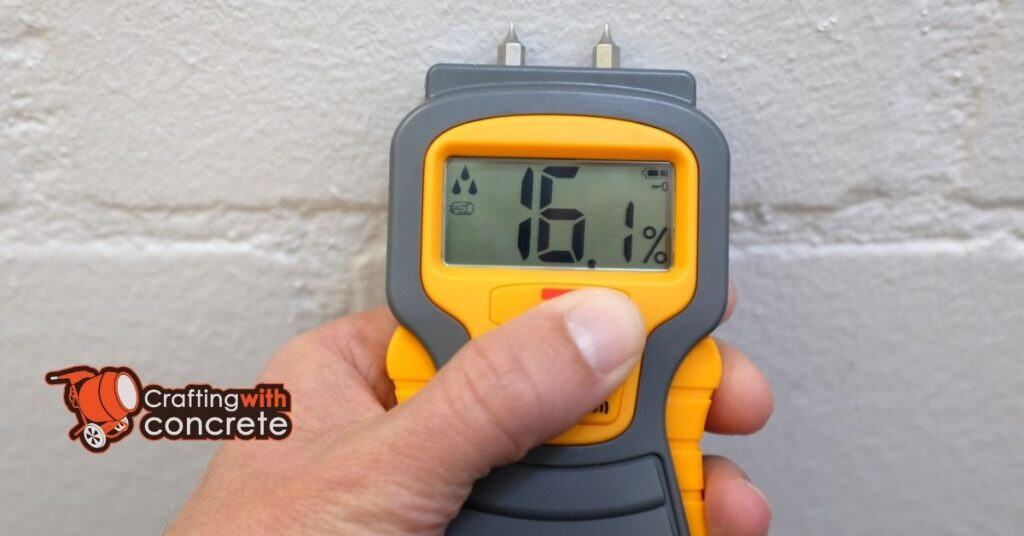
Table of Contents
- Why moisture measurement matters for stucco-clad buildings
- How pin moisture meters work (technical deep dive)
- How pinless moisture meters work (technical deep dive)
- Head-to-head comparison: pros, cons, and performance factors
- Stucco-specific inspection protocols and best practices
- Troubleshooting false positives and ambiguous readings on stucco
- Calibration, maintenance, and meter settings for accurate results
- Buying guide and feature checklist for stucco inspections
- Reporting, documentation, and regulatory/insurance considerations
Introduction
Pin meters and pinless meters serve different purposes in stucco inspections, and the right choice depends on accuracy, practicality, and budget.
The article explains how to compare readings, what to look for in material conditions, and practical steps to decide which method to use in common inspection scenarios.
You’ll learn how to evaluate moisture patterns, interpret results, and apply simple rules of thumb to choose the best meter for a given project.
Why moisture measurement matters for stucco-clad buildings
Hidden moisture in stucco-clad buildings is costly because small, early indicators can snowball into major, expensive problems. Delayed remediation can drive up mold remediation costs, trigger scope creep in projects, and lead to insurance or warranty disputes if moisture pathways aren’t addressed. Accurate measurements help homeowners, inspectors, and contractors make timely decisions, set realistic bid scopes, and avoid escalating expenses as moisture progresses through wood framing, gypsum board, lath, flashing, and weep screed details.
For a DIY or jobsite reader, understanding measurement principles—depth consistency, calibration, and the choice between pin and pinless methods—helps prevent under- or over-testing in continuous cementitious layers. Knowing when readings cross action thresholds, how moisture affects resale value, and who should test and document results streamlines repairs and permits. Clear reporting supports proper remediation steps, protects health by addressing mold risks, and aligns repairs with bids and warranties, reducing uncertainty for homeowners, inspectors, and contractors.
Common failure modes in stucco assemblies
Undetected moisture shows up as leaks first. Look for wet spots, efflorescence, or paint failure around windows, roof intersections, and penetrations. If you see staining, check flashings and sealants right away. Don’t wait for a big puddle — small leaks rot the substrate fast.
Lath or mesh can corrode and lose grip if it stays wet. When the metal fails the stucco will crack or fall away. EIFS can delaminate the finish from the substrate the same way. If you find loose or hollow-sounding areas, cut out the damaged section, dry the cavity, and replace corroded lath or delaminated EIFS. Let assemblies dry before you patch.
Substrate rot and mold are the endgame of long-term moisture. Probe wood framing or sheathing where moisture was high. Use a reliable moisture meter to track moisture trends and use moisture meter readings to decide whether to repair, dry, or replace. If mold is present, remove contaminated materials or hire remediation — painting over mold is a waste of money.
When meter data affects repairs, insurance, and liability
Treat meter readings like evidence. Take multiple readings in the same spot, note the exact location, and take photos of the probe point and surrounding area. If you get a high reading, don’t guess — retest nearby, mark the pattern, and record the meter type and settings. Insurers and contractors will expect clear documentation, not vague statements.
Use the numbers to decide scope: a few damp patches often mean targeted repairs; widespread elevated readings usually mean you need wall opening, drying equipment, or full stucco removal. Don’t let a single non-invasive meter reading be the final word if the fix is invasive. A corroborating invasive test or moisture profile is worth the extra cost before you start ripping things out.
Know that contractors and inspectors have a duty to be accurate. Use a calibrated meter, disclose your method, and keep copies of results. If an insurance claim is involved, notify the carrier promptly and share documented readings. If someone skips proper testing and the problem returns, liability follows. Bottom line: measure carefully, document everything, and let the data drive whether you dry, patch, or replace. Don’t paper over high readings and don’t skip verification.
How pin moisture meters work (technical deep dive)
The electrical-resistance principle drives pin moisture meters, where moisture in concrete or stucco lowers electrical resistance between probes and converts that change into a quantitative reading. Pin sensors create a direct moisture path through the material, while pinless models rely on electromagnetic sensing for surface and near-surface moisture, each with tradeoffs for stucco layers and Calibrated accuracy. Probe design and insertion depth matter, with typical pin lengths and embedment guides that affect readings in multi-layer substrates like coat, lath, and substrate, especially when temperature compensation and material references are used to translate raw values into percent moisture content or Wood Moisture Equivalent (WME).
Reading interpretation depends on calibration, temperature compensation, and the chosen material reference, so you’ll see values expressed as percent moisture content or WME rather than raw impedance alone. This section also covers practical considerations: how paint, sealants, or coatings can mask moisture and how to move the meter smoothly across a wall to map distribution without causing damage. For DIY and jobsite use, selecting the right setting for stucco or Portland cement composites and performing quick checks helps distinguish indicative readings from definitive conclusions, while understanding probe depth, surface dryness, and edge effects keeps you from misreading a surface as dry or wet.
Probe designs, insulated shafts, and replacement tips
Probes come short and stubby or long and skinny. Common lengths are about 2″, 4″, 6″, and 12″. Short probes are fine for drywall and surface checks. Use 6″ or 12″ when you need to get through thick stucco, lath, or insulation to reach the backing or studs. If you’re unsure, pick the shortest probe that will reach the substrate you want to test.
Insulated shafts matter. An insulated shaft only conducts at the exposed tip, so you get a localized reading at the point of contact. Uninsulated shafts conduct along their full length and give an averaged reading between the two prongs. For stucco over lath, start with insulated probes or longer insulated tips so you don’t short the circuit across the metal lath and get misleading high readings. Wrong probe choice gives wrong readings, plain and simple.
Replacement tips are cheap and worth carrying. Match the thread pitch and use stainless or plated tips to avoid rust. Keep tips sharp and straight; a bent or corroded tip will drag, tear the lath, or miss the backing. Clean tips after testing contaminated areas and test the meter on a known dry spot after swapping tips. Don’t drive probes through lath into wiring or plumbing — if you have to, open a small inspection hole instead of brute-forcing the probe.
Strengths and limits of contact measurements in heterogeneous assemblies
Pin meters give a true point measurement. That’s great when you need to confirm moisture at a specific spot like behind a trim or at a joint. Don’t expect a single reading to represent an entire wall, floor or layered assembly — heterogeneous materials hide a lot of variation. Take several readings across the area to form a picture.
Surface moisture skews results. Wet paint, mortar smears, or recent cleaning can produce high readings even when deeper layers are dry. Likewise, a dry surface can mask trapped moisture below. When you see a suspicious reading, scrape through surface layers or compare with a non-contact meter to decide if it’s surface-only or real penetration.
Metal lath, nails, screws and metal flashing twist the numbers. Pins that contact metal or run along fasteners will jump to high values — that’s a false high, not a soaked stud. Avoid planting pins directly on fasteners, check base compaction where possible, and move the probes a few inches off the fastener line. If assemblies contain mixed materials (insulation, plaster, metal), treat pin readings as directional clues, not absolute moisture maps.
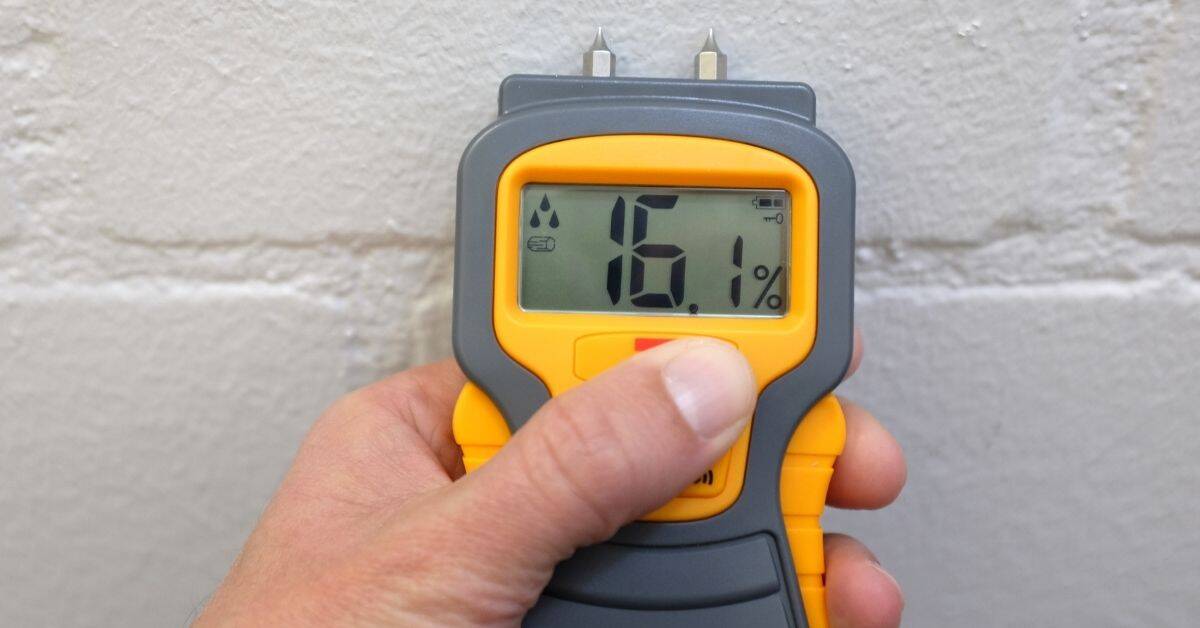
How pinless moisture meters work (technical deep dive)
Pinless moisture meters use two core sensing principles: electromagnetic or radio‑frequency methods that measure through the surface without penetrating it, and capacitance-based sensors that respond to dielectric changes in the near‑surface material. The RF approach evaluates how energy couples with moisture in the coating, substrate, and any backing, yielding readings that depend on detectable depth, which is often fixed or limited by the tool’s probe; surface contact, surface roughness, and material density all bias the results. Because stucco systems vary by plaster, lime, cement, coat thickness, and underlying lath, readings can differ across a single area or between adjacent locations, emphasizing the need to interpret results in the context of known layering and expected sensing depth.
For DIY and jobsite use, expect practical considerations that influence accuracy: calibrate to the specific substrate, inspect and clean the probe pads, and be mindful of temperature effects and the difference between surface moisture and in‑wall moisture. Discuss how surface preparation, including removing loose paint, smoothing rough areas, and ensuring consistent contact, helps reduce bias, and how heterogeneity in coat layers explains why nearby readings may diverge even on the same wall. Finally, treat pinless readings as screening data, corroborate with pin probes when suspicious, and use multiple measurements across representative areas to form a reliable moisture picture.
Typical sensing depths and what they mean for stucco layers
Most pinless meters let you choose a sensing depth from about 0.25″ up to 1.5″ or deeper. At roughly 0.25″ you’re only seeing the finish coat — useful to check surface dampness or recent washing. Around 0.5″ you’ll pick up the finish plus the scratch/leveling courses. That range is often where salt bloom or trapped paint failures show up.
Depths from about 0.75″ to 1.5″ will start to include the brown/level coat, the metal or paper lath, and the top of the substrate or sheathing. Readings here tell you if moisture is trapped inside the stucco assembly rather than just on the surface. If the meter still reads high beyond 1.5″, you’re probably sensing the sheathing, framing or substrate — this is when repairs or tear-off become a real possibility.
Practical rule: pick the right depth for what you’re checking, scan large areas quickly, then spot-check with an invasive method if readings are high. Scan at the base of walls, around windows, and at flashing terminations. Don’t assume a high surface reading equals deep saturation — and don’t ignore deep readings thinking the surface looks dry. When in doubt, drill a small hole or use a pin meter to confirm before you call for a teardown.
Material-specific limitations (concrete, masonry, metal lath)
Choose the right cement, mortar, lath and additives and the job will last. Use the wrong stuff and you get cracks, rust stains, delamination or a sticky mess. Also remember pinless meters read less accurately on high-mineral concrete and metal lath can fool the sensor, so check relative readings and remove or isolate metal where possible.
- Portland cement (Type I/II) Used for base coats and scratch coats under stucco. Look for “Type I” or “Type II” on the bag and a standard 94 lb or 50 lb weight; lower-alkali or moderate sulfate resistance (MSR) is better near soils. Cheap cement can cause rapid drying or shrinkage cracks; bags run about $8–$15 for 50 lb.
- Masonry cement Pre-blended for mortar and easier workability. Check for ASTM C91 or same-bag compatibility with stucco mixes. Use it when you want consistent color and water retention; avoid it where high structural strength is required because it’s weaker than straight Portland.
- Type S mortar For bonding brick, CMU, or as a scratch/leveling mortar. Look for “Type S” on the label (higher compressive strength and bond). Choose Type S for exterior walls and where wind-driven loads occur; cheaper Type N or sand-rich mixes will crack or fail under stress.
- Bonding agent (acrylic/latex) Added to base coats to improve adhesion and flexibility. Look for “bonding agent for stucco/mortar” and a polymer solids percentage on the label. Use it on smooth or low-suction substrates; skip it and you risk delamination—expect $15–$30 per gallon.
- Metal lath (galv or stainless) Provides mechanical key for stucco over wood or metal studs. Check for G60 galvanized or stainless (SS) rating and 1/2″ or 3/8″ diamond mesh. Galvanized is fine for most uses but near moisture or coastal sites go stainless; cheap thin lath will corrode or warp and show through finishes. Rolls cost about $10–$40 depending on type.
- Fasteners (stainless/bugle) Used to secure lath and trim. Look for stainless steel or hot-dipped galvanized, length to penetrate studs by 1″–1½”. Use stainless in damp or coastal areas; cheap zinc screws will rust and stain the finish—expect $0.10–$0.50 per fastener for good ones.
- Concrete patch/repair mix For filling holes, leveling slabs or repairing high-mineral concrete before stucco. Choose a mix labeled “vertical/patch” or “non-shrink;” check set time on the bag. Use a proper patch instead of sand and cement mix; wrong patch will pop out and telegraph cracks through the stucco. Bags run $5–$15.
- Water-repellent sealer Surface treatment to reduce moisture absorption in concrete or CMU. Look for silane/siloxane or penetrating silicate sealers and coverage rate on the can. Apply on porous masonry to reduce staining and freeze-thaw damage; do not use heavy film-forming paints that block breathability and trap moisture.
- Admixtures and accelerators Used to control set time, workability, or reduce moisture migration. Check compatibility notes and max dosage printed on the bottle. Use sparingly in hot weather or when you need faster set; too much accelerator causes crazing and weak bond, and incompatible chemicals can ruin color and durability.
Pro tip: Buy full 50 lb bags of cement/mortar for consistency and store them off the ground under cover. Mix with a paddle on a drill or small mixer — a cheap homeowner drill is fine for small batches; rent a mixer for large runs. Keep unused polymer additives sealed and cold; moisture or sun will ruin them faster than you expect.
Head-to-head comparison: pros, cons, and performance factors
This section pits pin-based and pinless moisture meters against each other in stucco environments, focusing on how each method gauges moisture, where readings originate (surface versus deeper readings), and how texture, coatings, and metal lath can skew or sharpen the results. It compares accuracy across typical stucco layers—skin coat, base coat, and veneer—alongside reading speed for job-site batching, potential destructive effects on the wall, and the consistency of readings across repeated passes and different meters. Depth control and interference are scrutinized, including fixed-depth versus variable-depth options, how stucco layers and metal lath affect depth interpretation, and the practical implications for inspections amid metal conduits or reflective coatings.
A concise, field-friendly on-site protocol is outlined for routine calibration checks, taking measurements at multiple locations per wall, proper surface preparation, and clear guidelines on when to average data points versus trusting a single reading. The guidance helps DIYers choose a tool type based on thickness of skin, base, and veneer layers, target moisture levels, access constraints, and a non-destructive preference, framing a quick decision framework rather than a universal rule. Understanding these factors helps you plan efficient inspections, reduce false readings, protect finishes and warranties, and keep the job moving by balancing accuracy with practical time on the scaffold or ladder.
Accuracy vs. coverage trade-offs
Pin meters give you a precise, local reading where the probe touches. Use them when you need exact moisture at a joint, subfloor seam, or a suspicious stain. Pinless units sweep large areas fast but they average readings and miss tiny wet pockets. Think of pinless as a flashlight and pins as a magnifying glass.
Practical balance: start with a quick pinless scan to map general coverage and identify hot spots. Then follow up with pins to confirm depth and exact percent at those spots. If an area is carpeted, warped, or insulated, favor pins; if the surface is clean and you need speed, favor pinless.
Do the basics right: calibrate meters, test probes in known conditions, and record both sweep patterns and spot readings. Don’t trust one reading alone. If you skip follow-up pin checks, you’ll miss hidden problems or false negatives. Simple routine: sweep, mark, then verify with pins. Keeps inspections honest.
Surface damage, repeatability, and reporting implications
Small pin holes in finished stucco look worse than they are. If you must test in visible areas, plan for patching. Use the smallest probe you can and keep holes tight to trim lines or behind fixtures. Photograph and label every hole before you repair it so there’s no argument later about damage location.
Make tests repeatable by using a consistent pattern. Pick fixed depths, spacing, and sequence and write them down. That way you can compare results over time without the noise from random placement. Strongly consider a few sacrificial spots out of sight to avoid ruining the look while still getting valid samples.
Data type drives whether a report will be accepted. Quick qualitative checks can flag problems but often aren’t enough for clients or regulators. If you need a report that holds up, collect quantitative samples, note instrument settings, and keep chain-of-custody or lab paperwork. Contractors will dismiss unlabeled or inconsistent data, so don’t hand them a sloppy spreadsheet and expect it to pass.
Stucco-specific inspection protocols and best practices
Stucco-focused inspection protocols emphasize a clear sequence: prepare the surface with attention to coatings, sealants, access points, and exterior versus interior substrate differences; perform baseline readings using pinless methods for initial sweeps and pin probes for targeted confirmation, calibrated to stucco assemblies; implement a consistent grid with vertical and horizontal passes, denser sampling at seams and corners, and uniform scan speed and contact pressure to ensure reliable data; follow up suspicious readings with confirmatory pins to verify depth and avoid misreading coatings or lath, and document every step with timestamped readings and photos for traceability.
This approach matters on the jobsite because it yields trustworthy results that distinguish actual defects from coatings or substrate variations, reducing false positives and guiding effective remediation. By standardizing prep, reading strategies, and documentation, DIY or contractor teams can interpret data more confidently, coordinate repairs with substrate knowledge, and maintain a clear sign-off process that ties readings to stucco composition. The emphasis on consistent patterns, appropriate instrument use, and thorough records helps avoid misinterpretation and supports safer, more durable outcomes.
Best scan patterns and baseline locations for cladding
Keep it simple: run a coarse grid across flat fields and tighten up at details. For general stucco walls use a 300 mm (12″) grid for handheld moisture checks or IR spot checks. Where you hit corners, windows, doors, flashings, roof-wall intersections and any visible control joints, cut the grid to 150 mm (6″) or closer so you don’t miss localized wet pockets.
Take baseline dry readings at set locations before any wet weather. Mark and record a reading at each outside corner, under every window and sill, directly above and below all flashings, and 150–300 mm below any wall penetrations (vents, pipes, hose bibs). Also take a baseline at the base of the wall about 150 mm above grade. These become your reference for after-rain or repair scans.
Use shorter, focused passes for problem areas. Do denser, overlapping passes along seams, at expansion/control joints, and around patched spots. When you perform the after-rain checks, replicate the same grid and the same baseline points. That consistency tells you whether moisture is new, persistent, or a meter artifact. If you see repeat high readings in tight spots, assume a leak until proven otherwise—don’t shrug it off because the rest of the wall looks dry.
When and how to use pins safely on stucco assemblies
Don’t stab blindly. If you must use pins, keep them short and shallow and aim between the lath runs or into mortar joints at a low angle. The goal is to test the stucco skin, not punch the weather barrier. Avoid penetrating the weather barrier — that’s the quickest way to create a water entry problem you didn’t have before.
Pick probe locations based on your scans and baseline checks (see earlier on scan patterns). Use edges, corners, mortar joints, or behind trim where the lath is less likely to be directly under the surface. If you feel metal immediately on insertion, back out and move a few inches. If you must go near fasteners or heavy-gauge lath, don’t — those spots will give false readings and can damage components.
If you want less risk, use a tiny entry hole or borescope instead of a long pin. A micro-hole with a thin probe or a borescope through a mortar joint tells you the same stuff without breaching the WRB. After testing, seal any holes with an appropriate exterior sealant or a small stucco patch. Bad practice is to leave pin holes open or use oversized pins to “get a reading” — that just invites leaks.

Troubleshooting false positives and ambiguous readings on stucco
False positives in stucco readings often arise when metal fasteners, reinforcing mesh, or nearby salt deposits skew the signal enough to misread moisture as present. Distinguishing salts and efflorescence from true moisture requires targeted checks such as surface wipe tests, shallow probing, and a plan to retest when readings hover near mineral residues or non-moisture cues. In practice, separate adhesives, coatings, patching layers, and substrate variability by choosing test locations away from suspicious features and by comparing multiple spots to build a reliable baseline.
A practical confirmation workflow includes cross-checking with both meters if available, documenting ambient conditions, and corroborating with non-destructive visuals before drawing conclusions about moisture. This matters on the jobsite because surface textures, patching, or waterproof membranes can alter depth and signal interpretation, so a repeatable sequence reduces false alarms and helps you verify findings. Following a clear, repeatable approach ensures DIY readers can make informed, data-based decisions without overreacting to a single reading or a momentary anomaly.
How to identify metal/fastener interference and mitigate it
If a meter reading pops up in one tiny spot or follows a straight line, don’t assume moisture yet. Those are classic signs of metal or a fastener under the stucco. Move the meter a few inches away and re-scan. If the reading drops sharply when you step off the spot, that’s metal influence — not moisture. Do a quick pin confirmation nearby if you have pins; if the pins stay low while the non‑contact gives a high, you’ve likely hit metal.
Use a small magnet first — slide it across the surface. If it sticks or tugs, you’ve found metal lath, screws, or corner bead. Also look for visual cues: rust stains, rows of tiny bumps where screws sit, or readings that track along seams and flashing. If you suspect hidden fasteners, drill a tiny test hole in an inconspicuous spot to inspect behind the stucco before ripping anything out.
Mitigation is simple: mark and avoid metal-affected zones for moisture decisions. Rely on pin readings or a moisture probe away from those spots, or remove the stucco locally to inspect and repair corroded fasteners and replace wet sheathing. When re-lathing or re-finishing, set a water barrier and keep fasteners short so they don’t bridge back into the sheathing, and consider using a small magnet to scan the area after repairs to confirm the metal’s gone.
Interpreting relative mode vs. absolute readings on masonry finishes
Absolute numbers on stucco, concrete, or drywall can lie. Porous masonry and salts raise background readings. Use absolute mode only when you see a clear, high value well above what you measured elsewhere. For borderline cases, trust relative increases — a spot that reads 5–10 points higher than several nearby dry spots is worth following up.
Before you test, set a dry baseline. Take readings at three to five spots well away from gutters, downspouts, windows, and suspect areas. Pick the lowest consistent reading as your baseline. Compare every suspect reading to that baseline, not to the meter’s factory scale. Write the numbers down so you can prove a trend.
If relative readings show a local spike, confirm with a deeper check — probe a small hole, use a hammer probe, or remove a section of finish. Remember the common tricks in earlier sections, like metal/fastener interference; if a spot gives odd results, check for screws or lath before you tear anything out. Trust the pattern more than a single number.
Simple field tests to separate salts/efflorescence from moisture
Use these quick checks before assuming wetness:
- Wipe test: rub the suspect surface with a damp white cloth. If the cloth picks up white residue (salts) but the meter reading falls, that suggests salts or efflorescence rather than liquid moisture.
- Grind or scrape: lightly abrade a tiny area. If the bright substrate beneath shows dry appearance and the meter drops, surface salts were likely the cause.
- Conductivity vs. moisture check: if available, compare a conductivity probe reading on the surface with a pin probe at shallow depth. High surface conductivity with low shallow pin reading = salts/minerals.
- Drying retest: mark the spot and retest after 24–72 hours of dry weather or after gentle drying. Salts remain, moisture drops. If readings persist, escalate.
Record all tests and photos. These steps reduce unnecessary destructive testing and give insurers or contractors objective grounds for interpretation.
Calibration, maintenance, and meter settings for accurate results
Start with a clear calibration routine that you perform before each job, using manufacturer-recommended reference standards, recording the results, and re-calibrating promptly after a meter is dropped or readings drift outside tolerance. Choose the correct material and density settings for stucco over concrete, including cementitious mixes and additives, and note how density shapes depth readings so you interpret moisture correctly. Understand temperature corrections and environmental factors, knowing when automatic temperature compensation applies and how to stabilize readings in sun or cold, so you avoid misleading results during on-site measurements.
Pinless versus pin meters, depth control, startup checks, and routine maintenance all matter for accurate results, with guidance on adjusting scan or insertion depth and keeping probes clean and sensor pads in good condition. Regular maintenance and sensor care include simple cleaning protocols, battery checks, proper storage, and a lightweight log for calibration, maintenance, and firmware updates, so you can track performance over time. Finally, establish a quick troubleshooting and recalibration cadence based on usage and environment, with practical signs that readings are off and a feasible frequency to re-check before critical jobs.
Step-by-step field calibration procedure and checklist
Follow this simple field calibration routine before every job or at the start of each workday:
- Warm up: power on the meter and let it warm 1–2 minutes (per manufacturer).
- Visual check: inspect probe tips/pads for corrosion, dirt, or damage.
- Air/zero check: with probes in air or pads clean and not touching material, confirm the meter shows a zero or baseline within ±1–2 points of the expected air value for that model.
- Block/reference check: use a manufacturer or known reference block (or a verified concrete block). Expect the reference to read within the device’s stated tolerance — typically ±1–3%MC or ±2–5 WME points. Record the block reading in your log.
- Tolerance pass/fail: set an acceptance band (example: ±3% for prosumer, ±5% for low-cost consumer units). If outside band, repeat after cleaning batteries; still out — remove from service and mark as “service required.”
- Document: record meter make/model/serial, probe type, block value, measured value, operator initials, date/time, and ambient temp/humidity.
After a drop or suspected damage, do a full block check and, if out of tolerance, send for factory recalibration. Keep a physical or digital calibration log for each meter and probe set.
Consolidated maintenance schedule and pass/fail criteria
- Daily (start of day): visual probe/pad check, battery level, air/zero check, record baseline block value if doing multiple sites.
- Weekly (high-use users): block check and pad cleaning; verify cables and connectors.
- Monthly: full functional test including at least one pad and one pin probe check; update firmware if recommended.
- Annual or after impact: factory calibration/service or accredited lab verification (1–3 years for pros; annual recommended for heavy commercial use).
Pass/fail: if any reference check deviates beyond the acceptance band you set, stop using the meter for reportable work until serviced.
Settings to adjust for stucco and mixed substrates
When you’re testing stucco or walls with mixed layers, start by getting a dry baseline on a visibly dry spot and zeroing out your expectations. Many meters let you pick a material or a species equivalent; for stucco over masonry, use a concrete/masonry equivalent if available. If the meter has only wood species choices, pick the lowest-density wood equivalent and expect readings to skew lower than actual masonry moisture.
Use relative mode when surfaces vary or you can’t trust the species setting. Take a stable reference reading on a known-dry patch, then scan suspect areas for deviations. Relative mode shows change, not absolute percent, and that’s what matters when plaster, lath, insulation and wood are layered together.
Account for temperature. Cold stucco and cold ambient temps will push readings down. Let the meter and the surface reach the same temperature, or enable temperature compensation if your device has it. And don’t forget to mark which setting or equivalent you used on your notes or photos so future checks are comparable. If you’ve skipped regular calibration checks, go back and run them before you judge any tricky surface—saves arguing later.
Buying guide and feature checklist for stucco inspections
A buying guide for stucco inspections centers on choosing between pin and pinless sensing, understanding how each method works, typical depth capabilities, and when combined options make sense, along with must‑have features like combo pin/pinless capability, adjustable depth, data logging, rugged housing, probes, and a clear sense of price/value for homeowners versus pros.
Key considerations include calibration, data accuracy, and the overall durability and maintenance needs that affect long‑term cost of ownership, such as battery life, IP rating, drop resistance, and repairability of probes. For DIY readers, this matters because it translates to reliable readings on varied stucco surfaces, fewer misreads, and a meter that stays accurate with regular verification and proper surface prep, multiple readings per board, and careful depth variation.
Representative meters and typical specs (examples)
Representative models to consider (prices and specs indicative; shop current listings):
- Basic consumer pin (approx. $40–$120) — simple two-pin resistance meter; probe lengths 0.5–2″; no data logging; good for spot checks, limited accuracy on masonry. Typical sensing: very shallow surface/wood WME; no depth select.
- Prosumer pin/pinless combo (approx. $150–$700) — example feature set: 0.25″–1.5″ variable pinless depth, insulated pin probes (2″–6″), data logging, Bluetooth export, material selection (wood/concrete). Good balance for homeowners and small contractors. Typical models: Kombi combo meters from established brands in this band.
- Professional pinless RF meter (approx. $700–$1,500) — deeper sensing to 1.5″–2.5″, stronger depth calibration, rugged housing, advanced compensation, integrated temperature/RH logging, exportable CSV/PDF. Better repeatability on masonry; recommended for restoration pros.
- High-end professional systems (approx. $1,500–$3,000+) — purpose-built moisture mapping, long-reach probes (6″–12″), calibrated blocks, lab traceable calibration, certification options, built-in hygrothermal logging and app ecosystems. Use when you need defensible, report-ready data for insurance or litigated claims.
When choosing, compare: sensing depth (0.25″ to 2.5+”), readout units (%MC vs. WME), probe lengths (2″, 6″, 12″), data logging/export, calibration options, and expected calibration/repair costs.
3-year total cost of ownership (TCO) example
Simple TCO example: Prosumer combo meter purchase $400 + annual factory calibration $150 + spare probes $100 over 3 years = ~$850 (approx. $283/year). For a pro-grade system $1,500 + annual service $250 + spare probes $300 = ~$2,550 (approx. $850/year). Factor in app subscriptions, lost time if meter fails, and replacement probes when budgeting.
Combo meters, data logging, and connectivity
Get a combo meter if you want one tool to do more than one job. A single unit that measures moisture, temperature, and relative humidity saves time on the job and keeps readings consistent. If you already checked the basic specs in the buying guide, pick the combo with the features you actually need instead of paying for every bell and whistle.
Bluetooth and onboard data logging matter when you need a record for a claim or a contractor. Snap a time-stamped run, export the CSV or PDF, and hand it to the adjuster. If you can’t produce saved readings, you’ll be arguing with opinions, not facts. Make sure the meter’s app or export method is straightforward and that files open on a standard computer.
Don’t trust a meter that only shows numbers on screen without storage. For inspections you’ll repeat or defend later, insist on data export and at least one wireless option. If the connectivity is flaky or the software is junk, the extra features are worthless—test the app before you rely on it.
Cost vs. lifetime value and typical price bands
Don’t buy the cheapest meter and expect it to last. For basic homeowner checks you can get a consumer moisture meter for about $30–$150. These are fine for a few spot checks but often lack depth probes and durable build. Prosumer meters—$150–$700—give better probes, repeatable readings, and often include combo features or basic data logging. True professional instruments range from $700 up to $3,000+ when you add high-end probes and calibration options.
Ongoing costs matter as much as the sticker price. Replacement pins or small surface probes run $10–$60. Durable external probes or long-reach pins are $50–$400. Annual calibration or verification will cost $50–$300 locally; factory calibration or service can be $150–$500 and should be budgeted every 1–3 years for pro use. Batteries, protective cases, and probe sheathes add another $20–$150 over the tool’s life.
Decide by how often you test and how much risk you carry. If you do a few checks a year, a $100–$300 prosumer unit is usually the best value. If you inspect often, document results, or need certified readings, buy a quality meter and plan for regular service. And don’t forget: check calibration before critical jobs and don’t rely on a single cheap reading when a repair decision is on the line.
Reporting, documentation, and regulatory/insurance considerations
Reporting, documentation, and regulatory/insurance considerations center on presenting meter data for repair decisions or insurance claims through a standardized, repeatable protocol that records where and when readings are taken, how many points per area, and every reading’s details (meter type, settings, depth, calibration status) alongside baseline photographs, grid overlays, and clearly labeled areas for consistent interpretation. Baseline grids should be annotated by area (e.g., stucco section, corners, known risk zones) with explicit units, color scales, and reference thresholds, while timestamped readings and signed summaries provide a transparent trail for authenticity and accountability. Data integrity is preserved by separating raw data from edited reports, using verifiable file naming, secure backups, and restricted access to prevent tampering, all within applicable regulatory, warranty, and insurance documentation requirements.
This approach helps DIY and jobsite readers present a credible, auditable record that supports claims reviews, code compliance, and owner consent while clarifying what constitutes acceptable documentation for repairs or inspections. By documenting before/after photos, grid references, scale references, and clear signage, readers gain a practical, decision-ready view of conditions and progress that reduces ambiguity and speeds approval processes. The emphasis on timestamping, signed interpretations, and controlled data flow teaches accountability, fosters trust with insurers and codes officials, and ultimately enhances safety, reliability, and the likelihood of successful claim handling.
Template checklist for stucco moisture inspection reports
Start by listing the equipment used and exact settings: moisture meter make/model, probe type, IR camera model and emissivity setting, and any calibration notes. Record weather, time of day, and recent rain history in one line. If you hooked up probes or used invasive probes, note depth and location by referencing permanent points (corner A, window B, etc.).
Describe the scan pattern you followed so someone else can repeat it: direction, spacing between passes, and areas skipped. Call out anomalies with short, clear labels — elevated readings, thermal cold spots, staining, soft areas — and give the wall location and height. Don’t try to explain causes here; just state what you found and where.
List confirmation steps and next actions: non-destructive follow-up (re-scan after drying, use pin-type checks), and when to perform destructive confirmation. If destructive testing was done, note cut size and depth and attach photos. Finish with recommendations: immediate repairs required, monitoring timeline, or referral to a licensed stucco/restoration contractor. Keep conclusions crisp so an adjuster or contractor can act without guessing.
Insurance/legal checklist for claim-ready evidence
The minimum documentation insurers commonly expect:
- Signed chain-of-custody for any physical samples (date, sampler, location).
- Meter make/model/serial, probe type, settings, and calibration block values and dates.
- Time-stamped photos showing the grid location, probe points, and surrounding context (wide shot + close-up with ruler or scale).
- Raw data export (CSV/PDF) plus a short narrative of methods used and person who performed the test.
- At least three corroborating data points per affected area (pinless sweep + 1–2 pin confirmations or one core/sample for invasive confirmation).
- Any lab analysis results (accredited lab name, method used) attached when cores/samples are submitted.
Keep copies in two locations (cloud + local) and include operator credentials if available. This makes claims and disputes far easier to resolve.
When to escalate to invasive testing or lab methods
If your non‑destructive checks keep showing high readings after drying time, or thermal imaging keeps pointing to the same spot, stop guessing and escalate. Persistent moisture numbers above about 20% with contact meters (or repeated elevated readings in the same area) plus visible signs like staining, soft spots, or delamination are the practical thresholds I use before calling for core samples or destructive inspection.
Structural concern or any sign of hidden decay—rot at the sheathing, warped framing, or spreading mold—means you need a pro to do core cuts and send material to a lab. Insurance companies or local regs sometimes require certified lab moisture analysis or licensed destructive testing before they’ll approve a claim or a permit. Get written authorization if you’re on someone else’s property and document the exact locations you pull cores from so your report ties back to earlier non‑destructive findings.
Don’t do destructive testing as a quick fix. Hire an experienced contractor or tech who knows where to cut, how to protect the wall, and how to seal the test hole afterward. Ship samples to an accredited lab, keep chain‑of‑custody notes, and fold results into your inspection report and photos. If a lender, insurer, or code official asks for specifics, let the lab and licensed pro provide the formal answers—not your gut feeling.
Clear DIY stop-rules: when to stop and call a pro
- Persistent elevated readings after 72 hours of controlled drying (fans/dehumidifier) — escalate.
- Contact readings >20% MC in sheathing or repeated deep pin readings above 16–18% in framing — call a licensed contractor.
- Visible delamination or soft area >1 ft², structural movement/cracking, or spreading mold — stop DIY and hire pros.
- Thermal imaging and pin/pinless both identify the same hot spot with corroborating high readings — escalate to invasive testing.
- Any required insurance/lender/permit that specifies certified destructive testing or lab analysis — do not DIY beyond non-destructive checks.

Conclusion
Moisture measurements matter because a small hidden leak can rot stucco, invite mold, and wreck curb appeal long before you see a stain or bulge. The right meter helps you find trouble early, keep the job safe, and protect the structure and your budget.
When you inspect, treat it like a simple three-step check: start with a quick screen using the pinless meter to map suspect zones, switch to a pin meter for precise readings at those spots, and then verify by testing in a small, inconspicuous area to confirm stability. Calibrate before use, test in a known-dry patch if you have one, and always document readings with location notes and dates. In practice, move from exterior seams to interior corners, test at a shallow depth, and compare readings across similar areas to spot outliers.
Avoid these common missteps: relying on a single reading to declare “dry” or “wet,” ignoring coatings or finishes that can skew results, and forgetting to factor in temperature or the meter’s settings. Don’t push a test without good access—drilling or forcing readings in a fragile spot can create new leaks or cracks. And always test a small area first to keep the surface intact and reduce damage.
When readings are near threshold, or the wall looks suspicious, it’s wise to call a professional rather than press on. If you’re dealing with complex moisture paths, hard-to-reach areas, or insurance/regulatory impacts, professional help protects you from costly mistakes. Stay methodical, document everything, and you’ll stay ahead of problem moisture—and keep the job moving toward a lasting, durable finish.
FAQ
What is a pin meter and how does it work on stucco?
A pin meter uses two metal pins that push into the surface to read moisture by resistance. It requires drilling tiny holes in the stucco to insert the pins. That makes it more invasive than you might want for a clean exterior.
What is a pinless meter and when should I use it on stucco?
Pinless meters scan the surface with sensors and show moisture without puncturing the stucco. They’re great for quick sweeps and checking large areas fast. But they can miss moisture behind the surface, especially in thick or multi-layered stucco.
Which should I use around windows, doors, and chimneys?
Do an initial sweep with a pinless meter to spot trouble spots. Then, if you find suspect readings, use a pin meter to confirm moisture behind the surface. Don’t rely on one reading alone.
What common mistakes should I avoid when choosing or using these meters?
Avoid buying cheap meters or ignoring calibration. Don’t drill blindly—start with a test on a known dry area and compare readings. If moisture shows up, address the source and consider professional help for damaged stucco.