Search Results for: rebar

Three workers pouring concrete over rebar framework outdoors

Pouring a Concrete Ramp Over an Existing Slab: Bond Breakers, Dowels, and Slope Math

Introduction Pouring a concrete ramp over an existing slab means adding a new ramp surface on top of the old slab and tying it together properly. Make sure the bond between old and new concrete is controlled with the right bond breaker plan and reinforcement setup. I’ll use bond breakers where they’re needed to prevent […]

Pouring a Concrete Ramp Over an Existing Slab: Bond Breakers, Dowels, and Slope Math Read More »

Concrete building columns and ceiling beams under blue sky

Deck Stair Footings in Concrete: Getting Below Frost Without Over-Digging

Introduction Deck stair footings are concrete supports placed below the frost line to keep stairs from heaving. This article explains how to do that without digging more than necessary. Check your local code and manufacturers for the exact depths and mix. Understanding frost depth, footing size, and concrete choices matters for a solid, long-lasting set.

Deck Stair Footings in Concrete: Getting Below Frost Without Over-Digging Read More »

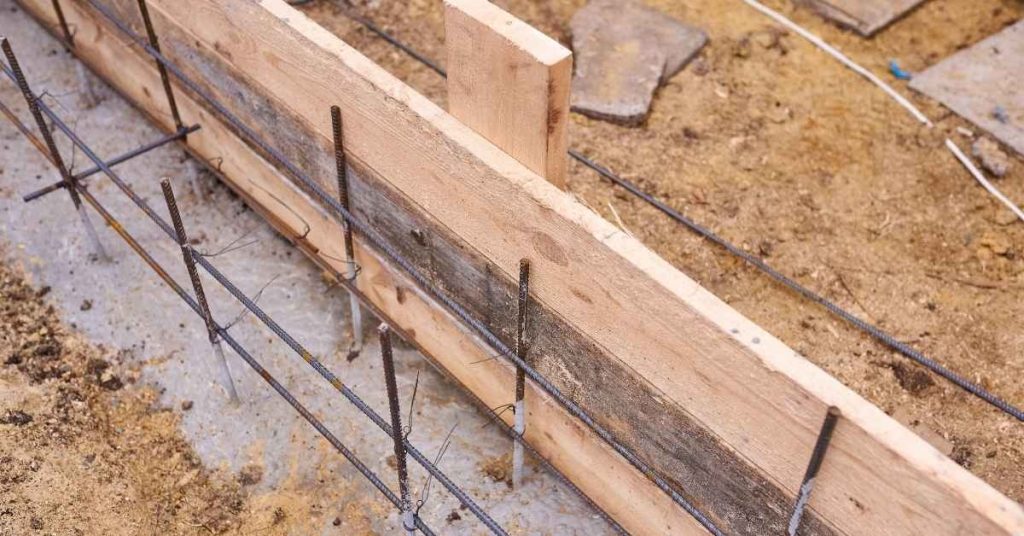
Wooden formwork and steel rebar grid on concrete slab

Concrete Slab-on-Grade for a Small Shed: Vapor Barriers, Thickened Edges, and Bolt Layout

Introduction A slab-on-grade is a concrete floor poured directly on prepared ground with no raised foundation. For a small shed, you’ll want to plan for a vapor barrier, thickened edges, and a simple bolt layout to anchor posts. As you work, verify local rules and follow manufacturer instructions for materials. Starting prep means grading, compacting,

Concrete Slab-on-Grade for a Small Shed: Vapor Barriers, Thickened Edges, and Bolt Layout Read More »

Concrete being poured onto slab framed by wood

Anchor Bolts in Fresh Concrete: Templates, Thread Protection, and Staying Dead-Accurate

Introduction Anchor bolts in fresh concrete are bolts placed before the pour to lock in exact locations for the structure. Getting them right means using simple templates, protecting threads during the pour, and checking alignment as you go. I’ll keep it plain and practical, with no fluff or guesswork. For proper placement, work from the

Anchor Bolts in Fresh Concrete: Templates, Thread Protection, and Staying Dead-Accurate Read More »

Person installing reflective foil insulation on floor

Frost-Protected Shallow Foundations (FPSF) for Small Slabs: Insulation Layout and Drainage Basics

Introduction Frost-Protected Shallow Foundations (FPSF) are a way to keep concrete slabs from freezing by using insulation and careful drainage. As a DIYer, you’ll want to plan insulation under and around the slab edge and maintain a continuous layer. Always check local rules and product instructions for how to install and transition between insulation and

Frost-Protected Shallow Foundations (FPSF) for Small Slabs: Insulation Layout and Drainage Basics Read More »

Stacked white bags in an outdoor storage area

Salt-Resistant Mixes for Marine Exposure: Cement Type, SCMs, and Cover Strategy

Introduction Salt-resistant concrete is a mix designed to resist salt intrusion and corrosion when used in marine or coastal exposure. In practical terms, that means choosing the right cement options and adding SCMs to slow down salt-related damage. Always check product labels and manufacturer instructions for suitability in salty environments and follow local rules for

Salt-Resistant Mixes for Marine Exposure: Cement Type, SCMs, and Cover Strategy Read More »

Concrete building with vertical and horizontal structural elements

How to Patch Vertical Concrete Without Sag: Mix Stiffness, Bonding, and Lift Thickness

Introduction Patch vertical concrete without sag by using a stiff, workable mix that stays put once placed. Choose a mix with good bonding and low slump, and apply in quick, controlled strokes. Always check product labels and local guidelines to confirm compatible bonding agents and lift thickness. Keep the surface clean and dampened as needed,

How to Patch Vertical Concrete Without Sag: Mix Stiffness, Bonding, and Lift Thickness Read More »

Yellow construction helmet tape measure pencils on architectural plans

Replacing Failed Expansion Joint Filler: Removal, Priming, and Resealing Workflow

Introduction Replacing failed expansion joint filler means removing the old filler, prepping the joint, and applying new material to restore sealing and movement space. The workflow typically covers removal, priming, and resealing, using basic hand tools, caulk guns, and compatible filler products. Always check product labels, manufacturer instructions, and local code or permit rules to

Replacing Failed Expansion Joint Filler: Removal, Priming, and Resealing Workflow Read More »

Hands applying mortar to brick wall with trowel

Self-Consolidating Mortar for Small Repairs: Mimic SCC Behavior Without Renting a Pump

Introduction Self-consolidating mortar is a flowable mix that fills small voids and cracks without the need for vibration. For DIY repairs, it behaves like a high-flow grout that can level and settle in tight spaces, mimicking SCC behavior without renting a pump. Always check the product label and manufacturer instructions to confirm compatibility with your

Self-Consolidating Mortar for Small Repairs: Mimic SCC Behavior Without Renting a Pump Read More »

Hand holding trowel with wet concrete inside container

Feather-Edge Patch Failures: Minimum Thickness Rules and Better Edge Details

Introduction Feather-edge patch failures occur when the thin edge of a patch is not thick or stable enough to grip the surrounding concrete. In plain terms, the edge can erode or chip and the patch pulls away. Make sure you follow the material’s directions and local rules for edge prep. To avoid failures, clean and

Feather-Edge Patch Failures: Minimum Thickness Rules and Better Edge Details Read More »