
Introduction
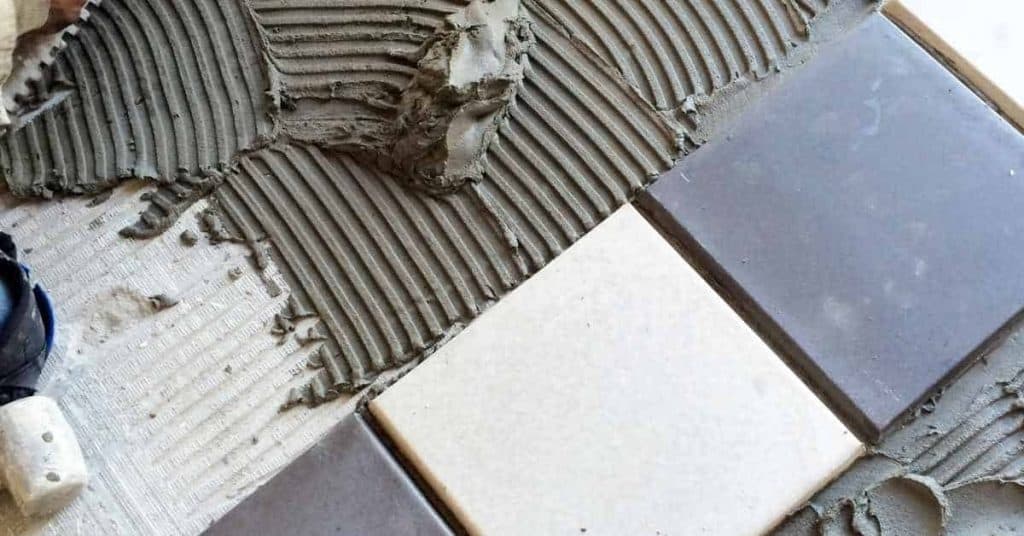
Choosing the right trowel notch size depends on tile size and how flat the surface is. In plain terms, it defines how much adhesive is spread and how evenly the tile will bed. Get this right before you start so you don’t have to redo tile later.
Check the tile size and flatness of the substrate, then pick a notch that matches both. Always follow the tile manufacturer’s instructions and local building rules, and test a small area first. If in doubt, ask at the store or read labels to confirm the notch size options and use safe ranges.
Key takeaways
- Choose notch size to tile dimensions and flatness for even adhesive coverage.
- Match notch to tile type and recommended adhesive film thickness per manufacturer.
- Assess substrate flatness early; plan for shading or high spots before setting.
- Check adhesive working properties and pot life under room temperature and humidity.
- Perform a dry run and visual checkpoints before committing to full installation.
- Always wear PPE, use proper trowel technique, and clean excess adhesive promptly.
Table of Contents
- Introduction
- Key takeaways
- Why Trowel Notch Size Matters
- Match Notch Size to Tile Size and Type
- Account for Substrate Flatness and Surface Condition
- Adhesive Type and Working Properties
- Visual Checkpoints and Testing Before Full Installation
- Tools, Materials Checklist and Best Practices
- Special Cases and Advanced Considerations
- Troubleshooting Common Installation Problems
- Conclusion
- FAQ
Why Trowel Notch Size Matters
The notch size on your trowel controls how much adhesive is laid under each tile and how it holds the tile to the substrate. A wrong notch can leave spots of hollow tile, poor transfer, or lippage that becomes obvious on the finished surface. Pay attention to the ribbon of adhesive and the bond you’re creating to avoid adhesive gaps and tile rocking.
Check the product label or data sheet to confirm the recommended notch size for your specific mortar, tile type, and substrate. If in doubt, ask the supplier or read the manufacturer instructions and follow their guidance for your tile and setting product.
Adhesive coverage and contact percentage
The size of your trowel notch plays a big role in how much mortar comes into contact with your tile. This is crucial because it’s this contact that creates the bond between the two.
Smaller tiles need more contact to stay put, so you’d want a larger notch for them. Larger tiles can get away with less contact, so a smaller notch will do.
Rule of thumb: For tiles under 6″ use a 3/8″ or 1/2″ notch. For tiles over 6″ go down to a 1/4″ or 3/16″.
Risks of incorrect notch selection
Using the wrong trowel notch can lead to a world of trouble. Too small and you’ll end up with lippage – where your tiles aren’t level, creating a wavy surface.
Too large and you risk debonding – where your tile comes loose because there’s too much mortar behind it, not enough on the face.
You might also end up with uneven grout lines. The excess or lack of mortar can cause your grout to sit at different heights, creating an unsightly look.
Match Notch Size to Tile Size and Type
Small tiles usually pair with smaller notches, while large-format tiles typically need a larger notch to ensure full coverage. Porcelain and natural stone can have different bonding needs, even at the same size. The goal is even contact from edge to edge with no air pockets under the tile.
Refer to the tile manufacturer’s recommendations and the adhesive data sheet for guidance. If you’re unsure, run a small test with a scrap tile to confirm the coverage you’re achieving before committing to the whole area.
Small tiles and mosaics
For tiny tiles and mosaics, you’ll want to use a trowel with a small notch. This could be as little as 1/8″ or 3mm.
Why? Small tiles have less surface area for the adhesive to grip onto. A smaller notch gives you more control over the amount of adhesive you’re applying, helping prevent excess mortar from oozing out and causing issues.
Mosaics need special attention. Use a notched trowel with very fine teeth or even a comb-notched trowel to apply thin layers of mortar. This helps maintain the grout lines between tiles.
Medium and large tiles
As tile size increases, so should your notch size. For medium-sized tiles (around 12″ to 24″), consider a 3/8″ or 10mm notch.
Large-format tiles (over 24″) often need deeper notches for full support. A 1/2″ or 12mm notch is usually suitable, but you might need to go up to 5/8″ or 16mm for extra-large tiles.
Remember, the goal is to provide enough adhesive coverage without using too much. Too little adhesive can cause tiles to lift, while too much can lead to cracking and other problems.
Porcelain vs. natural stone considerations
Tile type also affects notch choice. Porcelain tiles are usually lighter and less porous, so you can get away with smaller notches – around 1/8″ to 3mm.
Natural stones, on the other hand, are often heavier and more porous. They require larger notches for better adhesion – typically 3/8″ or 10mm, sometimes even larger depending on tile size and weight.
Additionally, natural stones may need special adhesives designed to penetrate their pores and provide a strong bond. Always check the manufacturer’s recommendations for your specific tiles.
Account for Substrate Flatness and Surface Condition
Flatness and surface irregularities directly affect how the adhesive fills under the tile and how evenly it bonds. A highly uneven substrate may require a different notch size or a substrate correction before tiling. If the surface isn’t true, you risk hollow spots and uneven tile heights.
Always check the substrate with a straightedge or level, and follow up with leveling as needed. If you see high spots, dips, or sudden changes in plane, correct them before choosing your notch and applying adhesive.
Measuring flatness and acceptable tolerances
Before you start notching your trowel, check the substrate’s flatness. Grab a straightedge – a long level or even a 2×4 will do.
Place it on the surface. If there’s a gap of more than 1/8 inch (3mm) at any point, your substrate isn’t flat enough for tiling directly. That’s too much movement for mortar to bridge.
If you find gaps up to 1/8 inch, you can still tile, but you’ll need to adjust your trowel notch size to accommodate the unevenness. More on that later.
When to level or skim coat the substrate
If you find gaps larger than 1/8 inch, don’t try to compensate with your trowel notch. That’s asking for trouble.
Instead, level or skim coat your substrate. For deep voids, use a self-leveling compound. For minor imperfections, patch with thinset mortar mixed a bit thinner than usual.
Once leveled, let it cure completely before tiling. This ensures a smooth, even surface for your tiles to stick to. After curing, recheck the flatness as described earlier.
Adhesive Type and Working Properties
Modified thinset, unmodified thinset, and mastics behave differently in how they hold, spread, and open time. The notch size that works for one adhesive can crowd out a proper bond with another. The working properties of the adhesive will influence how thick or thin the bed ends up being.
Always read the adhesive data sheet for open time, pot life, and consistency, then pair that with the notch recommended for your tile size. If you’re unsure, verify with the manufacturer instructions or your supplier before mixing and applying.
Modified vs. unmodified thinset
You’ve got two types of thinset: modified and unmodified. Both are good for different jobs.
Unmodified thinset is basic, no frills. It’s cheaper but not as strong or flexible. Use it for small tiles (under 12″ sq.) on stable, flat surfaces. Check your tile size and substrate before you decide.
Modified thinset, now that’s a different story. It’s got polymers mixed in, making it stronger and more flexible. This is what you want for larger tiles (12″ sq. and up) or thicker beds (over 3/8″). Why? Because those big boys need extra support to prevent cracking. Plus, the polymers help with suction on porous surfaces.
Here’s where notch depth comes in. For bigger tiles and thicker beds, you’ll want a trowel with a deeper notch (like 1/4″ or more) to hold more thinset. That extra adhesive gives your tiles better support and grip.
Mortar consistency and trowel technique
First things first, check your mortar mix. It should be like peanut butter – not too runny, not too stiff. Too fluid, it’ll be a mess; too stiff, won’t stick.
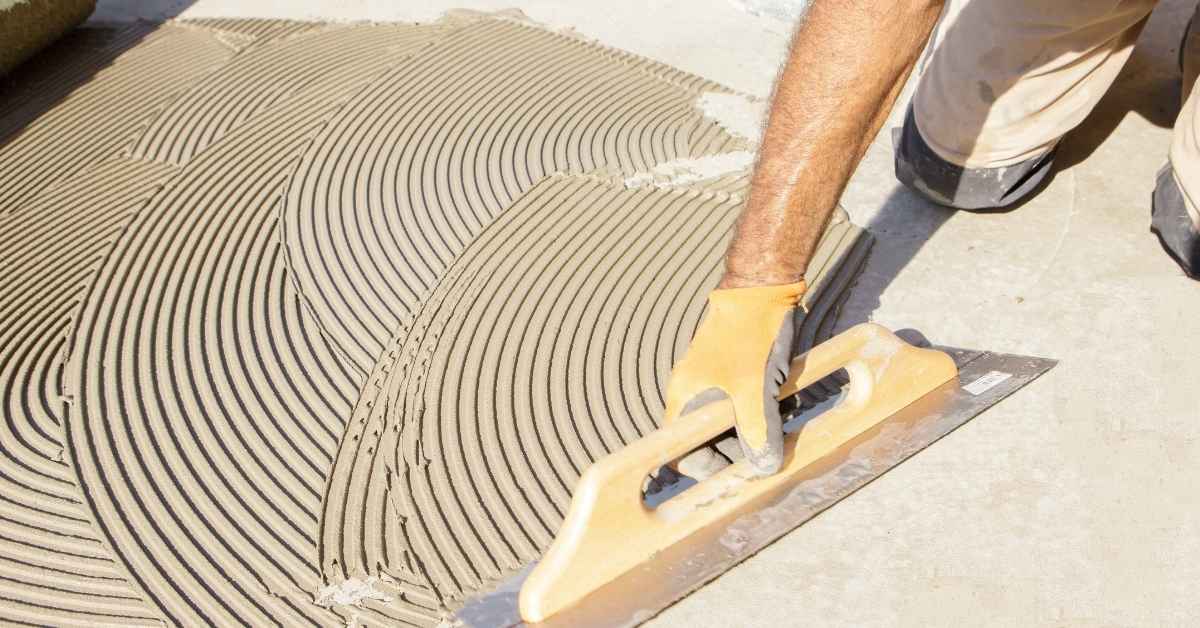
Now, let’s talk ridges. You want those 3/8″ to 1/2″ high, even ridges on your trowel. Not too many, not too few. Too many, you’re wasting material; too few, you ain’t got enough grip.
Buttering’s next. Spread that mortar thin, like you’re spreading butter on bread. You want a 1/8″ to 3/32″ layer. Too thick, it won’t stick; too thin, it’ll flake off.
Visual Checkpoints and Testing Before Full Installation
Do quick on-site checks as you begin: look for uniform transfer and clean lines along the tile edges. A simple pull or coverage test can show whether the notch choice is giving proper embedment. Any hollow spots or gaps should be addressed before continuing.
Designate a small test area, lay a few tiles, and inspect the bond up close. If you see inconsistent coverage, re-evaluate the notch size or substrate condition and adjust as needed per the product instructions.
Coverage test and back-buttering check
Before laying all your tiles, do this quick check to ensure proper mortar transfer and contact percentage.
- Press tile into place: Apply even pressure across the entire tile.
- Lift tile: After a few seconds, lift the tile gently. Check for mortar coverage.
- Inspect mortar transfer: Look at the back of the tile. It should be evenly coated with mortar.
- Check contact percentage: Aim for 85-90% coverage. Less than this may lead to weak adhesion and potential failures.
- Repeat test: Do this on multiple tiles from different areas of your batch.
- Observe cure behavior: Keep an eye on how the mortar cures under these conditions.
- Adjust notch if needed: If coverage is poor, consider a larger notch or adjusting your trowel technique.
- Inspect edges: Ensure edges are well-covered to prevent delamination.
Quick rule: If you’re not getting good mortar transfer and contact percentage, re-evaluate your notch size and trowel technique before proceeding with full installation.
Trial grid placement for large-format tiles
Before laying all your large-format tiles, install a small test area to observe their behavior and make adjustments if needed.
- Mark out test area: Choose a representative spot on your substrate. Make it big enough to see settling patterns (around 1m x 1m).
- Lay tiles in grid pattern: Start from the center, lay tiles in a grid pattern to mimic full installation.
- Observe lippage: Check for any high or low spots that might cause uneven surfaces. Adjust your leveling compounds if necessary.
- Check settling: Large tiles can settle over time. Observe how they move during the curing process.
- Monitor cure behavior: Keep an eye on how the mortar cures under these conditions, especially with large-format tiles.
- Inspect grout joints: Check for any issues that might arise when grouting, like excessive lippage or cracking.
- Adjust notch or technique: If you see excessive settling or lippage, consider adjusting your notch size or trowel technique.
- Let it cure: Allow the test area to cure fully before making any final decisions.
Quick rule: For large-format tiles, always do a trial grid placement first. It’s better to find issues now than after full installation.
Tools, Materials Checklist and Best Practices
Have the right trowel, a compatible float, a level, spacers, and the adhesive you’ve selected. Keep extra blades or notches on hand in case you need a different size for a section. A clean, orderly work area helps you spot issues early.
Follow safety and cleanliness best practices: wear eye protection, protect adjoining surfaces, and keep mixing containers and tools clean. Label your products and store them per label instructions to maintain performance.
Selecting the right trowel (notch types and codes)
Choose your trowel based on tile size, type, and substrate flatness. This ensures optimal adhesive coverage and grip.
- Notch shape: V-notches for thin tiles, square or U-notches for thicker ones.
- Tile thickness: 1/4″ – 3/8″ (6-9mm) trowels for small/thin tiles. 1/2″ – 5/8″ (12-16mm) for medium/large tiles.
- Substrate flatness: Use larger notches on rough surfaces to embed more adhesive.
- Avoid: Using the same trowel for different tile types without cleaning. It can cause adhesion issues.
Quick rule: Match trowel notch size to tile thickness and substrate condition for best results.
Application best practices and maintenance
Follow these steps to ensure your tiles stick well and last long.
- Clean trowel: Before each use, clean the trowel to remove old adhesive. A dirty trowel can cause poor adhesion.
- Work in sections: Apply adhesive and lay tiles in small sections (around 3×3 feet) at a time. This helps prevent premature setting.
- Timing: Allow the adhesive to ‘slake’ or absorb water for 5-10 minutes before troweling. Then, let it set for another 20-30 minutes before tiling.
- Temperature & humidity: Ideal conditions are 70-80°F (21-27°C) and 50% relative humidity. Extreme conditions can affect set time.
Quick rule: Work efficiently but carefully, cleaning up as you go to maintain optimal adhesion and prevent issues down the line.
Special Cases and Advanced Considerations
Edge cases include large-format, thin tiles or tiles installed over radiant heat, exterior applications, or unusual substrates like existing tile or plywood. These scenarios often require adjustments in notch size and additional preparation. Always verify compatibility and method with the product instructions.
For advanced installations, check if expansion joints or substrate modifications are needed and consult the manufacturer or a pro if you’re unsure. Document any special steps you plan to take before starting the area.
Installing over existing tile or plywood
When installing tiles over existing surfaces like tile or plywood, extra preparation is crucial. These substrates can be less stable and may not provide the same level of support as a fresh concrete slab.
Decoupling membranes or backer boards might be needed to isolate the new tile installation from any movement or instability in the existing substrate. Apply these before installing your tiles.
As for trowel notch size, you’ll want to consider the tile’s size and the stability of the underlying surface. Larger format tiles may require larger notches (like 1/2″ or 3/4″) to ensure proper coverage and adhesion. But if the substrate is less stable, you might need smaller notches (like 1/8″ or 1/4″) for better control and to help prevent delamination.
Heated floors and exterior installations
Tile installations over radiant heat systems or on exterior surfaces present unique challenges. Temperature changes can cause expansion and contraction, which can stress the tile installation.
For heated floors, consider using a modified adhesive that’s designed to withstand temperature fluctuations. You might also need to install movement joints to accommodate any expansion or contraction.
As for trowel notch size, larger format tiles may require larger notches (like 1/2″ or 3/4″) to ensure proper coverage and adhesion. But remember, larger notches can increase the risk of cracking due to movement, so it’s a balancing act.
For exterior installations, you’ll need an adhesive designed for outdoor use. Again, consider using movement joints if there’s potential for expansion or contraction due to temperature changes or moisture content in the substrate.
Troubleshooting Common Installation Problems
Hollow spots, lippage, or uneven grout joints usually point back to notch size, coverage, or substrate issues. Diagnose by checking embedment depth and looking for air pockets under tiles. Corrective actions depend on the root cause identified on site.
If problems persist, remove affected tiles, re-trowel with an appropriate notch size, and re-embed after rechecking the substrate and adhesive guidelines. Always verify with the product instructions before rework.
Fixing hollow spots and poor adhesion
Hollow spots under tiles are a sign of insufficient adhesive. Here’s how to find them:
Tap each tile gently with a rubber mallet. A dull thud indicates a problem.
To fix, remove the offending tile(s). Re-apply fresh adhesive, ensuring full coverage. Re-set the tiles and allow proper curing time.
For hard-to-reach hollows, use an adhesive injection tool to fill voids from the sides of tiles.
Minimizing lippage post-install
Lippage, where tile edges are uneven, can cause grout issues. Prevention is key:
Use the right trowel notch size for your tile size (see earlier section). Consider using a leveling system like adjustable spacers or self-leveling trammels.
If lippage occurs, address it immediately. For minor discrepancies, use a tile leveling clip to bring tiles flush during installation. For larger issues, remove and re-install tiles as necessary.
Conclusion
Getting the notch size right isn’t optional. It protects the surface, the tile, and your time by preventing gaps, lippage, and bond failures.
Make the move with a practical, door-in-the-wall checklist: verify tile size and flatness, pick a notch that suits the tile and substrate, confirm substrate flatness and surface condition, match the adhesive type and working properties, test a small area first, back-butter if needed, comb and apply in steady passes, and check coverage and surface before you set more tiles. keep the work tight and follow these checks in order as you go, not after you’ve laid half the room, and always wear eye and respiratory protection when mixing and troweling.
Common mistakes to avoid are using too large or too small a notch for the tile, neglecting substrate flatness, skipping a pre-install test, and rushing sections without allowing proper set or checking adhesive consistency. A few safety rules help: work in good light, clean tools between steps, and never force tiles with excessive adhesive. If a substrate is uneven or the tile size is unconventional, pause and reassess before proceeding.
If you’re still unsure about substrate issues, adhesive choice for your area, or unusual tile geometry, it makes sense to call in a pro instead of forcing a risky install. Stay patient, follow the checks, and you’ll end with a durable, clean-looking finish you can be proud of.
FAQ
How do I choose a notch size based on tile size?
For larger tiles, you typically need a notch that creates a thick yet even bed to prevent hollow spots. For smaller tiles, a finer notch helps keep the adhesive from oozing and keeps joints clean. Always check the tile and adhesive manufacturer instructions for recommended notch sizes and test a small area first.
How does substrate flatness influence notch size selection?
A very flat subfloor makes it easier to use a lighter notch. If the substrate has high spots or dips, you may need a wider notch or follow a two-pass method to achieve full coverage. When in doubt, test a sample area and compare coverage before committing to the full installation.
Can adhesive type affect which notch size I should use?
Some adhesives are thicker or self-leveling and may require a different notch to achieve full contact. Always read the adhesive label for recommended notches and do a small test area to confirm you get proper bed depth. If the instructions conflict with your tile size, lean toward the manufacturer guidance for that product.
What signs tell me I picked the wrong notch size during testing?
If you see missing adhesive at tile edges, seldom full contact, or adhesive squeeze-out that’s excessive, recheck notch size. A proper test should show a consistent ridged bed with tile seating evenly without rocking. If problems show up, adjust notch size or spread technique and retry on a new test tile.