
Introduction
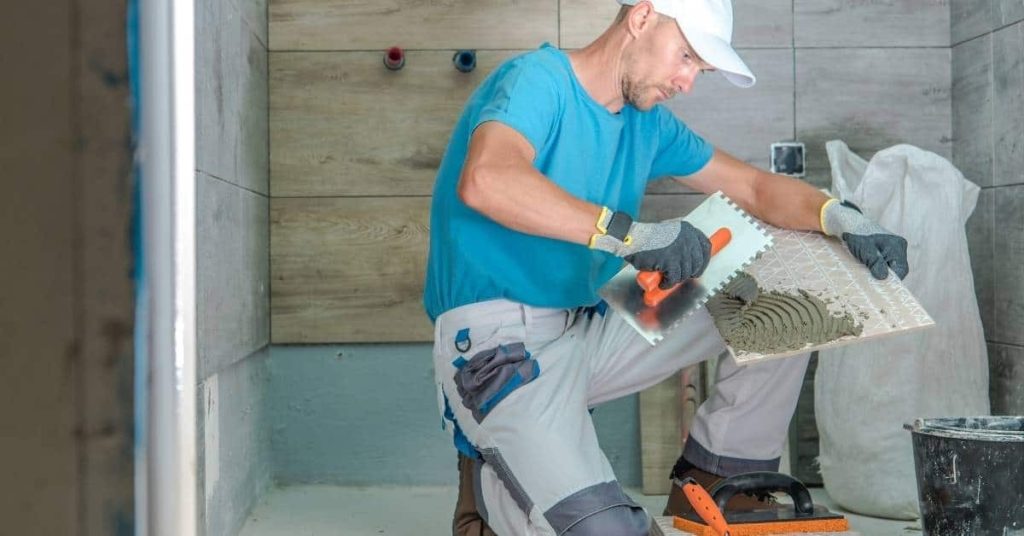
Back-buttering tile is applying a thin layer of adhesive to the back of the tile before setting it. This helps improve contact on rough backs or when setting over a slick surface. Check your tile and thinset instructions to see if back-buttering is recommended for your project.
It can be overkill for small, uniform tiles or well-leveled substrates. In those cases, skip back-buttering and focus on even coverage and proper set the first time. Always check the tile and thinset instructions or local rules if you’re unsure.
Key takeaways
- Assess substrate flatness first; back-buttering helps panel adhesion on uneven floors.
- Use back-buttering for large-format tiles or problematic backs for best grip.
- Avoid back-buttering on small, uniform tiles to save time.
- Check tile and substrate manufacturer guidance; local code may vary.
- Ensure thin-set coverage remains consistent; excessive back-buttering can cause slipping.
- Prioritize safety: wear eye protection, gloves, and clean spills promptly.
Table of Contents
- Introduction
- Key takeaways
- What Is Back-Buttering and Why It’s Used
- Situations Where Back-Buttering Is Important
- When Back-Buttering Is Overkill or Unnecessary
- How to Decide—Step-by-Step Assessment Checklist
- Correct Techniques for Back-Buttering When Needed
- Common Mistakes and How to Avoid Them
- Cost, Time, and Labor Trade-Offs
- Case Studies and Real-World Examples
- Conclusion
- FAQ
What Is Back-Buttering and Why It’s Used
Back-buttering means applying mortar to the tile back before you press it onto the substrate. It’s different from surface troweling, where you comb the adhesive on the wall or floor. The goal is solid coverage, better bonding, and fewer hollow spots under the tile.
Think of it as filling gaps you can’t reach with a single coat of mortar. It helps with larger tiles and irregular surfaces where full contact is hard to achieve with only surface adhesion. Always check the tile and substrate labels for guidance on this technique.
Basic definition and methods
Back-buttering is a technique where mortar is applied to the back of tiles before installation. It’s different from surface troweling, which only applies mortar to the wall or floor.
Installers typically use one of two methods:
- Skim-coat: A thin layer of mortar is spread evenly across the tile back.
- Full buttering: A generous amount of mortar is applied, covering the entire tile surface.
The exact method depends on the tile type and substrate condition. Always follow manufacturer guidelines for best results.
Historical and practical reasons installers back-butter
Back-buttering has been a common practice among tile installers for decades. It was initially used to address challenges with large tiles and uneven substrates.
Large Tiles: Back-buttering helps distribute the weight of larger tiles, preventing them from cracking under their own weight.
Uneven Substrate: When dealing with imperfect surfaces, back-buttering fills in low spots and creates a more even surface for tiling.
Thin-Set Limitations: In some cases, thin-set mortars may not provide enough coverage or bonding on their own. Back-buttering ensures full coverage and better adhesion.
Today, many installers still prefer back-buttering as it gives them more control over the installation process and helps ensure a strong, long-lasting bond.
Situations Where Back-Buttering Is Important
Back-buttering shines when tile size grows, or the tile is heavy and hard to press flat. It also helps on substrates that aren’t perfectly flat or a setting material that needs extra bite. In these cases, backing the tile helps ensure proper coverage and adhesion.
When you’re working with tricky substrates or less forgiving mortars, use back-buttering as part of your installation plan. Always cross-check manufacturer instructions and local rules before starting a job.
Large-format and heavy tiles
Back-buttering is crucial when installing large format tiles or heavy stone. These tiles need full mortar coverage to ensure they’re securely bonded to the substrate.
Large tiles have more surface area, so without back-buttering, you might end up with thin spots in your mortar bed. This can lead to lippage, where tiles aren’t level with each other.
Heavy stone tiles also benefit from back-buttering because they need extra support to prevent them from sliding or moving during installation.
Uneven or irregular substrates
When your substrate isn’t perfectly flat – like old tile, cement board with imperfections, or uneven slabs – back-buttering is a must.
Irregularities in the substrate mean you won’t get solid contact without extra mortar. Back-buttering fills these voids and ensures your tiles are properly supported.
Without back-buttering, you might end up with voids under your tiles, which can lead to cracking or delamination over time.
Wet areas and exterior installations
In wet rooms, showers, and exterior floors, back-buttering is essential for waterproofing and freeze-thaw resistance.
When tiles are exposed to moisture or freezing temperatures, they need a solid mortar bed to prevent water from seeping behind the tiles. This can lead to mold, cracking, or even tile failure.
Back-buttering ensures full coverage and helps create a barrier against water intrusion, protecting your installation for years to come.
When Back-Buttering Is Overkill or Unnecessary
Small tiles on a flat, well-prepared substrate often don’t need back-buttering. In such cases, standard surface troweling and bedded tile can be sufficient. Adding back-butter may just slow you down and create more mortar cleanup.
Some adhesives are formulated to grab easily with surface application alone. Check the product label or data sheet to confirm whether back-buttering will add value for your mix. When in doubt, follow the manufacturer guidance.
Small-format tiles and mosaics
For tiny tiles, mosaics, or other small-format installations, back-buttering is often overkill. Here’s why:
Thin-set mortar already provides excellent coverage for these little guys. It fills gaps, bonds well, and creates a solid base.
Back-buttering can waste time and material here. It might even clog those tiny grout lines if not done carefully.
Stick to thin-set alone for small tiles. You’ll save effort and still get a strong, lasting bond.
Use of modern mortars and adhesives
Today’s thin-sets are far from your grandpa’s cement-based mix. They’re highly polymer-modified, offering superior bond strength.
With recommended trowel techniques like the notch or V-groove, these modern mortars provide ample coverage and grip on their own.
Back-buttering might not be necessary with these advanced adhesives. Follow manufacturer guidelines for best results.
Risk of excess mortar and bond issues
Over-buttering can cause more problems than it solves. Here are a few:
Incorrect joint spacing becomes a challenge when excess mortar squeezes out. It’s hard to maintain even grout lines.
Mortar squeeze-out also leads to uneven bed thickness. This can cause tiles to sit at different heights, creating an unsightly, wavy surface.
Consistent bonding is key in tiling. Too much mortar on the back of tiles can lead to inconsistent adhesion, weakening your installation over time.
How to Decide—Step-by-Step Assessment Checklist
Start by evaluating tile size and weight, then inspect substrate flatness and cleanliness. If the surface is not perfectly flat, back-buttering can help. Review the adhesive type and its instructions to see if back-buttering is recommended.
Next, verify environmental exposure and movement considerations for the area. Always consult the product data sheet or label for your specific mortar and tile combination. Make the call only after you’ve checked these references.
Step-by-Step Process
Use this checklist before starting any concrete work to ensure a successful and safe project.
- Check local rules: Verify if you need permits or follow specific regulations. Always check with your local building department.
- Inspect site conditions: Ensure the area is level, dry, and free from debris. Check for any underground utilities using a utility locator service.
- Prepare forms: Build or install forms accurately to contain the concrete. Use straight edges and ensure they’re secure.
- Check reinforcement: Inspect rebar or other reinforcements to ensure they’re properly placed, secured, and meet required spacing and size.
- Calculate materials: Determine how much concrete you need using a calculator. Consider ordering 10% extra for waste and errors.
- Check weather forecast: Ensure temperatures are within safe ranges (50-90°F, 10-32°C) for pouring and curing. Avoid rain or extreme conditions.
- Gather tools and equipment: Have everything ready: shovels, rakes, floats, trowels, screeds, wheelbarrows, safety gear (gloves, glasses, boots).
- Inspect concrete mix design: Check the mix design on the batch plant ticket or ensure it’s as per your requirements. Verify water-cement ratio is within safe limits (0.45-0.65).
Quick rule: Always prioritize safety first. Wear appropriate Personal Protective Equipment (PPE) and follow safe handling procedures for concrete.
Measuring substrate flatness and tile warpage
Before you start tiling, use this checklist to ensure your surface is flat and tiles are not warped. This will save you time and prevent costly rework.
- Check substrate flatness with a straightedge: Place a long level or straightedge on the surface. Look for gaps between the edge and the surface. If gaps are more than 1/8″ (3mm), consider additional leveling compound or screeding.
- Feel for high spots with your hands: Run your hands over the surface to feel for any high spots. These can cause tiles to crack under pressure.
- Use a feeler gauge for small gaps: Insert a feeler gauge (available at hardware stores) into suspected gaps. If it fits, you need more leveling compound or screeding.
- Check tile warpage visually: Lay out tiles on the floor to check for warping. Tiles should lie flat without rocking. If they rock, they’re warped and shouldn’t be used.
- Test tile warpage with a level: Place a level on top of laid-out tiles. If the bubble isn’t centered, the tile is warped.
- Check for lippage between tiles: Lay out two tiles side by side and check if they’re even at the edges. If not, adjust your mortar bed thickness or use different tiles.
- Inspect tiles for cracks or chips: Check each tile for cracks or chips that could cause problems later. Discard any damaged tiles.
- Check tile size consistency: Measure a few tiles to ensure they’re all the same size. Inconsistencies can lead to uneven grout lines and lippage.
Quick rule: If you find more than one or two warped tiles, consider getting a new batch. The same goes for substrate flatness – if there are multiple high spots or gaps, redo the leveling compound or screeding.
Matching manufacturer instructions and standards
Before you start applying mortar or adhesive, use this checklist to ensure you’re following the tile and mortar manufacturer’s recommendations and industry standards (like those from TCNA). This will help you avoid common mistakes that can lead to costly rework.
- Check tile face size: Measure the face size of your tiles. Mortar coverage rates vary based on tile size.
- Read mortar bag label: Check the recommended coverage rate (square feet per bag) and ensure it matches your project’s needs.
- Check substrate flatness: Re-measure substrate flatness as described earlier. Mortar types vary in their ability to compensate for uneven surfaces.
- Match mortar type to tile type: Some mortars are designed specifically for certain tile types (e.g., ceramic, natural stone). Check if your mortar matches your tiles.
- Check water content: Follow the manufacturer’s guidelines for adding water. Too much or too little can affect bond strength and workability.
- Check mixing time: Timing is crucial. Mix only what you can use within the recommended time frame to maintain optimal mortar performance.
- Check open time: Open time is how long the mixed mortar remains usable before it starts to set. Ensure your project allows for this time frame.
- Check setting time: Setting time is when the mortar reaches its initial bond strength. Plan your installation accordingly.
Quick rule: Always follow manufacturer guidelines and industry standards to ensure a strong, long-lasting tile installation.