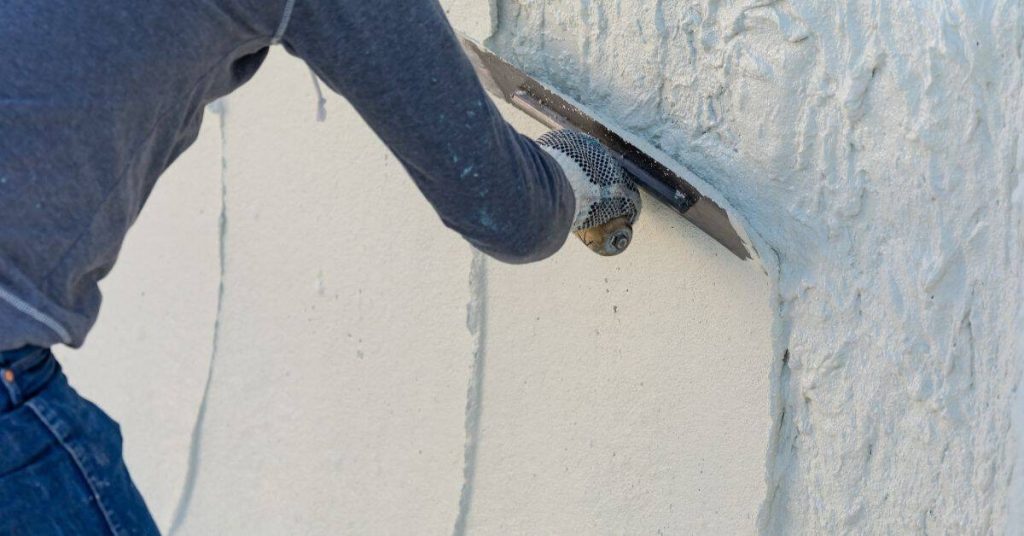
Person smoothing stucco on exterior wall with trowel

Drainage Stucco vs Barrier Stucco: How to Tell What You Have on Your House

Introduction

Drainage stucco is a cladding system designed to let water that gets behind the finish drain out, while barrier stucco is meant to shed water at the surface and keep moisture out; that’s the practical difference. Think of drainage as a layered system with a gap or channels to manage moisture and barrier as a continuous skin—check product labels and manufacturer instructions to confirm which you have. This matters for repairs and detailing because the ways you flash, vent, and tie in trim differ depending on the system.

From a DIY standpoint, drainage systems usually use a weather-resistive barrier, drainage plane, and specific lath or drainage accessory, while barrier systems rely on a solid substrate and a continuous finish; look at how the base lath and WRB are installed to tell them apart. Installation skill needs are similar, but materials and approach change—if you’re unsure, inspect wall components or consult the product data and local rules before cutting or patching.

Key takeaways

  • Drainage stucco uses weep screed and drain channels to manage moisture.
  • Barrier stucco relies on continuous membrane and thicker coating for water resistance.
  • Installation: drainage installs moisture management layers with weep holes integrated.
  • Drainage costs vary by material quality; barrier costs vary by membrane system.
  • Visual cues: drilled weep holes, caulking gaps, and stucco thickness indicate type.
  • Safety: ensure access to roof edge and scaffold safety when inspecting systems.
Table of Contents

Quick Definitions and Core Differences

Drainage (rainscreen) stucco is an exterior wall assembly that intentionally creates a small cavity or drainage path behind the stucco finish so moisture can exit and the assembly can dry. It includes a weather-resistive layer, drainage channels or mat, and a weep screed at the base to direct water out.

Barrier (monolithic) stucco is a continuous cementitious layer applied over lath with little or no designed cavity, relying on the outer surface and flashings to shed water. The single technical difference that governs performance is whether the system provides a planned drainage/ventilation cavity behind the finish (drainage) versus a continuous, non‑cavitied barrier (barrier).

What is barrier stucco?

Barrier stucco, also known as monolithic stucco, is a single layer of cement-based material applied directly over a lath or other substrate. It’s designed to be a continuous, airtight surface that relies on its outer layer to shed water.

This system doesn’t have a built-in drainage path behind the finish. Instead, it depends on the water-resistive barrier and proper flashing to prevent moisture from getting behind the stucco.

Key point: Barrier stucco has no deliberate cavity for drainage or ventilation.

What is drainage (rainscreen) stucco?

Drainage, or rainscreen, stucco is an exterior wall system that includes a small air gap or cavity behind the finish to allow moisture to drain and dry. It’s designed to manage water intrusion and prevent moisture buildup.

The system typically consists of a moisture barrier, drainage channels, a weep screed at the bottom, and a stucco finish with a deliberate cavity behind it for ventilation and drainage.

Key point: Drainage stucco has an intentional drainage/ventilation plane behind the finish.

One-line technical comparison

Barrier stucco relies on its outer layer to stop water, with no built-in path for moisture evacuation. In contrast, drainage stucco incorporates a deliberate drainage/ventilation plane behind the finish to manage water and drying.

Key difference: Barrier systems rely on the exterior layer alone, while drainage systems have a designed path for moisture to escape.

In barrier systems, if not installed perfectly, moisture can accumulate behind the wall. Drainage systems better handle moisture but require proper flashing to prevent water from getting into the cavity.

Back to top ↑

Installation Differences — Step-by-Step Contrasts

Drainage systems stack from exterior to interior as finish coat, base coat, metal lath, drainage mat or air gap, a weather‑resistive barrier, then substrate; key steps include installing the drainage plane, setting continuous weep screed, and sequencing flashing so water exits at the base. Barrier stucco typically places finish, base, lath, weather barrier and substrate in direct contact with no deliberate drainage layer, so installers focus on fully sealed WRB overlaps and tight flashing details.

Critical differentiators for fieldwork are the attachment and clearance for the drainage plane and weep openings versus the barrier approach’s emphasis on seamless WRB adhesion and sealed transitions at windows/doors. For a DIY verification checklist in the first 24–48 hours: confirm visible weep screed, inspect WRB overlaps per product instructions, photograph every window/door flashing, and note any missing drainage mat or gaps for professional follow‑up.

Step-by-Step Installation Process

The following steps outline the key differences between installing drainage and barrier stucco systems. They start with preparation, move through the main work, and end with final checks.

  1. Preparation: Check safety, gather tools, and prep surfaces. Safety first – wear gloves, goggles, and a dust mask.
  2. Base Layer: Apply weather barrier or drainage mat (drainage system only). Ensure it’s secure and properly lapped at seams.
  3. Lath Installation: Attach lath to the wall, following manufacturer’s guidelines. Leave space for expansion and contraction.
  4. Flashing & Terminations: Install flashing around windows, doors, and transitions. Ensure proper laps and adhesion.
  5. Base Coat Application: Mix and apply base coat, following mix tolerances. Use a straight edge to strike off the surface.
  6. Drainage Provision (drainage system only): Install weep screeds at the bottom of walls and ensure they’re open for drainage.
  7. Finish Coat Application: Apply finish coat, following manufacturer’s guidelines. Ensure it’s smooth and even.
  8. Curing & Final Checks: Allow proper curing time. Check for any cracks or delamination. Clean up tools and materials.

Barrier Stucco Installation Steps

Barrier stucco systems rely on a continuous barrier to prevent water intrusion. Here are the key steps:

Start by applying a weather-resistive barrier, ensuring it’s properly sealed at seams and laps. This barrier should be continuous and unbroken.

Next, install lath over the barrier, following manufacturer’s guidelines. Ensure lath is securely attached and evenly spaced.

Apply base coat, following mix tolerances. Use a straight edge to strike off the surface, ensuring an even application. Finish with a finish coat, again following manufacturer’s guidelines.

Drainage Stucco Installation Steps

Drainage stucco systems, also known as rainscreen systems, allow water to drain and dry quickly. Here are the key steps:

Start by applying a drainage mat or air gap over the weather barrier. Ensure it’s properly lapped at seams and secured.

Install lath over the drainage mat, following manufacturer’s guidelines. Ensure lath is securely attached and evenly spaced.

Apply base coat, following mix tolerances. Use a straight edge to strike off the surface, ensuring an even application. Finish with a finish coat, again following manufacturer’s guidelines.

Critical Flashing, Terminations, and Tolerances

Proper flashing, terminations, and tolerances are crucial for both systems to perform effectively:

Flashing: Install flashing around windows, doors, and transitions. Ensure proper laps and adhesion. Flashing should direct water out and away from the wall.

Terminations: At the bottom of walls, install weep screeds for drainage systems or ensure a proper termination point for barrier systems. These should be open for drainage (drainage system) or sealed (barrier system).

Tolerances: Follow mortar mix tolerances closely to ensure a strong, durable finish coat. Control joints should be properly spaced and tooled to prevent cracking.

Back to top ↑

Materials, Specs, and Standards Explained

Both systems use similar basic materials—metal lath or mesh, fasteners, flashing, weep screed and a WRB—but drainage stucco adds a drainage component (mat, foam spacer, or gap) and intentional weep openings; barrier stucco omits that cavity and depends on the cementitious layer and flashings to resist water. Check product labels or manufacturer data sheets for WRB permeability, accepted fastener types, and corrosion resistance for lath and fasteners when assessing the existing assembly.

Local codes and manufacturer installation instructions set required clearances, flashing methods, and acceptable materials—verify those documents rather than assuming one-size-fits-all. For homeowners: look for labels, permits, or contractor notes, inspect lath corrosion and presence of a drainage mat, and confirm flashing details against manufacturer specs before any repair or replacement.

Water-resistive barriers, housewraps, and WRB choice

The water-resistive barrier (WRB) is the first line of defense against moisture in your stucco system. Choose wisely.

Barrier Stucco: Opt for a 60-minute or higher perm rating WRB like Tyvek or Typar. They’re breathable but keep liquid water out. Avoid lower perm ratings to prevent moisture buildup.

Drainage Stucco: Go for a perforated housewrap like Benjamin Obdyke’s HR15 or similar products. They allow both water vapor and liquid water to pass through, promoting drainage. Ensure compatibility with your finish materials.

Lath, stucco mix, and accessory materials

Material choices impact the final result of your stucco system. Here’s what to consider.

  • Lath: Expanded metal lath is standard for both systems. For barrier, use 24-gauge. For drainage, opt for 20-gauge with wider spacing to accommodate drainage components.
  • Stucco Mix: Both systems use a mix of cement, sand, and water. Barrier uses a 3:1 or 4:1 ratio. Drainage prefers a 2:1 ratio for better adhesion to lath.
  • Fasteners: Use stainless steel fasteners in both systems. Galvanized can corrode over time, leading to cracking and staining.
  • Flashing: Both systems need flashing at openings. Ensure it’s compatible with your WRB and lath.
  • Drainage Components (Drainage Stucco only): Use weep screeds and drainage mats to facilitate water drainage. Skip these, and moisture can build up, leading to mold and mildew.

Tools and materials checklist for inspection or DIY

Before you start inspecting or repairing your stucco, make sure you have the right tools and materials.

  • Tape measure: To check clearances and dimensions.
  • Level: Ensure proper installation and identify any cracks or gaps.
  • Hammer and chisel: To expose lath and check for corrosion or damage.
  • Screwdriver: To remove fasteners and inspect them for signs of rust.
  • Flashlight: To inspect hard-to-reach areas like behind weep screeds.
  • WRB samples: To compare with your existing WRB and confirm compatibility.
  • Lath samples: To check gauge and spacing against your existing lath.
  • Fastener samples: To ensure you’re using the right material and size.
  • Flashing samples: To confirm compatibility with your WRB and lath.
  • Drainage components (if applicable): Weep screeds, drainage mats, and other accessories to check existing system and for repairs.
  • Perm test meter: To verify the perm rating of your WRB.

Quick rule: Always double-check local codes and manufacturer guidelines before starting any repair or replacement work.

Back to top ↑

Visual Checkpoints — How to Identify Your System on-Site

Start outside by locating a continuous weep screed at the bottom of the wall, any vented gaps at the base, or exposed edges where a drainage mat might be visible—those are strong signs of a drainage system. If the base terminates directly to substrate with no visible drainage path and seams look sealed, the wall may be a barrier system.

Also check for finish cracking patterns, interior staining, or efflorescence after rain; recurrent interior damp or peeling paint near exterior walls often signals moisture management problems. When in doubt, photograph edges, window/door flashings, and any labels or tags and compare them to manufacturer instructions or building permits for confirmation.

Exterior signs to look for (weep screed, vents, visible gaps)

Before you start poking and prodding, use this checklist to spot exterior signs of a drainage stucco system.

  • Weep screed at base: Look for a continuous horizontal line at the bottom of your stucco. It should be filled with a permeable material like open-cell foam or gravel.
  • Drainage gaps: Check for small vertical gaps (1/8″ to 1/4″) between the stucco and trim, siding, or other surfaces. These allow water to escape.
  • Venting holes: Look for tiny holes (about 1/32″ diameter) in the stucco near the base. They should be evenly spaced.
  • Sealant lines: Check for continuous sealant lines at corners, windows, and doors. These keep water out while allowing vapor to escape.
  • Wall-to-wall joints: Look for vertical joints that align with each other across the wall. This indicates a drainage system behind.
  • Expansion joints: Check for wider, horizontal gaps (about 1/4″ to 3/8″) at regular intervals. These allow the stucco to expand and contract without cracking.
  • Drainage plane behind trim: If possible, peek behind trim or siding to see if there’s a drainage mat, foam backer, or air gap.
  • Stucco texture: Drainage stucco may have a more uniform, less textured finish due to the underlying plane and lath.

Quick rule: If you see any of these signs, it’s likely your home has a drainage stucco system.

Probing non-invasive tests and what they reveal

Use this checklist to perform safe, non-destructive tests that can help you determine your stucco system type.

  • Check around openings: Inspect windows, doors, and other penetrations. A drainage system should have continuous sealant lines and no signs of water intrusion.
  • Flashings at base: Look for proper flashing at the bottom of your stucco. It should be lapped correctly and not damaged.
  • Wall-to-wall alignment: Check if vertical joints align across the wall. If they do, it’s a good sign of a drainage system.
  • Expansion joint gaps: Measure any horizontal gaps. A wider gap (1/4″ to 3/8″) may indicate a drainage system behind.
  • Tapping sound: Gently tap the stucco with a screwdriver handle. A hollow sound could indicate an air gap or drainage mat behind.
  • Stucco thickness: Try to measure the stucco’s thickness. Drainage systems may be thicker due to the additional layers.
  • Check for labels: Look for any manufacturer labels, stamps, or markings on access panels, edges, or behind trim.
  • Ask neighbors: If your home is part of a development, ask neighbors what type of stucco they have. It might be the same as yours.

Quick rule: Non-invasive tests can give you clues, but they’re not foolproof. Use them alongside other checks for best results.

Interior clues and moisture evidence

Sometimes, the interior of your home can reveal signs of your stucco system type or hidden moisture issues.

  • Wet spots on walls: Look for damp areas, especially after rain. They could indicate a drainage issue behind the stucco.
  • Stains on ceilings: Check for water stains or discoloration on your ceiling. They might hint at a leak from above.
  • Efflorescence: Look for white, powdery deposits on interior walls near exterior surfaces. It’s a sign of moisture moving through the stucco.
  • Peeling paint: Check for peeling or bubbling paint on interior walls. It could indicate hidden moisture behind the surface.
  • Musty odors: Smell for musty, earthy odors. They can indicate mold growth due to moisture intrusion.
  • Mold or mildew: Look for visible signs of mold or mildew on interior walls or ceilings.
  • Warped or rotting wood: Check for any warping, rotting, or soft spots in your trim, baseboards, or other wooden components near exterior walls.
  • Condensation: Look for water droplets on interior surfaces, especially during humid weather. It could indicate a vapor barrier issue.

Quick rule: If you find any of these signs, it’s time to investigate further and consider professional help if needed.

Back to top ↑

Exterior of house with beige stucco walls and red tile roof

Performance Comparison — Benefits and Drawbacks

Drainage stucco handles incidental moisture by giving it a path to leave the wall and an opportunity to dry, which generally reduces long‑term moisture buildup and related deterioration when installed correctly. Barrier stucco depends on the outer layer and flashings to keep water out; when perfectly executed it can work, but any breach risks trapping moisture behind the finish.

Drying capacity, susceptibility to intrusion, and longevity all hinge on details: properly flashed drainage systems tend to manage water better, while barrier systems are more sensitive to installation quality and flashing continuity. Homeowners should monitor sealants, flashings, and any signs of staining or cracking and verify repair methods against product instructions and local code guidance.

Water performance and drying potential

Drainage stucco systems actively manage water by allowing it to drain off, while barrier systems rely on repelling water. After wetting, drainage systems dry faster due to their open structure and ventilation paths. Barrier systems can take longer to dry as they depend on evaporation through the exterior surface.

Wall assemblies play a significant role in drying capacity. Drainage systems paired with proper wall assembly design (like rainscreens) facilitate quick moisture diffusion and evaporation. Barrier systems require well-ventilated cavities for effective drying.

In both cases, proper flashing, weep screeds, and drainage plane integrity are crucial to prevent water buildup and ensure efficient drying.

Durability and common failure modes

Barrier stucco systems can fail due to adhesion loss, especially when exposed to prolonged moisture or extreme temperatures. Cracks in the stucco or substrate can compromise the barrier, leading to water intrusion.

Drainage stucco systems may clog over time if not properly maintained, preventing water from draining and causing moisture buildup. This can lead to rot, mold growth, and other issues within the wall assembly.

Both systems are susceptible to failures at joints, penetrations, and flashings. Regular inspections and timely repairs can help mitigate these risks.

Energy, thermal, and condensation impacts

Drainage stucco systems offer better thermal performance as they allow for continuous insulation on the exterior. This reduces heat loss in winter and gain in summer, improving energy efficiency.

Barrier systems can trap moisture within the wall assembly if not properly vented, increasing the risk of condensation. This can lead to mold growth, rot, and reduced thermal performance over time.

Assembly details matter for both systems. Proper flashing, weep screeds, and drainage plane integrity are essential to prevent water buildup and condensation. Regular inspections can help identify potential issues early.

Back to top ↑

Climate and Regional Considerations

Climate affects which system is preferable: wetter, humid, or coastal areas increase the value of a drainage plane that lets assemblies dry and resist salt or persistent moisture, while very arid regions place less demand on drainage. Freeze–thaw regions also benefit from assemblies that control water and allow drainage to reduce repeated saturation and damage.

Always confirm local code requirements and product certifications with a pro or the manufacturer for your region rather than relying on general advice. For homeowners: check flashings, weep screed condition, and local permit/inspection notes and get a climate‑specific recommendation from a licensed contractor if you see signs of moisture or damage.

Wet and humid climates

In wet and humid regions, drainage/rainscreen systems are often recommended due to their ability to manage moisture effectively. These systems allow water to drain off the exterior while preventing it from getting trapped behind the stucco.

Key considerations: Ensure your system has a proper drainage plane, weep screeds spaced every 16-24 inches, and effective flashing at openings to prevent water intrusion. Regularly inspect for any signs of water damage or condensation on interior walls.

While barrier systems can work in these climates, they rely heavily on the integrity of the stucco itself to keep out moisture. Any cracks or holes can lead to significant water issues behind the stucco.

Cold and freeze-thaw regions

In cold climates with freeze-thaw cycles, both drainage and barrier systems need to be designed for durability. Drainage systems can handle cyclic moisture changes better as they allow water to escape.

Key considerations: Ensure your system has a robust vapor barrier to prevent interior condensation during heating seasons. Also, check for proper flashing at openings and any signs of freeze-thaw damage on the exterior.

Barrier systems can work in these regions but must be designed with redundancies like multiple layers or reinforced stucco mixes to resist cracking from freeze-thaw cycles.

Arid and mixed climates

In arid regions, barrier systems may be acceptable due to the lack of moisture. However, design redundancies are still crucial to account for any occasional heavy rains or temperature changes.

Key considerations: Ensure your system has a proper air/vapor barrier to prevent interior condensation during cooling seasons. Also, check for any signs of water intrusion or cracking on the exterior.

In mixed climates, it’s essential to consider both moisture management and freeze-thaw durability. A hybrid approach combining aspects of drainage and barrier systems might be warranted, depending on local conditions and code requirements.

Back to top ↑

Costs, Budgeting, and Long-Term Maintenance

Main cost drivers include material choices (drainage mat, WRB type, corrosion‑resistant lath), labor for careful flashing and details, and access logistics; drainage systems can add material and labor for the drainage plane but may reduce repair frequency over time. Ongoing maintenance costs center on inspections, sealant replacement, repainting, and addressing any localized cracking or flashing failures for both systems.

Use a lifecycle approach: plan capital expenses for installation and set aside recurring maintenance funds for inspections after seasons and visible repairs, and include a contingency for unexpected moisture remediation. If unsure about expected service life or specific product warranties, check manufacturer documentation and local contractor estimates before budgeting major work.

Initial installation cost factors

When comparing costs of drainage stucco vs barrier stucco, consider these key elements:

Materials: Drainage systems use more expensive materials like integral water-resistive barriers and drainage mats. Barrier systems rely on cheaper paint-on coatings.

Labor: Drainage systems require more labor-intensive installation, including proper flashing details and integration of drainage components. Barrier systems are quicker to install but may need additional labor for painting.

Detailing complexity: Both systems have their complexities. Drainage requires precise weep screed placement and venting. Barriers need careful application around openings to prevent water intrusion.

Expected maintenance and long-term costs

Maintaining your stucco system’s performance is key to longevity and cost-effectiveness:

Drainage Stucco: Regular inspections, sealant touch-ups, and occasional repointing may be needed. Drainage performance reduces the risk of moisture intrusion, lowering long-term costs.

Barrier Stucco: More frequent repainting, patching, and potential recoating may be required due to water intrusion risks. Long-term costs can be higher if moisture issues arise.

Maintenance intervals depend on climate, exposure, and initial installation quality. Regular visual inspections after seasons help catch issues early.

How to plan a budget and get reliable estimates

To ensure you’re getting accurate, competitive bids for your stucco project:

Specify materials: Clearly state the type of stucco system (drainage or barrier) and desired materials in your bid documents.

Ask about warranties: Inquire about material and labor warranties. Some manufacturers offer extended warranties with proper installation.

Get multiple bids: Obtain estimates from at least three licensed, insured contractors. Compare apples-to-apples, ensuring each bid includes the same scope of work and materials.

Back to top ↑

Common Installation Mistakes, Inspection Checklist, and Safety Concerns

Frequent errors that cause failures include missing or improperly installed flashing and weep systems, poor substrate preparation, incorrect lath fastening, and improper stucco mix or curing practices. These mistakes let water bypass intended paths or trap moisture behind the finish and are common on both drainage and barrier installations when details are rushed.

Homeowner inspection checklist: after rain inspect seams, base weep screed, flashing continuity, visible cracks, interior stains, and lath corrosion; photograph issues and compare to any installation documentation. For safety: use PPE for dust and chemical exposure, follow ladder and scaffold safety rules, and consult a pro for lead‑paint concerns or when structural issues appear.

Typical mistakes that cause leaks or failures

Use this checklist during and after installation to catch common issues early. It’s easier (and cheaper) to fix problems now than later.

  • Missed flashing: Check all transitions – walls, windows, doors. Flashing should be visible and continuous. What goes wrong if you skip this: Water intrusion can lead to rot, mold, and structural damage.
  • Improper WRB continuity: Ensure the weather-resistant barrier (WRB) is unbroken and laps are sealed properly. Check manufacturer’s instructions for specific product details. What goes wrong if you skip this: Water can penetrate behind the cladding, causing damage.
  • Blocked drainage paths: Verify that all drainage planes are clear and not obstructed by fasteners or other materials. What goes wrong if you skip this: Water won’t drain properly, leading to potential leaks.
  • Wrong lath fastening: Check that lath is securely fastened with the correct spacing (usually 6″ to 8″) and pattern (staggered). What goes wrong if you skip this: Inadequate support can cause cladding to sag or fall off.
  • Insufficient fasteners: Ensure there are enough fasteners for the lath. Check manufacturer’s recommendations based on your specific cladding and substrate. What goes wrong if you skip this: Cladding can become loose or fall off over time.
  • Improper cladding installation: Verify that cladding is installed correctly, with proper spacing for drainage and expansion. Check manufacturer’s instructions for specific product details. What goes wrong if you skip this: Cladding can buckle, warp, or leak.
  • Ignoring expansion joints: Ensure there are expansion joints at regular intervals (usually every 20′ to 30′) to accommodate building movement. What goes wrong if you skip this: Cladding can crack or break due to stress from movement.
  • Not checking for punctures: Inspect the WRB and cladding for any punctures, tears, or holes that could allow water intrusion. What goes wrong if you skip this: Water can enter and cause damage behind the cladding.

Quick rule: Always follow manufacturer’s instructions and local building codes to avoid common mistakes.

Homeowner inspection checklist before hiring a contractor

Before you hire a concrete contractor, use this checklist to assess your site’s condition and ensure the work scope aligns with your needs. This will help prevent common mistakes and expensive rework.

  • Check soil conditions: Ensure the ground is stable and well-compacted. Soft or unstable soil can cause settling and cracks over time.
  • Assess drainage: Verify water drains away from your site to prevent standing water, which can lead to foundation issues and leaks.
  • Inspect existing concrete: Check for any cracks, settlement, or damage. These may need to be addressed before pouring new concrete.
  • Measure dimensions: Accurately measure the area where you want the concrete poured. This ensures you get an accurate quote and helps prevent overordering or running short.
  • Check access points: Ensure there’s adequate space for concrete trucks to reach your site, and that they can safely maneuver around obstacles.
  • Inspect utilities: Check for any underground utility lines before digging. This is crucial to avoid damage and ensure safety.
  • Check local codes: Verify that your project complies with local building codes and zoning regulations.
  • Review contractor’s work: Ask for references and inspect their previous work, if possible. This can help you gauge the quality of their workmanship.

Quick rule: Always prioritize safety first. If you’re unsure about any aspect of your project or site conditions, consult a professional before proceeding.

Safety and handling concerns during application and repairs

Use this checklist before starting any concrete work to ensure a safe and successful job. Check these points every time you start a new task or repair.

  • Wear appropriate PPE: Gloves, safety glasses, and steel-toed boots are minimum. Check your specific project needs (e.g., ear protection for power tools).
  • Protect yourself from dust: Wear a respirator or dust mask when mixing, placing, or finishing concrete. Check product labels for silica dust warnings.
  • Work at height safely: Use secure ladders and platforms. Ensure stability before starting work. Tie off if necessary (check local rules).
  • Handle materials carefully: Store and move concrete, aggregates, and admixtures properly to prevent injuries or damage.
  • Check power tools: Inspect all power tools before use. Ensure they’re in good working order and have proper grounding.
  • Keep the worksite clean: Remove debris and keep walkways clear to prevent trips, falls, or other accidents.
  • Protect others from falling objects: Use toe boards, screens, or other barriers when working above ground level. Check local rules for required safety measures.
  • Avoid hazardous tasks yourself: Hire licensed pros for complex work like underwater concrete placement, high-rise pours, or jobs with special requirements (e.g., fire-resistant mixes).

Quick rule: Always prioritize safety over speed. Take the time to check and double-check your setup, tools, and PPE before starting any task.

Back to top ↑

Conclusion

Know what you have on the wall and how it behaves before you touch it. The right choice protects the house, keeps water out, and looks sturdy for years to come. Safety and durability go hand in hand when you’re deciding between drainage and barrier stucco.

Check in a simple, stepwise way: identify the system on-site by looking for backing, drainage channels, flashing, and weep gaps; confirm material specs against local standards; inspect for cracking, staining, or missing coatings; test a small, hidden area first, and then inspect all exposed joints and corners before any repair or replacement work begins. If you’re unsure, pause and verify each item in a calm, methodical order—do not rush the checks or skip steps.

Common mistakes to avoid include assuming a quick patch will fix drainage issues, ignoring flashing and moisture paths, and reckless scraping or grinding that can damage the substrate or create new leaks. Always clean and dry surfaces before any patching, sealants, or coatings, and wear eye protection and a dust mask. Do not open or breach hidden cavities without a plan to control water flow and collect debris.

If you encounter unfamiliar materials, inconsistent backups, or moisture you can’t trace, call a qualified pro rather than pushing ahead. A quick professional assessment can save money and prevent costly failures. Stay deliberate, follow the checks, and you’ll keep the exterior safe, solid, and looking right.

Back to top ↑

FAQ

What exactly is drainage stucco and what is barrier stucco?

Drainage stucco is designed to shed water away from the wall, usually with a built-in gap or drainage cavity behind the finish. Barrier stucco is a continuous, non-vented system that aims to keep moisture from getting behind the finish. Look at the manufacturer’s instructions or product label to confirm which system you have.

What are the main benefits of drainage stucco vs barrier stucco?

Drainage stucco helps moisture exit the wall assembly and can reduce pooling behind the finish. Barrier stucco aims to seal the wall to prevent water intrusion. If you’re unsure, check for a drainage layer or weep openings behind the coating and review the installation details from the product.

How do I tell which installation steps were used on my house?

Inspect the wall closely for signs of a drainage cavity, backing materials, or weep screeds. If you see a continuous sheet or tight finish with no gap, it’s more likely a barrier system. For a definitive answer, review the project specifications on the product label or manufacturer’s guide.

What maintenance should I plan for with each system?

Drainage stucco needs periodic inspections of the gaps, flashings, and any weep areas to ensure no blockage. Barrier stucco requires checking for hairline cracks and surface integrity to prevent moisture entry. Follow the manufacturer’s maintenance schedule and use approved repairs only.

Back to top ↑

More about this topic