

Introduction
For most small driveways, this is not a choice between two interchangeable bases. Blinding is usually a thin, lean, non-structural working layer. PCC can mean plain cement concrete used as a structural base or as the finished concrete driveway slab, depending on local terminology. The driveway’s ability to carry vehicles normally comes from stable, drained, compacted ground, an appropriate granular subbase, and—where the pavement design calls for it—a properly specified concrete slab or base.
Use blinding only when it has a clear purpose: creating a clean, level surface, separating the structural concrete from soil, or helping construction proceed neatly. Do not use a thin blinding layer as a substitute for a designed driveway base or slab.
Key takeaways
- Blinding/lean concrete is ordinarily an auxiliary, non-structural layer; PCC may be a concrete base or the finished driveway slab.
- Correct wet, soft, organic, or variable ground first. More concrete does not fix drainage or subgrade settlement.
- Choose the finished pavement—concrete, asphalt, or pavers—before choosing any optional blinding layer.
- Concrete mix, thickness, reinforcement, joints, drainage, and frost protection are site- and location-dependent.
- Reinforcement can control crack behaviour or meet a structural design; it does not compensate for poor support or missing joints.
Quick comparison overview
Start with the pavement system, not the word “concrete.” A concrete driveway normally needs a prepared subgrade and granular subbase beneath its structural slab. Asphalt and pavers need their own designed aggregate, drainage, and edge-restraint details. Blinding may be added to any suitable system for a specific construction purpose, but it is not automatically required.
| Layer or term | Usual job | What it does not do | Use it only if… |
|---|---|---|---|
| Blinding / lean concrete | Creates a clean, level working surface and separates the next pour from soil. | Provide the driveway’s vehicle support, drainage, or waterproofing. | The pavement detail or site conditions give it a defined purpose. |
| Granular subbase | Provides uniform support, drainage where designed, and a compactable working layer. | Correct unsuitable wet soil unless the unsuitable material and water problem are addressed. | Its aggregate, thickness, separation, and compaction suit the soil and pavement system. |
| PCC concrete base or slab | Distributes load as part of a designed rigid pavement; it may also be the finished drive. | Prevent cracking or settlement caused by poor drainage, variable support, or bad jointing. | Its concrete, thickness, joints, reinforcement, and curing are specified for the site and traffic. |
“Lean concrete” describes concrete with low cementitious-material content; it does not, by itself, define a universal mix, thickness, or structural capacity. See the ACI concrete terminology for the distinction. Local use of “PCC” varies, so confirm whether a supplier or permit office means a base course, a structural slab, or finished pavement.
What is blinding concrete?
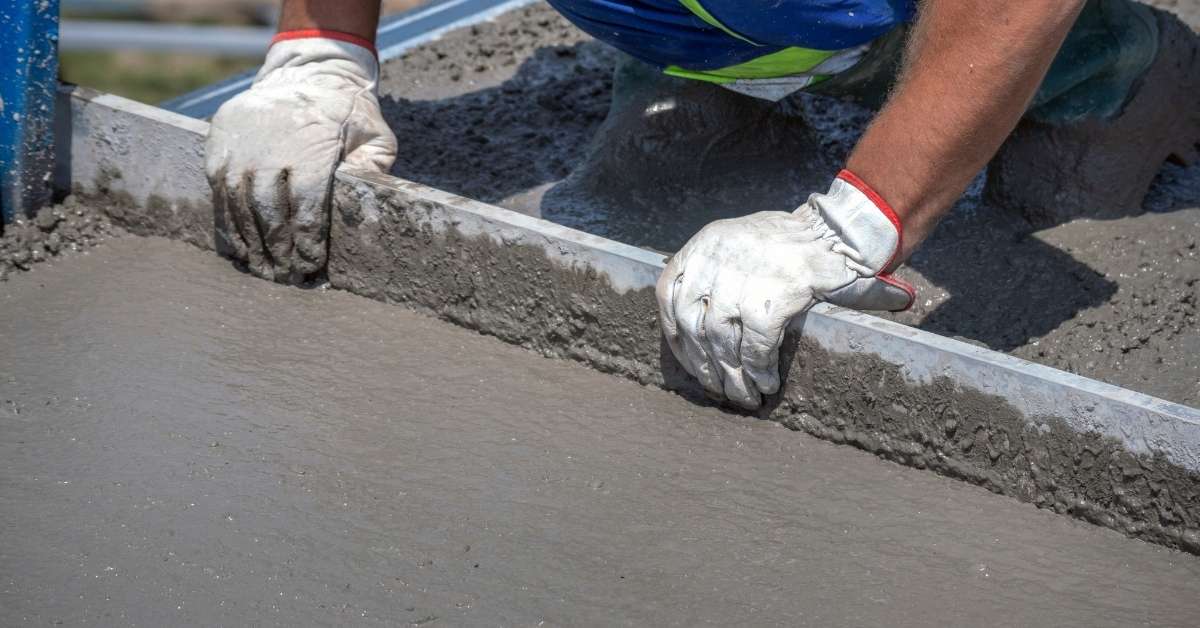
Blinding is a thin layer of lean concrete placed over prepared ground or aggregate to make a clean, reasonably level surface for the next operation. It can keep soil from contaminating structural concrete, make setting forms or reinforcement easier, and improve working conditions.
It is not a moisture barrier, capillary break, drainage layer, or structural driveway pavement unless a local engineered detail specifically says otherwise. If water is present, provide the required grading, drainage, separation fabric, and aggregate measures instead of relying on blinding.
Table of Contents
- Introduction
- Key takeaways
- Quick comparison overview
- What is blinding concrete?
- What is PCC (plain cement concrete) for bases?
- Structural performance and load-bearing considerations
- Installation process for small driveway projects
- Cost, time, and labor comparison
- Durability, maintenance, and long-term risks
- Material specs, standards, and testing for small projects
- Tools and materials checklist + DIY tips
- Decision guide and recommendations for small projects
- Conclusion
- FAQ
Typical mix and thickness for small driveways
Do not select blinding from a universal hand-mix ratio or a standard depth quoted online. Lean-concrete proportions, aggregate, water content, and thickness should come from the project specification, supplier, or local practice. Its thickness is controlled by its leveling and working-surface function, not by an assumption that it will carry cars.
Pros and limitations of using blinding
Its advantages are cleanliness, level control, and construction sequencing. Its limitation is equally important: it does not replace compacted aggregate, structural concrete, drainage, or a stable subgrade. Limited mixer access is not a reason to substitute blinding for a required structural layer.
What is PCC (plain cement concrete) for bases?
PCC commonly means portland-cement concrete without reinforcement, but the term is used differently by region and by project. It may describe a concrete base below another surface, or the finished plain-concrete driveway slab itself. Establish which layer is being specified before ordering material or excavating.
A structural PCC layer can distribute wheel loads over a larger area than a thin lean layer. It still depends on uniform support below it. Concrete may bridge small variations, but it cannot reliably prevent cracking or differential settlement where subgrade conditions remain wet, soft, expansive, frost-susceptible, or inconsistent.
Typical mix, strength, and thickness guidelines
Do not treat labels such as M10–M20 or nominal volumetric ratios as interchangeable international driveway specifications. Concrete strength classes, exposure requirements, aggregate grading, and batching methods vary. For a driveway slab or structural base, use the strength and durability requirements in the local design, permit, or supplier order; ready-mix often gives more consistent results than trying to hand-batch a large continuous pour. Related guidance: How to Pour Blinding Concrete for Slab Prep: Diy Steps, Thickness, and Mix Ratios.
Likewise, there is no universal safe driveway thickness. Required thickness depends on vehicle type and turning, slab size and joints, edge support, concrete properties, subgrade support, drainage, frost conditions, and local requirements.
Pros and limitations of PCC
PCC can provide a durable rigid layer when it is properly supported, placed, jointed, and cured. It costs more concrete and requires more coordination than blinding: forms, placement access, finishing, crack-control joints, curing protection, and a planned traffic-opening period all matter.
Structural performance and load-bearing considerations
Bearing capacity and settlement risk
Assess the subgrade before deciding on concrete. Remove topsoil and organic material. Investigate soft spots, uncontrolled fill, pumping under foot or equipment, standing water, and variable soil. Correct the cause with excavation and replacement, grading and drainage, separation where needed, and correctly placed and compacted granular material. Federal pavement guidance likewise emphasizes a uniform, adequately compacted subgrade and treatment of poor soils where needed; read the FHWA guidance on subgrade uniformity.
A probe, walking the area, and observing rutting are useful warning signs, not bearing-capacity tests. Do not treat a thumb test, rod test, visual sieve, or light drop-hammer check as proof that the ground meets a required density or design value.
Compatibility with paving types (asphalt, pavers, concrete slabs)
Choose the finished surface first. Asphalt and pavers generally rely on a correctly graded and compacted aggregate pavement section; pavers also need suitable bedding and edge restraint. A concrete driveway needs a designed slab system with joints and edge support. Do not assume that blinding is best for flexible surfaces or that PCC is automatically best below every rigid or permeable surface. Permeable systems, in particular, may need a designed reservoir layer, fabric, and drainage arrangement. Related guidance: Concrete Vs Asphalt Driveways: Key Differences + Which One to Choose.
Installation process for small driveway projects
Site prep common to both methods
- Confirm utility locates, permit and right-of-way requirements, finished pavement, drainage outlet, vehicle use, delivery access, and excavation depth before digging.
- Set reference levels and the required fall. Keep runoff away from buildings and do not direct it onto neighbouring property or public pavement.
- Excavate organic material, loose fill, and soft or wet pockets. Stop if water continues to enter the excavation or the ground pumps under compaction equipment.
- Install separation geotextile only where the design calls for it, then place the specified granular material in manageable lifts and compact each lift with suitable equipment.
- Check the prepared surface: it should be uniform, at the intended level and fall, free of standing water, and firm enough not to rut under normal construction activity. Set forms securely and verify final depth before concrete arrives.
Placing and curing blinding vs PCC
For blinding: place only after the support layer is accepted. Spread and screed it to the required level; protect it from soil, rain damage, and early traffic while the next operation is scheduled.
For a PCC base or finished slab: have enough helpers, tools, forms, jointing plan, curing materials, and access route ready for uninterrupted placement. Place without adding unapproved water, consolidate only as appropriate for the mix and thickness, screed to fall, and finish without overworking bleed water. Install formed joints or saw-cut contraction joints to the timing, layout, and depth required by the project specification.
Initial set is not permission for vehicle traffic. Follow the supplier, design, weather conditions, and local requirements for protection, foot traffic, passenger vehicles, and heavier traffic. Curing protects concrete from early drying, freezing, abrasion, and loading while strength develops; it is not simply a wait until the surface feels hard.

Cost, time, and labor comparison
A thin blinding layer uses less concrete than a structural slab, but it is an added operation. PCC may cost more per area because of depth, specification, forming, finishing, joints, and curing. Neither is inherently the cheaper option until you price the complete pavement section.
Material and mixing options to save money
Estimate concrete volume as length × width × thickness, then convert it to the supplier’s ordering unit. Price that volume separately from excavation and disposal, unsuitable-soil replacement, aggregate, geotextile, drainage, compaction rental, forms or edge restraint, reinforcement, delivery or short-load charges, pump or difficult-access charges, finishing, curing materials, washout, and waste. For a structural driveway pour, avoid a placement plan that creates unplanned cold joints because hand mixing cannot keep up.
Project timeline and critical path
Base preparation and drainage come before concrete and often take longer than the pour. Blinding must be placed and protected before the next layer. PCC requires a coordinated placement, finishing, jointing, curing, and protection plan. Weather can change all of these stages. Do not promise use of the driveway on a fixed number of days; obtain the opening guidance for the actual concrete and conditions.
Durability, maintenance, and long-term risks
Most driveway failures begin below the visible surface: trapped water, eroded edges, variable support, poor compaction, or inappropriate loading. A slab or PCC base may distribute load, but it cannot make an unstable subgrade stable.
Inspection checklist and visual checkpoints
- Before pouring: correct excavation depth, uniform compacted support, required fall, secure forms, planned drainage, and reinforcement held at its specified position if it is used.
- During placement: no added water without approval, no segregated mix, no uncontrolled runoff, and joints installed or scheduled as planned.
- After placement: curing protection remains intact; no early vehicle traffic; water sheds rather than ponds; edges do not crumble or wash out.
- Over time: investigate widening cracks, rocking slabs, ruts, repeated ponding, pumping, frost heave, or sinking areas rather than simply filling the surface crack.
Repair and upgrade strategies
For a local low or soft area, remove the failed pavement and unsuitable material, correct drainage, rebuild the support layers, and restore the surface using a compatible repair detail. Recurrent movement, widespread cracking, or water entering from below requires a broader assessment; adding a thin concrete overlay or extra blinding is unlikely to solve it.
Material specs, standards, and testing for small projects
Simple onsite tests and acceptance criteria
Use observable checks: verify levels with a string line or level, check the excavation and layer depths at several points, watch for rutting or pumping during compaction, and inspect fresh concrete for segregation or excessive water. These observations help identify a problem early, but they do not replace required density, bearing-capacity, or concrete-strength testing.
When to call a pro or get lab testing
Stop and obtain local engineering or contractor guidance for persistent groundwater, soft or pumping soil, uncontrolled fill, expansive or frost-susceptible soil, steep slopes, retaining walls, heavy trucks or unusual axle loads, structural transitions, or a connection to public pavement. Local permits, frost-depth provisions, stormwater requirements, and concrete terminology may also apply.
Use the joint layout in the applicable local specification or structural plan. Joint type matters: contraction/control, isolation, and construction joints have different jobs. Saw-cut timing and depth depend on the slab, mix, weather, and equipment; do not use a universal spacing rule or seal every cut with the same product. Where sealing is specified, use a compatible system and follow its preparation and installation instructions.
Tools and materials checklist + DIY tips
Plan the job before delivery. Typical needs include a tape, level or laser, stakes and string line, shovels, rake, wheelbarrow, forms and fasteners, screed, float, compaction equipment, curing covers or compound, and barriers to keep traffic off fresh work. A structural PCC pour may also require a mixer or ready-mix access plan, jointing tools or saw, and reinforcement supports where specified.
Step-by-step DIY tips to avoid common mistakes
- Do not pour over frozen, muddy, pumping, or visibly soft ground.
- Keep aggregate layers separated from soil where the design requires it, and compact them in lifts rather than trying to compact one deep loose layer.
- Check grade before concrete arrives; do not use wet concrete to correct a major excavation or drainage error.
- Order the specified concrete and do not add water casually to improve workability.
- Keep any reinforcement properly supported at its specified location. It is not effective when left on the ground or pulled up inconsistently during the pour.
- Prepare the joint plan, curing protection, washout containment, and access barriers before placement begins.
Safety and environmental considerations
Wear waterproof gloves, eye protection, long sleeves, sturdy boots, and suitable respiratory protection when handling dry cement or cutting concrete. Wet concrete can burn skin; wash exposed skin promptly and seek medical advice for persistent irritation or a burn.
Keep concrete washwater, slurry, and dry material out of soil, storm drains, and waterways. Use leak-proof contained washout, then use an approved local recycling or disposal route for the solids and water. Do not assume household-waste or sewer disposal is allowed.
Decision guide and recommendations for small projects
Typical scenarios and recommended approach
- Firm, drained ground and a planned concrete driveway: build the specified compacted subbase and structural PCC slab. Add blinding only if it improves the planned construction detail.
- Soft, wet, or variable ground: pause the concrete decision. Remove or treat unsuitable material, address water, and establish uniform support. Do not simply increase PCC thickness.
- Asphalt or paver driveway: follow that pavement system’s aggregate, drainage, bedding, and edge-restraint requirements. Do not add blinding by default.
- Unknown soil, heavy turning traffic, delivery trucks, slopes, or frost concerns: obtain local design advice before ordering material.
Final checklist before you start
Confirm the finished pavement and each layer’s purpose; utility locates and permits; drainage route and fall; excavation depth; material specifications; delivery access; compaction equipment; formwork; joint layout; curing protection; washout containment; and the concrete supplier’s traffic-opening guidance. If any of these is unresolved, delay the pour.

Conclusion
Use PCC when the driveway design requires a structural concrete base or slab. Use blinding only as a thin preparatory layer with a defined purpose. In either case, the critical work is beneath it: stable subgrade, drainage, correctly selected and compacted support layers, and a concrete detail suited to the actual vehicles and climate. Related guidance: Blinding Concrete vs PCC: Understanding and Solutions.
Do not choose a mix, thickness, reinforcement arrangement, joint spacing, or opening time from generic rules alone. Confirm those details locally, correct poor ground before pouring, and protect the concrete until it is approved for the intended traffic.
FAQ
What is blinding concrete and when should I use it on a driveway base?
Blinding is usually a thin lean-concrete working layer over prepared ground or aggregate. Use it when the driveway detail needs a clean, level surface or separation before the next layer. It is not normally the structural driveway base.
What is PCC for driveway bases and when is it the right choice?
PCC can mean plain cement concrete used as a structural base or finished slab, depending on local usage. It is appropriate only when its concrete specification, thickness, joints, support, and curing have been selected for the driveway conditions.
Which should I use for a small residential driveway project?
First select the finished pavement and correct drainage and subgrade problems. A concrete driveway generally needs a designed structural slab or base; blinding may be added only if it serves the construction detail.
What common mistakes should I avoid on a small driveway base project?
Avoid pouring over wet or soft ground, treating blinding as a load-bearing base, adding water to concrete without approval, leaving reinforcement unsupported, omitting joints, and allowing traffic before the supplier or design permits it.