Search Results for: rebar

Red-handled tool smoothing wet concrete surface

Concrete Crack Stitching for DIYers: When Staples Help and When They Don’t

Introduction Concrete crack stitching is a repair method that uses staples to grab and hold cracked slabs together. It aims to slow opening and transfer movement across the crack when appropriate. This DIY intro explains when staples help and when they don’t in plain language. Before you start, check manufacturer instructions, local rules, and the […]

Concrete Crack Stitching for DIYers: When Staples Help and When They Don’t Read More »

Precast concrete wall panels and steel roof framing

Repairing Honeycombed Concrete: When to Patch, When to Inject, and When to Rebuild

Introduction Repairing honeycombed concrete means fixing voids and loose pockets in the surface by choosing patching, injecting, or rebuilding. You evaluate how severe the honeycombing is and start with the simplest, most straightforward method. If the concrete has hollow spots you can reach, patching is usually the first option; deeper voids may need injecting, and

Repairing Honeycombed Concrete: When to Patch, When to Inject, and When to Rebuild Read More »

Concrete stairs with a smooth concrete ramp in the middle

Finishing Concrete Along Stairs and Steps: Clean Risers, Tight Corners, and No Ragged Edges

Introduction Finishing concrete along stairs and steps means smoothing and shaping risers and treads to remove ridges and achieve clean, even faces. This work uses hand tools and careful edging to keep joints tight and consistent along each stair edge. The goal is a safe, neat look that lasts without ragged edges. Start by outlining

Finishing Concrete Along Stairs and Steps: Clean Risers, Tight Corners, and No Ragged Edges Read More »

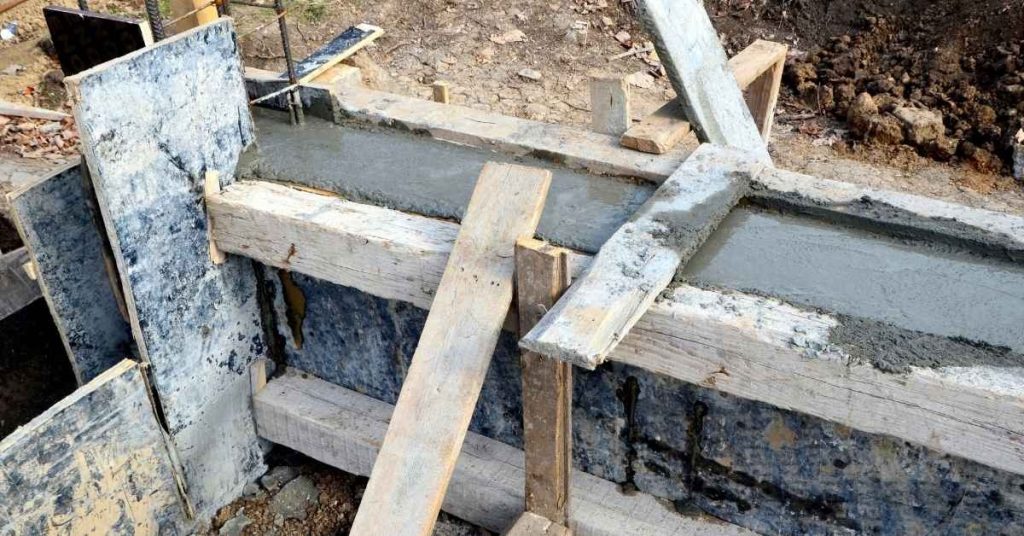
Concrete formwork with rebar and metal anchors in soil

Setting Wedge Anchors in Weak Concrete: When They Spin and Better Options

Introduction Wedge anchors spin in weak concrete when the anchor’s wedging action can’t grab solid material. That spinning often means the fastener won’t hold the load you expect. In practice, it’s a sign the substrate or hole preparation isn’t up to the task. If they spin, stop and check that the hole size and depth

Setting Wedge Anchors in Weak Concrete: When They Spin and Better Options Read More »

Above ground pool with ladder in backyard

Concrete on Frost-Heave-Prone Ground: DIY Drainage Fixes Before You Pour

Introduction Concrete on frost-prone ground needs drainage and subgrade prep to resist heave. In plain terms, moisture and freezing soil can push concrete upward if the ground isn’t managed. Check your local rules and follow manufacturer guidance for soil prep and drainage when planning a pour. A proper base and a simple drainage path help

Concrete on Frost-Heave-Prone Ground: DIY Drainage Fixes Before You Pour Read More »

Wire mesh secured flat on wet cement surface

How to Keep Mesh Flat During a Pour: Pinning Methods That Beat ‘Hook and Pull’

Introduction Pinning mesh flat during a pour means using temporary fasteners to hold the wire or plastic mesh steady so it lays as you pour. The goal is to prevent sagging, curling, or fish-tailing as the concrete flows. You’ll position, secure, and adjust as you go. Try a few simple techniques: place temporary pins or

How to Keep Mesh Flat During a Pour: Pinning Methods That Beat ‘Hook and Pull’ Read More »

Angle grinder with diamond blade lying on concrete edge

How to Cut Concrete Without Chipping Edges: Score Cuts, Support, and Blade Control

Introduction Cutting concrete without chipping edges means making clean, controlled cuts by scoring first, supporting the cut edge, and maintaining steady blade control. In practice, plan your score line, use light, steady passes, and let the blade do the work without forcing it. Always verify that your blade and tool are suitable for the concrete

How to Cut Concrete Without Chipping Edges: Score Cuts, Support, and Blade Control Read More »

Freshly poured concrete slab indoors under natural light

Choosing a Diamond Blade: Segmented vs Turbo vs Continuous for Concrete and Masonry

Introduction A diamond blade is a cutting wheel that uses industrial diamonds to slice through concrete, masonry, and similar materials. The common styles are segmented, turbo, and continuous. Each type has its own trade-offs, so the right pick depends on your material and cut. Cutting with these blades can be done wet or dry, but

Choosing a Diamond Blade: Segmented vs Turbo vs Continuous for Concrete and Masonry Read More »

Electric concrete cutting angle grinder resting on curb

Concrete Sawcut Dust Control: Dry vs Wet Cutting and How to Protect Indoor Spaces

Introduction Dry cutting creates concrete dust that must be controlled, while wet cutting uses water to suppress dust. This article gives a practical, hands-on look at how each method works in real spots around the house. You’ll see what to check on equipment and what to expect when cutting indoors vs outdoors. We’ll cover how

Concrete Sawcut Dust Control: Dry vs Wet Cutting and How to Protect Indoor Spaces Read More »

Gray concrete block wall with gravel base and two hollow concrete blocks

Anchoring Into Concrete Block: Hollow vs Grouted Cells and Proper Fastener Choices

Introduction Anchoring into concrete block means using the right anchors and installation technique to secure fasteners into hollow or grouted cells. The choice depends on whether you’re dealing with hollow sections or fully grouted blocks, so consult the anchor’s instructions and the block type before proceeding. Plan for safe drilling, clean holes, and proper seating

Anchoring Into Concrete Block: Hollow vs Grouted Cells and Proper Fastener Choices Read More »