Search Results for: Al ala 19

Stack of precast hollow core concrete slabs outdoors

Repairing Damaged Vapor Barriers Under Concrete Slabs: Fixing Seams, Punctures, and Missed Edges

Introduction Repairing a damaged vapor barrier under a concrete slab means fixing tears, punctures, or gaps so moisture cannot pass into the structure. Treat it as a hands-on task: identify the affected area, clean the surface, and plan patching with compatible materials. Check manufacturer instructions and local building guidance for approved repair methods. Use the […]

Repairing Damaged Vapor Barriers Under Concrete Slabs: Fixing Seams, Punctures, and Missed Edges Read More »

Hand holding electric drill with bit against white brick wall

Removing Paint from Brick: What Works Without Turning Faces to Powder

Introduction Removing paint from brick means stripping paint while keeping the brickwork intact and the mortar sound. This DIY guide focuses on practical, low-damage approaches you can do with common tools and safe techniques. You’ll want to test on a small area first and watch for powdering or etching, then proceed carefully. Start with gentle

Removing Paint from Brick: What Works Without Turning Faces to Powder Read More »

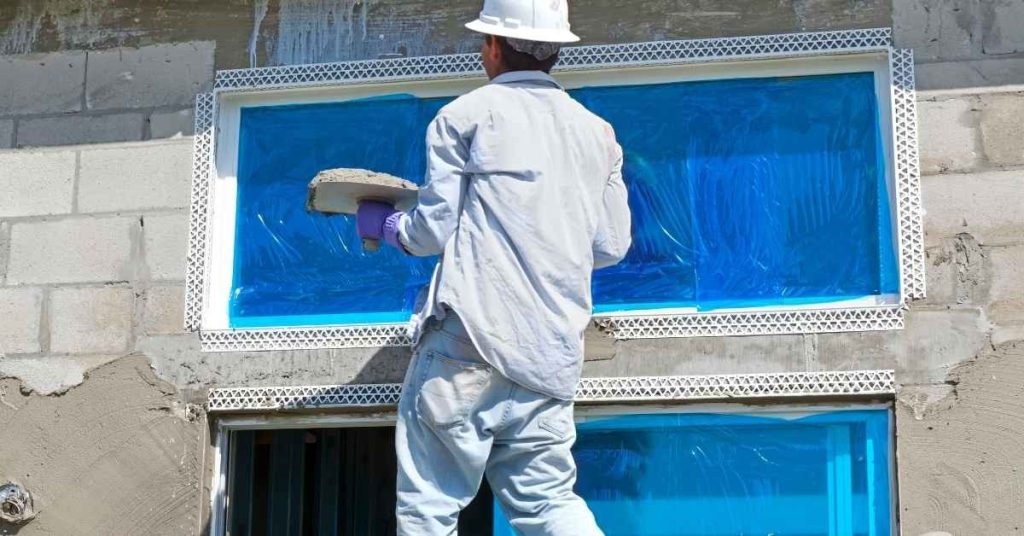
Worker applying stucco around window frame with trowel

Stucco Repairs Around Dryer Vents: Proper Sleeves, Flashing, and Slope

Introduction This guide explains how to repair stucco around dryer vents using proper sleeves, flashing, and slope. I’ll keep it practical and real-world, focusing on what you can check and adjust on the job. You’ll learn how to protect the vent opening from water intrusion while keeping the stucco looking sturdy. Key steps include selecting

Stucco Repairs Around Dryer Vents: Proper Sleeves, Flashing, and Slope Read More »

Concrete being poured onto slab framed by wood

Anchor Bolts in Fresh Concrete: Templates, Thread Protection, and Staying Dead-Accurate

Introduction Anchor bolts in fresh concrete are bolts placed before the pour to lock in exact locations for the structure. Getting them right means using simple templates, protecting threads during the pour, and checking alignment as you go. I’ll keep it plain and practical, with no fluff or guesswork. For proper placement, work from the

Anchor Bolts in Fresh Concrete: Templates, Thread Protection, and Staying Dead-Accurate Read More »

Freshly poured concrete slab indoors under natural light

Choosing a Diamond Blade: Segmented vs Turbo vs Continuous for Concrete and Masonry

Introduction A diamond blade is a cutting wheel that uses industrial diamonds to slice through concrete, masonry, and similar materials. The common styles are segmented, turbo, and continuous. Each type has its own trade-offs, so the right pick depends on your material and cut. Cutting with these blades can be done wet or dry, but

Choosing a Diamond Blade: Segmented vs Turbo vs Continuous for Concrete and Masonry Read More »

Concrete floor with large water puddle near wall

Concrete Dark Spots After Cure: Water, Curing Plastic, or Contamination—How to Tell

Introduction Dark spots on cured concrete usually indicate moisture issues, improper curing, or contamination. This article will help you tell which cause is at play and what to check on a DIY jobsite. We’ll cover practical signs to look for and simple checks you can do with common tools. Curing methods include keeping moisture with

Concrete Dark Spots After Cure: Water, Curing Plastic, or Contamination—How to Tell Read More »

Close-up of two rolls of metal wire mesh

Fiber + Wire Mesh Together: When It’s Redundant and When It Helps

Introduction Fiber + wire mesh together is a reinforced concrete setup where fibers help control cracking and mesh provides added structural distribution. Redundancy can mean extra fibers or extra mesh ends up overlapping; watch for overcomplicating the pour. Combining fiber with mesh can help in slabs with control joints or poor soil, but it can

Fiber + Wire Mesh Together: When It’s Redundant and When It Helps Read More »

Hands using pliers to pull wire from wall socket opening

Repairing Plaster After Removing Tile: Flattening, Bonding, and Preventing Future Cracks

Introduction Repairing plaster after removing tile means leveling the wall, applying a bonding layer, and getting it ready for plaster. Start by cleaning the surface, removing tile film, and filling any gouges or ridges to create a flat base. Then identify high spots and plan to flatten them with gentle passes and proper feathering of

Repairing Plaster After Removing Tile: Flattening, Bonding, and Preventing Future Cracks Read More »

White decorative plaster molding on wall and ceiling corners

Repairing Plaster at Crown Molding Lines: Keeping Shadow Lines Sharp

Introduction Repairing plaster at crown molding lines means restoring damaged plaster so the shadow line stays sharp. You’ll look for cracks, chips, or loose edges where the molding meets the wall. Addressing these spots carefully keeps the line from looking soft or uneven. Start by cleaning and dampening the area, then remove loose material and

Repairing Plaster at Crown Molding Lines: Keeping Shadow Lines Sharp Read More »