
Introduction
Flashing at joints under semi-gloss paint is when the edge of the joint shows through the finish due to imperfect sealing or adhesion. The fix is a careful primer, skim coat, and light sanding to smooth joints before applying the topcoat. Work from clean surfaces and match the paint system to the substrate, checking labels for compatible primers and sealers.
Start by sealing joints with a compatible primer or primer-sealer, then apply a thin skim layer over the joints. Sand smooth between coats and after the skim to keep the surface even, then re-check adhesion before finishing. If in doubt, follow product instructions and local rules, and test a small area first.
Key takeaways
- Inspect joints for movement and flashing before priming or skim coating.
- Clean and degloss surfaces to ensure primer adhesion around joints.
- Use compatible primer that seals joint edges and blocks absorbent sheen.
- Apply skim coat evenly, feather edges beyond joints to reduce contrast.
- Spot prime joints first, then full prime after skim dry to test hiding.
- Wear protective gear and ventilate area; avoid sanding dust inhalation.
Table of Contents
- Introduction
- Key takeaways
- What Flashing Is and Why Semi-Gloss Shows It
- Diagnose the Joint Condition Before Starting
- Tools and Materials Checklist
- Surface Preparation and Cleaning
- Primer Application Strategy to Prevent Flashing
- Skim Coat and Sand Workflow Step-by-Step
- Spot Priming, Full Priming, and Test Methods
- Painting with Semi-Gloss: Application Tips to Minimize Joint Visibility
- Conclusion
- FAQ
What Flashing Is and Why Semi-Gloss Shows It
Flashing is when joints or seams show through the finish as brighter spots or line shadows. It happens when differences in substrate color, porosity, or texture are revealed by the topcoat. The joint material and underlying filler can reflect light differently, making defects more obvious.
Semi-gloss finishes are less forgiving because they reflect more light off small imperfections. The gloss level emphasizes surface texture, edge lines, and any slight unevenness. Understanding this helps you plan for a uniform look under semi-gloss.
Flashing defined
Flashing, in painting terms, is when you see visible contrast or sheen differences at joints. This happens due to variations in the substrate, film build, or absorption.
It’s like looking at a well-painted wall under different lighting – some areas might look shiny while others don’t. That’s flashing.
Key is understanding that it’s not always visible until you apply your topcoat, like semi-gloss.
Why semi-gloss highlights defects
Semi-gloss paint has a higher sheen compared to other finishes. This means it reflects more light, making any surface irregularities or small reflectance differences stand out.
Think of it like looking at a wall under a bright spotlight. Every little imperfection will cast a shadow or reflection, making it more noticeable.
So, if there are any seams, skim transitions, or other defects in your joint areas, semi-gloss paint will amplify them, making them pop out at you.
Diagnose the Joint Condition Before Starting
Do a quick walk around the area to spot obvious gaps, cracks, or raised edges. Note where joints are deeper or where filler has chipped. Observe if previous coatings are peeling or lifting near joints.
Categorize joints by type and cause: movement gaps, improper filling, or edge notches. This helps you plan primer and skim work with the right strategy from the start.
Visual checkpoints and simple tests
Before you start, use this checklist to inspect your joints. It’s quick and helps avoid surprises.
- Tape ridges: Feel for any raised tape edges. They can show through paint.
- Compound shrinkage: Look for sunken or cracked areas where compound has dried out.
- Texture mismatch: Check if the joint compound’s texture differs from the surrounding wall.
- Raking light test: Hold a flashlight at an angle to highlight any imperfections.
- Touch check: Run your hand over joints to feel for unevenness or gaps.
- Cracking: Look for hairline cracks that could widen with movement.
- Moisture stains: Check for signs of water damage, which can cause joint issues.
- Previous repairs: Inspect any existing repairs to see if they’re holding up.
Quick rule: Don’t skip this step. It’s your best defense against hidden problems.
Substrate and joint type to note
Different surfaces and joints need different approaches. Here’s what to look for:
Drywall seams: These are usually straightforward, but wide or poorly taped seams may need extra attention.
Pre-finished trim joints: Be careful not to damage the finish. You might need to spot-prime before skim coating.
Plaster walls: Plaster can be tricky. It’s often more absorbent, so you’ll need to adjust your primer and skim coat application.
Repairs: Previous repairs may have been done differently. Inspect them closely to plan your work.
Tools and Materials Checklist
Keep quality hand tools for scraping, filling, and feathering within easy reach. Use a solid sanding block or pad to keep the surface flat. Have a dust control plan with a shop vacuum and capturing methods for clean air.
Stock primers, skim coats, sanding abrasives, and edge sealers. Include drop cloths, tack cloths, masking, and personal protective gear. Confirm that everything is compatible for primer, skim, and topcoat on the same substrate.
Primer types and selection guide
Choose the right primer for your substrate to ensure a smooth, flash-free finish.
- Bonding primers: Use on bare drywall or primed surfaces. They promote adhesion and seal porous substrates.
- High-build primers: Ideal for new drywall or heavily sanded areas. They provide a thick, even base coat.
- Stain-blocking primers: Essential for covering stains on previously painted walls. They prevent bleed-through.
- Check labels: Ensure the primer is compatible with your substrate and paint type.
- Avoid: Using a universal primer on all surfaces. Different substrates require different primers.
Quick rule: Always choose a primer designed for your specific substrate to prevent flashing.
Skim coat materials explained
Select the right joint compound for your skim coat to achieve a smooth, seamless finish.
- Premixed joint compound: Ready-to-use, ideal for small touch-ups. Thins easily with water.
- Setting-type compounds: Require mixing and set quickly. Great for large areas or heavy repairs.
- Lightweight spackles: Low-density, easy to sand. Perfect for fine finishing work.
- Check consistency: The compound should spread easily without being too runny or dry.
- Avoid: Using a compound that’s too thick or thin. Both can lead to flashing.
Quick rule: Match the joint compound to your job size and finish requirements for best results.
Sanding tools and abrasives
Choose the right sanding tools and abrasives for a smooth, flash-free finish with minimal dust.
- Hand sanding: Use for small areas or fine finishing. Ideal for controlling pressure.
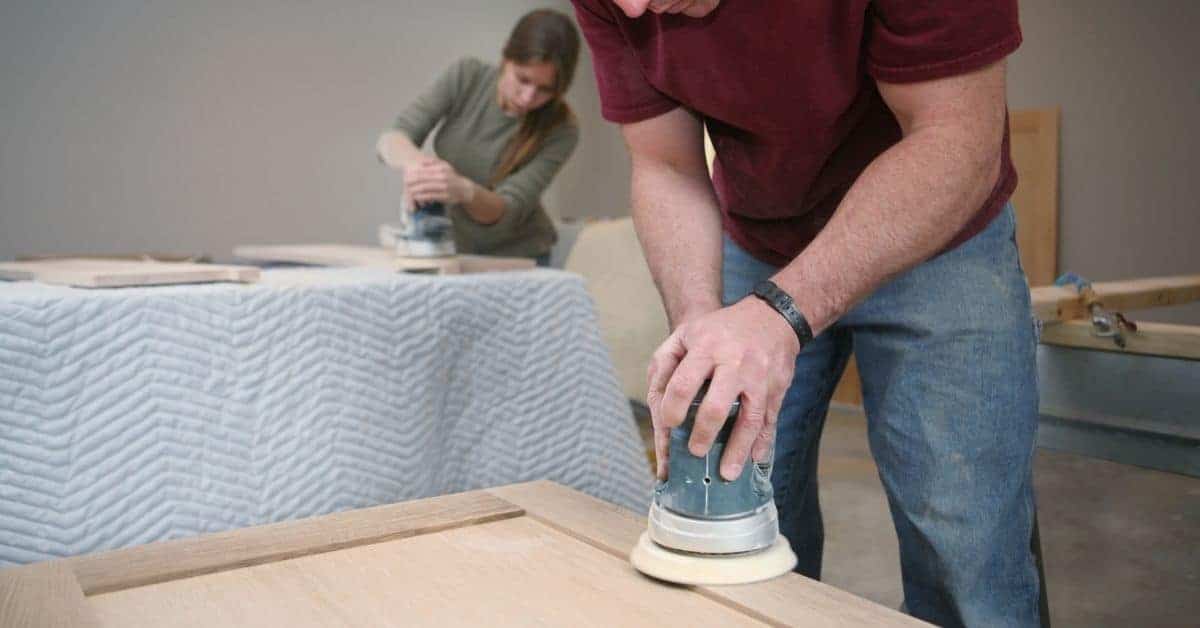
- Power sanders: Speed up large areas. Choose between orbital, random orbit, or palm sanders.
- Abrasive grits: Start with 120-grit for rough sanding, finish with 220-grit for a smooth surface.
- Dust containment: Use vacuum attachments or dust masks to control airborne particles.
- PPE: Wear safety glasses and a respirator when sanding to protect your eyes and lungs.
Quick rule: Start with coarse grits, progress to finer ones. Always wear PPE and contain dust for a safe, clean workspace.
Surface Preparation and Cleaning
Start with a thorough cleaning to remove grease, dirt, and residues. Degrease as needed and rinse away cleaners. Vacuum and wipe down to produce a clean surface for adhesion.
Roughen or abrade glossy edges to create a mechanical key. Edge prep around joints helps reduce the risk of flashing later. Ensure any loose material is removed before applying primer.
Cleaning and contaminant removal
First things first, you gotta get your surface clean. Grease, dust, old finish residues – they all need to go.
For most jobs, a simple soap-and-water solution will do the trick. But if you’re dealing with heavy grease or oil, you might need an alkaline cleaner. Just remember, always spot test first to ensure it doesn’t react badly with your surface.
Safety note: Always wear gloves and eye protection when handling chemicals.
Feathering, de-glossing, and edge prep
Now, let’s tackle those existing paint edges. You want your primer and skim coat to bond uniformly, right? So, we need to feather those edges.
Use a sanding sponge or fine-grit sandpaper (120-150 grit) to lightly scuff the glossy areas. This helps create ‘tooth’ for better adhesion. Just be careful not to sand through your paint.
For those sharp edges, use a razor blade scraper to create a feathered effect. Start at one end and pull slowly along the edge, holding the blade at a 45-degree angle.
Primer Application Strategy to Prevent Flashing
Choose a primer that balances absorption across the surface and helps seal joints. Apply in a way that minimizes high spots and runs, using even strokes. The goal is to level porosity so the skim coat can go on smoothly.
Always check the label, product data sheet, or manufacturer instructions for coat thickness and recoat timing. Verify compatibility with the skim material and the semi-gloss topcoat you plan to use.
Choosing the Right Primer for the Substrate
The first step to preventing flashing is choosing the right primer. It’s like picking a partner for your paint – they need to work well together.
Porosity: Check your substrate’s porosity. Porous surfaces absorb more primer, which can lead to uneven painting. Choose a high-build primer for these cases; it provides better coverage and evens out absorption.
Tannin/Stain Risk: Some woods like cedar or redwood have tannins that can bleed through paint. For these, use a bonding primer. It seals the surface and prevents bleeding.
Consider your joint type too. For wide joints, a high-build primer helps fill gaps. For narrow ones, a regular bonding primer should suffice.
Primer Application Technique and Film Build
Applying the primer right is as important as choosing it. You don’t want to overdo or underdo it – that’s when flashing happens.
Technique: Use a roller for large areas, a brush for edges and small spots, or an airless sprayer for speed. Work in ‘W’ or ‘M’ patterns to ensure even coverage.
Film Build: Aim for a consistent film build. Too thin, it won’t hide joints; too thick, it’ll crack and flash. For porous surfaces, use multiple thin coats instead of one thick one. Let each coat dry before applying the next.
Remember, the goal is to equalize absorption and hide joints, not create a perfect white surface – that’s your paint’s job.
Environmental and Drying Considerations
Primer needs time and the right conditions to dry and cure properly. Rushing this can lead to flashing or poor paint adhesion.
Dry/Cure Times: Follow manufacturer guidelines for drying and curing times. This ensures your primer forms a con