

Introduction
You can fix common stucco damage yourself with clear, step-by-step guidance.
The article explains why proper prep and sealing matter and shows practical DIY steps, tips, and rules of thumb to assess damage, perform repairs, and prevent future issues.
Key takeaways
- Assess crack width and moisture levels to determine DIY versus pro repair.
- Document damaged area with photos and notes before removing or patching.
- Use appropriate stucco repair mix and consistent texture for seamless blending.
- Moisture control is critical; repair should follow drying and weather window.
- Apply multiple thin coats, cure between layers, and test adhesion.
- Finish with texture matching and paint to seal against future moisture.
Table of Contents
- Introduction
- Key takeaways
- Quick Overview & When to DIY vs Hire a Pro
- Identifying Stucco Damage — Diagnosis Guide
- Tools, Materials & Material Specs
- Prep Work — Surface Prep & Moisture Control
- Step-by-Step Repair Methods (Small to Large Repairs)
- Finishing, Texture Matching & Painting
- Common Mistakes, Stop Rules & Safety Precautions
- Cost, Time Estimates & Project Planning
- Conclusion
- FAQ
Quick Overview & When to DIY vs Hire a Pro
We start by defining the two common stucco systems: traditional cement stucco and EIFS. Each system handles moisture and substrate movement differently, which changes repair approach and materials. The goal is to set realistic expectations for DIY feasibility and finish quality.
For DIY feasibility, look at damage types in plain terms: hairline cracks, minor chipping, and weathered paint on cement stucco are often manageable by homeowners. Moisture-driven staining, bulging, delamination, or EIFS cavity issues usually signal deeper problems and warrant a professional assessment.
Safe DIY vs Professional thresholds
Before you grab your trowel, understand these clear-cut thresholds to know when it’s safe to DIY or time to call a pro.
DIY: Stick to surface-level issues like hairline cracks (<1/8″ wide), minor chipping, and weathered paint. These are easy to spot and fix with basic tools and materials.
Pro: Anything beyond the surface – moisture-driven staining, bulging, delamination, or EIFS cavity issues – signals deeper problems. Structural movement, hidden stucco inside EIFS, or damage near doors/windows and penetrations also warrant professional assessment.
When to stop and call a contractor
Some issues are beyond your DIY capabilities. Here’s when to halt work and contact a pro immediately:
Hidden moisture: Suspect hidden moisture if you see chronic dampness, musty odors, or mold growth. These can cause serious structural damage and require professional moisture testing.
Large-scale detachment: If you find large areas of stucco detachment (delamination) or poor substrate adhesion, it’s a sign of underlying issues that need expert diagnosis and repair.
EIFS damage: Damage to the insulation board in EIFS systems can compromise the entire system. If you notice any issues with the foam board, stop work and call a pro.
Identifying Stucco Damage — Diagnosis Guide
Distinguishing cosmetic from structural damage helps choose the right repair plan. A superficial crack or chalking doesn’t necessarily threaten stability, while a compromised substrate does. Use a simple framework to guide your next steps.
Visual signs to check include cracking patterns, bulging, staining, and mold around openings. Moisture intrusion or water pooling are red flags that require closer investigation and possibly pro help.
Visual signs and patterns to look for
Inspect your stucco walls closely. You’re looking for specific signs that indicate damage.
Cracks: Hairline cracks are usually cosmetic, but wider ones may signal structural issues. Vertical cracks often point to settling, while stair-step cracks could indicate foundation problems.
Bulges: Bulging stucco might mean there’s moisture behind the wall or that the lath is damaged.
Staining: Discoloration can hint at water intrusion. Efflorescence – a white, chalky substance – often indicates moisture as well. Paint failure could signal underlying problems.
Simple diagnostic tests (tap, probe, moisture)
Perform these simple tests to gather more information about your stucco’s condition.
Tap Test: Gently tap the stucco with a hammer. A hollow sound might indicate delamination or voids behind the surface. Solid or dull sounds suggest intact areas.
Probing: Use a screwdriver to probe suspicious areas. If it goes in easily, there could be damage or voids.
Moisture Testing: Use a moisture meter or probe where water stains appear or where you suspect water intrusion. High readings indicate potential hidden damage.
Tools, Materials & Material Specs
Build a core kit with basic trowels, knives, a mixing tub, a drill with paddle, hawk, level, and a caulking gun. Include PPE like gloves, eye protection, and a dust mask. If working on EIFS, have a moisture meter handy for checks.
Know patch options such as cementitious vs polymer-modified mortars and EIFS-compatible patches. Check bonding agents, mesh type, and approved caulks for both cement and EIFS finishes, then cross-check with manufacturer instructions.
Tools checklist
Before you start mixing and pouring concrete, make sure you have all the necessary tools. Use this checklist to verify each item.
- Trowels (hand float, square shovel): Check for straight edges and no bends or cracks. A damaged trowel can cause uneven surfaces.
- Hawk: Ensure it’s in good condition with no rust or cracks. A stable hawk is crucial for transferring concrete from the mix to the surface.
- Mixing paddle (for electric mixer): Confirm it’s the right size for your mixer and in good working order. A faulty paddle can lead to improperly mixed concrete.
- Grinder/polisher: Check if it has enough power and is suitable for the job. An underpowered grinder may not polish the surface evenly.
- Utility knife: Ensure it’s sharp and in good condition. A dull blade can cause scratches on the concrete surface.
- Caulk gun: Confirm it works smoothly and has no leaks. A faulty caulk gun can result in uneven sealant application.
- Moisture meter: Check if it’s calibrated correctly. An inaccurate moisture reading can lead to improper finishing times and potential issues with the concrete’s longevity.
Quick rule: Always inspect your tools before starting work. Faulty tools can cause expensive rework and delays.
Materials and mix specs
The right materials ensure your repair job lasts. Here’s what you need, why, and how to pick ’em.
- Patching Compound (e.g., Quikrete Concrete Patcher): For filling cracks and holes. Look for a mix that matches your concrete strength (check here). Avoid cheap, fast-setting types; they crack easily.
- Bonding Primer (e.g., Red Devil Concrete Bonding Adhesive): Ensures patching compound sticks. Check label for suitable substrates and cure times. Don’t skip this step!
- Fiberglass Mesh (e.g., DEWALT Fiber Reinforcement): Adds strength to repairs. Choose a mesh size that fits your repair (check here). Cheap, small mesh can rust and cause problems later.
- Finish Coat (e.g., Sakrete Concrete Resurfacer): Gives a smooth, even surface. Match the color and texture of your existing concrete (check here). Don’t use paint; it won’t last.
- Sealant (e.g., Siloxs AA Concrete Sealer): Protects from water, stains, and freeze-thaw damage. Check label for suitable substrates and weather limits. Cheap sealants wear off quickly.
Pro tip: Buy materials in small quantities to avoid waste. Store them dry, cool, and away from direct sunlight. Mix only what you can use within the working time (check product labels).
Prep Work — Surface Prep & Moisture Control
Define the scope of prep by identifying all damaged versus sound material and cutting back to solid substrate. Clear away dust and debris so the patch adheres properly. Plan for protection of nearby surfaces from dust and spray.
Drying and moisture control are critical. Use moisture checks to set a target dryness level and plan moisture management steps. Document conditions and how they’ll be monitored during cure.
How to cut out and expose damage safely
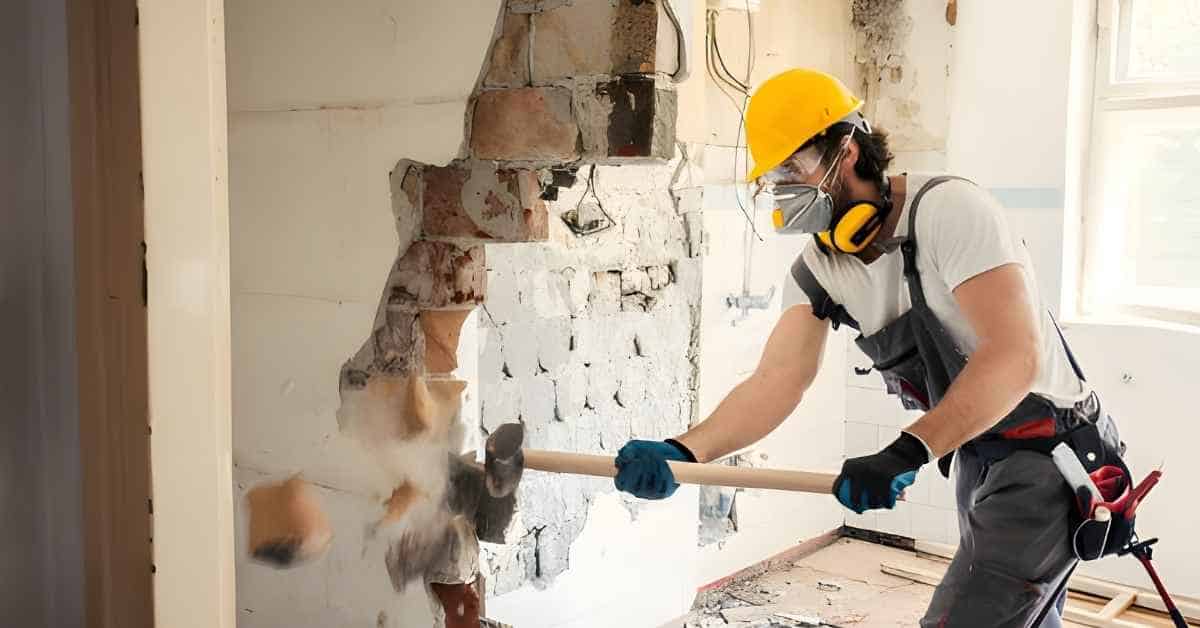
Start by marking the damaged area with a pencil. For cement stucco, use a utility knife or a chisel to score along your marks. Then, carefully snap off the damaged material using a hammer.
For EIFS (Exterior Insulation and Finish Systems), be extra careful not to damage the foam underneath. Use a fine-toothed saw or a sharp chisel to cut out the damaged area. Extend your cuts at least 2 inches into sound material to ensure you’ve reached solid substrate.
Once you’ve exposed the solid substrate, use a wire brush to clean off any loose material. Be sure to wear safety glasses and gloves during this process.
Drying, cleaning, and priming
Before you start patching, ensure the substrate is dry. Use a moisture meter to test for dampness. The target dryness should be between 12-24 hours or a specific relative humidity (RH).
Clean the area using a wire brush to remove any remaining loose material. For tougher dirt or algae/mold, use a mild detergent and rinse thoroughly with clean water. Be sure not to damage the underlying layers.
If you’re working on EIFS, apply a bonding primer to help the new stucco adhere better. If moisture is an issue, consider using a water-resistant barrier before patching.
Step-by-Step Repair Methods (Small to Large Repairs)
Think of repairs as a ladder: start with small cracks, then address surface delamination, and finally tackle larger patches. Stop if you detect movement, ongoing moisture, or substrate failure. This keeps you in a safe, repairable zone.
For each stage, plan preparation, assessment, and safety steps before applying patch material. Use appropriate reinforcement and curing guidance, and re-check adhesion after each step before moving on.
Step-by-Step Repair Process
Follow these practical steps to repair your stucco damage from small cracks to large patches.
- Preparation: Check substrate, moisture levels, gather tools and materials. Safety first – wear gloves, goggles, and a dust mask.
- Assess damage: Identify hairline cracks, delamination, or larger holes. Stop if signs of structural movement, moisture intrusion, or substrate failure appear.
- Main work: Start with small repairs, progress to surface delamination, then large patches as needed.
- Curing and finishing: Allow proper cure times for each stage. Touch up and blend edges for a seamless finish.
- Final checks: Re-check adhesion after curing. If issues persist, stop and call a professional.
Hairline cracks and surface patching
For minor cracks, use flexible acrylic caulk or sealant for an easy paint-ready finish.
First, clean the crack using a wire brush. Then, widen it slightly with a utility knife if needed. Apply a bead of caulk along the crack, using your finger to press and feather it into the surface. Let it dry according to the manufacturer’s instructions. Finally, lightly sand any rough edges.
If the crack reappears or expands after patching, stop and reassess – there might be an underlying moisture issue or structural movement.
Patching larger holes and re-plastering sections
For bigger damage, remove loose stucco and apply a backer/bonding coat. Embed mesh for reinforcement.
Mix patch mortar according to instructions. Apply it in thin layers, allowing each to cure before adding the next. Feather the edges into the existing finish to avoid visible patches. Let the final layer cure as directed.
If you encounter rusted lath or persistent delamination beyond the repair zone, stop and consult a professional – these could indicate deeper structural issues.
Dealing with EIFS-specific damage
EIFS (Exterior Insulation and Finish Systems) require careful handling. Replace damaged insulation board, then repair the mesh and base coat.
If you find trapped moisture or design flaws causing damage, replacement might be necessary. EIFS systems are complex – if in doubt, consult a professional to avoid further damage.
Always ensure proper ventilation behind EIFS to prevent future moisture issues. If you notice persistent problems, stop and call an expert.
Finishing, Texture Matching & Painting
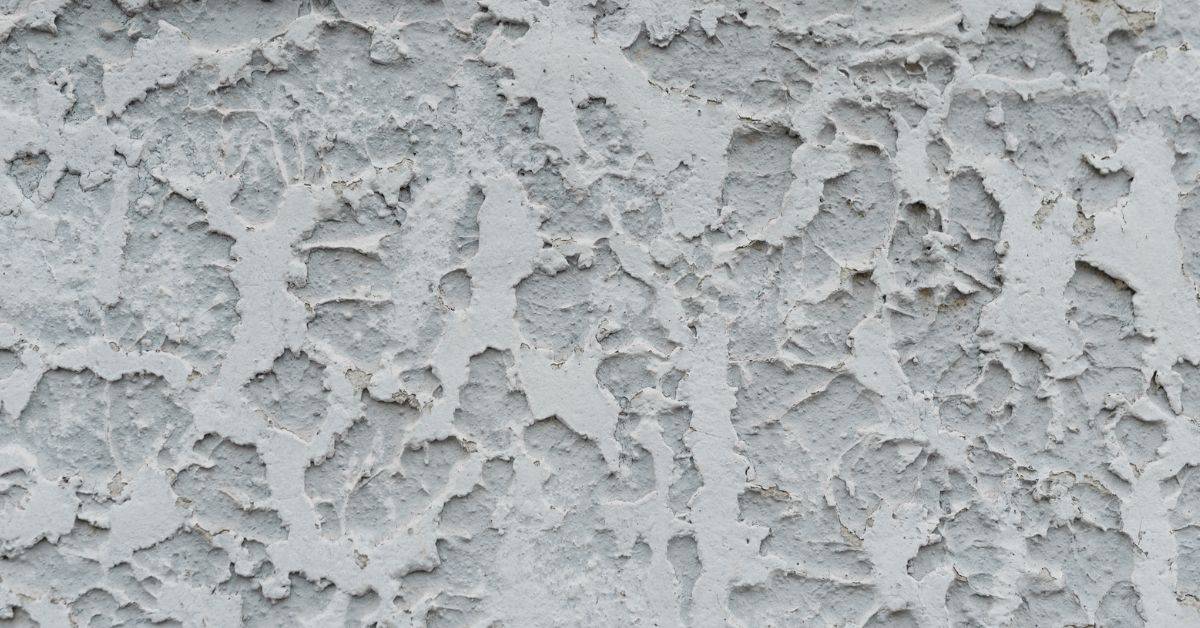
Assess the existing texture first (dash, knockdown, lace, or smooth) to choose a matching approach. If unsure, test a finish on a hidden patch to gauge texture and color results. Plan the final look before patching the visible area.
Tools and materials vary by texture, including trowels, brushes, and spray options. Primers, sealers, and paints should be compatible with both the repair and the surrounding finish to ensure durability.
Texture Replication Techniques
Matching your existing stucco texture is crucial for a seamless repair. Here are some common methods and tips:
Knockdown: Use a knockdown knife to create a textured, troweled-down effect. Practice on a scrap board first.
Lace and dash: For these textures, use a trowel or brush to create thin, wispy lines or dashes. Be patient and build up the texture slowly.
Before applying any texture, test your technique on a hidden patch. This way, you can adjust your approach without damaging your repair.
Sealing and Painting Best Practices
Proper sealing and painting ensure your repairs last. Here’s how:
Priming: Use a bonding primer to help paint adhere better. If you have stains, use a stain-blocking primer.
Painting: Opt for weather-rated acrylic latex or elastomeric coatings. Follow the manufacturer’s instructions for temperature and humidity limits.
Wait times: Allow your patch to cure according to the product label (usually 24-72 hours) before applying primer and paint. This ensures the best adhesion and durability.
Common Mistakes, Stop Rules & Safety Precautions
Common prep mistakes include inadequate cleaning, skipping moisture tests, and leaving loose material behind. These missteps undermine adhesion and long-term performance. Verify substrate readiness before patching.
Wet substrate, poor curing conditions, and stray sun or wind can ruin repairs. Establish stop rules for weather, moisture readings, and compromised scaffolding, and wear proper PPE at all times.
Top DIY mistakes and how to avoid them
Before you start repairing your stucco, understand these common DIY errors. Avoiding them will save you time, money, and frustration.
- Improper surface cleaning: Dirt and debris prevent proper adhesion. Always clean the area thoroughly before starting.
- Skipping moisture testing: Moisture can ruin your repair. Test for moisture using a moisture meter before proceeding.
- Failing to remove loose stucco: Repairing over loose material is like building on sand. Remove loose stucco first.
- Using wrong materials: Incompatible patching compounds, mesh, or adhesives can cause more damage than good. Always use compatible materials.
- Repairing on damp substrates: Wet surfaces won’t hold repairs. Wait for the substrate to dry completely before repairing.
Remember, prevention is better than cure. Take these steps to avoid common mistakes and ensure a lasting repair.
Safety and site protection
Your safety and the condition of your site are paramount. Here’s what you need to know:
Personal Protective Equipment (PPE): Wear a respirator for silica dust, gloves for hand protection, and eye/face protection to prevent injuries.
Ladder safety is crucial. Ensure your ladder is stable, secure it if necessary, and maintain three points of contact while climbing.
Control dust by wetting the work area before sanding or cutting. Protect landscaping and adjacent surfaces using drop cloths or plastic sheeting to prevent damage from debris or spills.
Cost, Time Estimates & Project Planning
Plan around the scope of work and patch size, noting that costs vary with access, material type, and any substrate repairs. Check local prices and factor in contingency for unforeseen issues. Use this to guide budgeting without fixed numbers here.
Develop a timeline that covers prep, cure times, and finishing steps, with buffer days for weather and multiple coats. Create a simple project plan with milestones and keep it updated as work progresses.
Estimating materials and labor for DIY
Choosing the right materials is key to a successful repair. Here’s how to estimate what you’ll need:
- Stucco mix: Calculate based on damaged area. A 94 lb bag covers approx. 1 sq ft (1/8″ thick). Look for Type N or S, avoid low-quality mixes.
- Fiberglass mesh tape: Use 3″ wide for small patches, 6″ for larger. Get enough for 2-3 layers plus extra for mistakes.
- Lath: If substrate repair is needed, use metal lath (1/4″ x 48″ x 96″) or chicken wire. Avoid plastic lath for large repairs.
- Fasteners: Use stainless steel or galvanized screws (1-5/8″, #8) to secure lath. Don’t use nails, they rust.
- Tools: Trowels (3″-6″), hawk, tape measure, utility knife, screw gun, trowel float, and safety gear.
When to get multiple professional quotes
Before hiring a pro, gather detailed quotes from at least three contractors. Here’s what to include and compare:
Include in your request: A moisture report, extent of removal (partial or full), any drainage fixes needed.
Compare quotes based on scope: Surface prep, substrate repair, parge coat, texture matching. Check if permits or structural concerns are included.
Inspect warranties and timelines: Ensure the warranty covers both labor and materials. Ask about lead times for completion and cure/paint timelines.

Conclusion
Safety, durability, and a good finish come from careful prep, honest assessment, and steady work. If you clamp down on moisture control and follow the repair steps, you protect the home and keep looking good for years.
First, do a simple, practical check: identify active leaks, test for moisture behind the stucco, gather the exact tools and materials you’ll actually use, prep the area clean and dry, protect nearby surfaces, mix or match materials to spec, patch small cracks or joints, then move to larger repairs if needed, finish with texture matching and a proper coat of paint, and finally monitor the area for a few days after curing to confirm the fix is solid. If any step feels risky, or the damage is bigger than a small repair, pause and reassess before proceeding.
Common mistakes to avoid are skipping moisture checks, using the wrong patch or finish for your stucco type, not letting patches cure fully, overworking the texture, and neglecting proper drainage and flashing details. Safety rules are simple: wear eye protection and a dust mask, keep the area dry and well ventilated, secure ladders, power tools, and extensions, and never work on wet surfaces or in high wind. Test a small area first to confirm adhesion and texture before you commit to the full repair.
If you encounter widespread damage, active leaks, or hidden rot behind the surface, it makes sense to call a professional instead of forcing through. A pro can confirm moisture depth, ensure flashing and sealants are correct, and prevent future failures. Stay focused, work methodically, and you’ll finish with a durable, respectable result and fewer costly surprises.
FAQ
What causes stucco damage to need repair?
Cracked or bulging stucco usually has water behind it. Freeze-thaw cycles and poor drainage make it worse fast. Look for stains, softness, or loose siding and fix the source first.
Can I inspect stucco damage myself safely?
Yes, with care. Use a sturdy ladder, proper PPE, and a flashlight to check for moisture behind the surface. If you see mold, rot, or a lot of moisture, call a pro.
Do I need to remove all damaged stucco before patching?
Yes. Scrape away loose material and clean the area. Any damp or rotten backing must go, or the repair will fail sooner than you think.
What are safe steps for a basic patch repair?
Chisel back to solid edges, prime bare concrete or lath, and apply one or two thin coats of patch material. Seal the edges and finish with paint that matches. If the patch cracks, stop and reassess.