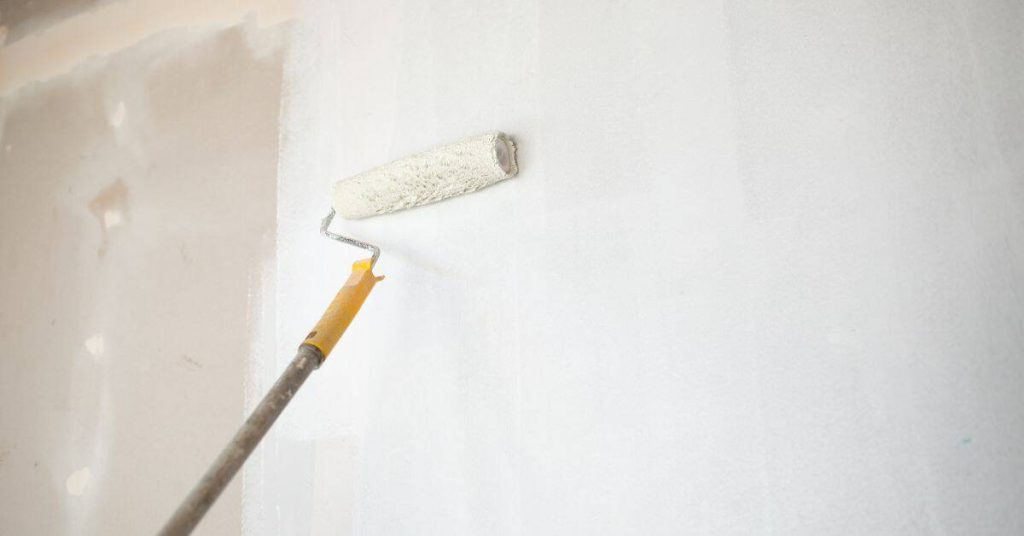
Introduction
The process of painting a wall can be time-consuming, and one common issue that arises is picture framing – the dark outline around painted walls due to improper rolling technique or primer choice. To avoid this, it’s crucial to understand the timeline involved in each step.
In this guide, we’ll walk you through the process of avoiding picture framing on your walls, focusing on the time it takes for each step and how they fit together to create a seamless finish.
For the full guide, see How to Avoid Picture Framing on Walls: Rolling Patterns, Wet Edges, and Primer Strategy.
The Step-by-Step Timeline to Avoid Picture Framing
To avoid picture framing, you need to plan your painting process carefully, considering the drying times of your primer and paint. Here’s a step-by-step timeline:
- Surface Preparation (30-60 minutes): Start by cleaning and smoothing the surface. This includes fixing dents, sanding high spots, and sealing cracks.
- Primer Application (15-30 minutes per coat): Apply a compatible primer to reduce absorption differences and edge flashing. Allow it to dry according to the manufacturer’s instructions – usually 1-2 hours or overnight.
- Cutting In (15-30 minutes per wall): Use steady strokes along corners to minimize visible borders. This step can be done while waiting for the primer to dry.
- Rolling (15-30 minutes per coat): Apply paint in organized sections, working from top to bottom and side to side. Allow each section to dry according to the manufacturer’s instructions – usually 2-4 hours or overnight.
- Touch-ups and Final Inspection (15-30 minutes): After the final coat has dried, inspect your work for any touch-ups needed. Ensure that there are no visible borders or lap marks.
By following this timeline, you can ensure that each step is completed at the right time to avoid picture framing and create a smooth, even finish on your walls.
Key takeaways
The preparation stage is crucial as it sets the foundation for the entire painting process. Taking the time to properly prepare your walls will not only help prevent picture framing but also ensure that your paint job lasts longer.
- Prepare walls by fixing dents, sanding high spots, and sealing cracks before painting.
- Prime with a compatible approach to reduce absorption differences and edge flashing.
- Cut in using steady strokes along corners to minimize visible borders.
- Use rolling patterns that start wet and work in sections to blend.
- Respect drying and edge-treat timing; avoid reconciling different moisture levels.
- Always wear eye and skin protection; clean tools to prevent lap marks.
Table of Contents
- Introduction
- Key takeaways
- What Is Picture Framing and Why It Happens
- Tools and Materials Checklist for Framing-Free Walls
- Wall Preparation and Repair to Prevent Uneven Absorption
- Primer Strategy That Minimizes Framing and Lap Marks
- Cutting in and Edge-Work to Avoid Visible Borders
- Rolling Patterns and Sectioning to Eliminate Picture Framing
- Managing Wet Edges, Drying Conditions, and Timing
- Troubleshooting Common Mistakes and Finishing Checks
- Conclusion
- FAQ
What Is Picture Framing and Why It Happens
Picture framing is the visible dark or light border that can appear around painted wall panels where the finish looks like a framed picture instead of a uniform field. The eye is very sensitive to small tonal and sheen shifts, so even slight variations at edges or overlaps read as a frame.
Common causes include roller overlap and inconsistent rolling patterns, lost or uneven wet edges as sections dry, uneven primer coverage or absorption, and surface variations such as texture or patched areas. Quick checks include viewing the wall from different lighting angles, running a thin edge-line test with a brush, and inspecting corners and transitions for sudden edge changes; these will help you diagnose whether technique, substrate, or materials are the main problem.
Visual symptoms and how to spot them early
While painting, keep an eye out for these signs of picture framing:
Lap marks: These are visible lines where two coats overlap. To spot them early, check your work frequently while the paint is still wet.
Contrast bands: These appear as distinct bands of color where the paint has dried differently due to temperature or humidity changes. Inspect walls after painting and again a few hours later when the paint has fully set.
Texture differences can also indicate picture framing. Feel the wall with your hand to check for variations in texture that might not be visible until the paint dries.
Root causes tied to technique and materials
The right materials and techniques can prevent picture framing. Here’s what you need to know:
- Rolling Patterns: Consistent, overlapping ‘W’ or ‘M’ patterns help avoid streaks and ensure even coverage.
- Drying Speed: Too fast (high heat/humidity) can cause surface cracking. Too slow (low temp/humidity) may lead to mildew.
- Roller Nap: Longer naps (3/8″ or more) are better for textured surfaces, shorter naps (1/4″) for smooth ones. Cheap rollers can leave lint behind.
- Primer Inconsistencies: Skipping spots or applying too thin/thick can cause uneven absorption and framing.
- Mortar Type: Using the wrong mortar (e.g., Type N for interior, Type S for exterior) can lead to cracking and weak bond.
- Cement:Sand Ratio: Too much cement (high ratio like 1:2 or 1:3) can cause shrinkage cracks. Too little (low ratio like 1:6) may not set properly.
- Admixtures: Some additives can speed up drying, improve workability, or increase strength. Check labels and follow instructions carefully.
- Water-Cement Ratio: Too much water (high ratio like 3:1) weakens the mix. Too little (low ratio like 0.5:1) makes it hard to work with. Aim for a safe range (around 2:1).
Pro tip: When buying materials, check labels and compare prices per unit coverage. Store cement in a dry place, and mix only what you need to avoid waste.
Tools and Materials Checklist for Framing-Free Walls
Use tools and materials that promote even application and maintain a wet edge: short-nap rollers suited to the wall texture, a sturdy roller frame, a dedicated edger, a paddle mixer for paint consistency, sanding blocks or rasps for smoothing, and a straightedge or level for alignment. Choose primers and topcoats made for the substrate—look for labels that mention bonding, concrete compatibility, moisture tolerance, or adhesion promoters rather than relying on vague ‘‘all-purpose’’ claims.
Also stock surface-prep items: degreaser or cleaner, patch compound, sanding supplies, tack cloths, and masking materials such as quality painter’s tape and drop cloths to protect floors. Read product data sheets or labels for indications of moisture and temperature tolerance and follow those instructions for timing; when in doubt, check the manufacturer’s technical data sheet for compatibility with concrete and recommended substrate prep.
Rollers, naps, and trays — choosing the right combo
Before you start painting your framing-free walls, make sure you’ve got the right tools for the job. This checklist helps you pick the perfect roller cover, nap, and tray combo to ensure a smooth, even finish.
- Check wall texture: Smooth surfaces need less material, while textured ones require more.
- Match roller nap to texture: For smooth walls (like drywall), use a 3/8″ or 1/2″ nap. For light textures, go with 3/4″. Heavy textures need 1″ or 1-1/2″.
- Fluffy vs dense covers: Fluffier covers hold more paint but may leave marks on smooth surfaces. Denser covers are better for smooth walls but may not hold enough paint for textured ones.
- Test on scrap area: Before you start, test your roller combo on a small, hidden area to ensure it’s right for your wall texture and paint type.
- Check packaging recommendations: Many rollers come with surface recommendations. Make sure yours matches your wall type.
- Avoid cheap rollers: They may leave lint or fuzz behind, ruining your finish. Spend a few extra bucks for quality.
- Choose the right tray: For framing-free walls, you’ll need an extended handle to reach high spots. A 9″ or 12″ roller cover will fit most trays.
- Check tray capacity: Make sure your tray can hold enough paint for your wall area without refilling too often.
Quick rule: Always test your roller combo on a small, hidden area first. This helps you avoid expensive rework and ensures a smooth, even finish.
Brushes, edgers, and accessory tools
Before you start painting your framing-free walls, use this checklist to ensure you have the right brushes, edgers, and accessories for a smooth, professional finish.
- Angled brushes (1.5″ – 2.5″): Check they’re angled at 40-45 degrees for cutting in edges. Confirm by holding it against the wall; the bristles should touch the surface at a comfortable angle.
- Mini-rollers (6″ – 9″): Ensure they match your roller nap choice from earlier. Quickly test by rolling on a scrap piece of drywall to check coverage and application consistency.
- Edger tool: Make sure it has adjustable wheels for various wall heights. Check wheel adjustment range fits your walls’ height.
- Extension poles (18″ – 36″): Confirm they’re telescopic and lock at desired lengths. Test by extending and locking them to ensure stability.
- Quality trays: Check they have liners for easy cleanup. Ensure they’re deep enough (1″ – 2″) for your roller size and paint type.
- Paint brush combs: Have one for cleaning your brushes. Quick test by running a dirty brush through it to see if it cleans effectively.
- Drop cloths or canvas: Ensure they’re large enough (6′ x 9′ – 10′ x 15′) and have weighted edges to prevent slipping. Check by laying them out and trying to move them; weighted edges should keep them in place.
- Painter’s tape: Confirm it’s blue or green (not yellow) for better paint adhesion and easier removal. Test by applying, painting, and removing to check for residue.
Quick rule: Always use quality tools that fit your specific job. Cheap or wrong-sized tools lead to sloppy work and wasted time.
Wall Preparation and Repair to Prevent Uneven Absorption
Start by assessing the wall for porosity and texture differences so you can target high-absorption spots versus sealed areas before priming. Clean thoroughly to remove dust, grease, and contaminants, and degloss any glossy finishes that can repel primer or paint.
Repair cracks, holes, nail pops, and trowel marks, sand patches flush, and feather repaired edges into the surrounding surface to get a uniform plane. Address moisture issues and select primers or sealers appropriate for porous versus non-porous areas; verify readiness with an adhesion check or a small test patch before applying a full primer coat.
Cleaning, Degreasing, and Surface Profiling
Start by assessing your wall’s surface. Grease, grime, or glossy finishes can cause uneven sheen and poor paint adhesion.
Degloss existing finishes using a deglosser or light sanding with 220-grit sandpaper. This helps paint adhere better and prevents shiny spots.
Use TSP (trisodium phosphate) or a similar heavy-duty cleaner to remove dirt, oils, and contaminants. Apply with a sponge or brush, let it sit for 15 minutes, then rinse thoroughly with clean water.
Let the wall dry completely before moving on. This step is crucial for consistent paint absorption.
Patching, Feathering, and Skim-Coating Best Practices
Inspect your walls for cracks, holes, or uneven areas. These can become framing hotspots if not addressed properly.
Use a suitable patching compound to fill nail holes and other defects. For larger holes, use fiberglass mesh tape and apply compound in thin layers, allowing each to dry before sanding lightly with 120-grit sandpaper.
Feather joint compound edges by applying it wider than the defect, then sand it down to blend into the surrounding material. This prevents visible lines that can cause framing.
If needed, apply a skim coat of joint compound or plaster to achieve a uniform substrate. Apply thinly, let dry, then sand lightly with 120-grit sandpaper for a smooth finish.
Primer Strategy That Minimizes Framing and Lap Marks
Decide between spot-priming and full-wall priming based on the amount of absorption variation and the condition of the substrate—spot-prime only discrete high-absorption areas, prime whole walls when absorption is inconsistent across a broad area. Match primer chemistry to the problem: select primers recommended for bonding, staining, or sealing on concrete and follow the product guidance for when oil, latex, or specialty primers are appropriate.
Before priming, perform porosity testing and final sanding/cleaning so the primer can produce a uniform base and even sheen for the finish coats. Apply primer with an edge-first strategy and maintain a wet edge during coverage; check the product data sheet for drying and recoat guidance and align primer selection with the chosen topcoat to avoid sheen or adhesion mismatches.
Spot priming vs full-wall priming — decision guide
When to spot prime or prime the whole wall depends on your surface’s condition.
Spot prime: If you’ve done repairs, like patching holes, and the rest of the wall is in good shape. Spot prime just those areas to seal them and even out absorption.
Full-wall prime: When you’ve got major repairs, previous paint is peeling or flaking, or you’re dealing with new drywall. Prime the whole wall for a consistent base.
If unsure, do a porosity test — dab water on different areas. If it absorbs evenly, spot prime. If it beads up in some spots and soaks in others, full-wall prime’s your best bet.
Choosing primer type and tinting for consistent coverage
Different primers serve different purposes. Choose wisely to minimize framing and lap marks.
Stain-blocking: Use when you’ve got stains, like water rings or tannin bleed from wood paneling. It seals them in so they don’t bleed through your topcoat.
Bonding primer: Great for new drywall or surfaces with poor adhesion, like glossy paint. It helps your topcoat stick better and reduces peeling risk.
High-build primer: Thicker than others, it’s ideal for filling minor imperfections and evening out surface texture. Use when you want to minimize sanding later on.
Tinting your primer to match your topcoat color can help reduce coats and framing risk. It evens out the base color, so your final coat goes on more smoothly and consistently.

Cutting in and Edge-Work to Avoid Visible Borders
The goal when cutting in is a seamless transition between brush-cut edges and rolled areas so borders don’t read as a separate band. Achieve that by controlling brush loading, keeping a consistent brush angle, and feathering the edge lightly so paint blends into the rolled field.
Use quality painter’s tape where appropriate and decide whether to tape before or after priming based on surface porosity and tape manufacturer guidance; burnish tape edges to prevent bleed and remove tape at the recommended time. Cut corners, trim, and baseboard lines first, then immediately transition into rolling while the edge is still wet to maintain continuity and avoid lap marks.
Proper brush loading and cutting-in sequence
Loading your brush right is key to a smooth edge. Dip it about halfway into the paint, then tap off excess on the lip of the can.
Start in a corner or along an edge like a window frame. Hold your brush at a 45-degree angle to the wall and cut in a steady, even line. Keep your wrist firm but flexible.
Once you’ve cut in about 2-3 feet, start rolling. Meet the wet edge of your roller with the wet edge of your brush stroke. This blends the two together seamlessly.
Using tape and edgers without creating ridges
Quality painter’s tape is a must. It sticks well but peels off cleanly. Press it firmly onto the wall using a putty knife or your fingers to ensure no paint seeps underneath.
Apply tape after priming for best edge adhesion. Let the primer dry first, then apply tape. This gives you a solid base and prevents bleeding.
Remove tape while the paint is still wet. If it’s dry, you’ll pull off paint with the tape. Start from one corner and peel at a 45-degree angle to avoid pulling.
Rolling Patterns and Sectioning to Eliminate Picture Framing
Work in consistent rolling patterns and repeatable section sizes so each pass meets a fresh wet edge and distribution of paint remains uniform. Use a W or overlapping S motion for the field, back-roll edges lightly, and break the wall into sections that you can complete before the previous area begins to set.
Mark visual guides or temporary boundaries if needed to keep sections equal and coordinate cutting-in, filling, and rolling so edges dry at similar rates. Align your primer choice and surface prep with the rolling plan so absorption and sheen stay consistent across sections and reduce the chance of framed panels forming as the finish cures.
Section size and the ‘workable wet edge’ concept
The key to avoiding picture framing is maintaining a workable wet edge. This means keeping your roller’s last pass in contact with fresh, wet paint before it dries.
To do this, choose a section size you can comfortably complete in 5-10 minutes. For most DIYers, that’s around 3×4 feet or smaller. Use painter’s tape to mark off these sections on your wall.
Start at the top, working your way down and across each section. This keeps you from having to reach over wet paint and creates a consistent finish.
Pattern techniques — W/M blending, feathering, and overlap
Use W (working from wall to center) or M (mirror image of W) patterns to distribute paint evenly. Start at the top of your section, rolling outwards in a wide ‘W’ or ‘M’ shape.
For edges, use a back-rolling technique. Roll half on the wall, then flip your roller over and roll the other half. This ensures even coverage and prevents streaks.
Feather your strokes at the edges to blend into surrounding wet paint. Don’t roll right up to the edge; leave about an inch, then use a brush or edger to cut in.
Managing Wet Edges, Drying Conditions, and Timing
Control ambient conditions and match them to the product’s working time by checking temperature and humidity recommendations on the product label or technical sheet. Plan work in manageable sections, mix batches sized to be used before they change, and choose slower-drying or extended open-time formulations when conditions would otherwise force edges to dry too quickly.
Maintain wet edges with consistent rolling patterns and back-rolling to blend seams while the previous area is still wet, and monitor surface tack or dry-to-touch times before re-coating. Keep a hygrometer and thermometer on site, document conditions during application, and be ready to pause or adjust if edges begin to dry unevenly or show tendency to frame.
Strategies for fast-drying or humid conditions
When it’s hot and humid, paint dries faster. Here are some tricks to keep your edges wet:
Work in smaller sections. Instead of doing the whole wall at once, break it down into manageable chunks. This way, you can work with the edge while the previous area is still wet.
Slow down ventilation. Keep windows closed and fans off to reduce airflow. This helps maintain a consistent environment for your paint.
Choose paint with a longer open time. Some paints are formulated to stay wet longer. Use these in hot, humid conditions to give you more working time.
Coordinate helpers. If you’re not painting alone, make sure everyone knows when to start their section. This helps maintain a consistent rolling pattern and keeps edges wet.
Reblending, back-rolling, and touch-up timing
Back-rolling and reblending help maintain a consistent finish. Here’s when to do it:
Before paint skins over. Back-roll or reblend edges within 5-10 minutes of application. This helps blend seams without creating lap lines.
Sanding and recoating might be needed if:
– Edges have dried too fast, causing a visible line.
– You’ve waited too long to back-roll or reblend.
– The paint has already started to skin over.
In these cases, lightly sand the area with fine-grit sandpaper, wipe it clean, and apply another coat. This ensures a smooth, even finish.
Troubleshooting Common Mistakes and Finishing Checks
If picture framing appears, diagnose whether it’s caused by roller overlap, lost wet edges, primer gaps, or surface differences by inspecting under the lighting you will use in the room. For small framing issues, re-roll with a lighter load and feather into the surrounding area; for larger problems consider sanding, spot-priming, or applying a thin skim coat before repainting.
Check roller nap choice, brush technique, and edge work if roller marks or edge bleed show up, and perform a final inspection under the room’s finished lighting for sheen and color uniformity. Follow a post-dry inspection checklist—look for lap marks, runs, sags, or texture differences—and rework only after the surface is fully dry and you’ve confirmed the corrective method on a test patch.
Repairing lap marks and visible frames
Once framing or lap marks appear, don’t panic. Here’s how to tackle them.
Feather sanding: Lightly sand the area with fine-grit sandpaper, following the direction of the paint strokes. This helps blend the edges.
Spot-sanding and blending: For smaller marks, spot-sand lightly, then use a damp cloth to remove dust. Reapply a thin coat of paint, feathering it out.
Recoat strategies: If sanding doesn’t work, or if the framing is severe, you might need to recoat the entire wall. Test spots first to ensure color and sheen match.
Final inspection, cleanup, and preservation
When to use this checklist: After the paint has fully cured (usually 24-48 hours), perform these checks before touching up or storing leftover paint.
- Lighting inspection: Check for any missed spots, runs, or sags under different lighting angles.
- Touch-ups: Address any small flaws with a brush or roller, using the same technique as before.
- Tool cleaning: Clean rollers, brushes, and trays thoroughly to prevent them from hardening. Use soap and water for latex paint, mineral spirits for oil-based.
- Store leftover paint: Seal the can tightly, label it with the room name and date, then store it in a cool, dry place.
- Check edges: Ensure all edges are crisp and free of drips or bleed-through. Touch up if necessary.
- Inspect sheen: Check that the sheen is uniform across the wall. If not, sand lightly and repaint.
- Color consistency: Ensure there are no color variations. If so, touch up with a thin coat of paint.
- Texture uniformity: Make sure the texture is even throughout. Sand any raised areas or fill in low spots before touching up.
Quick rule: Always perform these checks under natural light, if possible, to ensure an accurate assessment of your work.
Conclusion
The core idea is simple: a solid prep, the right primer, and careful rolling and edges keep walls flat and finish durable without the telltale picture frame. Do this safely, and you protect the job from costly fixes and rework down the line.
Start with a quick check and fix in this order: patch and sand any flaws, clean the surface, apply a consistent primer strategy, lay in cutting-in and rolling in organized sections, mind the wet edges and drying times, and test a small area before finishing the whole wall. Work in sequence, stay mindful of temperature and humidity, and verify each step before moving on.
Avoid these missteps: skip patches or repairs and expect flawless results; rush primer or cutting-in and run laps or lap marks; flood a wall with heavy coats or work while conditions are unfavorable; or ignore drying times and settle for a brittle or uneven finish. Safety basics matter: ventilate, wear a mask if dust or fumes are present, use steady strokes, and don’t force coatings onto an uneven substrate.
If you encounter persistent framing, widespread moisture, or structural damage, call in a pro rather than pushing on. Otherwise, apply these steps with steady hands and you’ll finish clean, durable walls that look right and stay that way. You’ve got this—get after it and stay confident with each coat and edge you complete.
FAQ
What wall prep steps make priming and rolling patterns work better to avoid picture framing?
Clean and patch the wall, then fix any high spots. A uniform surface helps primer absorb evenly and reduces edge contrast that leads to framing.
Which primer type and application technique reduces visible borders on edges?
Use a primer suited for the substrate and apply it evenly with a consistent coat. Work the edges first, then roll the center to blend the edge area into the field before it dries.
How should I plan cutting in and edge-work to prevent stark lines when rolling?
Cut in with a steady hand and a quality brush so the edge stays feathered. Roll from the wet edge toward the center in light passes to blend any edge marks as you go.
How do I choose tools and materials that minimize framing without wasting?
Pick tools that fit the wall and texture, plus a primer that matches the surface. Check the label for coverage guidelines and local recommendations, then test on a small spot before committing.

