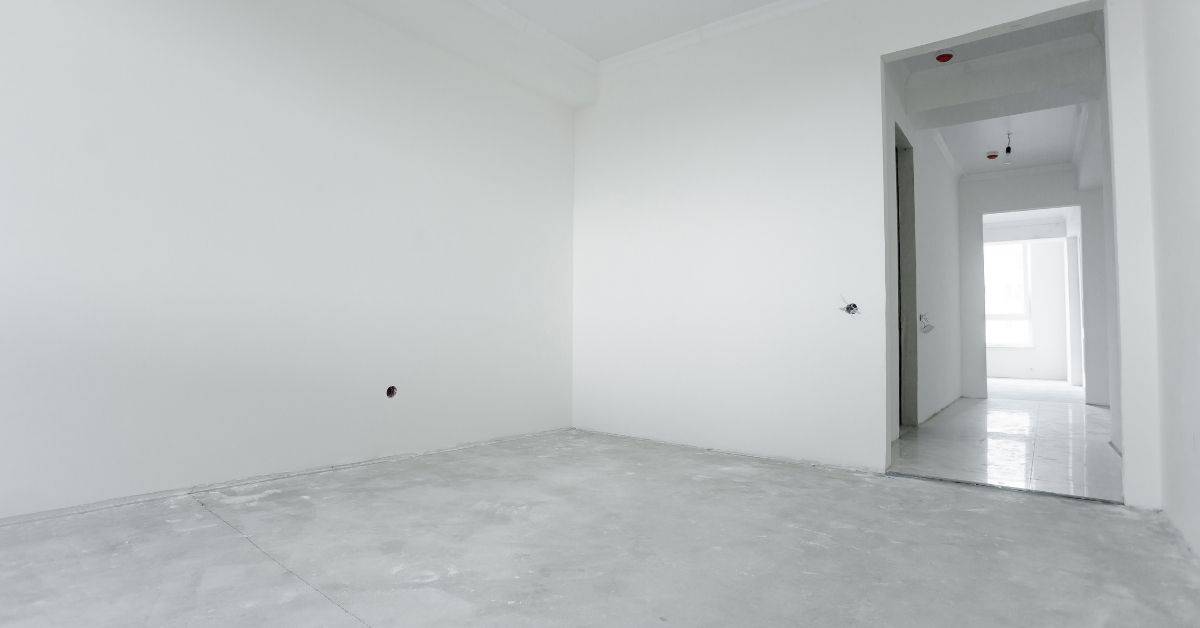
Empty room with freshly plastered white walls and bare concrete floor

How Long Does It Take to Get Dead-Flat Plaster Walls: A Step-by-Step Timeline

Introduction

Achieving dead-flat plaster walls is a meticulous process that requires patience and careful planning. Understanding the timeline involved in each step can help you manage your expectations and ensure a successful outcome.

In this guide, we’ll break down the process into clear, time-specific steps to give you an accurate estimate of how long it takes to get dead-flat plaster walls.


The Timeline for Achieving Dead-Flat Plaster Walls

Getting dead-flat plaster walls involves several stages, each with its own duration. Here’s a detailed timeline to help you understand the process:

  • Substrate Assessment and Prep: 1-3 days
    – Inspecting and preparing your substrate is crucial for achieving flatness. This step may take longer if there are significant imperfections or moisture issues.
  • Plaster Application: 2-4 days (per coat)
    – The application of each plaster coat takes time, with the first coat typically taking the longest due to the need for thorough coverage and feathering. Subsequent coats will take less time as you build up the surface.
  • Drying Time: 12-48 hours (per coat)
    – Allow sufficient drying time between coats to ensure proper adhesion and prevent issues like cracking or delamination.
  • Sanding and Finishing: 1-3 days
    – After the final coat has dried, you’ll need to sand the surface smooth and perform any necessary touch-ups. This step may take longer if there are significant imperfections that require additional attention.

In total, achieving dead-flat plaster walls can take anywhere from 7 to 14 days, depending on factors such as substrate condition, plaster type, and environmental conditions. Keep in mind that these timelines are estimates, and your specific project may take more or less time.

Key takeaways

Properly preparing the substrate is crucial for achieving a flat surface and can significantly impact the overall timeline of your project. Taking the time to assess and address any issues before applying plaster will save you time and effort in the long run.

  • Plan straightedge checks at key heights to map all deviations.
  • Verify substrate moisture and cleanliness before applying any build-up coats.
  • Apply coats in deliberate sequence, feathering edges to avoid ridges.
  • Use straightedge mapping to guide where extra skim or backing is needed.
  • Protect yourself with PPE and clean dust control during sanding and tapping.
  • Verify tolerance visually and with measurements after each build-up stage.
Table of Contents

Project Goals and When Dead-Flat Matters

Dead-flat means you can run a long straightedge across the wall with no visible rocking or gaps and the surface accepts the intended finish without shadowing or telegraphing defects.

This level is needed when the final treatment will magnify slightest deviations—examples include high-gloss paints, precise joinery, or premium wall coverings—so check product instructions or spec sheets to confirm the required flatness for your finish.

When flatness is cosmetic vs performance-driven

A ‘dead-flat’ wall isn’t always necessary. Sometimes, a bit of imperfection won’t show from normal viewing distances.

But for high-gloss paint or critical joinery, every bump and dip will be magnified. That’s where true flatness matters – it’s not just about looks, but performance too.

Cosmetic: Normal paint, wallpaper. Viewed from a few feet away.
Performance-driven: High-gloss paint, critical joinery, premium finishes. Up close inspection.

Setting success criteria with clients or specs

Before you start, agree on what ‘dead-flat’ means to your client or project spec.

Discuss visual expectations. Acceptance of minor variations. Reference panels can help – a small area showing the desired finish.

Get it in writing. This way, everyone’s clear on what success looks like before you pick up your trowel.

Back to top ↑

Tools and Materials Checklist

Gather straightedges in multiple lengths, a reliable level, light source for raking, feathering knives, mix buckets, sanding tools, and the joint compound or plaster systems recommended by the manufacturer.

Choose tool quality based on use—lightweight DIY versions work for small jobs while heavier aluminum or steel straightedges and professional blades serve larger projects; verify material compatibility and curing directions on the product label or technical data sheet.

Measuring and straightedge tools

Before you start any concrete work, use this checklist to ensure you have the right measuring and straightedge tools. This will help you avoid costly mistakes and rework.

  • Tape Measure: Check it’s at least 25′ long for most jobs. Test it by measuring a known distance to confirm accuracy.
  • Carpenter’s Square: Ensure it’s 16″ or longer and the edges are straight. Use it to check right angles on your forms.
  • Level (2′ or 4′):** Check it’s adjustable and has a built-in bubble vial. Test it by placing it on a flat surface to ensure it’s level.
  • Straightedge (6′ or longer):** Verify it’s straight by laying it across a known straight line, like a door frame.
  • Chalk Line:** Ensure it has a sharp point and can make consistent lines. Test it by snapping a line on a flat surface.
  • Flashlight or Work Light:** Check it’s bright enough to see in dark areas, like under forms. Use it to test visibility before starting work.
  • Marking Pencil:** Ensure it writes clearly and has an eraser. Test it by marking a line on a piece of paper.
  • String Line (mason’s line):** Check it’s taut and can be easily adjusted. Use it to test by pulling it tight between two points.

Quick rule: Always use tools that are the right size for the job. Longer tools mean fewer joints, which reduces the chance of leaks or cracks in your concrete.

Plasters, bonding agents, and finishing compounds

Use this checklist before starting any plastering or finishing work to ensure you have the right materials and understand their application.

  • Basecoat Plaster: Check label for type (e.g., bonding, multi-finish). Ensure it’s suitable for your substrate (e.g., concrete, brick, existing plaster).
  • Topcoat Plaster: Confirm it’s compatible with your basecoat. Check if it’s ready-mixed or needs mixing on-site.
  • Bonding Agent: If using, ensure it’s suitable for your substrate and plaster type. Check application instructions.
  • Finishing Compound: Confirm it’s the right type (e.g., skimming, textured) for your desired finish. Check if it’s ready-mixed or needs mixing on-site.
  • Primer/Sealer: If using, ensure it’s compatible with your plaster and substrate. Check application instructions.
  • Additives (e.g., Retarders, Accelerators): If using, check they’re compatible with your plasters and follow manufacturer guidelines for addition rates.
  • Skim Coat Compound: Ensure it’s suitable for creating a smooth finish. Check if it’s ready-mixed or needs mixing on-site.
  • Taping & Jointing Compounds: Confirm they’re suitable for your plaster joints and follow manufacturer guidelines for application.

Quick rule: Always check product labels and manufacturer instructions to ensure compatibility between plasters, bonding agents, and finishing compounds. Incompatibility can lead to poor adhesion, cracking, or discoloration, causing expensive rework.

Back to top ↑

Understanding Flatness, Tolerances, and Standards

Flatness describes long-wave deviations across a plane; smoothness describes surface texture—both affect final appearance, but they are measured and controlled differently on the job.

Different finishes and installations accept different tolerances, so consult the finish manufacturer’s guidance or local standards to determine how tight your deviations must be before you proceed.

Visual vs Measurable Flatness

Assessing flatness isn’t always about numbers. Sometimes, it’s about what you see.

Visually, hold a light source at an angle to your wall. Look for shadows that reveal dips or bumps. This works best in low light.

But visual checks aren’t enough. You need measurable data too. Use a straightedge and level to check flatness. A 4′ or 6′ level is good for most jobs. Press it firmly against the wall, then look through the vial.

Matching Tolerances to Finish and Codes

Tolerances matter. They tell you how much variation is acceptable in your plaster’s flatness.

Start with the finish. High-end finishes need tighter tolerances. Check product datasheets for recommended tolerances.

Then, look at local building codes. Some areas have specific tolerance requirements. Your local building department can provide this info.

Lastly, verify your tolerances. Don’t assume. Measure and check to ensure you’re meeting the required standards.

Back to top ↑

Substrate Assessment and Prep: the Foundation of Flatness

Inspect the substrate for framing out-of-plumb, studs or blocks that are proud or recessed, damaged drywall, and loose fasteners, because these issues govern how much build-up you’ll need.

Correct structural and attachment problems first, remove contaminants, and follow the product instructions for bonding or priming so subsequent coats adhere and behave predictably.

Inspecting for movement, adhesion, and defects

Before you start applying build-up coats, it’s crucial to inspect your substrate. You’re looking for any issues that could cause problems later on.

Loose plaster: Tap the wall. If it sounds hollow or pieces fall off, you’ve got loose material. Scrape it off and reapply.

Softboard: Press firmly on the surface. If it gives way, there’s a soft spot. You’ll need to reinforce this area before proceeding.

Check for uneven blocks or bricks. Fill any gaps with a suitable mix to ensure a flat base. Also, look out for any cracks – these will need to be filled and sealed.

Edgework, reveals, and transitions

Edges, reveals, and junctions are where problems often show up. Spend time prepping these areas to avoid issues during build-up.

For corners, use a metal bead or profile to maintain a sharp edge. Apply it before you start your first coat.

At reveals, ensure they’re clean and free of debris. If necessary, apply a backing compound to create a smooth surface.

Where walls meet floors or ceilings, use a suitable bead or profile to maintain a true line. Make sure these are securely fixed before you start applying your build-up coats.
Back to top ↑

Empty room with smooth white plastered walls and concrete floor

Straightedge Checking Techniques and Mapping Deviations

Use a long straightedge held with consistent pressure and a raking light to reveal highs and lows; mark locations of contact and gaps, and record whether spots are high or low relative to the plane you want.

Work systematically in a grid or bands, prioritize fixing the largest deviations first, and keep a simple map of problem areas to plan the amount and location of build-up material.

How to perform a straightedge sweep

A straightedge sweep is the first step in checking your wall’s flatness. Here’s how:

1. Choose your straightedge: A 6′ or 8′ level is ideal for most walls.

2. Start at the top: Begin at the ceiling, place your straightedge vertically against the wall, and let it rest gently.

3. Sweep down: Slowly move the straightedge down the wall in a smooth, steady motion. Keep it vertical and maintain even pressure.

4. Interpret gaps: As you sweep, look for light gaps between the wall and the straightedge. Gaps indicate low spots or ‘hollows’.

5. Check for rocking: If the straightedge rocks as you move it, that’s a sign of high spots or ‘bumps’.

Marking and mapping highs and lows

Once you’ve identified deviations with your straightedge sweep, mark them for reference.

1. Mark high spots: Use a pencil or chalk to mark the tops of bumps. Make a note of their height above the surrounding wall.

2. Mark low spots: Similarly, mark the bottoms of hollows. Note how far they drop below the wall’s general plane.

3. Create a map: On a sketch or printout of your wall, mark these high and low spots with ‘+’ signs for bumps and ‘-‘ signs for hollows. Include their heights/lows next to each mark.

4. Plan your work: Use this map to plan your plaster build-up strategy. Prioritize areas with the largest deviations. Start at the highest points and work downwards.

Back to top ↑

Build-up Strategy: Coats, Feathering, and Sequence

Start with a bonding or base coat to level extreme hollows if needed, follow with one or more build coats to approach plane, feather transitions outward, and finish with a thin skim for final texture.

Mix and apply each layer per the manufacturer’s directions for working time and thickness limits, and let labels or technical data sheets guide timing between coats rather than guessing dry times.

First coat — bonding and leveling foundation

The first coat’s job is to bond with the substrate and fill major hollows. Use a bonding agent or primer mixed with your plaster according to manufacturer guidelines.

Apply this coat evenly, focusing on filling any deep voids or cracks. Don’t worry about getting it perfectly smooth yet; that comes later.

Let it dry as per the product’s instructions before moving onto the next step. This initial layer creates a stable base for your follow-up coats.

Intermediate build coats and feathering technique

Now, start adding material in controlled passes with your trowel. Use a straightedge between passes to check progress and ensure you’re building up evenly.

When working on edges, use the ‘feathering’ technique: apply less plaster as you approach adjacent surfaces like walls or ceilings. This prevents sharp lines and helps create a seamless look.

Let each coat dry before sanding lightly with fine-grit sandpaper to remove any minor imperfections. Then, wipe down the surface with a damp cloth to remove dust.

Final skim and polishing to dead-flat

The final pass is all about achieving that dead-flat finish. Use a finishing compound mixed as directed, applying it thinly and evenly with your trowel.

After application, use a wet sanding sponge or polishing pad to smooth out any remaining imperfections. Work in small sections at a time, following the direction of the trowel marks.

Once satisfied with the finish, perform a final straightedge check. Make sure there are no high spots or low areas before applying primer and paint.

Back to top ↑

Visual Checkpoints and Quality-Control Workflow

Stop and inspect after each major step: substrate prep, base coat, build coats, and skim—use angled light, touch, and the straightedge to verify progress at each checkpoint.

Keep a clear pass/fail standard based on the finish spec and rework any area that still shows unacceptable deviation before applying the next coat or the final finish.

Mid-process sign-offs and correction windows

Use this checklist at key stages of your concrete project to ensure quality workmanship and prevent costly rework. Pause the job, inspect together with your contractor, document any agreed corrections, then sign off before proceeding.

  • Check formwork alignment: Ensure forms are straight, level, and plumb using a laser level or builder’s square. Any deviation can cause uneven surfaces and cracks.
  • Verify reinforcement placement: Check that rebar is properly placed, spaced, and secured within the forms. Inadequate reinforcement leads to weak concrete structures.
  • Inspect base preparation: Ensure the base is clean, dry, and compacted. A poor base causes settling, cracking, and uneven surfaces over time.
  • Check concrete mix design: Confirm the mix meets your project’s requirements (e.g., strength, finish). Wrong mixes cause durability issues and affect the final appearance.
  • Monitor concrete placement: Watch for proper pouring techniques to avoid honeycombing, voids, or excessive segregation. Poor placement leads to weak spots and reduced lifespan.
  • Verify finishing techniques: Check that surfaces are properly bull-floated, screeded, and floated to achieve a smooth, even finish. Inadequate finishing causes rough textures and reduces durability.
  • Check curing methods: Ensure concrete is adequately covered or misted during the initial set to prevent rapid drying and cracking. Improper curing weakens the concrete’s surface and interior.
  • Inspect expansion joints: Verify that proper jointing techniques have been used to control cracks and allow for movement. Skipping this step can cause random cracking and reduced lifespan.

Quick rule: Always sign off on completed stages before proceeding, ensuring both you and your contractor are satisfied with the work done so far.

Final acceptance checks before finishing

Before you prime or paint your concrete surface, use this checklist to ensure everything is ready. Perform these checks after the final curing and any mid-process sign-offs.

  • Check for cracks: Look over the entire surface for hairline cracks. Use a magnifying glass if needed.
    What goes wrong if you skip this: Cracks can grow, leading to costly repairs later on.
  • Measure flatness: Use a straight edge and feeler gauges (1/8″ or 3/32″) to check for variations. No more than 1/4″ variation over 10′ is acceptable.
    What goes wrong if you skip this: Excessive variations can cause issues with flooring installation or finishing.
  • Inspect edges: Ensure all edges are well-formed and not crumbling. Check for any sharp corners that need rounding off.
    What goes wrong if you skip this: Poorly formed edges can lead to chipping, crumbling, or tripping hazards.
  • Check moisture content: Use a moisture meter (check manufacturer’s instructions) to ensure the slab is dry enough for priming or painting. Acceptable range is typically 15-20%.
    What goes wrong if you skip this: High moisture can cause peeling, bubbling, or other finish failures.
  • Inspect surface contaminants: Look for any dirt, oil, grease, or other contaminants. A clean surface is crucial for good adhesion.
    What goes wrong if you skip this: Contaminants can prevent proper bonding of the primer or paint, leading to premature failure.
  • Check for efflorescence: Look for white powdery deposits on the surface. These can be wiped off with a damp cloth.
    What goes wrong if you skip this: Efflorescence can interfere with adhesion and cause finish issues.
  • Verify surface temperature: Ensure the concrete’s surface temperature is between 50°F (10°C) and 90°F (32°C) for optimal primer or paint application.
    What goes wrong if you skip this: Extreme temperatures can affect how the finish dries, leading to issues like blistering or slow curing.
  • Check weather forecast: Ensure no rain is expected within 24-48 hours after finishing. This allows for proper drying and curing.
    What goes wrong if you skip this: Rain can cause finish failures, washing away primer or paint before they’ve cured properly.

Quick rule: Always follow manufacturer’s instructions for their specific products to ensure the best results. Local rules and conditions may also apply, so check those as needed.

Back to top ↑

Troubleshooting Common Problems and Preventive Tips

Common failures include poor adhesion, excessive feather lines, trowel marks, and telegraphing from underlying framing; identify the root cause—attachment, mixing, application technique, or substrate—and address it directly.

Prevent issues by following manufacturer mixing and application instructions, controlling environment and lighting while working, and doing small test sections when unsure about a product or method.

Common defects (high spots, hollows, waviness) and fixes

High spots are easy to spot – they’re the areas where your straightedge doesn’t touch the wall evenly. To fix:

Sand lightly with fine-grit sandpaper, then feather in a thin layer of joint compound.

Hollows are low spots that need build-up. Use a hawk and trowel to apply joint compound, working from the center outwards.

Waviness is tougher – you’ll see it as your straightedge wobbles. Mark highs and lows, then build up or sand down accordingly.

Movement, delamination, and moisture-related issues

Check for movement by pressing the wall – it should feel solid. If not, you might need to reinforce or rework.

Delamination shows up as cracks or peeling. Scrape off and rewet, then rebond with a fresh coat.

Moisture is the worst – it can cause all sorts of problems. Use a moisture meter to check, and if it’s high, address the source before plastering.

Back to top ↑

Conclusion

Getting truly dead-flat plaster walls pays off in durability and a clean, professional finish. It’s safer and cheaper to right small issues now than to chase cracks or hollow spots after paint and wallpaper go on.

Run this as a simple check: confirm substrate prep is complete and dry, then run straightedges over all wall surfaces in a deliberate pattern, map any high or low spots, plan your coats and feathering so each pass builds toward uniform thickness, and finish with a final visual check against a consistent light line. Do each step in order, test a small area first, and always scrub or re-sand any spot that needs it before moving on to the next coat.

Two common mistakes to avoid are skipping the mapping of deviations and overworking a spot in the same place, which can create ridges or divots. Always keep safety gear on, work in a well-ventilated area, and never mix or apply materials beyond the manufacturer’s guidelines. If you encounter stubborn waviness after a couple of solid attempts, or you don’t have a reliable substrate, call a professional rather than forcing a risky cure—you’ll save time and protect the structure. Stay calm, plan your coats, and you’ll see steady progress toward a true dead-flat finish.

Back to top ↑

FAQ

How do I know if a wall is truly dead-flat without fancy gear?

Use a long straightedge or straightedge plus a known flat corner or window. Look for gaps or high spots and map them with a pencil line or light gauge. If it doesn’t ride cleanly across all areas, mark the deviations and plan the build-up accordingly.

What should I check before starting a build-up to correct flatness?

Inspect the substrate for loose plaster, dust, grease, or high spots. Remove loose material and clean the surface so coats bond well. Follow the plaster or finish product label for any prep steps the manufacturer requires.

How do I determine how many coats I’ll need and where to feather?

Count the high spots and plan gradual feathering from the center of a deviation outward in light passes. Don’t pile on thick coats in one go; multiple thin coats build a more even plane and reduce cracking. If in doubt, follow the product instructions and test on a small area first.

What safety checks should I do during the build-up process?

Keep dust under control and wear a mask when mixing or sanding. Don’t work over damaged or suspect substrate; fix the base first. If a method or product seems off, pause and verify with the label or manufacturer instructions.

Back to top ↑