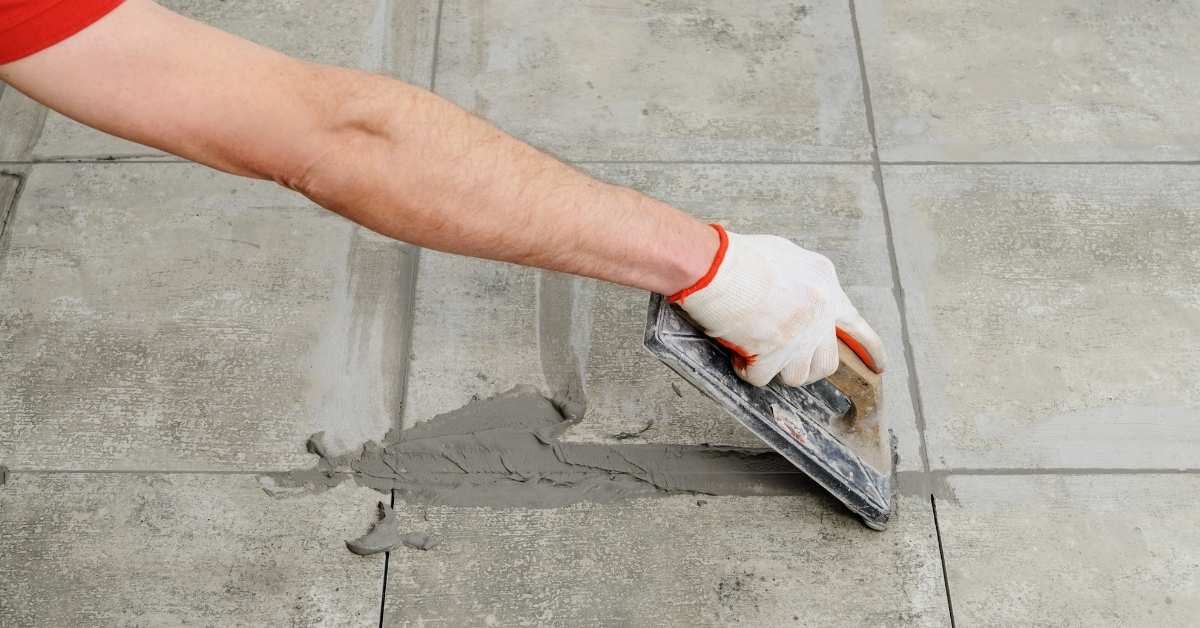
Introduction
Bowed tiles are not perfectly flat, so an edge or corner can sit higher than the neighboring tile. That height difference is lippage. Layout can make minor, acceptable bow less conspicuous, but it cannot make defective tile, poor mortar coverage, or an uneven substrate acceptable.
Before setting tile, inspect representative pieces, check the substrate separately, and make a small dry-layout mock-up under the room’s normal lighting. Sort consistent tiles together, choose a pattern that does not concentrate high centers against low ends, and stop before installation if the batch or layout cannot meet the tile manufacturer’s requirements.
Key takeaways
- Measure tile bow on a known-flat surface; compare it with the product’s stated tolerance, not a universal DIY number.
- Check substrate flatness, soundness, cleanliness, and system compatibility before mixing mortar.
- Use an approved mock-up to choose joint width, pattern, offset, orientation, and the appearance acceptable under the project lighting.
- For rectangular tile with an offset side longer than 18 inches, limit running-bond offset to 33% unless the manufacturer specifies otherwise; greater offsets need an approved mock-up.
- Select mortar and trowel from the actual tile-and-substrate system instructions, then lift test tiles and periodic tiles to verify coverage.
- Clips and wedges align adjacent tile faces while mortar cures; they do not flatten bowed tile, repair a low spot, or replace movement joints.
Table of Contents
- Introduction
- Key takeaways
- What Causes Bowed Tiles and Why Lippage Appears
- Assessing Tiles Before You Install: Sorting and Inspection
- Planning Your Layout to Hide or Minimize Lippage
- Setting Techniques and Bed Preparation to Compensate for Bowed Tiles
- Cutting and Trimming Strategies for Uneven Edges
- Grout and Finishing Choices That Minimize Visible Height Differences
- Corrections and Remediation for Installed Bowed Tiles
- Preventive Best Practices for Future Projects
- Conclusion
- FAQ
What Causes Bowed Tiles and Why Lippage Appears
Warpage is dimensional variation in the tile itself, often related to manufacturing and firing. It varies by size, thickness, type, and dimensional classification; it is not accurate to assume that all porcelain or ceramic tile has the same tendency to bow. A tile can also rock because of debris, impact damage, or pronounced underside geometry. Lippage can instead come from an uneven substrate, inconsistent mortar support, or a tile that moved after setting.
Tile tolerances and handling
Use the tile maker’s technical data and the applicable product standard to judge measured warpage. Tolerances are product-specific and may be calculated as a percentage of a tested edge or diagonal, rather than as one fixed gap for every tile size. Confirm the tile material, size, thickness, rectified or non-rectified status, shade, caliber, lot, and intended floor, wall, or wet-area use before mixing cartons.
Keep cartons protected and handle them as their packaging directs. Do not assume ordinary humidity or temperature changes permanently increase bow in fired tile. Instead, look for shipping damage, debris causing temporary rocking, poor support, or a visibly inconsistent lot.
Assessing Tiles Before You Install: Sorting and Inspection
Before you begin: documents, tools, and PPE
- Confirm the system: Obtain the tile manufacturer’s installation instructions and warpage tolerance, plus compatible mortar, grout, waterproofing, patching, primer, and leveling-system instructions where applicable.
- Inspection and layout tools: Use a straightedge long enough for the tile and substrate checks, feeler gauges or a calibrated gap-measuring tool, a pencil or labels, spacers, and materials for a mock-up.
- Setting tools: Have the specified trowel, clean water, mixing bucket, paddle, margin trowel, rubber mallet or beating block if permitted by the system, cleaning sponges, and the identified clips and wedges if used.
- PPE: Use eye protection, gloves, and knee protection. Use hearing protection for powered cutting. For cutting or grinding, use the applicable wet-cutting or engineered dust-control method and the PPE required by the equipment and work conditions.
Inspect several tiles from every carton before installation, including pieces from the beginning, middle, and end of the stack. Work on a known-flat surface, not the floor or wall about to be tiled.
Measure bow, then decide
- Clean the known-flat surface and place a tile decorative-face up. Check whether it rocks.
- Lay the straightedge across each edge, both diagonals, and through the center. Use feeler gauges or a calibrated tool to record the largest gap and the location of the high or low area.
- Repeat face-down if the tile rocks or its underside pattern affects support. Test representative pieces rather than only the worst-looking tile.
- Compare measurements with the manufacturer’s tolerance and installation instructions. Mark the tile and retain the carton identifiers: lot, shade, and caliber.
- Make a dry mock-up with the intended pattern, joint width, and lighting. Check joint consistency, plane, visible shadows, and whether tile edges can be supported without excessive mortar.
Quarantine and contact the supplier before installation if a measurement exceeds the manufacturer’s tolerance, tiles rock materially, corners or edges cannot be supported while meeting coverage requirements, the batch is visibly inconsistent, or adjacent tiles cannot be brought into an acceptable plane without excessive mortar. Retain cartons, labels, photographs, measurements, and purchase information.
Sorting tiles for the mock-up
Group tiles that show similar bow and keep markings visible. In the dry layout, avoid pairing a tile’s high center or high corner directly with a neighbor’s low end where the difference creates a toe-catching edge or bright shadow line. This is only a visual arrangement choice: it cannot override manufacturer requirements for pattern, joint width, coverage, or acceptable warpage.
Planning Your Layout to Hide or Minimize Lippage
View the mock-up from doorways, normal walking direction, and raking light from windows or fixtures. Compare a stacked/grid layout and the intended offset, then select the layout that meets the product instructions and gives the approved appearance. A stacked/grid layout may change how bowed rectangular tiles meet at joints, but it does not correct warpage or substrate error.
Pattern, joints, and sightlines
Long rectangular tiles in a running bond are especially sensitive because their high centers can meet the low ends of adjacent tiles. For tiles with an offset side longer than 18 inches, ANSI guidance cited by LATICRETE limits running-bond offset to 33% unless the manufacturer specifies otherwise. Greater offsets require an approved mock-up and owner/specifier acceptance because lippage risk increases. See the tile warpage and offset guidance.
Choose grout-joint width from the manufacturer’s instructions and actual dimensional variation. Do not close joints merely to hide lippage: a narrow joint can make misalignment more apparent and may not accommodate the tile variation. Keep cuts at planned walls, transitions, or other edges, and do not use trim to conceal an unsupported or unsafe tile edge.
Floors, walls, wet areas, and movement
On floors, keep visible lippage away from walk paths, thresholds, and strong sidelight where the approved layout permits. On walls, use an approved ledger or reference line so the layout does not accumulate error. Walls may be plumb or intentionally sloped, but the setting surface must still be flat.
For showers and other wet areas, complete, cure, inspect, and protect the compatible waterproofing system before tile. Maintain drainage slope where required. Plan drains, curbs, niches, transitions, perimeter gaps, and changes of plane before layout; keep movement joints and changes of plane open for the specified sealant or system treatment.
Setting Techniques and Bed Preparation to Compensate for Bowed Tiles
Correct the setting surface before trying to manage tile bow. For tile with an edge at least 15 inches, LATICRETE cites a maximum substrate variation of 1/8 inch in 10 feet and no more than 1/16 inch in 24 inches, measured from high points. For smaller tile, it cites 1/4 inch in 10 feet and 1/16 inch in 12 inches. Confirm the project specification and product instructions. Flat does not mean level: a floor can require slope for drainage, while a wall can be out of plumb but still must meet the flatness requirement.
Accept the substrate before mixing mortar
- Check the floor or wall with the straightedge in multiple directions, including along planned tile edges and across likely transitions. Record high and low areas.
- Confirm the substrate is structurally sound, clean, and free of bond-breaking contaminants. Verify the moisture condition required by the mortar and substrate system.
- Where patching, screeding, primers, waterproofing, or self-leveling materials are used, verify that each is compatible with the substrate and tile assembly and has reached the required cure condition.
- Correct major irregularities with an appropriate compatible patching, screeding, or self-leveling product. Do not use thin-set mortar to fill low spots or level a defective substrate.
- In wet areas, inspect and protect cured waterproofing before setting tile. Stop if the drain, curb, niche, transition, or membrane detail is incomplete or damaged.
Mix, set, and verify
- Select mortar and trowel from the mortar and tile instructions for tile size, underside pattern, substrate, orientation, wet-area exposure, and allowable installed thickness. A large-format-tile mortar is appropriate only where the system permits it.
- Mix with clean water and the stated ratio, mixing time, slake time, and re-mix procedure. Do not add water or retemper mortar unless its instructions allow it. Observe its stated pot life and open time.
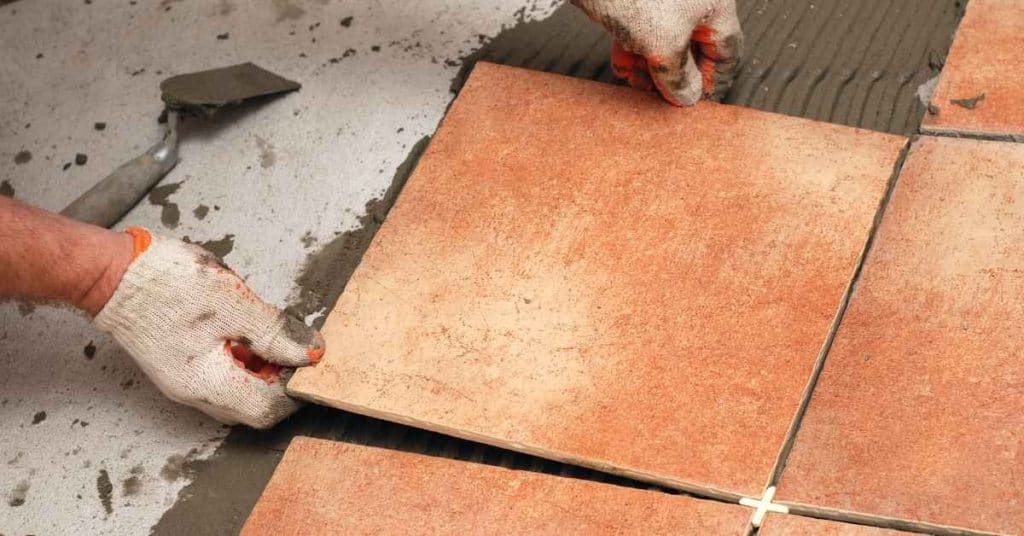
- Work in a small area that can be covered before the mortar skins over. Key mortar into the substrate with the flat side of the trowel, then comb continuous, parallel ridges with the specified trowel.
- Apply a compatible skim coat or back-troweled coat to the tile when required. Press the tile perpendicular to the ridges to collapse them; do not merely slide it randomly. Maintain the planned joint and do not build up a corner with a point load of mortar.
- Lift the freshly placed test tile before proceeding, then lift periodic tiles during installation. Confirm ridge collapse, required coverage, edge and corner support, planned mortar thickness, consistent joint width, acceptable plane, and no rocking.
- One mortar manufacturer calls for at least 80% coverage in dry areas and 95% in wet areas and exteriors, with edge support; the applicable standard, project specification, tile instructions, or mortar instructions may require more. If mortar has skinned over, remove and replace it, or recomb it only if the product instructions expressly permit that.
- Clean mortar from joints and tile faces as you work without disturbing set tiles. Do not continue if the approved appearance, required coverage, or joint width cannot be maintained.
For product-specific limits on mortar thickness, coverage, open time, and curing, follow the mortar manufacturer’s installation data.
When and how to use leveling clips and wedges
Identify the exact clip-and-wedge system and confirm that it is approved for the tile and joint width. In common systems, the clip sits in the grout joint beneath the edges of adjacent tiles and the wedge engages the clip to align their faces while mortar cures. Install, tension, and remove the components exactly as that system’s instructions direct.
Set and support the tile correctly first. Tighten only enough to align adjacent faces; excessive force can distort the joint, pull a tile from its mortar bed, or crack tile. Do not slip clips under a low tile or place wedges under a high tile unless that exact manufacturer directs it. Clips do not flatten a bowed tile, fill a void, correct a low substrate area, replace coverage, or replace movement accommodation. Remove or break clips at the time and in the direction specified by that system. Related guidance: Tile Leveling Systems Mistakes: When Clips Cause Lippage, Hollow Spots, or Wasted Time.