

Introduction
Bugholes in concrete are small air pockets that form during pouring and finishing. They usually appear where the cement slurry is displaced as the mix settles and air can escape. Keeping the mix and pour smooth helps reduce them.
They’re often caused by excessive vibration, too much form release agent, or an inconsistent mix. To cut them down, you can vibrate just enough to settle the mix, keep tools clean between steps, and check that the batch stays uniform. If you’re unsure about the release agent or the mix, follow label instructions and local guidance.
Key takeaways
- Excessive vibration during placement can trap air and create visible bugholes.
- Wear PPE and avoid overexposure when handling form release agents near fresh concrete.
- Ensure consistent mix composition and proper slump to minimize hollow spots.
- Proper consolidation with methodical, even vibration to avoid overworking concrete.
- Thorough formwork preparation and tight joints prevent bugholes at edges and corners.
- Implement inspection routines and plan remediation before finishing to cut costly fixes.
Table of Contents
- Introduction
- Key takeaways
- What Are Bugholes and Why They Matter
- Common Causes of Bugholes
- Mix Design and Material Factors
- Formwork Design, Preparation and Placement
- Placement, Consolidation and Finishing Techniques
- Detection, Inspection and Quality Control
- Prevention, Remedial Options and Tools Checklist
- Safety, Cost Implications and Planning Considerations
- Conclusion
- FAQ
What Are Bugholes and Why They Matter
Bugholes are air-entrainment voids that break the concrete surface. They differ from honeycombing, pinholes, and rough form marks in how they form and where they appear. Understanding what they are helps you judge both look and performance of the finished concrete.
Bugholes can impact aesthetics on architectural surfaces and may affect durability through increased pathways for water ingress. They also influence how surfaces release from forms and how finishing tools interact with the surface. Typical causes include mix properties, aggregate behavior, pour temperature, and the timing of vibration, finishing, and curing steps.
Visual characteristics and types (bugholes vs. pinholes)
Bugholes and pinholes are both surface defects in concrete, but they differ in size, depth, and distribution.
Bugholes are larger, typically ranging from 1/4 to 1 inch in diameter, and can be up to 1/2 inch deep. They often appear randomly distributed across the surface. Pinholes, on the other hand, are smaller, usually less than 1/8 inch, and shallower.
Rough formwork marks and honeycombing are not air-entrainment voids like bugholes and pinholes. Rough marks result from improperly prepared forms, while honeycombing is caused by insufficient consolidation or vibration.
Aesthetic and performance impacts
Bugholes can significantly impact the appearance of architectural concrete. They mar the surface, making it look rough and uneven, which may not be desirable for aesthetic purposes.
Functionally, bugholes can pose durability concerns. Their open nature allows water ingress, which can lead to freeze-thaw damage in colder climates. Additionally, they provide pathways for corrosive agents to reach reinforcing steel, potentially leading to rebar corrosion and concrete deterioration over time.
Surface finishing quality is also affected by bugholes. They make it difficult to achieve a smooth, even finish, which can impact the application of sealers, stains, or other surface treatments.
Common Causes of Bugholes
Entrapped air, segregation, release-agent issues, inconsistent mixes, and poor formwork are the main mechanisms. Each one has a quick cause-and-effect path you can spot on site. Recognizing these helps you target fixes fast.
On site you may see voids near joints, pockets of segregation, or too many air pockets in the surface layer. Mitigation steps include adjusting the mix, refining the mixing procedure, changing vibration technique, sealing joints, and using release agents properly. Watch for tight joints, compatible release agents, and avoid overworking the surface, as neglect here invites voids.
Entrapped air and pour rate/handling
Overly fast pours can trap air pockets, leading to bugholes. Air needs time to escape during placement.
Control your pour rate: Pour at a steady pace, allowing air to rise naturally. Don’t rush it.
Inadequate topping or turbulent placement can also trap air. Keep the concrete surface level and smooth as you place it.
Use proper handling techniques: Avoid overworking the surface and keep vibrations minimal during final stages of placement.
Consolidation issues and vibration (excessive or insufficient)
Insufficient consolidation lets air pockets remain, leading to bugholes. Vibrate concrete properly during placement.
Vibrate enough: Ensure your vibrator reaches the bottom of the formwork. Vibrate until no more air bubbles rise.
Excessive vibration can cause segregation, pushing aggregates aside and leaving voids. Be careful not to over-vibrate.
Use proper vibration technique: Keep the vibrator moving, don’t leave it stationary in one spot.
Form release agents and form problems
The wrong type or too much release agent can create pinholes. Use compatible, appropriate amounts.
Use the right release agent: Ensure it’s compatible with your concrete mix. Too much can leave voids as it tries to escape.
Form leaks and rough surfaces can also cause bugholes. Inspect your forms before pouring.
Seal form joints tightly: Prevent any leaks that could trap air or allow release agent to seep through.
Mix Design and Material Factors
Aggregate grading and stability influence how voids form and distribute in the paste. Look for well-graded, consistent aggregates and review sieve analyses. These checks help prevent uneven air voids.
Bleeding behavior, water content, and workability drive how paste flows and settles. Check slump expectations and how moisture conditions of aggregates are handled to reduce voids. Admixtures like air-entraining agents and plasticizers need to be compatible with the chosen aggregates and observed in the mix design sheets or field notes.
Aggregate stability and grading
Well-graded, stable aggregates are crucial for minimizing bugholes. They support the concrete paste, preventing it from segregating or leaving voids as the mix settles.
Check sieve analysis results to ensure your aggregates have a consistent, well-graded particle size distribution. This helps maintain a strong network that holds the paste in place.
Stable aggregates resist movement under vibration and handling. So, opt for dense, angular particles with good friction angles. They lock together better, reducing the risk of bugholes.
Water content, bleed and cement type
Moisture content affects paste mobility. Too much water leads to excessive bleeding, leaving voids at the surface. Target a water-cement ratio around 0.45-0.6 for most mixes.
Bleeding rate matters too. High bleed rates can cause bugholes. Check your mix’s bleed rate and adjust water content or use moisture-conditioned aggregates to reduce it.
Cement type influences surface film formation. Finer cements create thicker films, helping hide bugholes. But they also increase the risk of bleeding. Balance cement fineness with proper water management.
Admixtures and air-entraining agents
Admixtures can reduce bugholes, but they must be compatible with your aggregates. Plasticizers improve workability without extra water. But too much can increase bleeding.
Air-entraining agents introduce tiny bubbles into the mix. These reduce surface tension, helping to hide minor imperfections and prevent bugholes. Just ensure they don’t cause excessive air content, which weakens concrete.
Viscosity modifiers thicken the paste, reducing segregation and bleeding. But they can also make mixes harder to place. Check your mix design sheet for compatible admixtures and adjust dosages as needed on-site.
Formwork Design, Preparation and Placement
Clean, stiff formwork with tight joints reduces air entrapment. Inspect for damages, gasket integrity, and proper expansion joint planning. Good formwork setup is the first line of defense against bugholes.
Plan formwork for the placement sequence and ensure joints align to minimize voids. Proper release agent choice and timing help avoid trapped air on the surface. Use the right consolidation tools and avoid form distortion during the pour.
Proper form cleaning, sealing and joint details
Start with clean forms. Remove any buildup from previous pours.
Seal seams to prevent leakage. Use proper gaskets and ensure they’re in good condition.
Design joints properly. Use expansion joints every 20-30 feet for walls, less for slabs. Make them deep enough – about 1/4 inch below the surface.
Release agent selection and application best practices
Use form oil for most jobs. It’s cheap, easy to apply, and won’t harm finishes.
Apply evenly with a brush or sprayer. Don’t overdo it – too much can cause bugholes.
Test your release agent on a small area first. Make sure it doesn’t react with your architectural finish.
Pouring sequence and lift planning (including pour rate)
Plan your lifts carefully. For walls, start at the bottom and work up. For slabs, do one section at a time, staggering if necessary.
Control your pour rate. Too fast can cause cascading and air entrapment. Aim for about 2-3 feet per hour.
Top off each lift before moving on to the next. This helps prevent bugholes from forming at the joint.
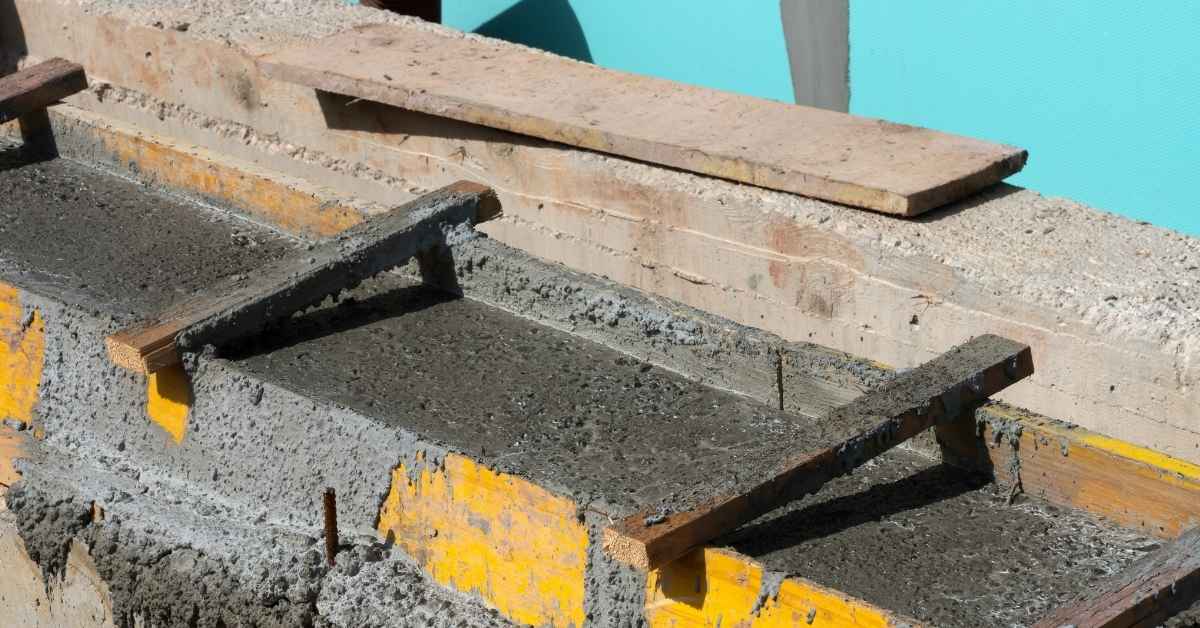
Placement, Consolidation and Finishing Techniques
Placement sequencing matters. Start consolidation after initial bleed and before surface set, using internal vibration and controlled external methods to move air without causing segregation. Tailor technique to the section being poured.
Watch for over-vibration and surface blemishes. Tie finishing actions to concrete maturity and avoid sealing air pockets too early. Temperature, slump, and admixtures all influence how air releases and how the surface looks after finishing.
Vibration techniques and avoidance of segregation
Proper vibration is key to consolidating concrete without causing segregation. Here are common mistakes to avoid:
- Over-vibrating: Excessive vibration causes paste migration, leading to segregation. Keep vibrator insertion time short.
- Vibrating too early: Starting too soon traps air and causes bugholes. Wait until initial bleed water has disappeared.
- Inconsistent spacing: Irregular vibrator placement leaves unconsolidated areas, leading to voids. Maintain consistent spacing between insertions.
- Wrong insertion depth: Vibrating too close to the surface causes micro-blemishes. Insert vibrators deep enough to reach aggregate but not touch the form.
Remember, less is more with vibration. Too much can cause as many problems as too little.
External consolidation and touch-up methods
After internal vibration, use external methods to consolidate the surface layer and reduce voids. Surface vibration helps expel remaining air without causing segregation.
Tamping: Use a tamping bar or manual tamper to consolidate areas where vibrators can’t reach. Be gentle to avoid damaging the concrete’s surface.
For a smooth finish, use a bullfloat after initial set to remove any remaining air pockets and level the surface. Follow up with a steel float for a final smoothing before troweling.
Exposing hidden bugholes and visual checkpoints
After form removal, use these methods to reveal any concealed bugholes and perform a thorough visual inspection:
- Light brooming: Gently broom the surface to dislodge any loose material hiding voids.
- Gentle blasting: Use compressed air or a soft-bristled brush to remove any remaining debris.
- Check for visible bugholes: Inspect the entire surface for any signs of voids. Look for small, dark spots that may indicate hidden bugholes.
- Inspect joints and edges: Bugholes often form in these areas due to poor consolidation or form problems. Check them thoroughly.
- Check for cold joints: Ensure no cold joints have formed due to improper finishing timing, which can lead to bughole formation.
Quick rule: If you find any bugholes, rework the area immediately. It’s cheaper and easier to fix now than later.
Detection, Inspection and Quality Control
Create clear detection criteria for visible bugholes, including size and density checks, and know when to escalate to QA. This keeps issues from slipping into the hard finish. Use consistent criteria to judge surface quality.
During form removal, curing, and early stripping, inspect surfaces with good lighting and a tactile feel. Capture photos and notes to document any nonconformances and guide corrective actions for future pours.
Test pours and mock-ups for architectural concrete
Before pouring large sections, validate your formwork, mix design, and process choices with test pours and mock-ups. This helps catch bughole issues early.
- Prepare representative forms: Use the same form materials and construction as the real pour.
- Mix a trial batch: Follow your planned mix design, ensuring water content, cement type, and admixtures are correct.
- Pour and finish: Pour the test slab and finish it like you would the real pour. Use the same tools and techniques.
- Inspect for bugholes: Check for visible bugholes, measuring diameter, depth, and density per area.
- Evaluate surface quality: Assess the finished surface for planarity, uniformity, and texture expectations.
- Grout-fill test: Fill a few holes with grout to see how they blend into the surface.
- Document results: Photograph and measure defects. Note any issues with formwork, mix, or process.
- Compare to acceptance criteria: Check if bugholes meet acceptable limits for your project’s standards.
- Adjust as needed: Based on test results, tweak mix proportions, aggregate grading, air entrainment, or curing methods before the real pour.
Quick rule: If test pours and mock-ups show bugholes exceeding acceptance criteria, don’t proceed with the real pour until issues are resolved.
Visual checkpoints and inspection checklist
Inspect your concrete at key moments to catch bugholes early. Here’s a step-by-step checklist:
- Before form removal: Check for any signs of bugholes forming on the surface.
- After form removal: Inspect the entire surface for visible bugholes, measuring size and density.
- During finishing: Feel the surface with your hands to detect any hidden voids or weak spots.
- After finishing: Use different lighting angles to reveal any missed bugholes.
- Before acceptance: Photograph and document all visible defects, noting their size, depth, and location.
Quick rule: Regular visual inspections are crucial. Don’t rely solely on final surface finishing to hide defects.
Material specs, standards and acceptance criteria
Before starting work, understand the material specifications and acceptance criteria for your project. This ensures everyone’s on the same page regarding bughole limits.
- Mix design: Review the planned mix proportions, water content, cement type, and admixtures with the designer or owner.
- Aggregate grading: Ensure the aggregate size distribution meets project standards to minimize bugholes.
- Air entrainment: Check that the required air content is specified in the mix design.
- Bughole acceptance limits: Understand the allowed bughole diameter, depth, and density per area for your project’s surface finish.
- Grout-fill requirements: Know if grout-filled bugholes are acceptable or if all must be surface-finished.
- Surface planarity: Check the allowed tolerance for surface flatness and levelness.
- Texture uniformity: Ensure expectations for troweled vs. brushed textures align with your finishing techniques.
Quick rule: Clear communication about material specs and acceptance criteria prevents disputes later on.
Prevention, Remedial Options and Tools Checklist
Establish a prioritized prevention plan that targets mix design, slump, air content, and vibration. Implement practical on-site controls and a standard curing protocol to keep surfaces stable. This reduces bughole formation over time.
When bugholes are present, use appropriate patching methods and surface preparation steps. Know when to apply hydraulic cement, epoxy patches, or cementitious fillers, and verify bonding readiness before repair.
Preventive checklist and common beginner mistakes
Use this checklist before, during, and after concrete placement to minimize bugholes.
- Check mix design: Ensure water-cement ratio is correct. Too much water can cause bugholes.
- Monitor slump: Keep it within target range (typically 3-5 inches). Excessive slump can lead to segregation and bugholes.
- Use air-entraining admixtures: They create tiny bubbles that help prevent bugholes. Skip this, risk bugholes.
- Proper consolidation: Vibrate well but not too much. Over-vibration can cause segregation and bugholes.
- Form release agent: Use sparingly. Excessive use can trap air and cause bugholes.
- Seal formwork joints: Prevents water from leaking out, causing bugholes.
- Control pour rate: Too fast can cause segregation and bugholes. Too slow may lead to cold joints.
- Cure properly: Keep moisture in, prevent rapid drying. Incomplete curing causes bugholes.
Quick rule: Regular checks and control of these factors will significantly reduce bughole risks.
Remediation options: plugging, surface repair and coatings
Choose the right method based on bughole size and location.
- Small holes (up to 1/4 inch): Use hydraulic cement or epoxy patches. Quick, easy fix but may not match texture.
- Medium holes (1/4 – 3/4 inch): Apply cementitious patching compounds. More work but better match.
- Large holes (> 3/4 inch): Use surface grinding to feather edges, then apply patch material. Time-consuming but effective.
- Coatings: For minor surface defects or as final touch-up after repairs. Prevents water ingress and enhances appearance.
Quick rule: Match repair method to hole size for best results.
Tools and materials checklist
Gather these essentials before starting prevention or repair work.
- Vibrators: To consolidate concrete, prevent bugholes. Electric or internal vibrators are common.
- Air-void monitoring tools: Check air content in fresh concrete to ensure it’s within acceptable range (typically 4-8%).
- Release agent applicators: Sprayers or rollers for even application of form release agents.
- Patching compounds: Epoxy, hydraulic cement, or cementitious patches. Choose based on hole size and location.
- Protective gear (PPE): Safety glasses, gloves, ear protection, and dust masks for handling chemicals and power tools.
- Cleaning equipment: Wire brushes, scrapers, or pressure washers to clean bugholes before repair.
- Slump test kit: To check concrete consistency on-site. Target slump range is 3-5 inches.
Quick rule: Having the right tools and materials ensures effective prevention and repair of bugholes.
Safety, Cost Implications and Planning Considerations
Follow safety protocols and PPE guidelines for concrete work and equipment operation. Slips, falls, and concrete burns are real risks on busy jobsites. Plan each pour with safety and flow of work in mind to prevent accidents.
Recognize how bugholes affect costs through remediation and delays. A good plan with test pours, pre-pour checks, and clear contractor communication helps keep budgets and schedules on track. Document decisions and changes to protect timelines and quality.
Safety precautions for workers handling concrete and equipment
Keeping your crew safe is top priority. Here’s what you need to know.
- Personal Protective Equipment (PPE): Gloves, safety glasses, and hard hats are must-haves. Respirators protect against silica dust during cutting and grinding remediation work.
- Vibrator operation: Ensure vibrators are in good working order before use. Never leave them running unattended to prevent overheating.
- Skin protection: Concrete can cause burns. Use barrier creams and wash hands regularly.
- Ventilation: Keep work areas well-ventilated, especially when using power tools for remediation.
- Emergency procedures: Establish clear protocols for injuries or concrete burns. Have first aid kits readily available.
Cost implications and budget planning
Excessive bugholes can hit your wallet hard. Here’s why:
Remediation costs: Fixing bugholes after the fact is expensive. It involves cutting, patching, and re-finishing.
Missed deadlines or penalties: Delays due to rework can incur additional charges or penalties if you’re working with a contractor.
Prevention is cheaper: Allocate funds for mock-ups, test pours, and quality checks. It’s worth it in the long run.
Scheduling, test pours and contractor communication
Proper planning reduces surprises and corrective work.
Schedule mock-ups early: Plan for trial pours before the main event. This helps catch any issues with your mix or placement techniques.
Communicate acceptance criteria: Clearly outline what you expect in terms of surface quality. Discuss this with your contractor upfront to avoid misunderstandings.
Document procedures: Keep daily logs and maintain a single point of contact for easy reference and accountability.
Conclusion
Bugholes don’t just spoil looks; they can weaken the surface and invite water trouble. Stay safe, follow solid practice, and you’ll get a durable, good-looking concrete finish that lasts.
Run a quick, practical checklist in plain language: confirm your mix and materials are appropriate for the job, inspect formwork and edge details, prepare the surface and placement plan, monitor placement and consolidation without overworking the concrete, finish smoothly and avoid over-tamping, check for air pockets during finishing, and perform a careful early inspection to catch issues before they set, then document what you did and apply the prevention steps for the next pour. Do a small test area first if you’re unsure, and proceed step by step in the order you’ve just laid out.
Common missteps to avoid are rushing the pour, skimping on proper consolidation, and skipping the inspection or early detection steps. Keep your safety gear on, work with steady control, and don’t expose fresh concrete to conditions that will grab its strength or cure improperly. If the project grows or you spot persistent bugholes after initial grading and finishing, don’t push through alone—call a professional for a thorough assessment and remediation. Stay disciplined, plan the steps, and you’ll finish strong with a surface that looks right and holds up well.
FAQ
Why do bugholes show up even when I think I mixed enough concrete?
Bugholes form when air gets trapped and stays in the mix or near the surface. Poor compaction or too-rapid placement can let air pockets stay in, especially if the mix is too dry or too wet. Check with the bag or supplier for recommended slump and follow it; then place and finish promptly.
How does excessive vibration during mixing or placement cause bugholes?
Over-vibrating can pull mixes apart and push air to the surface, leaving voids. It can also pump out cement paste and leave gaps under the surface. Keep vibration to the minimum needed to settle the mix, and stop as soon as you see the surface smooth out.
Can too much form release agent make bugholes worse?
Yes. Thick or oily release coatings can prevent good material adhesion to the form and trap air at the surface. Use only the amount recommended by the manufacturer, and wipe or rinse forms between pours if needed.
What about inconsistent mix or form design problems causing bugholes?
If the concrete mix varies batch to batch, or the form isn’t clean or properly prepared, air pockets are more likely. Make sure the forms are tight, clean, and straight, and that you’re using a consistent batch or instructed mix for the project.