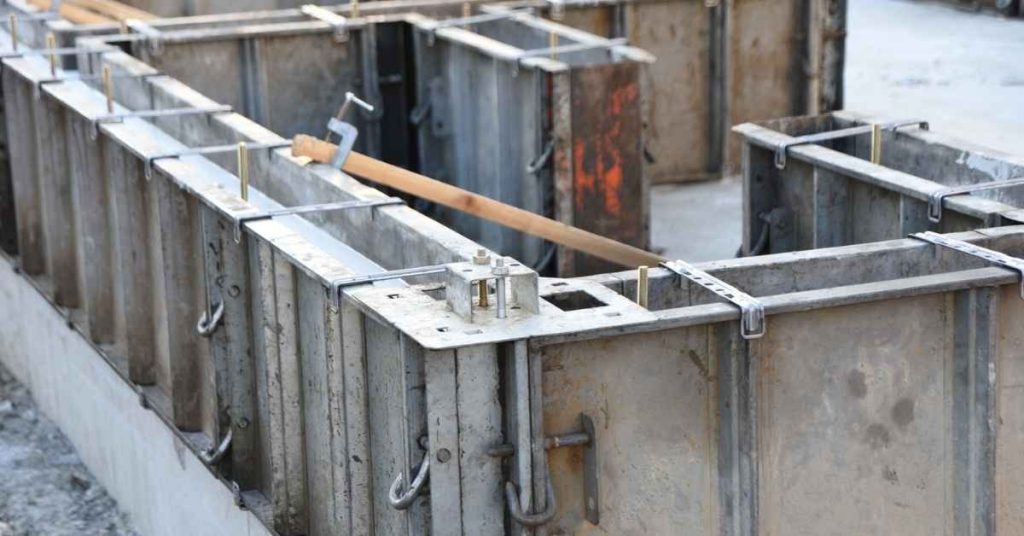
Metal concrete formwork panels arranged in a rectangular shape

Concrete Formwork for Curves: Kerfing Plywood, Flexible Liners, and How to Keep Edges True

Introduction Concrete formwork for curves means shaping temporary molds that guide wet concrete into a smooth, accurate curved edge, using techniques like kerfing plywood or flexible liners to follow the radius you need. In plain terms: kerfing lets stiff sheets bend by cutting relief slots, liners conform with support framing, and both need bracing to […]

Concrete Formwork for Curves: Kerfing Plywood, Flexible Liners, and How to Keep Edges True Read More »

Concrete wall surface with visible spalling damage

Concrete Spalling at Reentrant Corners: How to Cut Relief Joints That Stop Repeat Damage

Introduction Concrete spalling at reentrant corners is surface and edge breakdown where the inside corner of a slab or wall flakes, chips, or crumbles, and relief joints are cuts you make to interrupt stress paths so the same spot doesn’t fail again. In plain terms: you cut a controlled weak line near the corner to

Concrete Spalling at Reentrant Corners: How to Cut Relief Joints That Stop Repeat Damage Read More »

Stamped concrete patio with curved soft edges and garden bed

Soft-Edge vs Sharp-Edge Arrises on Concrete: How to Tool for Durability and Clean Lines

Introduction Soft-edge arrises are rounded or slightly chamfered corners on concrete that reduce chipping, while sharp-edge arrises are crisp 90-degree edges that give a clean look but can be more vulnerable to damage; choose the edge type based on the use and expected wear. For DIY work this means prepping your forms, selecting the right

Soft-Edge vs Sharp-Edge Arrises on Concrete: How to Tool for Durability and Clean Lines Read More »

Close-up of weathered wooden fence post with barbed wire and grass

Installing a Handrail Post in Concrete: Sleeves, Water Seals, and Freeze-Thaw Details

Introduction Installing a handrail post in concrete means setting a strong anchor that resists forces and stays watertight through freeze–thaw cycles; it’s done by using a post sleeve or flange, sealing the joint, and backfilling or grouting properly. Think like a foreman: plan the hole or sleeve position, choose a sealing method, and follow product

Installing a Handrail Post in Concrete: Sleeves, Water Seals, and Freeze-Thaw Details Read More »

Closeup of fresh concrete surface with some texture details

Concrete Surface Laitance: Timeline for Spotting, Removing, and Preventing It

Introduction Tackling concrete surface laitance requires a strategic approach that involves careful timing. From spotting the issue to removing it and preventing its recurrence, understanding the timeline is crucial for successful DIY management. This guide walks you through each stage of dealing with laitance, ensuring you allocate sufficient time for each task and maintain a

Concrete Surface Laitance: Timeline for Spotting, Removing, and Preventing It Read More »

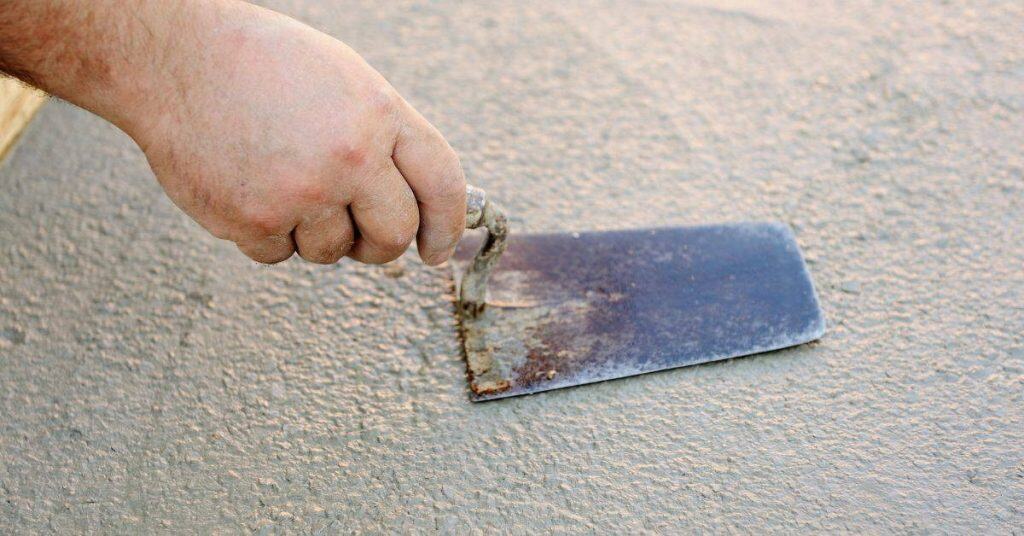
Hand holding a rusty trowel on a stucco surface

Stucco Layers and Purpose: How Each Coat Works and What Failures Look Like When One Is Wrong

Introduction Stucco layers are a sequence of coats—usually a scratch or bonding layer, a brown or leveling layer, and a finish coat—each serving to bond, build thickness, and protect or texture the wall. In plain jobsite terms: the first coat grabs the mesh and substrate, the middle builds out thickness and straightens the plane, and

Stucco Layers and Purpose: How Each Coat Works and What Failures Look Like When One Is Wrong Read More »

Rust-colored paint roller and brushes in paint tray

Why Primer Fails: Common Adhesion and Stain Problems, Simple Tests, and Reliable Fixes

Introduction Primer fails when it cannot stick to the surface or is overwhelmed by stains; in plain terms, failed adhesion and bleed-through mean the primer lost the mechanical or chemical grip it needs or contaminants pushed through. I’ll walk you through what usually causes those problems on a jobsite and how to spot them before

Why Primer Fails: Common Adhesion and Stain Problems, Simple Tests, and Reliable Fixes Read More »

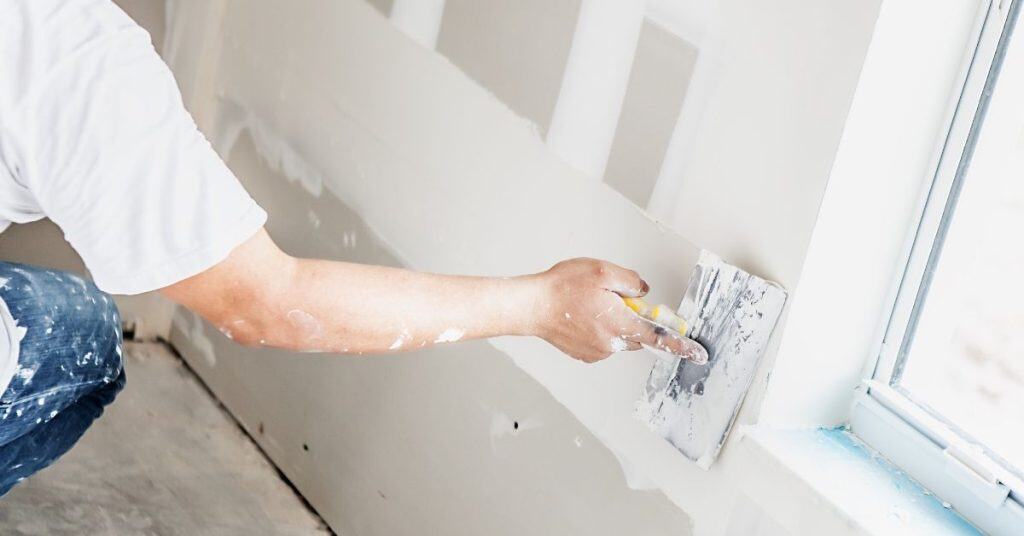
Person applying drywall joint compound near window

Choosing Plaster vs Joint Compound for Repairs: Durability, Sanding, and Paint Finish Differences

Introduction Plaster is a harder-setting wall finish made from cement- or gypsum-based mixes, while joint compound is a softer, gypsum-based product meant for taping and small repairs. For DIYers that means plaster will hold up better in high-traffic areas and where impact resistance matters, and joint compound is easier to apply and feather for small

Choosing Plaster vs Joint Compound for Repairs: Durability, Sanding, and Paint Finish Differences Read More »

Exterior stucco wall with scaffolding and windows

Stucco-to-Window Joint Leaks: Backer Rod Depth, Sealant Profiles, and Flashing Red Flags

Introduction Stucco-to-window joint leaks are failures where the seal between the stucco and the window lets water in, usually from improper backer rod depth, wrong sealant profile, or missing/incorrect flashing. Fixing them is about getting the joint depth right for the backer rod, choosing a compatible sealant, and making sure flashing directs water away from

Stucco-to-Window Joint Leaks: Backer Rod Depth, Sealant Profiles, and Flashing Red Flags Read More »

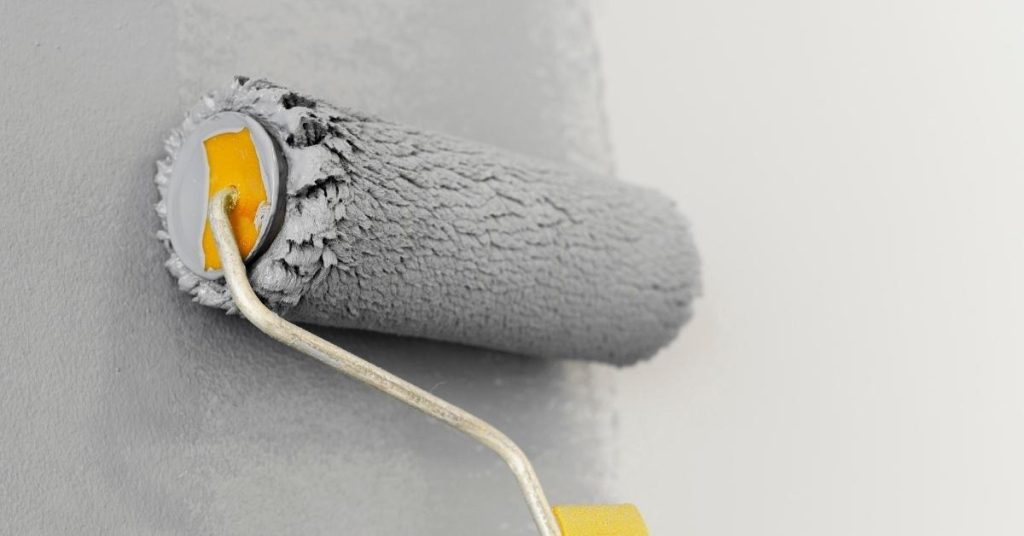
Paint roller applying gray paint on white wall

Rolling Paint Like a Pro: Managing Load, Speed, and Back-Rolling to Eliminate Stipple and Lap Marks

Introduction Rolling paint like a pro means controlling how much paint is on the roller, how fast you move it, and when you back-roll so the finish lays down smooth without stipple or lap marks. Think in practical terms: load the roller evenly, keep a steady, deliberate pace, and follow with a light back-roll while

Rolling Paint Like a Pro: Managing Load, Speed, and Back-Rolling to Eliminate Stipple and Lap Marks Read More »