
Introduction
Concrete surface laitance is a weak layer of cement paste and fine particles that separates at the surface during bleeding, placement, or finishing. It matters most when you plan to paint, coat, repair, or overlay the slab: a new material can bond to the weak layer instead of sound concrete.
Do not use a fixed day-by-day removal schedule. Inspect once the concrete is hard enough to examine or prepare without damaging it, and base the work on the surface condition and the requirements of the coating, overlay, or repair product you will use.
Use condition, not age, to choose the next step
- Loose powder or a thin friable layer: Clean a test area and prepare mechanically if the planned product requires a profile.
- White crystalline deposit: It may be efflorescence rather than laitance. Find and correct the moisture source; cleaning alone may not stop its return.
- Glossy film or water-repellent surface: Suspect curing compound, sealer, oil, or an old coating. These contaminants need the removal method approved for the new product.
- Deep powdering, hollow areas, cracks, spalls, or exposed reinforcement: Stop. This may be a concrete-repair issue rather than a thin surface-preparation problem.
Key takeaways
Remove only the weak or contaminated surface needed to reach a clean, sound substrate and the profile specified for the next material.
- Laitance is weak cementitious material and fines at the concrete surface, not every pale or dusty deposit.
- Rubbing and light scratching can identify loose material, but water beading alone does not prove a surface is coating-ready.
- For coatings and overlays, mechanical preparation is commonly required; pressure washing and acid are not interchangeable with profiling.
- Control silica dust with wet methods or dust extraction before relying on respiratory protection.
- Use the exact coating or overlay data sheet for cure, moisture, pH, cleanliness, profile, and bond requirements.
Table of Contents
- Introduction
- Key takeaways
- What Is Concrete Surface Laitance?
- How to Spot and Diagnose Laitance
- Causes and Contributing Factors
- Risks and Why You Should Care
- How to Remove Laitance: Methods and Step-by-Step
- Tools and Materials Checklist
- Preventing Laitance Next Time: Best Practices for Mix, Placement, and Finishing
- Aftercare, Inspection, and Preparing for Coatings or Overlays
- Conclusion
- FAQ
What Is Concrete Surface Laitance?
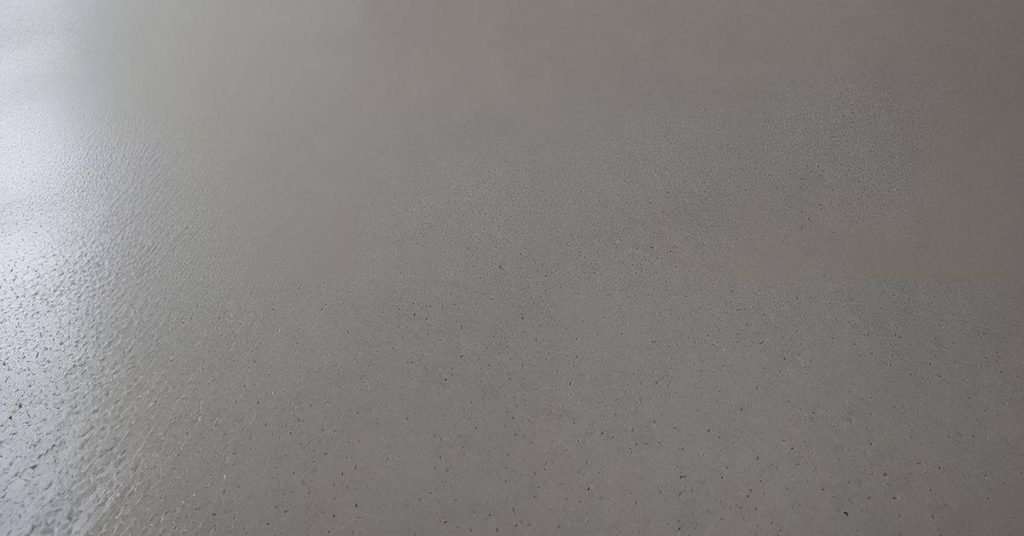
Laitance is a weak surface layer made of cementitious material and fine aggregate particles that have separated toward the top of fresh concrete. It is commonly associated with bleeding and separated fines. The ACI concrete terminology does not define laitance by a fixed thickness, color, or slab age. Related guidance: Crafting a Safe and Stylish Surface: Achieving a Swept Finish on Fresh Concrete.
What it is—and what it is not
| Condition | Practical clue | What to do |
|---|---|---|
| Laitance | Weak, dusty, smooth, or friable cement-and-fines layer that abrades relatively easily. | Remove loose material; mechanically prepare if required for bonding. |
| Surface dusting | The concrete itself powders, often from poor finishing, excess water, or inadequate curing. | Assess how widespread and deep it is; it may need more than surface cleaning. |
| Efflorescence | White crystalline salt deposit associated with moisture movement. | Clean only after investigating the moisture path. |
| Curing-compound residue | Intentional film or residue, sometimes clear or slightly glossy. | Remove by the new product’s approved method. |
A slab can have more than one of these conditions. Do not assume that a dusty surface is automatically laitance or that removal of a surface film repairs weak concrete below it.
How to Spot and Diagnose Laitance
Look for a lighter, chalky, dusty, smooth, or locally flaky surface. With a gloved finger, clean dry cloth, or light scratch in an inconspicuous area, laitance may smear, powder, or release more easily than adjacent concrete. These observations identify a suspect surface; they do not establish coating readiness or concrete strength.
Step-by-Step Process
- Identify the next material. Before selecting a removal method, obtain the coating, overlay, tile adhesive, or repair-mortar data sheet.
- Clean a small test area. Remove loose dirt without dry sweeping. Compare cleaned and uncleaned areas in good light.
- Rub and lightly scratch. Note whether only surface powder releases or whether the concrete remains friable below the surface.
- Look for films and salts. A glossy film suggests curing compound or sealer; crystalline white material suggests efflorescence.
- Check for distress. Mark hollow-sounding, cracked, scaling, or deeply soft areas and stop if the weakness is broad or deep.
What a small test area should answer
- Does loose material stop releasing after limited preparation?
- Can the required surface profile be reached without gouging sound concrete?
- Does the surface remain uniformly sound rather than powdering again after cleaning?
- Will the approved method control dust, slurry, and runoff in this location?
When simple checks are not enough
Ask for professional evaluation when powdering is widespread, the slab is hollow or delaminated, coarse aggregate is coming loose, there are significant cracks or spalls, moisture or efflorescence returns, or a required bond test fails within the concrete. Laitance removal is surface preparation, not a structural repair.
Causes and Contributing Factors
Laitance is commonly linked to bleeding and segregation: excess water, unauthorized water added at the jobsite, an unsuitable mixture, poor consolidation, or overworking the surface can leave a weak concentration of paste and fines at the top. Finishing while bleed water is present can worsen the surface.
Placement, finishing, and curing factors
- Adding water to make concrete easier to place: Use the specified mixture and ask the supplier about approved workability adjustments instead.
- Finishing bleed water into the slab: Wait for the concrete’s actual condition and follow the supplier’s finishing guidance; set time varies with the mix and weather.
- Overworking the surface: Use only the passes needed for the intended finish.
- Rapid drying, rain, heat, low humidity, or wind: These conditions can disrupt finishing and curing. Use the project’s weather protection and curing plan.
- Skipping curing: Begin the specified curing method after finishing, and remember that a curing compound may need removal before many coatings.
There is no universal water-to-cementitious-material ratio, cement content, sieve limit, cement type, or air-entrainment setting that prevents laitance on every project. Those choices belong to the project specification and concrete supplier because strength, workability, exposure, bleeding, and finishing conditions interact.
Risks and Why You Should Care
The main risk is bond failure. A coating, overlay, repair mortar, or adhesive can detach when it bonds to a weak layer rather than sound concrete. Laitance on hardened concrete is specifically identified as a cause of delamination for new concrete in FHWA guidance on examining hardened concrete.
Do not treat laitance as proof of a structural hazard by itself. It can coexist with more serious problems, however. Deep friability, hollow areas, cracking, spalling, aggregate loss, or exposed steel requires a repair-focused assessment before any coating or overlay work.

How to Remove Laitance: Methods and Step-by-Step
Choose the least aggressive approved method that removes weak material and creates the profile the next product requires. Cleaning may remove loose dust, but it does not reliably create a bond profile. For many coatings and overlays, grinding, shot blasting, or another mechanical method is required.
Step-by-Step Cleaning Process
- Read the product requirements. Confirm required surface profile, moisture test, pH limits, cure or strength requirements, and approved preparation method.
- Protect the work area. Remove movable items; isolate occupied indoor spaces; protect drains, walls, and adjacent finishes. Plan how slurry, dust, and rinse water will be collected.
- Remove contaminants first. Use the approved cleaner for oil, grease, curing compounds, sealers, paint, or salts. Let the test area dry if the product requires a dry substrate.
- Prepare a test patch. Start with a small, representative area and inspect the result before renting or using larger equipment.
- Mechanically remove weak material. Keep the tool moving and level. Use wet suppression or a shrouded tool with suitable dust extraction as applicable.
- Clean and inspect. Use wet cleanup or HEPA vacuuming where feasible; do not leave grinding dust, slurry, or loose debris.
- Verify before application. Confirm soundness, cleanliness, required profile, and every product-specific moisture, pH, temperature, and bond criterion.
Method selection
Stiff brushing and approved cleaning: Suitable for loose, superficial debris or a diagnostic test area. It is not enough when the concrete remains friable or when a coating requires a defined profile.
Pressure washing: Can clean some loose material and contaminants, but it can also erode weak concrete and leaves water that may delay coating work. Use a test patch and do not assume washing produces the required profile.
Grinding or shot blasting: These are common mechanical methods for removing laitance and creating profile. Select the tool and abrasives for the required profile, not simply to expose aggregate. Stop once the substrate is uniformly sound and the specified profile is achieved.
Chemical removal
Do not use muriatic acid as a default laitance remedy. Acid etching may not remove films, oil, coatings, or deeply weak concrete, and it may be prohibited by the coating system. It also creates handling, corrosion, drainage, and disposal concerns. Use an acidic cleaner or etching method only when the exact product manufacturer permits it and supplies the procedure; do not substitute household neutralization for that procedure.
Tools and Materials Checklist
Personal protective equipment and dust control
- Safety glasses or goggles, gloves appropriate to the cleaner or task, hearing protection for powered equipment, durable footwear, and skin-covering work clothes.
- Wet suppression or a shrouded grinder with dust extraction suitable for the tool and task.
- HEPA vacuum or wet-cleanup equipment for final collection where feasible; avoid dry sweeping or compressed air that puts dust back into the air.
- A properly selected and fitted respirator when needed after engineering and work-practice controls. A generic dust mask is not adequate protection for concrete grinding dust.
Grinding concrete can release respirable crystalline silica. OSHA requires exposure control through engineering and work-practice measures and treats respirators as part of a broader protection program, not a substitute for dust control. See OSHA’s respirable crystalline silica standard for the applicable requirements.
Project tools and consumables
- Stiff brush, scraper, and approved cleaner for the contamination present.
- Mechanical preparation tool approved for the next material: commonly a grinder, shot blaster, or scarifier.
- Tool shroud, dust extractor, or wet-control equipment.
- Containment materials and collection containers for dust, slurry, and rinse water.
- Manufacturer-specified moisture, pH, profile-comparison, or adhesion-test materials when required.
Preventing Laitance Next Time: Best Practices for Mix, Placement, and Finishing
Prevention begins before placement, not after a particular number of days. Use the specified mixture, avoid unauthorized water addition, place and consolidate properly, and coordinate the mix, crew, finishing plan, and weather protection with the supplier.
Practical prevention habits
- Tell the supplier the intended exposure, finish, placement method, and schedule so the mixture is selected for the project rather than adjusted at the truck.
- Do not add water to the surface during finishing or work bleed water back into the concrete.
- Finish according to the concrete’s actual condition and the intended finish; do not use a fixed set-time window or surface sheen as a universal signal.
- Protect fresh concrete from rain and from rapid evaporation caused by heat, low humidity, or wind.
- Start the specified curing method at the proper stage, and choose a curing method compatible with any future coating or overlay.
For a future coating or overlay, decide on the system before the pour. Some systems require removal of curing compounds and mechanical profiling even when the new concrete appears sound.
Aftercare, Inspection, and Preparing for Coatings or Overlays
After preparation, protect the concrete from foot traffic, dust, oil, rain, and recontamination until application. Do not use slab age or a water-drop observation as the sole readiness test. A coating can require a particular profile, moisture-test method and limit, pH range, temperature range, tensile bond result, cure condition, and cleaning method.
Coating or overlay readiness checklist
- Soundness: No continuing loose powder, friable areas, hollow areas, or delamination.
- Cleanliness: No visible dust, oil, grease, curing compound, sealer, salt deposit, or incompatible old coating.
- Profile: Uniformly match the ICRI concrete surface profile (CSP) range specified by the product, using its approved comparison or test method.
- Substrate conditions: Pass the product’s specified moisture, pH, temperature, humidity, and bond or pull-off requirements, where applicable.
- Repairs: Fill or repair cracks, holes, and roughness only with materials approved by the coating or overlay system.
A concrete surface-preparation guide illustrates why these checks are system-specific: required profile, contaminants, pH, moisture, soundness, and adhesion can all affect the result.
When to call a professional
- Powdering continues after reasonable test preparation, or weak material extends beyond a thin surface layer.
- The slab has hollow areas, deep scaling, cracking, spalling, exposed reinforcement, or aggregate loss.
- Efflorescence or moisture keeps returning, or required moisture, pH, or bond testing fails.
- The required profile cannot be achieved without substantial removal or unevenness.
- The project uses a high-performance system, has warranty conditions, or needs large-scale dust containment and mechanical preparation.
Conclusion
Handle laitance as a surface-condition and bonding problem, not a calendar problem. Identify whether you have weak cement paste, ordinary dusting, salts, or a curing-compound film; make a small test area; then remove only what is needed to reach clean, sound concrete and the specified profile. Related guidance: Concrete Surface Laitance: How to Spot It, Remove It, and Prevent It Next Time.
For any coating, overlay, or repair, the product data sheet is the final authority on preparation and readiness. Stop and seek evaluation when weakness is widespread, recurring, or deeper than the surface.
FAQ
How can I tell laitance from efflorescence?
Laitance is weak cementitious material that rubs or abrades away; efflorescence is a salt deposit left by moisture movement. Efflorescence can return unless the moisture path is addressed. Either condition can interfere with a coating, so follow the coating manufacturer’s cleaning and testing instructions.
Can I use a pressure washer instead of grinding?
Pressure washing may clean loose material, but it does not reliably remove a weak layer or create the profile required for many coatings and overlays. Use it only if the next product permits it, verify the result in a test area, and allow for the product’s moisture requirements.
When do I stop grinding?
Stop when loose or friable material no longer releases, the surface is uniformly sound and clean, and the required profile has been reached. Do not keep grinding solely to expose aggregate; excessive removal can damage otherwise sound concrete. Related guidance: Concrete Surface Profile for Coatings: Simple Ways to Check Readiness.
Does new concrete always need 28 days before coating?
No. Many systems use a 28-day cure requirement, but it is not universal. Follow the exact product’s minimum-age, strength, moisture, temperature, and compatibility requirements.