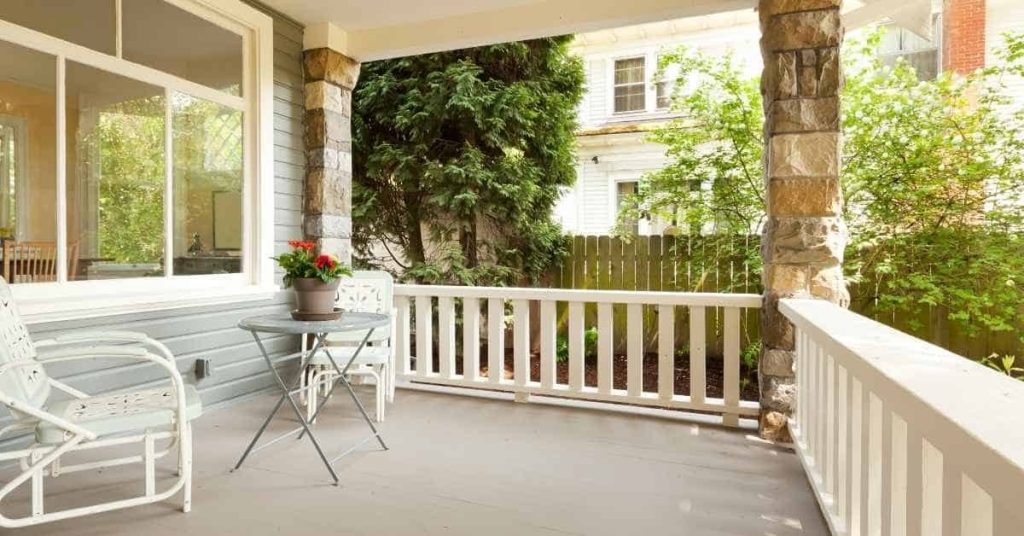
Concrete porch floor with chairs and small table

Water-Based Concrete Stains: When They Beat Acid Stains and How to Avoid Lap Marks

Introduction

Water-based concrete stains are pigmented finishes that penetrate and tint concrete using a water carrier; they beat acid stains when you need brighter or more consistent colors, easier cleanup, and compatibility with sensitive surfaces. They won’t etch or chemically react like acid stains, but check product labels for recommended substrate prep and compatibility with sealers or overlays. For a DIYer, that means choosing the right product for your slab and being honest about what the stain will and won’t do.

To avoid lap marks, work in manageable wet-edge zones, keep a steady application speed, and blend each pass into the next while the stain is still workable. Pay attention to drying and curing guidance on the product—temperature, humidity, and sealer timing matter—so follow the label and test a small area first. Simple tools, patience, and good prep make the difference between a pro-looking finish and uneven color.

Key takeaways

  • Water-based stains: easier cleanup and lower odor than acid alternatives.
  • Plan testing on sample panels to compare color uniformity and finish.
  • Prevent lap marks by misting coat applications and maintaining consistent application rhythm.
  • Spray or roller settings should stay even, overlapping edges without heavy builds.
  • Drying and curing depend on film thickness and ventilation, not fixed times.
  • Wear gloves and ventilation for safety, and read label warnings before use.
Table of Contents

Water-Based Vs Acid Stains — How They Differ

Water-based stains either lay pigment on the surface or use waterborne chemistries that bind color to the concrete, while acid stains depend on an acid reacting with minerals to produce translucent, mineralized tones. Each system rides on substrate porosity differently: pigments sit more on or near the surface and film or binder types can mask porosity, whereas acid stains penetrate and chemically alter pores for variegated color.

Sealers change the outcome for both—film-forming sealers can mute or deepen pigment-based color and block penetration for reactive stains, while penetrating sealers preserve a stained look but may alter sheen. Before you choose, check product labels or data sheets for recommended substrate condition and test a small area to verify penetration, adhesion, and final appearance.

How each product works

Water-based stains work by depositing pigments onto the concrete surface, much like painting. They penetrate slightly but mostly sit on top, creating an opaque color.

Acid stains, on the other hand, rely on a chemical reaction with the concrete’s minerals to create color. They penetrate deeper and react with the lime in the concrete to produce a translucent, marble-like effect.

Water-based stains are more like painting; they can be easily scrubbed off if not cured properly. Acid stains, once cured, become part of the concrete itself and are very durable.

Pros and cons summary

Here’s a quick comparison to help you decide:

Pros

  • Water-based: Easy application, wide color range, good for indoor use.
  • Acid: Unique, natural look, excellent for outdoor use, penetrates well into porous surfaces.

Cons

  • Water-based: Limited penetration, less durable, can peel or fade if not sealed properly.
  • Acid: Limited color range, can be unpredictable, requires careful handling due to acid content.

Choose based on your desired look, durability needs, and comfort with application process.

When not to use each type

Water-based stains may not be suitable for outdoor or high-traffic areas due to their limited durability. They’re also not recommended if you want a translucent, natural look.

Acid stains aren’t ideal for surfaces with low porosity as they won’t penetrate well. They also shouldn’t be used on surfaces with existing coatings that can’t be removed or may interfere with the staining process.

Both types should be avoided if you’re looking for a solid, uniform color across the entire surface. They work best when you want to enhance the natural beauty of concrete and embrace some variation in color and tone.

Back to top ↑

When Water-Based Stains Beat Acid Stains

Pick water-based when you need predictable, opaque or semi-opaque color control on indoor slabs, sealed or otherwise non-reactive surfaces, or where ventilation and fumes are a concern. They’re a practical choice for spaces that demand repeatable shades, easier layering, and faster handling without relying on a mineral reaction.

Use a quick substrate checklist—existing sealer status, porosity test, desired translucency, and location constraints—to decide. If you’re unsure about compatibility or long-term colorfastness, run a mock-up and verify manufacturer thinning and cure instructions before committing.

Indoor and low-ventilation jobs

Water-based stains are the smarter choice for indoor projects. They’ve got lower VOCs, so you won’t need heavy-duty ventilation. The odor is also much less intense, making it easier on your nose.

Cleanup’s a breeze too. Just soap and water – no harsh chemicals needed. So, if you’re working in tight spaces or indoors, water-based stains are your friend.

Color consistency and custom pigments

Water-based stains give you tighter color control. You can predict how the stain will look, and it’s easier to match or customize colors. Just add your desired pigment.

No unpredictable patinas here. What you see in the sample is what you’ll get on your floor. And layering is simpler – no chemical reactions to worry about.

Non-reactive or sealed concrete

Water-based stains work great on sealed or non-reactive surfaces. If your concrete’s already got a sealant, or you’ve prepped it without reactive fillers, water-based stains are the way to go.

Acid stains won’t work here. They need a chemical reaction with lime in the concrete to create their patina. But water-based stains don’t have this limitation – they’ll still give you great color even on these surfaces.

Back to top ↑

Planning the Project: Testing, Budgeting, and Timeline

Start with mock-up panels on the actual slab or a representative piece that has the same finish, porosity, and repairs you’ll be working on; accept or adjust color, penetration, and sheen on that panel before proceeding. Translate coverage claims from technical sheets into field reality by testing a small area and noting actual spread, waste, and how many passes or coats you used.

Build your schedule around the stain and sealer label details—open time, dry/recoat windows, and environmental limits—and add buffer days for bad weather or slower drying. Confirm the product data sheet and label for mixing, ventilation, and disposal notes, and assign roles for prep, staining, wiping, and sealing so wet edges and logistics are managed on deadline.

Test patch protocol

Before diving into your project, set up at least two small test areas to evaluate color and lap behavior. This step is crucial to avoid surprises later on.

First, prepare your test surfaces just like you would the real thing – clean, dry, and free of any contaminants. Then, apply the stain according to the manufacturer’s instructions, using different shades or techniques in each patch.

Let them cure for a day or two, then inspect for color consistency, penetration, and finish. If you’re happy with both patches, great! If not, tweak your approach and test again until you get it right.

Budget and time checklist

Before you start buying materials, use this checklist to convert coverage and number of coats into labor and material estimates. It’s best to do this once you’ve finalized your test patches.

  • Coverage: Calculate square footage per gallon from the manufacturer’s specs. Divide your project area by this number to find out how many gallons you need.
  • Coats: Plan for multiple coats, wipes, or sealers as needed. Each additional coat increases coverage and durability.
  • Labor: Estimate labor based on the size of your project and the number of coats. Don’t forget to account for prep work and cleanup.
  • Waste factor: Add a 10-15% waste factor to your material estimate to account for spills, drips, and leftovers.
  • Contingency: Include a 10-15% contingency in your budget for unexpected costs or delays.
  • Supplier confirmation: Confirm your order with the supplier, including any special requests like custom pigments or sealers.
  • Timeline: Convert spec sheets into a realistic project timeline. Include milestones for surface prep, stain application, drying times, and final sign-off.
  • Sign-offs: Identify who needs to approve each stage of the work – usually you, your spouse, and any relevant building inspectors.

Quick rule: Always round up when estimating. It’s better to have extra materials than run short mid-project.

Environmental and scheduling considerations

Temperature, humidity, and substrate moisture can affect how your stain dries and increase the risk of lap marks. Here’s what to check before you start:

Temperature: Most water-based stains work best in temperatures between 50-90°F (10-32°C). Too cold, and the stain won’t penetrate; too hot, and it dries too fast.

Humidity: High humidity can slow drying times and increase the risk of lap marks. Try to schedule your project when humidity is low – typically early morning or late evening.

Substrate moisture: Check for excessive moisture in your concrete before staining. If it’s too wet, wait until it dries out completely to avoid trapping moisture under the stain.

Back to top ↑

Surface Prep to Prevent Lap Marks and Ensure Uniform Color

Thorough cleaning, degreasing, and a moisture check are non-negotiable to get even stain uptake; contaminants or films create blotches and lap-prone areas. Use mechanical or chemical profiling to remove coatings and standardize porosity so the stain soaks in uniformly instead of feathering out unevenly at overlaps.

Fix cracks, holes, and depressions with compatible patch materials and let feathered repairs cure to the same absorbency as surrounding slab before staining. Perform visual porosity checks and a water drop test or manufacturer-recommended test, then mask transitions and edges to prevent bleed and lap marks during application.

Cleaning and profile

The first step in surface prep is thorough cleaning. Use a pressure washer or scrub brush to remove dirt, dust, and loose particles.

Why? Contaminants can prevent stain uptake, leading to uneven color.

Next, consider the profile of your concrete. A little texture helps stains penetrate evenly. You can add this with a surface retarder or light acid etching. But be careful: too much profiling can lead to deep scratches that show up in the final finish.

Patching, joints, and patch blending

Before staining, fix any cracks or holes with a concrete repair product. Use a trowel to feather the edges of your patches so they blend smoothly into the surrounding surface.

Why? Sharp edges can cause lap marks, where the stain takes differently at the patch’s edge.

For joints, use a joint filler or sealant. Make sure it’s compatible with your chosen stain. Let patches dry completely before staining to avoid differential absorption.

Moisture testing and visual checkpoints

Before you start staining, test for moisture and inspect the surface visually. This ensures your stain takes evenly and prevents surprises mid-project.

  • Conduct a moisture test: Use a calcium chloride test kit or a moisture meter to ensure your slab’s relative humidity is below 75%.
  • Check for efflorescence: Efflorescence is a white, powdery substance that can appear on concrete surfaces. If present, clean it off with a solution of muriatic acid and water (1 part acid to 10 parts water).
  • Look for dark spots: Dark spots could indicate moisture or contaminants. Clean them thoroughly before staining.
  • Inspect edges: Check where the concrete meets walls, floors, or other surfaces. These areas can be prone to lap marks and color bleed.
  • Check for cracks: Even hairline cracks can affect stain uptake. Seal them before staining.
  • Inspect joints: Ensure all joints are filled and sealed properly.
  • Check surface uniformity: The slab should look even in color and texture. If not, consider light profiling or etching to standardize the surface.
  • Test for proper curing: Concrete should be fully cured (at least 28 days old) before staining.

Quick rule: Always test a small, hidden area first. This helps you catch any issues early and adjust your approach as needed.

Back to top ↑

Stamped concrete surface with uniform textured pattern

Application Techniques That Minimize Lap Marks

The wet-edge rule is simple: keep the edge you’re working toward still wet so pigment and binder blend without a hard seam; consistent film thickness and steady pass speed are critical to avoid lines. Work in planned sections sized to what you can finish before the stain begins to set, and use cross-hatching or backrolling to smooth overlaps while keeping a uniform look.

Select application tools to match area size—hands-on for small patches, a coordinated two-person flow for rooms, and staged passes for large slabs—and pair spraying with a follow-up backroll or brush to even texture. Watch drying rate and environment; when things dry fast, reduce section size, mist lightly if permitted, or adjust technique to prevent lap formation.

Maintaining a wet edge and section size

Keeping a ‘wet edge’ means maintaining a continuous, moist surface to prevent lap marks. This is crucial when using water-based stains.

Pick a workable section: Start small – about 4×4 feet for hands-on application, or match your roller/brush size. For larger areas, divide into manageable sections.

Timing’s key: Work quickly but steadily. Don’t let the stain dry out before you’ve blended it with the next section. Re-wet edges slightly if needed.

Overlap, feathering, and blending methods

Overlapping is necessary but tricky. Aim for 20-30% overlap. Too little, you’ll see lap marks; too much, it pools.

Feather edges: Use light strokes at the end of each section to blend into the next. Wipe-on applications need more feathering than rollers or sprays.

Blending tips: For rollers, backroll in multiple directions. Sprayers, use a ‘Z’ or ‘X’ pattern for cross-hatching. Re-wet slightly if lines are too harsh.

Working with sunlight and shade transitions

Sunlight and shade affect drying times and lap risks. Drying slows in the shade, speeds in sunlight. Keep an eye on edges where light changes – these areas may dry differently.

Temperature also plays a role: Warmer surfaces dry faster. Adjust your work schedule to match drying conditions.

Back to top ↑

Tools, Dilution and Spray/Roller Settings

Choose tools by viscosity and surface: pump sprayers or HVLP for large, open floors; fine-nap microfiber or 3/8″–1/2″ style rollers for smoother slabs and detail work. Check the product label for thinning limits and do a small spray/roll test on scrap to confirm atomization, coverage, and that the chosen nozzle or roller produces an even film.

Monitor for clogging, poor atomization, or heavy ridges and adjust tip size, pressure, or nap accordingly; keep dilution conservative and re-test rather than over-thinning. Always confirm manufacturer thinning guidance, then tune your overlap strategy, pass speed, and roller pressure to hit a uniform wet film without puddling or feathered edges.

Safe dilution ranges and how to check

First off, always check the product label. Water-based stains have their own sweet spot for dilution. It’s usually between 1:4 to 1:8 parts water to stain, but it varies.

Here’s how you check:

Mix up a small batch using your chosen ratio. Then, grab an old paintbrush or roller and do a quick spray test on a scrap piece of wood or concrete. This way, you’re not wasting time or material on the real job.

Look for even atomization – that’s just a fancy word for a nice, even mist. If it’s too thick, add more water. Too thin? Cut back on the water. Once you’ve got your color and spray pattern right, you’re good to go.

Sprayer and tip guidance

When choosing a sprayer for your concrete sealer, bigger isn’t always better. You want enough pressure to atomize the sealer into a fine mist, but not so much that it blows the droplets off course.

Tip sizes typically range from 110° to 150°. Larger tips (like 150°) give you more coverage but less control. Smaller tips (like 110°) offer better control but slower application. Start with a 130° tip for most jobs.

As for pressure, check your sealer’s label. It should tell you the recommended PSI range. Most sealers work well between 40 to 60 PSI. Too much pressure can cause overspray and waste product. Too little, and you won’t get good coverage.

To keep your tip from clogging, use a filter before the sprayer. Also, clean your tip after each use with warm water and a soft brush. And don’t forget to flush your lines at the end of the day.

Roller, brush, and wipe-on methods

Use a roller for large, flat surfaces. It’s quick and covers well. But watch out, it can leave lap marks if you’re not careful.

To avoid lap marks: Overlap each stroke by about half the roller width. Start at one corner, work your way up and down, then side to side. Don’t let the paint dry before rolling over it again.

A brush is best for edges, small areas, and details. It’s slow but precise. No lap marks here, just keep a wet edge.

Wipe-on methods are for those who want a real hands-on approach. Use a cloth or pad, work in small sections at a time. You’ll get a unique finish, but it takes practice to avoid streaks and splotches.

Back to top ↑

Finishing, Sealing, and Achieving Consistent Sheen

Match your sealer type to the stain: penetrating sealers preserve a matte, in-situ look while film-forming waterborne finishes change color depth and control sheen—test to see the effect. Follow label recoat windows, and if multiple coats are needed, use light, even passes and consistent wet film to avoid lap marks and sheen differences between coats.

Always run compatibility spot tests for adhesion, color shift, and sheen on a test patch and confirm recommended surface prep between coats like scuffing or wiping. For uniform gloss, prefer several thin coats over one heavy coat and maintain consistent temperature and humidity during application and cure.

Choosing the right sealer

A topical sealer forms a protective film on top of your stain, adding sheen and enhancing color depth. A penetrating sealer soaks into the concrete for subtle protection with no added gloss.

Topical sealers like waterborne polyurethanes or urethanes offer high sheen levels (gloss to semi-gloss), perfect for floors needing extra protection and shine. Acrylics provide a matte finish, ideal for vertical surfaces where slip resistance is crucial.

Tip: Higher sheen means more reflection – consider how light will hit your surface before choosing.

Recoat timing and matting steps

Sealers need time to cure properly. Wait at least 24 hours after staining, then check for tackiness before sealing.

Rule of thumb: If you can’t press a clean finger onto the surface without picking up stain or residue, it’s not ready.

Before applying the next coat, lightly sand or buff the surface using fine-grit sandpaper (220-320 grit) to remove any dust and improve adhesion. Wipe clean with a damp cloth, then let dry completely.

Visual uniformity and final inspections

Before signing off on your project, use this checklist to ensure consistent color, sheen, and no lap lines.

  • Color consistency: Check for any areas where the stain appears lighter or darker. Use a small test area as a reference.
  • Sheen uniformity: Inspect under different lighting conditions to ensure even gloss distribution.
  • Lap lines: Look for visible seams, especially at edges and corners. If present, lightly sand and touch up with sealer.
  • Cracking or peeling: Check for any signs of delamination, which could indicate improper surface preparation or curing.
  • Slip resistance: Test the surface by walking on it – ensure no slippery spots remain.
  • Edges and corners: Inspect these areas closely for missed spots or inconsistent application.
  • Sunlight/shade transitions: Check how light hits your surface in different areas to confirm consistent appearance.
  • Scratches or imperfections: Ensure none are visible, especially on high-traffic surfaces.

Quick rule: If it looks good under these conditions, you’ve got a solid finish!

Back to top ↑

Troubleshooting, Common Mistakes and Maintenance

Lap marks often come from inconsistent film thickness, drying rate differences, or variable porosity—diagnose by checking moisture, porosity, and recent repairs. For small defects, use spot blending, light sanding, or targeted recoats feathered into the surrounding area; for widespread issues, plan a full rework following corrected prep and test panels.

Establish a maintenance routine—cleaning, touch-up protocols, and reseal schedules based on traffic—to protect color and sheen and reduce major restorations. If anything is unclear about product limits or long-term care, consult the product data sheet or manufacturer for guidance before attempting large-scale fixes.

Causes and fixes for lap marks

Lap marks happen when two coats of stain meet, creating a visible line. Here’s what causes them and how to fix:

Uneven porosity: If your surface isn’t consistently porous, the stain absorbs at different rates, leaving lines. Fix: Lightly sand with 120-grit between coats to even out the surface.

Slow/fast drying: Drying too fast or slow can cause lap marks. Fix: Control drying time by adjusting humidity, temperature, or using a retarder additive.

Tool choice: Using different tools for each coat (e.g., roller then spray) can leave lines. Fix: Stick to one tool per coat and overlap consistently.

When to spot-correct vs strip and redo

Deciding between spot repairs and full rework depends on defect size and visibility:

For small, isolated defects: Spot correct. Use a small brush or sponge to apply stain directly onto the affected area. Blend edges with a damp cloth.

For large areas or visible defects: Strip and redo. Remove old stain using a stripper, sand lightly (120-grit), clean, and reapply stain following initial application steps.

Rule of thumb: If the defect is larger than a dinner plate or highly visible, consider full rework for best results.

Long-term care and periodic recoating

Maintain your stained concrete’s beauty with regular cleaning and inspection:

Cleaning (every 6-12 months): Use a mild detergent and soft-bristle brush. Rinse thoroughly. Avoid harsh chemicals that can damage the sealer.

Inspection (annually): Check for signs of wear, fading, or cracking. Inspect edges and high-traffic areas closely.

Recoating (every 3-5 years): If you notice significant wear or fading, it’s time to recoat. Follow initial application steps, ensuring the surface is clean, dry, and free of contaminants before applying new stain.

Back to top ↑

Conclusion

Water-based stains give durable, even color with safer cleanup, but the result depends on careful planning, surface prep, and good technique to protect the surface and your investment.

First test a small area, then pick a color and mix per label. Prep the surface, mask edges, and keep ventilation; apply in light, even coats with your chosen method, maintain a uniform distance and overlap to avoid lap marks, let each coat dry before the next, then seal after curing.

Avoid common misfires: skipping the test area, rushing the prep or application, and skipping masking or proper dilution. Never apply on a damp or dirty surface, never breathe fumes without ventilation, and never seal until the stain has fully cured. These basics protect safety, prevent costly mistakes, and keep the color consistent across the floor or concrete surface.

If you’re already past these limits, or you’re dealing with a large area, structural edges, or stubborn staining, consider a professional. For most DIY projects, sticking to testing, deliberate prep, controlled application, and proper sealing will deliver reliable, attractive results you can be proud of—and you’ll finish with confidence to use the space.

Back to top ↑

FAQ

What are the main properties of water-based stains compared to acid stains?

Water-based stains sit on the surface and color more evenly with less chemical reaction. They’re easier to control for DIYers, but color depth can vary with the surface and sealer. Always check the label for colorfastness and compatibility with your concrete.

What are effective techniques for applying water-based concrete stains?

Apply in thin, even coats using a sprayer or roller, following the product instructions. Work in small sections to keep edges fresh and avoid overlap where the stain is still wet. Do not flood the surface; use multiple light coats if needed.

How can I avoid lap marks during application?

Keep a wet edge as you work and don’t let the stain dry in place before you feather the edge. Back-roll or back-brush lightly to smooth edges and blend wet and dry areas. If you see a lap start, rework it before it sets and apply a fresh, even coat over the blend.

What about drying and curing times for water-based stains?

Drying times depend on temperature, humidity, and airflow. Don’t hurry to seal until the surface feels dry to the touch and the manufacturer’s guidance is met. Check the label for the recommended recoat window and curing time before service or foot traffic.

Back to top ↑