
Introduction
Tile countertops are making a comeback as a durable, budget-friendly option for kitchen surfaces.
They can add character and are easier to replace locally if damaged. Check your tile type, edge treatment, and substrate compatibility before starting.
Common pitfalls include uneven surfaces, improper sealing, and grout maintenance. Plan for flatness, choose the right adhesive and grout, and follow manufacturer instructions for backer boards. If in doubt, verify requirements on product labels or with local rules.
Key takeaways
- Inspect substrate stability and levelness before tiling to avoid lippage and cracks.
- Use appropriate tile spacers and grout to prevent future debonding and staining.
- Seal porous tiles and dense countertops after curing per manufacturer instructions.
- Back-buttering and full-bed thinset improve adhesion and reduce hollow spots.
- Plan for a margin for expansion joints and edge finishes in design.
- If DIY, budget time for curing, grout, sealing, and final adjustments.
Table of Contents
- Introduction
- Key takeaways
- Why Tile Countertops Are Back in Style
- Pros and Cons — Honest Trade-Offs to Evaluate
- Tile Types and Material Specs Explained
- Design Approaches and Visual Checkpoints
- Installation Essentials — DIY Vs Hiring a Pro
- Common Pitfalls and How to Avoid Them
- Maintenance, Sealing, and Long-Term Repairs
- Cost, Timeline, and Return on Investment
- Conclusion
- FAQ
Why Tile Countertops Are Back in Style
Tile countertops are trending again because they offer affordability and a high degree of customization. Homeowners can mix colors, sizes, and patterns to create a unique look. The retro-modern appeal comes from classic tile shapes used in fresh layouts.
Consider how durable and repairable tile can be in high-traffic kitchens and baths. Check local rules and product labels for suitability in countertops and humidity-prone areas. Look for design cues in current remodels to confirm this style fits your space.
Design and cultural influences
Tile countertops are back, driven by a resurgence of vintage looks. Homeowners are embracing retro-modern styles, inspired by mid-century designs and the ’70s.
Social media platforms like Instagram and Pinterest have fueled this trend. Homeowners see unique tile installations, get ideas, and want to replicate them in their own homes.
The DIY culture has also played a significant role. Tiles are easy to install with the right tools and knowledge, making them an attractive option for homeowners looking to tackle projects themselves.
Practical reasons for resurgence
Tile countertops are practical and affordable. They cost less than natural stone or quartz, making them an attractive option for budget-conscious homeowners.
Tiles are also easy to replace if damaged. A single tile can be removed and replaced without having to redo the entire countertop.
The availability of new materials and finishes has also contributed to their resurgence. Today’s tiles come in a wide range of colors, patterns, and textures, allowing homeowners to create unique, personalized looks.
Pros and Cons — Honest Trade-Offs to Evaluate
Tile provides easy individual repairs and a wide range of looks. It can be cost-effective up front and offers DIY-friendly tile work in many cases. However, grout lines need maintenance and some tiles may chip if bumped hard.
Think about the long-term care, including sealing schedules and potential regrouting. Verify with product data sheets or manufacturer instructions what maintenance their tiles require. Weigh practicality against aesthetics for your kitchen or bath usage.
Key benefits (durability, customization, cost)
Tile countertops are tough. They’ll last decades with proper care. Expect durability like no other, even in busy kitchens or baths.
Customize to your heart’s content. Tiles come in endless patterns and colors. Add trim for extra flair. Make it truly unique.
Cost-wise, tile beats stone and quartz. It’s cheaper per square foot. Plus, you can DIY install to save more. Budget-friendly is an understatement.
Main drawbacks (grout, seams, heat/weight considerations)
Grout lines are visible. They can stain over time. Regular cleaning is a must to keep them looking fresh.
Seams between tiles can crack or chip. This happens with heavy impacts or temperature changes. Be prepared for some maintenance, especially in high-traffic areas.
Tiles are heavy. They need proper support. If your cabinets aren’t up to par, you might face structural issues. Consider reinforcement if needed.
Heat is another concern. Tiles can crack under extreme heat. Use trivets and protect them from sudden temperature changes. Treat with care, especially around cooktops.
Tile Types and Material Specs Explained
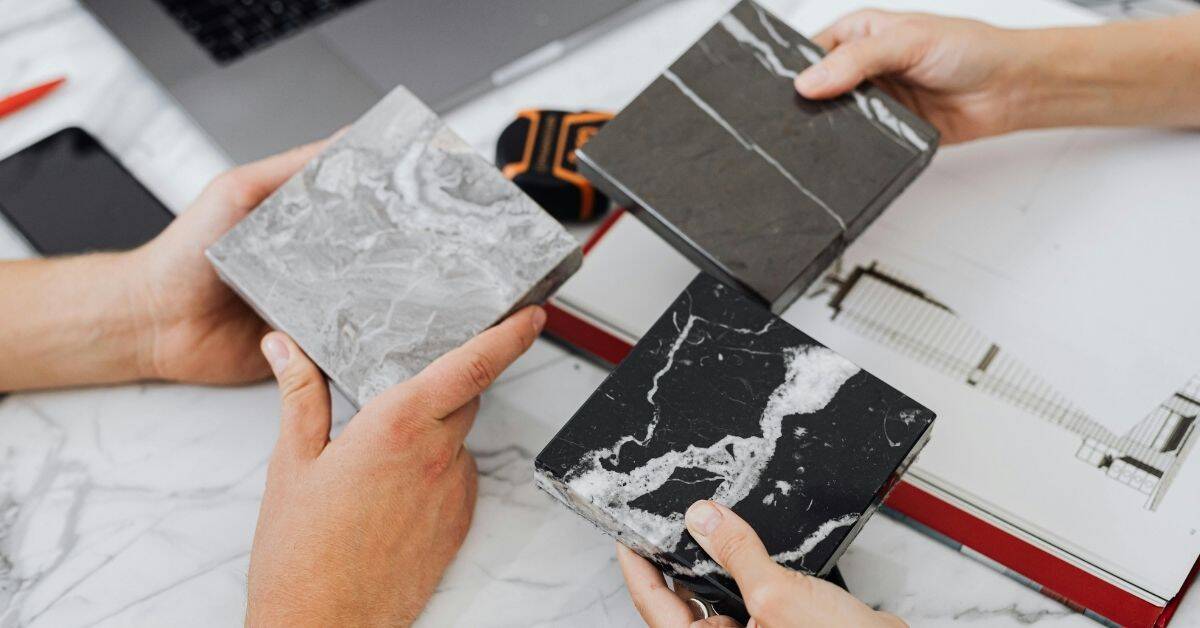
Ceramic, porcelain, natural stone, and mosaic tiles each behave differently under countertop use. Porcelain tends to be denser and less porous than standard ceramic, which affects staining risk. Natural stone offers unique character but requires extra sealing and care.
Look at hardness ratings, porosity, and water absorption as you compare options. Always check the label or specification sheet to confirm suitability for countertop installations. If unsure, ask the supplier or installer for guidance on your application.
Porcelain vs ceramic—what to choose
When it comes to choosing between porcelain and ceramic tiles for your countertops, understanding their differences is key. Both are great options, but they have distinct characteristics that make them suitable for different applications.
Water Absorption: Porcelain has a water absorption rate of less than 0.5%, making it highly resistant to moisture and ideal for areas prone to spills like countertops. Ceramic tiles, on the other hand, have a higher absorption rate, around 3-6%, which makes them more susceptible to moisture damage.
Strength: Porcelain is denser and stronger than ceramic, providing better durability for high-use surfaces such as kitchen countertops. While both are durable, porcelain’s superior strength makes it a better choice for areas that will see frequent use.
Edge Finishing: Porcelain tiles often come with rectified edges, which means they have straight, sharp edges that fit tightly together. This results in fewer grout lines and a more seamless look. Ceramic tiles may not have this feature, so you’ll need to consider the aesthetic impact of wider grout lines.
Natural stone and specialty tiles
For a unique, luxurious look, consider natural stone or handmade specialty tiles for your countertops. These options offer stunning beauty but require careful consideration of their maintenance needs.
Travertine: This limestone-based tile offers a warm, rustic appearance with its earthy tones and textured surface. However, travertine is porous, so it requires regular sealing to prevent stains and moisture damage. Expect to reseal your travertine countertops every 1-2 years.
Slate: Known for its durability and non-slip surface, slate is an excellent choice for high-traffic areas like kitchen islands or bar tops. While it’s less porous than travertine, slate still requires sealing to protect against stains. Sealing should be done every 2-3 years.
Handmade Tiles: These unique tiles offer a custom look with endless design possibilities. However, they often require more care due to their varied surfaces and potential porosity. Expect to seal these tiles regularly, depending on the specific material used in their creation.
Design Approaches and Visual Checkpoints
Experiment with grout color, tile size, and edge profiles to shape the final feel. Larger tiles can read as a seamless surface, while small mosaics add texture. Edge transitions and profiles pull the look together at sinks and corners.
During planning, note visual cues like grout brightness, tile alignment, and edge treatments. After installation, verify that joints are even and the surface looks uniform. Reference the manufacturer’s layout guidelines for best results.
Tile size, pattern, and grout color choices
Use this checklist when selecting tiles for your countertop to ensure visual harmony and cleanliness.
- Tile size: Larger tiles create a sleek, modern look. Smaller ones hide imperfections but may show grout lines more.
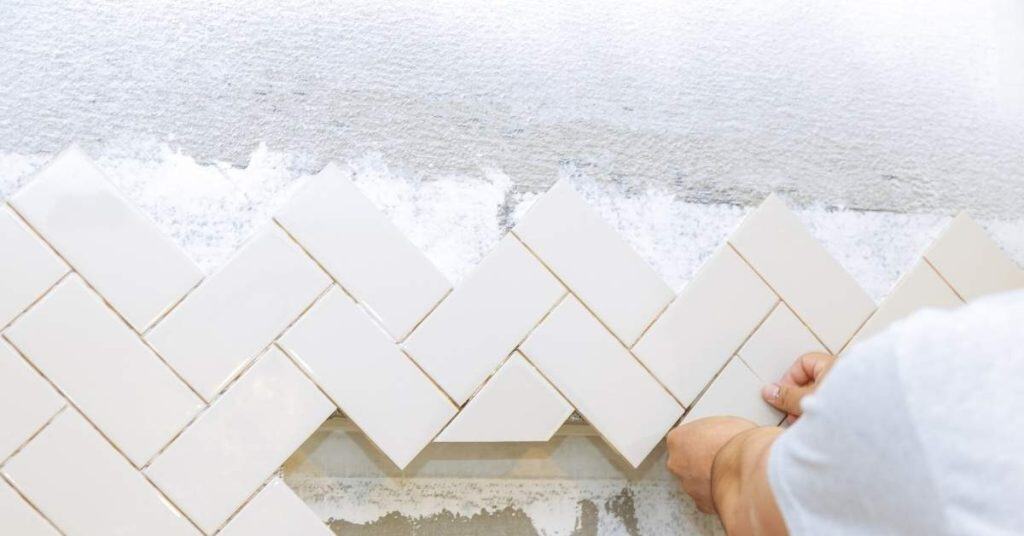
- Pattern: Consider herringbone, subway, or running bond patterns to add visual interest. Avoid complex patterns for small spaces.
- Grout color: Match grout to tile color for a seamless look. Contrasting grout adds drama but shows dirt more easily.
- Seam placement: Plan seam locations to avoid clustering them in one area or running through the center of the countertop.
- Grout joint size: Narrower joints (1/8″ – 1/16″) are sleeker but harder to clean. Wider joints (3/16″ – 1/4″) hide imperfections better.
- Tile shape: Rectangular tiles are classic. Hexagons, mosaics, or other shapes add uniqueness but may require more cutting and installation skill.
- Grout type: Epoxy grout is stain-resistant but harder to install. Cement-based grout is easier to work with but requires better maintenance.
- Tile texture: Smooth tiles are easy to clean. Textured tiles hide dirt but may be harder to maintain.
Quick rule: Consider the scale of your space and desired aesthetic when choosing tile size, pattern, grout color, and type.
Edge treatments and integrated features
Use this checklist to ensure a polished look for your countertop edges and integrate sinks seamlessly.
- Edge profile: Choose from eased, beveled, or bullnose edges. Consider the room’s style and safety when selecting.
- Overhang length: A slight overhang (1″ – 2″) provides a modern look. Longer overhangs (>3″) require support and may pose safety risks.
- Undermount sink integration: Ensure the countertop is thick enough to accommodate an undermount sink. Check that the sink’s lip aligns with the countertop’s underside.
- Seam alignment: Align seams at edges or along natural breaks in the tile pattern for a clean, finished look.
- Edge treatment material: Choose from matching tile, metal, wood, or stone for edge treatments. Consider durability and maintenance needs.
- Faucet placement: Plan faucet location to avoid interfering with sink use or countertop overhangs.
- Backsplash height: A continuous backsplash from the countertop creates a cohesive look. Consider plumbing and electrical work when determining height.
Quick rule: Plan edge treatments, sink integration, and seam alignment early in the design process to avoid costly changes later on.
Installation Essentials — DIY Vs Hiring a Pro
A confident DIYer can handle basic tile installation with careful substrate prep and proper tool use. You’ll need experience with leveling, cuts near edges, and reliable waterproofing considerations. Smaller projects or simple layouts are often doable without a pro.
When to hire a professional includes complex substrates, large-format tiles, or challenging edges and fixtures. Check local codes and the tile manufacturer’s installation instructions to decide the right approach for your space. If in doubt, get a professional opinion before starting.
Tools and materials checklist for DIYers
Before you start, make sure you have all the necessary tools and materials. This list covers a basic countertop job.
- Trowel: Notched trowel (1/4″ or 3/8″) for thin-set mortar.
- Grout float: For applying and leveling grout.
- Sponge: Damp sponge for cleaning excess grout.
- Grout sealer: To protect grout from stains and moisture.
- Tile nippers: For cutting tiles to size.
- Tile cutter or wet saw: For straight cuts on larger tiles.
- Adhesive: Thin-set mortar, suitable for your chosen tile type and substrate.
- Grout: Sanded or unsanded grout, matching your tile joints.
- Safety gear: Safety glasses, gloves, dust mask, and knee pads.
Quick rule: Always check your tools and materials before starting. Missing items can lead to delays or poor results.
When to call a pro (structural, plumbing, or electrical concerns)
While DIY tile countertops can save you money, some tasks require professional help. Here’s when to call in the experts.
Structural concerns: If your countertop needs structural reinforcement, such as adding support under existing cabinets or modifying the substrate, hire a pro. Incorrect reinforcement can lead to sagging or collapsing countertops.
Plumbing reconnections: When installing an undermount sink, you’ll need to cut into your countertop and connect it to your plumbing. This task requires precise cuts and proper plumbing connections to prevent leaks. Always hire a licensed plumber for this job.
Electrical concerns: If your countertop needs electrical work, such as adding outlets or running wires, always hire a licensed electrician. Improper electrical work can cause shocks, fires, or damage to your home.
Common Pitfalls and How to Avoid Them
Common mistakes include not leveling the substrate and using unsuitable grout for countertop use. An uneven base shows through and can cause cracking or uneven tile surfaces. Plan for proper substrate preparation before laying tile.
Another frequent error is choosing the wrong grout or sealing method. Verify grout type, sealer compatibility, and sealing frequency with the product label or data sheet. Establish a maintenance plan to prevent future issues.
Substrate and support failures
Listen up, DIYer. A solid, waterproof base is your tile’s foundation. Skimp on this, and you’re asking for trouble.
First off, check base compaction. Loose soil or fill can lead to a saggy base over time. Use a plate compactor to ensure it’s solid. Aim for at least 95% compaction.
Now, waterproofing. You don’t want moisture seeping up and weakening your base. Use a good quality, flexible waterproof membrane. Apply it properly, following the manufacturer’s instructions. Don’t be stingy with the stuff.
Lastly, watch for signs of flex or sag. If you see any movement in your base, stop work and fix it before laying a single tile. Cracked tiles are a pain to replace, trust me.
Grout-related issues (staining, cracking, hygiene)
Choosing the right grout is half the battle. Check the label for a stain-resistant option to keep your tiles looking sharp. For high-moisture areas like bathrooms, opt for unsanded, polymer-fortified grouts.
Joint width matters too. For ceramic and porcelain tiles, aim for a 3/16″ to 1/4″ joint. Wider joints can trap dirt and moisture, leading to mold and mildew. Narrower joints may crack under stress.
Sealing is your best friend against stains and moisture. Apply a high-quality sealant after grouting, following manufacturer’s instructions. For busy areas like kitchens or bathrooms, consider sealing every 6 to 12 months. It’s better to be safe than sorry, trust me.
Maintenance, Sealing, and Long-Term Repairs
Establish a practical maintenance schedule that fits your usage. Regular cleaning and periodic inspection of grout and sealers help prevent staining and wear. Address chips or loose tiles promptly to avoid bigger problems.
Follow step-by-step sealing and cleaning guidance from the manufacturer or product label. For repairs, know whether you need to replace tiles or re-grout and how to match existing finishes. Verify product compatibility before applying repairs.
Sealer types and recommended frequency
Choosing the right sealer is crucial for protecting your tile countertops. There are two main types:
Penetrating sealers soak into the tile’s pores, preventing moisture from getting in while still allowing the surface to breathe. These are ideal for natural stones like granite and marble.
Topical sealers create a protective film on top of the tile. They’re great for porcelain and ceramic tiles but can trap moisture if not applied correctly, leading to damage over time.
The frequency of resealing depends on your tile type and usage:
– Natural stones: Every 3-5 years.
– Ceramic/porcelain: Every 2-4 years, depending on wear and tear.
Repair tactics for chips, cracked tiles, and grout replacement
Small chips or cracks can often be repaired by a DIYer. Here’s how:
– Chips: Clean the area, apply a small amount of epoxy-based adhesive, fill the chip with matching tile material (if available), let it dry, then sand and polish.
– Cracked tiles: If the crack is minor, you can try to repair it like a chip. However, if the tile is severely cracked or has lost adhesion, replacement may be necessary.
– Grout replacement: Start by removing the old grout using a grout saw or oscillating tool. Clean the area thoroughly, apply new grout, let it dry, then seal.
If repairs are extensive or you’re unsure, consider hiring a professional for restoration work to prevent further damage.
Cost, Timeline, and Return on Investment
Understand the main cost components such as materials, labor, and prep work. Timeline expectations vary with layout complexity and substrate condition. Use these factors to estimate a realistic schedule for your project.
Consider resale implications and how tile choices age with wear. Check with local rules and the supplier for any warranty implications related to countertop use. Gather multiple quotes and compare what’s included to gauge value.
Budget ranges and where costs come from
Tile countertops can range from $2 to $10 per square foot, depending on the tile type. Ceramic and porcelain are usually at the lower end, while natural stone like granite or quartz can cost more.
Labor adds another significant chunk. Complex layouts or edge work can double your labor costs. Expect to pay around $30 to $80 per square foot for installation.
Don’t forget about sink cutouts and edge work. These can add $50 to $200, depending on the sink type and edge profile. Always check these details upfront to avoid surprise expenses.
Project timeline and staging tips
The entire project can take around 7-10 days, from demo to final sealing. Here’s a rough breakdown:
– Demo and prep: 1 day
– Tile installation: 2-4 days (depending on size and complexity)
– Grouting: 1 day
– Sealing: 1 day
– Final touch-ups: 1 day
During installation, set up a temporary kitchen. Keep a portable cooktop, microwave, and essentials nearby. Plan meals that don’t require much prep or cleanup.
Conclusion
Tile countertops are a practical upgrade, but the proof is in a safe, solid install that lasts. Focus on clean joints, proper substrate, and correct grout or sealant choices to protect the look and the surface under daily use.
Make it simple: inspect your substrate for flatness and moisture, pick the right tile type and thinset for your counter conditions, dry-fit pieces, seal edges where water can intrude, set in small sections, and cure according to the product timelines before use. Check for spacing, level, and a finished edge that won’t chip, then seal and test in a low-traffic area before committing to the whole run.
Common mistakes to avoid are setting over a wet or dusty surface, choosing the wrong adhesive for the countertop environment, and skipping a proper seal or grout sealing schedule. Standards are simple: test a tiny area first, follow manufacturer directions for cure times, and keep water and heavy heat off unprotected joints. If you spot waviness, cracks, or loose tiles, stop and reassess rather than forcing it through.
If the project starts to feel beyond easy maintenance or you’re dealing with an uneven substrate, don’t push past your comfort zone. Call a pro when subfloor moisture, large format tiles, or complex edge details come into play. Stay practical, stay safe, and you’ll have a durable, beautiful surface you can rely on for years to come.
FAQ
What’s the most common beginner mistake when prepping a countertop for tile?
Don’t skip a solid substrate. Clean and level the surface, and remove any coatings that won’t bond. Check with the tile or thinset manufacturer for surface prep instructions before you start.
How do I choose the right sealant or grout for a countertop, and what should I check on the label?
Pick products labeled for countertop use and water exposure. Read the label for pot life, cure time, and sealing recommendations. If unsure, follow the manufacturer instructions or ask at the store for guidance.
What should I do to prevent grout cracking on a kitchen countertop installation?
Use a proper thinset and allow adequate curing time before using the surface. Follow the recommended grout joint width and sealing schedule from the product maker. Don’t rush the cure or expose to heavy use too soon.
How can I maintain a tiled countertop to keep it looking good long term?
Seal the grout as directed by the manufacturer and re-seal as needed. Clean with mild cleaners and avoid abrasive scrubs that can wear grout. Inspect periodically for chipped tiles or loose tiles and repair promptly.