Search Results for: how to paint galvanized sheet metal

Two black rectangular planters with green plants outside white house

Ferrocement Planters and Thin Structures: Mesh Layout, Mortar Mix, and Curing

Introduction Ferrocement is a thin, reinforced cement mortar system that uses mesh and a cementitious mix to build lightweight, curved shells like planters. It relies on multiple coats and a strong mesh lattice to hold shape and resist cracking. It’s a hands-on technique that you can adapt for small DIY projects, with attention to formwork […]

Ferrocement Planters and Thin Structures: Mesh Layout, Mortar Mix, and Curing Read More »
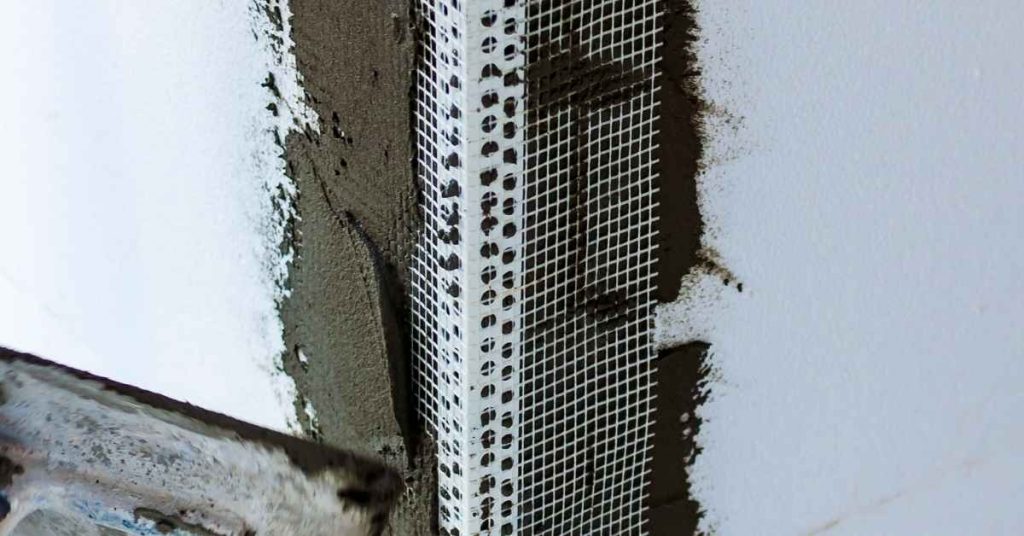
White mesh embedded in wet stucco on white wall surface

Stucco Over ICF Walls: Mesh, Fasteners, and Crack Control at Openings

Introduction Stucco over ICF walls means applying a cement-based veneer to insulated concrete forms using a proper weather-resistive layer, reinforcement mesh, and secure fasteners so the finish sticks and moves with the wall. This job needs the right mesh type, fastener method, and detailing at windows and doors to control cracking; check the stucco manufacturer’s

Stucco Over ICF Walls: Mesh, Fasteners, and Crack Control at Openings Read More »

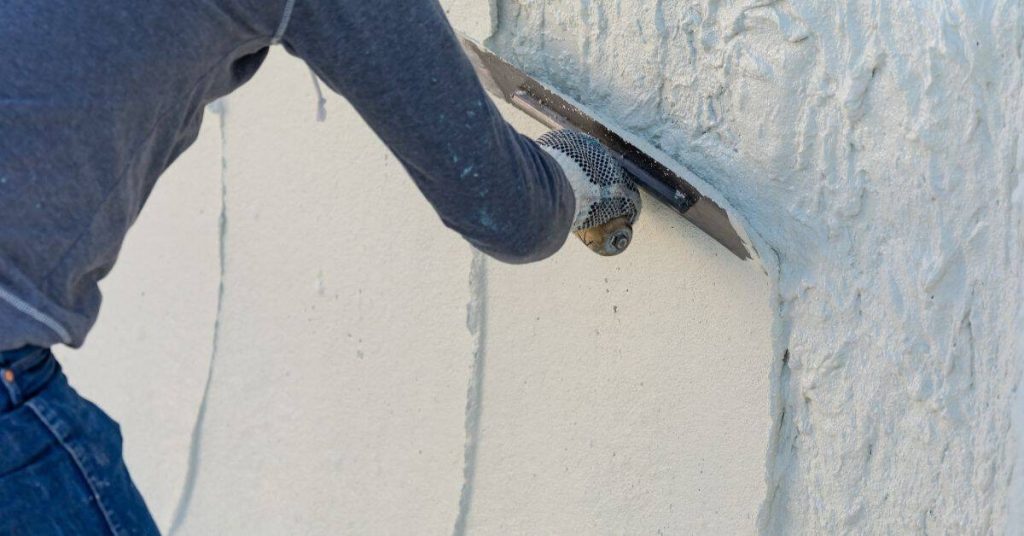
Person smoothing stucco on exterior wall with trowel

Drainage Stucco vs Barrier Stucco: How to Tell What You Have on Your House

Introduction Drainage stucco is a cladding system designed to let water that gets behind the finish drain out, while barrier stucco is meant to shed water at the surface and keep moisture out; that’s the practical difference. Think of drainage as a layered system with a gap or channels to manage moisture and barrier as

Drainage Stucco vs Barrier Stucco: How to Tell What You Have on Your House Read More »

Hand applying stucco on brick wall with trowel

Stucco Termination at Brick or Stone: Transition Details That Don’t Crack or Trap Water

Introduction Stucco termination at brick or stone is the method of finishing and sealing the edge where stucco meets masonry so water is kept out and movement doesn’t crack the finish. Do the job with a clear gap for flashing, a solid backstop, and a termination trim that lets water drain; check product labels and

Stucco Termination at Brick or Stone: Transition Details That Don’t Crack or Trap Water Read More »

Person applying plaster over blue mesh on wall

Reinforcing Plaster at Material Transitions: Mesh Choices That Don’t Telegraphed Through

Introduction Reinforcing plaster at material transitions means embedding the right type of mesh or alternative so the joint won’t crack or show through once the plaster dries. Pick a mesh compatible with your plaster and substrate and follow the product label and common-sense joint detailing to avoid telegraphing. If you’re unsure which mesh to use,

Reinforcing Plaster at Material Transitions: Mesh Choices That Don’t Telegraphed Through Read More »

Worker applying stucco around windows with protective coverings

Stucco at Window Sills: Drip Edges, End Dams, and How to Stop Staining Below

Introduction Stucco at window sills is the way the exterior plaster and the window flashing work together to shed water away from the opening; a proper setup keeps water off the wall below and prevents staining. In practice that means installing a flashinged sill, a drip edge or kerf, and end dams where the stucco

Stucco at Window Sills: Drip Edges, End Dams, and How to Stop Staining Below Read More »

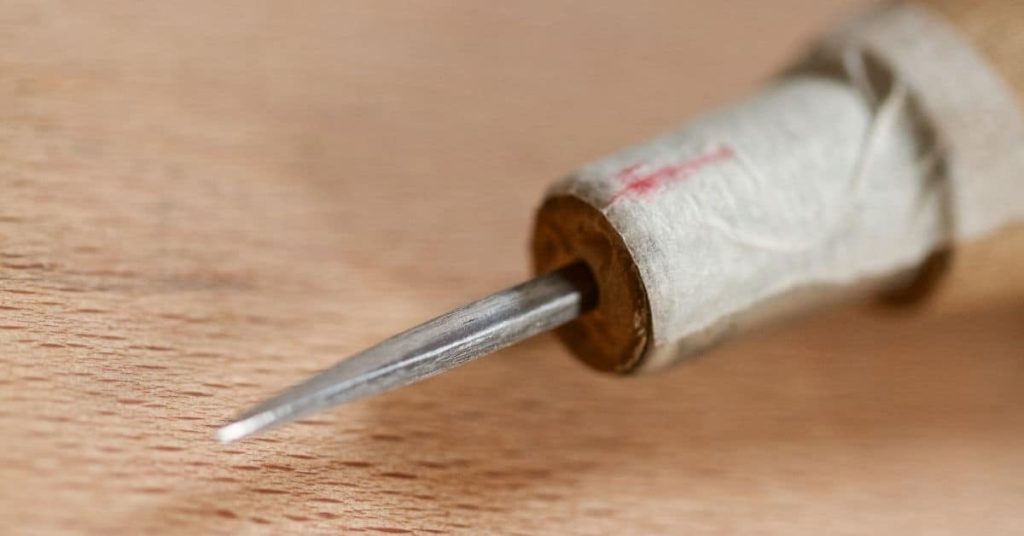
Close up of a pointed metal scratch tool tip wrapped in paper

Plaster Undercoats on CMU: Scratch Keys, Moisture Control, and Cure Timing

Introduction Plaster undercoats on CMU are the first bonded layers of cement or gypsum-based material applied to concrete masonry units to create a flat, sound surface for finish coats. They include types like cementitious scratch coats and bonding or leveling coats; check the product label and manufacturer instructions to pick the right one for your

Plaster Undercoats on CMU: Scratch Keys, Moisture Control, and Cure Timing Read More »

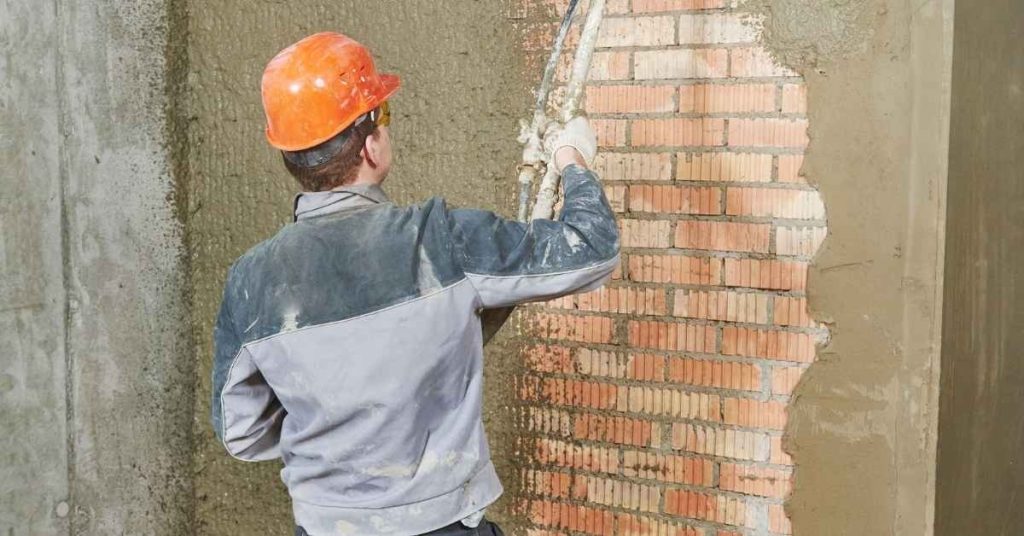
Worker applying stucco onto brick wall wearing orange hard hat

Galvanic Corrosion at Stucco Accessories: Troubleshooting Rust Stains and Effective Repairs

Introduction Discovering rust stains on your otherwise pristine stucco job can be frustrating. Galvanic corrosion is often the culprit, but identifying the cause and implementing effective repairs can be challenging. This guide walks you through troubleshooting galvanic corrosion issues in stucco accessories, helping you diagnose problems, understand their causes, and apply targeted solutions to stop

Galvanic Corrosion at Stucco Accessories: Troubleshooting Rust Stains and Effective Repairs Read More »

Ornate plaster ceiling medallion with floral and scrollwork design

Fixing Plaster Cracks at Ceiling Medallions: A Step-by-Step Timeline

Introduction Tackling plaster cracks around ceiling medallions can seem daunting, but breaking down the process into a clear timeline makes it manageable. This step-by-step guide walks you through fixing these issues efficiently, from initial inspection to final touch-ups. Understanding how long each stage takes helps you plan your project effectively and ensures you allocate enough

Fixing Plaster Cracks at Ceiling Medallions: A Step-by-Step Timeline Read More »

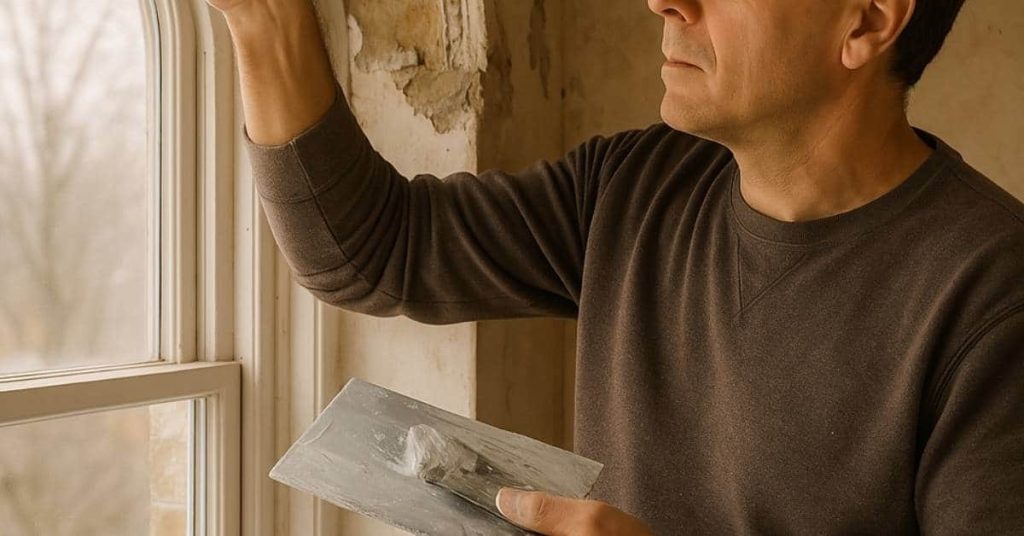
Man applying plaster around window casing with trowel

Repairing Plaster Around Window Casings: A Step-by-Step Timeline for Straight Returns and Crisp Corners

Introduction Tackling plaster repairs around window casings can seem daunting, but with a clear understanding of the timeline, you’ll find it’s a manageable project. This step-by-step guide breaks down the process into digestible stages, helping you complete your repair efficiently and effectively. From assessing damage to applying the final coat of paint, let’s explore how

Repairing Plaster Around Window Casings: A Step-by-Step Timeline for Straight Returns and Crisp Corners Read More »