Search Results for: finishing

Person drilling into white rigid foam insulation board

Air Detrainers and Defoamers: When Foam Kills Strength in High-Admixture Mixes

Introduction Air detrainers and defoamers are additives that limit and break surface foam in high-admixture concrete mixes. They work by reducing surface tension so trapped air can escape before hardening. Always check labels and manufacturer instructions for proper usage and dosing ranges. Foam in high-admixture mixes can be caused by rapid air entrapment, improper mixing, […]

Air Detrainers and Defoamers: When Foam Kills Strength in High-Admixture Mixes Read More »

Electric drill mixing cement in bucket outdoors

Viscosity-Modifying Admixtures (VMA): Stopping Segregation in Flowable Mixes

Introduction Viscosity-modifying admixtures (VMAs) help concrete stay workable without segregating. They slow down the mix’s tendency to separate into heavy cement slurry and lighter aggregate. Use them when you plan long pours, thick slurries, or hot weather. Choose a VMA based on the mixer and concrete type, and follow the label directions. Test a small

Viscosity-Modifying Admixtures (VMA): Stopping Segregation in Flowable Mixes Read More »

Stacked precast concrete hollow core slabs outdoors

Internal Curing With Lightweight Aggregate: Reducing Shrinkage in Thin Slabs and Countertops

Introduction Internal curing with lightweight aggregate is a method that uses porous, low-density aggregate inside the mix to keep moisture available for hardening. This approach helps manage moisture in thin slabs and countertops as they cure, especially when you’re working with limited thickness. Always follow the material instructions and local rules to ensure proper use.

Internal Curing With Lightweight Aggregate: Reducing Shrinkage in Thin Slabs and Countertops Read More »

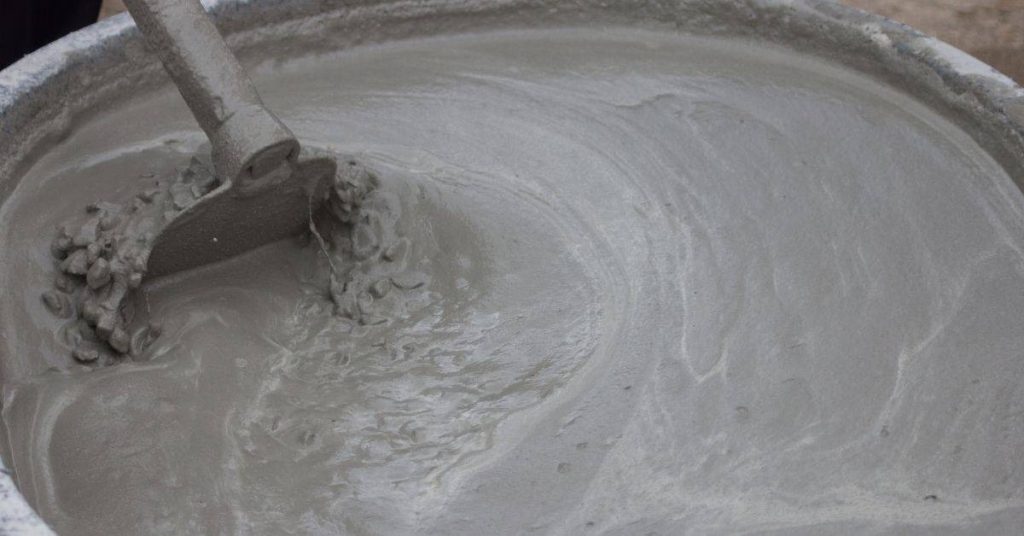
Trowel mixing wet cement mortar in a large container

Shrinkage-Compensating Cement: Where It Shines, Detailing Rules, and DIY Reality

Introduction Shrinkage-compensating cement is a concrete mix designed to offset shrinkage as it cures. In DIY projects, it helps reduce cracking on slabs and pads. Use it when you expect movement or large flat surfaces; check product instructions for mixing and cure guidance. For rules and specifications, follow the manufacturer’s directions and any local rules.

Shrinkage-Compensating Cement: Where It Shines, Detailing Rules, and DIY Reality Read More »

Stacked precast concrete hollow core slabs outdoors

Chloride Penetration in Concrete: Why Coastal Slabs Fail and How to Slow It Down

Introduction Chloride penetration in concrete is the inward movement of chloride ions from the environment into the concrete and reinforcement area. In coastal areas, salt spray, moisture, and wet-dry cycles push chlorides into the concrete matrix. This can lead to corrosion of reinforcing steel and reduce the structure’s long-term durability. To slow chlorides down, choose

Chloride Penetration in Concrete: Why Coastal Slabs Fail and How to Slow It Down Read More »

Melting ice cubes with water pool on white surface

Concrete Laitance: How to Identify It and Remove It Before Coatings Fail

Introduction Laitance is a thin, weak surface layer of cement and fines on concrete that can ruin coatings if it isn’t removed. It often feels powdery or dusty and looks lighter or different from the surrounding concrete. If you leave laitance, coatings can fail early and moisture or dirt may trap under the finish. Removal

Concrete Laitance: How to Identify It and Remove It Before Coatings Fail Read More »

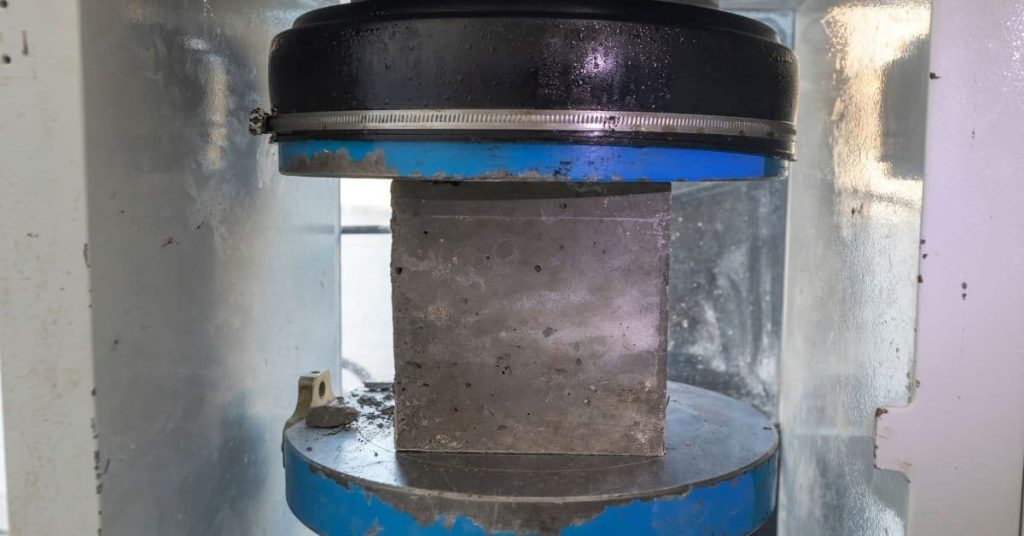
concrete compression test cube inside testing machine

DIY Slump Test: How to Make a Slump Cone and Read the Results

Introduction A slump test measures the workability of fresh concrete by using a cone and watching how much it settles. Key takeaways Understand the slump test measures concrete consistency by observing cone collapse height. Check tools: slump cone, trowel, sampling scoop, and clean curing surface. Follow a step-by-step procedure to ensure consistent results and repeatability.

DIY Slump Test: How to Make a Slump Cone and Read the Results Read More »

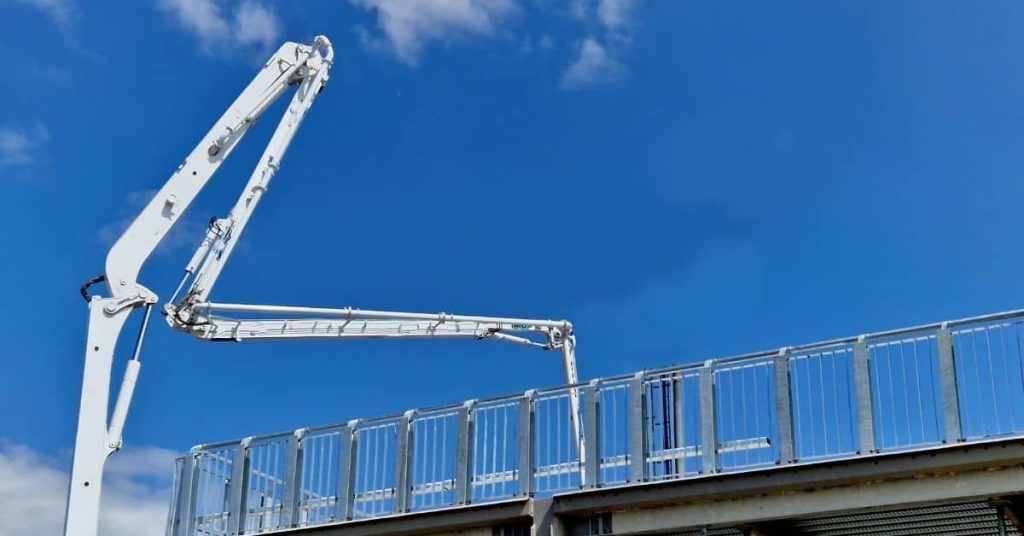
White concrete pump truck boom arm over metal fence

Air-Entrained Concrete: What It Is, Why It Matters, and Simple Checks

Introduction Air-entrained concrete is concrete that contains tiny air bubbles added on purpose to improve performance. These bubbles come from air-entraining agents mixed in with the concrete. This helps the concrete resist damage from freeze-thaw cycles and cracking, especially in exposed or moisture-prone spots. Testing for air content can be done with pressure, volumetric, or

Air-Entrained Concrete: What It Is, Why It Matters, and Simple Checks Read More »

Freshly poured wet concrete floor inside a room

Concrete Bleeding vs Segregation: How to Spot Each and What to Do

Introduction Concrete bleeding is water rising to the surface of fresh concrete as the mix sets. Segregation is when heavier components separate, causing uneven texture or coverage. Both can affect finish and long‑term durability if not spotted and managed early. Bleeding shows as a wet sheen on the surface and may leave a thin film

Concrete Bleeding vs Segregation: How to Spot Each and What to Do Read More »