Search Results for: dust mop for concrete floors

Hand in yellow glove cleaning blue surface with cloth

Cleaning Venetian Plaster: Safe methods that don’t dull the sheen

Introduction Cleaning Venetian plaster is removing dirt without dulling the sheen. Start with mild, gentle cleaners and a soft cloth or sponge, and test any method on a small hidden area first. Use light pressure and rinse with clean water, then dry with a soft, non-abrasive towel; avoid harsh scrubbing or abrasive tools to protect […]

Cleaning Venetian Plaster: Safe methods that don’t dull the sheen Read More »

Clean garage with painted concrete floor and shelving

Anti-Slip for Garage Coatings: Flake, Grit, and Cleaning Tradeoffs

Introduction Anti-slip coatings for garages use embedded flakes or grit to add traction. Choosing the right mix depends on your surface, traffic, and how much texture you want. Use this guide to compare options and make a practical, DIY-friendly choice. Consider where and how you’ll apply it—entryways, drive lanes, or workshop zones—along with your cleaning

Anti-Slip for Garage Coatings: Flake, Grit, and Cleaning Tradeoffs Read More »

White painted horizontal wooden shiplap planks

Clear Coating Painted Surfaces: When It Helps, When It Yellows, and What to Use Instead

Introduction Clear coating painted surfaces means applying a transparent protective finish over existing paint to protect it and change the sheen; it helps when the paint is sound and you want extra durability or a uniform look. Use a clear product compatible with the paint type and follow the manufacturer’s instructions; if you’re unsure about

Clear Coating Painted Surfaces: When It Helps, When It Yellows, and What to Use Instead Read More »

Three paintbrushes and one paint roller on yellow background

How to Paint Stairs for Grip: Additives, Abrasion Resistance, and Maintenance

Introduction Painting stairs for grip means using paint and additives that improve traction and hold up to foot traffic while keeping the surface safe and durable. This is a hands-on job: pick the right paint for the stair material, choose a compatible anti-slip additive or aggregate, and follow the product directions and local rules for

How to Paint Stairs for Grip: Additives, Abrasion Resistance, and Maintenance Read More »

Close-up of a paint roller with textured surface against white wall

Painting Textured Ceilings: Roller Nap, Loading, and How to Avoid ‘Holidays’

Introduction Painting textured ceilings means using the right roller nap and loading technique so the paint covers peaks and valleys without leaving unpainted spots called “holidays.” Think in practical terms: pick a nap length suited to your texture and follow the product label for compatible paints and thinning, and check manufacturer instructions if unsure. A

Painting Textured Ceilings: Roller Nap, Loading, and How to Avoid ‘Holidays’ Read More »

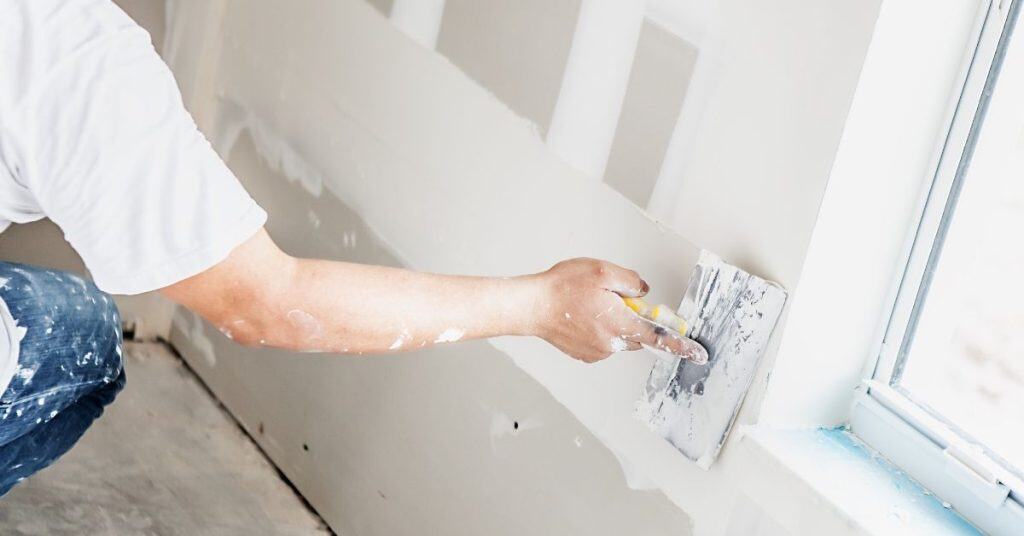
Person applying drywall joint compound near window

Choosing Plaster vs Joint Compound for Repairs: Durability, Sanding, and Paint Finish Differences

Introduction Plaster is a harder-setting wall finish made from cement- or gypsum-based mixes, while joint compound is a softer, gypsum-based product meant for taping and small repairs. For DIYers that means plaster will hold up better in high-traffic areas and where impact resistance matters, and joint compound is easier to apply and feather for small

Choosing Plaster vs Joint Compound for Repairs: Durability, Sanding, and Paint Finish Differences Read More »

White textured plaster wall surface with swirl patterns

Skim Coating Over Textured Plaster: High-Spot Knockdown and Flatness Checks

Introduction Skim coating over textured plaster is applying a thin, smooth layer to even out high spots and create a flat surface. You’ll knock down the high spots, then skim with lightweight compound to blend the texture. Start by inspecting for obvious ridges and plan where you’ll feather edges. Before you start, confirm you have

Skim Coating Over Textured Plaster: High-Spot Knockdown and Flatness Checks Read More »

Person applying stain to outdoor wooden table with brush

Integral Color vs. Stain vs. Dye: A Homeowner Decision Guide by Location

Introduction Integral color is color mixed into the concrete mix before it sets. Stain and dye sit on or in the surface rather than throughout the slab. This guide helps homeowners decide by location and conditions. Applications differ: integral color is mixed in, stain is applied to the surface, and dye is usually sprayed or

Integral Color vs. Stain vs. Dye: A Homeowner Decision Guide by Location Read More »

Living room with hardwood floor and furniture

Hardwood Floor Cupping vs. Crowning: Diagnosing Moisture Direction and Fixing It

Introduction Cupping happens when boards bow with edges higher than the center due to moisture imbalance, and crowning is when the center swells above the edges. In practice, cupping shows as edges higher than the center, with a concave profile across boards, while crowning shows the opposite where the center sits higher than the edges.

Hardwood Floor Cupping vs. Crowning: Diagnosing Moisture Direction and Fixing It Read More »