
Introduction
Plaster repairs in high humidity rooms require moisture-aware prep and material choices to stop powdery finishes. Start by preparing the walls carefully, removing loose material and cleaning the surface before patching. Choose materials and patching methods suited for humid conditions, and verify any limits on use with the product label or manufacturer instructions.
Mix plaster only as directed by the product instructions, and work in a way that avoids trapping excess moisture. Apply in thin, even coats and allow appropriate drying time, adapting technique for humidity and using breathable finishes when needed. If in doubt, check local rules and follow safe ranges or alternatives suggested by what the product label allows.
Key takeaways
- Prepare wall surface by cleaning, drying, and masking adjacent areas before plaster repair.
- Choose plaster and bonding agents rated for high humidity environments and damp rooms.
- Mix plaster per manufacturer instructions, avoiding lumps and too-thick batches in humid conditions.
- Apply in thin, even coats, letting each set partially before the next in humidity.
- Seal porous surfaces and use mold/mildew resistant primers for lasting finish.
- Safety: wear respirator, eye protection, and keep workspace ventilated during repairs.
Table of Contents
- Introduction
- Key takeaways
- Why Plaster Powders in High Humidity Rooms
- Assessing Damage and Deciding When to Repair Vs. Replace
- Tools and Materials Checklist
- Step-by-Step Plaster Repair Process for Finished Surfaces
- Techniques to Prevent Future Powdery Finishes
- Common Mistakes to Avoid
- Safety Precautions and Mold/Mildew Considerations
- Cost Considerations and Planning Estimates
- Conclusion
- FAQ
Why Plaster Powders in High Humidity Rooms
In damp spaces, salts and moisture interact with plaster. Salt efflorescence pulls soluble salts to the surface, creating a powdery film. Binders lose grip as moisture rises, leading to chalking and flaking.
Humidity accelerates these processes through higher vapor pressure and repeated condensation. Capillary rise and thermal cycling can further weaken the finish. Condensation, leaks, and poor ventilation are common triggers to watch for on site.
Chemical and Physical Causes
The powdering of plaster in high humidity rooms is driven by a few key mechanisms:
Efflorescence: This is when soluble salts within the plaster or substrate migrate to the surface, driven by moisture. As water evaporates, these salts are left behind, forming a white, powdery deposit.
Binder breakdown: Moisture can weaken and break down the binders holding your plaster together. This is especially true for plasters with poor quality or inappropriate binders for high humidity areas.
Moisture also causes surface salt migration. As water moves through the plaster, it carries salts to the surface where they accumulate and cause powdering.
Environmental and Installation Contributors
Several environmental factors and installation practices contribute to plaster powdering:
Humidity cycles: High humidity levels encourage the movement of moisture through your walls, driving the processes that cause efflorescence and binder breakdown. Repeated condensation cycles exacerbate these issues.
Temperature differences: In colder climates, freeze-thaw cycles can physically break down plaster, making it more susceptible to powdering. Even in warmer climates, temperature fluctuations can drive moisture movement.
Poor substrate preparation and using the wrong plaster mixes can also lead to problems. If your substrate is too wet or not properly prepared, it can draw moisture into the plaster, leading to powdering. Using plasters that aren’t suitable for high humidity areas can also cause issues.
Assessing Damage and Deciding When to Repair Vs. Replace
Develop a clear framework for repair scope based on surface friability and powder depth. Look for signs of adhesion loss and moisture history when judging whether to patch or replaster.
Visually inspect and feel for loose powder, color streaks, and crumbling edges. Damp patches, hollow sounds, or moving substrates indicate deeper concerns that may require more extensive work.
Quick inspection checklist
Before you start any repairs, run through this quick checklist to determine the extent of damage and the appropriate repair approach.
- Surface friability: Gently press on the plaster. If it crumbles easily, it’s severely damaged.
- Depth of powdering: Use a putty knife to scrape off loose material. If it goes deep, you’ll need more than just patching.
- Blistering: Look for raised, bubbly areas. These indicate moisture trapped beneath the surface.
- Damp spots: Check for wet or cold patches. These could signal hidden moisture issues.
- Color streaks: Uneven discoloration can hint at underlying problems that need addressing.
- Crumbling edges: Inspect corners and edges. If they’re crumbling, it might be a sign of deeper structural issues.
- Tapping test: Gently tap the wall with a screwdriver handle. A hollow sound indicates loss of adhesion or backing damage.
- Uniformity of powder: If powdering is inconsistent, it might indicate varied damage depths that need different repair approaches.
Quick rule: If you find multiple issues or extensive damage, consider full replastering instead of patching.
When to call a professional
While DIY repairs can save you money, there are times when it’s crucial to hire a professional. Here are some scenarios where you should seek expert help.
Extensive delamination: If large areas of plaster are peeling off the wall or ceiling, this could indicate structural issues that require professional assessment.
Mold presence: Any signs of mold growth should be handled by a professional. They have the necessary safety equipment and knowledge to remove it effectively.
Structural moisture sources: If you suspect the damage is due to ongoing moisture issues, like leaks or condensation, it’s best to consult with a professional. They can identify the source and recommend appropriate solutions.
Tools and Materials Checklist
List essential hand tools and moisture tolerant patch compounds suitable for indoor use. Consider hydraulic lime or cement-lime mixes and moisture-stabilized plasters as alternatives to standard mixes when needed.
Include surface prep gear, primers compatible with moisture-prone substrates, and a mixer, tub, and containment for mixing. Plan for ventilation, PPE, and proper disposal during the project.
Recommended materials and specs
Use this checklist to select the right materials for your plaster repair in humid rooms.
- Plaster: Choose breathable plasters like lime or cement-lime mixes. Check product labels for breathability ratings.
- Primer: Use a primer suitable for high humidity areas to promote adhesion and prevent mold growth.
- Salt Inhibitor: Apply a salt inhibitor primer to prevent efflorescence, especially in damp conditions.
- Breathable Finish: Opt for breathable paints or varnishes to allow moisture evaporation.
- Lime vs. Gypsum: Lime plasters are more suitable for humid rooms due to their better resistance to damp conditions.
- Moisture-Stabilized Pre-Mixed Plasters: Consider using these for convenience and quick application.
- Hydraulic Lime: This is ideal for high humidity areas as it sets underwater and resists dampness.
- Cement-Lime Mixes: These provide a balance between the strength of cement and breathability of lime.
Quick rule: Always check product labels to ensure materials are suitable for high humidity conditions.
Essential tools and safety gear
Use this checklist to gather the necessary tools and safety equipment for your plaster repair job in humid rooms.
- Scraper: Use a wide-blade scraper to remove loose plaster. Safety: Wear gloves to protect hands.
- Putty Knife: A flexible putty knife helps apply and smooth patch compounds. Safety: Be careful not to cut yourself.
- Feather/Edge Trowel: Use for applying plaster and creating smooth, even surfaces. Safety: Keep edges away from face and eyes.
- Sanding Block: For smoothing finished surfaces. Safety: Wear a respirator to avoid inhaling dust.
- Humidity Meter: Measure humidity levels before and during repairs. Safety: Ensure readings are within acceptable ranges (40-60%).
- Respirator: Protect against plaster dust and mold spores. Safety: Choose a respirator with a particulate filter.
- Goggles: Shield eyes from dust and debris. Safety: Ensure they fit well and provide full coverage.
- Gloves: Protect hands from cuts, plaster, and chemicals. Safety: Choose gloves that fit well and allow good grip.
Quick rule: Always prioritize safety when working with tools and in damp conditions.
Step-by-Step Plaster Repair Process for Finished Surfaces
Outline a practical sequence from prep to finish, noting how humidity affects each step. Start with inspection, then address cleaning and dampness control before patching.
Follow with removing loose material, applying patch material, and embedding any mesh as required. Build up the finish, cure with environmental controls, and apply a breathable top coat or primer when ready.
Step-by-Step Repair Process
This section guides you through a clear, numbered sequence of practical steps for repairing finished plaster surfaces in humid rooms. Follow these DIY-friendly actions to ensure a successful and long-lasting repair.
- Safety first: Inspect the area, turn off power if needed, and wear appropriate PPE (gloves, goggles).
- Inspect damage: Identify loose material, cracks, or holes. Mark them for reference.
- Prepare tools: Gather trowels, hawk, bucket, water, plaster mix, mesh (if needed), and sealers/primers.
- Repair process: Remove loose material, apply patch material, embed mesh if required, apply base coat, build up to match finish. Follow the manufacturer’s instructions for mixing and application.
- Final checks: Allow proper cure time in humid conditions (usually 24-72 hours). Inspect the repair, ensure it’s level, smooth, and well-adhered before painting or finishing.
Surface preparation and salt/sulfate removal
Before replastering, remove loose powder and treat contaminated areas to prevent future powdering issues. This step ensures a solid base for your repair.
Start by brushing or vacuuming off loose material. For efflorescence (white salt deposits), use a stiff brush or wire brush to scrub gently. Be careful not to damage the surface.
For severe cases, apply a salt inhibitor or use a poultice to extract salts. Follow the manufacturer’s instructions for application and removal. Ensure the area is clean and dry before proceeding with repairs.
Patching, bonding, and finishing technique
Applying a suitable bonding/primer layer ensures strong adhesion of your patch. Mix plaster correctly and use the right layering technique to minimize future powdering.
First, apply a bonding primer or sealant designed for humid rooms. This helps prevent moisture migration and improves adhesion. Follow the manufacturer’s instructions for application and drying time.
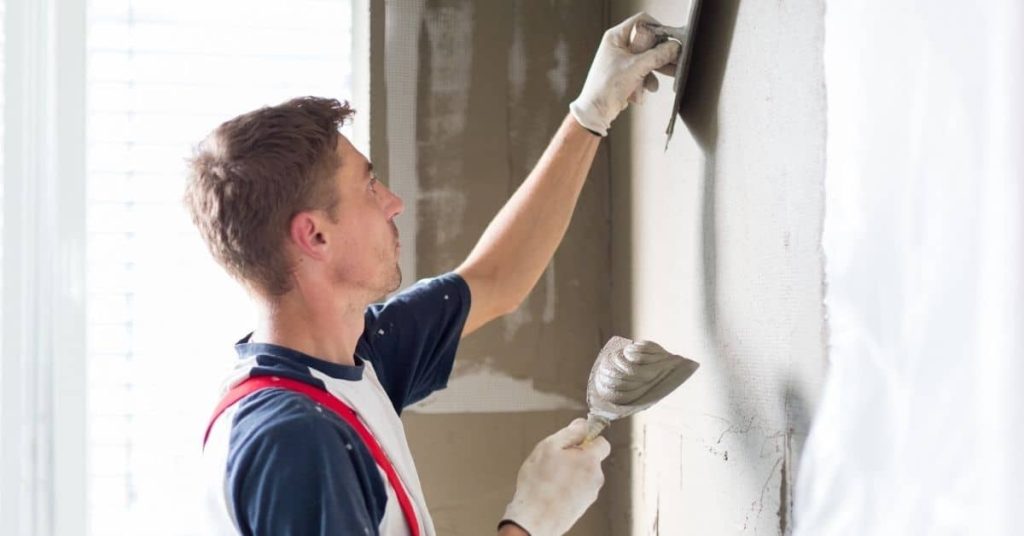
Next, mix your plaster according to the manufacturer’s specifications. Use a hawk and trowel to apply the patch material, building up layers to match the existing finish. Ensure each layer is well-bonded before applying the next. For deep holes or cracks, embed a mesh or fiberglass tape for added strength.
Once patched, allow the plaster to cure in humid conditions (usually 24-72 hours). Apply a final skim coat if needed, ensuring it’s well-bonded and smooth. Before painting or finishing, test a small, hidden area first to ensure compatibility with your chosen paint or finish.