
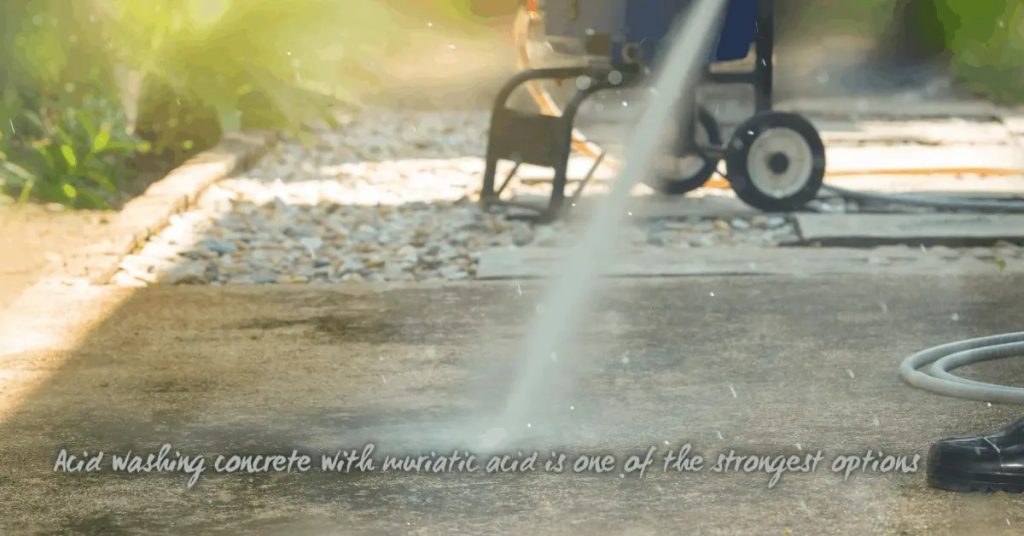
Introduction
Neutralizing acid cleaners on concrete means thoroughly rinsing and neutralizing the acid so it stops etching or causing future scaling; start by flushing the surface with plenty of water and follow with a bicarbonate or other manufacturer-recommended neutralizer until pH tests indicate neutral. Use common tools—hose with spray nozzle, stiff push broom, bucket, pH test strips or meter—and check the cleaner label or manufacturer instructions for the correct neutralizer and dilution to use.
After neutralizing, continue rinsing until runoff tests neutral and then let the slab dry before applying sealers or coatings that help prevent scaling. To reduce future scaling, address causes like aggressive cleaners, poor drainage, or salt exposure and follow product labels and local guidance for cleaning frequency and protective treatments.
Key takeaways
- Identify scaling causes: acid residue, improper rinsing, or surface micro-pitting.
- Choose neutralizers per manufacturer instructions and local codes, avoiding oversaturation.
- Rinse strategy: flood with clean water, then neutralize in stages per plan.
- Tools and materials: non-metallic brushes, pails, waterproof gloves, and pH tests.
- Check for post-acid damage and address microcracks or spalling before sealing.
- Prevent future scaling with proper curing, timely sealing, and routine maintenance.
- Safety: wear eye protection, gloves, and dispose effluent according to local regulations.
Table of Contents
- Introduction
- Key takeaways
- Why Acid Cleaners Can Cause Concrete Scaling
- Neutralizer Choices and How They Work
- Step-by-Step Rinsing and Neutralization Strategy
- Tools and Materials Checklist
- Identifying and Treating Post-Acid Concrete Damage
- Preventing Future Scaling: Sealing, Curing, and Maintenance
- Safety, Environmental Handling, and Disposal Best Practices
- Cost Considerations: Prevention Versus Repair
- Conclusion
- FAQ
Why Acid Cleaners Can Cause Concrete Scaling
Acid cleaners react chemically with the cement paste by dissolving calcium hydroxide and other soluble lime phases; that mobilized calcium leaves voids in the cement matrix and weakens the bond between aggregate and paste. This chemical removal creates microstructural damage that you will later see as surface softening and powdering.
Physically, the attacked surface becomes more porous and prone to micro-cracking, which increases water ingress and makes the slab vulnerable to freeze–thaw or abrasion—both accelerate scaling. The rate and severity of attack depend on cleaner concentration, dwell time, temperature, agitation, and surface porosity; check product labels or the manufacturer data sheet for concentration and dwell recommendations and treat even mild acids with caution because long contact or high porosity can produce significant damage.
Chemical mechanisms behind scaling
Acids lower the pH of concrete surfaces. When this happens, calcium hydroxide – a key component in cement paste – starts to dissolve. This is because calcium hydroxide is alkaline and reacts with acids to form water-soluble calcium salts.
Dissolving calcium weakens the cement matrix. The surface becomes softer and more susceptible to damage. Over time, this microstructural damage manifests as scaling – small pieces of concrete flaking off.
The surface chemistry also changes. Acids can react with other compounds in the concrete, further altering its properties and making it more prone to deterioration.
Environmental and material risk factors
Material choices and environmental conditions play a significant role in how concrete responds to acid cleaners. Porous surfaces, freeze-thaw cycles, salts, previous sealers, and improper curing can all increase the risk of scaling.
- Porosity: Highly porous surfaces absorb cleaner more deeply, increasing calcium leaching and promoting surface scaling on long exposure. Look for concrete with lower water-cement ratio or densifiers to reduce porosity.
- Freeze-thaw cycles: These can exacerbate damage caused by acids. Proper air-entrainment in the concrete mix helps mitigate this risk.
- Salts: Deicing salts used on driveways and walkways can react with acid cleaners, accelerating deterioration. Rinse thoroughly to remove all cleaner and salt residue.
- Previous sealers: Some sealers can trap moisture or acids beneath the surface, leading to scaling. Ensure any sealer is compatible with acid cleaners and allows for proper vapor transmission.
- Improper curing: Concrete that hasn’t been properly cured is more susceptible to damage from acids. Follow manufacturer’s guidelines for adequate curing times and methods.
Neutralizer Choices and How They Work
Neutralization stops the acid’s chemical attack by raising surface pH and converting free acid into salts and water, so it’s a critical step before rinsing and before any sealing or repair work. Verify compatibility and dosing on the neutralizer product label or technical sheet to ensure it’s appropriate for concrete.
Common options include household bases (baking soda), commercial alkaline powders, and purpose-made neutralizers; baking soda is safe and easy to use, commercial products may be faster or buffered for concrete, and strong bases require careful handling and manufacturer guidance. Apply according to the product instructions, watch for visual cues like fizzing or reduced reaction, use PPE, test surface pH with strips or a meter, and always follow up with a full rinse to remove dissolved salts and residues before proceeding.
Common neutralizers and compatibility
When choosing a neutralizer, consider its effectiveness, ease of use, and compatibility with concrete. Here’s a quick rundown:
Baking soda (sodium bicarbonate): A common household item that works well on small areas. It’s easy to use but may not be strong enough for heavy-duty cleaning.
Trisodium phosphate (TSP) alternatives: These are stronger alkaline powders, effective in removing tough stains. However, they can be harsh and may require testing on a small area first to ensure they don’t damage your concrete.
Commercial neutralizers: Professional-grade products designed for concrete surfaces. They’re usually more potent and easier to apply but come at a higher cost.
How to verify neutralization chemically
After applying the neutralizer, it’s crucial to confirm that the acid has been fully neutralized. Here’s how:
Use pH test strips or a digital meter to check if the surface and runoff have reached a pH of around 7 (neutral). Follow these steps:
1. Rinse a small area with water.
2. Apply the test strip or meter to the wet surface.
3. If the reading is close to 7, you’re good to go. If not, reapply the neutralizer and retest.
Step-by-Step Rinsing and Neutralization Strategy
Start by clearing loose debris, sweeping the area, and identifying high-porosity patches or damaged spots so you can focus rinsing and neutralizer application where the cleaner penetrated deepest. Pre-rinse with high-flow water to lift surface residues, then inspect and brush stubborn areas before applying any neutralizer.
Apply the chosen neutralizer per its directions—common approaches use a baking soda solution or commercial alkaline rinse applied with a sprayer, allowing the product to react while monitoring with pH strips or a digital meter at intervals. Follow with at least one thorough post-neutralizer rinse and a final rinse, documenting pH readings until the surface reads near neutral; use PPE, manage rinse runoff per local rules, and let the slab dry before testing or sealing.
Step-by-Step Process
This section guides you through a practical, step-by-step rinsing and neutralization strategy to prevent future concrete scaling.
- Preparation: Inspect the surface, clear debris, wear appropriate PPE (gloves, goggles).
- Pre-rinse: Flood the area with clean water to reduce acid load. Check water pressure and quality.
- Neutralize: Apply neutralizer per label instructions, agitate gently, let it dwell as specified.
- Rinse: Thoroughly flush the surface with clean water. Test runoff pH.
- Repeat: If pH isn’t near 7, repeat neutralization and rinsing until neutralized.
Pre-rinse and Water Quality Checks
Before neutralizing, a pre-rinse with clean water reduces acid load and prepares the surface. Ensure your water is suitable.
Use potable or low-mineral water to avoid introducing new contaminants. Check water pressure; too high may damage porous surfaces.
Test water pH if unsure; it should be around 7 (neutral). If not, adjust with vinegar or baking soda before use.
Neutralizer Application and Rinsing Sequence
Apply the neutralizer safely: dilute per label, broadcast evenly, agitate gently to ensure contact with all surfaces.
Let it dwell as specified. Then, thoroughly flush the surface with clean water. Test runoff pH using food-grade strips or a digital meter.
If pH isn’t near 7, repeat neutralization and rinsing until neutralized. Be patient; this may take several cycles.
Final Verification and Dry-down
After neutralizing, verify the final pH is near 7. Inspect for any residual staining or surface softening.
Allow adequate drying time before applying sealers or making repairs. This could take several days to a week, depending on weather conditions.
Note: If you find issues during the final check, consider calling a professional for advice.
Tools and Materials Checklist
Essential PPE includes chemical-resistant gloves, eye protection or face shield, and a respirator if fumes or fine dust are present; long sleeves and boots help prevent skin exposure. For measuring and application you’ll need pH test strips or a meter, spray bottles or a low-pressure sprayer, buckets, mixing containers, brushes, squeegees, and pads appropriate to concrete work.
Select neutralizers compatible with concrete—baking soda is a common DIY choice, while commercial neutralizers offer concentrated options; check product guidance for compatibility. For larger jobs consider a pressure washer, large-volume sprayer, containment mats, and waste-collection containers, and organize tools with labels and staging areas to keep clean and contaminated items separate for safe disposal.
Personal protective equipment and safety gear
Before you start, ensure you’re well-protected against potential hazards. Here’s a quick checklist to follow.
- Gloves: Chemical-resistant gloves to protect your hands from acid exposure. Check they fit well and cover your wrists.
- Eye protection: Goggles or face shield to prevent eye injuries. Ensure they’re certified for chemical splash protection.
- Respirator: Use a respirator if fumes are present, following SDS recommendations. Test it before use and replace filters as needed.
- Long sleeves: Wear long-sleeved clothing to protect your skin from acid splashes.
- Ventilation: Ensure the area is well-ventilated to prevent fume buildup. Use fans if necessary, but keep them away from dust sources.
- Spill containment: Have spill kits ready for quick response to any acid spills to prevent damage and injury.
- Respiratory safety: Handle acids safely, following SDS guidelines. Avoid breathing in fumes or mist.
- Hearing protection: Wear earplugs if using power tools like pressure washers to protect your hearing.
Quick rule: Always follow SDS instructions for specific chemical handling and PPE requirements.
Measuring, testing, and application tools
Accurate measurement and proper tool use are key to effective cleaning. Here’s what you’ll need:
- pH strips/meter: To test the acidity of your cleaner and neutralizer. Check before and after application.
- Sprayer/bucket: Choose a low-pressure sprayer or bucket for even distribution. Avoid high-pressure sprayers that can damage concrete.
- Brushes: Stiff-bristled brushes to scrub the surface effectively. Use nylon bristles for acid-resistant cleaning.
- Rollers/squeegees: For applying neutralizer and rinsing agents evenly. Check for even coverage.
- Utility knives: To remove any adhesives or labels before cleaning to prevent damage.
- Hose/pressure washer: Use a low-pressure washer (under 1200 PSI) to rinse effectively without damaging the surface. Check your specific equipment’s recommended pressure.
- Containment materials: Use containment mats or barriers to control runoff and prevent environmental damage.
Quick rule: Always test tools and equipment before use to ensure they’re in good working order.
Optional equipment for commercial or large jobs
For larger projects, consider these optional tools to increase efficiency and manage regulatory constraints:
- Water reclamation system: To recycle rinse water, redu