

Introduction
Garage floor coatings come in paint, epoxy, and polyaspartic, each with its own durability profile.
Paint is simple and forgiving, epoxy offers a thicker hard coat, and polyaspartic dries fast and resists temperature swings. This guide helps you compare protection, appearance, and DIY viability before you pick.
You’ll learn what to expect in terms of wear, heat, and how creative you can get with color and finish. The application process differs in prep, mixing, and curing time, and some options are more DIY-friendly than others. Check the label and local rules, and glance at recent posts from a few competitors to see real results.
Key takeaways
- Epoxy and polyaspartic coatings offer strong chemical resistance and abrasion protection when properly prepared.
- Garage floor paint is cheapest upfront but requires maintenance and frequent touchups.
- Polyaspartic cures faster and tolerates temperature swings better than epoxy.
- Proper surface prep and ventilation are critical for DIY success and safety.
- Recent Posts compare options from two to three competitors for context.
- Safety: wear respirator, eye protection, and follow manufacturer instructions to prevent hazards.
Table of Contents
- Introduction
- Key takeaways
- Quick Comparison Snapshot — Which Material Wins for Typical Garage Use
- Protection, Durability, and Longevity Comparison
- Appearance, Customization, and UV/Color Stability
- Application, Surface Prep, and Curing/Turnaround Times
- DIY Vs Professional Installation — Risk, Cost, and Warranty Considerations
- Real-World Performance: Water, Moisture, Chemicals, Traction, and Hot Tires
- Cost, Lifecycle Value, and Impact on Resale
- Safety, Environmental Impact, Tools & Materials Checklist, and Common Mistakes to Avoid
- Conclusion
- FAQ
Quick Comparison Snapshot — Which Material Wins for Typical Garage Use
Garage floors face a tradeoff between protection, appearance, cost, and longevity. Each system stacks up differently on wear resistance, moisture barriers, color stability, and upkeep. Understanding these basics helps you decide what matters most in your space.
Use-case framing matters: low-budget refresh, high-traffic areas, sun exposure, DIY versus pro help, and downtime tolerance all shift the best call. Look for practical cues in prep needs, curing timelines, and how costs can creep with primers and topcoats. The quick verdict usually hinges on your priorities: durability, look, or fastest turnaround.
Best-for scenarios
Each garage floor coating has its sweet spot. Here’s when to pick one:
Paint: If budget’s tight, and you want a quick, low-cost refresh.
Epoxy: For mid-range budgets, high durability, and better protection against moisture.
Polyaspartic: When top-notch performance matters most – heavy traffic, sun exposure, or demanding DIY projects.
How to choose using three questions
Answer these three questions to find your best fit:
1. Budget: Paint’s cheapest, followed by epoxy, then polyaspartic.
2. Exposure/Traffic: More sun and traffic? Polyaspartic holds up best. Less? Paint or epoxy might do fine.
3. Who will install: DIY-friendly? Paint’s easiest, then epoxy. Pro help only? Consider polyaspartic for top results.
Protection, Durability, and Longevity Comparison
You want to know how each coating bonds to concrete and where protection comes from. Some systems seal the surface, while others penetrate for deeper abrasion and impact resistance. How a product handles moisture and peeling ties directly to its bond with the substrate.
Assess durability in terms of hardness, flexibility, and how well it resists chipping and temperature swings. Longevity signals come from datasheets, warranties, and how prep quality or UV exposure can shorten or extend service life. Practical checks include bond strength claims and required recoat intervals from manufacturers.
Bonding and concrete penetration
Proper bonding with the concrete substrate is crucial for long-lasting garage floor coatings. A true bond means the coating penetrates into the concrete’s pores, creating a strong chemical link.
Poor bonding results in peeling, delamination, and easy damage. Check product datasheets for adhesion test results or ask your installer about their application process to ensure deep penetration.
Surface sealers, like garage floor paints, sit on top of the concrete, offering less protection against abrasion and impacts compared to coatings that penetrate and bond.
Flexibility and thermal cycling
Garage floors experience temperature changes and slab movement. Flexible coatings can handle these shifts better, preventing cracking and delamination.
Epoxies and polyaspartics are more flexible than garage floor paints. They can bridge minor cracks and accommodate slight slab movement without breaking down.
However, extreme temperatures can still cause issues if the coating isn’t flexible enough. Always check a product’s thermal cycling resistance before applying.
Chemical, abrasion, and impact resistance
Garage floors face harsh conditions: automotive fluids, cleaners, heavy loads, and impacts. Different coatings offer varying levels of protection.
Epoxies and polyaspartics provide excellent chemical resistance due to their deep penetration into the concrete. They also handle abrasion and impacts well, making them ideal for high-traffic areas.
Garage floor paints offer decent protection but are less resistant to chemicals and abrasion than epoxies or polyaspartics. Topcoat chemistry matters too – aliphatic topcoats perform better long-term against UV exposure and yellowing compared to aromatic ones.
Appearance, Customization, and UV/Color Stability
Finish options span gloss, semi-gloss, and matte, with topcoats altering gloss retention. Consider how each finish affects cleanliness and room brightness. Pigments and clear layers drive color fidelity over time.
Flakes, textures, and patterns add slip resistance and style, but also influence maintenance. UV exposure drives fading or yellowing; know which system holds color best in sunlit garages. For appearance preservation, lean on UV-resistant topcoats and follow practical cleaning and recoating schedules tailored to sun exposure.
Color, Flakes, and Texture Options
When it comes to garage floor coatings, you’ve got plenty of choices for finish, color, and texture. Let’s break ’em down.
For finish, you can pick from glossy, semi-gloss, or matte. Glossier finishes make your garage feel bigger and brighter, while matte hides scuffs better. Topcoats can help maintain that gloss over time.
Color-wise, you’ve got solid colors, quartz/flake blends, and translucent hues. Solid colors are simple and clean. Flakes add a touch of class – think metallic or granite chips. Translucents give a subtle, semi-transparent look. Choose what fits your style.
Flakes and textures aren’t just for looks. They hide stains and scuffs, making maintenance easier. Larger flakes hide more, but denser packs can make the floor feel rougher underfoot.
UV Stability and Long-Term Gloss Retention
Sunlight’s a garage floor coating’s worst enemy. It fades colors, yellows clear coats, and dulls gloss. Here’s how to fight back.
First off, check the technical data sheet. Look for UV-stable chemistries like 100% solids epoxy or polyaspartic. These hold up better against sunlight. Avoid urethanes – they yellow over time.
Next, apply a UV-resistant topcoat or clear coat. This adds another layer of protection. Reapply every few years to maintain gloss and color.
Lastly, keep your garage door closed when you’re not using it. Less sun exposure means less fading and yellowing. It’s simple but effective.
Application, Surface Prep, and Curing/Turnaround Times
Prep drives results: surface profiling, moisture testing, and crack repair determine bonding readiness. The better the prep, the longer the coating will hold up under traffic. Look for substrate requirements that affect install feasibility.
Crack repair, proper filling, and releveling matter because small missteps show up as failures later. Mixing accuracy, batch sizing, and pot life influence gloss and adhesion. Environmental controls and weather windows shape cure and return-to-service timing.
Surface prep and common application mistakes
Proper surface preparation is key to a lasting concrete job. Here are some common mistakes to avoid:
- Skipping cleaning: Dirt, grease, or other contaminants can cause peeling. Always clean the surface before applying.
- Ignoring repairs: Cracks and holes need filling before you apply concrete. Ignoring them leads to bubbling and delamination.
- Not profiling: A rough surface helps concrete bond better. Sandblasting, grinding, or acid etching can help achieve this.
Double-check these points before you start. A little extra work upfront saves a lot of trouble later on.
Mix ratios, pot life, and working time
First things first, always check the product label for your concrete mix’s specific ratio. It’ll usually be something like 1:2:4 (cement:sand:aggregate). But don’t just guess, measure it out right.
Now, pot life – that’s how long your mixed concrete stays usable before it sets. It varies by product and temperature, so check the manufacturer’s instructions. In warm weather, you might have as little as 30 minutes. In cooler temps, up to an hour.
Working time is similar but refers to how long you’ve got to place and finish your concrete before it starts to set. Again, check those instructions. Once it starts setting, you’re racing against the clock. Don’t waste time – plan your pour and finishing sequence ahead.
Curing stages and realistic turnaround
Concrete needs time to gain strength. It’s not just about slapping it on and calling it a day. Here’s what you need to know:
Tack-free: This is when the surface isn’t sticky anymore, usually after a few hours. You can walk on it, but don’t go dancing. Check your product label for exact times.
Light-use: After a day or two, you might think it’s ready for heavy use. Wrong! It’s still gaining strength. Be gentle with it. Follow manufacturer instructions to know when it’s safe for heavy traffic.
Full cure: This takes time, usually around 28 days. That’s right, you’ll have to be patient. After this, your concrete is at its full strength. But remember, even after 28 days, it’s still gaining a bit more strength over time.
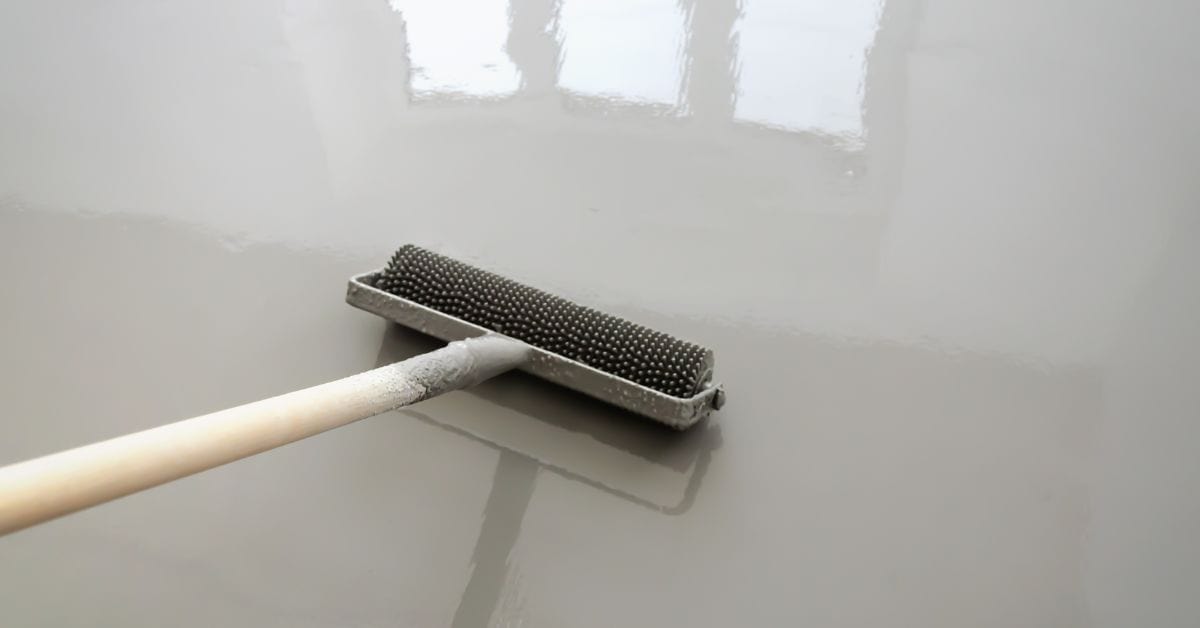
DIY Vs Professional Installation — Risk, Cost, and Warranty Considerations
DIY kits vs pro installs differ in prep depth, material quality, and cure management. Consider value against limitations and potential downtime. Warranties reflect these differences and what is covered in terms of labor and materials.
Fast-curing chemistries pose specific risks like blush or pinholes if mishandled. Understand how warranties and contractor oversight affect long-term performance. Use clear criteria to decide when to hire an installer and how to vet a contractor effectively.
Typical DIY pitfalls and how to avoid them
DIY garage floor coatings can go wrong if you’re not careful. Here are common mistakes and quick prevention tips.
- Insufficient surface prep: Not cleaning, etching, or priming the concrete properly leads to poor adhesion. Always follow the surface prep guidelines.
- Poor mixing: Incorrect mix ratios and incomplete stirring can cause uneven curing and reduced durability. Follow the kit’s instructions precisely.
- Timing errors: Not allowing enough time for each step, especially curing, can ruin your project. Plan your timeline accordingly.
- Ignoring temperature and humidity: Extreme conditions can affect cure times and final results. Maintain ideal temperatures (60-85°F) an