

Introduction
Concrete surface blisters are raised pockets on the finish caused by trapped air or moisture beneath the surface. They usually form when the surface dries too quickly or moisture moves upward as the concrete sets.
Causes include finishing while the surface is still soft, excessive water in the mix, or rapid evaporation from sun, wind, or heat. Prevention basics are to control bleed water, keep the surface from drying out too fast, and follow proper curing steps and manufacturer guidance for your mix and climate.
Key takeaways
- Definition: lightweight surface pockets caused by trapped air or moisture during finishing.
- Avoid by smoothing with consistent tension, delay finishing until bleed water subsides.
- Environmental factors: high wind, heat, or rapid drying promote blister formation.
- Plan finishing around forecasts; cover curing and protect edges from direct sun.
- Safety: wear eye and skin protection when finishing and handling curing materials.
- Document blister occurrences with photos and notes for future planning and repairs.
Table of Contents
- Introduction
- Key takeaways
- What Are Concrete Surface Blisters?
- How and Why Blisters Form During Finishing
- Environmental and Material Factors That Increase Blister Risk
- Common Finishing Mistakes That Cause Blisters
- Planning and Step-by-Step Finishing Guidelines to Prevent Blisters
- Tools, Materials, Safety Checklist and Material Specs to Check
- Detecting, Assessing, and Documenting Blister Severity
- Repair and Remediation Options—from Quick Fixes to Advanced Techniques
- Conclusion
- FAQ
What Are Concrete Surface Blisters?
Concrete surface blisters appear as raised, bulged patches on a slab’s surface. They are not the same as popouts, scaling, spalling, or honeycombing, though they share some underlying moisture and curing factors. Look for flat panels or joints hosting small to larger bulges, with textures that feel slick or brittle and color shifts that hint at trapped moisture beneath.
Size and frequency vary, from tiny pinhole-like swellings to broader blistered areas. Early detection matters because blisters can undermine bond, cause delamination, and complicate stain or paint adhesion later. Use simple inspection cues like tapping sounds, moisture indicators, and timing of finishing steps to note potential trouble areas and document findings for maintenance planning.
Definition and visual characteristics
Concrete blisters are raised, bulged patches on the surface of a concrete slab. They differ from other defects like popouts (small, shallow craters), scaling (flaking or peeling), spalling (chipping or breaking off), or honeycombing (large voids).
Blisters appear as slick, sometimes brittle, bulges with diameters ranging from small pinholes to larger areas up to a few inches across. They can be found on flat panels and in joints, often forming patterns where bleed water collects.
Color shifts may indicate blisters: they might look darker or lighter than the surrounding concrete due to trapped moisture or different cement paste content.
How blisters develop under the surface
Blisters form when air and bleed water get trapped beneath the finished surface during concrete placement. This happens if finishing starts too early, or if the slab isn’t properly cured.
As the concrete hardens, the trapped moisture can’t escape. It creates a pocket that pushes up against the surface, forming a blister. Excessive bleed water, temperature swings, and improper aggregate moisture can all contribute to this process.
The result is a hollow bump beneath the finished skin. Over time, these blisters can cause bond failures, delamination, staining, and poor paint/overlay adhesion.
Visual checkpoints for quick field detection
Inspect the slab after it’s been finished but before sealing. Use this checklist to spot blisters:
- Check for patterns: Blisters often form where bleed water collects, like in joints or on flat panels.
- Look for color shifts: Darker or lighter patches may indicate trapped moisture.
- Feel the surface: Slick or brittle areas could be blisters. Be gentle to avoid damaging the surface.
- Use a flashlight: Angle light across the slab to cast shadows and reveal any subtle bulges.
- Check for tapping sounds: Gently tap the surface with a hammer or screwdriver handle. A dull sound might indicate a blister.
- Moisture check: Use a moisture meter to confirm if trapped water is present.
- Bleed indicators: Look for signs of excessive bleed water, which can increase the risk of blisters.
- Timing of finishing steps: Ensure finishing wasn’t done too early or curing was inadequate. Improper timing can lead to blister formation.
Quick rule: If you find any signs of blisters, document them and address immediately. Early detection helps maintain durability and finish quality.
How and Why Blisters Form During Finishing
Blister formation starts when bleed water rises, creating laitance that can crust over. Finishing steps can then trap that moisture and air, especially if done too early or with too much pressure. This entrapment distorts the surface as the concrete continues to hydrate.
The sequence matters: a bleeding stage, crust formation, and then finishing that locks in moisture and air. Finishing timing is crucial—troweling on a wet or crusted surface increases blister risk. Surface sealing timing also controls whether moisture can escape from the pores, influencing blister development.
Bleed water and air entrapment mechanics
Concrete is a mix of cement, water, aggregates, and sometimes admixtures. When mixed, the cement reacts with water to form a paste that binds the aggregates together. This process produces bleed water, which rises to the surface as the concrete sets.
Air also gets trapped in the concrete during mixing or placement. As the bleed water rises, it carries some of this air to the surface. If the surface is sealed too early, this bleed water and air become trapped beneath the crust, creating pressure that leads to blistering.
Think of it like a balloon: The trapped moisture and air are like the air inside the balloon. As the concrete sets and hardens around them, they have nowhere to go but outwards, forming a blister.
Premature surface sealing and crusting
As the concrete sets, the surface starts to stiffen and form a thin layer called a crust. This happens faster than the underlying paste hardens. The crust gives the slab a solid feel, making it seem ready for finishing.
However, if you start finishing too early, you’re sealing this crust before the underlying concrete has properly set. This traps any remaining bleed water and air beneath the surface, setting the stage for blistering.
Remember: The crust is just a thin layer. Beneath it, the concrete might still be plastic – soft and unset. Finishing too early can trap moisture and air before they have a chance to escape naturally.
Impact of finishing timing and techniques
Finishing involves leveling, compacting, and smoothing the concrete surface. It’s typically done with tools like floats or power finishers. If you start this process too early, before the bleed water has fully risen and the crust has formed, you’re sealing in moisture and air.
Aggressive finishing techniques can also force air bubbles to the surface, creating voids that fill with bleed water. When these voids are sealed off by the finishing tool, they become blisters. Power finishers, if used too early or aggressively, can exacerbate this problem.
Be patient: Wait for the right time to finish – when the bleed water has mostly risen and a thin crust has formed. This ensures you’re not trapping moisture and air beneath the surface.
Environmental and Material Factors That Increase Blister Risk
Ambient conditions like heat, humidity, wind, and sun exposure change how quickly water evaporates and bleed water behaves. These factors interact with mix design and substrate readiness to heighten blister risk. Adjustments to curing and finishing plans are often required when weather shifts.
Mix design variables such as water content, cement type, and additives influence surface behavior during finishing. Substrate moisture, laitance, and curing conditions affect bond and trapped moisture beneath the surface. Finishing timing must align with how the slab is setting under these conditions.
Weather: wind, temperature, and humidity effects
Wind can increase evaporation rates, drawing moisture out of the concrete too quickly. This leaves less bleed water to rise to the surface, increasing blister risk.
Hot temperatures speed up hydration and evaporation. Concrete sets faster but may not have enough time for proper bleeding, leading to trapped air and water.
Low humidity can also increase evaporation rates, while high humidity slows down evaporation, allowing more bleed water to rise. However, it can also lead to condensation on the surface, which can be drawn back into the concrete, causing blisters.
Mix design and admixture influences
A high water-cement ratio increases the likelihood of blisters. Too much water makes it harder for the concrete to bleed properly, trapping air and water beneath the surface.
Workability, or slump, affects finishing timing. High-slump mixes can be finished too soon, before proper bleeding has occurred, leading to trapped moisture.
Water reducers (superplasticizers) can help control workability but may also increase the risk of blisters if not used correctly. They can make concrete set faster and bleed slower, trapping more water beneath the surface.
Air-entraining admixtures introduce tiny air bubbles into the mix. While they can improve freeze-thaw resistance, too much air can lead to blistering if not properly managed in the mix design.
Subgrade, drainage, and curing surface conditions
Wet or poorly draining subgrades can lead to upward migration of water, causing blisters. Ensure the subgrade is dry and well-compacted before pouring.
Improper curing surfaces can trap moisture beneath the concrete’s surface. Use appropriate curing compounds or membranes to control moisture loss and prevent blistering.
Ephemeral water migration, such as from rain or irrigation, can also cause blisters if it gets trapped beneath the surface. Protect the concrete from these sources of moisture during the critical early stages of setting.
Common Finishing Mistakes That Cause Blisters
Early or aggressive troweling, overworking, and sealing in bleed water or laitance can rapidly create blisters. Repeated passes or excessive tool pressure trap air and moisture beneath the surface. These habits undermine the natural evaporation needed for a smooth finish.
Tool selection and handling matter: choosing the right trowel and using proper pressure helps, while excessive passes or twisting motions can worsen blisters. Timing and weather also matter—finishing too soon or in drying wind can lock in distortions and stain the surface for later repair.
Over-finishing and early troweling
Starting to finish your concrete slab too early traps bleed water under the surface. This happens when you trowel before the bleed water has a chance to evaporate naturally.
Bleed water is the excess water that rises to the surface as the cement begins to hydrate. If you seal this water in with your trowel, it creates pockets of air and moisture that can lead to blisters later on.
To avoid this, wait until the initial set has occurred. The slab will have stiffened slightly but is still soft enough for finishing. This usually takes around 3-6 hours after pouring, depending on temperature and humidity.
Improper tool selection and machine operation
Using the wrong tools or operating them incorrectly can cause blisters. Here are some common mistakes:
- Heavy power trowels too early: Using heavy-duty power trowels before the slab has stiffened enough can push bleed water back into the concrete, trapping it and causing blisters.
- Wrong brooming/edging practices: Brooms with hard bristles or edgers with sharp corners can gouge the surface, leaving marks that trap air and moisture.
- Misuse of hand tools: Using trowels too aggressively or at the wrong angle can also trap air and cause blisters. Be gentle and use even pressure.
- Incorrect blade angles on power trowels: Setting blades at too steep an angle can cause them to dig into the surface, trapping air and causing blisters.
- Excessive passes with floats: Overworking the surface with a float can push bleed water back into the concrete, leading to blisters.
Inadequate protection and curing during/after finishing
Failing to protect your slab from wind, sun, or rapid drying can cause stress on the surface, leading to blisters. Here’s how:
Rapid drying causes the surface to set too quickly while the interior is still curing. This creates a hard crust that traps moisture and air underneath, leading to blisters.
To prevent this, protect your slab from wind and sun during finishing and for at least 72 hours afterwards. You can do this by covering it with plastic sheeting or wet burlap. Also, ensure proper curing after the initial set. Keep the surface moist but not waterlogged to allow a slow, even cure.
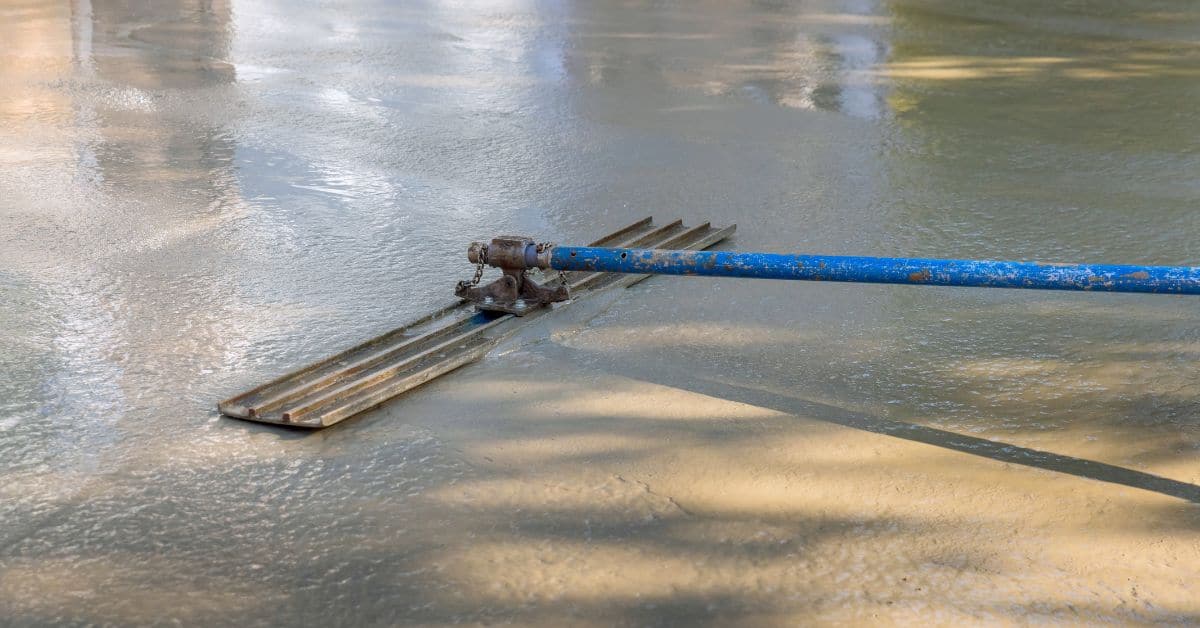
Planning and Step-by-Step Finishing Guidelines to Prevent Blisters
Proper pre-job planning sets the stage for blister-free finishing. Align delivery windows with mix characteristics, inspect the substrate for moisture and flatness, and choose curing methods that suit the site. Document the plan so the team follows consistent steps.
A sequenced workflow focuses on timing cues and contingency actions. Manage bleed water, delay finishing until a thin crust forms, and adapt finishing method as needed. Have alternatives ready for curing and protection in case conditions shift unexpectedly.
Step-by-Step Process
This section outlines a clear, numbered sequence of practical steps for planning and step-by-step finishing guidelines to prevent concrete surface blisters.
- Preparation: Check weather forecast, gather tools (trowels, screed, bull float), ensure safety gear (gloves, boots, goggles).
- Substrate Inspection: Check moisture content and flatness of the base. Moisture should be below 4% for new slabs.
- Concrete Delivery: Coordinate with your supplier to have concrete delivered within a 90-minute window for optimal workability.
- Main Work: Follow the on-site finishing sequence (screed, bull float, wait-for-bleed, edge, trowel) using visual/tactile cues to proceed.
- Final Checks: Ensure proper curing methods are in place before leaving the job site. Revisit after 24 hours for any touch-ups.
Pre-pour planning and communication
Before concrete placement, verify these aspects to minimize blister risk:
Concrete Mix: Confirm the mix design has suitable bleed characteristics (15-20% bleed water).
Weather Plan: Monitor ambient and substrate temperatures. If high heat or low humidity, consider delayed finishing or fogging.
Tools: Ensure all necessary tools are clean, in good condition, and ready for use.
Crew Responsibilities: Assign roles clearly – who’s handling the screed, bull float, etc. Communicate any special needs (e.g., additional curing).
On-site finishing sequence and timing cues
The order of operations for concrete finishing is crucial to prevent blisters:
1. Screed: Level the concrete surface immediately after placement.
2. Bull Float: After initial screeding, use a bull float to consolidate and level the surface. This should be done within 15-30 minutes of placement.
3. Wait-for-Bleed: Allow concrete to bleed water naturally (about 20-40 minutes).
4. Edge: Use an edging tool to finish the edges and remove any excess material.
5. Trowel: Make final trowel passes when the surface is no longer tacky but before it starts to scorch or drag (usually 2-4 hours after placement).
Contingency measures for adverse conditions
High evaporation rates, crusting risk, or unexpected delays may require contingency actions:
1. Fogging: If high heat or low humidity, consider fogging the surface to slow down evaporation and prevent premature drying.
2. Damp Coverings: Use damp coverings (burlap, plastic sheets) to maintain moisture levels when finishing is delayed.
3. Delayed Finishing: If conditions are unfavorable, delay finishing until temperatures drop or humidity rises. Revisit the site to ensure no blistering has occurred before proceeding with final steps.
Tools, Materials, Safety Checklist and Material Specs to Check
Keep essential finishing tools ready and know when each is appropriate for blister risks. Common items include trowels, floats, edging tools, gauge rods, sprayers, and curing blankets. Avoid tool misuse by following the intended sequence and pressures for each tool.
On-hand materials include sealers, curing compounds, anti-blister additives, and release agents. Verify safety equipment and PPE, and confirm material specs with the manufacturer or mix designer, then document them for the backyard or trades project use.
Recommended tools and equipment by task
Use this checklist to ensure you have the right tools for each stage of finishing fresh concrete and preventing blisters.
- Trowels (hand & power): For smoothing and leveling. Use hand trowels for small areas, power trowels for large slabs.
- Floats: To remove imperfections and bring aggregate to the surface. Use magnesium or wood floats for initial finishing, followed by steel floats for final smoothing.
- Edging tools (groovers, bullfloat): For creating control joints and leveling edges.
- Gauge rods: To check slab depth and ensure consistent thickness.
- KVB sprayers: For applying curing compounds and sealers evenly.
- Broom (for broom-finished surfaces): Use to create a non-slip texture. Work the broom in one direction for consistency.
- Curing blankets: To retain moisture and heat during early curing stages.
Quick rule: Use tools suited to each task to avoid over-working or under-finishing concrete, which can lead to blisters.
Material specs and what to verify with suppliers
Confirm these material specifications with your supplier or mix designer before pouring to ensure a quality, durable concrete surface.
- Cement content: Higher cement content increases strength but can also increase blister risk. Aim for 10-15% of total weight.
- Water-to-cement ratio (W/C): Target a low W/C (0.45-0.6) to minimize excess water that can cause blisters.
- Slump/workability: Aim for moderate slump (3-5 inches) for easy placement without excessive bleeding.
- Air entrainment: Confirm 5-8% air content to improve durability and resistance to freeze-thaw cycles. Too much air can cause blisters.
- Additive compatibility: Ensure any additives (anti-blister, accelerators) are compatible with the mix design and won’t increase blister risk.
- Finishing admixtures: Confirm use of retarding or accelerating admixtures to match your finishing schedule.
- Curing requirements: Follow manufacturer recommendations for curing time and methods to prevent premature drying and blisters.
Quick rule: Verify material specs with suppliers to ensure a well-designed mix that minimizes blister risk.
Safety and PPE during finishing operations
Protect yourself and your team with these safety measures and personal protective equipment (PPE) when handling fresh concrete.
- Gloves: Wear heavy-duty gloves to protect hands from skin burns and cuts.
- Goggles: Protect eyes from debris, splashes, and cement dust. Consider safety glasses with side shields for better protection.
- Boots (steel-toed): Wear sturdy boots to protect feet from heavy tools and falling objects.
- Respirator: Use a respirator in dusty conditions to prevent inhalation of harmful particles.
- Long sleeves & long pants: Wear protective clothing to minimize skin contact with fresh concrete.
- Slip & trip controls (temporary barriers, signage): Implement safety measures to prevent accidents on wet surfaces.
- Proper ladder/scaffold use: Follow manufacturer guidelines for safe setup and operation of ladders and scaffolds. Inspect before use.
- Machine safety (power trowels, edgers): Follow manufacturer instructions for safe operation and maintenance. Wear appropriate PPE when operating machinery.
Quick rule: Always wear appropriate PPE and follow safety guidelines to prevent injuries and accidents on the jobsite.
Detecting, Assessing, and Documenting Blister Severity
Develop a simple severity scale to standardize inspections. Use categories such as none, superficial lift, moderate lift with spotting, and deep or widespread blistering. This helps crews communicate clearly and plan repairs.
Document findings with notes, location maps or photo grids, and timestamped observations. A standard field form keeps data consistent, aiding future decisions on monitoring or repair actions.
Simple on-site inspection protocol
Before you start, ensure it’s safe and you have good lighting. Use this checklist to inspect blisters systematically.
- Check lighting: Ensure the area is well-lit for clear observation.
- Access substrate: Remove any toppings or sealers to see the true surface.
- Note curing history: Check when and how the concrete was cured. Inadequate curing can cause blisters.
- Check moisture status: Use a moisture meter to ensure the slab is dry enough for finishing.
- Inspect recent steps: Review any recent finishing work that might affect blister visibility.
- Tap and listen: Gently tap the surface. A hollow sound may indicate blisters beneath.
- Measure dimensions: Use a ruler or caliper to note blister diameter. Longer measurements mean bigger problems.
- Count blisters: Estimate how many blisters are present per square foot. More means more severe.
- Check depth: Use a depth indicator or probe to measure lift height. Deeper lifts need immediate attention.
Quick rule: The more you find, the bigger they are, and the deeper they go, the faster you’ll want to act.
Severity criteria and what they imply
The severity of blisters determines how quickly you need to act. Here’s what each grade means:
Grade 0 – None: No visible or felt blisters. Keep monitoring, but no immediate action needed.
Grade 1 – Superficial lift: Blisters are small and barely noticeable. These might be cosmetic only, but monitor for progression.
Grade 2 – Moderate lift with spotting: Blisters are larger and more numerous. They may affect durability and need attention soon.
Grade 3 – Deep or widespread blistering: These are serious. They can compromise structural integrity and require immediate remediation.
Repair and Remediation Options—from Quick Fixes to Advanced Techniques
Remediation decisions depend on blister size, depth, and underlying moisture or movement. Start with a careful assessment of moisture, substrate integrity, and any cracks before selecting a repair path. Patches or overlays may be suitable for isolated blisters; larger areas require broader treatment planning.
Patching and grinding are common quick fixes, while overlays use bonding agents and polymer-modified mixes. In severe cases, full slab replacement might be warranted, with attention to core tests and subgrade conditions. In all cases, consider consulting a concrete specialist or structural pro when in doubt.
Minor repairs: localized removal and patching
For small, isolated blisters, you can perform a quick fix with localized removal and patching. Here’s how:
Step 1: Carefully cut out the blister using a chisel or rotary tool to expose sound concrete.
Step 2: Clean the cavity thoroughly with compressed air or a brush to remove any debris.
Step 3: Apply a bonding agent or primer, then use an overlay material or patching compound. Feather the edges to ensure a strong bond and smooth finish.
Major remediation: milling, overlays, or replacement
When blisters are widespread or deep, you’ll need to consider major remediation options. Here’s what to do:
Step 1: For profile restoration, use a grinder or milling machine to remove the damaged layer and expose sound concrete.
Step 2: Clean the surface thoroughly. Then, apply a bonding agent before installing bonded overlays or polymer-modified overlays for a durable finish.
Step 3: If blisters indicate underlying issues like delamination or entrapped moisture, full slab replacement might be necessary. Consult a structural engineer to assess subgrade and evaluate adjacent finishes or slabs.
Advanced techniques and when to involve an engineer
Complex cases may require advanced techniques and professional assessment. Here’s when to consider them:
If blisters indicate delamination or entrapped moisture, perform moisture testing using a calcium chloride test or relative humidity probes.
For widespread or deep blisters, consider core tests to assess the concrete’s integrity and identify any underlying issues. If results are unsatisfactory, consult a structural engineer for further evaluation and recommendations.
In some cases, you may need to involve specialty contractors for advanced techniques like shotcrete or self-leveling overlays. Always consult a professional when in doubt about the cause or extent of blistering.
Conclusion
Blisters damage appearance and can undermine durability if you push ahead without confirming conditions and finish. The bottom line is to slow down, verify materials and environment, and follow a proven plan so you don’t trap flaws in the surface.
Run a quick, practical checklist as you finish: inspect the surface for any early blister signs, confirm your concrete mix and add materials match the plan, check ambient and surface temperatures, avoid finishing too soon or too aggressively, stage tools and PPE, and test a small patch or test area before full turnout. If the area looks marginal, pause, document the test, and adjust the timing or workflow before proceeding. Keep notes on material specs, moisture levels, and curing conditions so you can stay consistent and avoid repeating mistakes.
Common errors to avoid are pushing the finish when the surface is too wet or too cold, overworking the concrete or using improper trowel angles, and skipping a final check of environmental factors or material temps. Safety rules are simple: wear eye and respiratory protection as needed, handle tools calmly to prevent gouges, and never apply finishes beyond the tested window. If blistering is present after planning and a patch test, or if you’re unsure about moisture, cure, or patch viability, call a pro—late-stage repairs can be costly and risk long-term damage. Stay deliberate, document what you did, and finish with confidence.
FAQ
What exactly are concrete blisters and how do they form on the surface?
Blisters are raised pockets or bumps on the finish when moisture or air becomes trapped under the surface. They form when the concrete is still plastic and finishing steps trap vapor, air, or improper moisture movement under a thin layer.
What environmental factors most commonly cause blistering in DIY pours?
Temperature, wind, and rapid drying drive blistering. Hot or windy days can pull moisture out fast; shade helps, but avoid sudden changes in moisture and temperature during finishing and curing.
How does timing affect blister formation and prevention?
Finish while the concrete is workable but not soupy, and avoid overworking the surface. Start finishing after most bleed water has disappeared but before it stiffens too much; delaying or rushing steps can trap moisture and air.
What equipment choices or finishing methods should I avoid to prevent blisters?
Avoid aggressive troweling, overworking with steel floats, or switching tools mid‑finish. Use the same finishing approach from screeding to final float, and follow manufacturer guidance on tool use and blade or float hardness for the surface you’re finishing.