Introduction
Before you start pointing fingers at your concrete slab for drainage issues, take a moment to understand the timeline of checking and troubleshooting its slope. This process doesn’t have to be time-consuming or complicated.
In this guide, we’ll walk you through the step-by-step timeline of performing simple string and water tests on your concrete surfaces to ensure proper drainage before any major fixes or replacements.
The Timeline of Concrete Drainage Slope Checks
Performing a thorough check on your concrete slab’s drainage slope involves several steps, each with its own time commitment. Here’s a timeline to help you understand the process:
- Preparation (15-30 minutes): Gather your tools and materials, including a string line, tape measure, level, gloves, eye protection, and water.
- Setting up the string line (10-20 minutes): Find high and low points on your slab to set up the string line. Ensure it’s taut and accurately reflects the expected grade across the slabs.
- Measuring slope with a string line (5-10 minutes per section): Use the string line to eyeball the slope, checking for any deviations from the desired direction and depth. Divide your slab into sections to make this process more manageable.
- Performing water tests (5-10 minutes per section): After measuring with a string line, perform simple water tests on each section to watch how the slab sheds water. Note runoff patterns and pooling areas.
- Interpreting results and troubleshooting (10-30 minutes): Analyze the data from your tests, looking for improper drainage signs like standing water and slow edge runoff. Document issues early and plan budget-friendly fixes before replacing concrete.
By following this timeline, you can efficiently check your concrete slab’s drainage slope and address any problems that arise.
Key takeaways
The preparation time for these tests is minimal but crucial to ensure accurate results. Keep in mind that the overall schedule may be affected by factors such as the size of your slab and the severity of drainage issues.
- Verify slope direction toward drains before finishing surface work.
- Set up a taut string line to mirror expected grade across slabs.
- Wear eye protection and gloves when inspecting slopes and performing tests.
- Perform simple water tests by noting runoff patterns and pooling areas.
- Watch for improper drainage signs like standing water and slow edge runoff.
- Document issues early and plan budget-friendly fixes before replacing concrete.
Table of Contents
- Introduction
- Key takeaways
- Why Test Slab Drainage First
- Common Locations and Visual Checkpoints for Drainage Problems
- Tools and Materials Checklist for String and Water Tests
- How to Set up and Use a String Line to Measure Slope
- Performing Simple Water Tests on Concrete Surfaces
- Interpreting Results and Common Mistakes in Reading Tests
- Troubleshooting and DIY Fixes Before Replacing Concrete
- Seasonal Factors, Cost Considerations, and Maintenance Planning
- Conclusion
- FAQ
Why Test Slab Drainage First
Before assuming the concrete itself is at fault, run simple checks to avoid unnecessary slab replacement and to focus repairs where they actually belong. A good pre-diagnosis narrows the cause to grading, surface drainage, or concrete failure so you don’t replace a sound slab when the problem is water routing.
Proper drainage diagnosis will reveal whether the slope is adequate, where pooling or ponding occurs, how surface grading interacts with soil and nearby gutters or landscaping, and if cracks or edge voids are symptomatic rather than causal. Use basic string-line slope checks, small controlled water tests, and visual cues to record results, then compare them to the intended slope and manufacturer or local guidance to decide next steps like regrading, adding drains, or limited sealing.
When poor drainage is the likely cause
If you’re seeing water pooling on your slab, it’s usually a sign of poor drainage. But before you blame the concrete, consider these common scenarios:
Grading issues: If the ground around your slab isn’t sloping away from the house at least 1 inch per foot, water will pool and find its way onto the slab.
Clogged or improperly installed gutters and downspouts: They might be directing water right where it shouldn’t go – onto your slab. Check for blockages and ensure they’re pointing away from the foundation.
Adjacent landscaping: Plants, trees, or even soil mounds near the slab can redirect water flow, causing it to pool on the concrete instead of draining away.
How proper testing saves time and money
Accurate tests can guide you towards low-cost repairs and help you avoid unnecessary replacements. Here’s how:
First, identify the problem area. Use simple string-line slope checks and water tests to pinpoint where water is pooling or not draining properly.
Next, determine the cause. Based on your observations, you might find grading issues, gutter problems, or landscaping concerns. Remember, most drainage problems aren’t concrete defects.
Then, decide on repairs. If it’s a minor issue like a low spot in the ground or a clogged gutter, you can often fix it yourself for little cost. But if the problem is more severe, like extensive grading issues or a failed waterproofing membrane, you might need professional help.
Common Locations and Visual Checkpoints for Drainage Problems
Drainage trouble commonly shows up on patios, driveways, garage floors, and balcony slabs; each surface has typical fall directions and details to note before testing. Walk the area and look for pooled water, standing water lines, misaligned joints, edge cracks, spalling, efflorescence, and signs of settling near edges or corners.
For each location check high and low points, abrupt slope changes, and condition of expansion or control joints; mark any areas that consistently hold water after a light rain or a hose run. Sketch a simple labelled grid of the surface, mark suspected low spots, and correlate those with gutters, downspouts, and grading changes so the test plan targets likely problem zones rather than guessing.
Visual checkpoints to record
Before you start testing, document the current state of your concrete surfaces. This helps pinpoint issues and track progress.
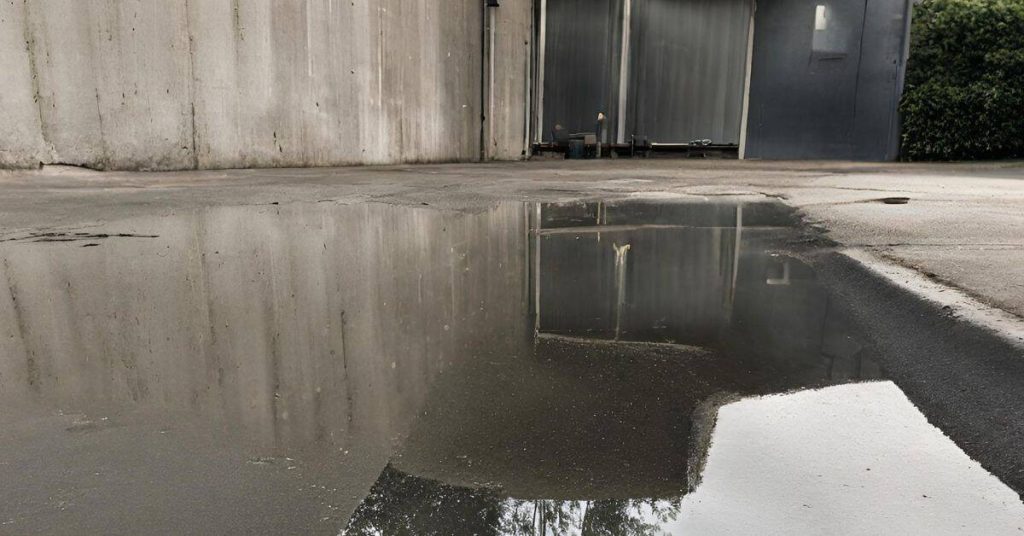
- Pooling areas: Photograph any water accumulation spots. These could indicate low points or improper drainage.
- Stain patterns: Note discoloration, especially around joints or cracks. It might hint at water intrusion.
- Crack orientation: Record crack direction and width. They can reveal settlement or movement issues.
- Nearby grade: Photograph surrounding ground level. Improper grading can direct water towards your concrete.
- Misaligned joints: Check if control or expansion joints are uneven or offset. This could signal settling or shifting.
- Efflorescence: Note any white, powdery deposits on the surface. It’s a sign of excess water moving through the concrete.
- Signs of settling: Look for cracks at edges or corners that might indicate settlement.
Quick rule: The more details you record now, the easier it is to diagnose and fix drainage problems later.
Seasonal and weather-related indicators
Weather conditions can exacerbate or hide drainage issues. Check for these signs at different times of the year.
- Freeze/thaw cycles: Inspect surfaces after winter thaws. Cracks may widen or new ones appear due to frost heaving.
- Heavy rain: Observe your concrete after heavy downpours. Temporary pooling can reveal low points or clogged drains.
- Snow melt: Check for water accumulation once snow starts melting. It might expose drainage problems hidden under the snow.
- Dry spells: Inspect surfaces during droughts. Cracks may open up due to lack of moisture, allowing water to penetrate deeper.
- Autumn leaves: Check for leaf debris in gutters and drains. Clogs can cause water backup onto your concrete.
Quick rule: Regular checks throughout the year help you stay ahead of drainage issues, preventing minor problems from becoming major ones.
Tools and Materials Checklist for String and Water Tests
Gather durable string or twine, stakes (rebar or wooden), a chalk line or marker, a tape measure, and a level (carpenter’s level or phone app) for the string test; for water tests bring a marked bucket or bottle, a stopwatch or phone timer, and a visible reference point for measuring travel. Consider inexpensive substitutes like fishing line, a garden twine, a laser or line level for greater accuracy, and a water bottle with measured markings if you don’t have a graduated container.
Also bring safety and prep gear—gloves, eye protection, proper footwear—and pre-mark the test area with chalk or paint so you can repeat tests in the same spots. Set stakes at known intervals, tension the string without sag, define run and rise points for slope calculations, and follow simple tips to avoid loose string, buried stakes, or misread levels when recording results.
Recommended tool specs and safe ranges
Before you start your string and water tests, use this checklist to ensure you have the right tools and materials. This will help you avoid common mistakes that can lead to costly rework.
- Tape Measure: Check it against a known straight edge to ensure it’s accurate. A 25′ or 30′ tape measure is usually sufficient for most DIY projects.
- Level: Use a 2′ or 4′ level with a bubble vial to ensure your string line is level. Check the level by placing it on a flat surface and adjusting until the bubble is centered.
- String Line (Mason’s Line): Choose a durable, flexible line designed for concrete work. Ensure it’s long enough to span the area you’re testing.
- Water Level (if using): Check that your water level is functioning properly by filling it with water and ensuring the bubble indicates a level surface when placed on a flat surface.
- Pencil or Marker: Use a pencil to mark your string line’s position. A marker can be used for permanent marks, but ensure it won’t stain your surfaces.
- Chalk Line (optional): If using, check that the chalk is flowing freely and the line is snapping straight. This helps create accurate reference lines.
- Safety Glasses: Always wear safety glasses when working with concrete to protect your eyes from debris.
- Gloves (optional): Wear gloves if you prefer protection for your hands, but ensure they don’t hinder your grip or dexterity.
Quick rule: Always double-check your tools and materials before starting any task. A few minutes of preparation can save hours of rework later on.
Safety gear and precautions
Before you start string or water tests on your concrete, ensure you’ve got the right safety measures in place. This checklist helps you verify everything’s ready.
- Hard Hat: Check it’s clean, undamaged, and fits well. It should sit level on your head with the chinstrap secured.
- Safety Glasses: Ensure they’re clean, unscratched, and fit properly. They should protect your eyes from all sides.
- Steel-toed Boots: Verify they’re in good condition with no cracks or worn-out soles. Laces should be tied securely.
- High-visibility Vest: Make sure it’s clean and fits well. It helps others see you, especially when working near traffic or machinery.
- Hearing Protection: If using power tools nearby, check your earplugs are in good condition and fit properly.
- Slip Hazards: Look for wet or slippery areas. Wear boots with good grip if needed. Consider using non-slip mats around work areas.
- Working Near Edges: If testing near drop-offs, use guardrails or wear a harness with lanyard. Always maintain three points of contact when moving around edges.
- Weather Check: Avoid testing in unsafe weather conditions like heavy rain, snow, or extreme temperatures as per manufacturer’s guidelines on your concrete mix.
- Unstable Slabs: Be cautious when testing on slabs that might be weak or unstable. If unsure, consult a structural engineer before proceeding.
Quick rule: Always prioritize safety over speed. A few extra minutes spent checking your gear can prevent serious injuries and rework.
How to Set up and Use a String Line to Measure Slope
Decide whether you’re measuring fall away from a structure or toward a drain and confirm site readiness—no fresh concrete, surface reasonably dry and compacted—before you start. Place two fixed reference points at known elevations, drive stakes firmly, and run a taut string between them using a level or digital slope gauge to check alignment.
Prevent sag by anchoring the line or adding intermediate support, mark increments along the string for repeated readings, and calculate the vertical drop over the measured run to evaluate the grade. Verify readings with a second pass, document measurements and timestamps, and switch to a laser or water test if the string results are inconsistent or influenced by wind or soft ground.
Step-by-Step Process
Follow this clear, numbered sequence to set up and use a string line to measure slope accurately on your DIY project.
- Preparation: Gather materials (stakes, chalk/laser line, flags, level/slope gauge, tape), check site conditions, and ensure safety gear is ready.
- Establish reference points: Choose two fixed, visible points at known elevations. Set stakes firmly and run the string line taut between them.
- Prevent line sag: Use a knee-high buoy line or anchors every few feet to keep the string line level and parallel to the intended surface.
- Maintain line tension: Keep the line taut throughout measurements to ensure accurate readings. Re-tension quickly if it loosens.
- Measure and document: Read the line against the surface at multiple points, account for line tension, verify with a second pass, and record measurements with timestamps and notes.
Measuring drop and converting to slope
Once you’ve set up your string line, measure the vertical drop along the run to determine the slope. Here’s how:
First, calculate the expected vertical drop over the distance using the target rise/run ratio (e.g., 1% or 2%). Mark increments along the line to simplify reading at multiple points.
Next, measure the actual vertical drop from the string line to the surface at these marked points. Use a level or digital slope gauge for accuracy.
To express slope in percent, divide the total vertical drop by the run length and multiply by 100. For inches-per-foot, simply use the rise/run ratio. Always verify local guidance for ideal slopes.
Common setup mistakes to avoid
Steer clear of these common errors when setting up your string line to ensure accurate slope measurements.
- Uneven anchor points: Ensure both reference points are at the same elevation and stable. Otherwise, your readings will be skewed.
- Sagging string: Keep the line taut throughout measurements. Sagging can lead to inaccurate readings and false slope indications.
- Reading measurements at an angle: Always read the line perpendicular to the surface. Angled readings can result in incorrect slope calculations.
- Ignoring line tension: Re-tension the line quickly if it loosens during measurements to maintain accuracy.
By avoiding these mistakes, you’ll get reliable slope readings that help ensure proper drainage on your DIY project.

Performing Simple Water Tests on Concrete Surfaces
Simple water tests show how surface water actually moves and where it pools, giving practical insight into drainage behavior that a string line alone might miss. Use a measured container or bottle, pour controlled amounts at selected locations (edges, mid-slope, near joints), and watch flow paths and pooling without over-saturating the area.
Observe whether the water flows uniformly toward a drainage point, pools in low spots, veers around obstacles, or stalls at joints; record photos and notes with timestamps for each pour location. Repeat tests after cleaning the surface and under similar conditions to get reliable comparisons, then use the observations to distinguish surface irregularities from subsurface or drain alignment issues.
Using dye and timed puddle tests
Adding a visible dye to your water test can help you see flow patterns more clearly, especially on dark or textured surfaces. Use food coloring or concrete dye available at hardware stores.
Pour the dyed water in the same spots as your plain water test – edges, mid-slope lines, near joints. Start a timer as soon as you pour.
Observe for 5-10 minutes. This gives water enough time to flow and reveals any slow-draining or pooling issues. If water disappears quickly, repeat the test with more water.
Recording results for troubleshooting
Keeping detailed records of your tests helps you pinpoint problems and track changes over time. Here’s what to log:
– Flow direction: Note where water flows towards, away from, or around.
– Pooling duration: Time how long it takes for water to drain completely. If it doesn’t drain within 15-20 minutes, note the time and come back later to check.
– Repeat-test conditions: Jot down weather, temperature, and any other relevant notes (e.g., recent rain, de-icing salt use). This helps you compare tests done at different times.
Interpreting Results and Common Mistakes in Reading Tests
Reliable readings show consistent slope and runoff patterns across multiple tests and times; transient streaks, dust, or sealant residue can create misleading results that don’t reflect true drainage. Compare string-line measurements with water-test behavior: agreement points to a clear slope issue, while disagreement may indicate substrate irregularities, thickness changes, or blocked drains.
Ignore temporary surface effects by cleaning and re-testing after different conditions, and follow a simple workflow—verify setup, run tests, record data, and compare against intended grade or product guidance. Avoid assuming any small deviation equals failure; document labeled photos and notes so you can decide whether DIY fixes are reasonable or a professional evaluation is needed.
Differentiating pooling types
When you see water puddling on your concrete, it’s important to understand whether it’s a temporary issue or a sign of a serious drainage problem. Transient puddles are usually harmless and will disappear with time or weather changes. However, chronic pooling can indicate that water is not draining properly, which could lead to issues like cracking or spalling over time.
Transient puddles typically occur due to temporary conditions such as recent rain, snow melt, or irrigation. They usually disappear within a few hours to a couple of days. If you notice these puddles, wait for the surface to dry and re-test after a few days of dry weather.
Chronic pooling, on the other hand, persists even after several days of dry weather. It often indicates that water is not draining away from the concrete as it should. This could be due to an improper slope, clogged drains, or other underlying issues. If you notice chronic pooling, it’s a good idea to investigate further and consider professional help.
Measurement and observation pitfalls
Even with the best intentions, it’s easy to misinterpret test results or make mistakes during the testing process. Here are some common pitfalls to avoid.
- Misreading slope: Be sure your string line is taut and level when measuring slope. A slight wobble can lead to inaccurate readings.
- Ignoring subgrade issues: Always consider the condition of the base beneath your concrete. Soft or unstable subgrades can cause false readings.
- Testing in inappropriate weather: Avoid testing when the surface is wet, as this can lead to inaccurate results. Also, be mindful of temperature changes that could affect the concrete’s moisture content.
- Not accounting for thickness variation: Concrete slabs may vary slightly in thickness, which can affect drainage. Be sure to account for these variations when interpreting test results.
- Neglecting long-term settling: Freshly poured concrete will settle over time as it cures. This is normal and should be factored into your testing.
By being aware of these pitfalls, you can avoid common mistakes and get more accurate readings from your tests.
Troubleshooting and DIY Fixes Before Replacing Concrete
Start with low-effort diagnostics and fixes: confirm slope with string and water tests, clear debris and drains, and identify isolated low spots that respond to simple patching. Work in stages—clean, patch small voids, apply a polymer-modified patch or self-leveling underlayment for localized correction, then consider a shallow overlay only if those steps restore acceptable drainage.
List the materials and tools you’ll need for each step and stop when you encounter large cracks, heaving, or structural movement that exceed DIY scope. Re-test after each corrective step, keep before/after measurements and photos, and use that documentation to decide whether an overlay, regrade, or professional rehab is justified.
Short-term and low-cost interventions
Before you decide to replace your concrete, consider these quick fixes. They won’t cost much and can buy you time while you plan a more permanent solution.
Add Drains: If water is pooling in one spot, adding a drain there might help. Use a core drill to create a hole, then install a floor drain or pop-up emitter.
Install Trench or Channel Drains: For larger areas with poor drainage, consider installing trench or channel drains along the edges. These can be surface-mounted or installed in a saw-cut.
Regrade Adjacent Soil: Sometimes, the problem isn’t the concrete but the soil around it. If water is pooling because the ground slopes towards your slab, regrading the soil to slope away from it might solve the issue.
Use Overlays: If your concrete has small cracks or voids, applying a thin overlay can help improve drainage. This won’t fix major issues but can provide temporary relief.
Indicators that you need a professional or replacement
While DIY fixes can help with minor drainage issues, there are signs that indicate a more serious problem. If you notice any of these, it’s time to call in a pro.
Structural Failures: Cracks wider than 1/4 inch, heaving, or other signs of structural damage mean your concrete might be failing. A professional assessment is needed here.
Pervasive Drainage Failure: If water is pooling all over the slab, not just in a few spots, it’s a sign that the entire slab might need to be replaced or regraded.
Subgrade Collapse: If the ground under your concrete is sinking or collapsing, it’s a serious issue. This could indicate a problem with the soil beneath your slab, and you’ll need a professional to assess and fix it.
Seasonal Factors, Cost Considerations, and Maintenance Planning
Seasonal conditions like freeze-thaw cycles, heavy rainfall, and soil moisture affect test accuracy and how drainage performs over time, so pick timing that reduces these variables when possible. Be aware that tests run in very wet or frozen conditions can mask recurring issues or create false positives, and re-check after a dry period or stable weather window for confirmation.
Consider DIY testing and minor fixes as cost-saving steps but weigh them against hidden costs such as specialty tools or rework from incorrect grading; document findings and maintain a seasonal checklist covering gutters, downspouts, vegetation, and sediment removal. Keep records of test results and inspections after heavy rains so you have evidence to justify professional work if problems persist or worsen.
Best timing for reliable tests and repeat checks
Timing is crucial for accurate test results. Here’s when to test and how to adapt in different conditions.
Spring: After winter thaws, test before heavy rains. This helps identify any freeze-thaw damage and ensures proper drainage as spring showers start.
Summer: Test after prolonged dry spells. This helps spot any settling or cracking that might have occurred during the hot, dry season.
Fall & Winter: Be cautious in cold or wet conditions. If testing is necessary, use warm water and ensure surfaces are clear of snow or ice. Repeat tests annually to monitor long-term performance.
Cost factors and how to get reliable quotes
Understanding cost drivers helps you make informed decisions about DIY detection versus professional assessments.
DIY: Costs include materials (string, dye, water) and time. Potential savings come from avoiding unnecessary professional assessments or rework due to incorrect grading.
Professional: Costs vary based on assessment complexity, tools required, and local rates. Ask for detailed quotes including labor, materials, and any additional services like sealant application or re-sloping.
To get reliable quotes, ask contractors about their process, expected findings, and what’s included in the price. Consider getting multiple quotes to compare costs and services.
Long-term maintenance checklist
Use this checklist annually: Regular inspections keep your drainage system performing optimally, preventing costly repairs down the line.
- Spring inspection: Check for cracks, settling, or pooling water after winter thaws. Address any issues promptly to prevent further damage.
- Gutter & downspout cleaning: Remove debris twice a year (spring and fall) to ensure proper water flow away from your home’s foundation.
- Vegetation control: Trim trees and shrubs to prevent roots from damaging drainage systems or blocking gutters.
- Sediment removal: Clean out sediment traps in your drainage system every 2-3 years to maintain proper water flow.
- After heavy rain events: Inspect for pooling water, erosion, or other signs of drainage issues. Address any problems immediately.
- Document performance: Keep records of test results, repairs, and maintenance activities to justify future repairs if needed.
- Proactive re-slope or repair scheduling: Based on your annual inspections, schedule proactive repairs or re-sloping to prevent minor issues from becoming major problems.
Quick rule: Regular maintenance is cheaper than costly repairs. Stay on top of your drainage system’s health to save money in the long run.
Conclusion
Get confident by treating drainage checks as a fast, repeatable process you can control. A solid slope and honest water tests protect your foundation, keep surfaces usable, and save you from costly fixes later.
Do this: start with a small, safe test patch and verify your string line setup, then measure by eye and with water to confirm direction and depth. Check the obvious high spots and low spots in the pattern, note any deviations, and repeat in stages across the slab. If a test passes locally, move to nearby sections until you’re satisfied the whole area meets the plan. Always document measurements and observations as you go, and keep children and pets away from fresh work zones.
Common mistakes to avoid are pushing on without a test in a real spot, skipping the small-area checks, and ignoring seasonal shifts that change how water behaves on the surface. Wear eye protection and sturdy footwear, work in daylight or good lighting, and never work on a patch you know is soft or cracking. If the slope or drainage is still unclear after a couple of tests, or if you see consistent pooling in multiple areas, consider a professional assessment rather than pushing ahead with risky fixes. Stay methodical, stay safe, and you’ll finish with a durable, even surface you can trust. You’ve got this; steady, small steps now prevent big headaches later.
FAQ
How do I determine the proper slope for a concrete drain?
Check the product label, manufacturer instructions, or local guidelines for the recommended slope. Look for guidance that directs water away from the building and toward the intended outlet. If you’re unsure, aim for a noticeable but gradual fall and verify with a test, not guesswork.
How can I use a string line to check slopes on a slab?
Set a straight string line at a fixed height at the high point and pull it across the area you’re testing. Use a level or a straight edge to see if the surface drops away as you move toward the outlet. Mark any low spots and repeat so you know where to focus grading or compacting.
What should I look for when conducting water tests on new slabs?
Pour or spray water and watch how it drains. Look for slow runoff, standing water, or water breaking into pools. If water sits longer than you expect, the slope or drainage path needs attention.
What signs indicate drainage is inadequate on a concrete slab?
Puddling, pooling near doors or corners, or water that beads and fails to run off quickly are red flags. You may also see stains, efflorescence, or damp edges that linger after rain or washdown. These point to poor slope or blocked outlets.

