
Introduction
Concrete drainage slope checks are simple on-site tests to verify water runs where you expect instead of assuming the concrete is at fault. Use a taught string or a small water test to see low spots and flow direction before planning fixes. These are hands-on checks you can do with basic tools and a clear eye for slope and drainage paths.
Start by setting a straight reference with a string line or rigid edge and then run water to observe flow and pooling; if results are unclear, recheck reference setup and surface cleanliness. If measurements or slopes matter for your project, check product labels, manufacturer instructions, or local rules for the proper tolerances. Treat the tests as diagnostic: they tell you where water goes, not why the concrete ended up that way, and that guides your next repair steps.
Key takeaways
- Confirm slope toward drainage lines and low spots before sealing concrete.
- Gather a simple string, chalk, and container for water tests; avoid DIY hazards.
- String line method provides repeatable checks across long slabs without heavy equipment.
- Water test reveals pooling patterns; document low areas and flow paths clearly.
- Measure slope deviations with a level and straightedge; record results consistently.
- If drainage remains poor, consult a professional and share field notes and photos.
Table of Contents
- Introduction
- Key takeaways
- Why Slope and Drainage Matter for Concrete Surfaces
- Tools and Materials Checklist for DIY Slope Checks
- Preparing the Slab for Accurate Testing
- String Line Check: a Simple, Repeatable Procedure
- Water Test: Low-Tech Way to Find Low Spots and Flow Paths
- Measuring and Documenting Slope and Deviations
- Common Causes of Poor Drainage and Targeted, Low-Impact Fixes
- When to Call a Professional, and How to Approach Disputes
- Conclusion
- FAQ
Why Slope and Drainage Matter for Concrete Surfaces
Standing water and slow runoff shorten a slab’s useful life by accelerating surface wear and promoting freeze‑thaw and staining issues. These effects change usability and finish appearance long before a structural failure shows up.
That’s why you should rule out improper slope or poor drainage before assuming a concrete defect; a wrong pitch or blocked flow path is often the real culprit. Verify slope and drainage performance against the original project documents or installer instructions rather than relying on visual impressions alone.
How concrete responds to water and loading
Concrete’s strength comes from its ability to hold together under load. But it’s not designed to sit in water or deal with constant moisture.
Standing water can cause a few problems:
- Ponding: Water sits in low spots, softening the concrete surface over time.
- Freeze/Thaw damage: When water freezes and thaws, it expands and contracts, weakening the concrete’s structure.
- Moisture-related staining: Standing water can leave ugly stains on your concrete.
Common misconceptions about “bad concrete”
Before you blame the concrete, consider these common issues that can mimic defects:
Installer errors: Poor finishing, improper curing, or inadequate mixing can lead to problems.
Substrate issues: Moisture from the ground below can wreak havoc on your concrete if not properly addressed.
Site drainage: If water isn’t draining away from the concrete, it can cause all sorts of trouble. Don’t assume it’s a concrete problem until you’ve checked these first.
Tools and Materials Checklist for DIY Slope Checks
Gather basic hand tools: a mason’s line, straightedge or level, tape measure, a long spirit level or laser level, a bucket for water, and a marker or chalk for layout. Include PPE like gloves and safety glasses and a friend to help with long spans.
Before you use anything, check the condition and calibration of measuring tools and read product instructions for the level or laser. If you’re unsure about accuracy, note it and consider borrowing or renting verified equipment.
Affordable Measuring Tools
Before you start checking slopes, make sure you’ve got the right tools. Here’s a simple checklist.
- String line: Helps create a straight reference for your slope check. Choose one that’s long enough for your project and has clearly marked increments.
- Level: Ensures your string line is truly horizontal. A small, adjustable level will do the trick.
- Ruler or measuring tape: Needed to measure distances and heights accurately. Go for one with clear markings and a sturdy hook.
- Container (bucket or cup): To hold water for your slope test. Make sure it’s clean and has no leaks.
Quick rule: Always check your tools before starting work to ensure they’re in good condition and will give you accurate readings.
Advanced Tools for Precise Results
For larger projects or when extra precision is needed, consider these advanced tools. Here’s what to check.
- Laser level: Provides a precise reference line for your slope checks. Ensure it has the right range and accuracy for your project.
- Transit (optical square): Offers accurate angle measurements, useful when checking complex slopes or alignments. Check its optical quality and calibration.
- Moisture meter: Helps determine if concrete is dry enough for testing. Look for one with a good range and easy-to-read display.
Quick rule: Rent or buy from reputable sources to ensure your tools are well-maintained and accurate.
Preparing the Slab for Accurate Testing
Clear the slab of debris, leaves, oil, and loose material so tests read the slab surface and not transient obstructions. Remove puddled water and allow the surface to dry enough to see texture and high/low spots.
Mark reference points and control edges with chalk where you’ll run the string or place the straightedge, and avoid testing in heavy rain or when freeze‑thaw conditions could change results. If weather might affect readings, note conditions and reschedule or repeat tests under stable conditions.
Visual checkpoints and marking reference points
Before you start, walk the slab to spot any low spots, seams, or drains. Mark a straight line as your reference point for repeatable checks.
- Low spots: Look for dips where water might pool. Mark them with chalk.
- Seams: Check where slabs meet. Inconsistent slopes here can cause issues. Mark each seam.
- Drains: Locate and mark all drains. You’ll need to know these for accurate testing.
- Edges: Mark the edges of the slab where it meets walls or other surfaces.
- Cracks: Note any cracks. These can affect drainage and should be considered during tests.
- Formwork lines: If visible, mark these. They might indicate original slope intentions.
- Obstructions: Mark anything that might interfere with your tests, like expansion joints or embedded items.
- Start/end points: Clearly mark the start and end of your test runs.
Quick rule: A thorough visual check ensures you’re testing the right areas and avoids surprises later.
Safety and surface conditions to avoid false positives
Certain conditions can skew your results. Avoid these common mistakes:
- Recent rain: Wait for the slab to dry before testing. Wet surfaces can give false readings.
- Curing compounds: Ensure all curing compounds have been removed or fully cured. They can affect water absorption and slope readings.
- Loose finishes: If the surface is flaking, peeling, or otherwise damaged, repair it before testing. Loose material can move during tests, skewing results.
- Uneven surfaces: If the slab has significant texture or variations in finish, smooth a small test area first to get accurate readings.
By avoiding these conditions, you’ll ensure your tests reflect the true slope of the concrete.
String Line Check: a Simple, Repeatable Procedure
Set a taut mason’s line between reliable fixed points at the slab perimeter and run it low and parallel to the surface to reveal the overall pitch and localized dips. Use a consistent reference height from the string to the slab at multiple points along the span to highlight deviations.
Keep tension steady and measure at the same offsets each time so results are repeatable, and mark any spots where the gap is noticeably larger. If the string slips or tools shift, reset and repeat to confirm your observations.
How to set anchor points and tension the string
The first step is setting up your anchor points. You’ll need two sturdy, level points at either end of your slab. Use reference blocks or shims if necessary to ensure they’re perfectly level.
Once you’ve got your anchors set, run your string line between them. Pull it taut using a tensioning tool or by hand. The key is to keep the string level and tight across the entire surface.
Pro tip: Use a level to double-check your string’s alignment at multiple points along its length.
Interpreting string results and common pitfalls
Before you start interpreting, remember: a gap under the string indicates a low spot. But it’s not just about finding gaps; understanding why they’re there is crucial.
- Consistent gaps: This could suggest your subgrade wasn’t properly prepared or compacted.
- Irregular gaps: It might indicate poor screeding. Screeds should be level and consistent to ensure a smooth surface.
- Gaps near anchors: Check if your anchor points are truly level. If not, adjust them or use shims.
- String sagging: This happens when the string isn’t taut enough. Retension it and ensure it’s level.
In summary, understanding these common pitfalls helps you interpret your string line results accurately, leading to better slope checks and ultimately, a more durable concrete surface.

Water Test: Low-Tech Way to Find Low Spots and Flow Paths
Pour small, controlled amounts of water in several locations and watch where it pools or the direction it flows to find low spots and dominant runoff paths. Use modest amounts so you’re mapping surface behavior, not saturating the slab or surrounding soil.
Repeat the test from the same starting points and note consistent pooling or flow lines to confirm findings; vary the amount slightly to see thresholds. If results differ between runs, consider surface texture or wind as factors and document conditions for comparison.
Methods for creating a consistent test
To get reliable results from your water test, you need to introduce water consistently. Here are two simple methods:
Controlled pours: Use a small container with a spout or a watering can. Pour water slowly and steadily at the same rate each time. Start at one end of the slab and work your way across.
Basin tests: For larger areas, create a makeshift basin using a tarp or plastic sheet. Fill it with water until it covers the entire area you’re testing. Let it sit for a few minutes to allow the water to soak in evenly before observing how it drains.
What different water behaviors indicate
Observing how water behaves on your concrete slab can tell you a lot about its drainage. Here’s what to look for:
Rapid runoff: If water flows quickly off the slab, it might not have enough slope or the surface could be too smooth. This can lead to ponding elsewhere.
Slow draining: Water that takes a long time to drain could indicate inadequate slope or absorption into the subgrade. Check for low spots and ensure your base is compacted properly.
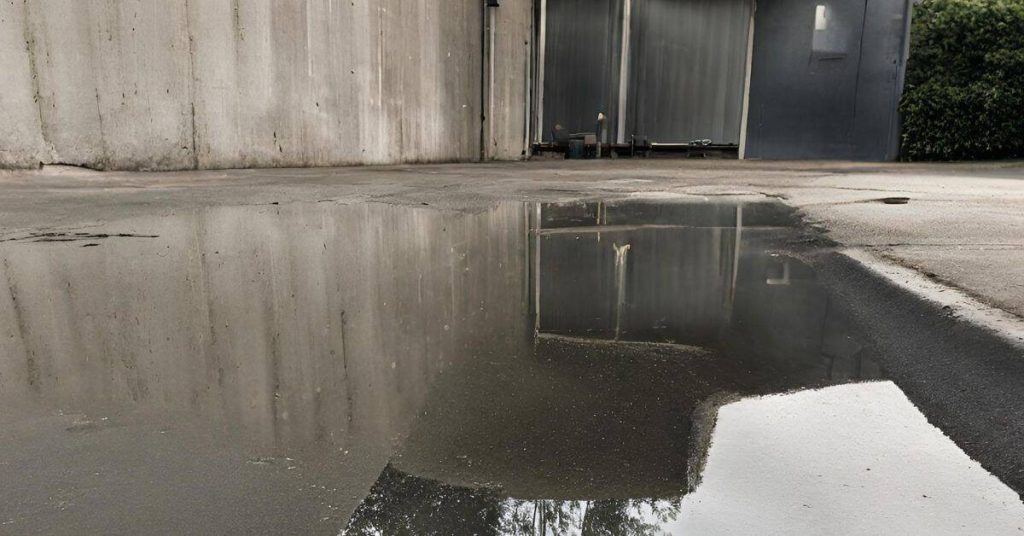
Persistent puddles: If water leaves standing pools, you’ve likely got low spots or areas where the concrete has settled. These need to be addressed to prevent further issues.