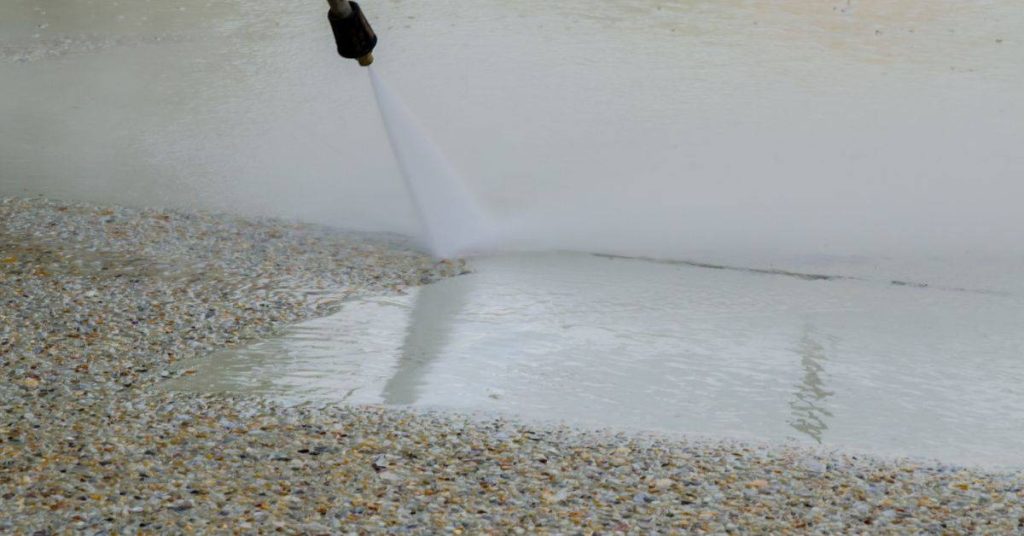
pressure washer cleaning exposed aggregate concrete surface

Concrete Countertop Mix Design for DIY: Step-by-Step Timeline and Duration Guide

Introduction

Planning a concrete countertop project involves careful timing to ensure the best results. From mix design to curing, each step takes specific time commitments. This guide walks you through the timeline and duration of key processes, helping you plan your DIY project efficiently.

Let’s dive into the step-by-step timeline, so you know exactly what to expect at every stage of your concrete countertop journey.

For the full guide, see Concrete Countertop Mix Design for DIY: Aggregate Size, Fiber, and Reinforcement Layout.


Concrete Countertop Timeline: Step-by-Step Duration Guide

The total duration of a concrete countertop project can range from two weeks to a month, depending on factors like complexity, size, and weather conditions. Here’s a detailed breakdown of each step’s timeline:

  • Planning and Design (1-3 days): Determine your project goals, gather materials, and create detailed plans for formwork, reinforcement layout, and edge profiles.
  • Formwork Setup (2-4 days): Construct and assemble your formwork, ensuring it’s level, square, and properly reinforced. Allow extra time if you’re using complex shapes or inlays.
  • Mix Design and Aggregate Selection (1 day): Choose the right aggregate size, fiber reinforcement type, and conventional reinforcement layout based on your project requirements. This step also includes batching and proportioning for DIY mixing.
  • Mixing Concrete (2-4 hours): Prepare your concrete mix according to your designed proportions, ensuring proper workability and consistency.
  • Pouring and Consolidation (1-3 days): Pour the concrete into your formwork, following a specific sequence to minimize voids and ensure even distribution. Allow time for vibrating or other consolidation methods to remove air pockets.
  • Finishing and Edge Work (2-4 days): Level off the surface, apply edge profiles, and perform any necessary finishing techniques like bullnosing or exposing aggregate. Keep in mind that some finishes may require additional curing time.
  • Curing (7-14 days): Maintain a consistent temperature and humidity level to ensure proper concrete curing. This step is critical for the countertop’s long-term strength and durability.

Key takeaways

The prep time for your mix design and aggregate selection directly impacts the overall project timeline, as it sets the stage for subsequent steps like formwork setup and pouring.

  • Define project goals and performance targets before mix design and formwork decisions.
  • Select aggregate sizes compatible with countertop thickness and finish requirements.
  • Use fiber reinforcement to control cracking without complicating finishing; plan placement early.
  • Conventional reinforcement: mesh, rebar, and embeds require accurate layout and embedment depth checks.
  • Batch and proportion carefully using on-site measurements; verify components and washout risks.
  • Formwork, pour sequence, and consolidation methods affect surface quality; enforce safety.
Table of Contents

Project Goals and Performance Targets

Start by listing what the countertop must do: carry loads, resist daily wear, present the desired surface look, and accommodate edge profiles and fixtures. Use those performance goals to steer choices for cement content, aggregate, reinforcement, and finish strategy.

If a specific strength, flexural capacity, or service condition is important, check product data sheets or consult local building rules rather than assuming values. Let those verified targets determine whether the mix and reinforcement are conservative or optimized for thin sections.

Determine strength, durability, and finish priorities

First things first, you need to decide what your countertop needs to handle. It’s like choosing a tool for the job – get it wrong, and you’ll regret it.

Start by thinking about strength. How much weight will it bear? Check material data sheets for compressive strength values. 3000-4000 psi is common for countertops.

Next, consider durability. How tough does the surface need to be? Look at abrasion resistance values. A higher value means it’s more resistant to scratches and wear.

Lastly, think about finish. Do you want a smooth, polished look or a rough, textured one? This will guide your choice of mix design and surface treatment.

Match design to thickness and span

The size of your countertop slab and how far it spans matter. They’ll dictate what you can use in your mix and how you reinforce it.

Thickness is key for aggregate size. Thicker slabs can handle larger aggregates, which give a stronger, more durable concrete. But too thick, and it’s heavy – you might need extra support.

Span affects reinforcement type. Longer spans need more reinforcement. Check what your supplier or engineer recommends for unusual spans. You might need steel reinforcement or even structural framing to support the slab.

Remember, these are guidelines. Always double-check with a pro if you’re unsure. It’s better safe than sorry when it comes to concrete.

Back to top ↑

Aggregate Selection and Sizing

Pick aggregate with an eye to surface appearance, workability in a thin cross-section, and compatibility with the binder; clean, well-graded material reduces voids and helps finish quality. Consider maximum particle size that will fit the section thickness and the finish method—larger stones change texture and may cause honeycombing if not consolidated properly.

Confirm gradation and cleanliness from the supplier or lab report instead of assuming suitability, and be ready to adjust fines or use a smaller maximum size for very thin tops. For exposed-aggregate finishes, choose decorative stone that survives polishing and check manufacturer recommendations for any admixtures used.

Coarse vs fine aggregates and surface finish tradeoffs

When it comes to aggregate size, bigger isn’t always better for thin concrete countertops. Larger aggregates improve strength and economy but can cause issues with thin sections.

Large aggregates can interfere with the smoothness of your countertop’s surface, making polishing difficult. They also increase the risk of delamination in thin slabs.

On the other hand, finer mixes provide smoother surfaces and easier polishing. However, they may not be as strong or economical as coarser mixes.

Strike a balance by choosing aggregates that are small enough to maintain a smooth finish but large enough to provide strength and reduce voids.

Rule-of-thumb sizing and verification

As a general guideline, the maximum aggregate size should not exceed one-third of your countertop’s minimum thickness. For example, if your slab is 1.5 inches thick, use aggregates no larger than half an inch.

This rule helps prevent cracking and maintains the structural integrity of your thin concrete countertops.

However, always verify these limits with your aggregate supplier or consult structural references to ensure you’re using the right size for your specific project.

Remember, these are just guidelines. Your final decision should be based on your specific design and performance targets, as discussed earlier in this article.

Sourcing, grading, and cleanliness

When sourcing aggregates, ask for the sieve curve to ensure you’re getting a well-graded mix. This means the aggregate particles are evenly distributed across different sizes.

A well-graded mix reduces voids and improves the strength of your concrete. It also ensures consistent color throughout your countertop.

Always choose washed aggregates to remove any contaminants that could affect the performance or appearance of your concrete. Contaminants can cause discoloration, reduce strength, and interfere with the curing process.

To ensure consistency, consider sourcing all your aggregates from the same batch or supplier. This helps maintain the quality and appearance of your thin concrete countertops.

Back to top ↑

Fiber Reinforcement: Types, Roles, and Placement

Understand that synthetic, glass, and steel fibers each control cracking and add secondary reinforcement differently; selection depends on the mix, slab thickness, and finish expectations. Fibers reduce plastic and drying shrinkage cracking and can allow thinner profiles when combined with primary reinforcement.

Verify compatibility and dosage on the fiber product label or tech sheet, and plan placement so fibers are evenly dispersed in the wet mix for consistent performance. For visible or polished surfaces, check how fibers affect grinding and patching procedures before committing to a type.

Comparing fiber types and tradeoffs

When it comes to concrete countertop fibers, you’ve got three main options: polypropylene/synthetic, steel, and glass. Each has its own strengths and weaknesses.

Polypropylene/Synthetic: These are cheap, non-corrosive, and won’t show up in polished surfaces. But they might not control cracks as well as other types.

Steel: Steel fibers provide excellent crack control but can corrode over time, especially if your countertop gets wet often. They’re also visible in polished surfaces.

Glass: Glass fibers offer good crack control and are invisible in polished surfaces. However, they’re more expensive and can be brittle, making them less suitable for thicker slabs or heavy use.

Dosage and effective positioning

Fiber dosage and placement are crucial. Follow your manufacturer’s recommendations to get the best results.

Too few fibers, and you won’t control cracks. Too many, and you’ll have a weak countertop with poor surface finish. As for placement, fibers work best when they’re spread evenly throughout the slab thickness.

Check your product datasheet for recommended dosages and placement guidance. It’s usually measured in pounds per cubic yard of concrete.

Mixing technique to avoid clumping

Adding fibers to your mix can be tricky. You want even dispersion, not clumps. Here’s how to do it right.

  • Start with the concrete: Begin mixing your concrete as usual. This helps distribute the aggregates and creates a better environment for the fibers.
  • Add fibers gradually: Slowly add your fibers to the mix while it’s still dry. This helps prevent them from sticking together.
  • Mix thoroughly: Keep mixing until you see even distribution of fibers throughout the concrete. It might take a few minutes.
  • Check for clumps: Before pouring, check for any fiber clumps. If you find any, break them up and mix again.

Remember, patience is key here. Taking the time to ensure even distribution will pay off in the final product.

Back to top ↑

Conventional Reinforcement Layout (Mesh, Rebar, and Embeds)

Decide between welded wire mesh, rebar, or a hybrid approach based on span, load points, and locations of sinks or heavy fixtures; mesh helps crack control while bars carry tensile loads across spans. Place reinforcement where tension is expected—not sitting on the form bottom—and ensure clear cover suited to the finish and embed requirements.

Confirm recommended bar sizes, mesh gauge, and spacing from manufacturer literature or an engineer when load or code conditions matter. For embeds and anchor points, plan insert locations before pouring and verify attachment and clearance details rather than improvising on the job.

Mesh selection and mid-depth placement

When it comes to thin concrete countertops, welded wire mesh is your best bet for reinforcement. It provides excellent tensile strength without adding much weight or thickness.

Choose a mesh with a gauge (wire diameter) of around 6-8 and an aperture (space between wires) of about 1/2″ to 3/4″. This combination offers good strength while keeping the countertop thin.

But here’s where many DIYers go wrong: they place the mesh too close to the surface. To avoid this, support your mesh at mid-depth using plastic or metal chairs or supports. This way, it influences the tensile capacity of your countertop without showing through the surface.

Rebar, dowels, and structural inserts

For long spans, heavy loads, or cantilevers, you’ll need more robust reinforcement. This is where small-diameter rebar (rebar diameter 1/2″ to 5/8″) or dowels come in.

Use #4 or #5 rebar for most countertop applications. To secure them inside your forms, use chairs or supports that keep the rebar at least 1″ away from the surface to prevent cracking and delamination.

If you’re embedding structural inserts like sink grids or support brackets, make sure they’re properly reinforced. Use a washer and nut on the backside of the insert to distribute the load evenly and prevent stress concentrations that could cause cracks.

Edge detailing and embedded hardware

Countertop edges are fragile. To reinforce them, use L-shaped rebar or wire mesh that extends up the sides of your forms. This provides extra strength where it’s needed most.

Corners are another weak point. To strengthen them, weld or tie a corner reinforcement piece into place before pouring. This could be a 90-degree bend in wire mesh or a corner rebar bracket.

When embedding hardware like sinks, faucets, or mounting brackets, it’s crucial to prevent crack initiation. To do this, embed the hardware with a generous amount of concrete around it. This distributes the load evenly and keeps stress from concentrating in one spot.

Back to top ↑

Concrete beams with exposed rebar and reinforcement mesh

Batching and Proportioning for DIY

Choose a batching method you can repeat reliably on-site—weight gives consistency, volume is common for small DIY batches; know that material variability (cement, sand, aggregate moisture) affects the final mix. Start with a reference mix and adjust water and admixtures to reach target workability without overwatering.

Check bag or supplier data for cement and admixture dosing instead of guessing proportions, and measure materials carefully every batch to maintain consistency. If using volumetric measures, document scoop sizes and batch recipes so you can reproduce the mix on subsequent pours.

Cementitious components and SCM choices

For your concrete countertop mix, start with Portland cement. It’s strong and reliable.

But, it can be pricey and not so eco-friendly. That’s where supplementary cementitious materials (SCMs) come in – like fly ash, slag, or silica fume.

Each SCM has its own strengths and weaknesses. Fly ash boosts long-term strength, slag improves early strength, and silica fume enhances both. But they can affect finishing too – expect slower setting times, so plan ahead.

Always check compatibility and substitution guidance on the datasheets. Some SCMs might not play nice with others or your cement. Better safe than sorry, right?

Water control and workability management

Less water means stronger concrete. So, keep it low – around 15-20% by weight of cement.

But too little water makes mixing a nightmare. That’s where plasticizers or superplasticizers come in. They make your mix more workable without adding extra water.

Follow the manufacturer’s dosing instructions to a T. Too much can cause slumping, too little won’t help much.

Remember, it’s all about balance – enough water for mixing, but not so much that you compromise strength and durability.

Pigments and admixtures

Want colored concrete? Pigments are your friend. But test batches first – some can affect curing or finish.

Air-entraining agents add tiny bubbles, making your countertop more durable against freeze-thaw cycles. Just don’t overdo it, or you’ll end up with a weak mix.

Accelerators speed up setting time, great for when you’re in a hurry. Retarders do the opposite – handy for hot weather or complex pours.

Always, always follow manufacturer instructions. Admixtures can be finicky, and you don’t want any nasty surprises on your countertop.

Back to top ↑

Formwork, Pouring Sequence, and Consolidation

Build forms that are square, rigid, and sealed for a tight edge and flat surface; locate reinforcement and embeds precisely before pouring. Plan a pour sequence that minimizes cold joints and allows proper working time for placing and consolidating the mix without segregation.

Use vibration, rodding, or careful tamping appropriate to the mix to remove trapped air, and follow product instructions for consolidation methods. Keep finishing timing in mind—verify set and bleed behavior with small trial batches if you are changing materials or admixtures.

Form materials, tolerances, and release techniques

The right form materials keep your countertop rigid, true, and free from defects. Here’s what to use:

  • Plywood (1/2″ or 5/8″): Use AC or better grade for strength and smoothness. Look for minimal warping. Avoid thin or low-grade plywood that can crack under pressure.
  • Form ties: Choose adjustable ties to maintain consistent spacing and prevent form movement. Avoid rigid ties that may cause stress points.
  • Bracing: Use 2x4s or 2x6s for bracing, spacing them every 16″-24″. Secure them tightly to keep forms from racking. Don’t skimp on bracing; it prevents warping and cracking.
  • Release agent: Use a spray-on release agent or form oil to prevent bonding without staining. Apply evenly, following manufacturer’s instructions. Avoid using household oils that can stain the concrete.
  • Form liner (optional): For exposed aggregate or polished surfaces, use a form liner. Ensure it’s clean and free from defects before installation. Don’t apply release agent on the side facing out; it may cause staining.

Pouring technique and preventing segregation

Proper pouring techniques ensure a strong, even countertop with no aggregate separation. Here’s how to do it:

Pour height: Pour in lifts no higher than 6″-8″. This allows for proper consolidation without pushing aggregates down.

Start at one end and pour evenly across the form, avoiding over-pouring or under-pouring. Use a low-slump mix to minimize segregation during pouring.

Consolidation: Use a tamping bar or low-frequency vibrator to consolidate the concrete gently. Work from the bottom up, pushing any air pockets out. Avoid over-vibrating; it can push aggregates away from surfaces.

Protecting reinforcement and fibers during pour

Keeping your mesh, rebar, and fibers in place ensures a strong, structurally sound countertop. Here’s how to protect them:

Mesh and rebar: Use chairs or spacers to keep mesh and rebar at the correct height. Ensure they’re level and secure before pouring. Avoid using objects that may rust or leave marks on the concrete.

Pour slowly around mesh and rebar, allowing the concrete to flow through and encapsulate them completely. Use a vibrator to help consolidate the concrete around them, ensuring good contact.

Fibers: Add fibers just before pouring, mixing them in thoroughly but gently to avoid clumping. Pour slowly, allowing fibers to settle into place naturally. Avoid over-vibrating or pushing fibers towards surfaces; it can cause them to float or clump.

Back to top ↑

Finishing, Edge Work, and Surface Options

Select finishing steps that match the intended look—matte, polished, or exposed aggregate—and sequence them so each operation builds on the previous one without overworking the surface. For sharp edges and integrated sinks, set edge forms and reinforcement accurately and protect them during finishing passes.

Refer to manufacturer guidance for polishing systems, sealers, and patch materials when planning the finish process rather than relying on guesswork. Test a sample panel to confirm how grinding, patching, and sealing will affect color and texture before working on the main countertop.

Timing and tools for finishing operations

The timing of your finishing operations is crucial to achieve the desired surface texture and clean edges. It depends on your concrete mix’s set rate and weather conditions.

  • Floating (15-30 min after pour): Use a magnesium or wooden float to remove excess water and level the surface. Timing is critical; too early, you’ll disturb the cement paste, too late, and it’s hard to move the float.
  • Troweling (30-60 min after pour): Follow up with a steel trowel to smooth out any imperfections. The concrete should be firm but still slightly plastic.
  • Edge tooling (20-40 min after pour): Use an edge tool or float to define crisp edges. Timing is important; too early, and the edge may crumble, too late, and it’s hard to create a sharp edge.
  • Sealing (1 week after pour): Apply a sealant to protect your countertop from stains and moisture. Ensure the concrete is fully cured before sealing.
  • Optional tools: Rentable power trowels can help achieve a smooth, polished finish. Expect to pay around $50-$100 per day for rentals.

Exposing aggregate, polishing, and honing

Exposing the aggregate in your concrete countertop can create a striking, natural look. Here’s how to do it:

Retarders: Apply a retarder to slow down the set rate of the surface layer, allowing you to remove it later. Follow manufacturer instructions for application and timing.

After the concrete has cured, use a diamond grinding blade or mechanical removal method like sandblasting to expose the aggregate. Start with a coarse grit (e.g., 30/60) and progress to finer grits (e.g., 120/240) for a smoother finish.

Polishing involves several steps, starting with a test patch to determine the final polish level. Larger aggregate sizes may require more polishing steps or coarser grits initially. Honing is similar but uses a finer grit (e.g., 800/1500) for a smoother, less reflective finish.

Integrating sinks, drain channels, and edge profiles

Forming complex details like sinks and drain channels requires careful planning and reinforcement to prevent stress concentrations.

Sinks: Use a sink template or formwork to create the sink opening. Reinforce with rebar or fiber mesh to support the surrounding concrete. Seal around the sink using a flexible, waterproof sealant after installation.

Drain channels can be formed using a channel former or by removing concrete after pouring. Ensure they’re reinforced and slope towards the drain. For edge profiles, use formwork that matches your desired profile. Reinforce edges with rebar or fiber mesh to prevent cracking under stress.

To prevent stress concentrations at cutouts like sink openings, use a ‘doweling’ technique: insert short lengths of rebar into the surrounding concrete before pouring, extending them into the cutout area. This ties the two pieces together and distributes stress evenly.

Back to top ↑

Curing, Post-Cure Processing, and Maintenance

Proper curing preserves strength and minimizes shrinkage cracks, so choose a curing approach compatible with your schedule and finish—wet curing, membranes, or curing compounds—and follow the product instructions for duration and application. Plan post-cure mechanical processing like grinding or polishing only after the mix has achieved sufficient hardness for the equipment you’ll use.

For long-term appearance and durability, follow manufacturer directions for sealers and maintenance products rather than assuming one treatment fits all mixes. Keep a maintenance plan that covers cleaning, re-sealing frequency, and how to address chips or stains specific to your chosen finish and sealer.

On-site curing methods and duration

Curing is crucial for your concrete countertop’s strength and durability. Here are some practical on-site methods:

Wet Coverings: Keep the countertop moist using wet burlap, plastic sheeting, or spray-on cure compounds. Follow product guidance for application timing.

Plastic Sheeting: Cover the countertop with plastic sheeting to prevent rapid moisture loss. Secure edges with tape or weights.

The initial curing period is critical – typically 7 days. After that, gradually reduce the intensity of your curing method over the next few weeks.

Grinding, gap-filling, and sealing sequence

After initial curing, it’s time to refine your countertop’s surface. Here’s the recommended sequence:

Grinding and Polishing: Use a concrete grinder with progressively finer grits (e.g., 40-grit to 150-grit) to smooth the surface. Follow up with polishing pads for a glossy finish.

Gap-Filling: Inspect your countertop for pinholes or voids. Fill these with a compatible concrete repair mortar, using a putty knife or trowel. Allow it to cure before grinding and polishing again.

Sealing: Apply a concrete sealer designed for countertops. Test adhesion first by applying a small amount in an inconspicuous area. Let it dry, then perform a scratch test with a fingernail or coin.

Maintenance, repair, and re-sealing

Regular maintenance keeps your concrete countertop looking great. Here are some tips:

Cleaning: Use a mild detergent or concrete cleaner to remove spills and stains. Avoid harsh chemicals that can damage the sealer.

Repairing Chips/Cracks: For minor chips, use a concrete repair mortar to fill the area. For larger cracks, you may need to grind out the crack, apply an epoxy filler, then grind and polish again.

Re-sealing: Re-apply sealer every 2-3 years or as needed based on traffic and stain resistance. Perform a water bead test: If water beads up and doesn’t absorb into the surface, your sealer is still intact. If it does, it’s time to re-seal.

Back to top ↑

Conclusion

The core idea is simple: a well-thought mix, the right reinforcement, and strict curing discipline will give you a durable, good‑looking countertop you can trust. Don’t rush it or cut safety corners—that’s where costly mistakes show up and permanent damage happens.

Before you start, confirm targets and then follow a steady path: choose aggregate size and fiber that fit your surface, plan the reinforcement layout, batch accurately, set up formwork correctly, follow the pouring sequence, consolidate well, finish cleanly, and cure properly. Keep a tight eye on the process and test a small area if you’re unsure about any step.

Common mistakes to avoid include using aggregate that’s too coarse for a smooth finish, skipping proper consolidation or curing, and skimping on securing embeds or proper reinforcement spacing. Safety rules to follow are strict: wear eye and skin protection, keep kids and pets away from the work zone, handle forms and heavy materials with proper lifting technique, and never rush curing or sealants. If you’re unsure about structural embeds, long spans, or precise edge work, it’s wise to bring in a pro rather than guessing.

Back to top ↑

FAQ

What aggregate size is safe for a DIY concrete countertop mix?

Use the smallest practical aggregate your form and slump allow. Check the product label or datasheet for max aggregate size and any sieve measures. If in doubt, consult the manufacturer instructions or local rules for guidance.

Where should fibers go in a DIY countertop mix?

Fiber should be evenly dispersed throughout the mix to help control cracking. Do not rely on fibers to hold form or support heavy loads. Follow the fiber manufacturer’s placement guidance and test mix in small batches if possible.

How should I arrange reinforcement for a DIY countertop?

Reinforcement should be placed to control cracking and to support the edges. Use supports and spacers to keep it off the bottom of the form so it doesn’t settle out. Verify any mesh or rebar guidance with the manufacturer and local requirements.

What are safe curing practices I should follow?

Keep the surface moist and protected from rapid drying after pour. Do not rely on rough curing methods that crack the surface. Refer to product instructions for cure duration and conditions, and adjust based on your climate and project specifics.

Back to top ↑

More about this topic