Search Results for: drill bit for concrete

Close-up of blue painted stucco wall texture

Patch “Picture Framing” on Painted Stucco: Prime Zones and Feathered Coating Steps

Introduction Patch “Picture Framing” on painted stucco means touching up small areas so the patch blends with the surrounding paint while keeping the texture. This guide introduces how to spot the framing, choose basic tools, and apply a feathered coat with primer over patches. Keep it practical and straightforward, like a real hands-on repair. Before […]

Patch “Picture Framing” on Painted Stucco: Prime Zones and Feathered Coating Steps Read More »

Close-up of blue painted wood siding with horizontal grooves

Acrylic Render Over Painted Stucco: Bond Tests, Prep, and Failure Prevention

Introduction Acrylic render over painted stucco is the process of applying an acrylic finish coat on top of painted stucco to create a new, durable surface. Before you start, run bond checks and surface prep to decide if the paint will hold and where it may peel. Inspect for peeling paint, loose patches, and gloss,

Acrylic Render Over Painted Stucco: Bond Tests, Prep, and Failure Prevention Read More »

Stucco wall with reinforcing mesh and metal bead at corner

Corner Cracks at Stucco Windows: Mesh Orientation and Bead Choices

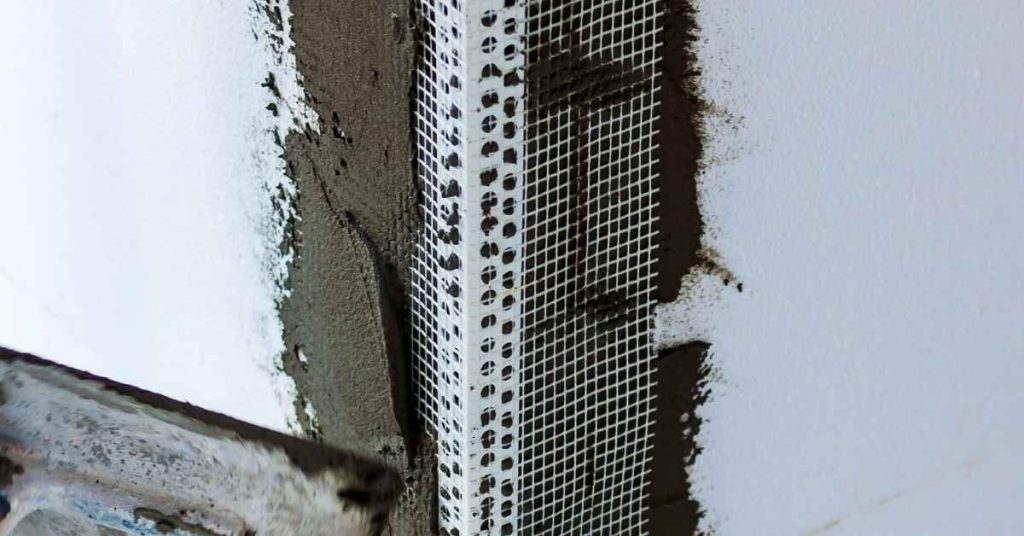
Introduction Proper mesh orientation and bead selection help prevent corner cracks around stucco windows. The way the mesh is aligned and the type of bead you use influence how the stucco moves at the casement and sill transitions. Choose options based on manufacturer guidance and local methods, then apply consistently. Bead installation techniques matter, especially

Corner Cracks at Stucco Windows: Mesh Orientation and Bead Choices Read More »

Man holding plastering hawk with fresh plaster

Sagging Plaster Ceilings: When Washers Help—and When Strapping Is Smarter

Introduction Sagging plaster ceilings can be stabilized temporarily by using washers under fasteners to pull the plaster back up. This is a short-term fix that can buy time while you plan a more permanent repair. Make sure you’re hitting solid framing, not just flaky plaster. Strapping is usually the smarter long-term approach when the ceiling

Sagging Plaster Ceilings: When Washers Help—and When Strapping Is Smarter Read More »

Closeup of red brick wall with light gray mortar

Lime Mortar vs Portland for Historic Brick: Protecting Soft Brick While Repointing

Introduction Lime mortar is a traditional, breathable binder used for soft historic brick. Portland cement mixes are stronger and quicker to set but can trap moisture and damage delicate masonry. This DIY guide helps you decide what to use and how to work safely around fragile brick. Before you start, test a small area and

Lime Mortar vs Portland for Historic Brick: Protecting Soft Brick While Repointing Read More »

Paint brush next to green color swatch cards on wooden surface

Marmorino Color Layering: Building Depth Without Blotches or Lap Marks

Introduction Marmorino Color Layering is a plaster technique that builds depth by layering pigments and lime plaster to avoid blotches. You’ll apply thin coats, blend colors wet-on-wet, and smooth to keep it even. Work in small areas and test a patch first to learn how your mix behaves. Start with a clean, damp surface and

Marmorino Color Layering: Building Depth Without Blotches or Lap Marks Read More »

Worker applying plaster to wall with trowel and hawk

Venetian Plaster Over Existing Tile: Prep, Bond Bridges, and Edge Detailing

Introduction Venetian plaster over existing tile is applying plaster onto a tile surface to create a seamless, stone-like finish. Prep and bond are critical, because you’re sticking plaster to a non-porous base. You’ll need to clean, roughen, and seal as needed, then choose a compatible bonding product and follow its directions. Start with careful prep,

Venetian Plaster Over Existing Tile: Prep, Bond Bridges, and Edge Detailing Read More »

Hands wearing gloves applying plaster with a trowel on wall

Lime Plaster Over Foam Indoors: Mechanical Keys, Mesh, and Fire-Safety Notes

Introduction Lime plaster over foam indoors is applying a breathable lime-based coating on foam insulation or foam boards inside a building. It needs proper keys, mesh, and surface prep so the plaster grips the foam. Work slowly, check that the foam is compatible with lime, and follow local rules. Use mechanical keys and mesh to

Lime Plaster Over Foam Indoors: Mechanical Keys, Mesh, and Fire-Safety Notes Read More »

Person applying plaster to wall with trowel and hawk

Plaster Timing vs Indoor Humidity: Avoiding Flashing, Soft Spots, and Patch Ghosting

Introduction Plaster timing vs indoor humidity is about when to plaster based on how damp the air and surfaces are. Doing it at the wrong moment can lead to flashing, soft spots, or patch ghosting that shows later. Check the product label and manufacturer instructions for open time and cure expectations, and adjust with airflow

Plaster Timing vs Indoor Humidity: Avoiding Flashing, Soft Spots, and Patch Ghosting Read More »

Person applying stucco to exterior wall with trowel

How Thick Is Your Stucco? Measuring Without Full Demo (and Patching Cleanly)

Introduction Measuring stucco thickness without full demolition means estimating how thick the outer layer sits on the wall. In plain terms, you’re looking for clues you can verify without tearing the surface apart. Use simple tools and a careful approach to avoid creating new cracks or exposing the substrate. Tools you can rely on include

How Thick Is Your Stucco? Measuring Without Full Demo (and Patching Cleanly) Read More »