

Introduction
Retarders allow you to slow concrete setting without compromising slab strength.
You’ll learn how to assess needs, choose compatible products, and apply best practices so timing controls meet project goals.
The guide walks through practical steps, common mistakes, and tips to balance workability, curing, and strength.
Key takeaways
- Define project goals and timing to select appropriate retarder dosage and type.
- Confirm water-cement ratio remains consistent; adjust admixture if slump changes.
- Test trial mixes with small batches before full-scale pours.
- Record temperature, humidity, and curing conditions to interpret set delays.
- Coordinate with suppliers on compatibility and verify spec sheets on-site.
- Avoid over-retarding; create uniform slump and prevent surface cracking.
Table of Contents
- Introduction
- Key takeaways
- What concrete retarders are and how they work
- When to use a retarder — project scenarios and benefits
- Choosing the right retarder for your job
- Avoiding common mistakes that weaken the slab
- Testing and quality control: trial mixes and field checks
- Tools, materials checklist, and on-site protocol
- Material specs, standards, and what to verify with suppliers
- Troubleshooting guide: problems, causes, and fixes
- Conclusion
- FAQ
What concrete retarders are and how they work
Retarders are additives that slow how fast concrete cures. They let you work longer in hot weather or when you need to pour in sections. They do this without stopping the concrete from setting; it just slows the chemical reaction so you can finish placement and finishing better.
They help you stay on schedule and reduce waste when the forecast messes with your timing. Always read the label and use the manufacturer’s guidance for your mix, and don’t guess—check the label/datasheet for what works with your materials. Bad practice can leave you with a rough finish or a weaker set.
Types of retarders (chemical vs. admixture vs. surface)
Concrete retarders come in different forms, each with its own use case.
Liquid admixtures are the most common. They’re added to the concrete mix during batching. Use them when you want consistent retardation throughout the slab.
Powdered additives work similarly but are easier to handle and store. They’re often used in ready-mix situations where space is limited.
Surface-applied retarders are sprayed or brushed onto the concrete after placement. They’re great for controlling finishing time on large slabs or when you need to extend the working time of a small area.
How retarders influence setting time and strength development
Retarders slow down concrete’s hydration process, giving you more time to place, finish, and compact the slab.
Setting time is extended, allowing for better consolidation and easier finishing. This is what we mean by ‘buying time’ on-site.
But here’s where it gets interesting: extending setting time doesn’t weaken your slab. In fact, it often strengthens it. Here’s why:
Concrete gains strength over time as hydration continues. By slowing down this process, retarders allow for more complete hydration, leading to increased early and long-term strength.

When to use a retarder — project scenarios and benefits
Retarders can help you when you need more control over the concrete mix. Use them in hot weather pours, long transports, or when finishing is tricky. They slow down the set so you have more time to work without cold joints.
Choosing to use a retarder depends on conditions, timing, and your finish plan. They improve workability and reduce early cracking and cold joints when you work slowly or start late. Check the label and instructions from the manufacturer to match your needs and local rules.
Hot-weather concreting and long transport times
High temperatures speed up concrete setting. This can lead to problems like rapid strength loss and weak spots in your slab.
Long hauls also accelerate set time, especially if the mix is exposed to heat during transit. Retarders slow down this process, giving you more time to work with the concrete before it sets.
Use retarders when pouring in hot weather or when transport times are long. This helps maintain workability and prevents premature setting.
Decorative finishes and surface treatments
Complex finishing techniques like stamping, exposed aggregate, or decorative overlays require controlled setting times. Too fast, and you won’t have time to achieve the desired effect. Too slow, and the finish may not adhere properly.
Retarders help manage this process by slowing down setting just enough to give you the time needed for these intricate finishes.
Consider using retarders when applying decorative treatments or complex surface finishes. They ensure your workmanship shines through without being rushed.
Choosing the right retarder for your job
The key is to match the retarder to your job. Consider your project scale, the finish you want, the outdoor temperature, and whether it will mix with other admixtures. Also match the product form to how you plan to apply it. Always check the manufacturer specifications.
This matters because the wrong retarder can ruin set timing and finish quality. Check the label or datasheet for compatibility with your concrete mix and conditions. If in doubt, follow the manufacturer instructions and choose the safer option.
Compatibility with cement type and other admixtures
Retarders work best with standard Type I Portland cement. If you’re using other types like Type II or Type V, check with the manufacturer first.
Water reducers, accelerators, and supplementary cementitious materials can interact with retarders. Too much water reducer might make the concrete too weak. Accelerators could speed up setting time, defeating your purpose. Fly ash, slag, or silica fume can affect retardation.
To avoid issues, ask suppliers or lab test before mixing. A small trial batch can save big problems later.
Dosage ranges and how to interpret product labels
Retarder dosages depend on temperature, slump, cement content, and desired set time. Manufacturers provide dosing guidance, but it’s a starting point.
For example, if it’s hot (80°F/27°C), you’ll need more retarder than in cool weather (60°F/15°C). If your slump is high, add more. For every 100 lb (45 kg) of cement, start with around 3-5 oz (90-148 ml) of liquid retarder or 2-3 lbs (907 g – 1.36 kg) of powder.
Don’t rely on exact dosing from labels. Temperature and mix proportions can change required dose. Always do a small test batch to fine-tune your dosage.
Avoiding common mistakes that weaken the slab
Common mistakes weaken the slab: overdosing, ignoring material compatibility, skipping trial mixes, and improper curing. Each one can reduce strength or durability if you let it slide. Preventive actions include following label instructions, confirming compatibility, doing a trial batch, and curing as directed.
Why it matters to you: a weak slab wastes time and money when it cracks or fails under load. Taking the time to check materials, follow the mix instructions, run a small trial, and cure correctly saves headaches later. If in doubt, read the product label or manufacturer instructions and ask for local guidance.
Risks of Overdosing and Uneven Application
Using too much retarder can cause more harm than good. It delays strength gain, making your slab weak initially.
Overdosing also increases the risk of surface problems like efflorescence and discoloration.
To avoid this, stick to the manufacturer’s dosage range. Measure precisely and mix well for even distribution.
Neglecting Curing and Finishing Best Practices
Retarders buy you time, but they don’t replace proper curing. Neglecting this can reduce your slab’s long-term strength.
Proper curing involves keeping the concrete moist for at least 7 days after placement. This allows it to gain full strength.
Also, ensure you’re following best practices for finishing. Overworking or underworking the surface can lead to weaknesses.
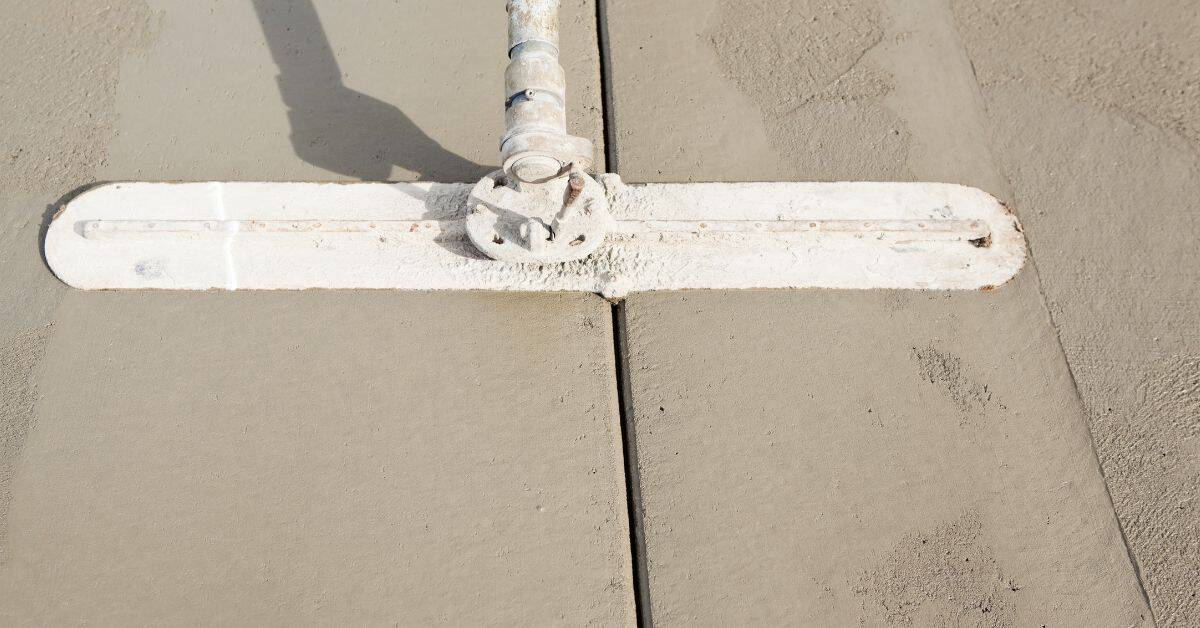
Testing and quality control: trial mixes and field checks
Trial mixes and field checks are essential before you pour and place a big slab. They tell you if the mix will set properly, gain strength at key ages, and hold slump as you expect.
Do a small trial batch and verify setting behavior, workability, and how it adapts in the field. If anything seems off, check the label or datasheet for guidance and don’t scale up until you’re confident you meet those expectations.
How to set up a practical trial mix
Before you start, gather your materials. You’ll need cement, aggregates, water, and the retarder you plan to use.
Mix them in small batches, keeping everything else constant but varying the retarder dosage. This way, you can see how different amounts affect setting time and early strength.
To measure set time, use a Vicat apparatus or just check when the mix is no longer plastic. For early strength, test at 24 hours and 7 days using a compressive strength tester.
Visual checkpoints during placement
Once you’ve got your trial mix sorted, it’s time to keep an eye on things as the concrete goes in. This checklist helps you monitor performance in real-time.
- Surface sheen: Check if it’s dull and consistent. Too shiny? You might have over-retarded.
- Bleed water: Look for even, slow bleed. Too much or too fast? Your mix might be weak.
- Finishability window: Watch when the concrete loses its sheen but is still workable. Miss this, and you’ll struggle to finish.
- Slump: Keep an eye on it. Too much or too little? Adjust your mix accordingly.
- Cracking: Any signs? This could indicate under-retardation or poor curing.
- Air bubbles: See if they’re evenly distributed. Too many or none? Your air content might be off.
- Color: Check for consistency. Inconsistent color can hint at mix problems.
- Consistency: Feel the concrete. It should be uniform throughout.
Quick rule: If something doesn’t look or feel right, it’s better to stop and check than risk a weak slab.
Tools, materials checklist, and on-site protocol
This section gives you a practical checklist of the tools and materials you’ll need, plus a clear on-site procedure for adding retarders. You’ll see items like measuring pumps, concrete mixers, and thermometers, along with the essential materials. Follow the step-by-step steps to add retarders safely and keep the mix consistent.
Sticking to the checklist helps you avoid guesswork and poor results. Knowing why it matters—safety, timing, and a uniform set—lets you plan the work and spot bad practices early. Always check the product label or datasheet for specific instructions, and adapt to your mix and conditions.
Measuring and Dosing Equipment Recommendations
Before you start, make sure you have the right tools to measure and dose your retarder accurately. This ensures consistent results and prevents slab weaknesses.
- Graduated container: Use a calibrated container for precise measuring of liquid retarders.
- Calibrated pump: For accurate dosing, especially in large-scale projects. Check its calibration regularly.