

Introduction
Repairing plaster after recessed lighting install means restoring the wall or ceiling so the patch sits flush with surrounding plaster and hides the cut edges. Start by cleaning the area and inspecting for cracks or loose material. Check product labels and local rules for recommended patching methods and drying times.
Apply a patching compound in thin coats, then feather the edges to blend with the surrounding surface. Let each coat dry before applying the next, and sand lightly once the area is firm. If the patch feels loose or hollow, stop and investigate the backing or lath behind it and follow safety guidelines for turning off power and working around the can light.
Key takeaways
- Plan repairs around recessed housing depth and existing plaster thickness.
- Clean dust and debris; score edges to improve patch adhesion.
- Verify electrical safety; turn off circuit before opening ceiling.
- Choose patching method based on crack size and backing support.
- Apply patch increments; allow settling with light pressure and flush finish.
- Finish with primer and paint, check for flush, crack reoccurrence.
Table of Contents
- Introduction
- Key takeaways
- Assessment and Planning Before You Start
- Tools and Materials Checklist
- Preparing the Opening and Supporting the Light Housing
- Choosing the Right Patching Technique
- Applying the Patch—Step-by-Step Workflow
- Taping, Reinforcement, and Crack Prevention
- Sanding, Visual Checkpoints, and Getting the Patch Flush
- Priming, Painting, and Finishing Touches
- Conclusion
- FAQ
Assessment and Planning Before You Start
First, take stock of the hole size and plaster type. Check whether the wall is traditional lime or gypsum plaster or modern gypsum drywall. Inspect the surrounding plaster for cracks, crumbling edges, and existing joint conditions.
Evaluate if the recessed light housing or framing needs adjustment before patching. Note any gaps you’ll need to bridge and plan your backing or blocking accordingly. Verify applicable local rules or manufacturer guidance if you’re unsure about clearances or fasteners.
Inspect the opening and surrounding plaster
Before you start patching, take a close look at the hole and the area around it. What you’re looking for are signs of damage or instability.
Check for: loose plaster, hairline cracks (which could indicate movement), and the condition of any lath behind the plaster. If you see any of these, a larger repair might be needed.
Also, look at how the plaster meets any drywall nearby. If there are gaps or cracks here, you’ll need to address those as part of your repair.
Determine structural vs cosmetic repair
Not all holes left by recessed lights need the same kind of fix. Some are just cosmetic, while others might indicate a bigger problem.
Look for: signs of movement in the wall or ceiling, like cracks at corners or around windows. These could mean there’s a structural issue that needs to be addressed before you patch.
Also, check if the electrical box is secure and level. If it’s wobbly or crooked, you might need to adjust it or reinforce it before you patch.
If everything seems stable but the hole is just unsightly, then a simple cosmetic patch should do the trick.
Create a repair plan and timeline
Once you know what needs fixing, it’s time to make a plan. Here’s how I’d suggest sequencing your work:
First: get the electrical work done. Make sure the wires are secure and the light fixture is properly installed.
Next: address any structural issues or backing needed for your patch. This could mean reinforcing the lath, installing a support block, or taping and floating drywall joints.
Finally: apply your plaster patch. Remember to let it dry and cure properly before sanding and painting. This can take anywhere from a few days to a couple of weeks, depending on the size of your patch and the humidity in your home.
Tools and Materials Checklist
Gather the basics: a utility knife, plaster or joint compound, drywall patch options, and appropriate backing material. Include a trowel or putty knife, sanding block, and a damp sponge for cleanup. Have a lightweight patch material for the hole size you’re facing.
Prepare alternatives for plaster vs drywall repairs, such as traditional patching plaster or ready-mix joint compound. Check product labels or data sheets for cure times, compatibility with existing plaster, and any ventilation requirements. If in doubt, ask for the manufacturer’s instructions or local building guidance.
Tools for cutting, backing, and finishing
Before you start mixing concrete, make sure you have all the necessary tools to ensure a smooth and professional finish. Use this checklist to verify your tools before beginning work.
- Circular Saw: Check blade condition; replace if dull or damaged. Ensure it’s suitable for cutting concrete (diamond blade).
- Utility Knife: Inspect blade; sharpen or replace as needed. Test cut on scrap material.
- Hawk (Trowel Holder): Check trowels are securely attached and in good condition. Ensure they’re the right size for your project (e.g., 12″ for general use).
- Concrete Trowel: Inspect for bends or damage; replace if necessary. Test edge sharpness with a fingernail.
- Taping Knife: Check blade condition; straighten if bent. Ensure it’s the right size (e.g., 6″ for small areas, 12″ for large).
- Orbital Sander: Verify sandpaper is secure and suitable for concrete (coarse grit for initial pass, fine for final).
- Safety Gear: Check hard hat, safety glasses, gloves, and ear protection are in good condition. Ensure they meet local safety standards.
- Measuring Tape: Verify accuracy with known measurements to prevent incorrect cuts or finishes.
Quick rule: Always inspect your tools before starting work to avoid costly mistakes and rework. A few minutes of checking can save hours of fixing.
Materials and compound choices
Before you start your drywall project, use this checklist to ensure you have the right materials. Check each item off as you verify it.
- Setting-type plaster: Verify it’s suitable for your climate (check product label).
- Gypsum joint compound: Ensure it matches your project needs (lightweight, all-purpose, etc.).
- Bonding agent: Check if required for your specific drywall panels.
- Tape options: Choose between paper, fiberglass, or metal tape based on your joint width and finish requirements. Avoid using the wrong type as it can lead to cracking or poor adhesion.
- Backing solution (wood strips/mesh): Ensure they’re compatible with your drywall panels and provide adequate support.
- Drywall screws: Confirm they match the thickness of your drywall (1/4″ or 5/8″) to avoid stripping or bending.
- Finishing tools: Check you have a wide taping knife, joint knife, and sanding screen for final touches. Missing these can result in poor finish quality.
- Primer/sealer: Ensure it’s suitable for your paint type (latex or oil-based) to prevent tannin bleed and ensure proper adhesion.
Quick rule: Always check product labels and manufacturer instructions before starting any task. This ensures you’re using the right materials and compounds, saving you time and money in the long run.
Material specs and safe ranges to use
Before you start mixing and pouring, make sure your materials are in good condition and suitable for the job. Use this checklist to double-check everything.
- Cement: Check the bag for the date of manufacture. Use within six months for best results. What goes wrong if you skip this: Old cement can cause weak concrete.
- Water: Ensure water is clean and free from contaminants. Test pH if unsure (should be between 5-8). Contaminated or acidic/alkaline water can affect concrete’s strength.
- Aggregates (sand, gravel): Check for consistent size and shape. Use a sieve to ensure no oversized particles. Inconsistent aggregates can lead to weak, patchy concrete.
- Admixtures: Follow manufacturer’s instructions for dosage rates. Overdosing or underdosing can affect setting time, strength, and durability.
- Setting compounds (accelerators, retarders): Check pot life and working time before use. What goes wrong if you skip this: Incorrect usage can cause rapid setting, leading to weak, unworkable concrete.
- Temperature: Check ambient temperature. Ideal range is 50-90°F (10-32°C). Too cold or too hot can affect setting time and strength.
- Humidity: Consider relative humidity levels. Below 40% RH can cause rapid water loss, above 80% RH can lead to excessive bleeding. Check manufacturer’s recommendations for your specific mix.
- Mix design: Ensure you have the correct proportions of cement, aggregates, and water (typically 1:2:3 or 1:3:5 by volume). Incorrect ratios can result in weak, porous concrete.
Quick rule: Always check and double-check your materials. A few minutes spent verifying specs can save hours of rework later on.
Preparing the Opening and Supporting the Light Housing
Secure the recessed housing before patching. Follow manufacturer instructions to lock the unit in place or add temporary bracing if needed. Ensure there is a solid substrate behind the patch area.
Install backing or blocking to give the patch something to grip. Create a stable ring or rim using appropriate spacer material if required by the housing. Re-check that the area remains square and true before any plaster goes on.
Securing the lighting housing and isolating vibration
First, ensure your recessed light housing is securely fastened to the joists or studs. Use appropriate screws, not nails, for a solid hold.
Isolation: To prevent vibrations from transmitting to the patch, add isolation. You can use rubber gaskets or vibration pads between the housing and the framing. This helps keep your patch crack-free.
For can lights, make sure they’re properly secured with clamps or straps. Tighten them evenly to distribute pressure and prevent movement.
Installing backing (wood, metal, or mesh)
Before you apply compound, install a backing material. This gives the patch something to key into and prevents cracking.
Small holes: For openings up to 6 inches, use a flexible mesh tape. Apply it over the opening, pressing firmly to ensure good adhesion.
Large holes: For bigger openings, use wood or metal backing. Cut pieces to size and secure them with screws or nails. Make sure they’re flush with the surrounding surface for a smooth patch.
Electrical safety and final checks
Before you start any work, always turn off power to the circuit at your main electrical panel.
- Test circuits: Use a non-contact voltage tester to confirm power is off. Test both hot wires (black) and the neutral wire (white).
- Check housing position: Ensure the light housing is properly positioned before closing the opening. Measure from the ceiling line to the top of the housing.
- Inspect wiring: Check that all wires are securely connected and there are no frays or damage.
- Verify can lights: For can lights, ensure they’re properly seated in their housings and won’t move when the opening is closed.
- Check for obstructions: Ensure nothing will interfere with closing the opening, like wires too close to the surface or other obstacles.
- Test switch: Once everything’s checked, turn power back on at the panel and test the light switch. If it works, you’re ready to patch.
Quick rule: Always double-check your work before closing the opening. A few extra minutes can save you from major issues later.
Choosing the Right Patching Technique
Match the technique to hole size and wall type. Direct plaster repair works best on intact plaster surfaces with a stable edge. For larger openings, consider a drywall patch with joint compound for a flush finish.
Two-coat plaster methods can be used on traditional walls with lime or gypsum plaster systems. Verify the wall composition and follow the patching approach specified by the plaster or drywall system in use. When in doubt, consult product instructions or local code guidance.
Small holes: quick-fill vs reinforcing patch
For small holes under about 2–3 inches, time is of the essence. You want a quick-setting compound to minimize downtime.
Use a lightweight, fast-setting joint compound. It’ll set in around 24 hours, letting you move on quickly.
To reinforce the patch and prevent cracking, add a layer of fiberglass mesh or use a bonding agent. These will strengthen the patch and help it blend with the surrounding plaster.
Pro tip: Don’t skimp on reinforcement just because the hole is small. A little extra effort now saves future touch-ups.
Large openings: multi-coat plaster or drywall insert
For larger holes, you’ve got two main options: using a rigid drywall insert or building out with multiple coats of plaster.
Drywall Insert: If the hole is too big to fill with plaster alone, use a rigid drywall insert. These are easy to install and provide a solid base for your patch.
Multi-coat Plaster: For heritage homes or where you want to match the original plaster, use a brown coat (first layer) and finish coat approach. This takes more time but provides a strong, durable patch that matches the surrounding area.
Pro tip: Always follow up with a skim coat to ensure a smooth, seamless finish.
When to match original plaster method
In heritage homes or where the original plaster is visible, it’s crucial to match the grain/texture and composition of the existing plaster.
Matching ensures compatibility and prevents future issues. It also helps maintain the home’s historical integrity.
To match, you’ll need to identify the type of plaster used originally. This might involve testing small, hidden areas or consulting with a professional if you’re unsure.
Pro tip: Always test your patch in an inconspicuous area first to ensure it matches seamlessly.
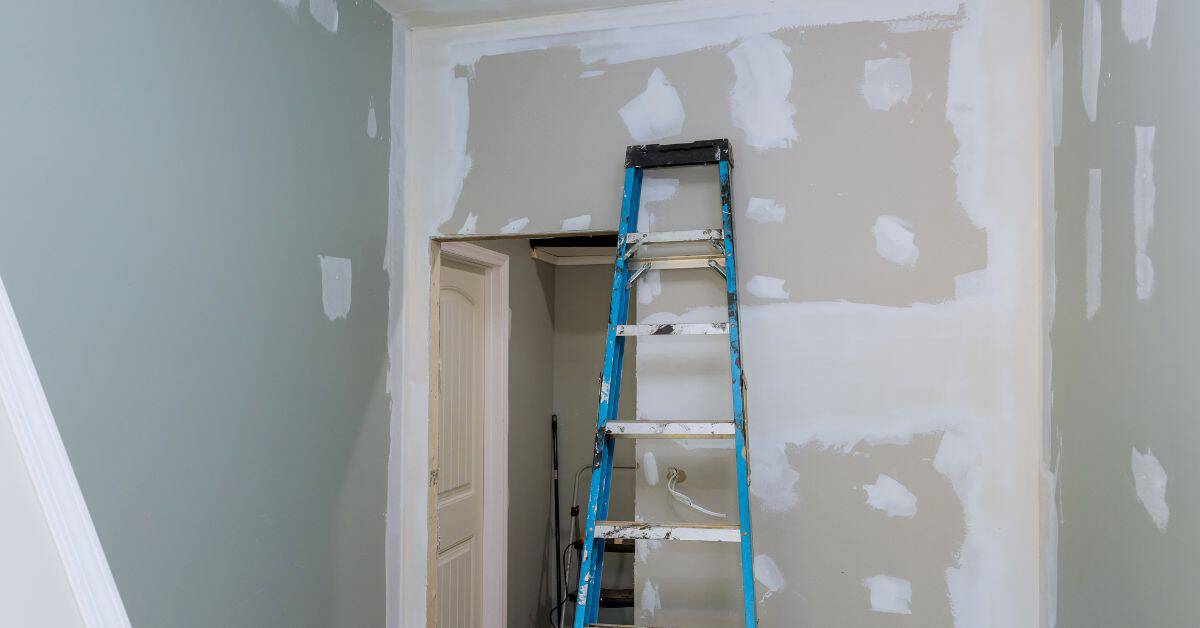
Applying the Patch—Step-by-Step Workflow
Begin with a bonding agent or primer suitable for the substrate. Apply a base coat that conforms to the patch material, then embed the patch to blend with the surrounding surface. Allow initial set according to product directions before proceeding.
Progress to a base coat that fills voids and establishes a level surface. Feather edges to minimize ridges, then apply a finish coat for the final texture. Do not rush cures; verify compatibility with the existing plaster or drywall system per label or manufacturer guidance.
Step-by-Step Process
Now that your surface is prepped, let’s walk through applying the concrete patch step by step. This will ensure a strong, long-lasting repair.
- Mix the patch: Follow the manufacturer’s instructions for mixing the concrete patch. Typically, it’s one part water to five parts dry mix. Stir until smooth and lump-free. Why? A well-mixed patch ensures even curing and strength. Check: The mixture should have a consistency similar to thick peanut butter.
- Apply the patch: Using a trowel or squeegee, spread the mixed patch evenly over the prepared surface. Fill any cracks or holes completely. Why? Even application prevents weak spots and ensures a smooth finish. Check: The patch should cover the entire damaged area without gaps or thin spots.
- Smooth the surface: Use a flat trowel to screed off any excess material, creating a smooth, level surface. Why? A smooth surface cures evenly and is less likely to crack. Check: The patched area should be even with the surrounding concrete.
- Cure the patch: Cover the patched area with a plastic sheet or damp cloth to keep it moist for at least 72 hours. This allows the patch to cure properly. Why? Moist curing helps the patch reach its full strength. Check: The patch should feel firm and cool to the touch after 72 hours.
- Remove the covering: After 72 hours, remove the plastic sheet or cloth. If the patch feels hard and doesn’t indent under light pressure, it’s cured properly. Why? Removing the covering allows air to circulate, promoting further curing. Check: The patch should feel as hard as the surrounding concrete.
- Inspect your work: Check for any missed spots or areas that didn’t cure properly. If you find any issues, reapply and cure again. Why? Early detection prevents further damage and ensures a long-lasting repair. Check: The patched area should look and feel like the surrounding concrete.
Pro tip: For best results, apply patches in cool, dry conditions. Extreme heat or cold can affect curing time and strength.
Bonding and first coat application
Before you start, check base compaction. It’s gotta be solid. If not, fix it now.
Now, grab your bonding agent. Follow the manufacturer’s instructions for mixing. You want a consistent, smooth mix. Too thick, and it won’t spread right; too thin, and it won’t bond.
Apply the bonding agent with a trowel or sprayer. Get even coverage, but don’t overdo it. A thin layer is all you need. Let it tack up for a bit, then apply your first coat of concrete mix.
Use a stiff-bristle broom to work the mix into the bonding agent. This gives you a good key for the next layers. Then, use a vibrating screed or a straight edge to level and compact your first coat.
Building up layers and allowing proper cure
Now that you’ve applied your first coat, let’s build up those layers right. You’re aiming for a typical thickness of around 1/8 to 1/4 inch per layer. Too thick and it won’t set properly; too thin and you’ll be at it all day.
Between coats, you need to let the patch cure. This isn’t just waiting around – it’s a crucial step that lets the compound harden and gain strength. Check your product label for exact times, but it’s usually around 24 to 72 hours. Don’t rush this; overworking setting compounds can weaken them.
Once cured, lightly sand any high spots with fine-grit sandpaper. Then, apply the next layer at a right angle to the first. This helps to strengthen the patch and avoid cracking. Keep building up those layers, allowing proper cure time between each, until you’ve reached your desired thickness.
Final skim and texture matching
Now that you’ve built up your patch, it’s time to finish it off. You want a thin, smooth coat that matches the existing surface.
First, mix your final coat of joint compound. Check the manufacturer’s instructions for the right consistency – you’re aiming for something like peanut butter.
Using a wide taping knife (10″ or 12″), apply a thin layer over the patch. Feather the edges so it blends into the existing surface. Don’t leave any visible lines where the patch starts or ends.
For texture matching, use a light touch. Drag the knife lightly across the surface to mimic the existing texture. If you’re not sure what that is, take a look at an area nearby and try to replicate it. Remember, less is more – you can always add another thin coat if needed.
Taping, Reinforcement, and Crack Prevention
Use appropriate reinforcement such as paper or fiberglass tape and, where applicable, corner beads to reinforce joints. Place mesh or tape over the seam to help control movement. Apply with careful pressure to prevent air pockets behind the patch.
Detail cracks at the patch perimeter with gradual layering and proper screed angles. Ensure the reinforcing is embedded and the surface remains flat as you build up. If you’re unsure about the right reinforcement for your wall type, check the product instructions or local building practices.
Tape selection and embedding technique
Choosing the right tape is crucial for a strong bond. Use paper tape for small patches, it’s easier to work with and provides a smooth finish. For larger repairs or areas prone to movement, opt for fiberglass mesh tape.
Embedding: Apply tape before applying any compound. Press firmly using a taping knife, ensuring the tape is fully embedded in the compound. Avoid air bubbles or wrinkles.
Use a wide, 6-inch or 8-inch taping knife for better control and to avoid tearing the tape. Work quickly but carefully, as compounds dry fast.
Reinforcing joints to reduce stress
Strengthen joint edges with buttressing or scarfing. This involves tapering the edge of the patch, reducing stress concentration points.
For mechanical fixing, use drywall screws or nails along the perimeter. Ensure they’re countersunk and filled to avoid cracking later.
In areas with expected movement, like above fireplaces or windows, use flexible joint compounds. These allow for minor expansion and contraction without cracking.
Controlling shrinkage and curing stress
Multiple thin coats: Apply several thin layers of compound instead of one thick one. This allows each layer to bond better and reduces the risk of cracking due to shrinkage.
Choose compounds with low shrinkage properties. Some compounds are specifically designed for repair work, reducing shrinkage by up to 75%.
Control environmental factors: Keep the area humid (around 50%) and warm (around 70°F or 21°C) during curing. This slows down drying time, allowing the compound to cure evenly and reducing stress.
Sanding, Visual Checkpoints, and Getting the Patch Flush
Start with light sanding to assess flushness and identify high spots. Use a firm, even stroke and check with a straightedge or shadow test from eye level. Move to finer grits as you approach a seamless surface.
Conduct both visual and tactile checks at multiple angles. Look for uniform texture and a flush goal with adjacent surfaces. If you detect low spots, apply a thin additional coat and re-sand rather than overloading in one pass.
Sanding technique and grit progression
Start sanding once the final skim coat is completely dry. This helps you achieve a flush, smooth finish.
- Start with 120-grit: Use to shape the patch, remove any rough spots, and prepare for finer grits.
- Switch to 150-grit: Smooth out any remaining imperfections. Be careful not to create depressions.
- Avoid using too high a grit initially: This can cause swirl marks and make the patch feel rough.
- Use a damp cloth for final wipe: Remove dust, check for any missed spots before moving to the next grit.
- Proceed with 220-grit: For a super smooth finish. Only use if you’re confident in your sanding technique.
Quick rule: Always start with medium grit, then progress to finer grits for best results.
Visual and tactile checkpoints
Before priming, inspect the patch visually and by touch to ensure it’s flush with the original wall.
- Check from different angles: Look at the patch from various angles to spot any unevenness or shadows.
- Use a grazing light source: Hold a flashlight at an angle to highlight any imperfections.
- Feel for smooth transitions: Run your hand over the patch. Any lumps, bumps, or sudden changes indicate areas that need attention.
- Check corners and edges: Ensure they blend seamlessly with the surrounding wall.
Quick rule: Inspect the patch thoroughly before moving on to priming. A good inspection now saves time later.
Correcting uneven areas before priming
Before applying primer, address any minor imperfections in the patch to ensure a smooth finish.
- Spot fill pinholes: Use a small amount of joint compound on a putty knife to fill any tiny holes. Let it dry.
- Apply thin glaze coats: For small dips or low spots, apply thin layers of joint compound until the area is level with the surrounding patch.
- Avoid overfilling: Too much compound can cause cracking and unevenness.
- Sand lightly between coats: Use a fine grit sandpaper to remove any excess compound and smooth out the surface.
Quick rule: Address minor imperfections before priming. This ensures a better final finish.
Priming, Painting, and Finishing Touches
Choose a primer compatible with the patch material and your wall type. Apply evenly to seal the repair and improve paint adhesion. Follow the primer’s guidance for film build and drying times.
Finish with paint that matches the surrounding area. Inspect for any sheen differences or texture mismatches and address them before final cleanup. If visible imperfections remain, revisit the patch method or consult local guidance for long-term durability.
Primer selection and adhesion promotion
A good primer is your first line of defense in ensuring a long-lasting, crack-free repair. It seals the new compound, promotes adhesion for paint, and helps prevent future issues.
PVA (Polyvinyl Acetate) primers are great for sealing new plasterwork and promoting adhesion. They’re water-based, so they’re compatible with previously painted surfaces. Use them on your repaired areas before painting.
For tougher jobs where you’ve had to use a PVA-based compound, consider a shellac primer. It seals tannin stains and provides excellent adhesion for paint. But remember, it’s oil-based, so spot test first if your surface was previously painted with water-based paints.
Paint blending and texture finalization
Now that your patch is flush and smooth, it’s time to blend the paint edges so the repair disappears into the surrounding wall. The key here is feathering.
Start with a small, soft brush and some of your existing paint. Work outwards from the edge of your repair, using light strokes to gradually blend the color into the wall. This creates a seamless transition between the old and new.
Matching sheen is just as important. If your walls are eggshell or satin, use those sheens for your touch-up paint. And if you’ve got textured walls, don’t forget to lightly dab some texture onto your repair using a damp sponge to match the surrounding area.
Final inspection and warranty tips
Before you call it a day, give your work a thorough once-over. This ensures any issues are caught early and gives you peace of mind.
- Check for cracks: Run your hands over the repaired area to feel for any hairline cracks. If found, sand them smooth and reapply primer before painting.
- Inspect edges: Ensure all edges are well-blended and there’s no visible repair line.
- Look for bubbles: Check for any paint bubbles that might indicate trapped air or moisture beneath the surface.
- Feel for unevenness: Run your hand over the area to ensure it’s smooth and even. Any lumps or dips should be sanded down.
- Check for color match: Make sure the repaired area blends seamlessly with the surrounding wall.
- Inspect texture: Ensure any textured walls have been accurately matched.
- Test adhesion: Gently pull at the paint edges to ensure they’re well-adhered. No flaking or peeling allowed!
- Check for moisture: If your repair was over a leak, ensure there’s no dampness behind the patch.
Quick rule: Document all materials used, cure times, and any notes from this final inspection. It’ll come in handy if you need to make a warranty claim or tackle future repairs.
Conclusion
One solid patch means safety, durability, and a look that lasts. If you follow a careful workflow, you won’t leave you with a visible crack or a bulge that shows under paint.
First, verify the opening is properly supported, choose the patching technique you committed to, apply the patch with the right reinforcement, tape, and then sand flush, followed by priming and painting, finishing with a final visual check to confirm it sits true with the surrounding ceiling. Keep the work area dry and test a small, inconspicuous spot first if you’re unsure about any step.
Common mistakes to avoid are skipping proper support for the light housing, guessing on patching material instead of matching to the wall, and over-sanding or under-sanding, which leaves ridges or dimples. Always shut off power and handle the housing carefully, follow the patching and reinforcement steps, and never rush the dry times or the sanding. Safety first means you test in a hidden spot, stay within material limits, and stop if anything shows signs of movement or moisture.
If you’re unsure about the electrical or structural condition, or the patch still won’t sit flush after multiple passes, call a professional. When in doubt, don’t press on—fix what’s risky first, then finish like a pro. Stay steady, stay methodical, and you’ll have a clean, durable patch that looks right and holds up.
FAQ
What steps help keep the patch flush around the recessed light?
Work in thin layers and press the compound into the opening so it bonds to the surrounding plaster. Use a wide blade to feather the edges and keep the surface level with the ceiling. Follow the patching compound’s instructions for drying and curing.
Why do cracks appear after patching, and how can I prevent them?
Cracks usually come from movement, shrinkage, or tape not being embedded properly. Reinforce joints with tape and embed it well in each coat, then build the patch gradually rather than piling it on at once. If you see movement in the ceiling, address it before patching and check local guidance for crack prevention tips.
Paper tape vs fiberglass mesh tape for this repair?
Paper tape is the standard choice for most plaster patches and works well when embedded with compound. Fiberglass mesh can be used around irregular openings, but follow the manufacturer instructions and ensure it is fully embedded to avoid ridges.
How do I finish the patch to get a smooth, paint-ready surface?
Sand lightly with a drywall sanding block until the surface is flat with the ceiling. Wipe away dust and apply a compatible primer if the patching compound requires it. Check the patch with a straightedge to confirm flushness before painting.