

Introduction
Remove curing compounds before coatings to ensure proper adhesion and a clean, durable finish.
The guide walks through how to test for residual film, choose practical stripping methods, and apply steps that balance effectiveness with surface safety, so you’ll know what to check and how to proceed in real-world applications.
Key takeaways
- Test cure film compatibility on sample areas before full surface stripping.
- Visual indictors include powdery haze, persistent sheen, and color separation.
- Use low-pressure water rinse to assess film looseness without damage.
- Select stripping method based on concrete porosity and odor control needs.
- Address cracks and joints with epoxy injections or sealant compatible with coatings.
- Document test results, rinse verification, and adhesion check before coating.
Table of Contents
- Introduction
- Key takeaways
- Why removing curing compounds matters
- Initial inspection and visual checkpoints
- Key specs and numbers that matter (without a datasheet)
- Methods to remove curing compounds and contaminants
- Step-by-step field procedure: test, strip, verify
- Addressing cracks, joints, and localized issues
- Safety, environmental, and waste-management protocols
- Cost, timeline, and choosing the right method
- Conclusion
- FAQ
Why removing curing compounds matters
Curing compounds left on the surface can interfere with adhesion and film formation. Residual film can trap solvents, cause pinholes, or create a milky sheen that signals poor cure release. Different coatings respond differently, so you may see milky halos with epoxy, pronounced pinholing with polyaspartic, or edge delamination around curing agents with urethane.
Testing and removal decisions hinge on observed failures and the coating type you plan to apply. Check the product label, manufacturer instructions, or data sheets for guidance, and note safety and ventilation needs when using removers or mechanical tools. Use practical checks to determine readiness before proceeding with coatings or targeted cleaning.
How curing compounds interfere with adhesion
Curing compounds form a barrier film on the surface after concrete curing. This film is designed to protect the concrete from moisture loss and ensure proper hydration. However, if not removed, it can cause issues when applying coatings.
The most common types of curing compounds are wax-based, acrylic, or silicone. These films create a physical barrier that prevents adhesion between the coating and the substrate.
Visually, you might see a shiny or glossy surface where the film is present. Adhesively, coatings may not stick well to the surface, leading to issues like poor film formation, pinholes, fisheyes, and eventually delamination.
When removal is required vs. when testing suffices
Not all curing compounds need to be removed before applying a coating. Some can be tested and left if they pass the tests, while others must be stripped off regardless.
Here are some decision rules:
- Immediate removal is required when the film is thick, visibly present, or fails adhesion tests (like tape pull test).
- Spot remediation may suffice if only small areas fail tests. Remove these spots and proceed with coating.
- Proceed with coating after testing if the surface passes all tests and manufacturer guidance allows it.
Initial inspection and visual checkpoints
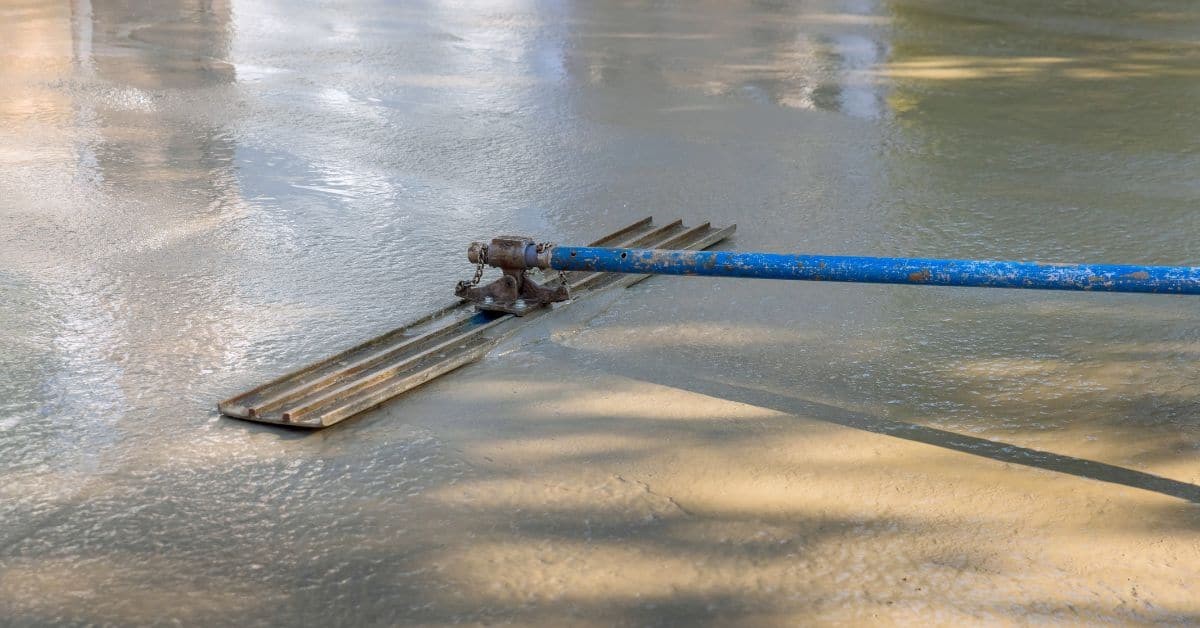
The goal is to establish a baseline and spot suspected curing-compound films before stripping or testing. Visual cues guide where to focus more thorough checks or patch tests. This quick survey helps decide whether spot testing or full-surface assessment is needed.
Look for dull patches, color variance, and a chalky or powdery appearance. Note edge transitions around joints or form-release residues that may indicate surface contamination. Record these observations to map contamination density and plan the prep strategy.
Quick field checks: water and solvent tests
Before you start stripping, use these quick tests to confirm curing compound presence.
- Water Bead Test: Spray a light mist. If water beads up and doesn’t spread, film is present. If it wets the surface, it’s likely bare concrete or previously stripped.
- Isopropyl Alcohol Rub Test: Apply a small amount to a white cloth, rub firmly in a 2×2 inch area. If the film transfers to the cloth, it’s curing compound. If not, it’s probably just dirt or residue.
- MEK (Methyl Ethyl Ketone) Rub Test: Use this if isopropyl alcohol doesn’t work. Follow same steps as above. MEK evaporates quickly, so work fast.
- Avoid skipping these tests: They help you target stripping efforts and prevent unnecessary product waste.
Quick rule: If both tests fail to show film, consider retesting or consulting a professional before proceeding with coatings.
Measuring surface profile and roughness
Before applying any coating, ensure the surface has enough ‘tooth’ for good adhesion.
- Replica Tape: Press a piece of replica tape onto the surface, then peel off and examine under a microscope or compare to profile standards. Aim for 3-8 mils (0.003-0.008 inches) for most coatings.
- Profile Comparison Plates: Hold plates against the surface. Matching plate indicates suitable profile. If none match, consider light surface preparation or consult coating manufacturer.
- Avoid skipping this step: Insufficient profile can lead to poor adhesion and coating failure.
Quick rule: For best results, aim for a surface profile within the recommended range for your chosen coating.
Key specs and numbers that matter (without a datasheet)
The aim here is to identify the curing compound family and get a feel for film thickness using on-site cues. This helps choose an initial removal approach without pulling a full data sheet.
On-site tests include solvent responses, sheen changes after abrasion, and rough-thickness cues from simple tape tests. These results guide whether you should pursue chemical removal, mechanical profiling, or a targeted wipe. Use lab-oriented ideas only as a reference if you have access to a small test panel.
Recommended on-site tests and how to document results
Before you start stripping, do some quick tests. These help identify the curing compound and estimate film thickness.
Water Break Test (ASTM D2247): Pour water onto the surface. If it beads up or doesn’t spread evenly, you’ve got a water-repellent film like wax or silicone.
Solvent Wipe Test (ASTM D4752): Use common solvents – acetone, isopropyl alcohol, or methyl ethyl ketone. Apply with a cotton swab. If the film dissolves or wipes away easily, note which solvent worked best.
Record your findings in a simple table: Test Name | Result | Observations. This helps track progress and ensures everyone’s on the same page.
When to send samples for lab analysis
Sometimes, on-site tests aren’t enough. Here are times when you should consider sending samples to a lab:
Ambiguous Film: If your on-site tests give conflicting results or you can’t identify the film, send samples.
Liability Risk or Warranty-Critical Projects: For high-stakes jobs, lab confirmation provides peace of mind and protects both you and the customer.
Request these from the lab: Film identification (type, composition), FTIR analysis for polymer identification, and adhesion simulation to check how well your stripping method will work. Follow their instructions for sample collection and packaging.
Methods to remove curing compounds and contaminants
Set clear goals for surface readiness and avoid substrate damage. The surface should be open to coatings with no residual film that could block adhesion. Plan your method around keeping porosity and profile suitable for the chosen coating system.
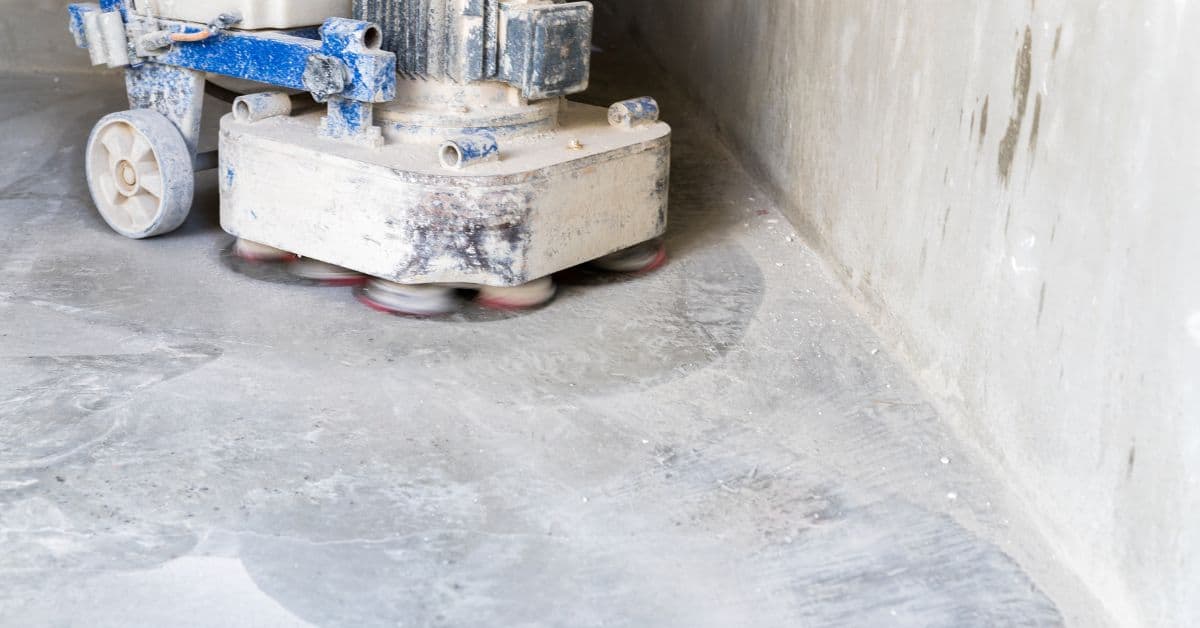
Mechanical methods like scarifying or grinding change the surface profile and generate dust, while chemical methods rely on solvents or degreasers to dissolve residues. Hybrid approaches combine steps for tough films and may reduce downtime. Always consider safety, ventilation, and waste handling as you choose a sequence.
Mechanical methods: shot blasting, diamond grinding, and scabbling
These methods physically remove curing compounds by creating a new surface profile. They’re effective when you need to ensure pore openness for coatings.
Shot Blasting: Uses abrasive media (like steel grit or glass beads) propelled at high speeds. It creates a deep profile, up to 10 mils. Equipment is heavy and requires proper containment for dust control.
Diamond Grinding: Uses diamond-impregnated blades or discs to remove material. It’s gentler than shot blasting but still effective. Dust control is easier with vacuum attachments. Depth removal is around 5 mils.
Scabbling: Uses a hammer-like tool with teeth that chip away at the surface. It’s ideal for small areas and hard-to-reach spots. Depth removal varies, typically less than shot blasting or grinding.
Chemical and detergent stripping
Chemical strippers dissolve curing compounds, making them easy to wipe off. They’re safe for most surfaces but require careful handling.
Cleaners/Degreasers: These are mild solvents that remove light residues. They’re safe to use but may not be strong enough for tough films. Neutralize with water after application.
Striping Compounds: These are stronger, typically containing caustic soda or other harsh chemicals. They require neutralization and thorough rinsing. Always check compatibility with your coating before use.
Safety is paramount when using chemicals. Wear gloves, eye protection, and a respirator. Keep the area well-ventilated.
Low-pressure water blasting and hydrodemolition considerations
Water blasting uses high-pressure water jets to remove curing compounds. It’s eco-friendly but less aggressive than mechanical methods.
Pressures range from 5,000 to 40,000 psi. Check with your equipment supplier for safe ranges. Flow rates vary depending on the nozzle size. Water blasting can leave surfaces wet, so allow time for drying before applying coatings.
Hydrodemolition is a specialized form of water blasting using ultra-high pressures (up to 60,000 psi). It’s used for deep removal but requires expert operation and proper safety measures.
Water methods are appropriate when you want to minimize surface damage or dust. However, they may not be as effective as mechanical methods for tough films.
Step-by-step field procedure: test, strip, verify
Define pre-work criteria such as surface temperature, humidity, and cure age before starting. Establish acceptable drying or conditioning times to validate readiness for testing. Document the field conditions as you go.
Begin with a film-detection plan using spot tests, water tests, and visual cues to determine pass or fail. Record product data sheets and batch numbers for reference. Plan the stripping sequence from test strip to full-strip with appropriate rinses and neutralization steps.
Step-by-Step Process
The following is a clear, numbered sequence of practical steps for the step-by-step field procedure: test, strip, verify. This will help you prepare, perform the main work, and finish with cleanup or final checks.
- Preparation and Safety Checks:
– Ensure surface temperature is above freezing (50°F/10°C) and relative humidity is below 85%.
– Allow sufficient cure time before testing (typically 28 days).
– Gather necessary PPE, tools, and materials. - Initial Film-Detection Tests:
– Perform solvent rub/eraser test, water-drop translucency test, and visual adhesion indicators.
– Document pass/fail criteria for each test. - Stripping Method Selection:
– Choose between mechanical (shot blasting, diamond grinding) or chemical stripping methods.
– Consider compatibility with target coatings and follow a step-by-step order: test strip, full-strip, rinse/neutralize. - Drying, Neutralization, and Surface Conditioning:
– Allow drying times as specified by the manufacturer between steps.
– Rinse and neutralize the surface using appropriate solutions.
– Restore acceptable surface energy through brushing, vacuuming, or light profiling. - Verification and Acceptance Criteria:
– Perform post-strip tests: film absence, surface cleanliness, moisture content, surface profile, and adhesion pull-off test.
– Define clear pass/fail thresholds for each test.
Prep sequence example (inspection → test patch → removal → verification)
Use this practical timeline and decision checkpoints for a typical concrete slab coating project.
- Initial Inspection: Check surface condition, look for cracks or damage.
– Confirm cure age and record batch numbers. - Test Patch: Perform initial film-detection tests on a small area.
– Document pass/fail results and compare to agreed criteria. - Stripping Method Selection: Choose mechanical or chemical stripping based on test patch results.
– Consider compatibility with target coatings and follow manufacturer’s guidelines. - Removal Sequence: Follow the chosen method’s step-by-step order: test strip, full-strip, rinse/neutralize.
– Maintain safety and environmental controls throughout the process. - Drying and Neutralization: Allow drying times as specified between steps.
– Rinse and neutralize the surface using appropriate solutions. - Surface Conditioning: Restore acceptable surface energy through brushing, vacuuming, or light profiling.
– Ensure the surface is clean and ready for coating. - Verification and Acceptance Criteria: Perform post-strip tests: film absence, surface cleanliness, moisture content, surface profile, adhesion pull-off test.
– Define clear pass/fail thresholds for each test and document results.
Quick rule: Always follow manufacturer’s guidelines for specific products and conditions.
Visual and pull-off adhesion verification
To ensure a successful coating application, perform final adhesion checks using visual inspections and pull-off tests. Acceptable results will confirm the surface is ready for coating.
First, perform a visual inspection of the prepared surface:
- Look for any signs of contamination or incompatibility.
– Ensure the surface appears clean, dry, and free from defects.
Next, conduct an adhesion pull-off test following ASTM D4541 standards:
– Apply a suitable adhesive to the surface and affix a dolly.
– Allow the adhesive to cure according to manufacturer’s guidelines.
– Pull the dolly off using a testing machine, recording the force required.
– Acceptable results will show cohesive failure within the concrete or adhesive, indicating strong adhesion.
– Document results and compare to agreed pass/fail thresholds before proceeding with coating application.
Addressing cracks, joints, and localized issues
Differentiate dynamic from non-dynamic cracks to decide on repair strategy. Movement, width, and origin influence whether to repair, accommodate, or leave cracks as-is before coating. Align this with the chosen coating system requirements.
When planning, decide between filling and routing based on movement and compatibility with the curing-compound removal. Outline the sequence so removal precedes moisture testing and surface profiling, and set target edge conditions and sealant choices that won’t conflict with coatings.
Repair Timing and Material Selection for Cracks
The right materials and timing can save you from costly rework. Here’s what to consider:
- Epoxy: Fast curing, strong bond. Use before coatings, allow 24-72hrs cure time.
- Polyurethane: Flexible, good for dynamic cracks. Apply after coatings, let it cure at least 16hrs.
- Cementitious compounds: Cheap, easy to apply. Use before coatings, allow 7-28days cure time.
- Avoid: Latex or acrylic paints. They crack and peel over active cracks.
- Tip: Always test sealant movement allowance against expected crack width.
Spot Removal and Feathering Near Joints
Joints need special care to ensure proper film removal and coating adhesion. Here’s how:
1. Use a joint knife or scraper to remove excess film from joint edges. Be careful not to damage the substrate.
2. Feather the edge of the removed area into the existing film using a sanding sponge or orbital sander with 80-grit paper. This ensures a smooth transition and promotes coating adhesion.
3. Test feathered edges for gloss level. If necessary, use a de-glosser to ensure proper surface preparation.
4. Always perform a test patch near joints to validate coating compatibility before full application.
Safety, environmental, and waste-management protocols
PPE and respiratory protection should match the anticipated dust, fumes, and chemical exposure. Include fit-testing and training, and use the appropriate respirators, eye protection, gloves, and clothing. Follow local rules for ventilation and containment.
Control dust with barriers and proper dust collection, and manage wastewater with containment strategies. Segregate waste streams such as cured film, rinse water, and concrete dust for proper disposal. Keep SDS and regulatory checks up to date before work begins.
Containment and Dust Control for Blasting/Grinding
When using mechanical methods like shot blasting, diamond grinding, or scabbling to remove curing compounds, you’ll need to control dust. Here’s how:
Vacuums and Enclosures: Use industrial vacuums with HEPA filters to collect dust at the source. For larger-scale work, consider enclosed systems that capture dust within a contained workspace.
Run-off Controls: When water is used during blasting or grinding, ensure run-off is contained using troughs, coated tarps, or other barriers. This prevents contaminated water from entering drains or the environment.
Handling and Disposing of Chemical Strippers and Rinsate
After using chemical strippers, proper handling and disposal are crucial. Here’s what to do:
Neutralization: Neutralize the stripped film and rinsate with a suitable base or acid (depending on the stripper used) before disposal. This reduces the environmental impact and ensures compliance with local regulations.
Sampling and Disposal Pathways: Take samples of the neutralized waste for hazardous constituent analysis. Dispose of the waste through licensed haulers, following your local regulations. Typical disposal pathways include treatment plants or secure landfills.
Cost, timeline, and choosing the right method
Think in terms of labor, equipment use, and waste handling when evaluating costs. Consider the need for grinders, scarifiers, dust collection, and disposal, plus any consumables. Plan for contingencies in access and indoor occupancy considerations.
Project timelines depend on inspection, dwell times, stripping, rinsing, and drying. Factor in weather, ventilation, and material compatibility. Use a simple decision framework to weigh mechanical, chemical, or hybrid approaches against site conditions and coating requirements.
Budgeting and scheduling examples
For small areas (under 500 sq.ft.), expect labor hours to range between 4-8 per method. Check local rates for labor and equipment rental.
Small area budget: Labor: $200-$400, Equipment Rental: $100-$300, Consumables & Waste Handling: $50-$150
Large area (over 1000 sq.ft.) budget: Labor: $800-$2000, Equipment Rental: $400-$1000, Consumables & Waste Handling: $200-$500
Buffer drying times and weather constraints into your schedule. For example, add 2-3 days for drying after mechanical stripping in humid conditions.
Common mistakes and how to avoid them
Here are some common pitfalls to steer clear of when removing curing compounds:
- Skipping test patch: Always do a test patch first to ensure the method works on your surface.
- Insufficient profile: Ensure you achieve the required surface profile (SA/SP grade) for coating adhesion. Too smooth or too rough can cause issues.
- Poor rinsing: Thoroughly rinse and neutralize chemicals to prevent residue affecting coatings.
- Ignoring safety protocols: Always follow manufacturer guidelines, use PPE, and contain dust and runoff.
- Rushing drying times: Allow sufficient time for surfaces to dry completely before applying coatings.
Taking these precautions will help minimize rework and ensure a successful project.
Conclusion
Removing curing compounds before coating is about protecting the surface, avoiding costly rework, and ensuring a durable, good-looking finish. Do the testing, strip carefully, and verify before you commit to a full job.
Begin with a small test patch, check film integrity, then choose a method that matches the surface and the cure film you’re dealing with. Do a light pass, re-test, rinse or wipe as needed, and inspect cracks, joints, and any localized issues before moving on. If the film stays put or the substrate shows signs of damage, stop and reassess instead of pushing ahead. Safety first and proper waste handling stay with you from start to finish, and keep the timeline realistic so you don’t rush the cure or the coating that follows.
Common mistakes to avoid include skipping the initial test patch, using the wrong method for the substrate or film type, and rushing through stripping without re-testing. Always wear the right PPE, ventilate, and follow local waste-management rules. If you see cracking, softening, or delamination during testing, or if the project scope goes beyond a simple surface strip, call in a professional rather than guessing. When you stick to small tests, deliberate steps, and clear checks, you’ll finish confidently with a durable, smooth coating ready to perform.
FAQ
How do I tell if curing compound is still on the concrete?
Run a simple test with a damp patch. If the patch darkens and feels slick, the film is still there. If it soaks in evenly, you’re getting closer to ready for coating.
What tests should I run to verify before coating a floor?
Do a water drop test on several spots. If water beads up and sits, you’ve got film interference. If it soaks in or dries evenly, you’re likely good to move on to the next step.
What is the best way to remove the film if it’s still there?
Start with a light scrub using a concrete-safe cleaner and a stiff brush. If that doesn’t do it, consider a chemical stripper or etch, but follow the product label and wear proper protection.
When is it safe to coat after stripping?
Wait until the surface dries completely and passes the water test again with clean spots. If you see any film or residue, strip or scrub again before applying coatings.