Introduction
Radon rough-in under a slab is routing and sealing a pipe under a concrete floor to vent soil gas safely.
Do this with plain instructions: plan the path, verify access, and seal joints to limit leaks, while following local rules and manufacturer notes.
Before you start, check local rules and follow any recommended testing plan to decide if you need active or passive systems.
Keep the routing clear of utilities, seal all joints well, and use approved materials; if in doubt, follow the product instructions and manufacturer guidance.
Key takeaways
- Clarify language options and translation notes to help diverse readers choose terms.
- Explain page details and navigation so DIYers locate sections on routing and sealing.
- About this site and disclaimers align with Health Canada and Government guidance.
- Reference Health Canada, Government of Canada, and Corporate pages for compliance context.
- Active soil depressurization basics, passive options, and risk factors for homes.
- Follow safe installation practices with warnings about sealing gaps and penetrations.
Table of Contents
- Introduction
- Key takeaways
- Why a Radon Rough-in Under the Slab Matters
- Step-by-Step DIY Rough-in Under Slab (Code-Aware Workflow)
- Pipe Routing: Patterns, Sizing, and Penetrations
- Sealing, Membranes and Material Specifications
- Active Soil Depressurization Systems and Fan Considerations
- Radon Detection, Testing Protocols and Maintenance
- Building Codes, Certifications, and Choosing a Mitigation Professional
- Costs, Common Installation Mistakes, and Regional/Climate Impacts
- Conclusion
- FAQ
Why a Radon Rough-in Under the Slab Matters
The sub-slab rough-in is meant to provide a ready path for a future radon mitigation system. It also reduces disruption later by giving you a clean, planned interface for the stack and vents. This approach aligns with best practices for homes with slab-on-grade or crawlspace transitions.
You should plan this during a new slab pour or a major remodel, when retrofit potential is feasible and when local guidance supports it. Design essentials cover pipe size, intake and exhaust lines, exterior or attic routing, cleanouts, and how the rough-in will interface with future foundation details. Consider corridor routes that avoid footings, rebar, and utilities, and think about sleeves, depth, and frost protection. During the pour, sleeves and seals should integrate to prevent concrete infiltration while preserving airtight connections for future connections. Finally, document the as-built layout and note inspection requirements so future contractors can pick up where you left off or perform testing after the full system is installed.
When to rough-in (new builds vs retrofit)
A sub-slab rough-in is most cost-effective during new construction or major slab work. Here’s why:
New Construction: It’s like building a highway before you need it. You’re pouring the slab anyway, so adding pipes now saves digging later.
Major Remodel/Retrofit: If you’re already tearing up the slab, it’s wise to add pipes then. Retrofitting after the fact can be messy and expensive.
Benefits and limits of a rough-in vs full mitigation
A sub-slab rough-in is like preparing your home for a future guest (radon system). Here’s what it does and doesn’t do:
Benefits: It creates passive pathways for future radon mitigation. No digging, less disruption, and you’re ready when you need it.
Limits: A rough-in alone won’t mitigate radon. It’s a preparation step. For active reduction, you’ll still need to install fans, seals, and other components later.
Step-by-Step DIY Rough-in Under Slab (Code-Aware Workflow)
Start by defining the scope, applicable codes, and permit needs. Identify required inspections and the documentation you’ll collect, such as plans and material specs. This keeps the project aligned with local expectations from the outset.
Next, prep the site and layout, examining slab type, sub-slab conditions, and any obstructions. Decide on the collector location, vent pathway, and accessible cleanouts, while planning for moisture barriers and cleanable access. Choose pipe diameter and material, along with seals, grommets, gaskets, and dampers, and document airtight transition details and backflow prevention. Map routes under the slab with minimal bends, plan vertical risers to the attic or exterior, and coordinate penetrations with utilities. Finally, establish pre-pour and post-pour sealing methods, determine an air-tightness test approach, and outline inspection milestones so inspectors can verify the rough-in at key points.
Step-by-Step Process
This section guides you through the practical steps of a DIY rough-in under slab, ensuring code compliance and safety.
- Preparation: Check local codes, gather materials, and prepare your site. Safety first – wear appropriate PPE.
- Mark out collector location, vent pathway, and cleanouts on the slab’s underside using chalk or spray paint.
- Create core holes for risers at marked locations. Keep them clean and dry to prevent clogging.
- Install pipe through slab, ensuring minimal sharp bends and proper seating. Use grommets, gaskets, and dampers as needed.
- Temporarily cap the pipe above the slab, label it clearly for future reference, and ensure access for fan installation.
- Moisture barrier: Install a polyethylene sheet under the slab to prevent moisture intrusion into your home.
- Final check: Inspect your work, ensuring all components are secure and properly installed. Double-check local codes before pouring concrete.
- Post-pour: Once concrete is cured, perform an air-tightness test to ensure a proper seal.
Sub-slab collector layout and preparation
Locating and preparing the gravel/collector zone is crucial for effective radon mitigation. Here’s how:
Gravel bed: Excavate a 4-6 inch deep layer of clean, coarse gravel under the slab area. This provides a pathway for radon gas to move towards the collector.
Collector layout: Position the collector in the center or near the middle of the gravel bed. Ensure it’s large enough (at least 16 inches in diameter) and deep enough (at least 4 inches below the slab) to capture sufficient radon gas.
Suction points: Place suction points around the collector, ensuring they’re at least 2 feet away from any walls or obstructions. This helps maximize sub-slab communication and prevents short-circuiting of the system.
Installing the rough-in pipe and through-slab routing
Properly positioning the riser and routing the pipe is vital for a successful rough-in. Here’s how:
Riser position: Place the riser vertically at the marked location, ensuring it’s centered and plumb. This will allow for easy connection to the fan later on.
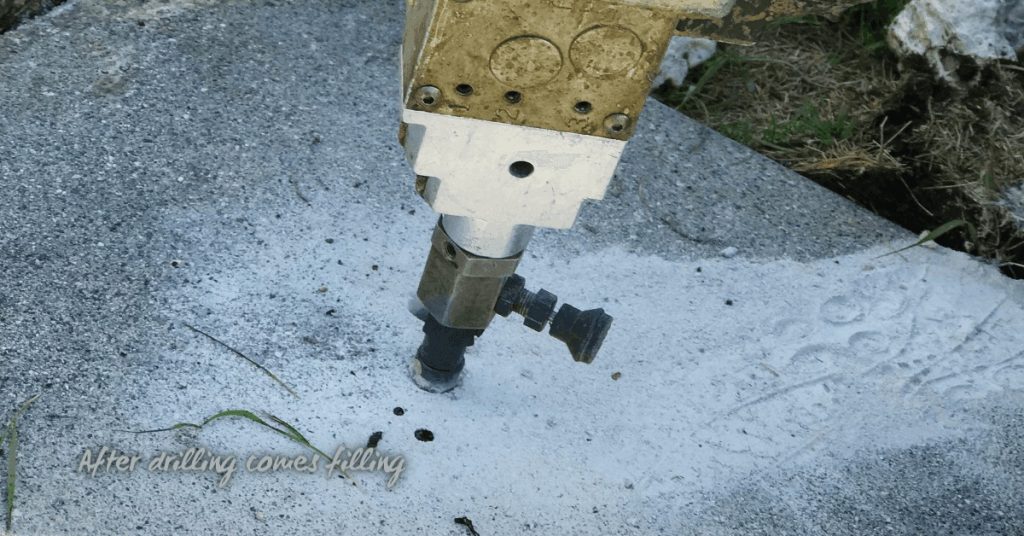
Create core holes: Use a core drill bit to create clean, circular holes through the slab at the marked locations. Keep them dry to prevent clogging with concrete residue.
Seating the pipe: Insert the pipe through the slab, ensuring it’s properly seated and doesn’t wobble. Use grommets or other sealing materials as needed to create an airtight seal.
Temporary termination: Above the slab, temporarily cap the pipe with a suitable cap. Ensure the cap is secure but can be easily removed when installing the fan later on.
Temporary capping, labeling and leaving access for future fan
Properly capping and labeling your rough-in pipe ensures easy identification and access when installing the fan later on.
Capping: Use a temporary cap that’s secure but can be easily removed. Ensure it creates an airtight seal to prevent any backflow of gas.
Labeling: Clearly label the pipe above the slab, including the date of installation and any relevant notes. This helps future contractors understand your system’s history.
Access: Ensure there’s enough space around the capped pipe for easy access when installing the fan later on. Keep this area clear of obstructions to facilitate future maintenance or diagnostics.
Pipe Routing: Patterns, Sizing, and Penetrations
Outline the main routing choices, such as toward exterior walls, into an attic chase, or to a dedicated stack, and weigh trade-offs based on slab type and home layout. Use simple visual cues or diagrams to aid decision-making. Consider the comfort of future access when choosing a pattern.
For sizing and materials, plan to use common options like PVC or CPVC, and keep diameter guidance practical for your layout. Verify that fittings, solvents, and sealing methods are compatible with your chosen pipe. Plan penetrations through slabs and walls with appropriately sized sleeves, and coordinate fire stopping, grout, and insulation to minimize heat loss and condensation. Ensure slopes support gravity-driven venting and maintain cleanouts and vent terminations within code limits. Avoid long, exposed exterior runs and sharp bends by securing proper supports and planning for future upgrades as needed.
Routing layouts: single suction, multiple suction and manifold options
When routing your radon pipe under the slab, you’ve got a few layout choices. Each has its pros and cons.
Single Suction Point: This is simplest for small slabs. One collector covers the whole area. But if soil communication’s poor, it might not be enough.
Multiple Collectors: For larger slabs or poor soil communication, multiple collectors can do the job. Each has its own pipe run to the stack. More complex but better coverage.
Manifold System: This is for big slabs with varied soil conditions. Pipes from several collectors meet at a manifold before going to the stack. It’s the most complex but offers best coverage.
Pipe sizing, joints, slope and fitting best practices
Size your pipe right for smooth airflow. Most use 3″ or 4″ PVC Schedule 40/80, ABS, or CPVC.
Glue joints with the right solvent. Keep it airtight. Slope pipes consistently at least 1/4″ per foot away from the slab to ensure condensate drains out.
Use fittings sparingly. Too many can restrict airflow. Keep angles gentle, no sharp 90-degree bends.
Secure pipe with straps or hangers every 3-4 feet. No sagging, no stress on joints.
Penetrations through walls, rim joists and floors
Make clean, airtight penetrations. Use a core bit to drill through the slab, wall, or floor.
Insert a sleeve for pipe protection. Seal around it with fire-stop caulk or foam. This stops air leaks and prevents heat loss.
At rim joists, use expandable foam sealant. It expands to fill gaps, keeping your penetration airtight. Insulate the pipe to prevent condensation.
Always check local code for specific penetration requirements. Safety first.
Sealing, Membranes and Material Specifications
Explain how sealing and membranes reduce leakage paths under the slab and how they interact with the routing. Prioritize air gaps, seam integrity, and long-term durability during rough-in. Think ahead to future connections and serviceability.
Choose membrane types that are gas-impermeable and compatible with concrete and moisture. Document thickness, permeability, and exposure considerations for UV and moisture. Detail proper placement beneath the slab, at edges, and around penetrations, with overlaps and taped seams that wrap around pipes. Include transitions to walls, piers, and footing pours, and ensure movable joints are accommodated. Use elastic, non-shrinking sealants and appropriate gaskets where pipes and wires pass through, and verify your system remains accessible for maintenance. Plan field checks and records to confirm seam integrity before the pour.
Sealing around pipes, control joints and perimeter gaps
Proper sealing at pipe origins, construction joints, and perimeters is crucial to prevent radon gas leaks. Use gas-tight sealants designed for concrete and compatible with your mit system.
Around pipes: Apply sealant generously on the pipe before insertion into the slab. Ensure it’s covered by at least 2 inches of concrete. Use mechanical seals or gaskets where necessary, especially around larger pipes.
At control joints: Seal them with a flexible, non-shrinking sealant to accommodate movement and prevent gas leaks. Apply in a continuous bead along the joint before concreting.
At perimeters: Seal the edge of the slab using a similar process as control joints. Ensure the sealant extends at least 2 inches into the concrete.
Sub-slab membranes and vapor barriers: selection & placement
Use gas-impermeable, multilayer membranes as sub-slab vapor barriers. They reduce leakage paths and enhance mitigation performance.
Placement: Lay the membrane continuously beneath the slab, overlapping seams by at least 6 inches. Tape seams with a compatible, gas-tight tape to prevent leaks.
Around penetrations: Ensure membranes wrap around pipes and wires tightly, using gaskets or sealants if necessary. Seal any gaps between the membrane and footings or walls.
Transition to walls/piers: Extend the membrane up the wall at least 6 inches, taping it securely. For piers, wrap them with the membrane before pouring concrete.
Approved materials, backfill and visual checkpoints
Use this checklist before backfilling to ensure correct rough-in installation.
- Pipe sealants: Check they’re gas-tight, compatible with concrete, and applied generously around pipes.
- Membrane integrity: Ensure it’s laid continuously, overlaps are at least 6 inches, and seams are taped securely.
- Penetration seals: Verify membranes wrap tightly around pipes/wires; seal any gaps with gaskets or sealants.
- Control joints: Check they’re sealed with a flexible, non-shrinking sealant.
- Perimeter edge: Ensure it’s sealed with a gas-tight sealant extending at least 2 inches into the concrete.
- Transition to walls/piers: Confirm membrane extends up walls at least 6 inches, and wraps around piers securely.
- Pipe routing: Verify it follows your planned layout, with no kinks or sharp bends that could restrict airflow.
- Temporary capping: Check the pipe is capped properly to prevent backfill intrusion.
- Labeling and access: Ensure the pipe is labeled and accessible for future fan installation.
Quick rule: If any item fails inspection, correct it before pouring backfill or concrete. Re-inspect after pours to ensure no damage occurred.

Active Soil Depressurization Systems and Fan Considerations
Describe how passive rough-ins can be upgraded to active systems, including component choices and control schemes required to meet code and manufacturer specs. Outline typical steps to bring a rough-in to active status without reworking the entire slab. This helps ensure future performance with minimal disruption.
Discuss fan siting and electrical considerations, balancing noise, weather exposure, and service clearances. Decide indoor vs. outdoor locations, ensure GFCI protection where required, and plan for a robust wiring path. Route under the slab with short, direct runs, maintaining airtight joints and proper slope. Include condensate handling, trap seals, and anti-backflow features, while sealing bulkhead penetrations and wall penetrations to keep the system durable in daily use.
SSD system types: passive, passive-stack, and active SSD
Passive systems rely on natural ventilation to draw radon out. They’re simple but less effective in some conditions.
Passive-Stack systems add a vertical pipe to increase stack effect. They’re better than standard passives but still limited by weather conditions.
Active Soil Depressurization (SSD) systems use fans to force radon out. They’re the most effective, especially in areas with high radon levels or challenging site conditions.
Fan selection, location, condensate and freeze concerns
Fans can be indoor, in the attic, or exterior. Indoor fans are quiet but may cause condensation. Attic fans risk freezing and need weather protection. Exterior fans expose the fan to elements but offer better ventilation.
Condensation can form on cold pipes, so insulate if needed. In freeze-prone areas, consider a freeze-resistant or heated fan.
Ensure fans have proper clearances for service and adequate power supply with GFCI protection. Use weatherproof enclosures for outdoor installations.
Monitoring: manometers, alarms and commissioning checks
A manometer measures system pressure. Install it near the fan to monitor performance. Regularly check for proper operation.
Alarms can alert you to system failures. Consider installing one if your system is critical or hard-to-monitor.
During commissioning, check that:
- The fan runs when the system is activated.
- The manometer shows adequate negative pressure (usually -1.5 to -4 inches W.C.).
- The vent terminates as per code (typically 10 feet above the roof or 2 feet above the highest point within 10 feet).
Radon Detection, Testing Protocols and Maintenance
Outline pre-installation testing to establish a baseline and inform slab design, noting detector placement and duration. Understand which tests fit your situation, and document results for comparison after installation. Coordinate with local codes to ensure your method meets expectations.
Describe post-installation testing to verify there are no bypass paths and to confirm the system performs as intended. Plan follow-up tests after depressurization or sealing, and select detector types suited to your setup. Establish a monitoring cadence that suits your site, and track results to identify transient spikes. Prepare a remediation plan with clear steps if readings stay high, and keep records of maintenance and consultant communications for future reference.
Short-term vs long-term tests and detector placement
Before installing your radon mitigation system, it’s crucial to understand the two types of testing methods – short-term and long-term. Both have their purposes but differ in duration and accuracy.
Short-term tests are quick, taking only a few days to a couple of weeks. They’re great for initial screening but can be affected by temporary conditions like weather or open windows. Use these to get an idea if your home has elevated radon levels.
Long-term tests, on the other hand, take several months to a year. They provide a more accurate representation of your home’s average radon level over time. These are ideal for establishing a baseline before installing your system and should be used to inform your slab design.
When placing detectors, ensure they’re in the lowest lived-in level of your home, at least 20 inches above the floor, and away from exterior walls, doors, and windows. This placement helps capture representative readings of your living spaces.
Post-install commissioning and verification testing
After installing your radon mitigation system, it’s essential to confirm that it’s working correctly. This involves immediate post-build testing and follow-up tests after any soil depressurization or slab penetrations are sealed.
Conduct immediate post-install tests within 24 hours of completion. Use a continuous monitor or a short-term test kit to ensure no radon bypass is occurring. Place the detector near suspected entry points and away from any ventilation systems that could skew results.
After sealing, perform follow-up tests. These should be done after at least 24 hours but no more than 30 days post-sealing. Use a long-term test kit for these follow-ups to ensure sustained reductions in radon levels over time.
If your initial testing shows high levels, don’t panic. It can take time for the system to fully depressurize the soil. Re-test after a few weeks and monitor regularly to ensure your system is working as expected.
Routine maintenance, troubleshooting and fan replacement considerations
Maintaining your radon mitigation system is crucial for ensuring it continues to protect your home. Regular inspections, usually every two years, can help catch any issues early.
Common failure modes include clogged pipes, leaks in the system, or fan malfunction. If you notice radon levels rising again, check for these issues first:
- Ensure all seals around pipe penetrations are intact and well-maintained.
- Check that your fan is running smoothly and isn’t blocked by debris or dirt.
- Inspect the system for any cracks, holes, or gaps where radon could bypass the mitigation efforts.
Fan replacement may be necessary if your current one is old, noisy, or no longer effectively reducing radon levels. When selecting a new fan, consider its airflow capacity, energy efficiency, and noise level. Always follow manufacturer guidelines for installation and maintenance.
Building Codes, Certifications, and Choosing a Mitigation Professional
Explain how national and local codes interact with radon retrofit work, including when permits and inspections are required. Note how ongoing maintenance or disclosures may be mandated by code for slab-on-grade homes with radon systems. Use this as a guide to stay compliant from the start.
List core standards and best practices to follow, and align them with recognized guides from regional authorities. Discuss certification programs such as NRPP, NRSB, or CARST, and what each credential covers. Build a contractor-vetting checklist that includes licenses, insurance, references, and a detailed written proposal with scope and milestones. Describe a due-diligence workflow that compares bids, clarifies testing plans, and anticipates potential renovations. Finally, highlight contract clarity and communication pitfalls to avoid, such as vague scope statements or missing permit documentation.
National, provincial/municipal code variations and permits
Radon mitigation work is governed by national and local building codes. It’s crucial to understand these provisions before starting any rough-in work.
National Codes: In the U.S., the International Residential Code (IRC) provides guidelines for radon systems in new construction. For retrofits, follow the International Mechanical Code (IMC).
Local Codes: Check with your local building department to understand any additional requirements or variations from national codes. They can provide specific permit information and inspection schedules.
Choosing a certified professional and vetting checklist
Before hiring, use this checklist to ensure you’re working with a competent, trustworthy mitigation professional.
- Certifications: Look for professionals certified by the National Radon Proficiency Program (NRPP), National Radon Safety Board (NRSB), or Canadian Association of Radon Scientists and Technologists (CARST).
- Insurance: Confirm they carry liability and workers’ compensation insurance to protect you from potential damages.
- References: Ask for references and follow up with them. Past clients can provide valuable insights.
- Past Projects: Request photos of past projects to assess their work quality.
- Warranty Terms: Ensure they offer a warranty and understand what it covers.
- Written Proposal: Require a detailed written proposal outlining scope, materials, milestones, and post-install testing requirements.
- Pre/Post Testing Plans: Discuss their plans for pre- and post-install radon testing.
- Modifications & Decommissioning: Address potential modifications or decommissioning if future renovations occur.
Quick rule: Always vet your contractor thoroughly to avoid costly mistakes and ensure a safe, effective system.
Inspections, documentation and warranties
Proper documentation and inspections are crucial for maintaining your radon system’s effectiveness and ensuring a smooth resale process.
- As-Built Drawings: Keep these to understand your system’s layout and make future modifications easier.
- Test Results: Maintain records of pre- and post-install test results to track system performance.
- Warranty Information: Keep warranty documents handy for reference in case of service calls or repairs.
- Inspection Sign-Off: Ensure all inspections are signed off on by the relevant authorities. This is crucial for resale and ensures your system meets safety standards.
Quick rule: Regularly review and update your documentation to keep it current and easily accessible.
Costs, Common Installation Mistakes, and Regional/Climate Impacts
Address budgeting by outlining typical material costs, labor scenarios, and inspection fees, while noting that actual figures depend on local conditions. Emphasize building in contingencies for unexpected site specifics. Use these points to form a realistic project budget without promising exact numbers.
Cover frequent mistakes to avoid, such as misrouting or pinching the vent line, failing to seal penetrations, or neglecting an airtight envelope under the slab. Discuss frost depth and slope concerns and the importance of cleanouts for future service. Explain how regional climate and soil conditions affect design choices, including durability considerations for seals and routing. Offer a simple approach to rough-in cost modeling that ties region, soil type, and climate to expected material and labor needs. Finish with a checklist to verify clearances, vent path continuity, and documentation for inspectors.
Cost drivers and budgeting guidance
The cost of a radon rough-in under a slab varies based on several factors. Slab access, the number of suction points needed, fan choice, and permitting fees all play a role.
Material costs typically include pipes (around $2-$5 per foot), seals ($0.50-$2 each), couplings ($1-$3 each). Add 10-15% for contingencies like unexpected site conditions.
Labor can range from $40-$80 per hour, depending on whether you DIY or hire a contractor. Permitting and inspection fees vary by location but expect around $200-$500 in total.
To estimate realistically, get multiple quotes, consider all factors, and add a 10-15% contingency for surprises.
Top safety and installation mistakes to avoid
Mistakes in radon rough-in can lead to ineffective systems. Here are common errors to steer clear of:
- Poor seals: Inadequate sealing at pipe penetrations lets air in, reducing system effectiveness.
- Blocked collectors: Incorrect routing or debris can block collectors, preventing proper radon removal.
- Undersized piping: Pipes too small for the job can’t handle radon levels, leading to system failure.
- Incorrect routing: Poorly routed pipes can’t reach all areas under the slab, leaving high radon pockets.
Regular inspections and proper installation practices prevent these issues. Always follow local codes and manufacturer guidelines.
Regional soil types, frost, and climate considerations
Soil composition, water table height, freeze-thaw cycles, and local climate all impact radon rough-in design. Here’s what to consider:
Soil type: Clay soils can be impermeable, requiring more suction points. Sandy or gravelly soils allow easier radon movement, needing fewer points.
Frost depth: In cold regions, pipes must be buried deep enough to avoid freezing and potential damage. Slopes should also account for frost heave.
Climate: High moisture areas may need additional seals or drainage considerations. Seismic zones might require extra pipe reinforcement. Always check local building codes for specific requirements.
Conclusion
The core idea is clear: a careful radon rough-in under the slab protects people, keeps the space reliable, and avoids costly rework later. Do it right, and you’re building safety, durability, and peace of mind into the job from the ground up.
Plan and execute in a steady sequence: confirm local code requirements, map pipe routing and penetrations with clean, straight runs, size any penetrations correctly, seal and separate the system from moisture paths, install membranes and materials to spec, lay out the active depressurization components if needed, set up a reliable radon detection and testing routine, keep good records and inspections, and maintain the system with regular checks. Start small if you’re unsure, document what you do, and test frequently as you progress.
Common mistakes to avoid include skipping or sloppy sealing around penetrations, using improper materials or compatible membranes, neglecting a test plan or post-install verification, and ignoring regional climate impacts or code requirements. Never assume “it will be fine”—test early, test often, and document every step. Use safety rules like never vent directly into living spaces, keep power and fan wiring properly protected, and never rough-in components without a clear plan and correct clearances.
If the project starts to feel uncertain—complex routing, major penetrations, uncertain code compliance, or you’re handling an active soil depressurization system with a fan—call a mitigation professional. When in doubt about certifications, inspections, or getting the system right the first time, pause and get expert input. Stay safe, stay methodical, and you’ll finish strong with a robust, reliable radon rough-in you can trust.
FAQ
What is radon gas and why should I care about it under a slab?
Radon is a naturally occurring gas that can move through soil and into a building. High levels over time can affect indoor air quality. You want a plan that controls pathways from the soil into the slab and living space.
How do passive radon reduction methods differ from active ones?
Passive systems rely on natural pressure differences and layer seals to keep radon out. Active systems use a fan or pump to move air and depressurize the soil. Each has its place; you’ll choose based on soil, slab design, and future needs.
What should I watch for during long-term radon testing after the rough-in?
Run the test as instructed by the kit or lab. Keep doors closed and vents as usual to get a true reading. If results stay high, plan for updates or a mitigation check.
When is it time to hire a certified mitigation professional?
If you’re unsure about sealing, pipe layout, or active system installation, call in a pro. A certified mitigator can verify the work, handle complex sub-slab routing, and ensure proper testing. Always check credentials and ask for proof of recent work.

