Introduction
Use controlled, gentle vibration on the edges to minimize honeycombing without overworking the material.
This approach helps you achieve a cleaner edge while preserving material integrity, and the guide walks you through practical tips, timing, and technique considerations.
You’ll learn how to assess edge conditions, pick the right vibration frequency and duration, and apply simple, repeatable steps that yield consistent results.
Key takeaways
- Honeycombing at edges due to reduced concrete cover.
- Vibrate edges with principles, not power: less is more.
- Use right tools: vibrators, formwork, joint materials.
- Apply vibration techniques: top-down, bottom-up, or combined.
- Protect edges with proper formwork and joint strategies.
- Adjust mix design and placement to reduce honeycombing.
- Avoid overvibration: watch for signs of excess.
Table of Contents
- Introduction
- Key takeaways
- Why Honeycombing Happens at Edges
- Vibration Basics for Edges — Principles, Not Power
- Tools and Materials Checklist for Edge Work
- Practical Vibration Techniques for Edges
- Formwork and Joint Strategies to Protect Edges
- Mix Design and Placement Adjustments to Reduce Honeycombing
- Avoiding Overvibration — Signs and Mitigation
- Inspection, Acceptance Criteria, and Visual Checkpoints
- Troubleshooting Common Edge Honeycombing Scenarios
- Practical Case Studies and Step-by-step Examples
- Conclusion
- FAQ
Why Honeycombing Happens at Edges
Honeycombing at edges happens when concrete around the edge of a slab or column traps air and settles unevenly. Poor compaction, aggregate separation, and leaks through the formwork create voids that show up as rough, honeycomb-like surfaces. These flaws are usually caused by common site practices that ignore edge details.
To prevent it, keep edge forms tight, seal joints, and vibrate thoroughly along the perimeter. Don’t rush pours or pull forms early, and watch for leaks during placement. If you ignore these steps, air pockets and settlement stay in the edge, and you’ll pay with repairs later.
Aggregate Segregation and Particle Size Effects
The size of the aggregate used in concrete plays a crucial role in honeycombing at edges. Larger aggregates can create voids when they settle, especially if there’s not enough fine material to fill these gaps.
Fines are essential because they help to seal off small spaces and prevent air pockets from forming. Without sufficient fines, the concrete mix becomes too coarse near the edges, leading to honeycombing issues.
Formwork Leakage and Poor Seals
Gaps in formwork can cause paste to escape from around columns or slab edges. This leakage results in exposed aggregate and voids, which are visible as honeycombing.
Poorly sealed joints between forms allow concrete to seep out, weakening the structure’s integrity at these critical points. Ensuring that all ties and connections are properly sealed is key to preventing this issue.
Vibration-induced Paste Migration
Incorrect vibration techniques can cause paste to migrate away from the edges of concrete pours, leaving behind exposed aggregate. This happens when the vibrator pulls more paste towards itself rather than evenly distributing it.
It’s important to find a balance in how you use your vibrators. Too much vibration can lead to paste migration and honeycombing at the edges, while too little may not consolidate the concrete properly.
Vibration Basics for Edges — Principles, Not Power
Vibration targets edges with the right frequency, amplitude, and duration. Don’t chase bubbles; let the concrete consolidate and work with the mix.
Low frequency and steady amplitude at the edge help avoid voids and weak corners. Timing matters: start lightly, stay steady, and pull back as the mix stiffens so you don’t overwork the surface.
Frequency and Amplitude Explained
Frequency is how many times a vibrator moves back and forth each second, usually measured in vibrations per minute (VPM). A higher frequency means more rapid movement. For edges, you want to aim for around 9000-12000 VPM with handheld vibrators.
Amplitude refers to the distance the vibrator travels during one cycle. It’s like how far it moves back and forth. With edge work, a good starting point is an amplitude of about half an inch (13mm) for internal vibrators. This helps move the concrete without overworking it.
Remember, these numbers are rough guidelines. Adjust based on your specific mix design and pour conditions to avoid honeycombing.
How Long to Vibrate Near an Edge
Vibration time near edges should be short but effective. A good rule of thumb is about 5-10 seconds per insertion point, moving the vibrator slowly along the edge.
The spacing between vibration points depends on your pour height and concrete pressure against the formwork. As a general guide, space insertions every 6 to 12 inches (15 to 30 cm) for most pours. Adjust based on how stiff or wet your mix is.
Too much time can overwork the concrete and cause segregation, so keep it brief but thorough.
Pulse Versus Continuous Vibration
Vibrating in short pulses helps move the concrete without overworking it. A pulse is a quick burst of vibration, followed by a pause. This method can be effective for edges where you need to consolidate but avoid excessive movement.
Continuous vibration means keeping the vibrator moving steadily without pauses. While this works well for larger areas, continuous use near edges risks causing honeycombing or segregation due to overworking the concrete.
Pulsing is better when dealing with stiff mixes or narrow spaces where you need precise control. Continuous vibration might be more suitable for wider pours and looser mixes.
- Edge-work workflow (concise, end-to-end) — Use this as a quick checklist to guide edge vibration from prep through finish:
- Prep the forms and edges: remove debris, inspect seams, and dampen the form if the mix is very sticky or if the form is very dry.
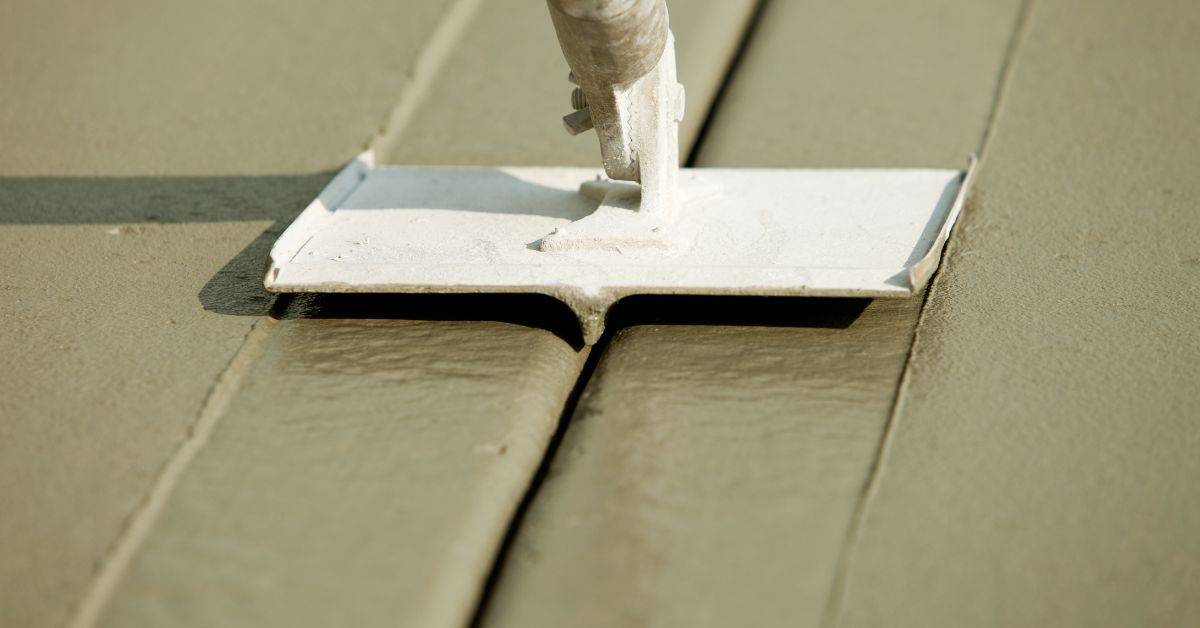
- Place concrete and screed to the correct level, then bring the edge to the final contour with a edging tool or trowel as needed.
- Set vibration plan: determine insertion points, spacing (6–12 inches / 15–30 cm), and whether to pulse or use short bursts.
- Begin vibration at the edge with light contact to consolidate the concrete without overworking the surface.
- Move along the edge smoothly, pausing briefly at each insertion point to avoid creating streaks or voids.
- Inspect for surface defects (honeycombing or air voids) and re-vibrate any suspect zones with a lighter touch.
- Finish the edge with a proper tool to seal the surface once consolidation is achieved; avoid overworking the near-edge area.
- Plan curing and protection: mist or pond cure as specified for the mix and ambient conditions, and monitor for surface drying that could lead to cracking.
- Post-pour maintenance: clean the vibrator immediately after use, drain and lubricate according to the manufacturer’s guidance, and store in a dry place.
Tools and Materials Checklist for Edge Work
Here’s the practical tools list you need for clean edges. Use the right vibrators, needles, and external vibrators to settle concrete and stop honeycomb at edges. Skimp on tools and you’ll pay with rough edges and extra work.
Edge honeycombing costs time and durability, so having the right gear matters. With proper measuring tools, formwork sealants, and a few sturdy vibrators, you get a consistent finish, fewer callbacks, and less rework on your project. Don’t fight the pour with makeshift tools—quality tools save you money and frustration in the long run.
Selecting the Right Internal Vibrator Head Size
The right internal vibrator head size is crucial for preventing honeycombing at edges. It should match your formwork thickness and aggregate size.
- Choose a head diameter that’s about 1/4 to 1/2 inch larger than the maximum aggregate size.
- Avoid using heads too large for thin forms, as they can cause over-vibration.
- Select smaller heads for intricate edge work and larger ones for thicker sections.
- Consider head length when working with deep pours or thick walls.
- Use a variety of sizes to handle different pour heights and pressures.
- Avoid using the same size for all edges; adapt based on form thickness.
- Test vibration influence zones before starting your pour.
- Keep spare heads handy in case you need to switch during work.
- Inspect heads regularly for wear or damage.
- Ensure proper alignment of the vibrator head with the concrete surface.
- Avoid over-vibrating edges, which can lead to honeycombing and segregation.
- Use a steady rhythm when vibrating; too fast can cause issues.
If you notice excessive movement or signs of honeycombing, stop and adjust your technique.
External Vibrators and Rammers for Form Faces
For edge work where internal vibrators might be impractical, external devices like rammers or surface vibrators can help. They are useful when working with thin forms.
- Select a rammer that fits the formwork width without causing damage.
- Avoid using too much force; gentle tapping is often more effective than heavy blows.
- Use surface vibrators for larger areas or thicker sections of concrete.
- Position rammers and external vibrators close to edges but not directly on them.
- Vary the location slightly with each pass to ensure even distribution.
- Avoid over-vibrating any single area, which can cause segregation.
- Use a steady rhythm when applying vibration; too fast can lead to honeycombing.
- Check for proper alignment of external vibrators before starting work.
- Keep spare parts and tools nearby in case adjustments are needed during work.
- Inspect equipment regularly for wear or damage.
- Avoid using damaged or worn-out equipment, as it can cause poor results.
- Test the effectiveness of your external vibration setup before pouring concrete.
If you notice excessive movement or signs of honeycombing, stop and adjust your technique.
Consumables and Inspection Tools
To prevent honeycombing at edges, having the right consumables and inspection tools is essential. These items help ensure proper sealing and quality control.
- Select formwork sealants that can withstand concrete pressure without leaking.
- Use foam gaskets to fill gaps between forms for a tight seal.
- Perform slump tests regularly to check consistency of the mix.
- Carry chains or templates to measure and verify edge thickness.
- Inspect formwork regularly during pouring to catch leaks early.
- Have spare seals and gaskets on hand in case replacements are needed.
- Use a simple visual aid like a chain to check concrete level against forms.
- Avoid using damaged or worn-out tools, as they can compromise quality.
- Keep inspection tools clean and ready for use throughout the pour.
- Test sealants before pouring to ensure proper adhesion and durability.
- Inspect formwork joints frequently during work to prevent leaks.
- Avoid using overly aggressive methods when applying sealants, which can damage forms.
If you notice signs of honeycombing or leakage, stop and address the issue immediately.
Practical Vibration Techniques for Edges
Keep the vibrator close to the edge and use steady, shallow passes. Move the tool slowly to place and extract without dragging paste away from the formwork. Don’t force it; if the edge is dry, stop and re-wet the surface.
Edges need vibration to settle concrete, but too deep or rough handling pulls paste from where you want it. This saves you time, reduces air pockets, and keeps the edge clean for a sharp finish. Follow the steps here so you don’t end up with honeycombing or messy edges on a DIY job.
End-to-end edge workflow (quick checklist):
- Prep: Clean and dampen the edge formwork surface; remove loose concrete or debris that could create gaps.
- Set up: Position the vibrator no more than 1–2 inches from the edge; keep the tool steady and avoid hitting the form with excessive force.
- Staging insertions: Plan insertions so each point covers the area around it with half overlaps; maintain a steady rhythm to avoid gaps.
- Consolidation pattern: Work from interior toward the edge, using overlapping passes to push paste toward the formwork without hawking paste away from the edge.
- Edge finishing during consolidation: As you near the edge, slow the motion and verify there are no voids or over-pushed zones that could distort the edge.
- Withdrawal and surface finish: Withdraw slowly (about 1 inch per second) while lifting slightly to distribute paste evenly and minimize air pockets.
- Post-vibration finishing: Immediately after withdrawal, strike the surface with a float or trowel to seal moisture and achieve a crisp edge; protect the edge during curing and plan for a light touch-up if needed.
- Safety and maintenance: Use the lowest effective vibration amplitude; inspect equipment after use and clean the tool to prevent buildup that can dull performance.
Staging Insertions and Overlap Pattern
To prevent honeycombing, space your vibrator insertions so each point covers the area around it without leaving gaps. Think of it like overlapping tiles on a roof.
The key is to move slowly enough that you don’t miss spots but fast enough not to over-vibrate any one spot. A good rule of thumb is moving about 1 foot per second, depending on how thick your pour is and the vibrator’s power.
Overlap each vibration zone by half its width as you go along. This ensures continuous consolidation without leaving voids or pushing paste too far from the edge.
Working from Interior Toward the Edge
Vibrate starting from the center and work your way out towards the formwork. This pushes concrete paste to the edges, filling voids that might otherwise cause honeycombing.
The idea is to consolidate the middle first so it supports the edge as you finish there. Move in a pattern that covers all areas evenly but doesn’t over-vibrate any one spot.
As you near the formwork, slow down and be more careful. You want to fill voids without pushing paste out of place or causing segregation.
Needle Withdrawal and Finishing Sequence
When withdrawing the vibrator, do it slowly and steadily. A good pace is about 1 inch per second to avoid leaving holes or weak spots.
Lift slightly as you pull out to help distribute paste evenly without creating air pockets. This also helps maintain a smooth surface.
Immediately after pulling out the vibrator, use a float or trowel to finish the surface. This seals in moisture and gives it a neat look while preventing cracks from forming.
Formwork and Joint Strategies to Protect Edges
Keep formwork tight and well sealed. Prep the edges, seal gaps, and detail joints so concrete paste stays in place. This lets vibration move straight through and fill corners without chasing leaks.
If you skip this, you lose paste, you waste mix, and edges crumble. Proper work saves time, reduces repair work, and gives you clean edges for finishing. Do it right the first time, or you’ll pay for it later.
Sealing Gaps and Tie Holes
Before pouring concrete, make sure all gaps between formwork pieces are sealed tight. Use foam gaskets or rubber tapes to prevent leaks where forms meet.
Tie holes from reinforcing bars can also let paste out if not plugged. Quick-setting mortars work well for this job. Just dab a bit in each hole before you pour.
Form Stiffness and Surface Contact
Stiffer formwork means less movement during vibration, which helps keep the concrete uniform. Make sure your forms are well-supported with solid bracing.
Avoid gaps between the form surface and the wet concrete by ensuring good contact. This prevents honeycombing and ensures a smooth finish when you strip the forms.
Edge Chamfers and Fillets as Design Aids
A small chamfer or rounded fillet at edges can reduce stress concentrations in concrete. This helps prevent cracks from forming later on.
Rounded corners also improve the flow of fresh concrete into tight spots, making it easier to fill all areas without voids or honeycombing.

Mix Design and Placement Adjustments to Reduce Honeycombing
Tighten up the mix and control the way you place it. Slump the concrete to keep it workable without washing out edges. Use the right admixtures and proper aggregate gradation and place in lifts to reduce edge voids and honeycombing.
Why it matters: edge voids weaken the slab and can crack later. Rushing or bad placement traps air and wastes money. Do it right with small lifts, proper vibration, and good finishing timing.
Optimizing Workability without Over-slumping
To prevent honeycombing, you need to balance concrete workability with stability. Aim for a slump between 4 and 6 inches; this keeps the mix fluid enough to flow into forms but not so runny it segregates.
Use admixtures like water reducers or superplasticizers to fine-tune your mix without adding too much water. These can help you hit that sweet spot where concrete is easy to place and consolidate, yet holds its shape well.
Remember, the goal is to keep the mix as stable as possible while still being workable. Adjusting admixtures carefully will give you a better chance of avoiding honeycombing at edges.
Aggregate Grading and Maximum Size Guidance
The size and grading of your aggregates play a big role in preventing honeycombs. Aim for a mix that includes both fine and coarse aggregate to fill gaps effectively.
A good rule of thumb is to keep the maximum aggregate size no more than 1/4th the thickness of your concrete element. For example, if you’re pouring a slab that’s 6 inches thick, use aggregates up to about 1.5 inches.
Proper grading ensures there are enough small particles to fill voids left by larger ones, reducing the risk of honeycombing at edges and corners where concrete tends to be thinner.
Placement Lifts, Drop Heights, and Consolidation Sequence
To minimize paste migration at the edges, pour your concrete in smaller lifts rather than large drops. Smaller lifts give you better control over how the mix settles.
Avoid dropping concrete from too high up; this can cause segregation and leave voids near form edges. Aim for a drop height of no more than 3 feet to keep things under control.
Consolidate each lift before adding another, ensuring that you don’t over-vibrate which could wash out the paste at the edges. This staged approach helps maintain a consistent mix throughout your pour and reduces honeycombing risks.
Avoiding Overvibration — Signs and Mitigation
Overvibration shows up as loud tool chatter, the slab surfaces bouncing, and visible honeycomb patterns. If you see these, slow down, pause, and inspect the vibrator, base, and form; stop and rework the mix or placement instead of pushing through.
Ignoring it means weak spots and cracks that cost you time and money later. Addressing signs fast keeps the slab solid, gives a smoother finish, and avoids rework on the job site.
Visual Cues: Bleeding, Segregation, and Laitance
When you see excessive water pooling on the surface of fresh concrete or along form edges, it’s a sign that too much vibration has caused bleeding. This can lead to honeycombing if not managed.
Another indicator is segregation where larger aggregates separate from the mix and settle at the bottom. Look for chunks of aggregate sticking out or uneven distribution across the surface.
Laitance, a thin layer of fine particles that float on top due to overworking, also signals too much vibration. This weak layer can compromise the concrete’s integrity if not addressed properly.
Testing and Simple Field Checks
To assess whether you’ve overvibrated your concrete, start by re-measuring its slump to see how much water has been displaced. A typical starting point is a 1-inch difference from the initial measurement.
Another quick check involves using a core or penetrometer test to evaluate internal consistency and density. If the concrete feels overly loose when tested, it may have been overvibrated.
A simple tap test can also reveal if there’s honeycombing by listening for hollow sounds. This is especially useful along form edges where vibration effects are most pronounced.
How to Recover an Overworked Edge
If you notice signs of overvibration, act quickly to recover the edge. Here’s how:
- Assess the extent of damage and determine if controlled re-vibration can help without causing further issues.
- For minor honeycombing, inject a grout mixture into the affected area using a small nozzle or tube for precise application.
- Mix repair mortar specifically designed to patch damaged concrete edges. Apply it in thin layers, allowing each layer to set before adding another.
- Smooth out any rough patches with a float and ensure the surface is level and free of voids.
- Protect the repaired area from premature drying or freezing until fully cured by covering it with plastic sheeting or other protective materials.
A final check should be done after curing to confirm that all repairs are solid and no further action is needed.
Inspection, Acceptance Criteria, and Visual Checkpoints
Inspecting work against clear criteria keeps projects honest. Set practical acceptance criteria for edge appearance and void limits, and check them at every stage. If it looks off or has gaps, it fails.
This gives you a simple, repeatable way to spot bad work before it costs you later. Visual checkpoints help you catch mistakes with your own eyes on site, not just when you tear things apart.
Visual Acceptance Checklist for Edges
After removing the forms, quickly check each edge for uniform paste cover, no exposed aggregate, and no continuous void lines.
- Inspect edges for consistent paste coverage.
- Look for any signs of exposed aggregate.
- Check for continuous void lines or honeycombing.
- Ensure no cracks are visible on the surface.
- Verify that all tie holes and gaps are sealed properly.
- Confirm chamfers and fillets match design specifications.
- Look for any signs of segregation or bleeding.
- Check for laitance formation, indicating overvibration.
- Ensure no form oil residue remains on the surface.
- Verify that all edges are free from dust and debris.
- Confirm proper curing compound application if required.
- Take photos of critical areas for future reference.
If any issues are found, stop work immediately to address them before proceeding further.
When to Take Cores or Non-destructive Tests
In cases where visual checks raise doubts about edge integrity, consider taking cores or using non-destructive testing methods like ultrasonic or rebound tests.
- Evaluate edges for honeycombing or voids that cannot be visually confirmed.
- Use core samples to assess concrete density and strength.
- Apply ultrasonic testing to detect internal defects without damaging the surface.
- Utilize rebound hammer tests to estimate compressive strength of the concrete.
- Consider taking cores if there are concerns about formwork stability or tie spacing.
- Use non-destructive methods for assessing areas with complex geometries.
- Evaluate edges that show signs of excessive vibration damage.
- Test critical load-bearing elements to ensure structural integrity.
- Take samples from different elevations and locations within the pour.
- Compare test results against specified acceptance criteria.
- Document all testing procedures and findings for future reference.
- Consult with a concrete specialist if persistent doubts remain unresolved.
If any tests indicate issues, halt further work until corrective actions are taken.
Documentation and Communication with Crew
Maintain clear records of practices used during concrete placement to refine techniques for future projects. Use quick forms and photos to document outcomes.
- Create simple checklists for daily tasks and inspections.
- Take before-and-after photos of critical areas for comparison.
- Keep a log of any adjustments made to formwork or mix design.
- Note down specific issues encountered during placement and their solutions.
- Document the frequency and duration of vibration used at different stages.
- Maintain records of testing results and corrective actions taken.
- Use visual aids like diagrams for complex instructions.
- Ensure all crew members understand their roles in quality control.
- Communicate any changes to procedures promptly with the team.
- Review documentation regularly to identify areas for improvement.
- Share best practices and lessons learned across projects.
- Store records securely for future reference and compliance.
If issues are identified, communicate them immediately to address before they escalate.
Troubleshooting Common Edge Honeycombing Scenarios
Edge honeycombing shows up as gaps or rough edges along the form when the pour finishes. The key is to diagnose cold joints, tight corners, and high aggregate content, then fix with better consolidation, correct vibration, and proper form work.
Fixing edge issues early keeps the slab strong and prevents failure at the edge. It saves time, prevents costly repairs, and makes the finished surface look right, which matters when you show off the job to family or neighbors.
Honeycombing at Thin Edge Sections
Thin edge sections are prone to honeycombing because the concrete mix doesn’t fill all spaces properly, leaving voids behind. This issue often happens when aggregate pieces are too large for thin areas.
To fix this, consider using a finer mix with smaller aggregates or adding more fines to help fill in gaps. You might also need to use alternative compaction methods like hand tamping instead of vibrators, which can be too aggressive for these delicate spots.
Recurrent Honeycombing at Same Detail
If you notice honeycombing happening repeatedly in the same spot, it’s time to do a thorough check. Start by examining your formwork for any leaks or misalignment that might be causing issues.
Next, review your mix design and placement sequence. Sometimes adjusting these can solve recurring problems. Also, look at how you’re vibrating the concrete; overdoing it here could cause honeycombing too.
Lastly, consider environmental factors like temperature and humidity which can affect how well the concrete sets up and bonds with itself and the formwork.
Emergency Fixes During Formwork Removal
If you spot honeycombing after removing forms, act fast to protect both structure integrity and appearance. First, clean out any loose material from the affected area.
You can then use a mix of sand and cement or epoxy grout to fill in voids left by honeycombing. Make sure it’s well-compacted so it bonds properly with existing concrete.
For larger areas, consider installing temporary supports or shoring until you’ve filled the gaps adequately. This prevents further damage from structural loads while repairs are made.
Practical Case Studies and Step-by-step Examples
Edge honeycombing is a common DIY finish flaw. The fix is targeted vibration at the edge plus the right mix consistency. Do not cover up the problem— fix it at the source.
Example 1: Before, a ragged edge with voids; after, an external boundary vibrator run 4 seconds per pass while the mix is tuned to a wetter slump. Example 2: Before, a tight edge with air pockets; after, vibrator sweeps from form to edge and the mix adjusted with a touch more cement to improve cohesion. Example 3: Before, visible honeycombs at a joint; after, short bursts of vibration at the edge plus extra fine aggregate to fill gaps.
Step-by-step Process
To prevent honeycombing on edges, follow these steps from preparation to final checks:
- Inspect formwork for tight corners and weak spots.
- Mix concrete according to the recommended slump.
- Pour concrete in layers no thicker than 6 inches.
- Vibrate each layer with a handheld vibrator until it stops bubbling.
- Check edges by tapping lightly with a hammer; they should sound solid.
- Clean tools and forms immediately after pouring to avoid damage.
Final check: Inspect the poured concrete for any signs of honeycombing before removing formwork.
Small Slab Edge with Handheld Vibrator
For a small residential slab edge, start by ensuring the vibrator is set to a moderate speed. Place it about 6 inches from the formwork and move it slowly along the edge.
Vibrate each section for just a few seconds until you see no more air bubbles rising. Be careful not to over-vibrate as this can cause segregation or bleeding.
Column Foot or Beam with Confined Formwork
To compact tight corners, use a needle vibrator placed close to the formwork. Move it slowly and steadily along the edges until you see no more air bubbles.
If using external vibration, place the vibrator on the outside of the formwork near the honeycombed area. Vibrate gently for about 5 seconds in each spot before moving to the next.
Repair Example Using Grout Injection
To repair a honeycombed edge, first clean and dry the area thoroughly. Mix grout according to the manufacturer’s instructions for consistency similar to thick cream.
Inject the grout into the honeycombed voids using a small funnel or tube. Ensure it fills all gaps without overfilling. Allow the grout to set before removing any excess.

Conclusion
Controlling edge honeycombing comes down to using the right vibration approach, solid formwork, and careful checks at every step to protect durability and appearance. Stay deliberate, test small areas, and stop when something looks off to avoid costly fixes later.
First, verify the formwork is solid and aligned, then set up the vibration with a steady rhythm appropriate for the mix and edges. Work from the outside toward the center in short, controlled passes, monitor for air pockets or washout, and keep a close eye on the edge joints and corners. Finish with a thorough inspection, and cure according to the mix and temperature to lock in the gains.
Common mistakes to avoid include overvibrating, which can wash away cement and create deep voids; rushing edge work or removing formwork too early; and ignoring safety gear or testing limits in a small area first. Always wear eye and ear protection, keep hands clear of moving parts, and never push beyond the tested edge window. If in doubt about the edge detail, or if the job involves complex formwork, call in a pro rather than guessing. With careful steps and checks, you’ll get clean edges, solid joints, and a durable finish you can be proud of.
FAQ
Why do I see air pockets on my freshly poured concrete?
Chances are you’re overvibrating the concrete. Too much vibration forces out too much air, and now you’ve got a problem: honeycombing.
How can I stop this from happening without under-vibrating it?
The sweet spot is right in the middle. Vibrate just enough to get all the big air bubbles out but not so much that you’re squeezing out the fine ones too. Practice makes perfect here, DIYer.
Should I use a surface vibrator or immersion vibrator?
For most home jobs, an immersion vibrator will do just fine. It gets right into the action and helps remove those bubbles in the middle and at the edges – where you really don’t want honeycombing.
What if I can’t afford a vibration machine? Can I still pour concrete?
There are cheaper alternatives, like power tools with a vibrating tip. They won’t give you professional results but they’ll do in a pinch. Just remember, the quality will be, well… DIY.

