

Introduction
Concrete formwork bracing means the stakes, kickers, and ties you put in so forms hold shape and resist the pressure of wet concrete. Think practical: place braces so they take shear and lateral loads, check form faces for plumb, and expect adjustments when you pour. If you’re unsure about allowable spacing or anchor size, check product labels, manufacturer instructions, or local rules.
Timing for removing forms is about structural safety, not convenience, and depends on weather, the concrete mix, and the element’s load. Cold, high-cement mixes, or elements that will carry traffic need longer support; warm conditions and accelerators shorten hold time, so follow manufacturer guidance and local practice. When in doubt keep bracing until the concrete can safely carry expected loads and recheck before final backfill or live loading.
Key takeaways
- Kick off bracing plans early; align stakes and kickers with wall lines.
- Pour-pressure reality: fresh concrete exerts lateral loads; brace accordingly to prevent bulge.
- Design bracing by element: walls, slabs, beams require tailored spacings and heights.
- Timing matters: strip bracing only after forms prove stable under load.
- Curing and moisture: manage environmental conditions to reduce surface cracks and warping.
- Safety first: inspect connections; remove forms cautiously to avoid sudden failures.
Table of Contents
- Introduction
- Key takeaways
- Why Bracing Matters: Role of Stakes, Kickers, and Formwork Stability
- Pour-Pressure Reality: Fresh Concrete Behavior and Lateral Loads
- Designing Bracing by Element: Walls, Slabs, Beams, and Large Pours
- Timing: When to Strip Bracing and Remove Forms Safely
- Curing, Moisture Control, and Environmental Impact
- Tools, Materials, and Standards Explained
- Common Mistakes, Troubleshooting, and Cost Implications
- Safety, Inspections, and Jobsite Best Practices
- Conclusion
- FAQ
Why Bracing Matters: Role of Stakes, Kickers, and Formwork Stability
Bracing’s job is straightforward: resist the lateral pressure of fresh concrete, keep form panels plumb and square, and protect the surface finish and long-term structural integrity through pour, cure, and stripping. Stakes and kickers are simple parts but have an outsized influence on safety and final quality.
Stakes provide vertical restraint and anchorage while kickers prevent inward movement and hold panels aligned; they work together so loads transfer into the ground rather than let panels bow. Before you pour, check panel condition, stake spacing, kicker angles, and make a plumb verification; follow product labels or manufacturer instructions for fixings and embedment guidance when in doubt.
Stakes — types and placement principles
Stakes are your first line of defense against lateral pour pressure. They anchor forms to the ground, transferring loads safely.
Types: Wood, plastic, or metal stakes can be used. Wood is common due to its strength and cost. Ensure they’re long enough for your form height plus 6 inches buried in the ground.
Placement: Stakes should be placed every 4-6 feet along the base of forms. For corners, place stakes on each side within a foot of the corner. Always check local building codes for exact spacing requirements.
Kickers — function and correct installation
Kickers are your second line of defense, preventing toe-in and shifting. They keep form panels aligned and plumb.
Placement: Kickers go at the top of forms, every 2-3 feet along the length, and at all corners. For corners, use a ‘T’ brace with kickers on each side.
Installation: Attach kickers to form panels using screws or nails. Ensure they’re tight against the panel. Then, drive stakes through the kicker holes into the ground for added stability.
Complementary bracing elements (walers, ties, props)
Walers distribute loads across form panels. They’re horizontal members that tie opposite sides together.
Ties connect form panels to each other and to the ground. Use them at every stake location and at corners.
Props support the top of forms where there’s no kicker, like midspan on long forms. They prevent sagging or deflection under load.
Pour-Pressure Reality: Fresh Concrete Behavior and Lateral Loads
Fresh concrete exerts time-varying lateral pressure that depends on mix, slump, placement rate, vibration, and temperature—pressure is highest early and eases as the mix stiffens. Those changing forces determine what your forms and bracing must resist during the entire placement sequence.
For higher-risk pours—rapid placement, deep walls, or unusual mixes—get engineering input or set up on-site monitoring like visual deflection checks and pour-rate logs. Use conservative assumptions when you can’t verify parameters, track slump/temperature during the pour, and pause placement if you see unexpected bulging or fast deflection.
Factors that increase pour pressure
Fresh concrete exerts varying lateral loads on formwork, influenced by several factors. Understanding these helps you brace forms effectively.
Mix consistency: Higher slump concretes have more fluidity, pushing harder against forms initially. Stiffer mixes lose pressure faster as they set.
Placement rate: Rapidly pouring concrete increases pressure. Slow placement allows the mix to stiffen before it reaches the forms, reducing thrust.
Vibration: Excessive vibration can increase lateral loads by compacting concrete against the forms. Too little vibration may lead to honeycombing and weak spots in the slab.
On-site pressure estimation and monitoring
Monitoring pour pressure helps prevent form failure. Here’s how:
Keep an eye on form deflection. If forms bow or show signs of excessive movement, pause the pour and adjust bracing.
Use temporary load indicators, like hydraulic gauges, to measure pressure directly. Set alarms for critical thresholds.
Track pour rate and vibration intensity. Slower rates and less vibration mean lower lateral loads. Adjust these factors as needed during the pour.
Engineering margins vs. rules of thumb
For heavy or tall walls, rely on engineer-specified loads rather than simple height-based rules. Here’s why:
Rules of thumb are conservative estimates. They assume worst-case scenarios but may over-brace forms, wasting materials and time.
Engineers consider specific job conditions: mix design, placement rate, formwork geometry, and local loads. They provide tailored load limits, optimizing bracing needs.
For complex pours or critical structures, always consult an engineer. Their input ensures your forms are safe but not excessively braced.
Designing Bracing by Element: Walls, Slabs, Beams, and Large Pours
Differing orientations change load paths: vertical forms (walls, columns) take lateral thrust directly while horizontal forms (slabs, beams) need support against uplift, sag, and point loads from props and equipment. Tailor bracing—stakes, kickers, walers, cross-bracing—so forces flow into anchored nodes rather than unsupported panels.
For large-volume or deep pours, account for stronger hydrostatic-like pressure and increase stiffness, closer spacing, and more tie-ins; when unsure, check manufacturer tables or consult an engineer. Plan sequencing and removal so temporary supports remain until internal strength and stiffness are adequate, and verify anchors, corrosion condition, and bracing continuity before the pour.
Vertical elements (walls, tall forms)
Tall formwork needs sturdy bracing. Here’s how:
Stakes: Space them every 4-6 feet vertically and horizontally. Use longer stakes for taller forms.
Waler placement: Place walers at the top, middle, and bottom of tall forms. Secure them with ties to stakes.
For tall or blocked pours, use additional intermediate walers and cross-bracing. Pour in stages from the bottom up.
Horizontal elements (slabs, beams, soffits)
Horizontal formwork needs edge restraint and proper support:
Edge restraint: Use kickers or walers along the edges to prevent slab edges from lifting.
Stake alignment: Align stakes with slab edges. Space them 2-3 feet apart for slabs up to 6 inches thick, closer for thicker slabs.
For shoring/props, place them under formwork where needed. Use adjustable props to maintain level and support during pours.
Staged and large-volume pours
Large or deep pours need extra bracing:
Staging pours: Pour in sections, allowing each section to cure before moving on. Upgrade bracing as you go.
For deep or continuous pours, use heavier supports. Increase stake length and waler size. Add intermediate walers and cross-bracing.
Estimate pour pressure increases for deep pours. Use rules of thumb or consult a pro if unsure.
Timing: When to Strip Bracing and Remove Forms Safely
Strip based on achieved concrete strength and structural demands, not a calendar day. Verify strength with test results or accepted on-site methods and confirm the element can carry its intended loads before removing primary bracing.
Before any removal, inspect for deflection, cracking, or surface distress and keep kickers/walers in place until the structure demonstrates adequate stiffness. If test data or specs aren’t clear, follow the project documents or consult an engineer to decide the safe removal sequence and order.
Strength-based checks and on-site testing
Removing forms too early can weaken your structure. So, base removal on concrete strength, not just cure time.
Target a compressive strength of 75% of the design strength. This varies by mix but is often around 20-28 MPa (3,000-4,000 psi).
Check strength with molded cylinder tests. Compare results to your project specs. Also, look for cracks or other signs of distress.
Safe sequence for stripping forms and bracing
Strip forms in a way that keeps the concrete safe and supported. Here’s how:
First, remove vertical formwork (walls, columns). These can be stripped once the concrete is strong enough to stand on its own.
Next, take off horizontal formwork (soffits, slabs). Leave props and kickers until last. This keeps the structure stable while you remove the rest of the forms.
Weather and curing effects on removal timing
Extreme temperatures can slow or speed up concrete curing. So, keep an eye on the weather:
Cold conditions (below 10°C/50°F) slow strength gain. You might need to extend cure time and use heating blankets.
Hot conditions (above 32°C/90°F) speed up curing but can cause rapid evaporation, leading to cracks. Monitor moisture levels and adjust curing as needed.
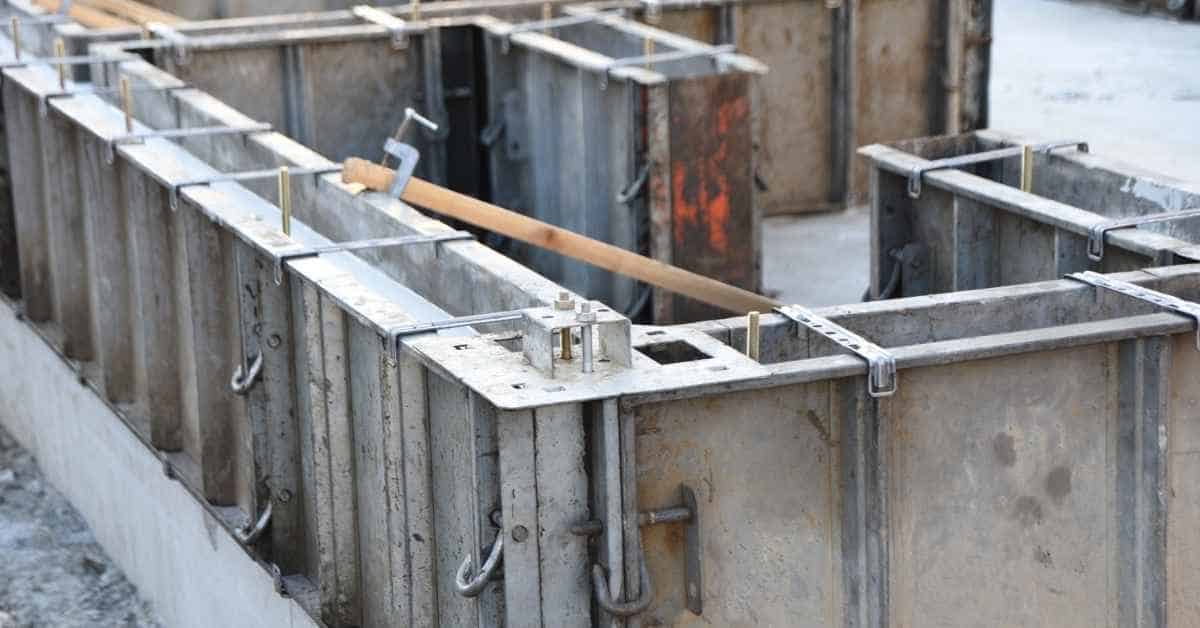
Curing, Moisture Control, and Environmental Impact
Forms can help curing by retaining moisture at the surface; the curing method you choose—wet cure, plastic cover, or curing compound—affects both form behavior and final surface quality. Proper moisture control during early cure reduces shrinkage and improves long-term strength while minimizing repairs.
Match curing approach to climate and pour size: seal edges and use covering or misting where evaporation risk is high, and document curing conditions such as temperature and surface moisture. Favor reusable form components and minimal-waste practices to reduce environmental impact, and check product labels or data sheets for compatible curing materials.
Curing techniques that complement bracing
Keeping forms in place for curing is the best way to retain moisture and protect newly cast concrete. This method acts as a natural curing aid, maintaining optimal humidity around the pour.
Wet curing, where you apply water to the surface, can also be effective but requires careful management to prevent over-wetting or rapid drying. Use a fine mist spray or damp cloth for best results.
Curing membranes like plastic sheets or blankets provide another option. They seal in moisture and heat, promoting faster curing. However, they must be applied immediately after pouring to trap the initial surface moisture.
Visual checkpoints for curing and surface quality
Inspect your pour within the first few hours and again at regular intervals during the curing process to ensure everything is proceeding as expected.
- Surface sheen: A slight sheen indicates proper curing. Dull, patchy surfaces may be drying too quickly.
- Moisture content: The surface should feel damp but not wet. Excessive moisture could lead to crazing or scaling.
- Cracks: Fine hairline cracks are normal; wide or numerous cracks warrant investigation.
- Blisters: These indicate excessive bleed water, which can weaken the surface.
- Discoloration: Uneven color may suggest inconsistent curing or contamination.
- Form lines: Sharp, even form lines indicate proper stripping. Ragged edges could signal premature removal.
- Edge curling: This occurs when the edges dry out faster than the rest of the pour, often due to insufficient sealing.
- Temperature differentials: Large temperature differences between the surface and core can cause stress and cracking.
Quick rule: If you notice any of these issues early, address them promptly to prevent further deterioration.
Reducing environmental footprint through good practice
Preventing rework is key. Durable pours that minimize cracking and delamination reduce the need for repairs, saving materials and labor.
Conserve curing water by using efficient application methods like misting instead of soaking. Collect and reuse runoff where possible.
Choose durable mix options that require less frequent re-pouring due to improved resistance to weathering, abrasion, or chemical attack. Consult with your concrete supplier for suitable mixes.
Tools, Materials, and Standards Explained
A practical jobsite kit includes levels, plumb bobs, hammers, cutting tools, fasteners, measuring tapes, and safety gear; add temporary load indicators or simple deflection gauges for larger pours. For materials, acceptable options include sound dimensional lumber or metal stakes, suitable-grade plywood or engineered sheathing, and durable bracing hardware—verify suitability with product specifications.
Standards and code requirements vary by location and project size, so consult local codes, manufacturer guidance, or an engineer for critical dimensions and spacing. Do a pre-pour inspection for damage, check anchor depth and corrosion protection, and replace compromised components before proceeding.
Tools and materials checklist
Before you start, make sure you have all the essential tools and materials for your concrete formwork bracing. Here’s a quick checklist to help you.
- Tape measure: To ensure accurate dimensions and spacing.
- Level: For setting up forms and checking alignment.
- Circular saw: To cut lumber for stakes, kickers, and walers.
- Hammer or nail gun: For driving nails and staples to secure formwork.
- Safety glasses: To protect your eyes from debris.
- Work gloves: For handling materials and protecting your hands.
- Ear protection: When using power tools.
- Hard hat: For safety on the job site.
- Stakes (2×4 or 2×6 lumber): For supporting forms and preventing movement.
- Kickers (1×4 or 1×6 lumber): To provide additional support for horizontal formwork.
- Walers (2×4 or 2×6 lumber): For connecting vertical stakes and providing lateral support.
- Fasteners (nails, staples, or screws): To secure formwork together.
- Shoring hardware (adjustable braces, post anchors, etc.): For supporting heavy loads and preventing collapse.
Quick rule: Always double-check your tools and materials before starting. Missing or damaged items can lead to poor formwork and safety hazards.
Material specs and standards to consult
Choosing the right materials is crucial for a successful pour. Here are some guidelines on what to look for in stakes, kickers, walers, and fasteners.
- Stakes: Use pressure-treated lumber or metal stakes to prevent rot and decay. Look for a rating of at least 2000 psi for bending strength.
- Kickers: Plywood or engineered lumber works well for kickers. Check the span rating to ensure they can support the load without sagging.
- Walers: Choose lumber with a high bending strength, such as Douglas fir or pressure-treated pine. A 2×4 should have a minimum bending strength of 800 psi.
- Fasteners: Use corrosion-resistant nails or screws to prevent rust and maintain formwork integrity.
- Ties: Plastic or metal ties are better than wire for easy removal. Ensure they’re rated for the load you’ll be applying.
- Shoring hardware: Look for adjustable braces with a minimum capacity of 1000 lbs and post anchors that can withstand the expected loads.
- Standards: Consult ACI 347 (Formwork for Concrete) and ASTM E580 (Standard Practice for Forming Concrete in Place) for detailed guidelines on formwork design and materials. Check your local building codes as well.
Fasteners, ties, and removal best practices
Choosing the right fasteners and temporary ties is crucial for minimizing concrete surface damage and ensuring easy, safe removal of formwork.
Use corrosion-resistant fasteners to prevent rust and maintain formwork integrity. Stainless steel or galvanized nails and screws work well. Avoid using wire ties as they can cause damage when removed and may leave marks on the concrete surface.
When driving nails, be careful not to overdrive them into the concrete, which can make removal difficult. Use a nail set if necessary. For screws, use a countersink bit to ensure they’re flush with the formwork surface.
For removal: Start by removing any temporary ties or bracing that’s holding the forms in place. Then, carefully pry the forms away from the concrete using a crowbar or pry bar. Work from the bottom up to avoid damaging the concrete surface. If forms are stuck, use a hammer and chisel to gently tap them loose.
Common Mistakes, Troubleshooting, and Cost Implications
Frequent DIY errors include under-bracing, overspacing stakes, shallow embedment, weak kicker angles, and hasty form removal—each can cause panel movement, poor edges, and rework. Early detection of bulging, squeaks, or step changes in alignment lets you fix the issue with added bracing rather than full rebuilds.
When troubleshooting, reinforce nodes, add walers or cross-braces, and reduce pour rate or vibration if pressure spikes occur; document actions and conditions to justify decisions. Prevention saves time and money—if movement persists or safety is in doubt, stop work and consult a pro rather than risking failure and schedule slippage.
Typical installation errors and fixes
To ensure your concrete formwork stands strong, avoid these common mistakes during setup.
- Misaligned forms: Check all forms are level and plumb before securing. Use shims to adjust if needed.
- Inadequate kickers: Ensure kickers are placed every 2-3 feet, driven deep enough (at least 1/3 of their length), and properly secured with stakes.
- Loose walers: Tighten walers to secure forms together. Use turnbuckles or wedges for adjustment.
- Improper stake spacing: Space stakes evenly, no more than 4 feet apart, and drive them deep enough (at least 1/3 of their length).
Regularly inspect your formwork during setup to catch and fix these issues early.
Cost, schedule, and durability consequences
Inadequate bracing or stripping forms too early can lead to costly rework and delays. Concrete may bulge, crack, or collapse, damaging both formwork and pour.
Rework: Fixing damaged forms and replacing spoiled concrete adds extra labor and material costs.
Delays: Repairs push back your project schedule, leading to potential rental equipment overruns and increased labor expenses.
Durability: Premature stripping can cause long-term issues like reduced strength, increased permeability, and accelerated deterioration of the concrete structure.
When to call an engineer or inspector
Certain signs indicate professional assessment is needed. Don’t hesitate to consult a pro if you notice:
Unexpected form deformation: Bulging, warping, or other unusual movements in your forms may signal inadequate bracing or structural issues.
Major cracking: Large cracks in the concrete surface during pouring could indicate excessive pressure or weak concrete.
Unusual pour conditions: If you’re experiencing unexpected challenges like rapid setting, segregation, or excessive bleeding, an inspector can provide valuable insights.
Safety, Inspections, and Jobsite Best Practices
Follow PPE, fall protection, and hazard controls for every phase: install bracing with safe access, control form movement during pours, and use buddy checks when removing forms. Set an inspection cadence: pre-install checks, pre-pour verification of bracing and anchors, and post-pour stability checks with sign-off.
Keep concise records—inspection logs, photos, and pour notes—to show conditions and decisions, and run briefings so everyone knows roles during critical operations. If conditions or deflections are outside expected ranges, stop and get guidance from an engineer or qualified supervisor before continuing.
On-site inspection checklist (before, during, after pour)
Use this checklist before, during, and after the concrete pour to ensure formwork integrity and safety.
- Bracing integrity: Check for any loose or damaged braces. Tighten or replace as needed.
- Ground support: Ensure stakes are secure and not wobbling. Add extra support if necessary.
- Form alignment: Verify forms are level, plumb, and square. Adjust if required.
- Signs of distress: Look for any cracks, bulges, or leaks in the forms during the pour.
- Kickers and walers: Check that they’re properly placed and secure.
- Tie spacing: Confirm ties are evenly spaced and tight.
- Pour pressure: Monitor for any signs of excessive pressure, like form movement or bulging.
- Weather conditions: Note temperature, humidity, and wind speed as they affect pour performance.
Quick rule: Inspect regularly to prevent costly repairs and delays.
PPE, crew coordination, and communication
Ensure safety and efficiency with proper PPE and clear communication during formwork operations.
- Hard hats: Mandatory for all workers to prevent head injuries.
- Safety glasses: Protect eyes from debris and chemicals.
- Ear protection: Use when operating power tools or working near heavy machinery.
- Steel-toed boots: Essential for foot protection on-site.
- Fall protection: Use harnesses and lanyards when working at heights.
- Rate of placement: Communicate the concrete’s rate of delivery to avoid overloading forms.
- Emergency stops: Establish clear signals for immediate halting of pours in case of emergencies.
- Buddy system: Pair workers, especially during high-risk tasks like form removal.
Quick rule: Regularly review and update safety protocols to keep your crew informed and protected.
Recordkeeping and documentation
Keep detailed records of formwork operations for quality control and liability protection.
- Inspection logs: Record all inspections, including dates, findings, and actions taken.
- Test results: Document strength tests, slump tests, and other relevant data.
- Weather conditions: Log daily weather reports to track environmental factors affecting the pour.
- Form-set tolerances: Record form dimensions, alignment, and any adjustments made.
- Bracing tightness: Document initial bracing tension and any re-tightening needed during the pour.
- Pour pressure monitoring: Note any signs of excessive pressure or form movement.
- Form removal: Record date, time, and condition of forms when removed.
Quick rule: Regular recordkeeping helps identify trends, troubleshoot issues, and defend against claims.
Conclusion
Bracing isn’t optional. It keeps the wall, slab, and beam forms true, protects people nearby, and makes the finish look right. If the form moves or pops, you pay in cracks, leaks, and rework.
Check the plan in your head as you work: confirm stakes and kickers are solid and plumb, tighten all connections before any pour, verify braces carry the expected load for the element, watch for pour pressure and lateral movement and adjust bracing accordingly, then verify curing and moisture control practices are ready, and finally do a quick safety and inspection pass before stripping forms. Work in that rough order: stake and kicker check, brace alignment and speed of pour, form stability during pour, strip timing, then curing and moisture management.
Common mistakes to avoid are clear: not checking alignment before the pour, under- or over-tightening braces, stripping forms too early, skipping inspections, and neglecting moisture or environmental controls. Safety rules to follow are simple: always test a small area first, never rely on a single brace or fastener, wear proper PPE, and remove forms only after you’re sure the concrete has gained enough strength and the load path is transferred safely. If you’re uncertain about wall, large pour, or complex geometry, call in a pro rather than guessing.
When to call a professional is clear: if the job involves large pours, high lateral loads, or unusual geometry, or you see persistent movement or misalignment during curing. Stay focused, follow the checks, and you’ll finish with a solid, durable result and fewer callbacks. You’ve got this—stick to the plan, stay safe, and push the project forward with confidence.
FAQ
How do I understand the basics of concrete formwork before I start?
Formwork is the mold that shapes the concrete. It must be sturdy, square, and tied together to resist the pressure of fresh concrete. Check that all panels, braces, and supports are in good condition and properly aligned before pouring.
What factors influence when I can remove formwork safely?
Removal timing depends on how fast the concrete gains enough strength to support itself. Weather, mix design, and the size of the pour can change when removal is safe. If in doubt, check the concrete’s manufacturer instructions or do a simple strength test per local guidance.
What should I do to cure concrete properly after the forms come off?
Keep the surface moist and protected for as long as you can reasonably manage. Good curing reduces cracks and helps long-term strength. If you can’t maintain moisture, use a breathable curing compound or cover with a light, damp method suitable for your climate.
What are practical signs I should not remove forms yet?
If panels or bracing are showing movement, loosening, or obvious settling, hold off. If the concrete still feels soft or gummy, wait. Always follow the concrete label and local guidance for safe removal.