
Introduction
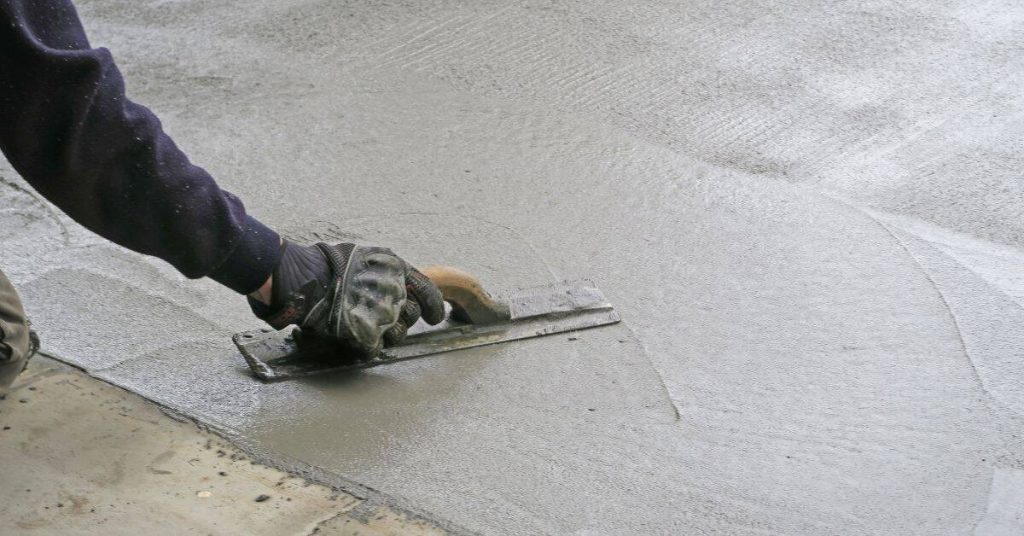
Fresh-concrete evaporation rate is an estimate of how quickly water is leaving the surface. It matters when surface moisture is being lost faster than bleed water can replace it: plastic-shrinkage cracking and finishing problems can follow. Wind, direct sun, warm air, low relative humidity, and warm concrete can combine into a high-risk condition. Related guidance: Plastic Shrinkage Cracks: Wind, Sun, and Simple Prevention.
For a useful jobsite estimate, measure air temperature, relative humidity, wind speed, and concrete temperature, then use the ACI/Menzel nomograph or its project-approved equivalent. The estimate helps you decide whether to reschedule, add shade and windbreaks, use controlled fogging or an approved evaporation retarder during finishing, and begin final curing without delay.
Key takeaways
- Calculate estimated evaporation from actual air temperature, relative humidity, wind speed, and concrete temperature—not a forecast alone.
- Use the project specification first. As general guidance, about 0.5 kg/m²/h may call for precautions, while 1.0 kg/m²/h calls for protective measures; neither is a universal pass/fail limit.
- Install shade, windbreaks, and staged curing materials before placement when conditions indicate risk.
- Fogging and evaporation retarders are initial-curing aids during the plastic stage; neither replaces final curing.
- As a normal sequence, apply final curing after finishing and disappearance of bleed-water sheen, when the surface will not be marred; the governing specification and product data sheet control the timing and application conditions.
- Check curing-compound and cover compatibility before using them under later coatings, sealers, adhesives, waterproofing, or decorative finishes.
Table of Contents
- Introduction
- Key takeaways
- What Evaporation Rate Is and Why It Matters for Fresh Concrete
- Primary Environmental Drivers: Wind, Sun, Temperature, and Humidity
- How to Estimate and Measure Evaporation Rate on Site
- Relevant Standards and Specifications to Consult
- Surface Protection Methods: Wet, Membrane, and Coverings
- Practical on-Site Strategies to Mitigate Wind and Sun Effects
- Common Mistakes, Risks, and Safety Considerations
- Planning, Costs, and Seasonal Adjustments
- Conclusion
- FAQ
What Evaporation Rate Is and Why It Matters for Fresh Concrete
Evaporation rate is commonly reported as mass of water lost per area per time, such as kg/m²/h. The ACI/Menzel estimate is an estimate of evaporation from a free-water surface, not a direct measurement of a particular slab. It does not account for every factor that affects a slab, including mixture bleeding behavior, subbase absorption, finishing, and the final curing method.
Its practical purpose is to identify conditions where the surface may dry faster than bleed water arrives. That imbalance can contribute to random, irregular plastic-shrinkage cracks while the concrete is still plastic. It can also make finishing difficult. Early moisture loss is not the only factor governing setting or strength: hydration, temperature, mixture proportions, cementitious materials, and curing all matter. Proper curing retains moisture needed for hydration and strength development.
Evaporation vs. Bleeding and Setting
Bleeding is water rising through fresh concrete as solid particles settle. Evaporation is water vapor leaving the exposed surface. A changing surface sheen alone does not diagnose evaporation rate; sheen can also change because of bleeding, finishing, mixture characteristics, and setting.
Setting is the transition from plastic to stiff concrete. Do not add water to the surface or finish bleed water into the slab to make it easier to work. Instead, control the conditions above the slab and use an approved initial-curing measure if the calculated risk and project requirements call for one.
How Evaporation Influences Long-Term Durability
Rapid early surface drying can leave the surface vulnerable to cracking and poor finish quality. Once final curing can begin, maintaining the specified moisture and temperature conditions supports hydration and durable surface development. The American Cement Association’s overview of concrete applications likewise emphasizes curing as part of concrete performance, rather than treating evaporation as the sole control on strength.
Primary Environmental Drivers: Wind, Sun, Temperature, and Humidity
Evaporation risk is governed by four measurements used together: air temperature, relative humidity, wind speed, and concrete temperature. Direct sun can raise the concrete surface temperature, so direct sun exposure is an added jobsite concern even though it is not a separate input in the common calculation.
Wind: mechanisms and site behaviors to watch for
Airflow thins or removes the humid boundary layer immediately above the wet concrete. That increases vapor transfer from the surface. Edges, corners, openings, and gaps around windbreaks can have locally stronger airflow, so protection must cover the whole placement area rather than only the middle of the slab.
Sun and solar radiation: surface heating effects
Direct sunlight can heat the concrete surface and increase drying demand. Exposure varies with time of day, season, latitude, obstructions, and site orientation; do not assume one compass direction is always the highest-risk side. Use shade that does not obstruct placing, finishing, or safe access.
Temperature and relative humidity interplay
Warm air and warm concrete generally increase the moisture-driving force, while lower relative humidity leaves the air able to accept more vapor. A cool day can still be high risk when wind is strong and humidity is low. Measure at the placement area and repeat readings when wind, cloud cover, temperature, or placement conditions change.
How to Estimate and Measure Evaporation Rate on Site
Use a calibrated air-temperature/RH meter, handheld anemometer, concrete thermometer or approved temperature probe, and a job log. Measure actual conditions at the placement area before placement and again during the pour when conditions materially change. A shallow pan, damp towel, fingerprints, glare, ripples, or color changes are not validated ways to calculate a concrete evaporation rate.
The FHWA reproduces the ACI/Menzel approach and identifies the required inputs: air temperature, relative humidity, concrete temperature, and wind speed. Use the nomograph or equation required by the project; do not mix SI and U.S. customary versions. In the commonly reproduced SI form, temperatures are in °C, wind speed is in m/s, RH is percent, and the result is kg/m²/h:
ER = 4.88[0.0001(Tc + 17.8)2(2.5V + 0.01RH)(Ta + 17.8)]
Here, ER is estimated evaporation rate, Tc is concrete temperature, Ta is air temperature, V is wind speed, and RH is relative humidity. Verify the equation transcription, variable conventions, and units against the project-required chart and the FHWA discussion of the evaporation nomograph and its limits before using it for a project decision.
Step-by-Step Process
- Review the controlling plan: before concrete arrives, identify the governing specification, local or owner requirements where applicable, approved curing method, approved products, expected concrete temperature, later finishes, action limit, and the person authorized to delay or stop the pour. If no approved curing method, compatible product, action limit, or responsible authority is identified, postpone the pour or obtain qualified direction.
- Stage protection: have windbreaks, shade, approved fogging equipment or evaporation retarder, and final-curing materials ready before placement. Review current product data sheets (TDS) and safety data sheets (SDS). Wear gloves, eye protection, boots, and long sleeves; use any additional PPE required by the SDS.
- Measure actual conditions: record air temperature, RH, wind speed, and concrete temperature at the placement area before placement.
- Calculate the estimate: use the specified ACI/Menzel chart or equation and record the units, time, inputs, and result.
- Compare and decide: apply the project limit. If no limit is stated, obtain direction from the engineer, owner, ready-mix supplier, or contractor rather than treating generic values as approval. About 0.5 kg/m²/h is commonly treated as a point to take precautions and 1.0 kg/m²/h as a condition requiring protective measures, but these are guidance values, not universal failure thresholds.
- Reduce exposure before it becomes a surface problem: postpone or shift to a cooler, less windy window when feasible; ask the ready-mix supplier or follow the approved hot-weather mix plan for permitted ways to reduce concrete temperature; install windbreaks and shade; and shorten the interval between placing, finishing, and curing.
- Monitor during placement: remeasure and log conditions whenever wind, sun, clouds, or temperature changes materially. Observe whether moisture appears to be leaving the surface faster than bleed water arrives, but treat that only as a supporting observation.
- Protect in sequence: use controlled fogging or an approved evaporation retarder during the plastic stage if needed, finish without adding water, then apply final curing according to the governing specification and product TDS. The normal sequence is after finishing and disappearance of surface bleed-water sheen, when the surface can resist marring.
Quick decision checklist
- Before placement: measured conditions, calculated estimate, governing action limit checked, compatible protection selected, and materials staged.
- If the estimate is elevated: add shade and windbreaks; adjust timing or postpone if the required protection cannot be provided.
- While concrete is plastic: use only approved controlled fogging or evaporation retarder; do not spray water onto the slab or work retarder into the surface.
- After finishing: start the specified final curing at the TDS- and specification-required stage, normally after bleed-water sheen has disappeared and the surface will not be damaged.
- Stop and get direction: if wind removes covers, fogging deposits water or damages the surface, the required curing method cannot be applied promptly, plastic cracking appears, or the calculated risk exceeds the project limit.
Instruments and on-site measurements to use
Air-temperature/RH meter: records air conditions. Anemometer: records wind speed. Concrete thermometer: records concrete temperature. Use instruments with units matching the selected calculation. Keep a time-stamped log of readings, calculated rates, placement, finishing, bleed-sheen disappearance, initial-curing actions, and final-curing start.
Relevant Standards and Specifications to Consult
The project specification controls the curing method, application rate, duration, temperature limits, and any evaporation-rate action limit. Review it with the ready-mix supplier or contractor before placement, especially for structural slabs, low-w/cm or high-performance mixtures, decorative concrete, hot-weather work, and durability-critical work. Verify locally adopted specifications, owner requirements, and permit conditions where applicable.
What to look for in ACI guidance (e.g., ACI 308, ACI 318)
ACI curing guidance and the project documents should identify whether curing is prescriptive or performance-based, when final curing begins, how it must be maintained, and the acceptance or strength criteria for ending it. Do not substitute a generic online interval for the specified requirement.
AASHTO, ASTM, and agency specs: materials and test methods
Use only standards that match the work being specified. For example, ASTM C597 is an ultrasonic pulse-velocity test method; it is not a fresh-concrete evaporation-rate or curing-material test. State DOT, owner, or agency specifications may require particular curing compounds, sheets, blankets, application rates, and inspection records.
Surface Protection Methods: Wet, Membrane, and Coverings
Separate initial curing from final curing. Initial curing limits moisture loss while concrete is still plastic and finishing is underway. Final curing maintains the required conditions after finishing, once surface water has disappeared and the surface will not be marred. Follow the specified method and product data sheet rather than treating these methods as interchangeable.
Moist curing techniques (burlap, saturated covers)
Wet burlap or other approved saturated coverings can provide final curing when they can be placed without damaging the finish. Keep them continuously moist for the specified curing period; do not allow them to dry. The needed rewetting frequency depends on weather, cover, water supply, and specification, so a fixed interval is not reliable. Use clean materials that will not stain or contaminate the surface.
Membrane-forming curing compounds and liquid treatments
A curing compound is a final-curing material, not an evaporation retarder. Apply it after finishing and after bleed-water sheen has disappeared, at the product’s specified rate and in a continuous, uniform film. Do not apply it over bleed water or use a fixed number of hours after placement as the trigger.
Check compatibility before selection. A curing compound can interfere with later coatings, sealers, paint, waterproofing, adhesives, or flooring. Product removal and surface-preparation requirements may be more demanding than expected, so confirm them with both product manufacturers before the pour.
Impervious sheeting and temporary roofing
Plastic sheets, coated fabrics, blankets, and temporary roofing can reduce wind and sun exposure and may be part of final curing. Apply covers only when the surface can resist marring. Secure them against wind without dragging them across fresh concrete, and inspect edges and corners for lifting. Plastic and wet covers can discolor decorative or colored concrete; check the proposed method on a sample or obtain project approval where appearance matters. Related guidance: How to Protect Fresh Concrete from Frost, Wind, and Sun (Curing Blankets and More).
Practical on-Site Strategies to Mitigate Wind and Sun Effects
Schedule for a lower-risk weather window when practical, but confirm with on-site readings. Forecasts are planning tools, not a substitute for measurements at the slab. Set windbreaks and shade before placement, and make sure they do not create unsafe access, interfere with equipment, or become windborne hazards.
Scheduling and sequencing pours for lower-risk windows
Choose a cooler or less windy period when it is available. Coordinate delivery, placing, finishing, and curing so the final-curing method is ready as soon as finishing is complete. If conditions exceed the project limit and the planned protection cannot control them, delay the work or obtain direction from the responsible contractor, engineer, owner, or ready-mix supplier.
Shading, windbreaks, and temporary enclosures
Use shade to reduce direct solar heating and windbreaks to reduce airflow across the slab. During the plastic stage, a proper fogging system can humidify air above the concrete. It must produce a fine fog, not a stream from a garden sprayer: do not create puddles, wash paste from the surface, disturb aggregate, or erode edges. Continue controlled fogging until the specified final-curing method can be applied. If you cannot fog without depositing damaging water, use shade, windbreaks, rescheduling, or another approved measure.
An approved evaporation retarder may also be used during the plastic stage where the product and project allow it. Read the selected product’s current TDS and the governing specification before placement for dilution, application equipment, coverage or application rate, timing, and whether reapplication is permitted. Apply only as directed so the surface receives the product’s intended, uniform coverage. It reduces evaporation; it is not a finishing aid, must not be worked into the surface, and is not a substitute for final curing.
Common Mistakes, Risks, and Safety Considerations
The common failure is waiting for visible distress before acting. Calculate and prepare before placement, recheck conditions during work, and use the protection sequence the project allows. Do not treat a pan test or appearance alone as proof that a pour is safe.
Typical application errors and their outcomes
- Using air temperature alone: ignores wind, RH, and concrete temperature, which can materially change risk.
- Spraying water on the surface: can add uncontrolled water, wash paste, and damage the finish.
- Working in an evaporation retarder: turns an initial-curing aid into an unapproved finishing practice.
- Applying curing compound too early: applying over bleed water or before finishing is complete can impair the membrane and finish.
- Letting wet coverings dry: interrupts moist curing and can mark or damage the surface when covers are handled poorly.
- Ignoring compatibility: can leave a bond-breaking residue beneath a later coating, adhesive, sealer, or finish.
Safety and compatibility when using curing compounds or heaters
Wear the PPE specified by the product SDS, provide ventilation for spray-applied or solvent-based products, and keep ignition sources away from flammable materials. Wet coverings, fogging, overspray, and curing chemicals can create slick walking surfaces and chemical-exposure hazards; keep unnecessary traffic off the work area, wear slip-resistant boots, and clean up spills as the SDS directs. Secure covers and temporary enclosures for wind.
Temporary heat and cold-weather protection require a separate, project-specific plan; do not use heaters in an enclosed space without safe ventilation and fire controls. If cracking appears while concrete is plastic, do not hide it with water or extra finishing. Document the conditions and obtain professional direction. Likewise, stop and reassess if covers blow loose, fogging damages the surface, or the specified curing method cannot begin promptly.
Planning, Costs, and Seasonal Adjustments
Budget for the protection required by the measured risk, not simply the lowest-cost material. Include instruments, windbreaks, shade, approved curing materials, anchoring, water supply where moist curing is specified, and labor to maintain and inspect the system. Have backup materials on site in case wind or weather changes.
Budgeting and lifecycle cost perspective
Choose a method that can be applied and maintained correctly for the project’s required period. Wet coverings need reliable water and monitoring; curing compounds need correct application and compatibility review; sheets and blankets need secure anchoring and careful handling. The right choice depends on the surface finish, exposure, water availability, later work, and project specification.
Seasonal and extreme-weather adaptations
Hot, dry, windy conditions require earlier planning and closer measurement because initial protection may be needed while finishing is underway. Cold-weather curing has different risks, including freezing and inadequate temperature for hydration, and may require insulated covers or a project-specific heating plan. In either case, do not wait until the next day to make the initial protection decision.
Completion, cleanup, and aftercare
At final-curing start, record the measurements and calculated rate; placement, finishing, and bleed-sheen-disappearance times; the initial-curing action; final-curing start time; product name and batch; TDS-required application rate; coverage; and required curing duration or performance criterion. At each weather-reading check and after a gust, rain, or site disturbance, confirm that wet coverings are continuously moist, covers remain secure and non-marring, and curing compound has a continuous, uniform film. Record corrective actions.
Do not remove sheets, blankets, burlap, or other covers until the specified curing duration or approved strength, maturity, or other release criterion has been met. Remove them carefully so they do not mar the surface. Follow the selected product TDS and SDS for curing-compound residue, cleaning, removal, and disposal. Collect contaminated wash water and chemical residue; do not allow curing chemicals or wash water to enter drains or soil. Dispose of materials according to the SDS and local requirements, retain product batch information and curing records, and do not apply later sealers, coatings, adhesives, or finishes until their compatibility and required surface preparation have been confirmed.
Conclusion
For fresh concrete, measure air temperature, RH, wind speed, and concrete temperature; calculate the recognized estimate; compare it with the governing action limit; then put protection in place before the surface dries faster than bleed water can supply it. Windbreaks, shade, controlled fogging, and approved evaporation retarders manage risk during the plastic stage. Final curing follows the governing specification and product TDS, normally after finishing and disappearance of bleed-water sheen when the surface can be protected without marring.
Seven days is a common planning default for ordinary concrete, not a generally applicable acceptance requirement. Curing duration can vary with cementitious materials, mixture, exposure, temperature, specified strength or maturity criteria, and the curing product. Follow the project specification and product instructions. Do not proceed with a structural, decorative, low-w/cm, high-performance, or critical pour when the governing specification, responsible authority, approved curing plan, or compatible product is unavailable; postpone or obtain direction from the engineer, owner, ready-mix supplier, or experienced concrete contractor before placing.
FAQ
1. What is evaporation rate for fresh concrete and why does wind matter?
It is an estimate of how quickly water leaves the exposed surface, commonly expressed in kg/m²/h. Wind removes the humid air layer above the slab, increasing evaporation. Measure wind along with air temperature, RH, and concrete temperature; wind alone does not establish risk.
2. How does sun exposure affect curing and surface finish?
Direct sun can heat the concrete surface and increase drying demand. Use shade where needed, but calculate risk from the measured inputs and begin the specified curing method at the correct stage rather than relying on sun exposure alone.
3. What practical methods and materials protect the surface from evaporation?
Before and during finishing, use windbreaks, shade, controlled fogging, or an approved evaporation retarder as allowed. Follow the retarder TDS for application details; it is not final curing. After finishing, use the specified final-curing method—such as wet coverings, curing compound, sheets, blankets, or another approved system—at the product- and specification-required stage.
4. How long should curing ideally last, and what should I check if I’m unsure?
Seven days is a common planning default for ordinary concrete, but the required duration may be shorter or longer. Check the governing specification, mixture requirements, exposure conditions, product data sheet, and any strength or maturity criterion. Keep wet covers continuously moist, inspect all systems when conditions change, and remove curing materials only when the specified release condition is met. Related guidance: Concrete Mix Water Too Wet: Field Signs, Strength Risks, and How to Adjust Safely.