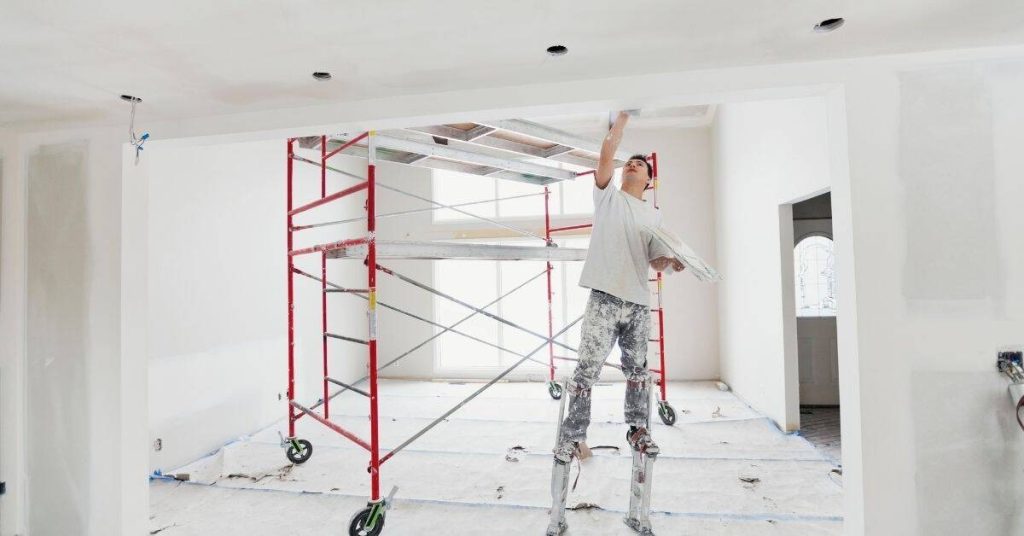
Worker applying plaster to ceiling with scaffolding nearby

Plaster Repairs Around Ceiling Light Boxes: Reinforcement That Stops Ring Cracks

Introduction

Plaster repairs around ceiling light boxes are targeted fixes that reinforce the plaster and stop the circular “ring” cracks that form where fixtures meet the ceiling. This means cleaning the crack, adding a reliable backing or reinforcement around the box, and patching with an appropriate plaster or joint compound following the product directions. Treat it like a small structural detail: if the fixture is heavy or the electrical box is loose, check the box mounting and follow manufacturer or local guidance before finishing the plaster.

Expect the work to be hands-on: remove loose material, attach reinforcement (mesh, tape, or a metal ring) tied into solid substrate, then feather the repair so the ceiling reads flat. If you’re unsure which reinforcing method or finishing compound to use, check product labels and manufacturer instructions or consult a licensed electrician for the box mounting; err on the side of a stronger backing when in doubt.

Key takeaways

  • Always shut off power and verify no live circuits near the fixture.
  • Pinback the plaster and gently brace the box to prevent movement.
  • Use appropriate reinforcing: metal lath, fiberglass mesh, or paper tape at joints.
  • Match texture and finish to surrounding ceiling for seamless repair.
  • Test repair by gentle pressure after setting and repaint as needed.
Table of Contents

Why Ring Cracks Form Around Ceiling Light Boxes

Ring cracks around light fixtures usually stem from movement where the plaster meets a rigid box, thermal cycling, or a weak bond at the perimeter. Over time small shifts or repeated stress concentrate at the cut edge and open the crack again unless the junction is reinforced.

Moisture, settling, and vibration from door slams or nearby activity can accelerate the problem by weakening the plaster or the fasteners. To confirm the likely mechanism for your situation, check the condition of the box, the surrounding substrate, and any signs of movement or water—consult product labels or manufacturer instructions if you need fastener or material limits.

Structural causes (movement, joist deflection, and framing gaps)

The main culprit behind ring cracks is the building’s structure itself. Here’s how:

Movement: Houses settle over time. This movement can cause stress on your plaster, leading to cracks.

Joist Deflection: Joists can bend under load, especially if they’re not properly supported. This deflection transmits stress to the plaster and creates those nasty ring cracks.

Framing Gaps: Insufficient blocking between studs or gaps in the framing allow the wall to flex, putting more strain on your plaster.

Installation and fixture-related causes

How you install light boxes and fixtures can also cause ring cracks. Here’s why:

Loose Boxes: If the light box isn’t securely fastened, it can move around, putting stress on the plaster.

Improperly Supported Fixtures: Heavy fixtures that aren’t properly supported can pull down on the electrical box, causing cracks.

Overcut Plaster: If you cut too deep into the plaster when installing the box, it weakens the surrounding area and makes it more susceptible to cracking.

Thermal Cycling: As the room heats up and cools down, the plaster expands and contracts. This can cause small cracks to widen over time.

Back to top ↑

Assessing the Damage: Inspection Checklist

Start with a visual sweep: note the crack pattern, width, length, and whether plaster is delaminating from the substrate around the box. Then perform simple physical checks: probe the edges with a screwdriver for loose plaster and flex the ceiling gently to see if the crack opens.

Look above the ceiling where possible for wiring movement, rot, or insulation contact that could explain recurring stress. If electrical work or structural issues are suspected, verify requirements on the device label or consult a qualified tradesperson before proceeding.

Visual inspection points and hidden clues

Before you start any repairs, use this checklist to spot issues around the ceiling light box.

  • Check the light box itself: Look for cracks or gaps where the box meets the ceiling. If it’s loose, that’s a red flag.
  • Inspect adjacent seams: Cracks here could indicate movement in the surrounding plasterwork.
  • Examine the joists above: Sagging or gaps between them can cause cracks below.
  • Check for nail pops: These can indicate framing issues that might be causing your crack.
  • Look at the attic side (if accessible): Any signs of moisture, pests, or structural damage up there could be causing problems downstairs.
  • Inspect other light boxes: Cracks around multiple boxes might indicate a bigger issue with your home’s structure.
  • Check for water stains: These can suggest a leaky roof or plumbing issue that’s affecting your plaster.
  • Look at the walls below: Cracks here could be due to settling or movement in the ceiling above.

Quick rule: If you spot any of these issues, it’s best to address them all at once. Ignoring related problems can lead to more damage down the line.

Probing and testing movement safely

Before you start poking around, use these non-invasive methods to check for instability or loose plaster layers.

  • Gently push on the cracked area: If it feels soft or gives way, there might be a problem with the layer beneath.
  • Tap lightly with a screwdriver: A dull thud could indicate a void behind the plaster. Be careful not to damage anything.
  • Use a moisture meter (if available): High moisture levels can weaken plaster and cause cracks.
  • Check for delamination: Gently scrape at the crack with a flathead screwdriver. If the plaster comes away easily, it might be loose.
  • Test the light switch and outlet (if accessible): Wiggle them gently. If they move, that could indicate movement in the wall or ceiling above.
  • Check for cold or hot spots: These can suggest a lack of insulation or air sealing, which might be causing condensation and weakening the plaster.
  • Use a stud finder (if available): Ensure you’re not about to poke through any wires or pipes hidden behind the plaster.
  • Listen for hollow spots: Tap gently around the crack. A hollow sound could indicate a void behind the plaster.

Quick rule: If you find any instability, stop and reassess your approach. Poking at loose plaster can cause more damage or even injury.

When to call an electrician or structural pro

Some issues are best left to the professionals. Here’s when to pick up the phone.

  • Loose wiring: If you spot any exposed wires, sparks, or smell something burning, turn off the power and call an electrician immediately.
  • Compromised support: Sagging joists, large gaps between them, or other signs of structural damage require a structural engineer or pro.
  • Widespread cracking: Cracks in multiple rooms or on multiple walls could indicate a serious foundation issue. Don’t DIY this one.
  • Cracking around windows or doors: This can suggest settlement issues that might require professional intervention.
  • Signs of asbestos (if your home is older): Do not disturb any suspected asbestos. Call a pro for testing and removal.
  • Mold or mildew: While you can clean it, the underlying moisture issue needs professional attention to prevent recurrence.
  • Any safety concerns: If you’re unsure about anything, err on the side of caution and call a pro.
  • Permit requirements (check local codes): Some repairs might require permits. A pro can guide you through this process.

Quick rule: If it’s safety-related, structural, or beyond your comfort level, don’t hesitate to call a professional. It’s always better to be safe than sorry.

Back to top ↑

Tools and Materials Checklist

Gather basic hand tools—utility knife, plaster knife, screwdrivers, small pry bar, sanding block, and a selection of fasteners—and include a flashlight and thin mirror for inspecting behind the box. For materials, have bonding agent, appropriate reinforcement (mesh tape, metal plates, or backing ring), setting-type patching compound or plaster, and finishing compound on hand.

DIY-friendly alternatives include self-adhesive fiberglass mesh instead of metal lath for small repairs and premixed joint compound if you prefer not to use setting compounds. When choosing products, read the product data sheet or label to confirm cure times and substrate compatibility for your repair scenario.

Essential tools for cutting, fixing, and finishing

Before you start your plaster repair around ceiling light boxes, make sure you have the right tools. Here’s a checklist to ensure you’re prepared.

  • Utility knife: For scoring and cutting old plaster, as well as opening new compound bags.
  • Jigsaw or reciprocating saw: To cut out damaged areas safely and accurately. Skipping this can lead to uneven cuts and further damage.
  • Screwdrivers (flathead and Phillips): For removing old screws, brackets, or other fasteners.
  • Drill with assorted bits: To create pilot holes for new screws and mix plaster compounds.
  • Trowels (1/2″ and 3/4″): For applying and smoothing plaster compound. Using the wrong size can result in uneven application.
  • Sanding block or orbital sander: To smooth out finished surfaces and remove excess material.
  • Level: To ensure your repairs are even and true, preventing further cracking.
  • Plaster testing device (moisture meter): To check for hidden moisture that could compromise your repair. Ignoring this can lead to mold growth or weakened plaster.
  • Safety glasses: To protect your eyes from debris and dust.

Quick rule: Always prioritize safety when using tools, wear appropriate PPE, and follow manufacturer guidelines.

Recommended materials and suitable alternatives

Having the right materials is crucial for a successful plaster repair. Here’s what you’ll need and some suitable alternatives.

  • Reinforcing plates/backs: To strengthen the area around light boxes and prevent further cracking. Skipping this can lead to recurring cracks.
  • Bonding agent (prime): To ensure new plaster adheres properly to existing surfaces. Without proper bonding, your repair could peel or flake off.
  • Plaster compound: For filling gaps and rebuilding damaged areas. Using the wrong type can result in weak repairs that crack easily.
  • Fiberglass mesh tape: To reinforce repaired areas and prevent new cracks from forming. Not using tape can lead to weakened repairs.
  • Plaster fasteners (screws or nails): To secure reinforcing plates and hold repairs in place.
  • Joint compound (for finishing): To create a smooth, even surface after sanding. Skipping this step can result in an uneven finish.
  • Sandpaper or screen (120-grit): For smoothing out finished surfaces and removing excess material.
  • Plaster of Paris (optional): A quick-setting alternative for small repairs, but it’s not as strong as traditional plaster. Using it for large repairs can lead to weak spots.

Quick rule: Always follow product instructions to ensure you’re using materials correctly and safely.

Back to top ↑

Safety and Working Around Electrical Fixtures

Always isolate the circuit at the breaker before touching the fixture, and verify the circuit is de-energized using a non-contact tester and then a contact tester on the conductors. Treat wiring as live until you have physically confirmed power is off and lock or tag the breaker if available.

Protect the wiring and device while you work: secure conductors out of the way, use temporary wire connectors or wire nuts per manufacturer instructions, and avoid compressing or nicking insulation when installing reinforcement. If you encounter damaged wiring, stop and consult an electrician and follow local electrical rules rather than guessing fixes.

Safe power isolation and verification

First, locate your home’s main electrical panel. It’s usually in a garage, basement, or utility room.

Turn off the circuit that controls the light fixture you’ll be working on. Use a non-contact voltage tester to confirm the wires are dead before starting any work.

For added safety, consider using a lockout device to prevent someone else from turning the power back on while you’re working.

Protecting wiring and junctions during repair

Before you start reinforcing, secure any loose wires. Use wire staples or clips to fasten them to the joists or studs.

Cap exposed ends of wires with electrical tape or wire nuts to prevent damage or accidental contact.

Route wires carefully to avoid pulling on connections in the light box. If you need to extend wires, use approved junction boxes and follow local electrical codes.

Back to top ↑

Person wearing black safety boots stepping on wooden planks

Reinforcement Strategies That Stop Ring Cracks

Effective reinforcement ties the plaster into a stable support so loads are spread away from the box edge; common methods include backing rings, metal or composite plates, and embedded mesh tied to framing. Choose the approach that addresses the root cause—movement, lack of backing, or poor bond—rather than only covering the crack.

For each strategy, check the product instructions or manufacturer guidance for attachment methods and compatibility with lath, plaster, or drywall. If the box itself is loose or the joist spacing causes flex, include mechanical fastening to structure as part of the reinforcement plan.

Securing the box and adding blocking or bracing

The first step to stopping ring cracks is to secure your ceiling light box. The box should not move independently of the framing. Here’s how:

Fasten the box: Use long screws, at least 2-1/2″ in length, to fasten the box to the joists or studs. This prevents the box from moving.

Add blocking or bracing: If there’s a gap between the box and framing, add a piece of wood (blocking) to fill it. Screw this into both the box and framing. For larger gaps, use a 1×4 or 2×4 as a brace, securing it at both ends.

Backing plates, washers, and plaster anchors

To distribute loads evenly and protect your wiring, use backing plates or large-diameter fasteners. Here’s how:

Backing plates: Install a metal plate behind the box. This spreads the load over a larger area, reducing stress on the plaster.

Large washers: Use washers with your screws to increase the contact area and distribute pressure.

Plaster anchors: If you’re using drywall screws or nails, use plaster anchors. These distribute the load and prevent the screw head from pulling through.

Mesh, tape, and bond-coat reinforcement options

To bridge cracks and provide a solid base for your new plaster, use one of these reinforcement methods:

Fiberglass mesh: Apply a layer of joint compound, then embed fiberglass mesh into it. This provides strength and flexibility.

Scrim tape: Use setting-type joint tape to bridge cracks. Apply a thin layer of joint compound first, then press the tape into it. Feather out the edges.

Bond-coat approach: Apply a thick layer (1/4″ or more) of joint compound over the crack. Let it dry, then sand and apply another coat. This provides a strong base for your new plaster.

Back to top ↑

Step-by-Step Repair Workflow (Retrofit and New Installs)

Begin by removing loose plaster and cleaning the perimeter, then install the chosen reinforcement so it overlaps solid substrate and secures to structure where possible. For retrofit repairs, ensure the reinforcement bridges beyond the damaged area; for new installs, position backing or mesh before plaster is applied.

Apply patching plaster or joint compound in appropriate layers, allow proper curing as stated on product instructions, sand lightly, and finish with texture and paint to match. Verify each layer is compatible with the next by checking product labels or technical data sheets to avoid adhesion failures.

Step-by-Step Installation Process

The following steps guide you through the repair workflow, from preparation to final touches.

  1. Safety first: Isolate power and verify it’s off. Protect wiring and junctions.
  2. Probe around the light box for movement or damage. If severe, call a structural pro.
  3. Secure the box with blocking or bracing, using back plates, washers, and plaster anchors if needed.
  4. Install reinforcement: embed mesh or tape, apply bond-coat. Ensure proper adhesion.
  5. Apply initial skim coats, feathering into surrounding surface. Sand lightly for smooth finish.
  6. Let it dry, then sand again. Check for any missed spots.
  7. Wipe clean with damp cloth. Prepare for paint or texture match.

Prep, cutting back, and cleaning the area

Remove loose plaster using a scraper or chisel. Be careful not to damage surrounding good plaster.

If needed, cut a neat repair opening with a utility knife or multi-tool. Keep edges clean and straight.

Important: Ensure the substrate is sound and free of any major defects before proceeding.

Clean the area thoroughly to remove dust and debris. A damp cloth works well for this.

Installing reinforcement and applying base coats

Position backing/bracing securely around the light box. Ensure it’s level and flush with surrounding surface.

Embed mesh or tape into the repair area. Press firmly to ensure good contact with the substrate.

Tip: Use a straight edge to guide you for even coverage.

Apply initial bonding coats using a trowel. Work quickly and evenly, ensuring proper adhesion to the substrate.

Finishing, feathering, and paint prep

Apply final skim coats, using a trowel or hawk and knife. Feather into surrounding surface for a seamless finish.

Pro Tip: Work in small sections to maintain control over the plaster’s consistency.

Let it dry, then lightly sand at 45-degree angles to surrounding surface. Check for any missed spots or imperfections.

Wipe clean with a damp cloth. Your repair is now ready for paint or texture match.

Back to top ↑

Special Cases: Lath-and-Plaster, Drywall, and Textured Ceilings

Lath-and-plaster ceilings may need mechanical reattachment, partial lath replacement, or through-fastening to framing; plaster bonds differently than drywall, so use compatible materials. Drywall repairs often rely on patching tape and backing rings, while textured ceilings require matching the texture technique after the repair.

Inspect the substrate to pick the right reinforcement and patch material—if in doubt, review manufacturer recommendations for bonding to wood lath, metal lath, or gypsum board. For significant substrate damage or historic plaster, consider consulting a specialist to preserve integrity and appearance.

Lath-and-plaster specific tips

Working with lath-and-plaster ceilings requires a different approach than drywall. First, check for loose lath. Tighten any screws or nails and use wood glue to secure wobbly pieces.

Keyed plaster failure often occurs around light boxes due to vibration. Replace damaged sections if the damage is extensive, otherwise, patch carefully, ensuring good keying with the existing plaster.

When patching, use a mixture of joint compound and sand for a stronger bond. Apply in thin layers, allowing each to dry before sanding lightly.

Drywall and thin-coat plaster approaches

For drywall repairs, use self-adhesive mesh tape to avoid seams opening up later. Apply joint compound in thin layers, allowing each to dry before sanding.

With thin-coat plaster, use a base coat of PVA glue before applying the plaster. This improves adhesion and reduces suction, making application easier.

For both, use joint finishing techniques like feathering to blend the repair into the surrounding ceiling.

Matching and repairing textures

Replicating textures can be challenging. For popcorn ceilings, use a spray can texture applicator, applying the texture in small sections at a time.

For stamped or skip-trowel textures, practice on scrap material first to get the technique right. Use a light touch and work quickly before the plaster dries.

To blend a repaired area, match the surrounding texture as closely as possible. If it’s not perfect, paint can help disguise any differences.

Back to top ↑

Preventing Recurrence and Long-Term Maintenance

After a proper reinforcement and repair, minimize causes of movement by securing loose boxes, adding support to the fixture, and controlling moisture or HVAC-driven temperature swings. Schedule periodic visual checks around fixtures to catch small separations before they grow into ring cracks.

Keep records of products and methods used so future repairs match the existing system, and follow any recommended inspection intervals on product documentation or local practice. If you see new cracking despite repairs, re-evaluate the underlying cause—structural settling, persistent vibration, or hidden moisture—and address that specific issue.

Visual checkpoints and monitoring plan

Regularly inspect your repairs to ensure they’re holding up. Use this checklist for guidance.

  • Spring and Fall: Check for cracks around light boxes after temperature changes.
  • After Heavy Rain: Inspect for water damage or leaks that could weaken the repair.
  • Post-Winter Thaw: Look for signs of frost heave causing stress on the repair.
  • Before and After Major Holidays: Ensure fixtures aren’t overloaded with decorations.
  • After DIY Projects or Home Improvements: Check for vibration damage from power tools or heavy equipment.
  • Every 6 Months: Inspect the entire ceiling area for signs of sagging, warping, or new cracks.
  • Annually: Hire a professional to perform a thorough inspection and check for hidden issues.
  • Immediately After Severe Weather: Inspect for damage caused by storms, high winds, or ice buildup.

Quick rule: Don’t wait until you see cracks before inspecting. Regular checks help catch problems early.

Controlling environmental and usage factors

Manage humidity to prevent expansion and contraction that can cause cracking.

Tip: Use a hygrometer to monitor indoor humidity levels, keeping them between 30-50%.

Limit fixture weight to avoid overloading the repair. Check manufacturer guidelines for safe weights.

Reduce ceiling vibration by securing heavy items properly and minimizing foot traffic above the repaired area.

When reinforcement is a temporary fix — upgrade options

If cracks recur despite repairs, it might indicate deeper structural issues. Here are next-step options:

Reframing: Strengthen the surrounding structure to better support the fixture.

Continuous Backing: Extend backing plates or use continuous metal straps for added support.

Professional Remediation: Consult a structural engineer or professional contractor if recurring cracks persist. They can assess and address underlying issues.

Back to top ↑

Conclusion

Safe, durable repairs hinge on addressing the ring cracks directly where they meet the box, and then backing the work with solid, well-sealed plaster and correct backing material so the ceiling stays stable and looks right for years. Do the work in a controlled sequence, test in small areas first, and keep the work surface clean and secure to avoid costly mistakes.

Inspect the area with a clear plan: confirm the type of ceiling (lath and plaster, drywall, or textured), check for movement or moisture, verify electrical shutdown and fixture stability, then choose the reinforcement approach you prepared for versus retrofit or new install; install backing, apply compounds in light coats, and finish to blend with the surrounding surface before the fixture is reconnected and tested.

Common mistakes to avoid are skipping the safety shutoff and fingerprints in the wrong places, using the wrong patch material for your ceiling type, and trying to rush the cure or drywall skim without proper adhesion or support; always work with the circuit off, let patches cure fully, and test fit the fixture before final fastening so you don’t trap movement or crack lines, and stick to tested sequences rather than improvising.

If the box is loose, the damage is extensive, or you see persistent cracking after backing and patching, consider calling a professional to ensure long-term safety and appearance; for most DIY projects, following the inspection findings, reinforcing correctly, and respecting cure times will give you a solid, trouble-free result and driveway-to-ceiling confidence. Stay steady, stay methodical, and you’ll finish with a ceiling that looks right and stays crack-free.

Back to top ↑

FAQ

How do I tell if the crack is from box movement or just loose plaster?

Look for a widening crack that follows the edge of the box. Check if screws are loose or the box shifts when you push on it. If in doubt, read the product label or manufacturer instructions for movement tolerances.

When should I retrofit reinforcement instead of just patching?

If you see the crack keeps reopening after patches, or the ceiling around the box feels soft, reinforce before mudding. Use the appropriate backer or plaster ring per the box type and follow the label for installation steps.

What’s the simplest way to mud and feather around a ceiling box without cracking?

Apply thin coats of plaster or patch material, and embed any mesh or backing as directed. Let each coat set before the next, and feather the edges well into the surrounding ceiling. Always check the product instructions for cure times and layering limits.

Do repairs differ between lath-and-plaster and drywall ceilings?

Yes. Lath-and-plaster needs longer setting and a reinforced patch, while drywall uses joint compound and may rely more on backer supports. Follow the material’s instructions and use the correct mesh or backing for the substrate.

Back to top ↑