
Introduction
Pervious concrete maintenance is the ongoing care you do to keep its water-draining pores open and prevent clogging. Over time, roots, sediment, and debris can fill the pores and slow drainage. This is why it needs regular cleaning and timely repairs, not a one-time fix.
Compared with traditional concrete, pervious surfaces require more frequent monitoring and cleaning to stay permeable. They can show reduced strength or durability if the surface is damaged or overloaded, so check for cracks, rutting, and compaction. Installation and repairs should follow local guidelines and manufacturer instructions; when in doubt, check labels or manuals for proper steps and safe practices.
Key takeaways
- Regularly inspect pores for sediment buildup and surface staining after storms.
- Prioritize preventive design choices: proper subbase, uniform texture, and elevation.
- Use low-impact cleaning methods: vacuum, non-bleach detergent, water recycling when possible.
- Avoid high-pressure washing that damages pore structure and surface.
- Wear gloves, eye protection, and respiratory mask during cleaning.
- Choose contractors with documented pervious-concrete experience and proper disposal plans.
Table of Contents
- Introduction
- Key takeaways
- How Pervious Concrete Clogs and Why It Matters
- Preventive Design and Site-Selection Strategies
- Step-by-Step Cleaning Methods and Tools (Energy- and Resource-Efficient)
- Troubleshooting Failures, Repairs, and DIY Mistakes to Avoid
- Environmental Risks, Pollutant Mobilization, and Proper Disposal
- Cost, Lifecycle Considerations, and Decision Framework Vs. Alternatives
- Maintenance Plan Template, Specifications, and Choosing a Contractor
- Conclusion
- FAQ
How Pervious Concrete Clogs and Why It Matters
Pervious concrete loses its drainage ability when particles fill the connected pores. Sediment, clay, silt, organic growth, roots, and mineral buildup all reduce pore connectivity. Traffic compaction and the particle-size mix also influence how quickly clogging occurs.
Blocked drainage leads to surface ponding, increased erosion around joints, and higher runoff. It can accelerate cracking, scaling, and pavement deterioration. Safety concerns rise with slick surfaces and potential hydroplaning after rainfall or de-icing events.
Clogging mechanisms and common contaminants
Pervious concrete clogs when tiny particles, organic debris, or other contaminants enter its pore network. Here’s what you need to know:
Fine sediment: Soil, clay, and silt are the main culprits. They get washed into pores during rain or irrigation, gradually reducing permeability.
Organic debris: Leaves, twigs, and other organic materials can accumulate on the surface, clogging pores over time. Algae and moss growth can also contribute to this issue.
Tire wear particles: Tiny rubber particles from tire treads wear off onto the pavement surface, especially in high-traffic areas like driveways or parking lots. These particles can infiltrate the pore network, further reducing permeability.
Performance impacts of reduced infiltration
When pervious concrete clogs, its ability to absorb and filter stormwater is compromised. Here’s what you’ll notice:
Puddling: Water will start pooling on the surface instead of being absorbed. This can lead to longer drying times and increased risk of erosion around joints.
Lost stormwater benefits: One of pervious concrete’s main advantages is its ability to recharge groundwater and reduce runoff. When clogged, these benefits are significantly diminished.
Increased loading on drainage systems: With reduced infiltration, more water will flow into nearby drains or sewers, potentially overloading them during heavy storms.
Visual checkpoints and early warning signs
Regular visual checks can help you spot clogging before it causes major issues. Here’s a simple checklist to follow:
- Dark, sticky surface: This could indicate a buildup of organic debris or mineral precipitation.
- Slick algae film: A slimy layer on the surface can signal excessive algae growth, which can clog pores over time.
- Surface discoloration: Changes in color, especially around joints, may indicate mineral precipitation or organic growth.
- Puddling after rain: Water should absorb quickly. If it pools for extended periods, infiltration is likely reduced.
- Slow-drying areas: These could be signs of clogging, as water isn’t being absorbed as efficiently.
- Eroded joints: Excessive erosion around joints may indicate prolonged puddling and reduced infiltration.
- Increased runoff after storms: More water flowing off the pavement instead of being absorbed can signal clogging.
- Cracking or scaling: These can be signs of accelerated deterioration due to reduced permeability.
Quick rule: Inspect your pervious concrete regularly, especially after heavy storms, de-icing, or nearby construction. Early detection and intervention can prevent major issues and extend the life of your pavement.
Preventive Design and Site-Selection Strategies
Begin by evaluating the site’s watershed paths, soils, and existing drainage to limit sediment reaching the pavement. Consider pre-treatment options like vegetative buffers and swales to intercept runoff. Align the design with site realities to simplify maintenance later.
Choose a permeable subbase and appropriate aggregate gradation, and plan around filter fabrics to protect infiltration. Avoid fines-heavy backfill and aggressive compaction that impede water flow. Ensure curb, edge details, and inlets support regular cleaning access and sediment capture.
Subgrade, subbase, and slope considerations
The subgrade beneath your pervious concrete should be stable, compacted, and permeable. A well-designed stone reservoir here helps manage water flow.
Slope: Grade the subgrade to direct runoff away from buildings and other sensitive areas. Aim for a 1-2% slope.
Subbase: Use clean, angular aggregate with good drainage properties. Avoid fine soils that can clog pores over time.
Landscaping, setbacks, and sediment source control
Keep landscaping simple and well-maintained to minimize soil wash-in. Use setbacks: keep plantings at least 5 feet away from the pavement edge.
Edging: Install durable edging to prevent soil migration into the pervious concrete.
Trap strips: Plant narrow strips of grass or other low-maintenance vegetation along edges to capture sediment and organic matter before it reaches the pavement.
Material specs and mix-design principles to balance strength and permeability
The right materials ensure your pervious concrete is strong, durable, and permeable. Here’s what to look for:
- Aggregate size: Coarse aggregates (1/2″ to 3/4″) provide better void space for water flow. Avoid fines-heavy mixes.
- Paste content: Too much paste can clog pores. Aim for a low water-cement ratio and use well-graded sand.
- Compaction: Proper compaction ensures strength, but avoid over-compacting which can reduce permeability.
- Cement type: Use Type I or II Portland cement for standard mixes. For sulfate exposure, consider Type V.
- Avoid: Fine aggregates (like sand), high water-cement ratios, and excessive compaction that can lead to cracking, staining, and weak bond.
Step-by-Step Cleaning Methods and Tools (Energy- and Resource-Efficient)
Start with a quick assessment of clog sources and subgrade drainage. Decide whether a dry method suffices or a light wet wash is needed. Define success in restoring infiltration and removing debris.
Dry cleaning should cover sweeping, brushing, and controlled removal of sediment, with dust control in mind. Wet cleaning emphasizes low-energy rinsing, water capture, and minimal chemical use to protect porosity. Choose energy-efficient tools and plan for safe, compact setups to save space and fuel.
Step-by-Step Cleaning Process
The following steps guide you through the process of cleaning your pervious concrete efficiently and safely, ensuring optimal drainage restoration.
- Preparation: Inspect the area for any hazards. Wear appropriate PPE (personal protective equipment).
- Identify Clogs: Locate clog sources – sediment, roots, fines. Check subgrade drainage.
- Dry or Wet Method: Decide if a dry method suffices or if wet cleaning is needed based on your findings.
- Main Cleaning: Perform the chosen cleaning method – sweeping, brooming, blower use, or pressure washing.
- Final Checks: Inspect cleaned area for any remaining debris. Check infiltration rate to confirm success.
Dry cleaning: vacuum sweeping best practices
Vacuum sweeping is the preferred first step for removing loose and superficial fines from your pervious concrete. Here’s how to do it right.
Use a dry vacuum sweeper with a suitable pickup head – choose one designed for fine material removal. Start at the highest point, working downwards to prevent sediment redeposition.
Avoid using brooms or other tools that could damage delicate aggregates. Time your cleaning when the surface is dry but not too hot to prevent rebound or compaction.
Wet cleaning: pressure washing, containment, and water management
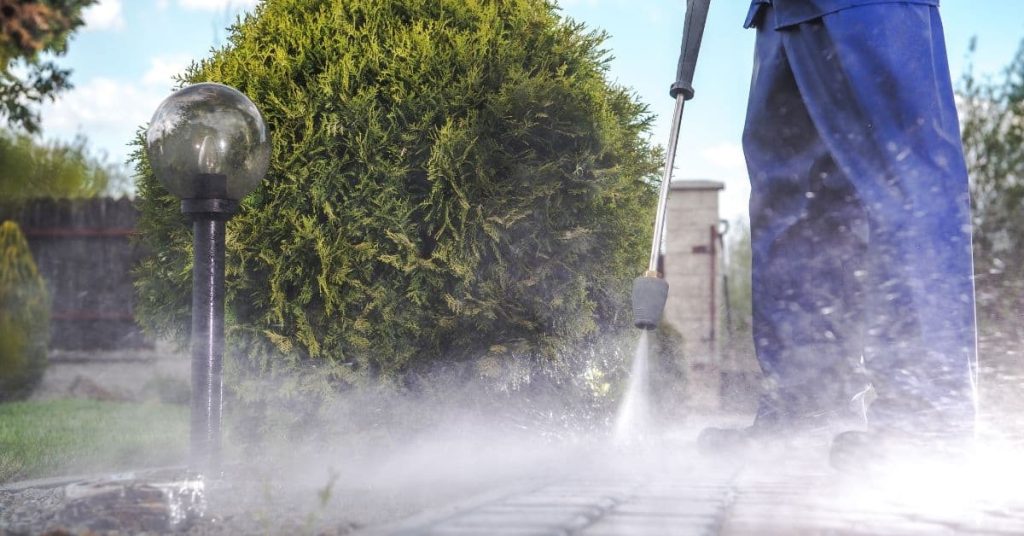
Pressure washing can effectively remove stubborn clogs. Here’s how to do it safely and efficiently.
Use a low-pressure washer (1200-1500 PSI) with a wide-angle nozzle to avoid damaging the concrete surface. Keep the wand moving to prevent excessive water penetration.
Contain washwater using barriers or tarps. Collect and reuse water using gravity-fed collection systems, onsite filtration, or graywater recycling if permitted. Rinse with clean water to protect porosity.
Advanced and mechanical restoration options
For tough clogs, consider these advanced cleaning methods and when to hire specialist equipment.
Regenerative air systems can remove deep-seated sediment. High-recovery systems minimize water use. For severe clogs, consider mechanical removal using specialized tools like hydro- or air-vacuums.
Hire specialist equipment when needed – always follow operator instructions and safety guidelines. Regularly maintain your equipment to ensure optimal performance.
Troubleshooting Failures, Repairs, and DIY Mistakes to Avoid
Identify common failure modes like sediment or root clogging, crusting, and low infiltration. Use a severity guide to decide if DIY fixes are enough or if professional help is needed. Look for joint voids or frost indicators as warning signs.
Diagnostics should include visual checks, simple infiltration tests, and core samples when warranted. Repairs may involve cleaning, gentle resealing, or selective replacement of affected units. Avoid over-cleaning with high-pressure tools or sealing products that block porosity to prevent warranty issues.
Fixing puddling and partial clogging
If you notice puddles forming on your pervious concrete surface, it’s likely due to partial clogging. Here’s how to troubleshoot and fix this:
Start with a light vacuum: Use a low-pressure vacuum sweeper to remove loose sediment and debris. This might be enough to restore drainage.
If puddles persist, it’s time for staged wet-cleaning: Begin with a lower pressure wash (around 500 psi) to dislodge more stubborn particles. Increase pressure gradually if needed, but avoid high-pressure washing which can damage the surface.
After cleaning, perform an infiltration test to verify your work. Pour water onto the cleaned area and check how quickly it disappears. If drainage is still slow, you may need to repeat the process or consider advanced restoration options mentioned earlier in this guide.
Addressing raveling, cracking, and structural damage
Raveling (surface deterioration), cracks, or significant settling indicate structural issues that require immediate attention. Here’s how to identify and address these problems:
Look for these signs of structural damage: Deep cracks, widespread raveling, voids at joints, or sections sinking lower than others. If you see any of these, stop traffic on the affected area immediately.
For minor cracking and raveling, use a compatible sealant to reseal joints and cracks. For more extensive damage, you may need to selectively replace affected units or perform full-depth repairs. Before proceeding with any repair, ensure the subgrade is stable and well-compacted.
If you suspect frost heave or other complex structural issues, consult a professional engineer. They can assess the damage and recommend appropriate repairs to restore your pervious concrete’s strength and longevity.
Common DIY mistakes and safety precautions
To avoid accelerating damage or voiding warranties, steer clear of these common DIY mistakes:
- High-pressure washing: Using too much pressure can erode the surface and reduce porosity.
- Aggressive chemical use: Harsh chemicals can corrode the concrete and damage its permeability.
- Improper disposal: Dispose of cleaning water responsibly to prevent environmental contamination.
- Mixing incompatible materials: Using non-compatible sealants or mixing materials incorrectly can block pores and reduce infiltration.
- Performing full-depth repairs without subgrade assessment: Without checking the subgrade, you risk undermining your repair efforts.
Always wear appropriate PPE when working with power tools or chemicals. This includes safety glasses, gloves, and ear protection. Also, ensure proper ventilation when using chemicals. Lastly, know your warranty terms to avoid voiding coverage through improper maintenance practices.
Environmental Risks, Pollutant Mobilization, and Proper Disposal
Maintenance can mobilize sediments, hydrocarbons, metals, and nutrients that travel through joints into the subsurface. Recognize how pollutants may move with rain events and groundwater flow. Plan to minimize mobilization during work windows.
Follow regulatory requirements for runoff, spill response, and disposal. Use containment, filters, and sediment basins to control waste. Properly treat wash water and waste on-site or via approved facilities, and document procedures for audits.
What pollutants to expect and how cleaning mobilizes them
Pervious concrete, over time, traps various pollutants. These include:
- Petroleum residues: Oils and greases from vehicles.
- Metals: Particulates from brake wear, tire debris, and corrosion.
- Nutrients: Fertilizers and organic matter from landscaping.
Cleaning mobilizes these pollutants. Sweeping pushes them around. Pressure washing flushes them out. Storms can wash them away in large quantities.
Containment, recovery, and disposal options
Contain pollutants during cleaning to prevent spread:
- Use containment barriers around work areas.
- Collect solids with vacuum sweepers or filter fabrics.
Recover and dispose properly:
- Dewater solids in sediment basins.
- Treat wash water on-site, store in tanks, or recycle.
- Use licensed waste handlers for hazardous materials.
Design and operational controls to limit pollution transfer
Reduce pollutant loads with these strategies:
- Use pretreatment: Sweep before washing.
- Install vegetated buffers around pervious concrete to filter runoff.
- Time maintenance for dry weather to minimize wash-off.
Maintain records of waste management for regulatory audits. Communicate disposal responsibilities and risks to stakeholders.
Cost, Lifecycle Considerations, and Decision Framework Vs. Alternatives
Think through initial install or retrofit costs alongside ongoing maintenance, energy use, and potential downtime. Climate, traffic, and sediment load influence how often maintenance is needed and what methods work best. Use these factors to forecast lifecycle value.
Develop a practical decision tree for maintenance, retrofit, or replacement based on site conditions and cost thresholds. Compare alternatives like improved underdrainage or different drainage strategies and weigh their impact on long-term performance. Establish clear metrics and a simple inspection plan to guide future decisions.
Major cost drivers and lifespan variables to evaluate
When considering pervious concrete, it’s crucial to understand the factors that drive lifecycle costs. These include initial installation or retrofit expenses, ongoing maintenance needs, energy consumption during downtime, and potential reconstruction costs.
Initial Install/Retrofit Costs: These vary based on site preparation, material prices, and labor. Complex sites with heavy grading needs will cost more. Climate also plays a role; colder regions may require additional materials for freeze-thaw protection.
Ongoing Maintenance: Cleaning frequency depends on traffic volume, sediment load, and climate. Regular vacuuming or pressure washing can extend pavement life but adds labor and equipment costs. Repairs like fixing cracks or replacing damaged sections also impact the budget.
Energy and Downtime: Clogging can lead to reduced infiltration rates, increasing runoff and potentially causing flooding. This may require emergency cleaning, leading to downtime and extra energy usage for pumping out water. Reconstruction costs can be high if clogging causes structural damage.
When to choose alternatives and comparative trade-offs
Pervious concrete isn’t always the best choice. Understanding when to opt for alternatives can save you maintenance hassles and money in the long run.
Resin-Bound Surfacing: This system uses a resin to bind aggregates together, creating a permeable surface. It’s low-maintenance but has a higher initial cost than pervious concrete. It’s ideal for areas with high dust/sediment loads as it resists clogging better.
Permeable Pavers: These systems allow water to pass through gaps between pavers and into underlying stone bedding layers. They’re flexible, durable, and can handle heavy traffic. However, they require regular joint sand refilling and may shift over time, leading to maintenance needs.
Conventional Concrete Sealed Systems: These aren’t permeable but offer low maintenance costs. They’re suitable for areas where water isn’t a concern or where stormwater management is handled separately. However, they don’t contribute to groundwater recharge and may cause runoff issues.
Permit, stormwater compliance, and ROI checklist
Before committing to a pervious concrete project, ensure you’ve covered all bases with this practical checklist. It helps verify permit requirements, performance targets, and expected return on investment.
- Check local permits: Ensure you have the necessary permits for installation and any required inspections.
- Stormwater management plan: Confirm it meets local regulations and handles expected runoff volumes effectively.
- Infiltration rate targets: Set clear targets for infiltration rates to ensure the system performs as expected.
- Pollutant removal efficiency: Check if the system meets required pollutant removal standards, such as Total Suspended Solids (TSS) and metals reduction.
- Maintenance plan: Develop a clear maintenance plan to keep the system performing optimally over its lifespan.
- Warranty and maintenance commitments: Understand what’s covered under warranty and who’s responsible for ongoing maintenance tasks.
- ROI calculation: Estimate the return on investment, considering initial costs, maintenance expenses, energy savings from reduced runoff, and potential rebates or incentives.
- Long-term performance monitoring: Plan how you’ll monitor the system’s performance over time to ensure it continues meeting your needs and regulatory requirements.
Quick rule: Regularly review and update this checklist as site conditions change or new regulations come into effect to ensure continued compliance and optimal performance.
Maintenance Plan Template, Specifications, and Choosing a Contractor
Provide a maintenance-plan template with seasonal and annual frequencies, inspection checklists, and record-keeping. Include a simple process for tracking issues and trends over time. Use a consistent format to keep everyone accountable.
List key material and equipment specs to request, such as acceptable mixes, aggregate size, porosity targets, and necessary cleaning tools. Outline contractor criteria, references, and warranty expectations. Add a vendor sheet template for quantities, surface area, and performance metrics to compare bids.
Editable maintenance-plan components and visual checkpoints
Use this checklist to create a tailored maintenance plan for your pervious concrete. Regular inspections help prevent clogging and ensure proper drainage.
- Spring inspection: Check for winter damage, such as cracks or raveling (miss this step and you might face costly repairs).
- Summer cleaning: Schedule regular cleanings to remove debris and prevent clogging.
- Fall maintenance: Inspect for signs of wear, such as discoloration or soft spots (neglect this step and you may miss early signs of deterioration).
- Winter preparation: Ensure proper drainage to prevent ice buildup and damage.
- Record-keeping: Keep detailed logs of inspections, cleanings, and repairs (without records, you won’t have a history of issues or proof for warranty claims).
- Photographic evidence: Take before-and-after photos to document condition and work done (photos help track progress and identify trends).
- Acceptance criteria: Clearly define what constitutes a ‘passing’ inspection or cleaning (without clear standards, you won’t know when to escalate issues).
Quick rule: Regular inspections and cleanings are key to maintaining pervious concrete’s performance. Don’t skip them.
Tools, materials checklist, and specs to request
Use this list when talking to vendors about equipment and materials for maintaining your pervious concrete. Asking the right questions ensures you get what you need.
- Pervious pavement mix: Request a mix with high porosity (low porosity means poor drainage).
- Aggregate size: Specify small to medium-sized aggregates for better filtration (large aggregates can cause clogging).
- Porosity target: Aim for at least 15-20% porosity (lower porosity reduces drainage capacity).
- Filtration rate: Ask for a rate of at least 300 in/hr (slower rates mean slower drainage).
- Drainage credits: Ensure the mix meets local stormwater management requirements.
- Sealant/primers: If applicable, request products that won’t clog pores or reduce porosity (wrong sealants can cause drainage issues).
- Pump/jet-cleaning tools: Ask about allowable cleaning pressures and methods to avoid damaging the surface.
Quick rule: Consult manufacturers for specific equipment and material recommendations. One size doesn’t fit all.
How to evaluate and hire qualified contractors
Use this checklist when interviewing potential contractors for your pervious concrete maintenance needs. Hiring the right team ensures quality work.
- Licenses: Check for valid, up-to-date licenses (unlicensed contractors may not follow regulations).
- Experience: Look for prior pervious-concrete experience (inexperienced teams might cause damage).
- References: Contact past clients to verify quality and satisfaction (skip this step and you might hire a poor performer).
- Sample maintenance plans: Review proposed plans for detail, clarity, and comprehensiveness (vague plans indicate lack of expertise).
- Warranty expectations: Ensure they offer a warranty that covers both parts and labor (no warranty means no recourse if work is poor).
- Scope of work: Clearly define the project scope in the contract to avoid misunderstandings.
- Waste handling: Specify how waste will be handled and disposed (improper disposal can cause environmental issues).
- Performance verification: Include provisions for regular inspections and performance testing (without verification, you won’t know if work is satisfactory).
Quick rule: Take your time hiring. The right contractor can save you money and headaches in the long run.
Conclusion
Pervious concrete works best when you keep the flow clear and the surface solid. A clean drain path protects your foundation, controls runoff, and keeps the look of the project intact. Stay practical, test small areas first, and follow a solid maintenance plan to avoid costly fixes.
First, check the surface for clog risk and review your maintenance plan. Then confirm your cleanup steps are in the right order: identify problem spots, choose the energy- and resource-efficient method you settled on, perform a controlled cleaning pass, test drainage, and recheck after a rain event. Make sure you use the tools and methods you documented, and verify disposal and pollutant handling meet local rules before you clean or rinse any runoff.
Common mistakes to avoid are using harsh or unapproved cleaners, blasting the surface with high pressure that can crack or scuff, and skipping a small-area test before full use. Always wear basic safety gear, protect adjacent finishes, and test procedures in an inconspicuous patch first. If you see stranded debris, loose aggregate, or standing water that won’t drain after a cleaning pass, stop and reassess rather than pushing ahead.
If the scope exceeds routine maintenance, or you’re facing repeated clogging, poor drainage, or structural concerns, call a contractor who understands pervious systems and local environmental rules. A clear plan, proper specifications, and a defined maintenance schedule will keep the system functioning and your project moving forward.
FAQ
How does clogging affect permeability and when should I worry?
Pervious concrete can slow down drainage if debris builds up in the pores. If you notice pooling or standing water after a rain, inspect the surface and nearby inlet areas for sediment or organic buildup. Regular, light cleaning is easier than trying to fix a clogged system after it’s failed.
What makes pervious concrete require more maintenance than standard surfaces?
Pervious systems need ongoing cleaning to keep pores open and prevent infiltration from clogging materials. Schedule periodic inspections and plan for targeted cleaning of the surface and joints, especially after heavy runoff or nearby soil disturbance. Don’t skip maintenance; it’s what keeps drainage working.
Can reduced load-bearing or durability affect long-term performance?
Pervious concrete can handle typical light-to-medium loads, but it’s less forgiving than conventional concrete under heavy, concentrated loads. If you expect heavy equipment or frequent high loads, consider the site’s load expectations and discuss reinforcement or alternative surfaces with a professional. Always verify with the manufacturer’s guidance and local rules.
What are practical alternatives if clogging is a concern?
Options include permeable pavers, vegetated swales, or infiltration beds that match your site needs. Compare maintenance, cost, and space requirements. Check local recommendations and choose a solution that fits your drainage goals and maintenance capacity.