
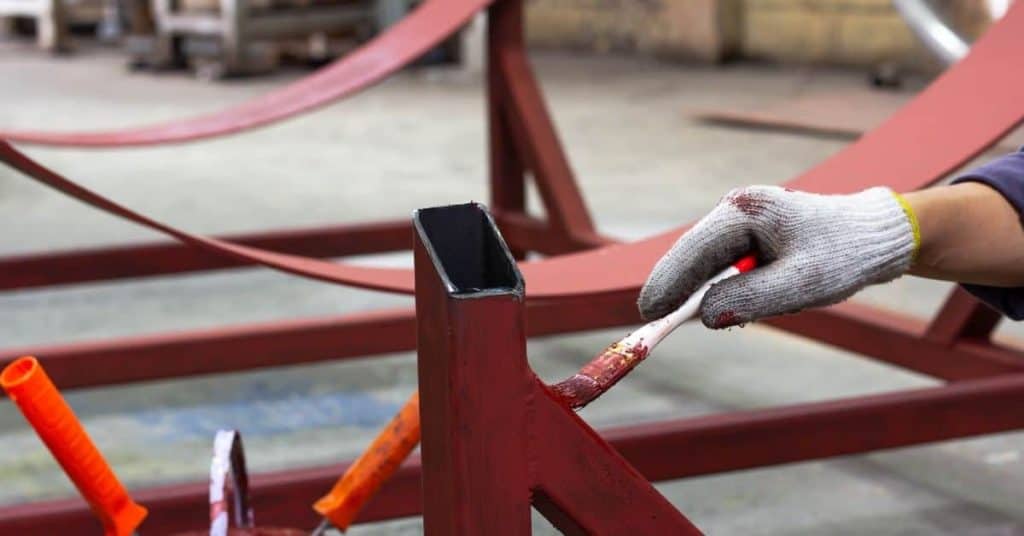
Introduction
Painting aluminum is best done with proper prep to prevent flaking. Start by cleaning the surface thoroughly and removing any dull oxidation, then consider a light etch to help paint grip. Then choose a primer and topcoat that are rated for aluminum and compatible with each other.
Light sanding for a smooth, even surface helps the finish flow better and improves adhesion. When selecting primers, look for options specified for aluminum and follow the label directions for number of coats and dry times. Always check local rules and product instructions to confirm compatibility and application steps at hand.
Key takeaways
- Clean aluminum surfaces thoroughly to remove oils, oxidation, and debris before any prep.
- Etch or chemically prepare the surface according to manufacturer instructions for adhesion.
- Sanding or mechanical prep creates a key for primers and topcoats.
- Choose aluminum-specific primers and apply in thin, even coats following labels.
- Use compatible topcoats designed for metals to resist flaking and weathering.
- Wear eye protection and gloves when cleaning, sanding, and applying coatings.
Table of Contents
- Introduction
- Key takeaways
- Why Special Prep Matters for Aluminum
- Tools and Materials Checklist
- Cleaning Aluminum Surfaces Thoroughly
- Sanding and Mechanical Prep for Better Adhesion
- Etching Aluminum: Chemical Surface Treatment
- Primer Selection and Application Best Practices
- Topcoat Choices That Resist Flaking
- Preventing Flaking, Troubleshooting, and Cost Planning
- Conclusion
- FAQ
Why Special Prep Matters for Aluminum
Aluminum carries a natural oxide layer that resists paints and creates a low surface energy, which makes coatings less likely to bond. This oxide also dulls the look and can hide adhesion flaws until the finish flakes. Proper prep helps coatings bite into the surface and stay put.
Without proper prep, conventional primers and paints can fail on aluminum, leading to flaking, peeling, and accelerated corrosion. The key is to plan a sequence that includes degreasing, abrasion if needed, etching or chemical treatment, thorough drying, and timely priming. Choose methods and products based on alloy type and the intended topcoat, and verify readiness with a simple surface check before priming.
How adhesion fails on aluminum
Aluminum’s natural oxide layer and low surface energy make it tricky to paint. Here’s why:
Poor Adhesion: The oxide layer reduces the surface area for paint to bond with, leading to weak adhesion.
Undercutting by Corrosion: If not properly prepped, moisture can get trapped under the paint and cause corrosion. This undercuts the paint, lifting it off from the edges.
Trapped Contaminants: Dirt, grease, or other contaminants left on the surface can prevent paint from sticking, leading to flaking and peeling.
When to repair vs. replace
Before you start painting, assess the aluminum part’s condition:
Repairing is worthwhile if there are only minor dings, scratches, or areas of light corrosion. Just ensure these issues are properly addressed during prep.
Replacing might be necessary if:
Major Damage: There are large dents, holes, or extensive corrosion that can’t be repaired easily.
Aging and Wear: The part is old, worn out, or has lost its structural integrity. It’s safer to replace it rather than risking failure after painting.
Tools and Materials Checklist
Organize a categorized list covering tools, cleaners, abrasives, etchants, primers, topcoats, and PPE. Include brief notes on why each item works with aluminum and where it fits in the process. A clear kit helps you avoid mid project runs to the hardware store.
Provide recommended quantities or bundles and explain the purpose of each item. Mention common tool types, cleaner choices, and primer options while noting any compatibility caveats for aluminum. Add tips on where to buy, possible multi packs, and essential safety gear and storage guidelines for chemicals.
Cleaning and surface-prep supplies
Before you start painting, use this checklist to ensure your aluminum surface is clean and ready for primer.
- Degreaser: Mineral spirits or acetone-based cleaner to remove grease and dirt. Skipping this can lead to poor paint adhesion.
- Rags: A pack of lint-free rags for applying degreaser and wiping off residue.
- Brushes: Soft-bristle brushes for scrubbing hard-to-reach areas.
- Scrub pad: Non-abrasive pad to gently clean without damaging the aluminum.
- Ph level test strips: To confirm your surface is neutral (pH 7) before painting. Acidic or alkaline surfaces can cause paint failure.
- Rust converter: If there’s rust, apply a rust converter to prevent it from bleeding through the paint.
- Tack cloth: To remove any remaining dust or debris before priming.
- Aluminum etchant test kit: To confirm your surface is properly etched for optimal paint adhesion. Skipping this can result in flaking paint.
Quick rule: Always clean, rinse, and let the surface dry completely before moving on to the next step.
Abrasives, etchants, and primers/topcoats
Use this checklist to select the right abrasives, etchants, primers, and topcoats for your aluminum surface.
- Sanding pads: 1-2 sets of medium (120-grit) and fine (220-grit) sanding pads for manual or dual-action sanders. Coarse grit can damage the aluminum, while fine grit ensures a smooth finish.
- Aluminum etchant: Phosphoric acid-based etchant to prepare the surface for painting. Self-etching primers can be used as an alternative but offer less durability.
- Epoxy primer: A high-build, corrosion-resistant epoxy primer designed for aluminum substrates. Water-based primers are not recommended due to poor adhesion and durability.
- Topcoat (urethane or acrylic): Durable, UV-resistant topcoat in a satin or semi-gloss finish. Avoid oil-based paints as they can yellow over time and lack the durability of urethanes or acrylics.
- Aluminum-specific paint: Consider using a paint specifically designed for aluminum, which often includes built-in primers and topcoats.
Quick rule: Always follow the manufacturer’s instructions for application, drying times, and safety precautions.
Cleaning Aluminum Surfaces Thoroughly
Set a cleanliness goal that removes oils, dirt, and loose oxidation without dulling the metal. Residues left on the surface can sabotage adhesion later. A clean surface is the foundation for a durable finish.
Choose cleaners that are aluminum safe and avoid abrasive or chlorinated solvents that can damage the metal. Use a stepwise approach with an initial wash, targeted degreasing as needed, and a final rinse with clean water. Dry thoroughly before moving to abrasion or etching steps.
Degreasing and oxidation removal
Aluminum surfaces can collect oils and grease over time, which need to be removed before painting. The same goes for loose oxidation that may have formed on the surface.
You’ve got two types of cleaners here: solvent-based and alkaline. Solvents are great at cutting through grease but can evaporate quickly, leaving behind a residue if not rinsed properly. Alkaline cleaners, like mild dish soap with warm water, break down oils and dirt but may require more agitation to work effectively.
To use either, apply the cleaner liberally using a soft-bristle brush or cloth. Agitate well, ensuring you reach all nooks and crannies. Then, rinse thoroughly with clean water. To confirm removal of oils and grease, perform a simple wipe test with a clean, lint-free cloth. If it comes away clean with no oily sheen, you’re good to go.
Visual checkpoints for cleanliness
Before moving on to sanding or etching, it’s crucial to verify your aluminum surface is clean and ready. This helps prevent adhesion failures later.
- Water beading: Pour water onto the surface. If it beads up and rolls off easily, the surface is clean and free of contaminants.
- Tactile feel: Run your fingers over the surface. It should feel smooth and even, with no gritty or sticky residues.
- Bright metal vs. film: Look for any dull patches or films that might indicate remaining dirt, grease, or oxidation.
- Soap test (optional): If unsure, perform a quick soap test. Apply a drop of dish soap onto the surface and rub it in with your fingers. Rinse off. If suds form easily and rinse away cleanly, the surface is likely clean.
Quick rule: Always inspect your work at each stage. A few minutes spent checking now can save hours of rework later.
Sanding and Mechanical Prep for Better Adhesion
Mechanical prep aims to increase surface roughness for better primer bite while preserving the protective oxide layer. The goal is a uniform, micro-etched profile that improves adhesion without removing too much material.
Use hand sanding, blocks, or power tools based on part size and contours. Progress through grits to create a consistent scratch pattern, and avoid deep gouges. Between steps, wipe or blow dust away and inspect for even coverage and clean edges.
Grit Choices and Sanding Techniques
The goal of mechanical prep is to increase surface roughness without removing the inherent aluminum oxide layer. Here’s how:
Start with 220–320 grit for general dulling. Then, use 400–600 grit for a uniform profile. This progression helps create micro-adhesion pockets without over-scratching or creating deep gouges.
If unsure about grit choice, test on a small, hidden area first. Remember, too coarse will scratch the metal, too fine won’t provide enough keying.
Feathering Edges and Complex Shapes
Aluminum parts often have complex contours. Here’s how to prep them for painting:
For edges, use a light touch with fine grit (400–600) to avoid sanding through thin metal near edges. This is called ‘feathering’ and helps prevent lifting paint later.
For complex shapes, use small tools like fingertip sanders or sanding sponges. Blend old coatings into new surfaces, and prep corners carefully. This ensures a smooth finish and prevents lifting.
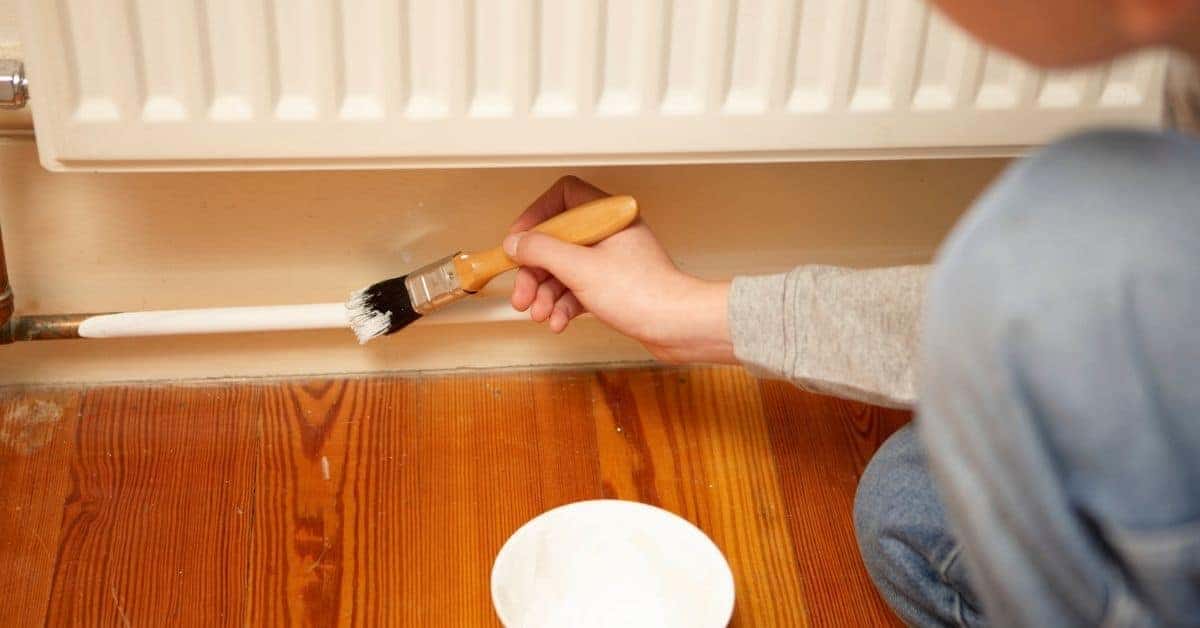
Etching Aluminum: Chemical Surface Treatment
Etching modifies the outer oxide and creates micro-keys for primer bonding. It prepares the surface to accept coatings more reliably than cleaning alone. This step helps especially when a strong bond is needed for outdoor or harsh environments.
Understand that oxides vary by alloy and that etching can be essential in some cases. Follow the etchant instructions and safety notes, and rinse and dry as directed. Use a simple adhesion check to confirm readiness before priming.
Common etchants and how they work
Etching aluminum involves using chemicals to modify the surface’s oxide layer. There are two main types of etchants: acid and alkaline.
Acid etchants, like phosphoric or sulfuric acid, remove the outer layer of aluminum oxide, creating microscopic pits that improve primer adhesion. They’re typically used for light-duty applications.
Alkaline etchants, such as sodium hydroxide or potassium hydroxide, work by converting the aluminum oxide into a soluble salt, which is then rinsed off. These are usually reserved for heavy-duty adhesion needs. There are also conversion coatings, like chromate or phosphate, that react with the aluminum to form a protective layer, enhancing primer bonding.
Neutralizing, rinsing, and timing
After applying the etchant, it’s crucial to neutralize, rinse, and dry the surface properly to prevent flash rust or recontamination.
Use a neutralizing solution, like a mixture of vinegar and water for acid etchants, or a mild detergent for alkaline ones, to stop the etching process. Rinse thoroughly with clean water to remove all etchant residue.
The dwell time – how long the etchant sits on the surface – varies depending on the etchant type and temperature. Generally, it’s between 5 to 30 minutes. To check if etching is complete, rewash the surface with clean water. If no residue comes off, the etch is done.
Primer Selection and Application Best Practices
Primer goals on aluminum are adhesion, corrosion resistance, and sometimes etching. Tailor the choice to exposure level and the topcoat you plan to use. A good primer sets up the entire system for long service life.
Compare etch primers, zinc alternatives, and epoxy primers, noting safety considerations and how they s