
Introduction
Overlay thickness rules determine how thin overlays will perform outdoors. If you go thinner than recommended, they can crack, delaminate, or wear away quickly. Always check the product label and local rules, and follow the manufacturer’s guidance for your climate and substrate.
There are several overlay types you might consider, from micro-toppings to self-leveling and stampable surfaces, each with its own thickness range. Admixtures and proper patching, priming, and curing influence how well an overlay holds up, so read the directions on the bag or sheet and follow those steps. The durability depends on your substrate, moisture, movement, and how you apply it, so plan for prep, test patches, and realistic cures, rather than guessing.
Key takeaways
- Choose correct overlay thickness per substrate, traffic, and outdoor exposure conditions.
- Thin overlays fail outdoors via cracking, delamination, moisture movement, and surface dusting.
- Consider micro-toppings, stampable, and self-leveling overlays when planning thickness and finish.
- Use compatible admixtures and polymers as manufacturers instruct for outdoor durability.
- Follow strict application steps: substrate prep, proper curing, and protection from elements.
- Visual checkpoints and safety gear: wear PPE, verify evenness, edges, and slopes.
Table of Contents
- Introduction
- Key takeaways
- Overlay Thickness Rules and Why They Matter
- How Thin Overlays Fail Outdoors — Common Modes of Failure
- Components of Overlay Systems That Determine Required Thickness
- Application Process and Outdoor Best Practices to Avoid Thin-Overlay Failures
- Visual Checkpoints, Tools, and Materials Checklist for Outdoor Overlay Jobs
- Maintenance, Repair Strategies, and Lifespan Expectations for Outdoor Overlays
- Choosing Products, Understanding Cost Tradeoffs, and Safety Considerations
- Conclusion
- FAQ
Overlay Thickness Rules and Why They Matter
The thickness you prescribe directly influences how the overlay bonds to the substrate, adapts to flexural movement, and resists water and vapor ingress. Undersized thickness can weaken adhesion and invite micro-cracking and delamination over time outdoors.
Check manufacturer specifications and common industry guidance to set safe ranges for outdoor exposure. When in doubt, compare multiple sources and label the guidance to verify compatibility with sealers or stains planned after the install.
Minimum vs. Maximum Thickness Guidance
Each overlay product has a sweet spot for thickness, and sticking to it is crucial for outdoor durability.
Below minimum: Applying too thin compromises bond strength. You’ll see poor adhesion, micro-cracking, and delamination over time.
Above maximum: Exceeding recommended max can lead to excessive weight, slow curing, and increased permeability. It’s a recipe for long-term failure.
Always check product datasheets. They’re your best friend here. Follow the manufacturer’s minimum and maximum thickness guidelines like they’re golden rules.
How Thickness Influences Movement, Permeability, and Wear
Thickness isn’t just about how much material you use. It’s about performance.
Thin sections: These are more flexible but prone to movement-related issues. They can crack under stress or shrink during drying. Water and vapor can pass through too easily, leading to accelerated wear.
Thick sections: These offer better load resistance and durability. But they dry slower, which can lead to moisture-related problems if not cured properly. Thicker doesn’t always mean better; it’s about finding the right balance.
The key is understanding how thickness interacts with your specific overlay product and substrate. It’s a dance, and you’ve got to know the steps.
How Thin Overlays Fail Outdoors — Common Modes of Failure
Cracking, delamination, and debonding from the substrate are typical failures seen with under-thickness overlays outdoors. Dusting or wearing away and spalling due to moisture are also common indicators of insufficient build.
Root causes include weather cycles, substrate issues, prep flaws, and product choices that sit below the recommended range. Environmental cycles accelerate these failures, making thin layers more vulnerable than thicker resurfacing.
Delamination and debonding
Thin overlays can delaminate or debond from the substrate due to several reasons. The most common is an inadequate bond coat, which acts as a glue between the old concrete and the new overlay.
Contaminated substrates also cause poor adhesion. Dirt, grease, or other contaminants prevent the overlay from sticking properly.
The overlay itself can be too thin to form a strong bond. Overlays need a certain thickness to create enough surface area for adhesion and distribute stress evenly.
Signs of delamination include flaking, peeling, or lifting of the overlay. If you notice these, check for proper bond coat application and substrate cleanliness before applying any more material.
Cracking, crazing, and reflective cracks
Thin overlays are prone to cracking due to several factors. Shrinkage occurs as the overlay dries, causing it to contract and form hairline cracks.
Thermal movement is another culprit. Concrete expands and contracts with temperature changes, which can cause cracks in thin overlays that can’t accommodate this movement.
Reflective cracking happens when existing substrate cracks reflect upward into the overlay. This is why it’s crucial to address any substrate issues before applying an overlay.
Crazing refers to a network of fine cracks that resemble a spider web. It’s often due to excessive drying or inadequate curing. Regularly inspect your overlay for these signs and address them promptly to prevent further deterioration.
Abrasion, UV degradation, and moisture-related deterioration
Thin overlays are more susceptible to surface wear. Foot traffic, vehicle traffic, and even windblown debris can cause abrasion that wears away the overlay over time.
UV exposure from sunlight causes pigment fade in thin overlays. The lack of depth in thin overlays means there’s less color to protect the underlying concrete from UV damage.
Freeze-thaw cycles also take a toll on thin overlays. Water seeps into tiny cracks, then expands as it freezes, causing more cracking and spalling. This is why it’s important to use a mix designed for outdoor exposure in freeze-thaw zones.
Moisture-related deterioration can occur if the overlay doesn’t allow moisture to escape. This can lead to efflorescence (white powdery deposits) and even delamination. Regularly inspect your overlay for signs of excessive moisture and address any issues promptly.
Components of Overlay Systems That Determine Required Thickness
Aggregate size and grading influence minimum build height and surface texture, with larger aggregates potentially requiring more material on exterior surfaces. This affects how the overlay grips the substrate and resists wear.
Binder types, fibers, admixtures, and bond coats all shape flex, strength, and long‑term durability. Read the technical data sheets for component limits and field tolerances for outdoor exposure.
Aggregate and particle gradation
The size and grading of aggregates significantly impact minimum overlay thickness. Larger particles need more space, so they require thicker overlays to prevent exposure or pumping out.
Coarse aggregates also create a rougher texture, enhancing skid resistance but demanding a thicker build for strength and durability.
Fine aggregates allow thinner sections but may compromise long-term wear performance. Read your aggregate’s grading curve to understand its influence on minimum thickness.
Admixtures, fibers, and binders
Plasticizers like superplasticizers boost workability, enabling thinner sections without compromising strength. But don’t go too thin; read the data sheet for limits.
Shrinkage-reducing admixtures prevent cracking in thin overlays. Polymer modifiers enhance flexural and tensile strengths, allowing thinner or thicker sections based on design needs.
Fibers (polypropylene, steel, glass) control cracking by bridging micro-cracks. They enable thinner sections but must be used correctly to avoid compromising performance.
Bonding agents, primers, and underlayments
Primers and bonding agents improve adhesion, reducing delamination risk. They can sometimes allow thinner toppings if applied correctly, but don’t rely on them to compensate for insufficient thickness.
Stabilizing slurries create a strong bond between the old and new concrete. They may enable thinner overlays but must be used according to manufacturer guidelines to ensure long-term performance.
Underlayments level out uneven surfaces, allowing consistent overlay thickness. But they don’t replace proper surface preparation; clean, dry, and structurally sound substrates are crucial for successful overlays.
Application Process and Outdoor Best Practices to Avoid Thin-Overlay Failures
Follow a step by step workflow that starts with inspection and proper substrate prep, then moves to bonding assessment and correct mixing. Outdoor conditions like sun, wind, and temperature swings should guide timing and sequence.
Use exterior specific checks for moisture, efflorescence, cracks, and drainage. Monitor bonding strategies, compatibility of primers, and surface prep to prevent delamination or premature failures.
Surface assessment and mechanical preparation
Before you start, assess your surface. Check for contamination like oil, grease, or dirt. Use a moisture meter to test for excess moisture. Look for delamination – any loose or peeling material must be removed.
Strength is crucial. Tap the surface with a hammer. If it sounds hollow, it’s weak and needs repair. Use a mechanical profile method like shot blasting or diamond grinding to achieve a proper anchor pattern.
Ensure your substrate has proper slope for drainage. No more than 1/8 inch per foot fall. Cracks? Fill them with an appropriate crack filler before overlaying.
Bond coat/primer application and timing
Choose a primer that’s compatible with your overlay system. Apply it evenly, following the manufacturer’s guidelines. Don’t rush – take time to ensure full coverage.
Tackiness window is critical. Apply your bond coat within this time frame for optimal adhesion. Too soon or too late risks delamination. Use a notched trowel for even application.
Be cautious with application rates. Over-applying can lead to excessive bond coat on the surface, causing it to break down over time. Under-applying reduces bonding effectiveness.
Mixing, placing, finishing, and curing for outdoor conditions
Mix your overlay according to the manufacturer’s instructions. In hot sun, you might need to adjust water content to maintain workability. Aim for a consistent mix.
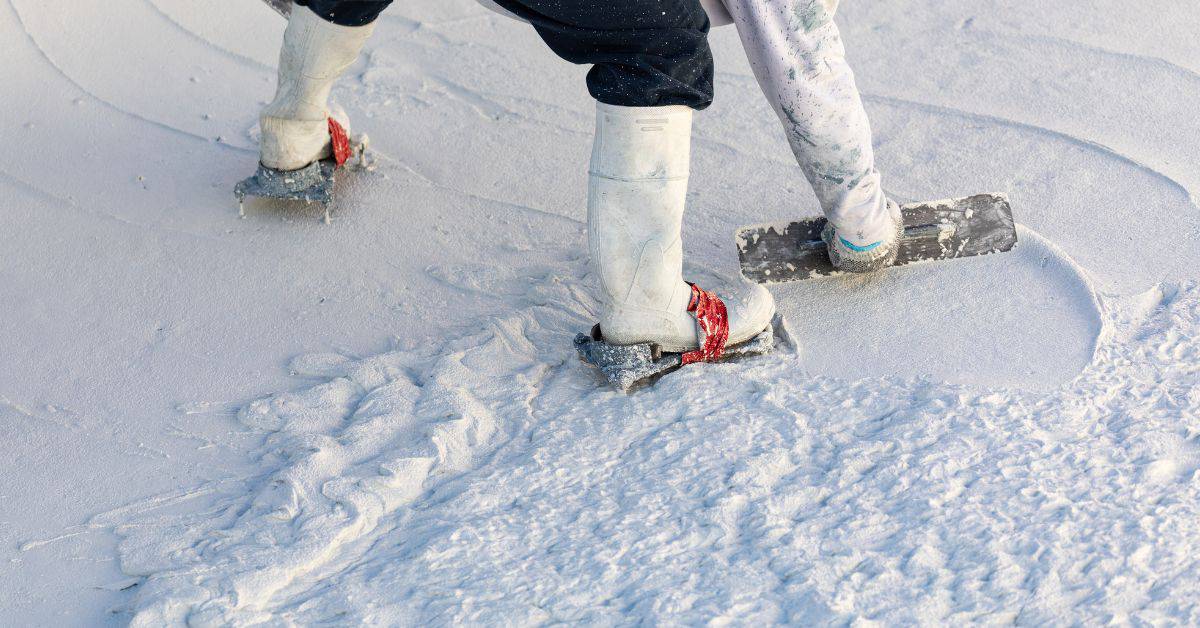
Place the overlay in thin layers – no more than 1/4 inch at a time. Use a screed or trowel to achieve your desired thickness and smoothness. Feather edges to prevent lift-off.
Curing is vital outdoors. Keep the overlay shaded from direct sunlight during initial curing. Use temporary coverings if necessary. Control moisture loss with damp covers or fogging. Follow manufacturer’s guidelines for cure duration. Before exposure to traffic or staining, ensure it’s fully cured.
Visual Checkpoints, Tools, and Materials Checklist for Outdoor Overlay Jobs
Define visual checkpoints along the installation flow with clear acceptance criteria and pass/fail triggers. Focus on substrate condition, thickness uniformity, and surface cleanliness.
List tools and instruments to verify thickness, levelness, and moisture, and document readings for traceability. Include a consumables checklist tailored for outdoor overlays and stage-specific QC steps.
Tools and equipment essentials
Before you start, ensure you have the right tools for the job. Here’s a checklist to help you.
- Surface prep equipment: Check your grinders, scarifiers, and shot blasters are in good working order. Blades should be sharp, and machines should run smoothly.
- Measuring gauges: Calibrate your straightedges, trowels, and screeds to ensure they’re accurate. A 6′ level is a must for checking flatness.
- Mixers: Ensure your mixer’s blades are intact and it’s running smoothly. It should be able to handle the volume you need.
- Trowels and sprayers: Inspect your trowels for bends or cracks. Sprayers should have no leaks and deliver a consistent mist.
- Protective gear: Check your safety glasses, gloves, and boots are in good condition. Don’t forget ear protection if you’re using power tools.
- Moisture meters: Calibrate these to ensure they’re reading accurately. They’ll help prevent moisture-related issues.
- Laser level: Ensure it’s charged and the beam is clear and steady. It’s crucial for checking levels and slopes.
- Dew point meter: Calibrate this to ensure it’s reading humidity accurately. This helps prevent condensation issues.
Quick rule: Always check your tools before starting work. Faulty equipment can lead to poor results or even accidents.
Visual and simple measurement checkpoints
Throughout the overlay process, use these visual checks and simple measurements to ensure quality control.
- Substrate condition: Before priming, visually inspect the surface. It should be clean, dry, and free of defects. Any issues can compromise adhesion.
- Thickness uniformity: Use a straightedge to check for variations in thickness. No high or low spots should exceed 3mm.
- Surface cleanliness: Before applying any overlay, ensure the surface is clean and free of dust, debris, or contaminants. These can cause delamination.
- Edge/blemish checks: Inspect edges and corners for any blemishes, voids, or honeycombing. These can lead to cracking or debonding.
- Levelness: Use a laser level to check the surface is flat and within tolerance. A 6′ level can also help here.
- Moisture content: Use a moisture meter to ensure the substrate isn’t too wet. Excess moisture can cause delamination or cracking.
- Bond quality: After applying the primer/bond coat, check for any missed spots or poor coverage. A good bond is crucial for adhesion.
- Finish uniformity: After final finishing, visually inspect the surface. It should be smooth, even, and free of defects.
Quick rule: Regular visual checks can help catch issues early, preventing costly rework or failures.
Maintenance, Repair Strategies, and Lifespan Expectations for Outdoor Overlays
Outline routine maintenance such as cleaning and resealing, and when to schedule these tasks. Document maintenance actions to guide future work and warranties.
Explain common repair workflows for thin overlays, including patching and resealing, and identify factors that influence realistic service life. Keep a log of conditions and outcomes to inform replacements or recoats.
Routine care and protective coatings
Outdoor overlays need regular love to keep them looking sharp and performing well. Here’s what you should do:
Cleaning: Keep your overlay clean by sweeping off debris regularly. For tougher stains, use a mild detergent and soft-bristle brush. Rinse thoroughly with water.
Sealing: Apply a quality acrylic or polyurethane sealer every 2-3 years to protect against UV rays and moisture. Check the product label for specific application instructions. Don’t skimp on coverage – it’s better to use too little than too much.
Avoid water pooling: Ensure your overlay has proper drainage by sloping it slightly away from structures. Standing water can cause damage and encourage weed growth. If you notice any low spots, fill them with a self-leveling compound.
Repair tactics for delamination, cracking, and wear
When your outdoor overlay starts showing signs of trouble like delamination, cracking, or excessive wear, it’s time to act. Here’s what you need to do:
Delamination: This happens when the overlay peels off from the base. First, check base compaction. If it’s poor, remove and reinstall properly this time. For minor cases, use a flexible bonding agent before patching.
Cracking: Small cracks can be patched with an overlay-specific repair mortar. For larger ones, you might need to reprofile the surface. Remove damaged areas, prepare the base, and apply new overlay. If it’s a structural issue, consult a pro.
Wear: Normal wear can be patched with fresh overlay material. But if it’s excessive, you might need to remove and reinstall. This is a full-system remediation. Before proceeding, check your overlay’s warranty and local rules.
Estimating lifespan and logging service history
Outdoor overlays’ lifespan depends on a few key factors. Here’s what you need to check and keep track of:
Substrate condition: The base matters most. Check compaction, moisture content, and strength before overlaying. A solid base means a longer life.
Climate and traffic take their toll too. In harsh climates or high-traffic areas, expect to replace overlays sooner. Keep an eye on:
- Freeze-thaw cycles: These can crack and delaminate overlays.
- UV exposure: Sunlight breaks down binders over time.
- Traffic volume: Heavy use wears out overlays faster.
Thicker overlays last longer, but they’re pricier and heavier. Weigh the pros and cons based on your needs and budget.
Keep installation records to make informed decisions later:
- Date of installation: Know when it’s time for a refresh.
- Product used: Track what works best in your conditions.
- Maintenance history: Log repairs and routine care to spot trends.
Regular inspections help too. Catch issues early, and you’ll extend your overlay’s life.
Choosing Products, Understanding Cost Tradeoffs, and Safety Considerations
Provide a decision framework that weighs performance per thickness, substrate compatibility, and long-term durability. This guides product selection for outdoor use with sensible maintenance plans.
Compare product categories by typical thickness ranges, cure times, and outdoor strengths and weaknesses. Include safety, code considerations, and guidance on verifying datasheets, warranties, and third-party tests.
What to Verify on Datasheets and Warranties
Before you buy, check these key points on product datasheets:
Recommended Build Thickness: Ensure it matches your project’s needs. Too thin might crack, too thick wastes material.
Bond Strength: Check how well it sticks to existing surfaces. Poor bond means delamination later.
Flexural/Tensile Data: Look for strength under stress. Higher numbers mean better resistance to cracking and wear.
Cost vs. Longevity Tradeoffs
Thinner overlays might seem cheaper, but consider this:
Thin layers can crack or wear faster, leading to costly repairs and redoing. Invest in thicker, engineered systems for longer life.
Material Waste: Thicker applications use more material upfront but may reduce waste over time due to fewer touch-ups.
Labor Time: Thinner layers can take longer to apply and finish properly, offsetting initial savings.
Safety, Environmental, and Regulatory Considerations
Your product choice should consider more than just performance:
PPE: Check if personal protective equipment is required during application.
VOC/Eco Labels: Look for low VOC emissions and eco-friendly certifications to protect your health and the environment.
Slip Resistance: Ensure it meets or exceeds local codes for wet/exterior conditions to prevent accidents.
Local Codes: Check if your project complies with local building codes or standards regarding overlay thickness, materials, and safety features.
Conclusion
Thickness matters for safety, durability, and how the finish will look outdoors. Stay disciplined about the rules so you don’t invite cracks, debonding, or a patchy appearance that costs more to fix later.
First, verify the substrate and drainage, confirm the required overlay thickness for the site, and then follow the correct mix, priming, and curing steps in the proper outdoor sequence; protect edges, apply in the right conditions, allow adequate cure time, test a small area, and then scale up with checks at key intervals to avoid surprises.
Common mistakes to avoid include skipping substrate prep or edge protection, choosing a product and thickness that aren’t matched to outdoor conditions, and rushing curing or weather windows; always wear appropriate safety gear, verify compatibility of products, and test a small area first before committing to a full job.
If you encounter unstable substrates, large surface areas, or unclear specifications, call a professional rather than guessing; otherwise, stay steady, follow the checks, and you’ll finish with a durable, safe outdoor overlay that lasts. You’ve got this—keep it deliberate and don’t skip the steps.
FAQ
What are the common types of concrete overlays and how do they differ for outdoor use?
Micro-toppings are thin, fast-setting overlays best for minor leveling and matte finishes. Self-leveling overlays flow out to even surfaces and are good for low spots, but require careful prep. Stampable or decorative overlays add texture or patterns but need proper curing and protection outdoors.
What role do admixtures play in overlays, and what should DIYers check on the label?
Admixtures modify set time, workability, and durability. Check the label for compatibility with outdoor exposure and the substrate. If in doubt, read manufacturer instructions and local guidance before mixing.
How should you prep the existing surface before applying an overlay to ensure longevity?
Clean all dirt, oils, and weak concrete. Remove loose material and repair cracks or holes. Follow the product label for priming and bonding agents; surface prep is the main factor in a reliable, long-lasting overlay.
How do you choose the right overlay thickness and finish for outdoor durability, and what can go wrong if you over-thin?
Thickness must align with the product instructions and site conditions. Going thinner than recommended risks early wear, popping, or bonding failure. If unsure, check the label, datasheet, or ask the manufacturer for guidance and safe ranges.